
This Unique Wisconsin Sculpture Garden Is One Of The State’s Most Overlooked Spots
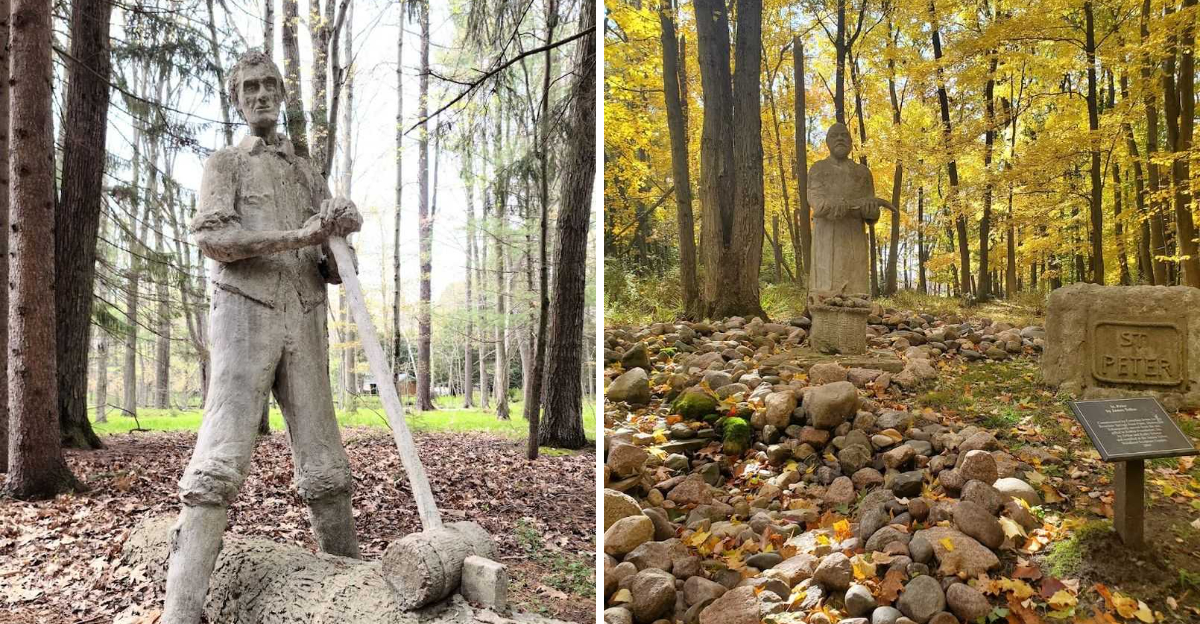
You could easily drive past this quiet spot in Sheboygan without noticing it, but it’s worth slowing down. Set along a simple, tree-lined street, this outdoor space features handmade concrete sculptures created by one artist starting in the 1940s.
The pieces are scattered among the trees, giving it a calm, slightly unexpected feel. There’s no entrance fee or set route, just an open area where you can walk around at your own pace.
It’s a simple place, but one that sticks with you, especially if you enjoy folk art or places with a personal story behind them.
Woodland Setting That Feels Quiet And Undisturbed
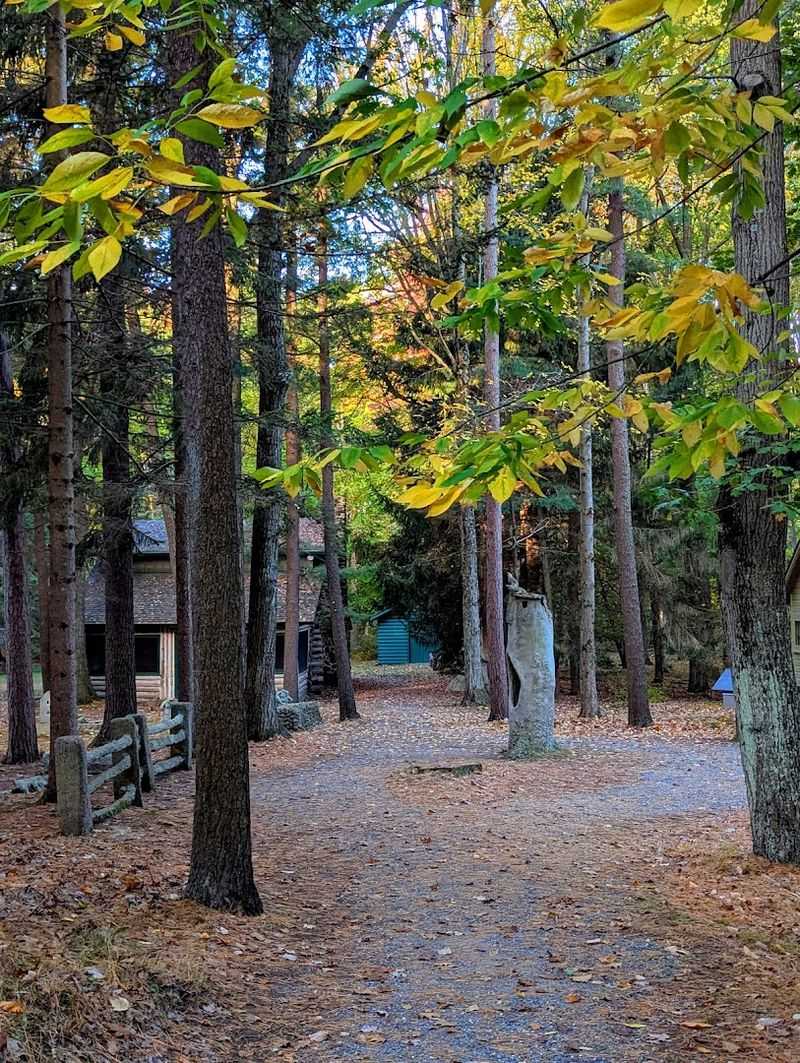
Located at 5634 Evergreen Drive, the sculpture garden sits within a natural forest that provides shade and seclusion throughout the year. Tall hardwoods create a canopy overhead, filtering sunlight onto the gravel paths below.
The environment remains calm even during peak visiting hours, with only the occasional sound of birds or rustling leaves breaking the silence.
Walking through the space feels different from typical outdoor museums. The sculptures appear gradually as you move along the trail, integrated into the landscape rather than displayed on pedestals.
This arrangement allows visitors to discover each piece at their own pace without feeling rushed or directed.
The woodland location also means the site changes with the seasons. Spring brings fresh growth around the concrete figures, summer offers full shade, autumn paints the backdrop in warm colors, and winter reveals the sculptures against bare branches.
Each season provides a distinct atmosphere that enhances the overall experience of exploring this unusual place.
Handcrafted Sculptures Built From Concrete And Found Materials
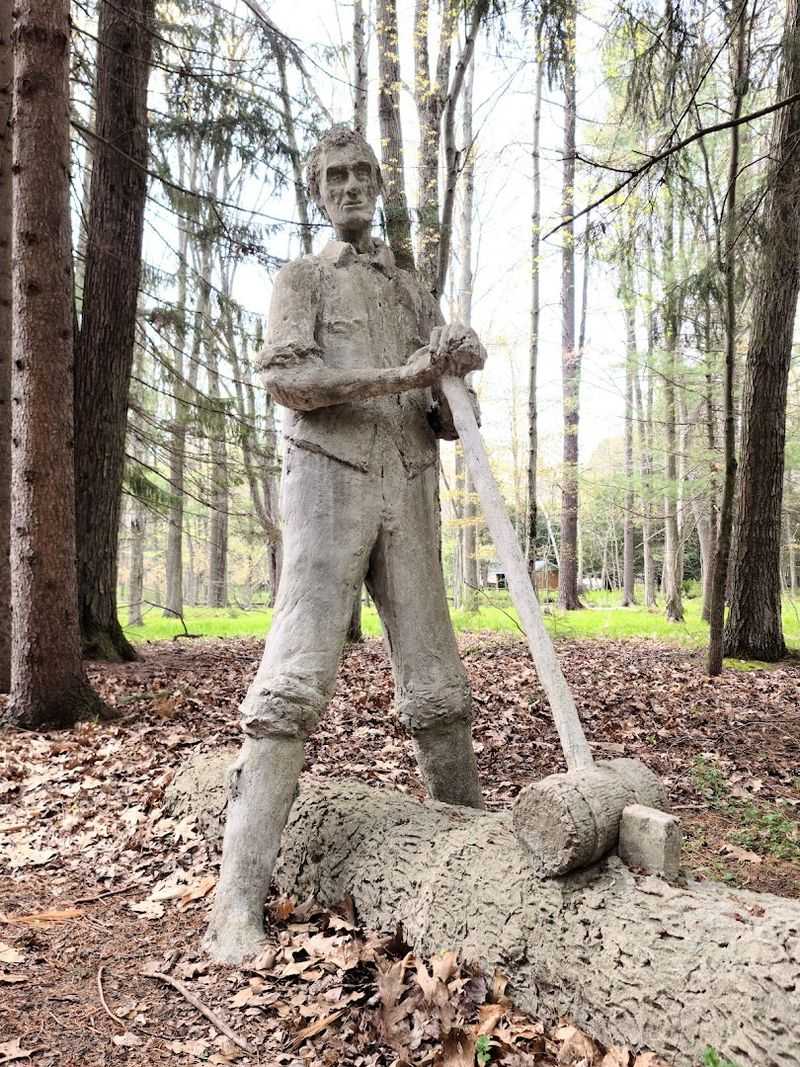
James Tellen constructed every sculpture on the property using concrete mixed by hand, shaping figures and structures without formal training or modern equipment. The materials came from whatever he could find or afford during the mid-20th century.
Some pieces incorporate rocks, metal fragments, and other objects pressed into the wet cement before it hardened, creating texture and detail that remains visible decades later.
The construction methods give the sculptures a distinctive appearance that differs from professionally carved stone or cast bronze. Surfaces show the marks of handwork, with fingerprints and tool impressions still present in many areas.
This rough, authentic quality adds character to the collection and demonstrates the physical effort required to build each piece.
Time and weather have affected the concrete over the years, creating cracks and worn spots that some visitors find distracting. Others appreciate these signs of age as proof of the garden’s long history.
The Kohler Foundation now maintains the site, working to preserve the sculptures while respecting their original handmade nature and rustic appearance.
Personal Project That Turned Into A Lasting Landmark
What started as a hobby in the 1940s became a lifelong project for Tellen, who lived on the property in a log cabin and spent years adding to his outdoor collection. He worked alone, without plans or formal designs, creating sculptures based on his own interests and imagination.
The project grew organically over time, with new pieces appearing as inspiration struck and materials became available.
Tellen never intended his work to become a public attraction. He built the sculptures for his own satisfaction, decorating his property according to his personal vision.
After his death, the site could have been lost or destroyed, but community recognition of its value led to preservation efforts that eventually opened it to visitors.
The Kohler Foundation acquired the garden and undertook restoration work to ensure its survival. Today, the site operates as a free public space, allowing anyone to experience what began as one person’s private creative expression.
This transformation from personal project to community landmark demonstrates how individual artistic efforts can gain broader cultural significance over time.
Religious And Cultural Themes Woven Throughout The Artwork
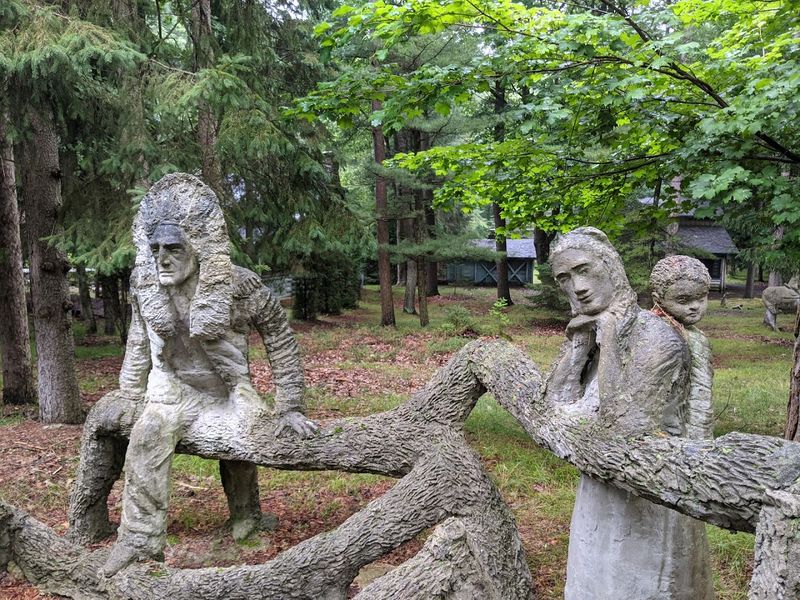
The sculptures reflect a mix of religious devotion and cultural references that held meaning for Tellen during his lifetime. Visitors encounter figures like the Virgin of Fatima, Christ, and various saints positioned along the paths.
These religious pieces suggest a strong Catholic influence and demonstrate how personal faith shaped the artistic choices throughout the garden.
Beyond religious subjects, Tellen also created sculptures of historical figures including Abraham Lincoln and Saint Paul. These additions show his interest in American history and broader cultural icons.
The combination creates an eclectic collection that moves between sacred and secular themes without clear separation or organization.
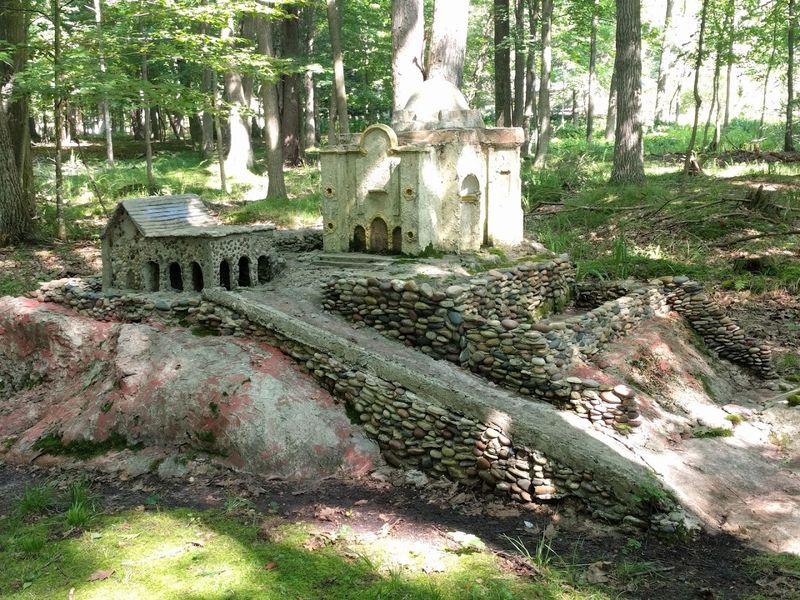
Some structures mimic architectural forms such as a small cathedral and a wishing well, adding variety to the collection of standing figures. The tavern building provides another example of how Tellen incorporated different concepts into his work.
This range of subjects keeps the walk interesting, as each turn reveals something unexpected rather than following a single predictable theme throughout the entire property.
Life-Sized Figures That Appear Along The Forest Paths
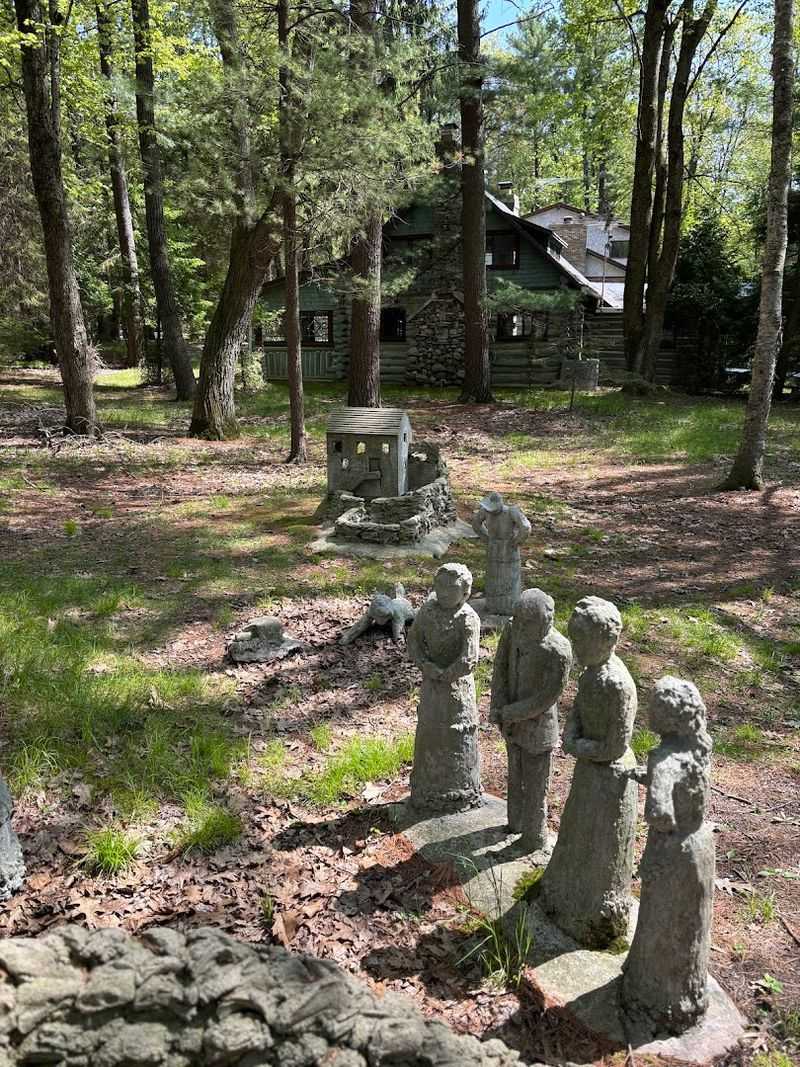
Many sculptures stand at human height or larger, creating an unexpected sense of presence as you walk through the garden. These life-sized figures appear suddenly around bends in the path or partially hidden behind trees, giving the impression of encountering other visitors frozen in time.
The scale makes them feel more immediate and engaging than smaller decorative pieces would.
Elves, religious figures, and historical characters all share the same space along the trails. Some stand alone while others group together in small scenes.
The placement feels intentional in some areas and random in others, reflecting the informal way Tellen developed the site over many years without a master plan.
The aging concrete has given some figures a weathered appearance that adds to their character. Moss grows on some surfaces, and cracks have formed in others, but these imperfections contribute to the garden’s authentic folk art quality.
The combination of human scale, forest setting, and aged materials creates an atmosphere that feels both mysterious and accessible to visitors of all ages.
Layout That Encourages Slow, Exploratory Walks
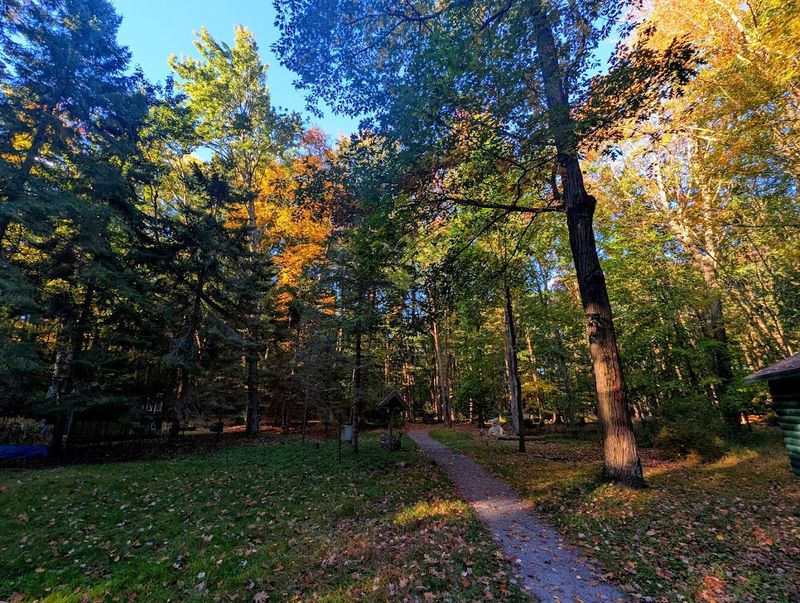
The garden follows a simple path system that visitors can complete in about twenty to thirty minutes at a casual pace. The main trail loops through the sculpture area before connecting to longer forest paths that extend beyond the property.
This design allows for short visits focused on the artwork or longer walks for those who want more time in the woods.
Gravel surfaces keep the paths accessible in most weather conditions, though some low spots can become muddy after rain. The trail remains relatively flat with minimal elevation changes, making it suitable for families with children and most adults regardless of fitness level.
Some visitors have noted that the terrain may present challenges for wheelchairs in certain sections.
The layout naturally slows your pace because sculptures appear at irregular intervals, requiring you to look around rather than walk straight through. This spacing prevents the experience from feeling rushed or overwhelming.
You can stop at any sculpture for as long as you like without blocking the path or feeling pressure to move along.
Outdoor Gallery That Changes With The Seasons
Spring visits reveal sculptures surrounded by emerging wildflowers and fresh green growth that softens the concrete surfaces. The forest comes alive with activity during these months, adding sound and movement to the static artwork.
New leaves create dappled light patterns that shift throughout the day, changing how the sculptures appear at different times.
Summer brings full canopy coverage that keeps the garden cooler than open spaces nearby. The shade becomes an asset during hot weather, making the walk more comfortable than it would be in direct sun.
Dense foliage also creates a more enclosed feeling that emphasizes the hidden, secret quality many visitors mention in their observations.
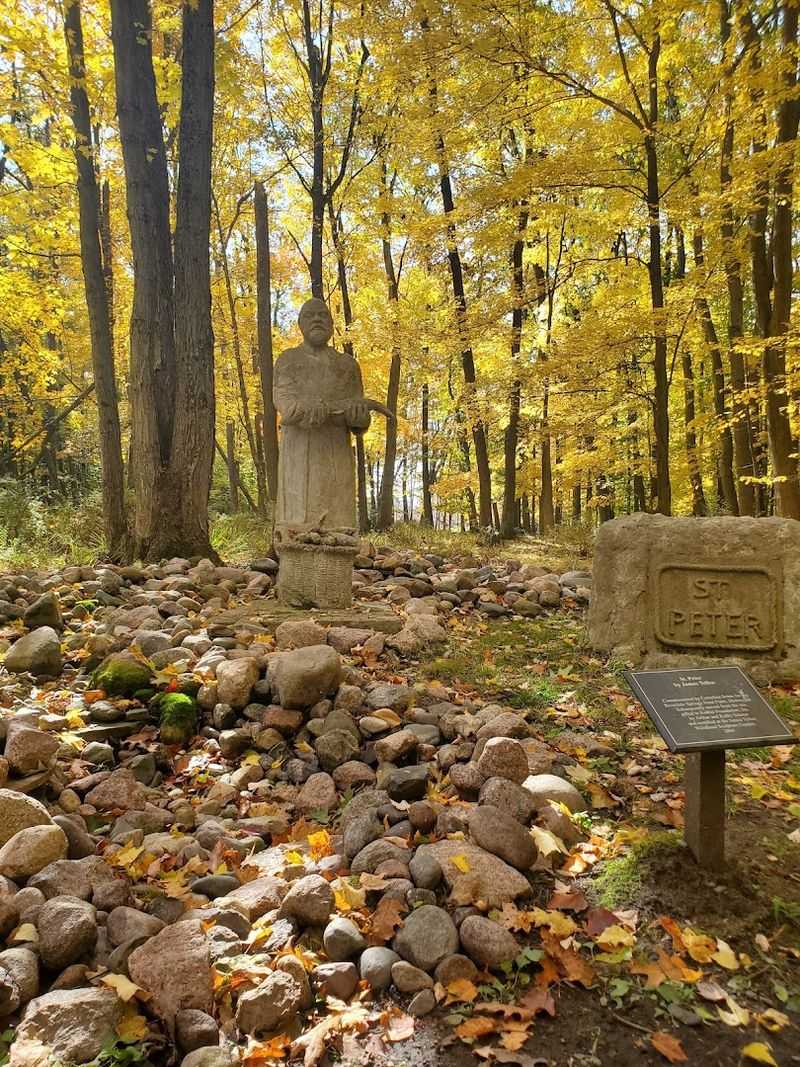
Autumn transforms the backdrop with brilliant colors that contrast beautifully against gray concrete. Many consider this the ideal time to visit because the hardwood forest displays vibrant reds, oranges, and yellows.
Winter strips away the leaves and exposes the sculptures more fully, creating stark views and a completely different mood. Deer sightings become more common during colder months when animals move through the quiet property.
Lesser-Known Spot That Still Feels Personal
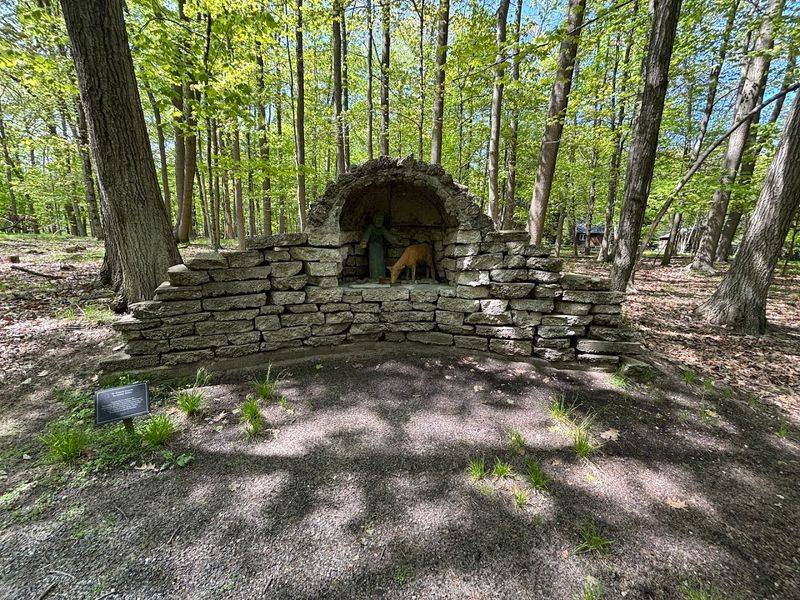
Despite being open to the public for years, the garden remains relatively unknown compared to major Wisconsin attractions. Its location in a residential neighborhood rather than a commercial district keeps it off most tourist itineraries.
Visitors often report having the entire space to themselves, especially on weekdays or during off-peak seasons when crowds are nonexistent.
This lack of popularity works in favor of those who do visit. The quiet atmosphere allows for genuine contemplation and unhurried exploration without competing for views or navigating around tour groups.
You can take photographs without waiting for other people to move, sit on benches without feeling rushed, and experience the garden as it might have felt when Tellen was still working on it.
The intimate scale contributes to this personal feeling. The garden never tries to be grand or impressive in the way large institutions do.
Instead, it offers a modest, honest presentation of one person’s creative output. This authenticity resonates with visitors who appreciate folk art and grassroots cultural preservation efforts that honor individual expression over commercial appeal.
Free Public Access That Makes It Easy To Visit
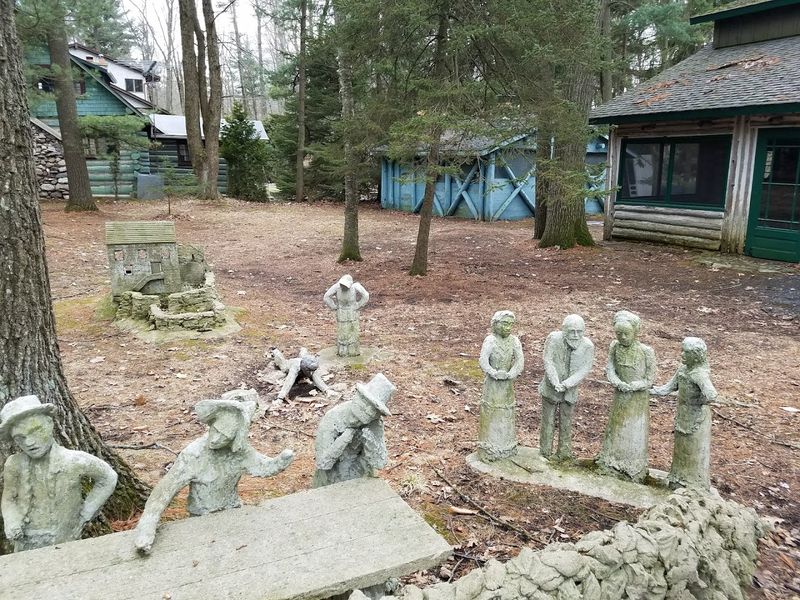
The garden operates without admission fees, tickets, or registration requirements. You simply park in the provided lot and walk onto the trails whenever the site is open.
Hours run from 8 AM to 6 PM daily, giving visitors flexibility to stop by morning or afternoon depending on their schedule. This accessibility removes common barriers that prevent people from exploring cultural sites.
A donation box near the parking area accepts contributions for those who wish to support maintenance and preservation work. These donations remain completely voluntary, and nobody monitors or enforces them.
The honor system approach reflects the community spirit that has kept the garden open and maintained since it became public property.
The location at 5634 Evergreen Drive sits close enough to Sheboygan’s lakefront parks to combine visits easily. Families exploring the area can add the sculpture garden to their itinerary without significant detours or extra planning.
The free access particularly benefits local residents who can return multiple times throughout the year to see how the site changes with the seasons.
Creative Legacy Preserved By The Local Community
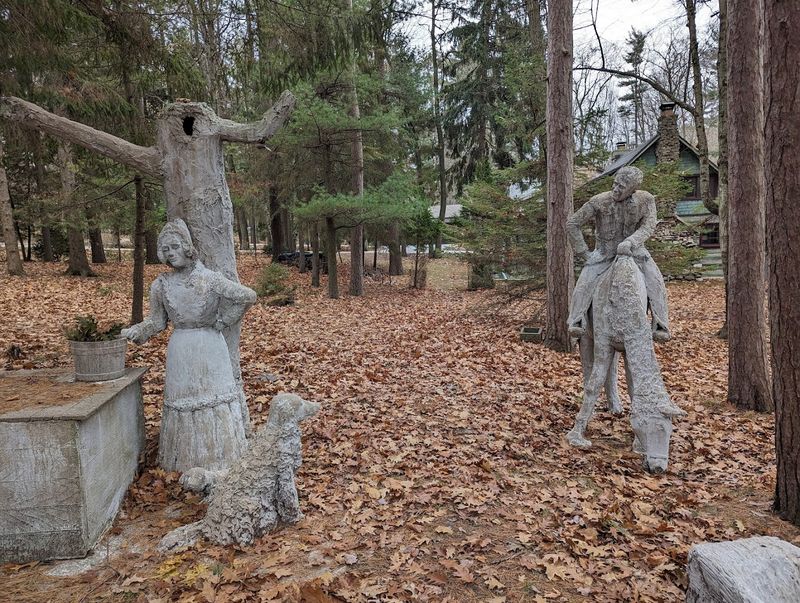
After Tellen’s death, the property faced an uncertain future until local preservation advocates recognized its cultural value. The Kohler Foundation stepped forward to acquire the site and fund restoration work that stabilized deteriorating sculptures and improved public access.
This intervention saved the garden from potential demolition or private sale that would have closed it to visitors permanently.
Community involvement continues through volunteer efforts and ongoing maintenance funded by donations and foundation support. The preservation approach respects the original character of the work rather than attempting to modernize or commercialize the site.
This careful balance maintains authenticity while ensuring the sculptures remain safe and accessible for future generations to experience.
The garden now stands as an example of successful grassroots cultural preservation. It demonstrates how communities can protect folk art environments that might otherwise disappear when their creators pass away.
By keeping the site free and open, preservationists ensure that Tellen’s decades of creative work continue to inspire and intrigue visitors who discover this unusual place along a quiet road in Sheboygan.