
Hanoi, Vietnam: a bustling Southeast Asian metropolis with a history worth revisiting
By Eileen Ogintz
Tribune Content Agency
Taking the Kids
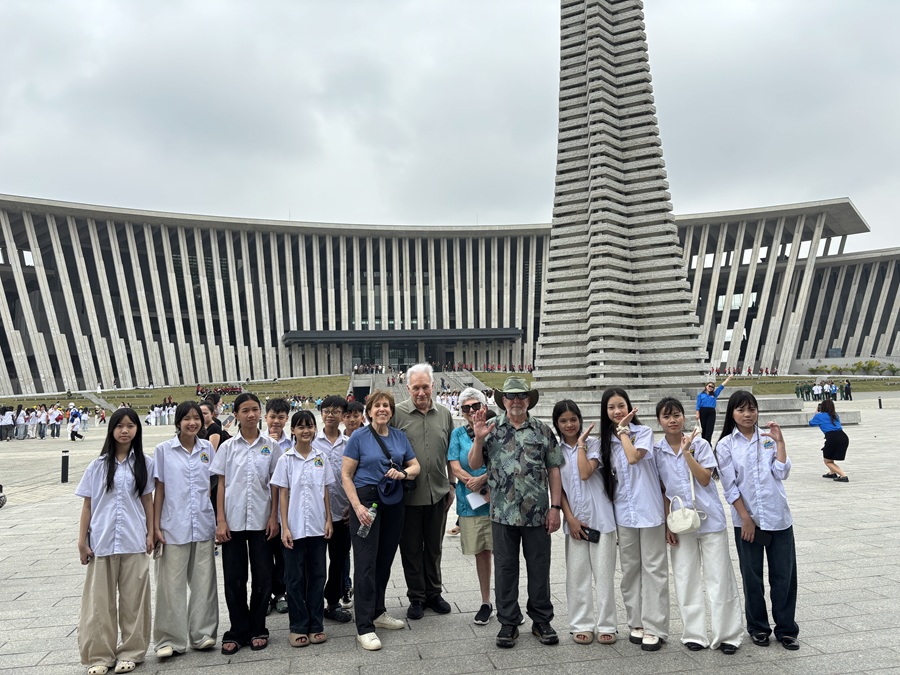
I know what celebrities must feel like. “Please, a picture!” the kids beg, jostling to get close to us. We were in Hanoi outside the Vietnam National Museum of History, where scores of children on field trips, dressed in different color shirts from their schools, were excited to meet us.
Many were from outside Hanoi, our guide Dang Viet Khanh explained, and as white people, we were an oddity. They also wanted to practice their English, though they don’t know much more than “Hello, what’s your name? Can we take a picture with you?” They were charming.
Fall and winter are the most popular times to visit Vietnam, especially popular now as travelers seek affordable destinations where they can immerse themselves in different cultures and experiences.
We arrived in Hanoi after a grueling 24-hour, two-stop flight from Denver. Though after midnight, we were welcomed cordially at Bespoke Trendy Hotel, a boutique property in the historic Old Quarter recommended by G Adventures. We would travel with G Adventures on a four-day hiking trip to Sapa, the famous mountainous region, before heading south for a cruise on the Mekong River on a 14-passenger CroisiEurope boat.
The Old Quarter is home to more than 1, 000 years of trade that today is busier than romantic, according to my Lonely Planet guide to Vietnam. There are streets dedicated to various crafts – metalworks, silk, embroidery, lacquer and more. We stop to see how lacquer is produced by hand in Duyen Thai, which is not far from Hanoi, the craft handed down from generation to generation. But we also learned that young people today aren’t interested and would prefer other work — on computers or with AI. We couldn’t resist buying something as the work is beautiful and the prices so inexpensive.
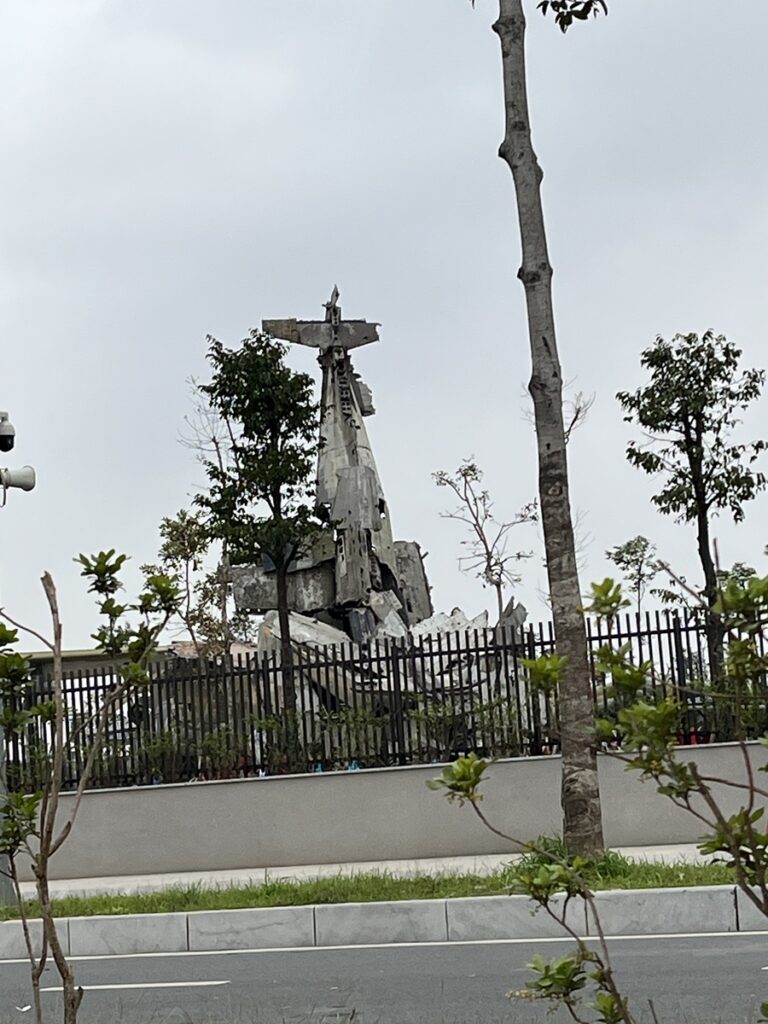
The Vietnam National History Museum focuses on Vietnam’s many wars during the 20th century– with the Japanese during World War II, the colonial French defeat in 1954, the U.S. until 1975, the Cambodian Khmer Rouge in 1976, and the Chinese (on and off from 1978 to 89). Outside, many military aircraft and vehicles are on display, including remnants of a US B-52 bomber, one of 34 shot down over Hanoi during the infamous “Christmas Bombing” of 1972.
While the exhibits focus mainly on how horrible the American war was for Vietnamese people, today no one seems to harbor grudges.
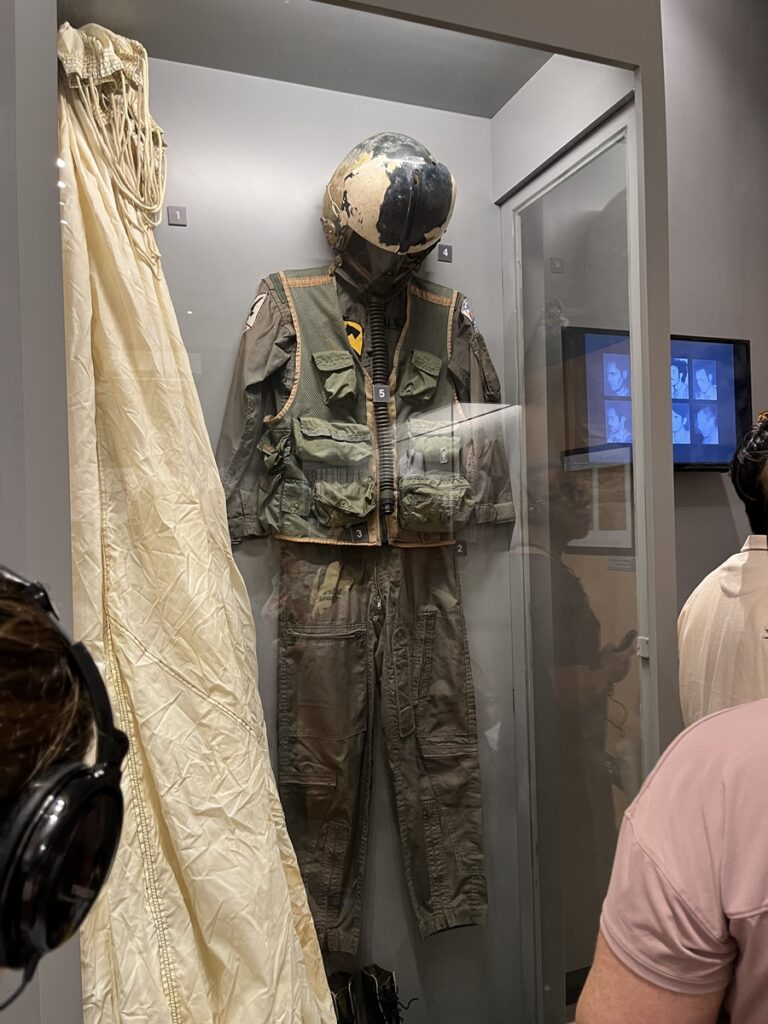
I used a local travel agency, Asia Focus Travel, to plan our North Vietnam foray and the prices were incredibly reasonable for guides and drivers and taking us where we wanted to go, including the famous prison dubbed by the captured American pilots as the “Hanoi Hilton.” Among the several hundred prisoners was Navy pilot John McCain, son and grandson of famous Navy admirals who went on to serve several terms as a senator from Arizona and was the Republican presidential nominee in 2008. He was incarcerated here from 1967 to 1973, when the Paris Peace Accords ended the contentious and increasingly unpopular war. His flight suit and parachute are on display along with photos of how locals helped him when he was shot down and badly injured.
However, the exhibits make it seem as if the pilots were at summer camp, raising chickens, painting, tending vegetable gardens, playing pool and other sports, all smiling. That wasn’t necessarily the case as many reported suffering from beatings, prolonged isolation, inadequate medical care, and extreme psychological pressure intended to force them to make anti-US propaganda statements, according to the American Heritage Museum’s Hanoi Hilton exhibit. Survivors largely testified to severe, ongoing abuse.
Of course, at the same time, people in North Vietnam were suffering terribly from bombings and lack of food. It was after 12 days of intense bombings in December 1972 that the U.S. returned to the negotiating table and signed the Paris Peace Accords in January 1973, finally ending the increasingly unpopular war in the US, as well as here.
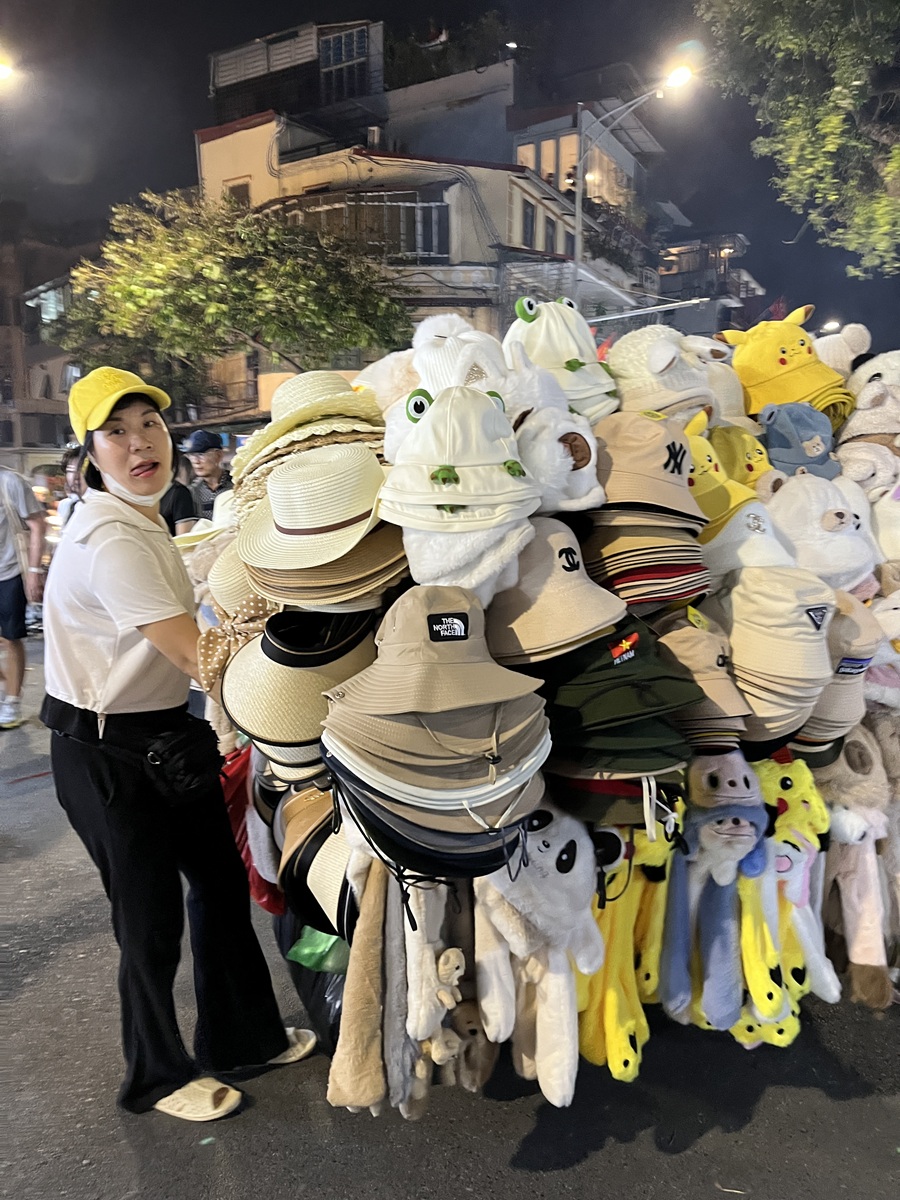
Once we got off the quiet street where our hotel was located, we were bombarded with sights and sounds of this city-motor bikes zipping by, tiny shops selling everything from knock-off designer goods to traditional robes, conical hats (worn in the rice paddies), as well as shops offering incredibly inexpensive massages (shoulder or feet, perhaps), manicures and pedicures. (Just $12 for a pedicure!)
At the bustling Sunday Market, you can get everything from a knockoff Gucci wallet to a knockoff North Face backpack to T-shirts and socks. In the old days, each of these streets specialized in one item – fabric, for example, or fans. Today that’s no longer the case, though the streets are still winding and narrow.
I don’t know what to call the restaurants. The cooks are out in front on the street. “That’s so people can see they are using fresh ingredients,” we were told on our evening food tour. We walked through a narrow passage where we sat on stools sized for preschoolers.
We sampled a traditional Hanoi dish called Buncha, grilled pork mixed with a sauce of fish, rice vinegar and sugar, along with papaya, carrots and rice noodles, all in a tasty broth. All this for about $2. Every recipe is different,
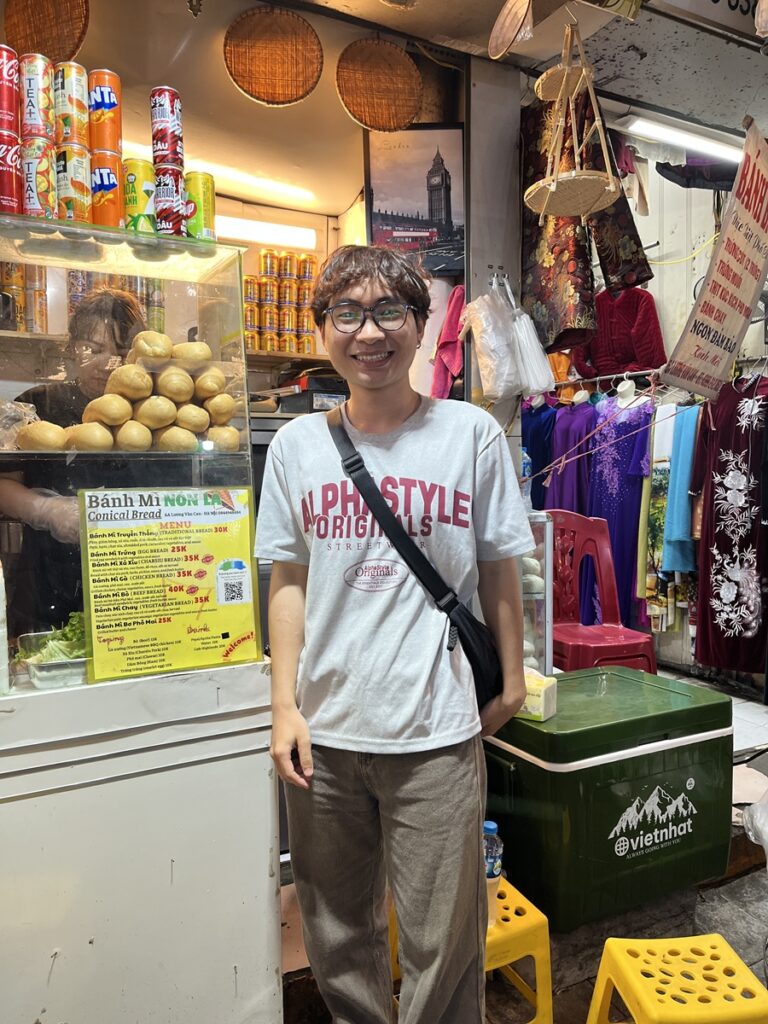
Banh Mi, the ubiquitous Vietnamese sandwich that we see in many U.S. cities, is different here, much larger and served on a French baguette with vegetables, beef, BBQ chicken sauce … delicious. It’s just about $1.
A cook at another spot handles several frying pans at once to cook Banh Xeo, Vietnamese crepes that are filled with vegetables and meats. There is a knack to eating them, we learned – they must be wrapped in edible rice paper and then dipped in sauce.
Vietnamese love coffee – very strong coffee. We tried the popular egg coffee topped with a sweet egg cream near the famous Hoan Kiem Lake.
Kids are running around playing; Adults playing on their phones, families squeezing into the impossibly small eateries.
I was overwhelmed by the crowds, the humidity, and the opportunity to step into such a different culture. I can only imagine what it must have been like for young American soldiers so many decades ago.
(For more Taking the Kids, visit www.takingthekids.com and also follow TakingTheKids on Twitter, Facebook and Instagram where Eileen Ogintz welcomes your questions and comments. The fourth edition of The Kid’s Guide to New York City and the third edition of The Kid’s Guide to Washington D.C. are the latest in a series of 14 books for kid travelers published by Eileen.)
©2026 Eileen Ogintz. Distributed by Tribune Content Agency, LLC.