
Mississippi Has A Free NASA Science Center Where Kids Climb Inside A Real Orion Capsule And Touch History
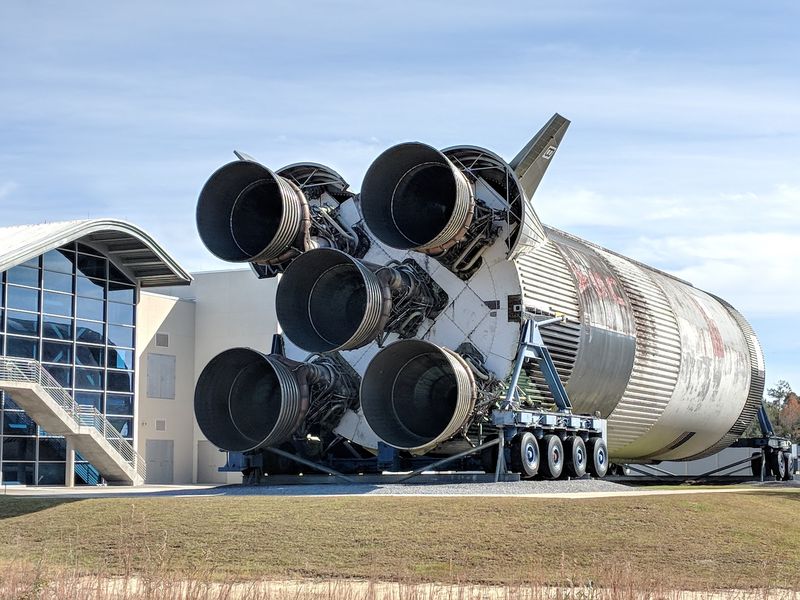
A giant rocket lying beside a Mississippi interstate is not something you expect to see on a regular drive. Curiosity won, and the exit ramp led somewhere far bigger than a quick roadside stop.
Inside were space capsules you can sit in, a real moon rock, and a slice of NASA history that most people speed right past. If your family loves rockets, weather, or just a good surprise, this stop deserves a spot on your coastal plans.
NASA’s Front Door on the Gulf Coast
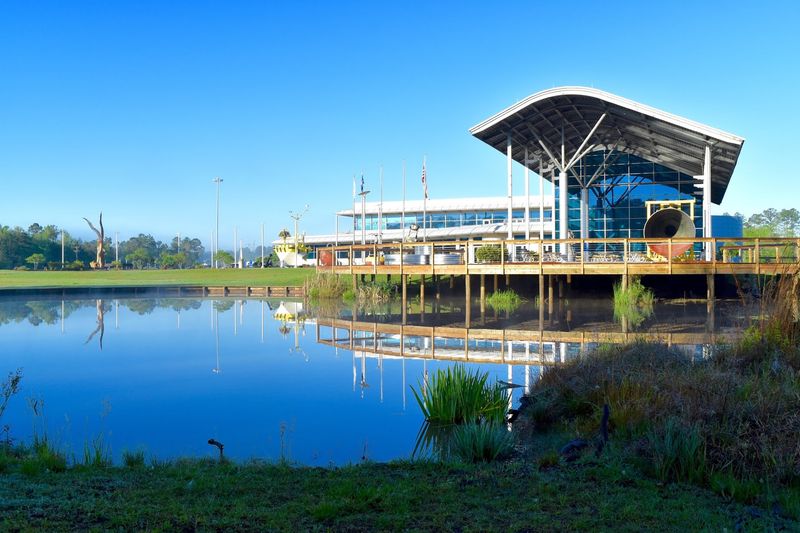
Right where Mississippi meets Louisiana along Interstate 10, a massive rocket stage peeks out at passing drivers. That rocket marks the INFINITY Science Center, the official visitor center for NASA’s Stennis Space Center.
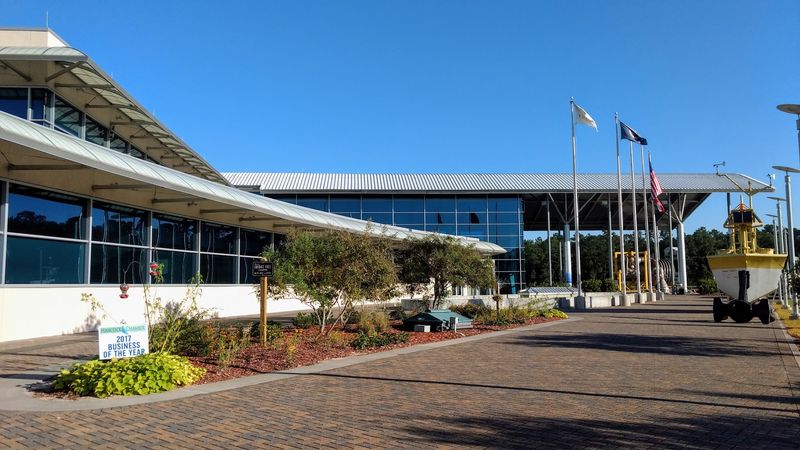
You will find it at 1 Discovery Circle in Pearlington, a small community in Hancock County.
Getting there could hardly be simpler. Take Exit 2 South off I-10, and the building sits just off the freeway, so it works well as a planned outing or a spur-of-the-moment break on a road trip.
Plenty of families say they only pulled over because the rocket caught their eye.
So what exactly is inside? The center is a science museum packed with interactive exhibits about space, Earth science, technology, and engineering.
It holds about 35,000 square feet of indoor exhibit space, plus outdoor displays that include some truly enormous rocket hardware.
Unlike a typical museum where everything sits behind glass, much of it here invites you to touch, sit, and play. Visitors explore at their own pace, since the center is self-guided.
That freedom lets curious kids linger at their favorite stations while parents read up on the history behind each display, making it easy for every age to find something exciting.
A Story Tied to Rocket Testing
Few people realize that rocket engines have roared to life in the quiet forests of south Mississippi for decades. Nearby Stennis Space Center is NASA’s rocket testing ground, where engines are fired up and checked before they ever leave Earth.
The science center serves as the public window into that work.
Picture the connection like this. Engineers at Stennis test the powerful engines, and the visitor center tells their story to everyone else.
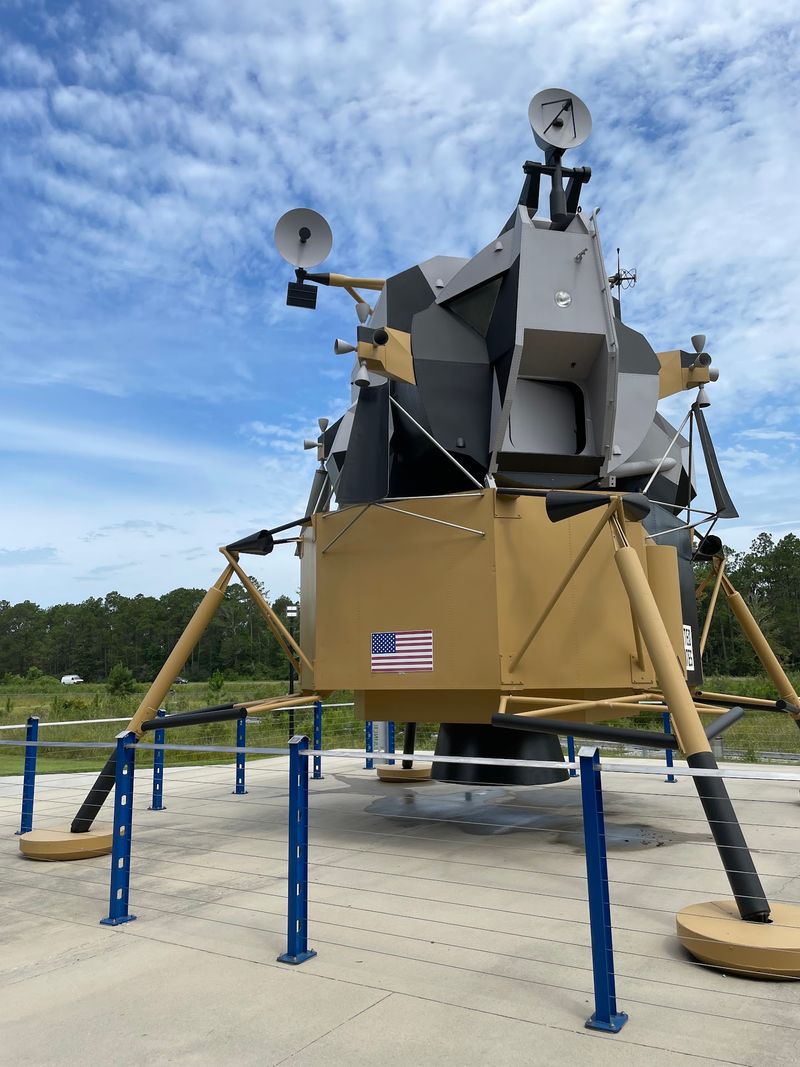
Exhibits trace NASA programs in order, starting with Gemini and Apollo, moving through the International Space Station, and reaching the current Space Launch System, often called SLS.
Seeing that timeline laid out helps kids understand that space travel did not happen all at once. Each program built on the one before it.
Local astronauts and space technology also show up in memorabilia displays, which gives the whole place a hometown feel.
Not every exhibit is about space, either. The center also covers Earth sciences, including weather and the ocean, which makes sense on a coast shaped by storms and the Gulf.
That mix keeps things fresh as you walk from room to room. You leave knowing a little more about the sky above and the water nearby.
Sitting Inside an Orion Capsule
Squeeze into the seat, look at the screen, and suddenly you are an astronaut. Among the most popular experiences here is the chance to sit inside a replica of NASA’s Orion space capsule while watching videos about the mission.
Orion is the spacecraft designed to carry astronauts farther than the space station, including trips around the Moon. Reading about it in a book is one thing.
Actually sitting where a crew would sit gives kids a real sense of how tight and carefully planned a capsule must be.
Children tend to love the feeling of being inside something built for space. Parents often snap photos of little faces peering out, imagining a launch countdown.
Even adults have admitted to enjoying the experience just as much as their children.
Here is a fun fact to share while you wait your turn. A capsule like Orion has to protect astronauts from extreme heat when it returns through Earth’s atmosphere, so its shape and shield matter a lot.
Plan for a short line during busy times, especially when school groups are visiting. The wait is usually worth it, since this hands-on moment is the one many kids talk about all the way home.
The Apollo 4 Command Module
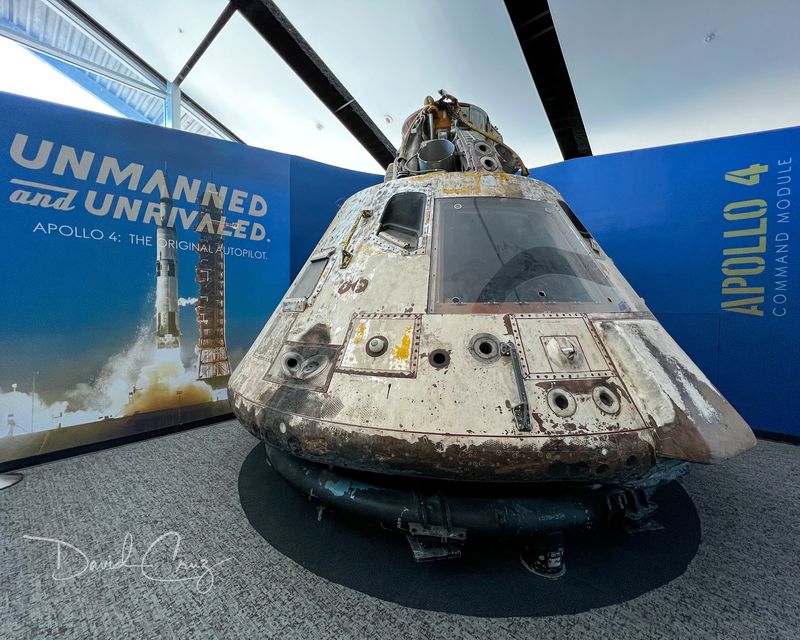
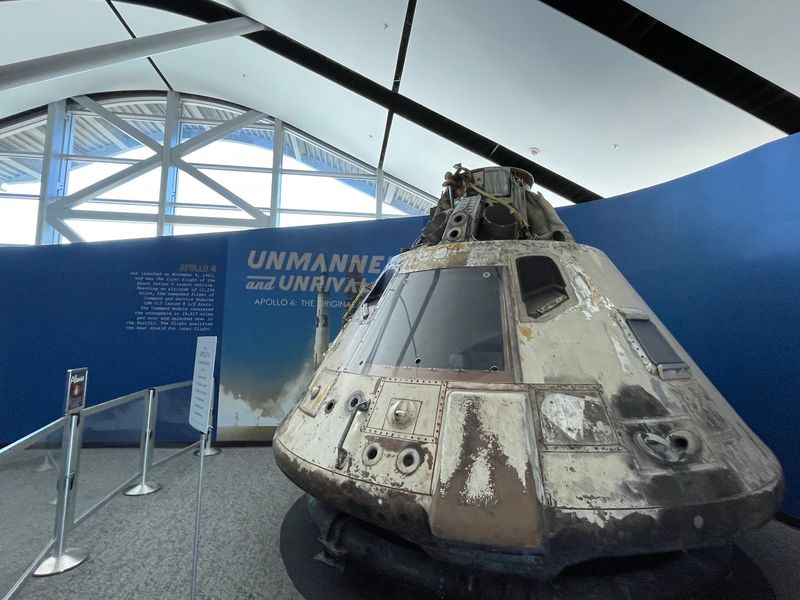
In 1967, an uncrewed spacecraft blasted into space on the very first flight of the giant Saturn V rocket. That spacecraft was the Apollo 4 command module, and the original now rests inside this museum for visitors to see up close.
Why does it matter? Apollo 4 was a test mission that proved the Saturn V could do its job.
Without successful tests like this one, astronauts would not have reached the Moon just two years later.
Standing beside a real flown spacecraft feels different from looking at a model. You can notice its cone shape and imagine the heat it faced coming back through the atmosphere.
For older kids studying history or science, this artifact brings textbook pages to life.
Many families slow down here. It is a quieter spot compared to the buzzing interactive stations, which makes it a nice place to talk about what space travel really took.
Questions like how big the crew area was, or how it landed, tend to pop up naturally.
Try asking your kids to guess how old the capsule is before reading the sign. Hearing that it flew before their grandparents were grown often surprises them.
Walking Through a Space Station Lab
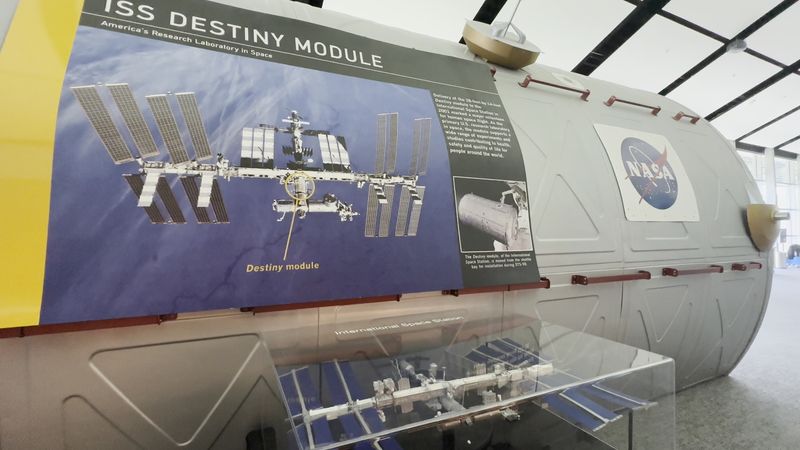
Ever wondered what daily life looks like for astronauts orbiting Earth? A full-sized, walk-through mockup of the International Space Station’s Destiny module offers a pretty good answer.
Destiny is the American laboratory on the real space station, where crews run experiments while floating around the planet. Inside the mockup, you can walk along the narrow space and see how equipment fills nearly every wall.
Nothing goes to waste when every inch has to travel by rocket.
Kids usually notice right away that there is no clear up or down in the design. That detail opens a great conversation about weightlessness and how astronauts sleep, eat, and work without gravity holding them in place.
The module is also a nice change of pace from screens. It is a physical place you move through, so younger children who get restless can stay engaged by simply exploring.
Short on time? Even a quick walk through gives a clear picture of life in orbit.
Families with more time can read the panels about the research done aboard the station, from studying plants to testing how the human body changes in space. It pairs nicely with the capsule exhibits, showing where astronauts actually live and work after launch.
Moon Rocks, Space Suits and Engine Parts
A tiny gray stone draws a surprising crowd. It is a real moon rock collected during the Apollo 15 mission, and it may be the oldest thing many kids will ever see in person.
Nearby, displays explore authentic space suit technology. Suits are basically personal spacecraft, keeping astronauts safe from extreme temperatures and the lack of air.
Seeing the layers and gear helps explain why getting dressed for a spacewalk takes so long.
Rocket engine components round out this part of the museum. These parts show the complex plumbing and engineering behind lifting heavy loads off the ground, a fitting topic given the nearby testing center.
For something more modern, an Apollo 11 virtual reality simulator lets guests experience a taste of the first Moon landing mission. It blends history with technology in a way that grabs older kids and teens.
Collectors will enjoy the gift shop too. Shoppers mention finding small pieces of meteorites and moon-themed souvenirs, plus one of the more memorable penny presses around.
Picking out a space keepsake gives kids a way to hold onto the day long after the drive home, and it often sparks more questions about where those rocks came from.
Giants on the Outdoor Grounds
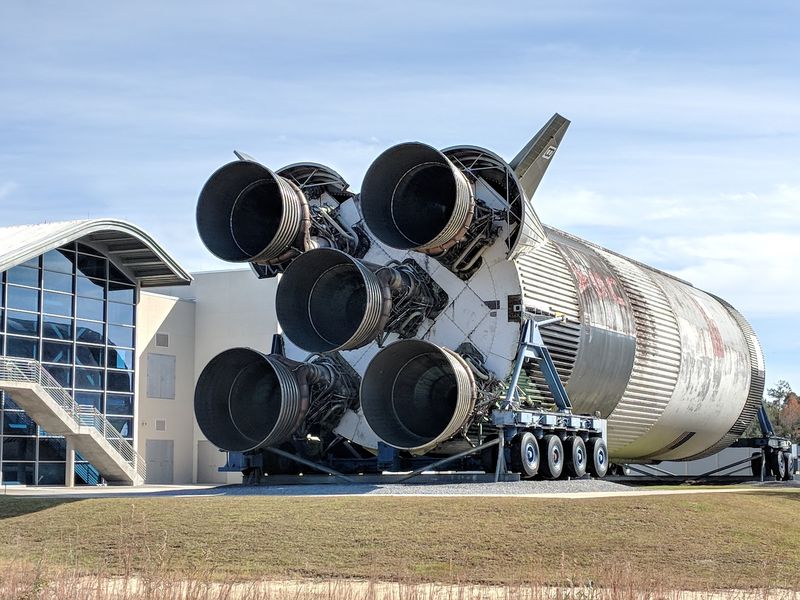
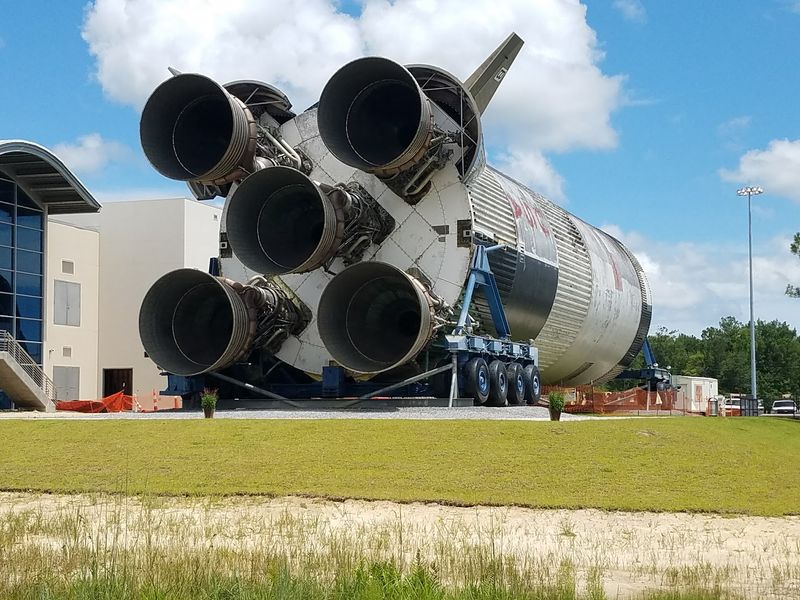
Step outside and the scale changes completely. Lying on the grounds is the Apollo 19 Saturn V first stage, a colossal rocket section that makes adults look tiny standing next to it.
The Apollo 19 mission was canceled, which is why this stage stayed on Earth instead of flying. Now it gives families a rare chance to grasp the true size of the rocket that carried astronauts toward the Moon.
People who drive by on the interstate often spot it first and decide to stop.
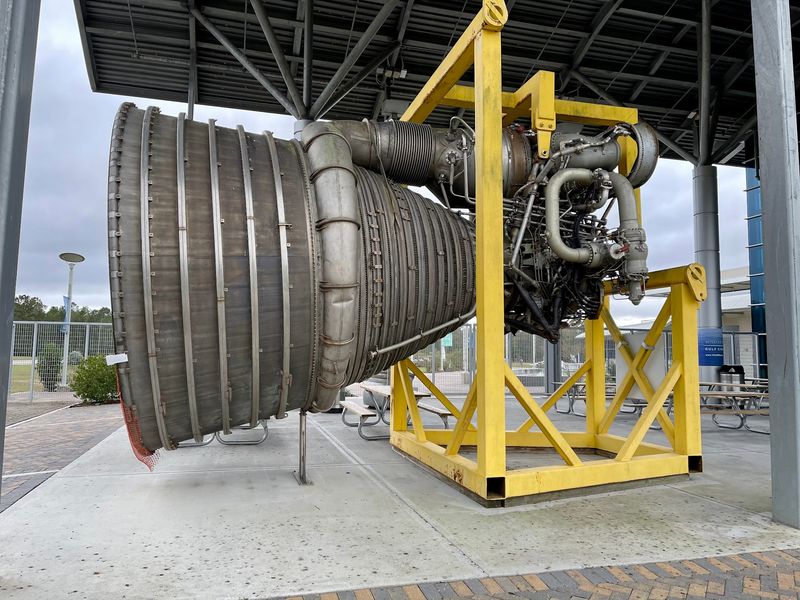
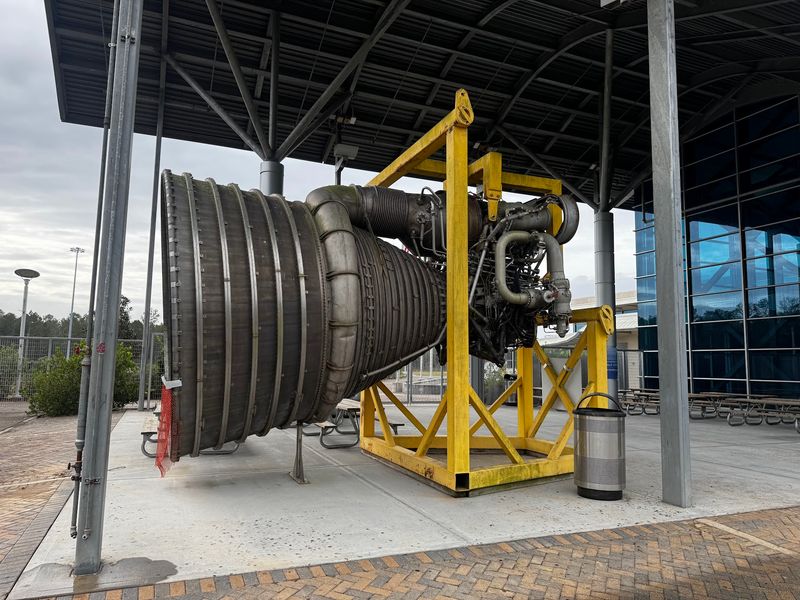
Close by sits a historic F-1 rocket engine. Five of these powerful engines worked together at the base of every Saturn V first stage.
Standing beside one, you can see the huge bell-shaped nozzle where flames once poured out.
Adults traveling without children frequently say the outdoor displays are their favorite part. The boardwalk area outside also earns praise for feeling like a relaxing stroll through a park.
Bring sunscreen and water on hot days, since the Gulf Coast sun can be strong. Walking the length of the rocket takes a few minutes, and it is the perfect backdrop for a family photo.
Pictures rarely capture just how enormous it feels in person.
Hurricanes, Deep Seas and 3D Films
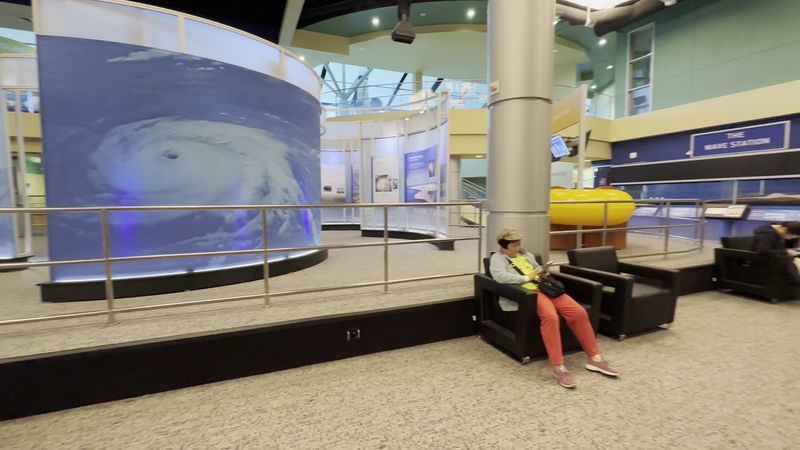
Space is only half the adventure. Visitors have described a hurricane simulator where kids combine storm location with high and low air pressure systems to build the strongest possible storm.
For a coastal state that knows hurricanes well, it is a smart and memorable lesson.
Then comes the ocean. A deep sea exploration experience puts guests on a simulated underwater trip, where they may need to help fix a broken hatch or a leak.
Kids tend to treat it like a real mission.
Need a break from walking? The 3D science films are a family favorite.
A different film plays roughly every 30 minutes, and visitors say even young children sit through the shows captivated. Tickets for the films have been mentioned as a small extra cost.
Some guests also highlight a learning lab for little ones up to age five, with coloring and puzzles. It gives toddlers their own calm corner.
A fair heads-up: some visitors have found certain exhibits out of service during their trip, and the films are not always running. Checking the website before you go helps set expectations, so nobody is disappointed if a favorite station happens to be closed that day.
Who Gets the Most Out of a Visit
Grade-school kids are the sweet spot. Families repeatedly describe the exhibits as best for children roughly ages eight to fourteen, though many younger kids have a blast with the hands-on stations too.
Field trips are common here, so expect school groups and summer camp programs on weekdays. Some visitors enjoy the cheerful energy of kids learning, while others prefer quieter mornings.
Those who want calmer halls often mention that weekday visits outside of field trip rush feel less crowded.
Teens and serious space fans may find it smaller than major NASA centers like the one in Houston. It is not meant to compete with those giants, and setting that expectation helps.
Engineers and science lovers, though, have admitted to having just as much fun as their children.
Since the center is self-guided, there are no tour guides walking you through. Families who like to read signs together and ask questions will feel right at home, while those wanting a guided talk may wish for more.
Staff members often get praise for being friendly and helpful, from greeters at the door to people running individual exhibits. Overall, the place feels clean, organized, and welcoming to grandparents, parents, and kids exploring together.
Hours, Tickets and Time to Budget
Timing matters, because the doors are not open every day. The center operates Wednesday through Saturday from 9 AM to 4 PM, and it is closed Sunday, Monday, and Tuesday.
Double-check the official website before heading out, since schedules can change.
Admission is generally described by visitors as affordable, with recent mentions of around $17 to $18 per person. The 3D films have been noted as a small add-on, about $4 in one account.
Prices may shift, so confirm current rates online.
Military families should look into a discount offered on Wednesdays, according to visitors who have used it.
How long should you plan? A quick stop can fill an hour or two, which suits travelers passing through on I-10.
Families who want to try everything, watch a film, and take a lunch break have spent around four hours inside.
Arriving right at 9 AM gives you a head start before groups fill the hands-on areas. Late afternoon arrivals may feel rushed, since closing time comes at 4 PM sharp.
Comfortable shoes help, too, because between the indoor halls and the outdoor rocket displays, you will cover a fair amount of ground during the visit.
A Rocket-Sized Reason to Exit the Interstate
Some road trip stops fade from memory by the next exit. Climbing into a capsule and standing beneath a Saturn V stage tends to stick around much longer.
Hunger will likely hit at some point, and the on-site café has fans. Visitors mention juicy burgers and flavorful chicken tenders, and some even recall a robot-run frozen yogurt machine.
That makes it easy to refuel without leaving.
Is it perfect? Not every exhibit works every day, and the center is smaller than the famous NASA sites in Florida and Texas.
Going in with realistic expectations makes the experience more enjoyable.
Still, the mix of genuine artifacts, hands-on science, and outdoor giants gives families plenty to talk about. A moon rock, a flown Apollo capsule, a space station lab, and hurricane science all fit under one roof near the Gulf.
Families with grade-school kids, weather lovers, and travelers needing a stretch break will likely find the stop rewarding. Pair it with other Mississippi coast outings for a full day.
When your children start asking how rockets work on the drive home, you will know the detour paid off, and a future scientist may have just been born.