
One Man Carved An Entire Castle Out Of Coral Rock In Florida And Nobody Knows Exactly How
Picture a nine-ton gate that once turned with one finger.
Would you believe one small man built it alone? Better believe it!
He stood about five feet tall and weighed roughly one hundred pounds. Still, he moved more than eleven hundred tons of coral rock.
No cranes, no crew, and no modern machines helped him. He worked mostly at night and kept his methods secret.
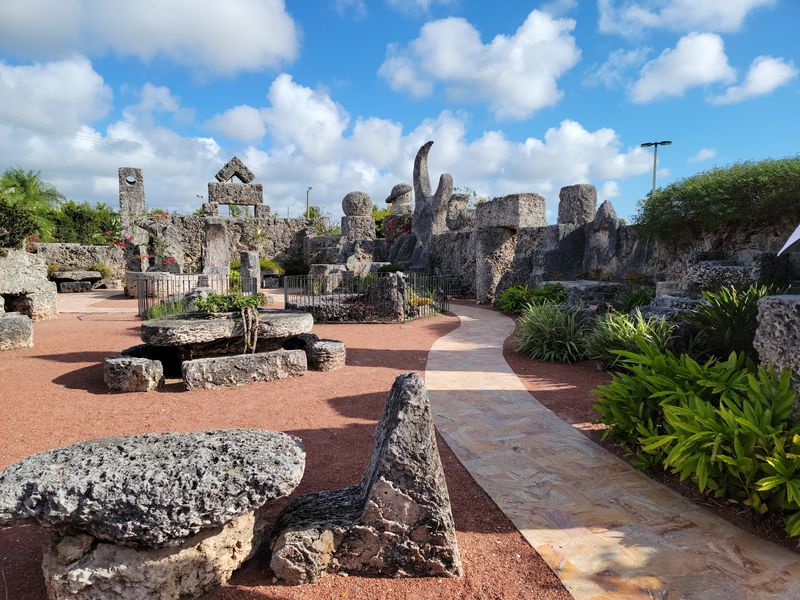
The result rises in southern Florida behind stone walls. Inside, a stone telescope points at the North Star.
Rock chairs, a heart-shaped table, and a table shaped like the state fill the garden. How do you move furniture like that?
A broken engagement started it all, according to the builder. He spent decades shaping stone for a love who never came to see it.
Curious enough to study the puzzle in person? This Florida mystery leaves experts guessing.
A Nine-Ton Gate That Once Moved With One Push
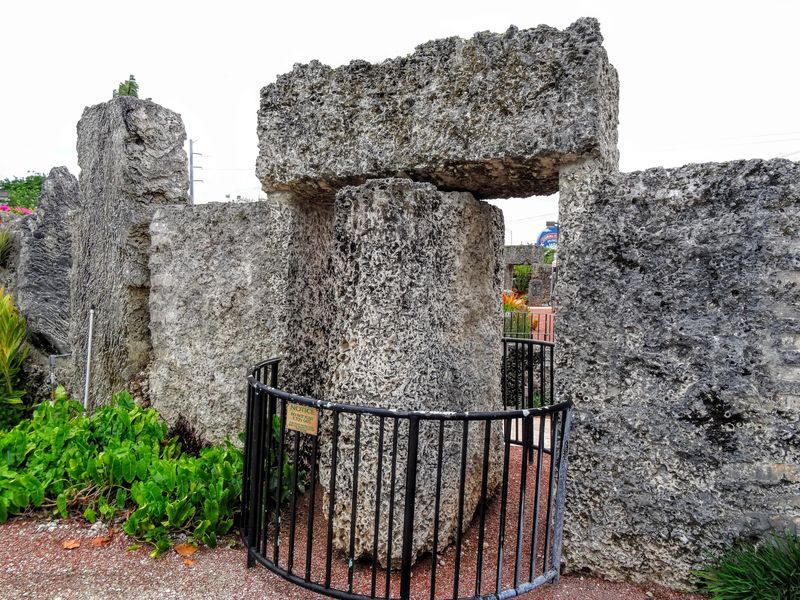
Nine tons is about the weight of a few large pickup trucks. At Coral Castle, a gate of that weight was once balanced so well that it moved with very little effort.
That fact alone explains why people travel to Homestead to see it.
The gate is carved from oolitic limestone, which most people call coral rock. This stone is common across southeastern Florida, but shaping it into a perfectly balanced door is another story.
Edward Leedskalnin did it without modern machinery.
How did the gate turn so easily? The answer surfaced in 1986, when the stone stopped moving.
Six men and a crane lifted it free. They found a metal shaft resting on a truck bearing.
The slab clears its opening by just a quarter inch.
Today, the Coral Castle Museum & Sculpture Garden runs guided tours that explain the gate and the man behind it. Guides share the history and the long-running mystery.
Visitors should know that touching the stones is not part of the experience, so plan to admire this wonder with your eyes.
Eight-foot-tall stone walls surround the property, and the gate is one of the first pieces that shows how skilled the builder was. It sets the tone for everything else you will see inside.
The Heartbreak Behind Every Stone
Behind all that rock is a love story. Edward Leedskalnin, born in 1887, was a Latvian immigrant.
He said he was inspired by Agnes Skuvst, his Sweet Sixteen, who reportedly called off their wedding the day before it was to happen.
Heartbreak is the reason he gave for the work. Whether you see it as romantic or sad, it gives the castle a human heart.
It also explains the heart-shaped table that stands among the carvings.
Leedskalnin kept working on the site until 1951. That is a lot of years spent shaping stone for a person who never came to see it.
Many travelers say the story matters as much as the engineering puzzle. Reading a little before a visit can help.
The guided tour and the short documentary also fill in the details, so the human side comes through clearly.
Meet Ed, The 100-Pound Builder
Five feet tall and about 100 pounds. That is how Leedskalnin is described, and he moved stones weighing up to 30 tons.
Numbers like those make any visitor stop and squint at the walls.
He worked mostly at night and in secret. His tools were basic, and many were homemade from repurposed materials such as old car parts.
He also said he knew the secrets ancient pyramid builders used.
Nobody has fully explained his methods. Some people point to leverage and clever physics.
Others enjoy the wilder theories, and the castle welcomes both kinds of curiosity.
Inside, one exhibit shows Ed’s cooker, which he ingeniously made from a 1920s Model T Ford differential. It is a small, practical object, and it fits the story of a man who built big things from simple parts.
A Stone Telescope Aimed At The North Star
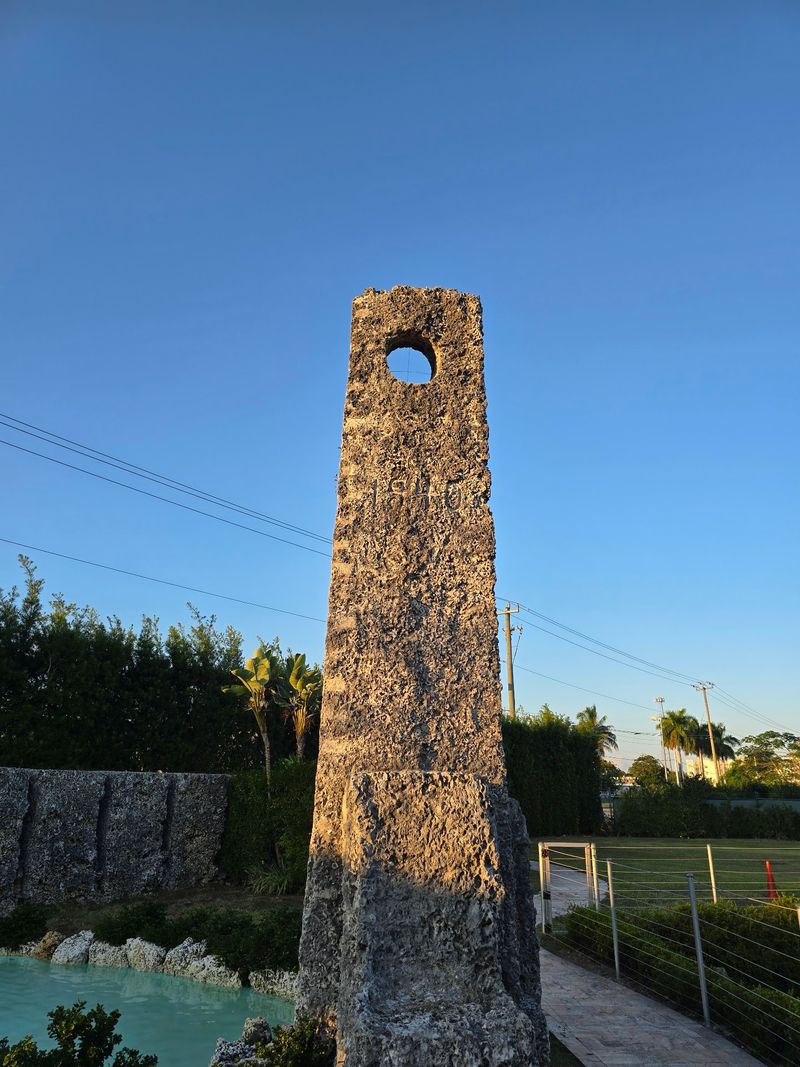
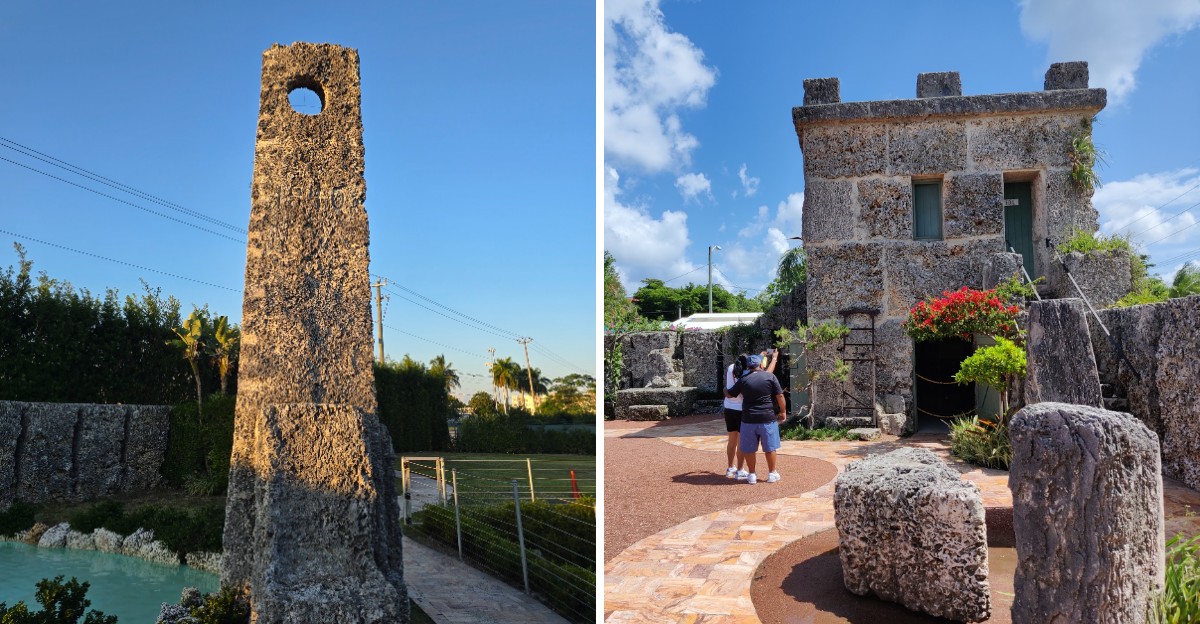
Standing about 25 feet tall and weighing roughly 30 tons, the Polaris telescope is hard to miss. It is carved from coral rock and aligned with the North Star.
That is a serious feat for a man working without modern machines.
Nearby, a sundial tells time and marks the seasons. Visitors have called the clock and calendar piece their favorite, and it reportedly took years to create.
These pieces suggest Leedskalnin cared about the sky as much as the stone. He did not just stack rocks.
He aimed them at something.
On a bright Florida day, the tall telescope stands out against the sky. Guides explain how the pieces work during the tour at Coral Castle.
Bring a camera, but know that photos are best taken during the guided portion.
Furniture Made Of Rock, Including A Florida-Shaped Table
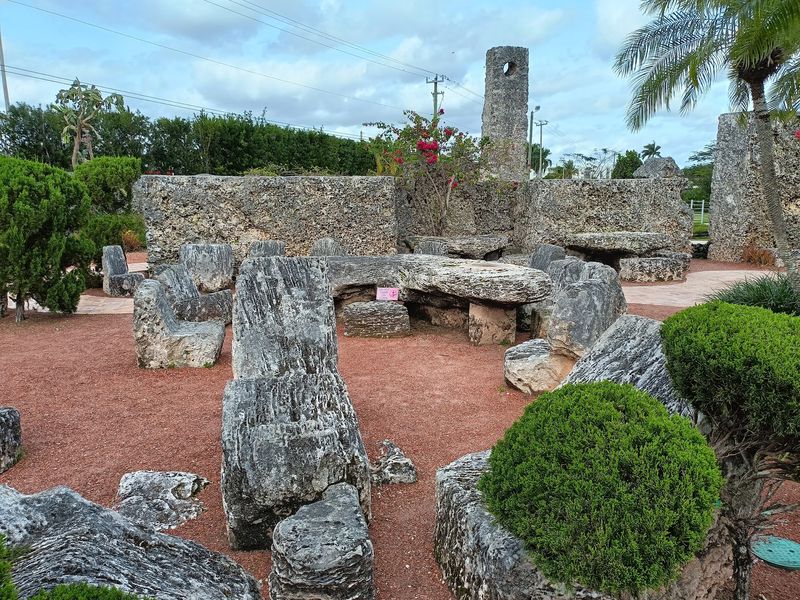
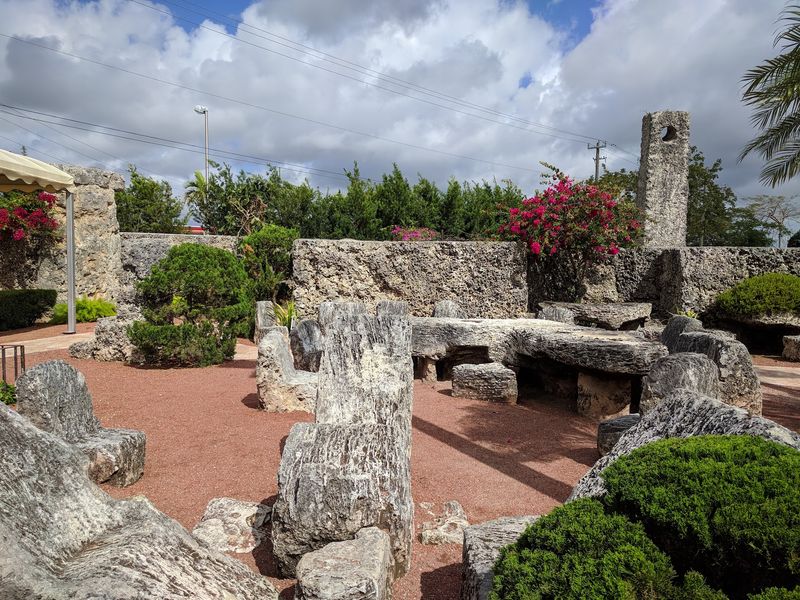
Ever wanted to sit in a five-ton rocking chair? The castle has one, carved in stone.
It sits among other pieces that turn a garden into a strange living room.
The star is a 13-ton table shaped like the state of Florida. Ten chairs surround it.
There is also a heart-shaped table and a sun couch, all carved from the same coral rock.
Stone furniture sounds uncomfortable, and honestly, it looks like it would be. Still, the craft is impressive.
Every curve was shaped by hand tools rather than modern machines.
Visitors should remember that these pieces are for looking, not sitting or touching. Guides keep the tour moving and share the stories behind each one.
It is a playful side of a serious mystery, and it shows that Leedskalnin built a home as well as monuments.
The Tower Where Ed Actually Lived
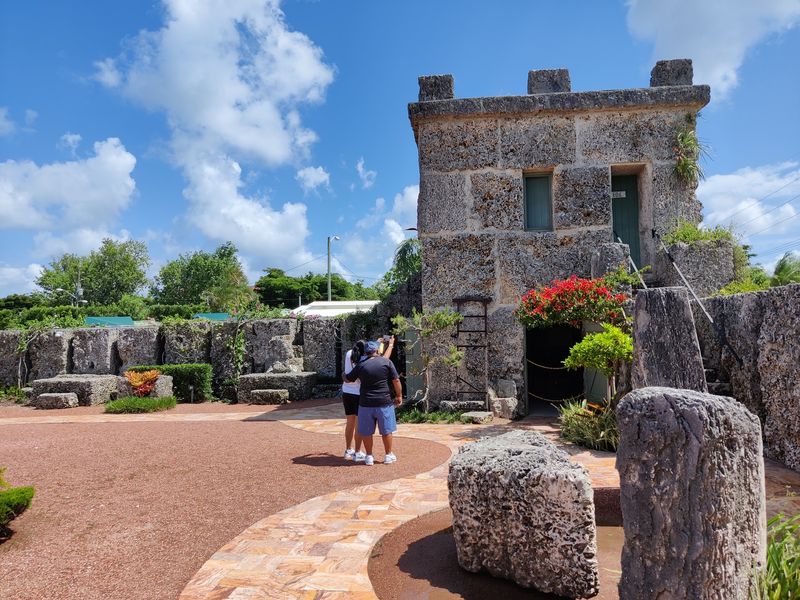
Leedskalnin lived in a two-story stone tower. It had no running water and no electricity.
For a man who moved 30-ton stones, a simple home seems almost fitting.
The tower rises inside those eight-foot-tall walls. It is part of the story the guides tell, and it shows how plainly he lived while building something so grand.
Another exhibit shows his shaving mirror, which is a basin that uses water for reflection. Ingenious and simple, it fits his style.
You can also see a self-portrait sculpture and the original ten-cent admission sign from the first location. Small objects like these make the man feel real.
They remind you that behind the legend was someone who simply got up and went to work each day.
The Castle That Moved Ten Miles
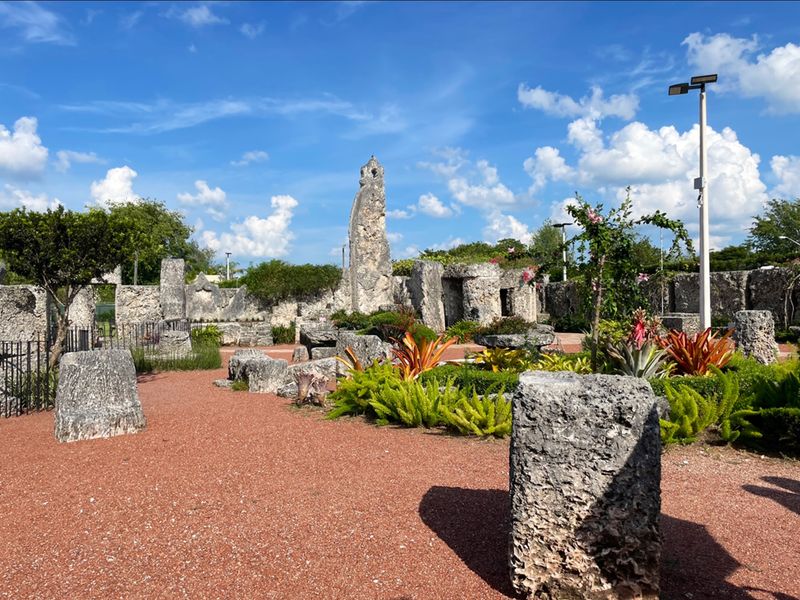
Here is a twist. The castle did not start in Homestead.
Construction began in 1923 in Florida City, where it was known as Ed’s Place.
In 1936, Leedskalnin moved the entire castle about 10 miles north. That job took him three years.
At the new site he first called it Rock Gate Park.
The name Coral Castle came later, in the 1950s, after his death. He kept working on the site until 1951.
What happened after Leedskalnin died? A nephew sold it in 1953 to Julius Levin.
Levin renamed it Coral Castle and opened it to tourists. Ownership changed hands again in 1981.
Think about that for a moment. Moving one rock is hard.
Moving the whole collection, with stones weighing many tons, is almost unbelievable.
The location today is 28655 S Dixie Hwy, Homestead, FL 33033, in unincorporated Miami-Dade County. In 1984 the site was added to the National Register of Historic Places, which says a lot about how people value it.
What The Guided Tour Includes
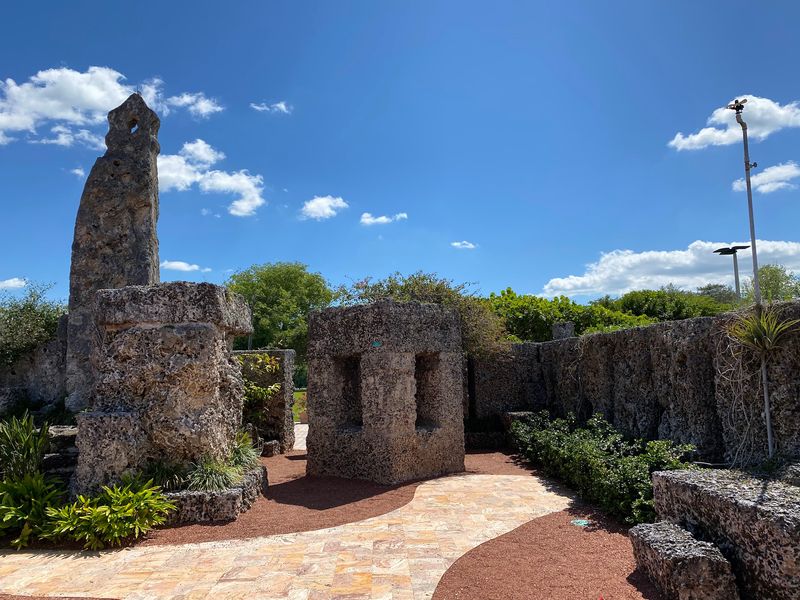
Admission includes a professionally led public tour and a 30-minute documentary about the castle’s history and mysteries. The film sets the scene before you step outside.
After that, the guide leads you through the stone garden.
The tour starts on the hour, and the pace is quick. Plan for roughly an hour or so in total, and read a bit of history beforehand to get more from it.
The site is wheelchair accessible, and free parking is available. Summer sun in Florida can be strong, so shade matters.
Umbrellas have been offered for visitors, which helps on hot days.
Hours can change, so check the official schedule before you go. The attraction has typically opened at 9 AM, and the last tour starts an hour or so before closing.
Gift Shop, Grotto, And Other Extras
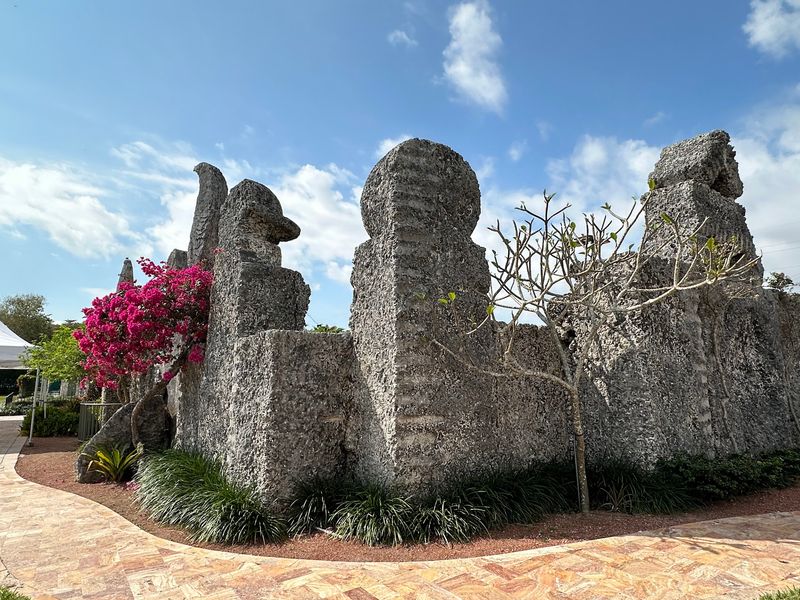
Before you leave, there is more to explore. The Grotto of Three Bears was designed as a children’s play area.
A crescent moon carving also adds to the collection.
The on-site gift shop sells collectibles, science-related items, natural stones, jewelry, and books about the story of Coral Castle. It is a fun place to pick up a keepsake after the tour.
Coral Castle is also available for private events, including weddings. Given the love story behind it, that feels oddly fitting.
Pets and families have been part of visits, and the grounds include lush landscaping. Still, if you are planning a Miami-area day, pair this stop with other plans, since the tour is short.
Even so, it is a memorable Florida stop for anyone who likes a good mystery with their sightseeing.