
The Giant Scrap Metal Sculpture In A Wisconsin Field Was Built To Launch Its Creator Into The Heavens
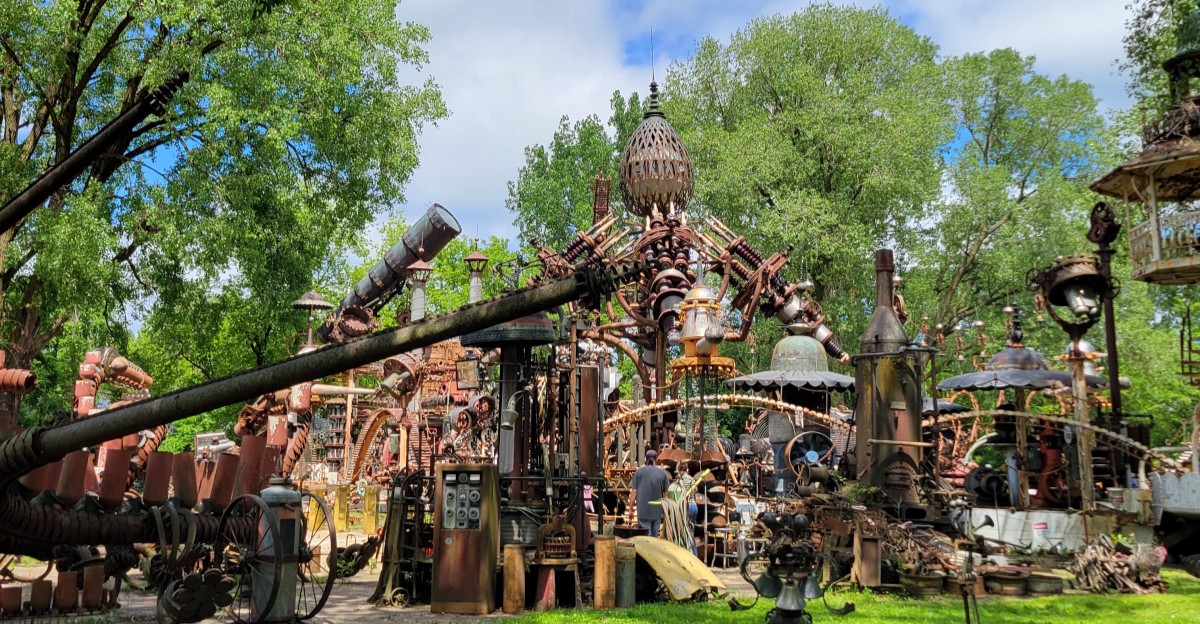
What would you build with three hundred tons of scrap metal? One retired wrecking expert built a machine meant to launch him into the heavens.
It towers over a quiet Wisconsin field, built from forgotten industrial parts. Edison-era dynamos and an Apollo decontamination chamber hide inside.
Its creator invented a Victorian alter ego to match the machine. Every sculpture on the grounds plays a role in his story.
Can a flock of metal birds play music? Dozens of them stand frozen mid-song, shaped from old horns and springs.
Giant bugs, a dragon, and a flying saucer fill out the rest of the grounds. Admission is free, and donations help keep it standing.
Want the oddest road trip stop in Wisconsin? Bring a camera and plan to stay awhile.
A Launch Machine Made For One Very Special Passenger
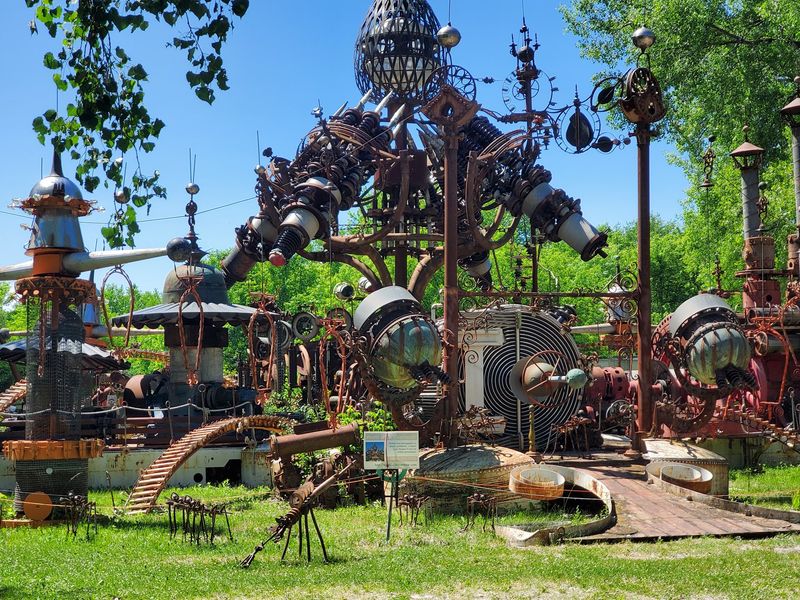
Dr. Evermor’s Sculpture Park is home to the Forevertron, and its purpose sounds like a tall tale. Its creator said it was built to launch Dr. Evermor into the heavens on a magnetic lightning force beam.
He also called it a soul-transformation device.
The machine stands 50 feet high and 120 feet wide. It weighs over 300 tons, which is heavier than dozens of pickup trucks parked together.
Standing next to it makes a person feel pretty small.
At the top sits a copper-strapped glass space capsule. That’s where the good doctor was meant to ride.
The sculpture also includes an antigravity wheel and a celestial telescope.
Here’s a fun detail. A Victorian gazebo is part of the setup, and the story says Queen Victoria and Prince Albert could watch the launch from it.
Every piece of the tale fits together, which is half the fun.
Give yourself time to walk all the way around, because the view changes with each step. Bring a camera, and try a few angles.
The Man Behind The Doctor’s Coat
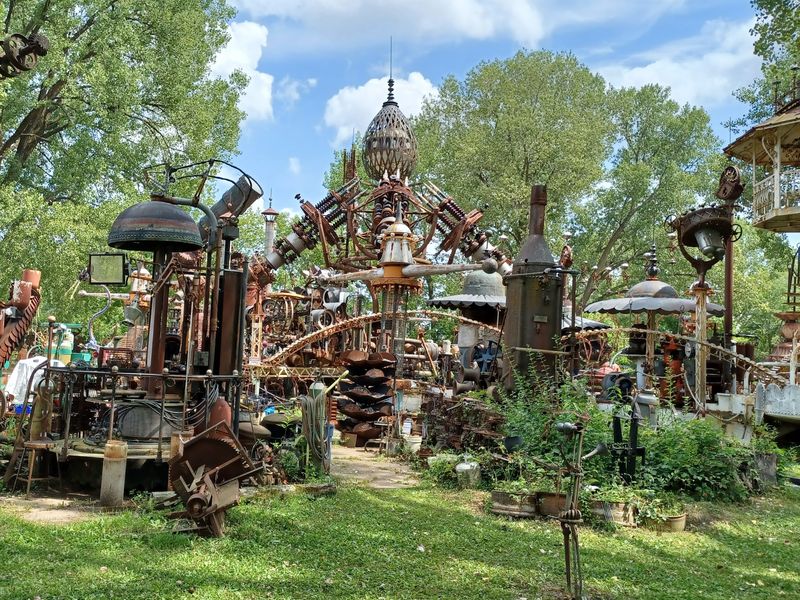
Tom Every lived from 1938 to 2020. He spent decades as a demolition expert, and he began collecting scrap metal in 1964.
Most people would call that a pile of junk, but he saw future art.
He retired from the industrial wrecking business in 1983. After that, he gave his life to creating the park.
The Forevertron went up between 1983 and 1986, with help from his son Thayer and others.
Tom also took on a persona. He became Dr. Evermor, a fictional Victorian inventor with big ideas.
That character gave every sculpture a story to hang on.
His work reached beyond this field too. He contributed installation art to the famous House on the Rock in Wisconsin.
Not bad for a guy who started with a scrap pile.
Tom passed away in March 2020. His creations still stand, ready for visitors to wander through and enjoy every day the park is open.
Parts Pulled From History’s Junk Drawer
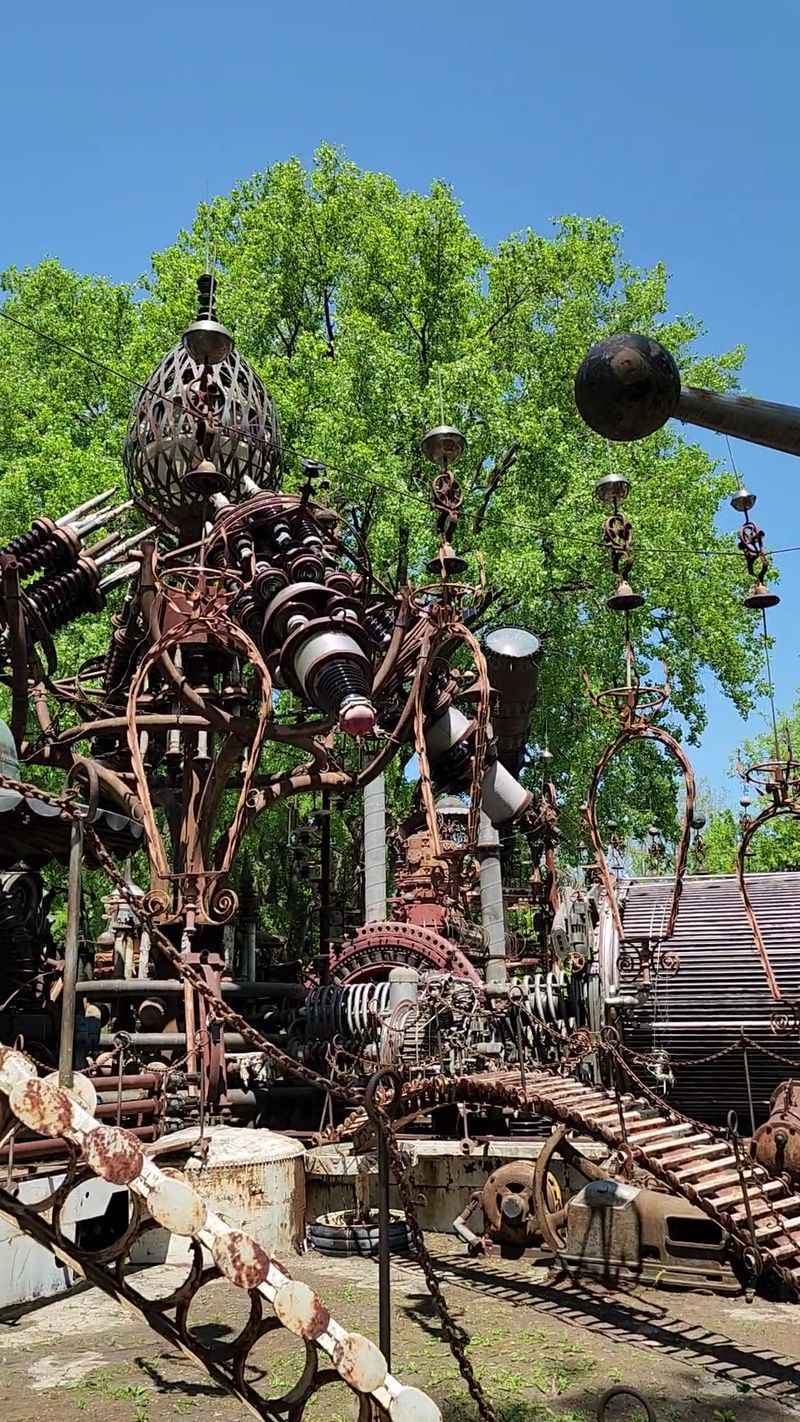
Check out the parts list, because it reads like a museum catalog. The Forevertron includes two Thomas Edison bipolar dynamos from the 1880s.
It also has high-voltage components from 1920s power plants.
Scrap from the Badger Army Ammunition Plant went into the build as well. And then there’s the showstopper.
A decontamination chamber from the Apollo program is part of the sculpture.
Lightning rods add to the electric look. The whole thing is built in sections joined by bolts and pins.
That means it’s designed so it could be moved.
Think about how much hunting that took. Every gear and plate had to be found, hauled and fitted.
Tom started collecting in 1964, so the gathering alone took many years.
Take your time and look closely. Tiny details hide between the big pieces, and each one has a past life.
Seventy Metal Birds Are Ready To Play
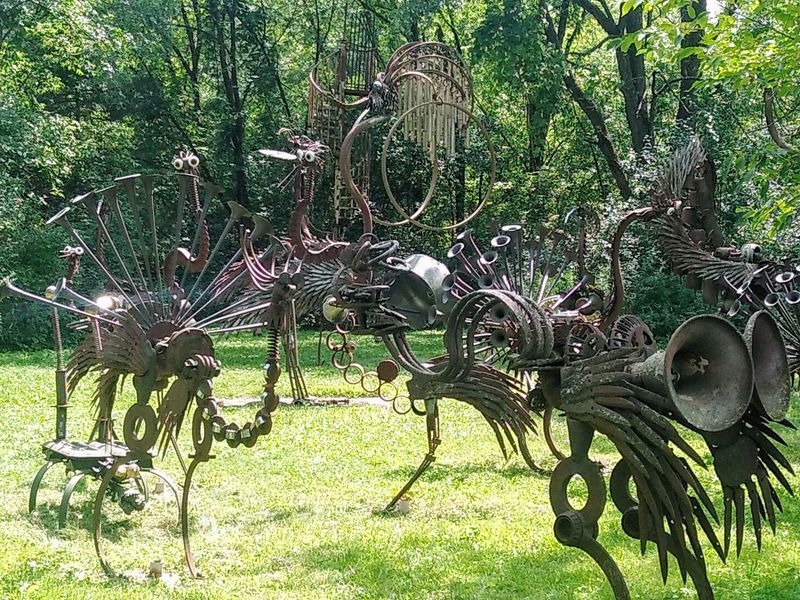
Meet the Bird Band Orchestra, a flock of about 70 metallic birds. They range from 3 to 20 feet tall.
The tallest ones tower over most grown-ups.
The materials make the band extra fun. Salvaged brass instruments form the bodies.
Theater speakers, geological survey markers and industrial springs fill in the rest.
It’s a fitting crew, since horns and speakers were made for music. Now they stand in a field and keep a silent concert going.
Kids and adults alike tend to stop and point.
Walk slowly through the group. Each bird has its own shape and attitude, and you’ll spot new pieces as you move.
A horn bell becomes a beak, or a spring becomes a tail.
The flock is a nice break from the giant machine. It shows how one man could turn old parts into something playful.
Snap a few photos before moving on.
Bugs, Dragons And A Train Powered By Bellows
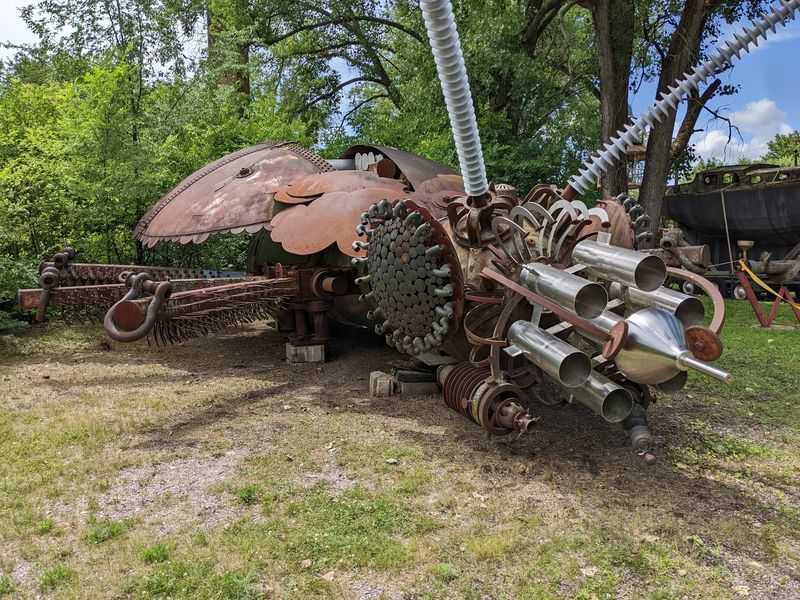
The park doesn’t stop at one big machine. Giant insects crawl across the grounds, including the Juicer Bug and Arachna Artie.
They’re made of scrap, but they have real personality.
There’s also The Dragon, which fits right in with the fantasy theme. A bellows-driven train called The Epicurean sits nearby.
And an extraterrestrial piece called The UFO adds a touch of outer space.
Other creations have wonderful names. Look for the Celestial Listening Ear and the Overlord Master Control Tower.
Each one adds to the story of Dr. Evermor’s world.
The park is often described as a playful yet provocative sculptural landscape. Others call it a steampunk fantasy or a machine museum.
All three labels fit.
Whimsical carriages and fanciful resting spots dot the grounds too. They give the place a lived-in, storybook feel.
Wander without a plan and see what turns up.
Free Entry And A Donation Box
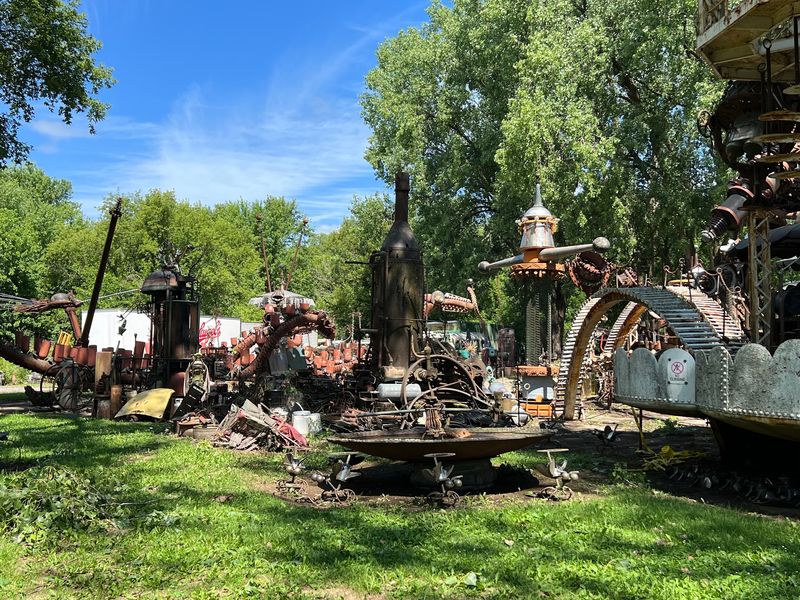
Money talk is simple here. Visiting the park is free.
Donations are encouraged, and they help with upkeep.
The Evermor Foundation was established in 1999 as a non-profit to keep the park maintained. Tom’s wife, Lady Eleanor Every, continues to oversee the sculpture park.
So your donation supports a family-linked effort.
A gazebo on the grounds is also where visitors can buy sculptures and souvenirs made by the family. That’s a nice way to take a piece of the park home.
A donation box sits there as well.
Some visitors say they spent about 20 minutes, while others spent hours. It depends on how closely you look.
Art lovers might want to plan a longer stop.
Dogs on leashes are welcome, which is good news for road-trip pets. A caution sign at the gate asks you to watch children.
Keep little ones close near the big metal pieces.
Plan Around The Park’s Odd Schedule
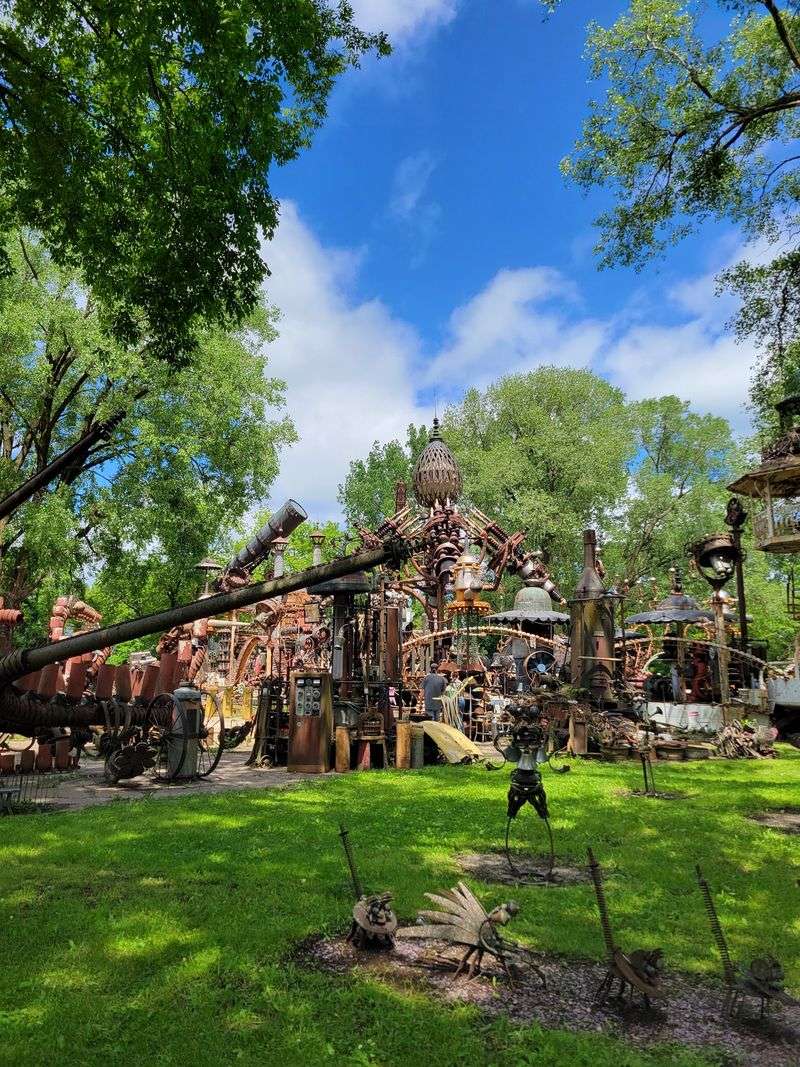
Timing matters at Dr. Evermor’s Sculpture Park. The park is generally open Thursday through Monday from 11 AM to 5 PM.
Sunday hours run from 12:30 PM to 5 PM.
It’s closed every Tuesday and Wednesday. The park also closes each year from December 24 through March 31.
Poor weather can change the hours, so calling ahead is smart.
Now for the address. You’ll find it at S7703 US-12, North Freedom, WI 53951.
Some sources place it in the Town of Sumpter, and it sits behind Delaney’s Surplus.
Watch for the roadside sign, because it’s easy to miss. Some drivers nearly passed it before spotting the small marker.
Slow down as you get close.
Plan for a quick stretch stop or a long wander. The rural setting means open space and plenty of sky.
Pick a clear day and enjoy the field.
Scan A Code And Hear The Story
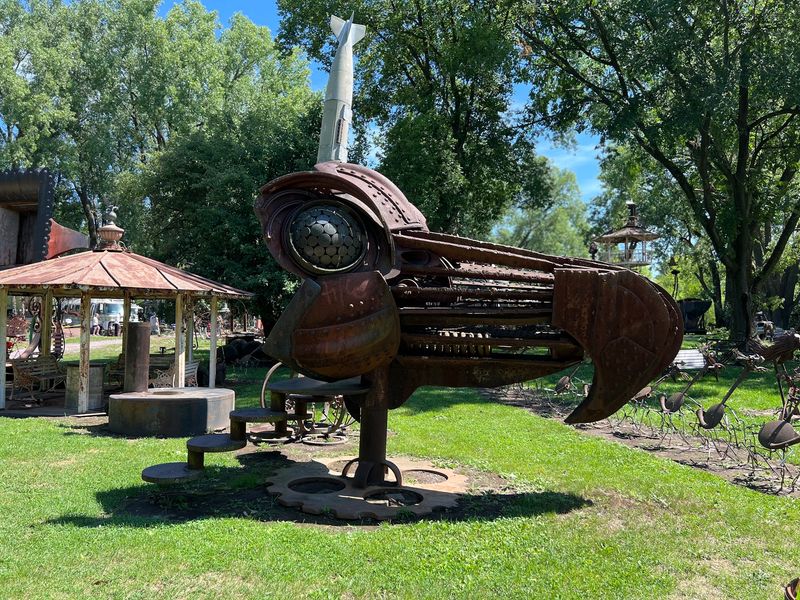
Bring your phone along. QR codes around the park tell the stories behind the different areas.
Visitors enjoy reading them as they go.
That fits the underlying theme of the park. Dr. Evermor was an inventor, and every sculpture plays a part in his tale.
The codes let you follow along at your own pace.
Family members are often on the grounds too. Lady Eleanore and her daughter have been seen chatting with guests near the gazebo.
Ask a question and you may learn a family memory.
Bring comfortable shoes for walking the grass. Benches give you a spot to rest and study a piece.
A portable restroom is available too.
One more tip is to sit still for a minute. Pick a sculpture and look for its small parts.
You’ll spot gears, scissors and old instruments hiding in plain sight.
Make It Part Of A Wisconsin Road Trip
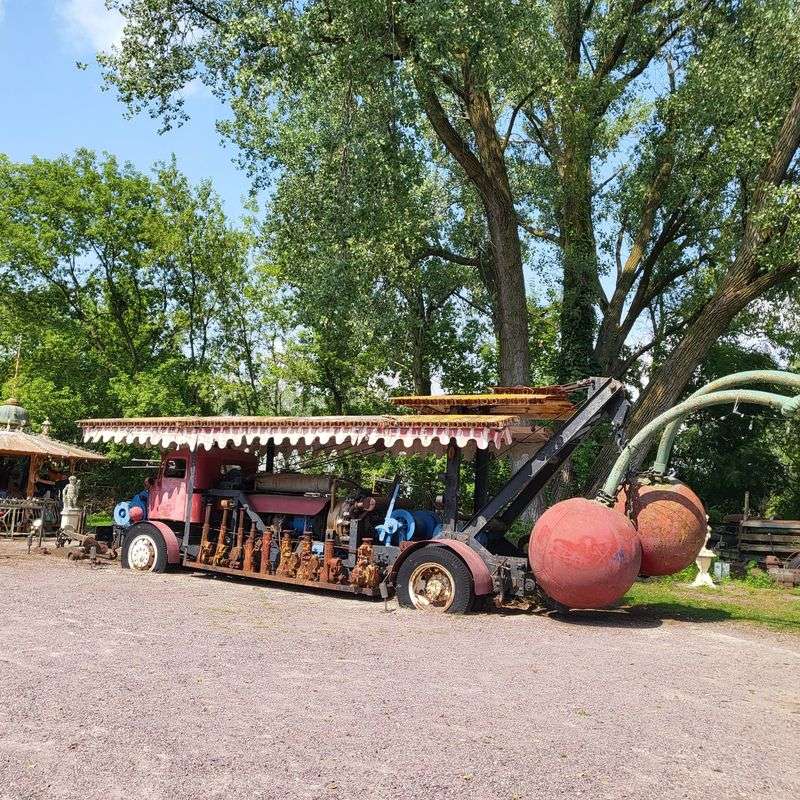
The park sits in rural Wisconsin, about 15 minutes south of Baraboo. Madison is roughly 45 minutes to the southeast.
Chicago is a few hours away.
That makes it an easy add-on to a bigger trip. Circus World in Baraboo is close by.
Devil’s Lake State Park offers hiking and views.
Delaney’s Surplus sits right in front of the park. It’s a unique shop of its own, so a quick look is tempting.
You’ll pass it on your way in.
The park’s land has its own history. The site was once part of Badger Village, a housing complex built during World War II.
Now it holds sculptures instead.
Pack a picnic if the weather is nice. A grassy spot near the parking lot works for a snack.
Then stretch your legs, fill your camera roll and head back out on the road.