
Take a Tasty Bite of San Francisco: tour historic Chinatown and visit the iconic Tonga Room
By Eileen Ogintz
Who knew? The Fortune cookies we get at the end of every San Francisco Chinatown restaurant meal are actually Japanese in origin.
In fact, the modern version is said to be made by Makoto Hagiwara, a Japanese immigrant working at the Golden Gate Park Japanese Tea Garden. He likely made the cookie with a message inside to thank those who lobbied to save his job after he was unfairly dismissed.
By 1915, these cookies were reportedly served at the Panama-Pacific International Exposition.
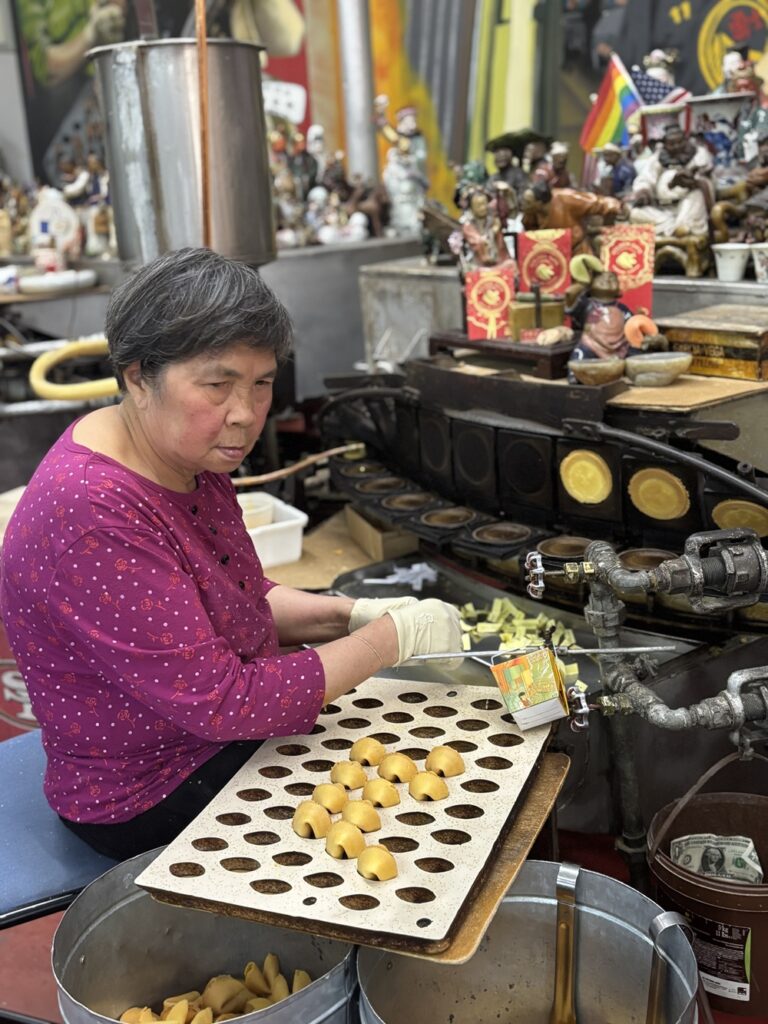
We were standing outside the Golden Gate Fortune Cookie Factory in San Francisco’s Chinatown with Marcy Clark, a guide for Stretchy-Pants Food Tours sampling just-made fortune cookies before they are folded with a message inside.
Stretchy Pants offers history-with-food tours of San Francisco’s Chinatown, widely considered the largest Chinatown in the US and the largest outside of Asia that was established in 1848. The company also offers a Ghost Food Tour in North Beach, the city’s famous Italian area, and one of Fisherman’s Wharf and Pier 39 with tales of San Francisco’s maritime past, how sourdough bread sustained displaced residents after the 1906 earthquake with salvaged starters from the rubble.
The company was founded a decade ago by Kara Ricciardi. Our Dim Sum and Tea tour is the company’s most popular, Clark tells us, noting that families could opt for a private combo tour of Chinatown and North Beach (think pizza and gelato!)
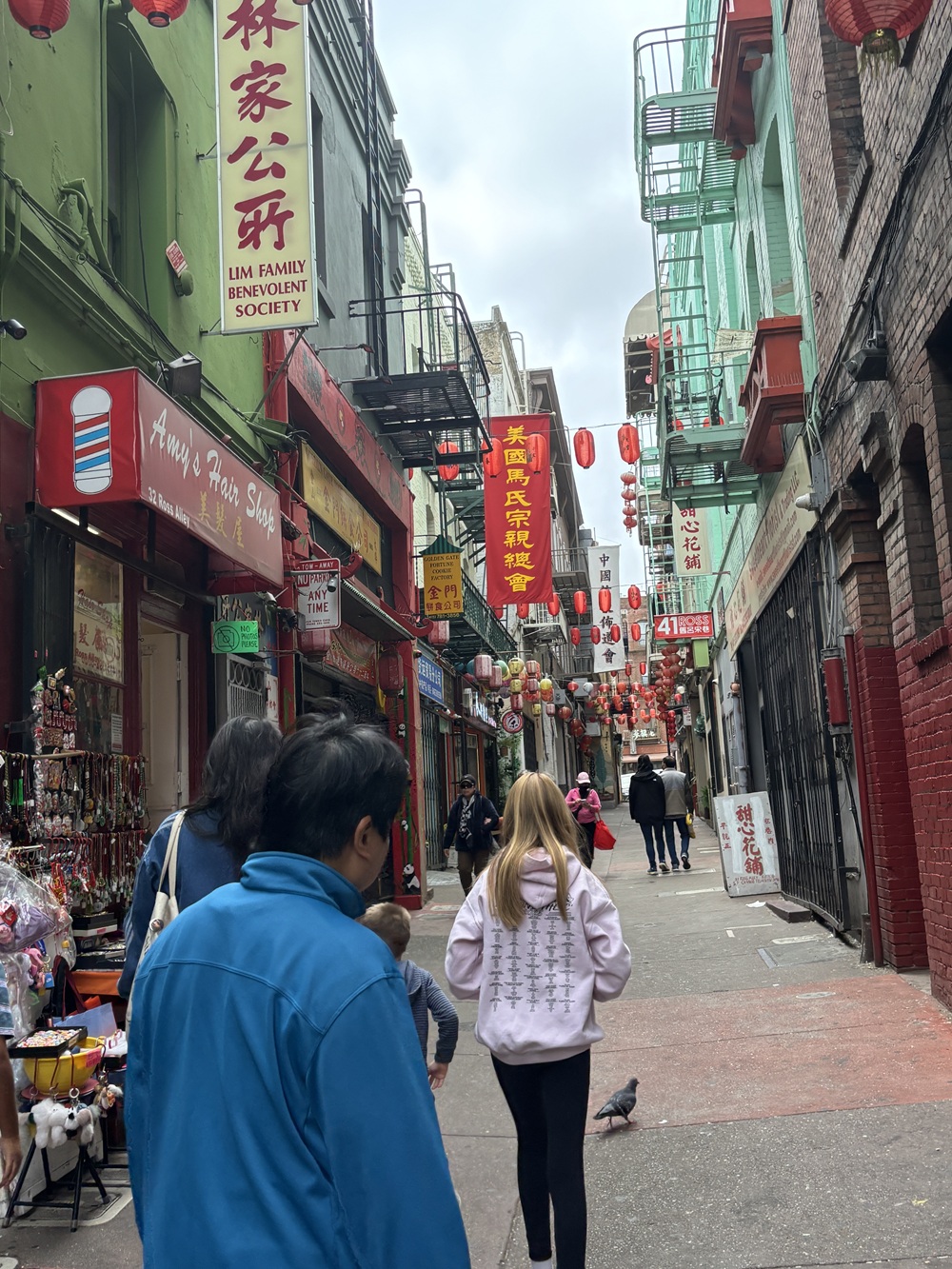
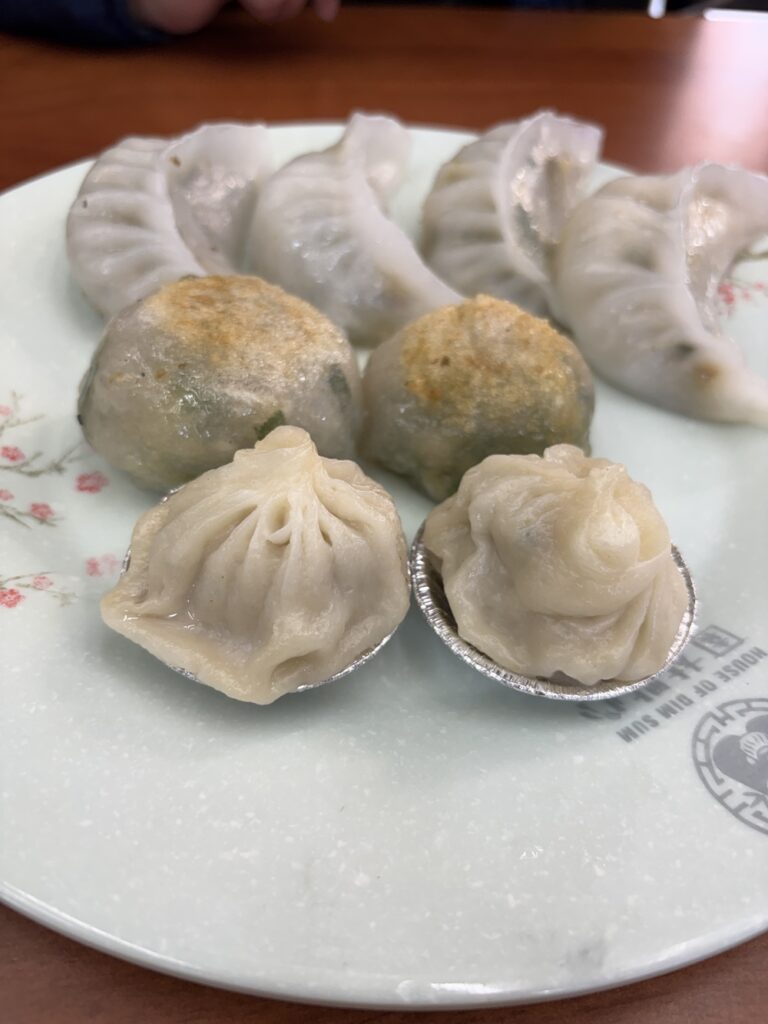
We sampled dumplings, egg rolls, pork buns and other delicious bites at our first stop. Dim Sum, we learn, means “touch the heart” that is designed to be shared among family and friends. As we nibble, Clark explains that San Francisco’s Chinatown dates to the 1848 Gold Rush when Chinese immigrants, like others from around the world, arrived to seek their fortune and Chinese merchants set up shop in this area. There was gambling, prostitution and opium dens As gold and jobs became scare, they faced violence, discriminatory laws, including the Chinese Exclusion Act of 1882, and protected themselves here with close-knit family associations and societies.
The 1906 earthquake destroyed much of Chinatown—you can see burnt pieces of bricks sticking out of buildings here—but it was rebuilt despite efforts to relocate the Chinese Community. Today, it is not only one of the city’s most popular tourist areas but a 30-block residential hub boasting more than 40 alleys where residents converse in Chinese, shop for herbs and vegetables and tourists vie for the best places to eat, grab a Boba tea with tapioca pearls, shop for souvenirs and sample different kinds of tea as we did at the Vital TeaLeaf where Kenny (no last name please) kept us entertained with all the reasons we shouldn’t use tea bags or call herbal tea tea. “The herbs aren’t tea…they are added to the tea,” he says.
As we chatted, we walked through Chinatown’s famous alleyways, strung with red lanterns, stopping for Boba fruit tea with pearls of tapioca, Peking duck, and sample after sample of tea before heading home with iconic egg custard tarts. Clark points out Mister Jiu’s, the first Michelin starred restaurant in Chinatown, and oldest Chinese Temple in the US and Waverly Place, called “10-cent Alley,” that was famous for the place where during the Gold Rush, a 10-cent hair cut and shave could be had. The Presbyterian Mission House, officially known as the Donaldina Cameron House, served as a refuge where Chinese women and girls could escape human trafficking. Donaldina Cameron was credited with rescuing over 2,000 Chinese immigrant and girls. Who knew?
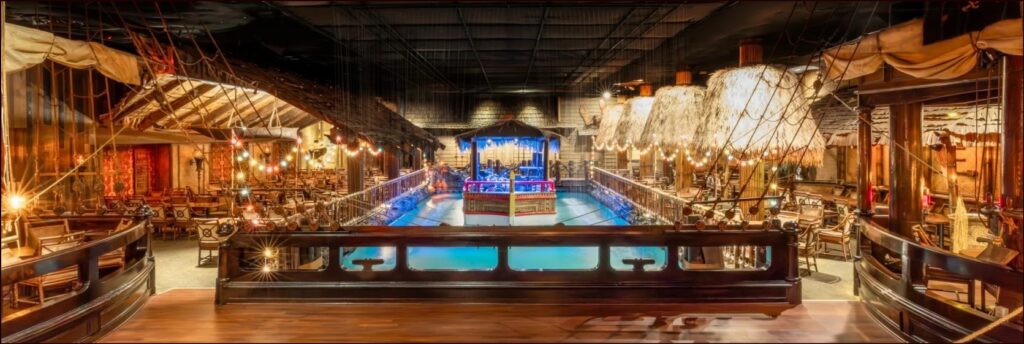
The night before, we’d learned a little more of the city’s history at the San Francisco Fairmont’s Tonga Room Hurricane Bar, an icon of tiki bars and culture. (The Mai Tai, served here, was invented not far away in Oakland.) The historic hotel at the top of Nob Hill dates back to April 18, 1906, the day of the infamous earthquake. That was the day wealthy sisters Tessie and Virginia were scheduled to open the hotel named for their father Graham Fair, who made his fortune in silver mines. Though the hotel survived the quake, it was gutted a day later by the fires that destroyed much of the city.
A year later, when the hotel opened with great fanfare, it was the first major business to reopen following the quake. Not only did the hotel’s opening complete with rivers of champagne and fireworks signal the city’s rebirth, but its renovation was undertaken by Julia Morgan, California’s first woman licensed architect.
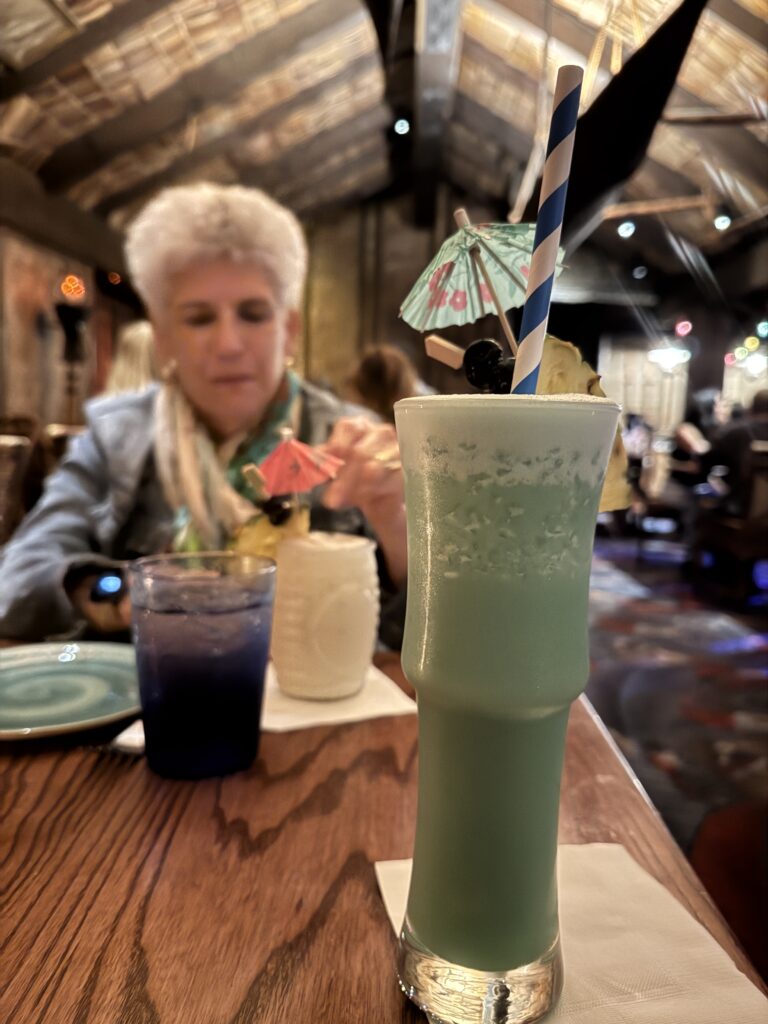
The hotel boasted many firsts including the first time Tony Bennett sang “I Left My Heart in San Francisco, the city’s first post-prohibition cocktail bar, the first UN conference and beneath the lobby, the ultimate Tikki Bar experience with kitschy cocktails and mocktails, Asian dishes and in the middle, a pool deck where a band serenades diners with classics from their boat as it “sails” up and down the water complete with thunderstorms and flashing lights. On a Wednesday night, the restaurant was packed with locals celebrating a special birthday or anniversary and tourists, including many families, were seeking a unique experience that while a throwback, resonates today with kids and adults alike.
The ever-popular restaurant was fashioned in the 1940s from the hotel’s indoor pool with parts salvaged from the S.S. Forrester, a lumber schooner that had sailed from San Francisco to Asia as they dine under thatched roofs on coconut calamari, Tiki Noodles, seafood curry , poke, fried rice and much more. (The portions were so big we had plenty of leftovers for another dinner!)
History is never boring when there’s plenty of good food involved