
The Wisconsin Roadside Attraction So Bizarre And Wonderful People Stop Every Single Time
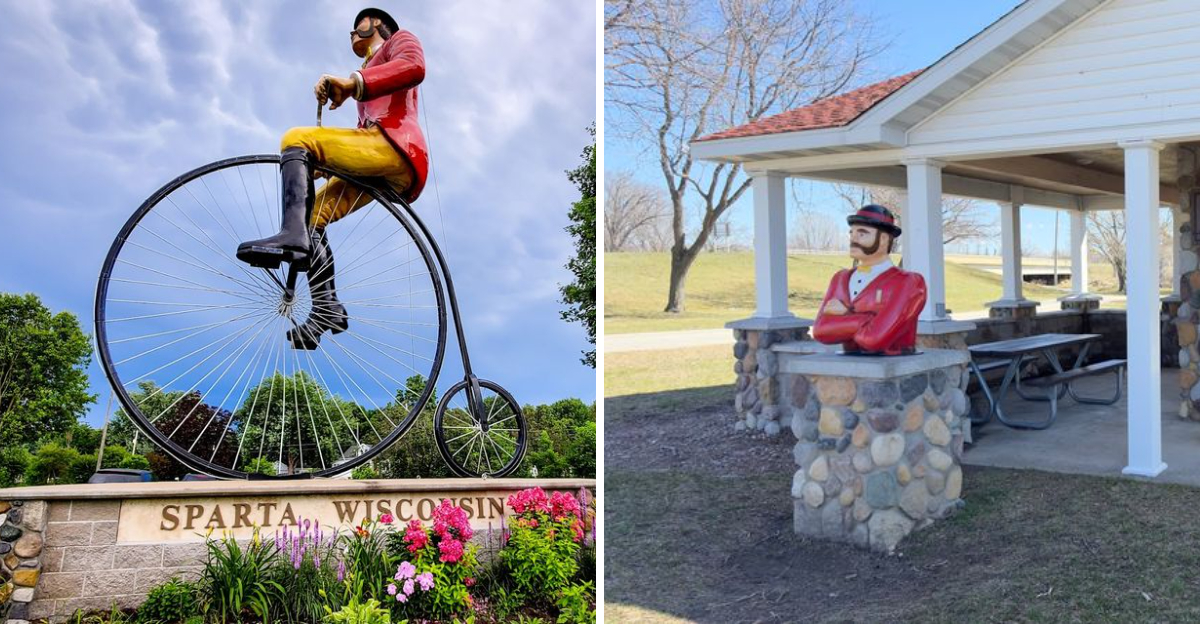
A giant cyclist in a bowler hat is not something you expect to meet on a Wisconsin drive, which is exactly why this roadside stop works so well. Towering over Sparta, the oversized rider pedals a huge old-fashioned bicycle and turns a quick pass-through into a must-pull-over moment.
It looks wonderfully strange at first, but there is real meaning behind the oddity. The statue nods to the town’s cycling heritage, nearby trail culture, and love of outdoor adventure.
Visitors come for the photo, then learn why bikes matter so much here. It is playful, proud, and impossible to ignore, the kind of Wisconsin landmark that makes a road trip instantly more fun.
Ben Bikin’ Is Known As The World’s Largest Bicyclist
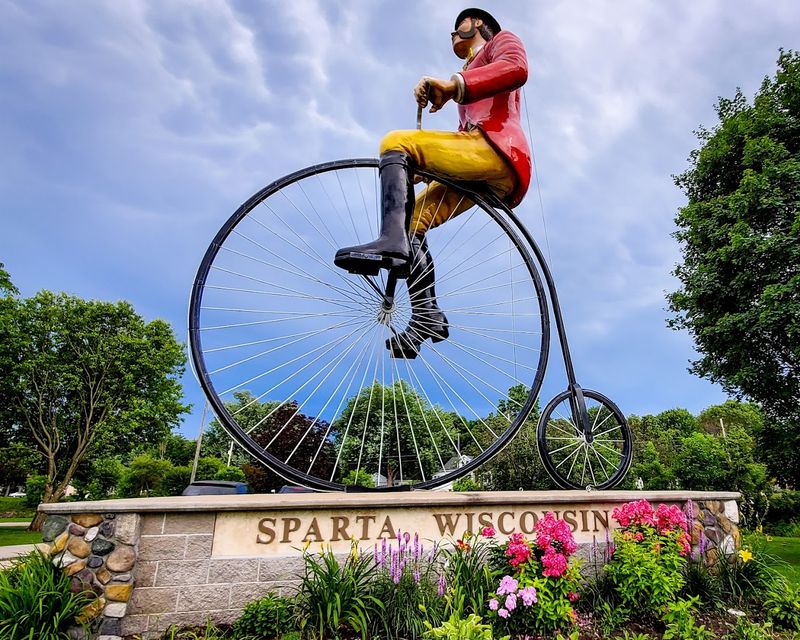
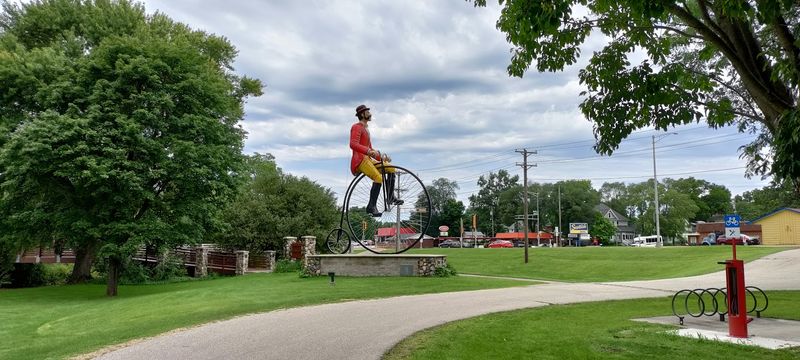
Sparta’s claim to fame rides high above East Wisconsin Street in the form of a colossal cyclist. The figure represents a Victorian gentleman complete with period attire, forever pedaling through the Wisconsin sky.
Local pride runs deep for this landmark, and for good reason, it captures attention from blocks away.
The sculpture depicts a rider atop a penny-farthing, the iconic high-wheeled bicycle that dominated streets in the late 1800s. His bowler hat and formal clothing add authenticity to the period representation.
Visitors traveling through Monroe County often plan their routes specifically to see this landmark, making it one of the state’s most photographed sculptures.
Finding Ben Bikin’ is straightforward at 101 East Wisconsin Street. The site remains accessible around the clock, allowing travelers flexibility in their visit timing.
The surrounding area includes walking paths and green space that complement the main attraction.
The Statue Stands About 32 Feet Tall
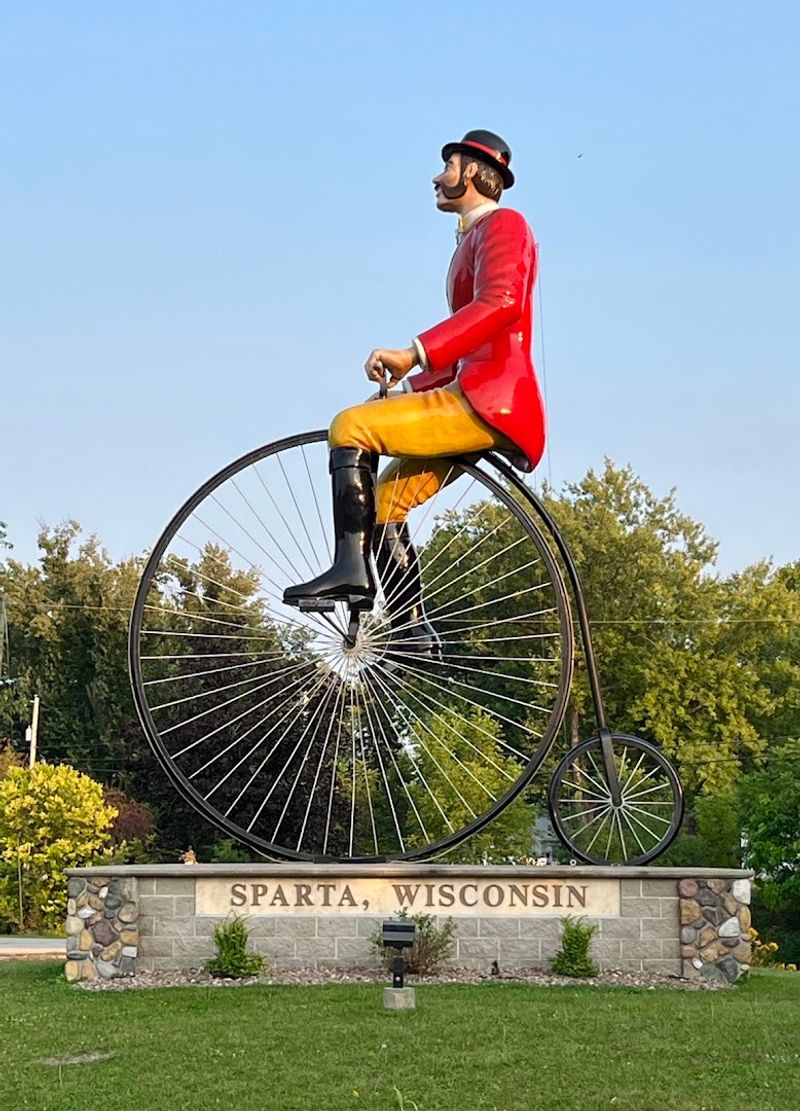
Scale defines this attraction’s impact on first-time visitors. Measuring approximately 32 feet from ground to the top of the rider’s head, the sculpture towers over most buildings in the immediate vicinity.
The height allows visibility from considerable distances, serving as a beacon for curious travelers along the highway.
Photographers find the vertical dimension particularly striking when framing shots. The statue’s elevation creates dramatic perspectives from various angles, making it impossible to capture in a single frame without stepping back significantly.
Standing at its base provides a humbling sense of proportion that photographs rarely convey fully.
Construction of such a substantial figure required specialized engineering and materials. The creators at F.A.S.T.
Corporation designed the internal structure to withstand Wisconsin’s harsh weather conditions, from summer storms to winter ice accumulation. This durability has allowed the statue to maintain its presence for decades without significant deterioration.
It Shows A Rider On An Old-Fashioned Penny-Farthing Bicycle
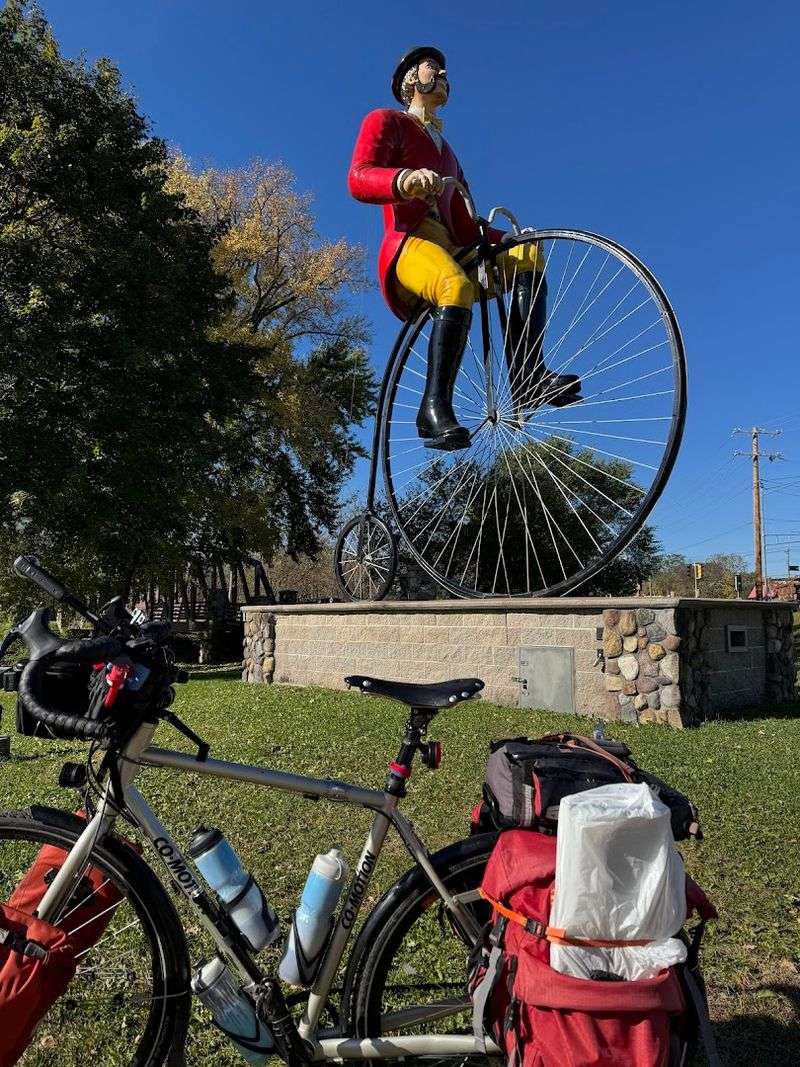
The penny-farthing bicycle design carries significant historical weight in cycling evolution. This distinctive bicycle style featured a front wheel measuring several feet in diameter, while the rear wheel remained comparatively tiny.
Riders sat perched precariously high above the ground, making mounting and dismounting genuine challenges that required skill and courage.
Sparta’s choice to feature this particular bicycle style connects directly to the golden age of cycling. During the 1870s and 1880s, these machines represented cutting-edge transportation technology before the safety bicycle emerged.
The large front wheel allowed riders to cover more ground with each pedal rotation, though stability remained questionable at best.
Modern cyclists viewing Ben Bikin’ often marvel at the impracticality of the design. The sculpture accurately captures the proportions and mechanical details of authentic penny-farthings, including the mounting step and handlebar configuration.
This attention to historical accuracy adds educational value beyond mere novelty.
Sparta Calls Itself The Bicycling Capital Of America
Bold declarations define small-town identity, and Sparta embraces its cycling heritage without reservation. The community has invested substantially in bicycle infrastructure, trail maintenance, and cyclist-friendly amenities that support its self-proclaimed title.
This commitment extends beyond marketing into tangible resources for riders of all skill levels.
The designation stems from decades of dedication to cycling culture. Local businesses cater to trail users with bike shops, repair stations, and accommodations designed for touring cyclists.
Community events throughout the year celebrate two-wheeled transportation, reinforcing the connection between town identity and pedal power.
Skeptics might question such a bold claim, but visitors quickly recognize the authenticity. Bicycle lanes mark major streets, trail access points appear throughout town, and cycling maps are readily available at multiple locations.
The infrastructure supports both recreational riders and serious cyclists tackling multi-day trail expeditions across the region.
The Statue Celebrates The City’s Bike Trail Culture
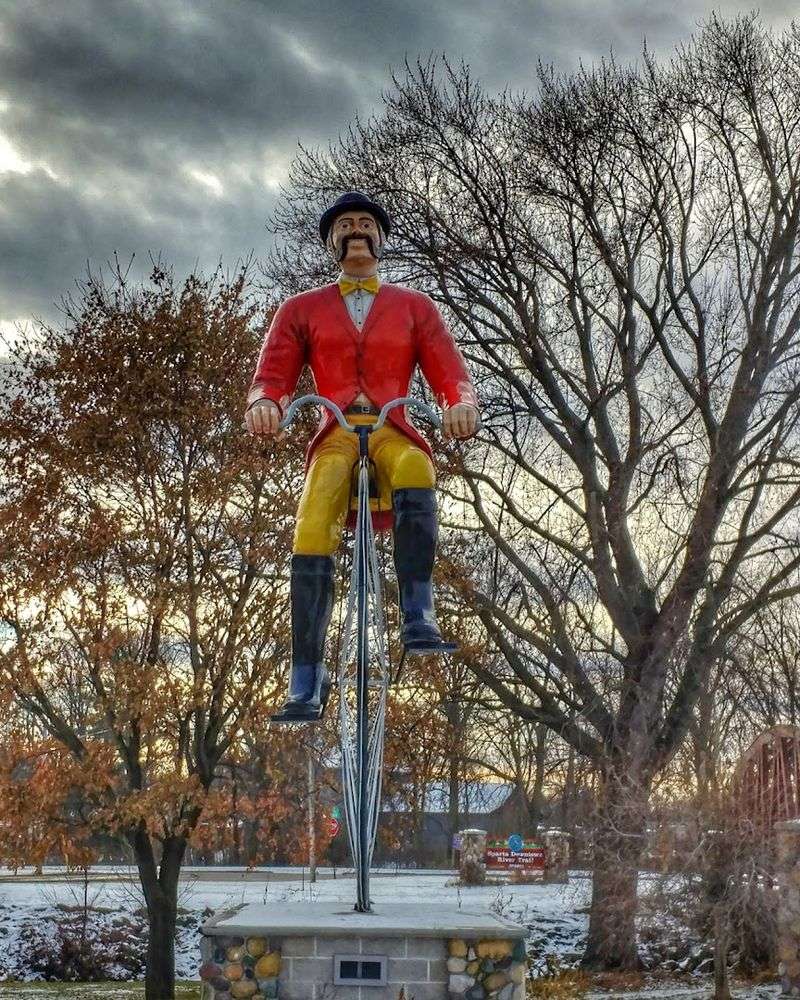
Public art often serves purposes beyond aesthetics, and Ben Bikin’ functions as a three-dimensional mission statement. The sculpture welcomes trail users arriving in Sparta, signaling the community’s commitment to cycling recreation.
It stands as both greeting and promise that cyclists will find support and appreciation in this town.
Trail culture in Sparta extends back generations, creating a legacy that newer cycling communities struggle to replicate. Families return year after year to ride familiar paths, creating traditions around the trail system.
The statue has become a meeting point, photo opportunity, and symbol of shared experience for these returning visitors.
Local organizations maintain the area surrounding the sculpture with care typically reserved for civic monuments. Benches, informational panels, and landscaping create a small park atmosphere.
This attention to detail demonstrates how seriously Sparta takes its role as a cycling destination and how the statue represents broader community values.
The Elroy-Sparta State Trail Helped Launch The Rails-To-Trails Movement
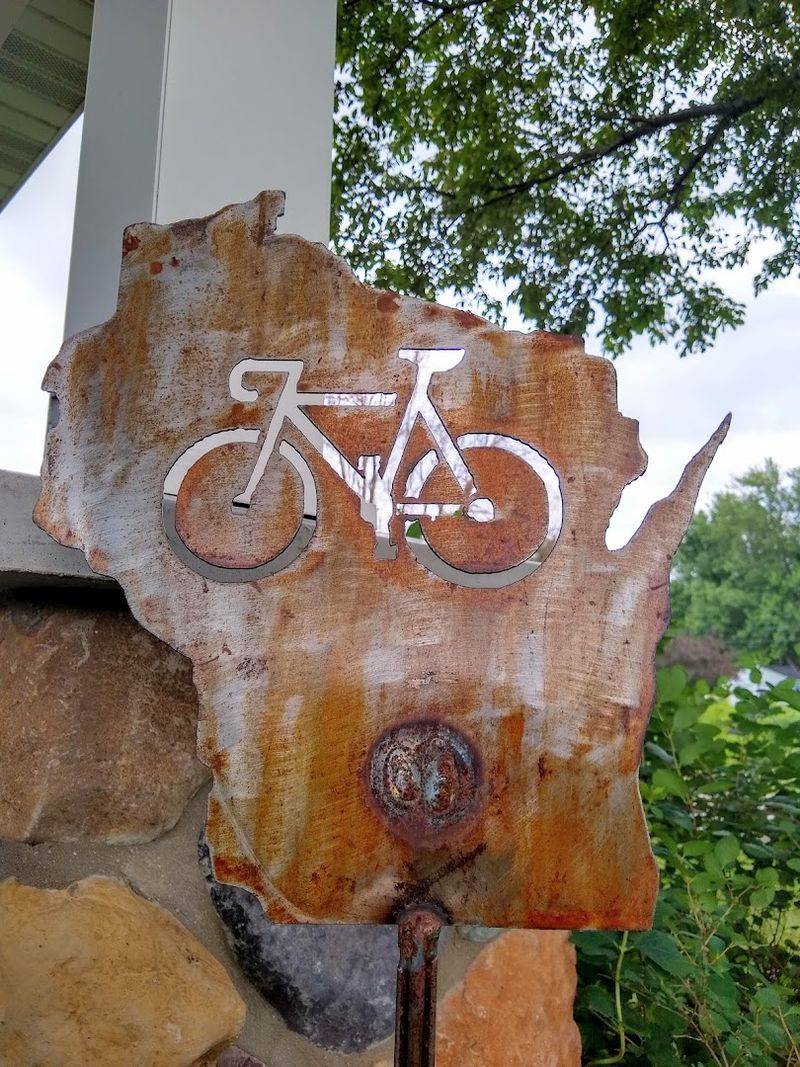
Innovation in outdoor recreation often begins with practical problem-solving. The Elroy-Sparta State Trail represents one of the first successful conversions of abandoned railroad corridors into recreational pathways.
Opened in 1967, this trail demonstrated that defunct rail lines could serve new purposes, inspiring similar projects across the nation.
Railroad abandonment in rural America created both challenges and opportunities. Communities faced losing transportation infrastructure while gaining potential recreational resources.
Sparta’s vision to transform 32 miles of former railroad bed into a bicycle trail proved both economically and culturally significant, establishing a template for hundreds of subsequent conversions.
The trail’s success metrics extend beyond simple usage numbers. It spurred economic development, preserved historical railroad tunnels, and created a model for sustainable tourism.
The rails-to-trails movement that followed has converted thousands of miles of abandoned corridors nationwide, but the Elroy-Sparta trail remains the pioneering example that proved the concept viable.
The Attraction Sits Near The End Of The Elroy-Sparta State Trail
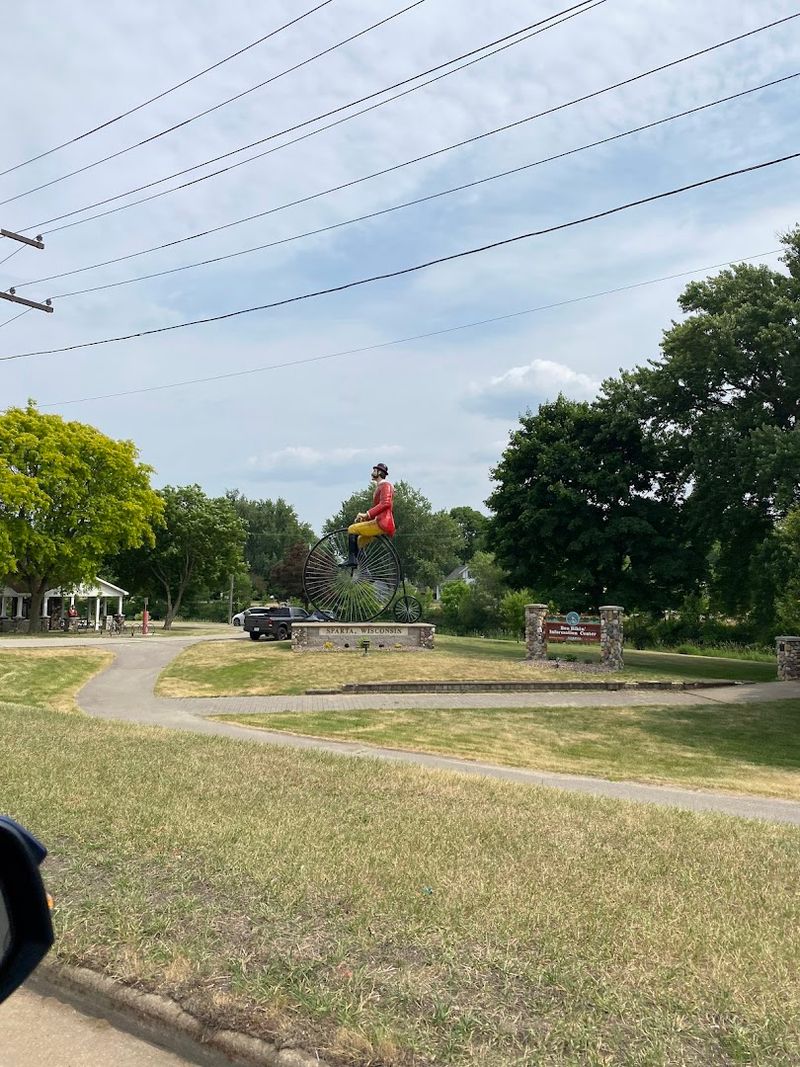
Strategic placement amplifies the statue’s impact on trail users. Cyclists completing the Elroy-Sparta route encounter Ben Bikin’ as they enter town, creating a triumphant arrival moment after miles of pedaling.
The location at 101 East Wisconsin Street positions the sculpture as both destination marker and celebration of accomplishment.
Trail users appreciate the proximity to downtown amenities after finishing their ride. Restaurants, shops, and services cluster within walking distance of the statue, making it a convenient stopping point.
The small park area surrounding Ben Bikin’ offers space for rest and recovery before cyclists continue their journeys or explore Sparta proper.
Geographic positioning also serves practical navigation purposes. The statue functions as a landmark for giving directions and planning meetups.
Its visibility and unique character make it impossible to miss, eliminating confusion about rendezvous locations. This functional aspect complements its role as tourist attraction and town symbol.
Its Oversized Design Makes It A Classic Roadside Photo Stop
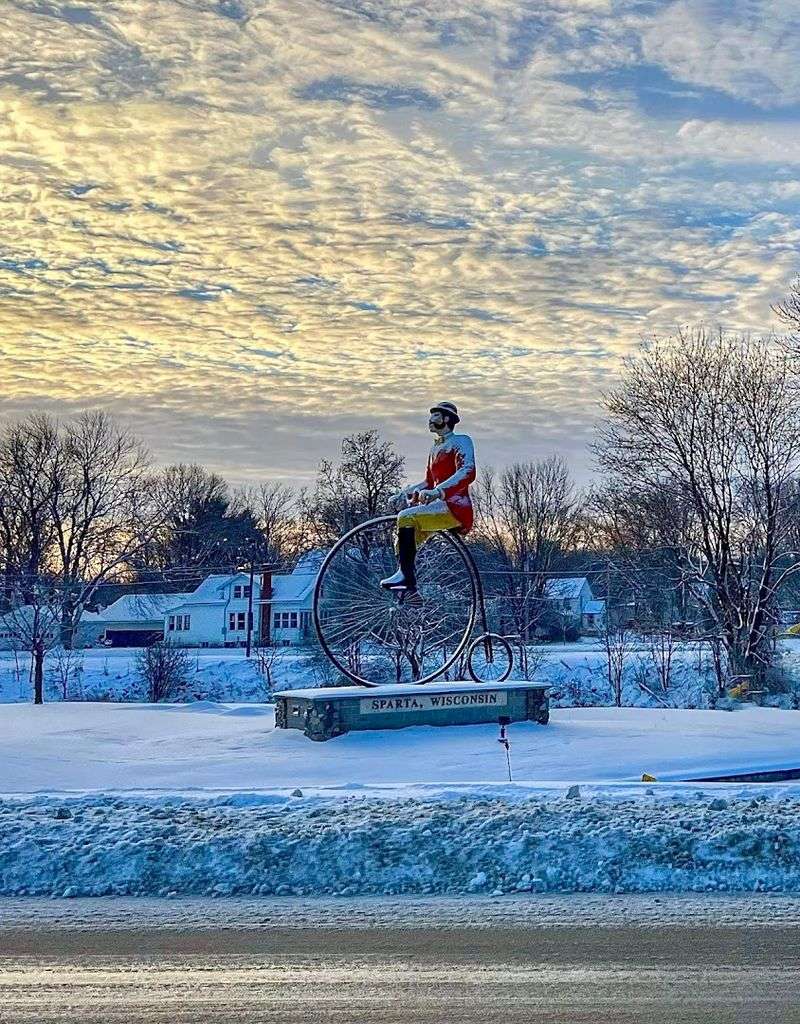
American roadside culture thrives on the unexpected and oversized. Ben Bikin’ fits perfectly into the tradition of giant objects that dot highways from coast to coast.
The sculpture’s scale and whimsy trigger an almost automatic response in travelers, the need to document the encounter with photographs.
Social media has amplified the statue’s reach beyond physical visitors. Images of Ben Bikin’ circulate online, tagged with location data and travel recommendations.
This digital presence creates a feedback loop where people seek out the statue specifically because they’ve seen it in others’ travel photos, perpetuating its status as a must-see attraction.
The photographic appeal stems from multiple factors beyond mere size. The Victorian styling, the absurdity of the penny-farthing bicycle, and the cheerful permanence of the rider’s posture all contribute to memorable images.
Visitors experiment with perspective tricks, posing as if interacting with the giant cyclist or matching his pedaling motion at ground level.
The Statue Was Made By Sparta’s F.A.S.T. Corporation
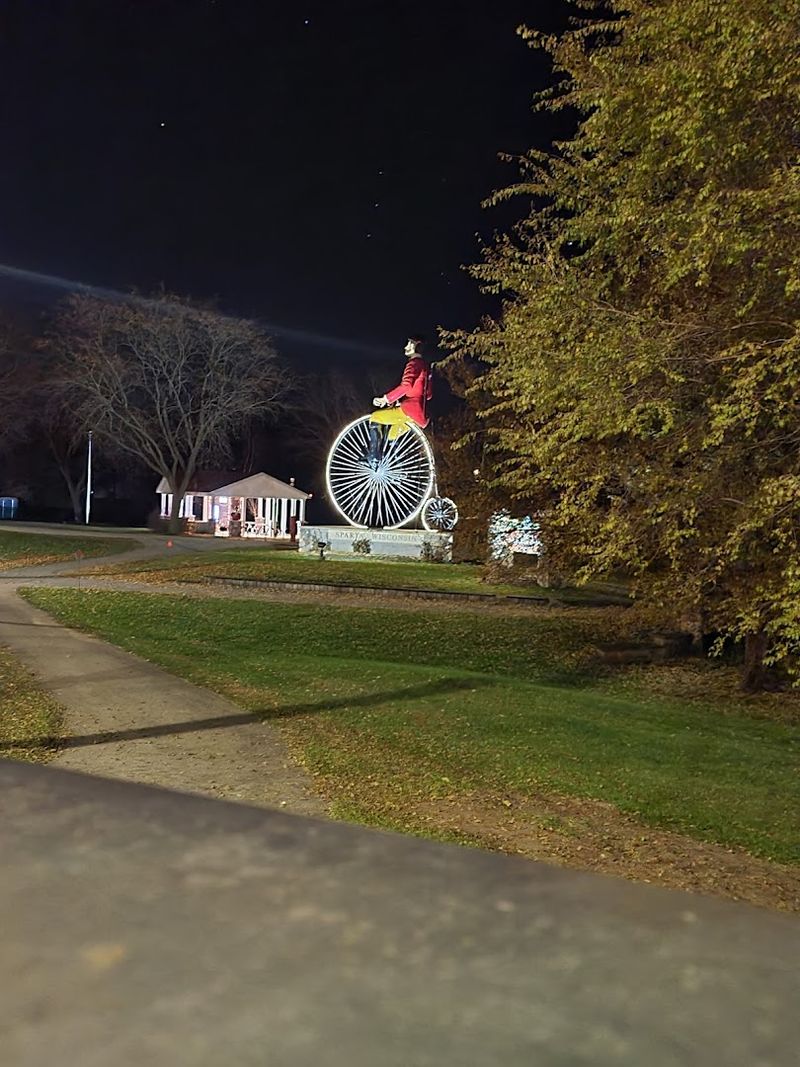
Local craftsmanship brought this oversized vision to reality. F.A.S.T.
Corporation, a Sparta-based company, specialized in creating large-scale fiberglass structures for commercial and promotional purposes. Their work on Ben Bikin’ showcased technical expertise in mold-making, structural engineering, and weather-resistant finishing that would allow the piece to endure decades of exposure.
Fiberglass construction offered advantages for a project of this magnitude. The material provides strength without excessive weight, resists corrosion, and allows for detailed surface texturing that mimics fabric, skin, and metal components.
The production process required careful planning to ensure structural integrity while maintaining the artistic vision of a Victorian gentleman caught in eternal cycling motion.
Community involvement in the project reflected Sparta’s investment in its cycling identity. The statue emerged from local initiative rather than outside consultants, giving residents ownership of the result.
This hometown connection strengthens the bond between sculpture and community, making Ben Bikin’ more than tourist kitsch, he represents collective pride in local heritage.
Ben Bikin’ Has Become A Symbol Of Sparta
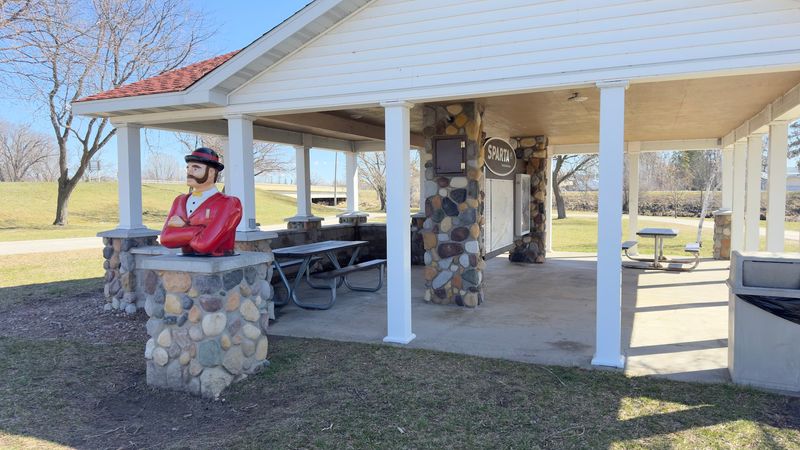
Symbols acquire meaning through time and community adoption. Ben Bikin’ has transcended its origins as a promotional sculpture to become deeply woven into Sparta’s identity.
Local businesses reference the statue in their branding, events use it as a backdrop, and residents give directions using it as a reference point.
The sculpture appears in official town materials, tourism publications, and community celebrations. This visibility reinforces the connection between the giant cyclist and Sparta’s self-image as a cycling destination.
New residents learn quickly that Ben Bikin’ represents more than quirky roadside art, he embodies values of outdoor recreation, community pride, and historical preservation.
Generational connections strengthen symbolic power. Children who posed for photos with Ben Bikin’ decades ago now bring their own families to continue the tradition.
This continuity creates emotional bonds that transcend the statue’s physical presence, making it a touchstone for memory and belonging within the community and among returning visitors.