
This Ancient Wisconsin Landmark Is The Only One Of Its Kind Left In The Upper Midwest
History does not always come with velvet ropes and crowded exhibits. Sometimes it waits quietly in the grass, easy to miss unless you already know there is something remarkable ahead.
In Wisconsin, one small roadside stop protects a human-made earthwork that has survived for roughly eight centuries or more. It is the last known example of its kind, giving visitors a rare connection to a much older chapter of the region.
The setting is simple, but the story is anything but ordinary. Archaeologists have studied it for generations, while tribal nations continue to recognize its cultural importance.
There are no flashy attractions competing for attention. That is part of what makes the experience so powerful. Visitors can stand beside something ancient, take in the landscape, and appreciate a piece of history that has endured while nearly everything around it changed.
A Giant Shaped Like A Person, Resting In The Grass
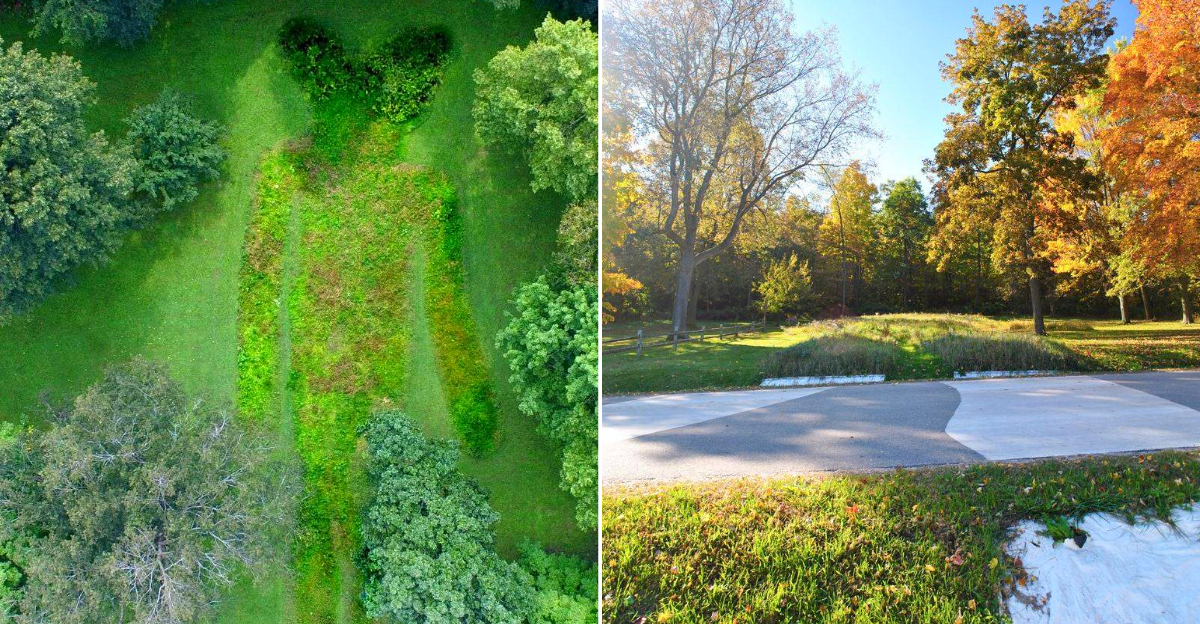
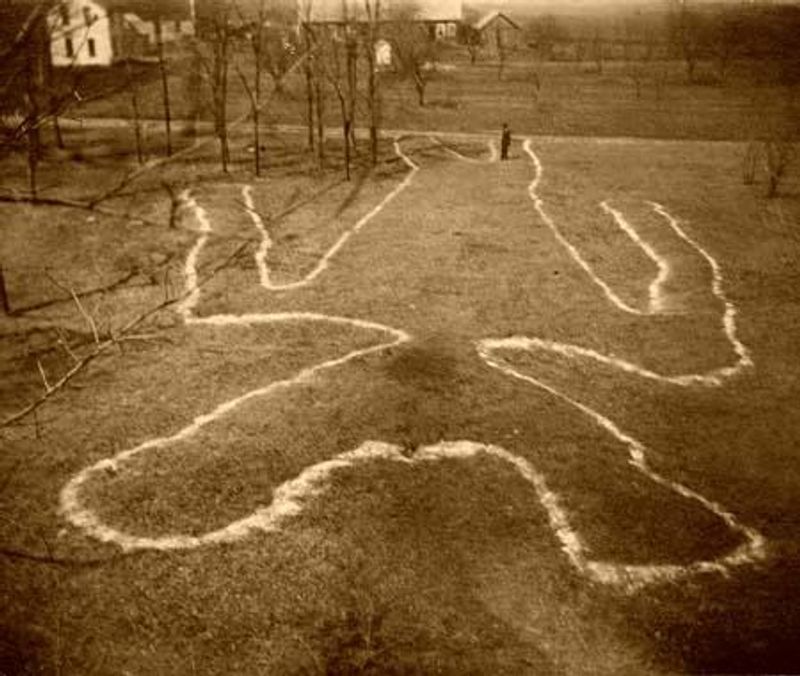
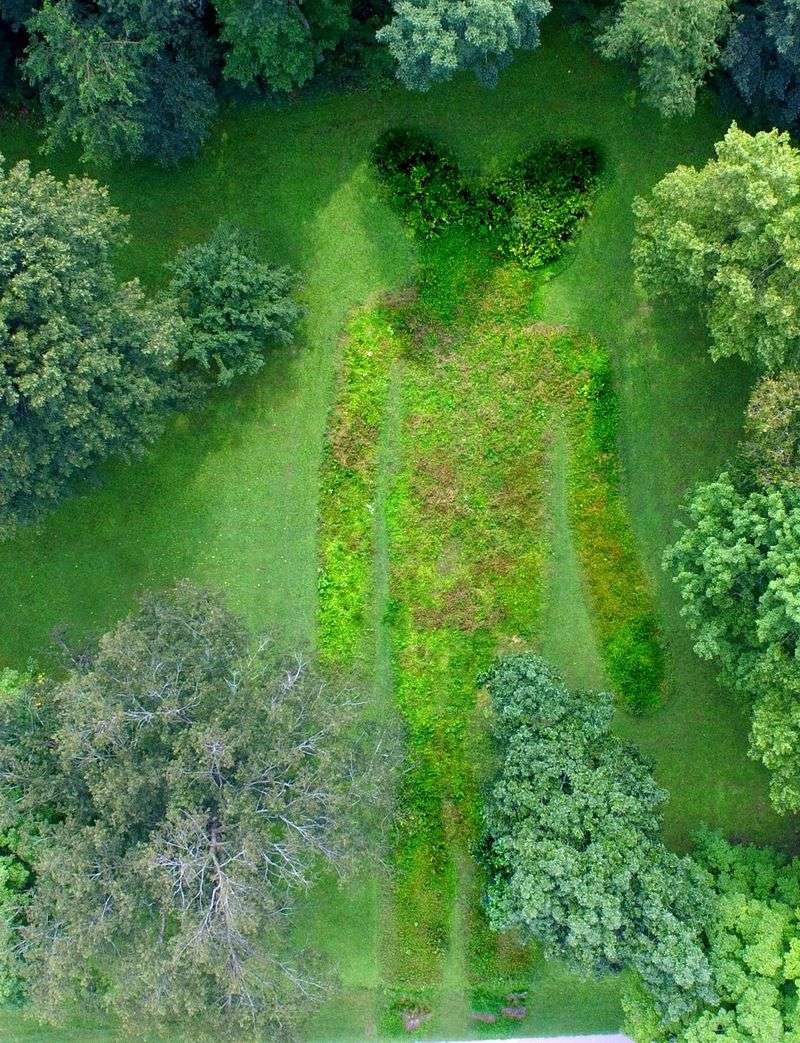
The original figure measured roughly 214 feet long and 48 feet wide, with a humanlike head, torso, arms, and legs. Native builders created it sometime between about AD 750 and 1200, and most of the figure survives today at Man Mound Park.
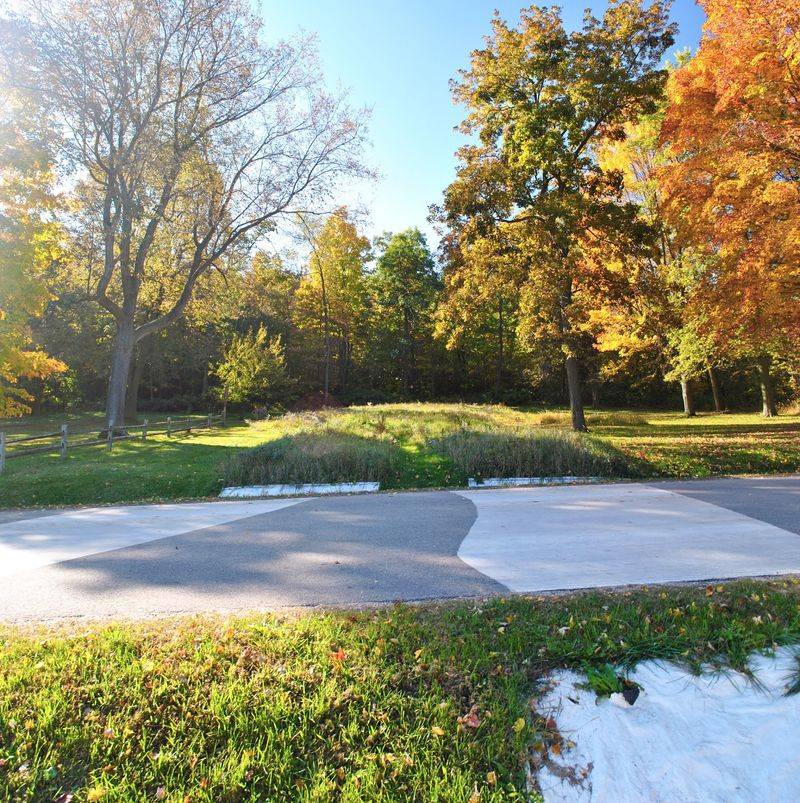
The mound rises only a foot or two above the ground, so it reads more like a soft swell in the lawn than a hill. Park staff leave the grass on the effigy taller than the mowed lawn around it, which helps your eyes trace the outline.
What catches most visitors off guard is the head. Instead of a simple round shape, it carries what look like horns or a headdress, and interpretations vary widely.
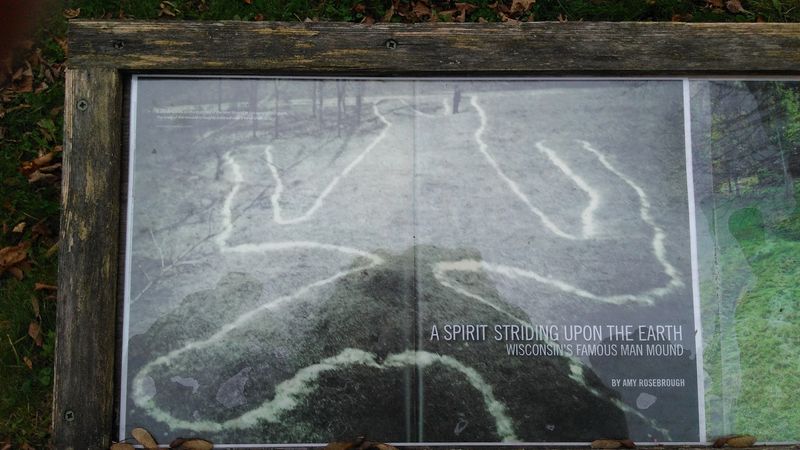
You will want a few minutes to let your vision adjust. Start at the interpretive signs, study the aerial drawing, then look back at the ground.
Suddenly the shape clicks into place. No fences block your view, though staying off the mound itself matters. Walk the perimeter slowly and the scale becomes clear. Standing beside something this old, still holding its form, tends to stick with you.
The Last Human-Shaped Effigy Mound Standing
Here is the detail that draws researchers from across the country: this is recognized as the only surviving earthen human-shaped effigy mound in North America.
Others existed once, especially across southern Wisconsin and nearby states, but farming, road building, and development erased them.
Effigy mounds shaped like birds, bears, panthers, and long tapering lines still survive in decent numbers throughout the state. Human forms were always rare, and Man Mound Park protects the sole survivor that remains recognizable.
Because of that status, the site earned designation as a National Historic Landmark in 2016, a rank held by only a small fraction of protected places nationwide.
Knowing the rarity changes how the visit feels. You are not looking at a replica or a reconstruction. The earthwork was built by Late Woodland peoples centuries before European settlement of the region.
Consider how easily this could have vanished like the others. A preservation effort in 1907 kept much of it from disappearing. That thought alone makes the short drive worthwhile, and it gives the quiet park a weight that larger attractions rarely match.
Finding Your Way To This Backroads Landmark
Navigation matters more than usual here, because the park sits along quiet country roads north of Baraboo rather than on a busy highway. Plug the full address into your phone before you leave: Man Mound Park, E13097 Man Mound Rd, Baraboo, WI 53913.
Directional signs guide you through the final turns, and they are surprisingly helpful once you spot the first one. Even so, the park entrance is modest and easy to overlook if you are driving fast. A small parking area is provided beside the park.
The road running past is narrow, and drivers sometimes move quickly, so watch children closely and cross with care.
Gates open early and stay open late, generally from 5 AM to 11 PM every day of the week, which gives you flexibility around sunrise or evening light.
Admission costs nothing. Sauk County maintains the grounds, and free landmarks of this caliber are genuinely uncommon across Wisconsin. Fill your gas tank, since services thin out along these back routes.
Green Stripes On The Pavement Tell A Story
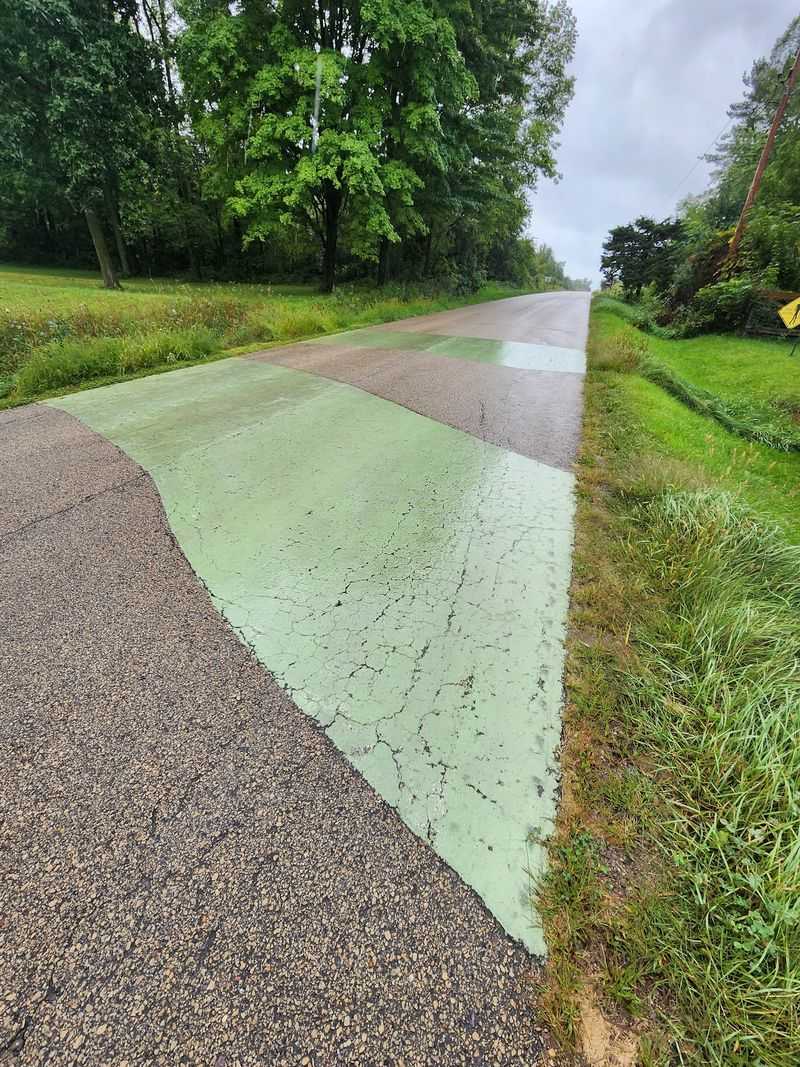
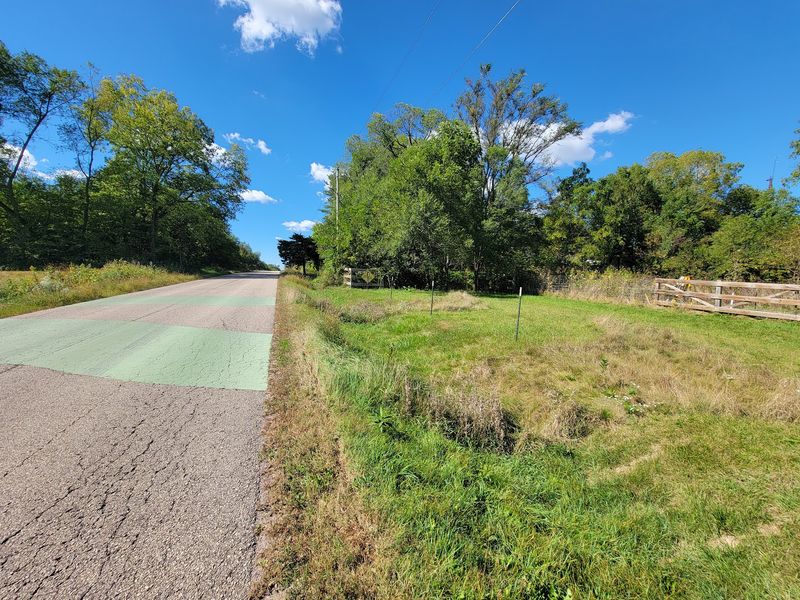
Look down at the road as you arrive and you will notice green stripes painted across the pavement. They mark where the figure’s lower legs continued before Man Mound Road damaged that portion of the earthwork in the 1800s.
In 2008, the contours of the missing legs and feet were painted across the road and adjoining pasture using William Canfield’s original survey measurements. It is a simple idea that works beautifully.
Beyond the road, the original feet extend onto private property, where their surface traces were heavily damaged by past cattle grazing. You can see the outline from a distance without stepping onto private land.
Honestly, the road cutting through stings a little once you understand what was lost. Yet the same era also brought efforts to protect the site. Preservation groups purchased the surviving portion south of the road in 1907, and the park was dedicated the following year.
Man Mound Park now stands as both a monument and a lesson about how quickly irreplaceable things can be damaged.
Take a moment at the stripes before you head to the interpretive area. Understanding the break makes the intact portion feel even more valuable, and it explains why the site draws so much protective attention today.
Interpretive Signs Worth Reading Word For Word
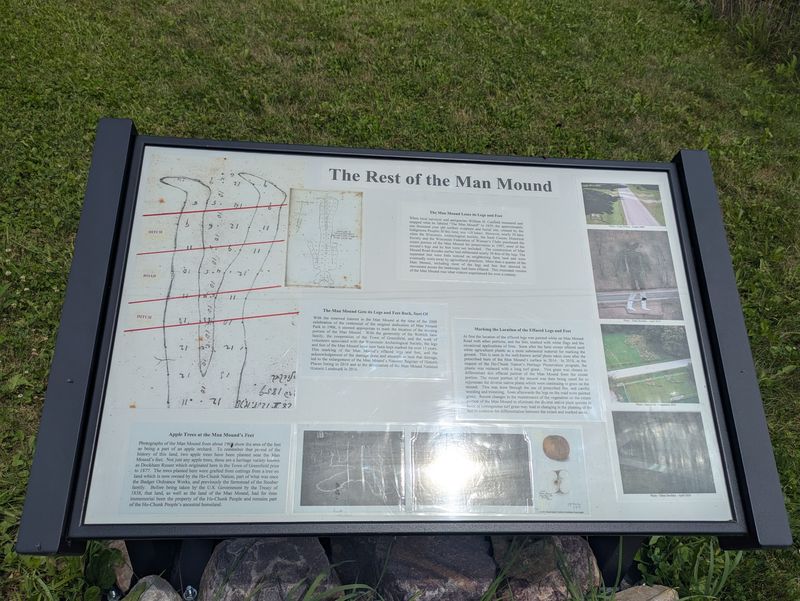
Skip the signs and you will miss most of what makes this place remarkable. The interpretive panels near the parking area explain who built effigy mounds, when, and why the human form matters so much to archaeologists.
Diagrams show the effigy from above, which is the view you cannot get standing on the ground. Photographs, survey drawings from the 1800s, and preservation history fill in the rest.
Kids often find the aerial illustration more exciting than the mound itself, and that is fine. Once they see the outline drawn clearly, they usually turn around and start pointing at the grass.
You will also learn that the mound was first identified and mapped in 1859 by local surveyor and antiquarian William H. Canfield.
Plan on fifteen to twenty minutes of reading if you want the full picture. Man Mound Park rewards patience more than it rewards photographs, since the low profile makes images tricky.
Bring water and a hat on sunny days, because the panels sit in open lawn. Reading them slowly turns a quick roadside stop into a genuine history lesson for every age.
Picnic Tables, Shade Trees, And A Quiet Lunch
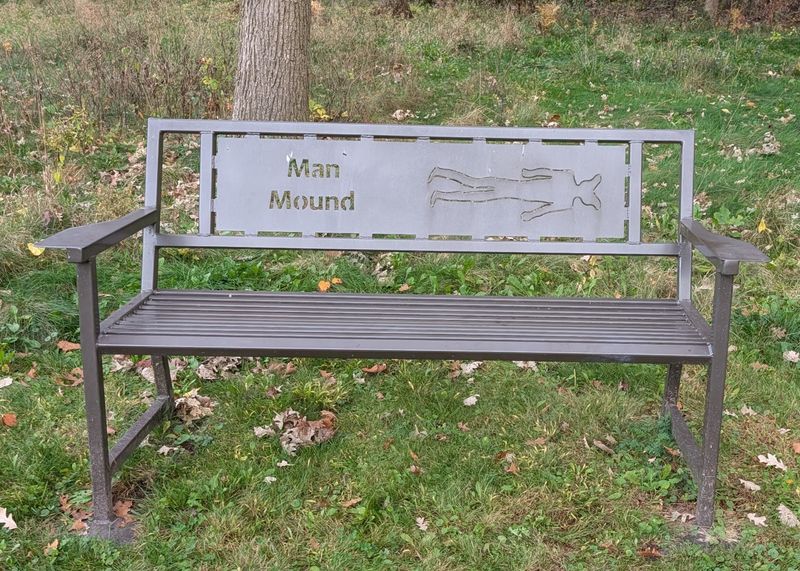
Pack a lunch. Seriously, the picnic setup here is one of the nicest surprises of the visit, with a handful of tables and benches placed under mature trees.
Traffic on the road stays light most of the day, so birdsong and rustling leaves carry easily across the lawn. Many visitors describe the atmosphere as unusually peaceful, and that reputation holds up.
Man Mound Park works well as a midday break between bigger stops. Spread out a sandwich, let the kids stretch their legs on the mowed lawn, then wander over to the effigy afterward.
There are picnic tables and benches, but amenities are limited, so bringing what you need is sensible. Simple planning keeps the grounds looking as tidy as you found them.
Shade makes summer visits comfortable, while autumn brings color to the surrounding hills of southern Wisconsin. Spring and early fall probably offer the most pleasant temperatures.
Keep voices low if others are present. Descendant tribal nations regard the mound as sacred, and the quiet here feels intentional rather than accidental. Treating it as you would any place of remembrance is the right instinct.
Respecting A Sacred Site While You Explore
Effigy mounds are not decorations. Many contain burials, and Native nations across Wisconsin consider them sacred ground connected to living communities today.
That understanding shapes how you should behave. Stay off the raised earth, keep pets leashed and away from the effigy, and never dig, probe, or take soil as a souvenir. Wisconsin law protects burial sites.
Drones may seem tempting given how hard the shape is to photograph from ground level, but check current county and federal rules before launching anything. When in doubt, leave the camera on the ground.
Man Mound Park offers plenty of vantage points along mowed paths and the parking area, so you never need to step onto protected ground for a good look. Respect any ceremonial activity you encounter and avoid disturbing the mound or surrounding archaeological features.
Approaching the place with quiet respect costs nothing and honors the people who built it. It also sets a good example for children, who tend to mirror how adults behave. Small courtesies keep this landmark intact for the next thousand years.
Pairing Your Visit With Nearby Sauk County Stops
Because the stop takes twenty to thirty minutes, most people fold it into a larger day trip. Devil’s Lake State Park sits just a short drive away, with its quartzite bluffs and swimming beaches.
Baraboo itself offers a walkable downtown square, the historic Al. Ringling Theatre, and the Circus World. The International Crane Foundation and Mirror Lake State Park round out the area nicely.
Man Mound Park fits best in the morning before crowds build elsewhere, or late afternoon when light softens and the effigy’s edges cast faint shadows.
Driving the surrounding backroads is genuinely enjoyable, with rolling farmland, bluffs, and barns along the way. Give yourself extra time and skip the interstate.
If effigy mounds interest you, other groups survive throughout southern Wisconsin, including sites near Madison and along the Mississippi River. Seeing several helps you appreciate how unusual the human form truly is.
Standing in one small county park beside the last figure of its kind puts a thousand years into perspective in a way few attractions manage. Add it to your route, arrive curious, and leave the grass exactly as you found it.