
This Eerie California Ghost Town Hides An Unforgettable History Behind Its Abandoned Streets
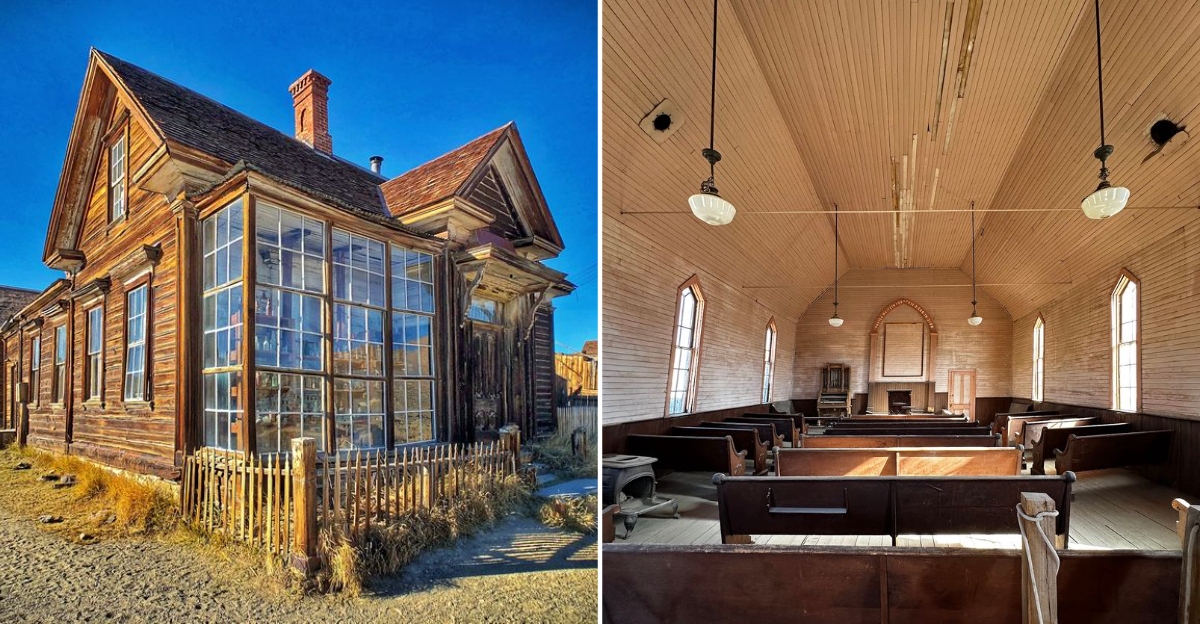
Leaving a place behind doesn’t always mean the story ends; sometimes it leaves behind even more questions. This California ghost town proves that, completely, hiding history behind streets abandoned decades ago.
Buildings here stand quietly, weathered by time but still recognizable despite years of neglect. Nothing about the town feels restored or maintained beyond what nature has already done to it.
Explorers who venture through often describe the silence as the strangest part of the entire experience. Stories about what happened here shift depending on who tells them, though the core details rarely change.
Photography opportunities exist throughout, especially where structures still hold onto their original character. This ghost town proved that some histories stay unforgettable simply because they were never fully explained.
Origins Of Desert Mining Communities
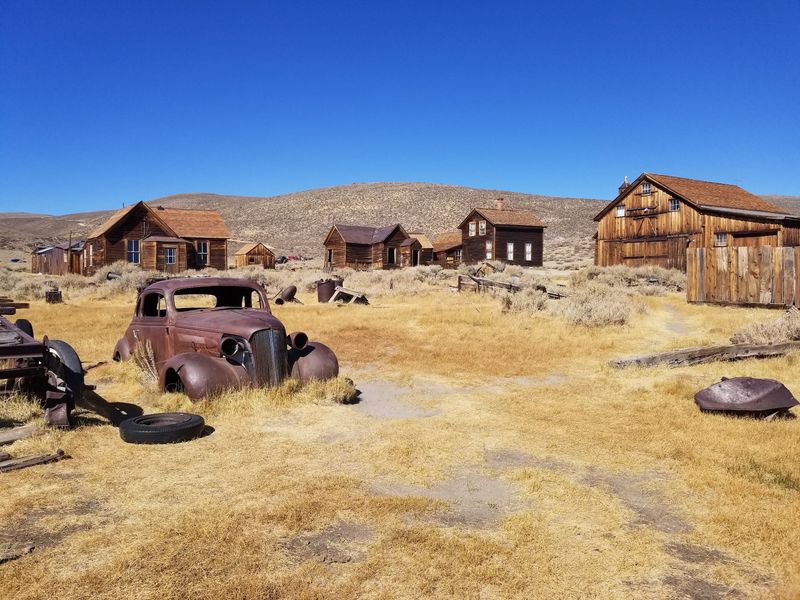
Four prospectors poking around the hills north of Mono Lake in the summer of 1859 had no idea they were writing the opening chapter of California’s most famous ghost story. One of them was William S. Bodey, and gold turned up under his boots.
Bodey never got to enjoy it. He froze to death in a blizzard that same winter while hauling supplies, which is a brutal reminder of what winter looks like at over 8,000 feet.
The camp that carried his name stayed small and scrappy for years. Miners came, miners left, and nobody predicted greatness for a windy patch of sagebrush.
Everything flipped in 1875. A mine cave-in accidentally exposed a rich vein of gold-bearing ore, and word traveled fast the way word always does when money is involved.
What had been a sleepy outpost exploded into a boomtown in a matter of months. Prospectors were already pushing far past the original goldfields by then, planting rough communities in places with almost no water, no shade, and no mercy.
Difficulty was practically the job description. Supplies arrived slowly, weather arrived violently, and people stayed anyway because the ore was worth it.
That accidental collapse in 1875 changed everything, and the town it created still stands today at Bodie State Historic Park, CA-270, Bridgeport, CA 93517.
Influences On Architectural Styles
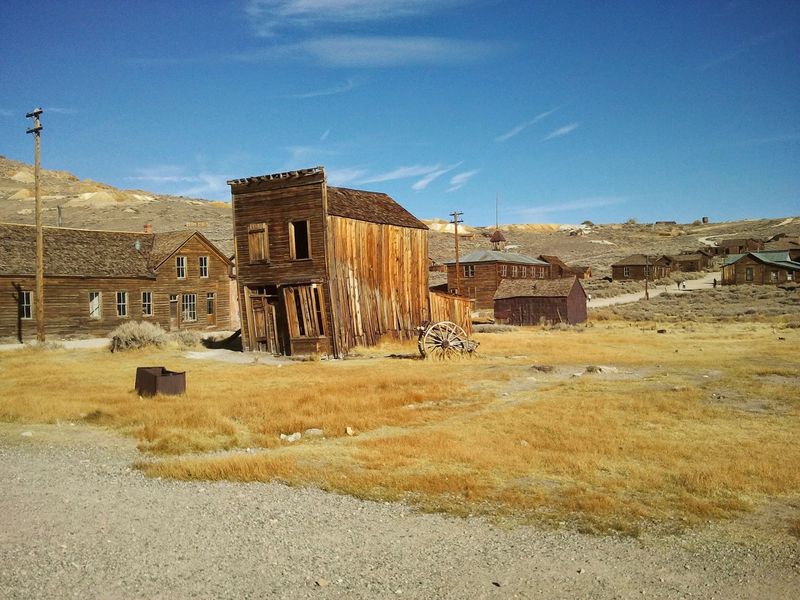
Fancy was never the goal here. Buildings went up fast, mostly from wood, and the dominant look was board-and-batten pine, which is about as no-nonsense as construction gets.
Boomtown builders cared about two things. Speed and shelter.
Elevation shaped everything else. Sitting above 8,000 feet means brutal cold, deep snow, and wind that treats loose boards like confetti, so structures had to be squat, tight, and stubborn.
Insulation was a creative problem. Residents stuffed old newspapers into their walls, which means some interiors were technically wallpapered in yesterday’s headlines and gossip.
That detail says a lot about life out there. When the nearest lumber shipment is days away, you use whatever is lying around and hope it holds through February.
Walk the streets now, and the buildings tilt at odd angles, boards silvered by decades of sun. Peeling paint clings to storefronts, and roof lines sag like tired shoulders.
None of it was designed to last 150 years, yet plenty of it has. There are no ornate columns, no showy trim, no architect’s signature flourish anywhere in sight.
Practicality won every single argument. The result is a town that looks honest, weathered, and a little haunted, which is exactly why photographers keep showing up in the late afternoon light hunting for long shadows across old pine siding.
Stories Of Daily Life In The Past
Rough does not begin to cover it. Miners, shopkeepers, gamblers, and gunfighters shared the same dusty streets, and the town earned a reputation for lawlessness that traveled far beyond Mono County.
One clergyman in 1881 called it a sea of sin lashed by the tempests of lust and passion, which is a heck of a review for a mining camp.
Hurting happened with grim regularity, sometimes daily. Living and working conditions in the early years were described as flat-out inhospitable, and nobody was exaggerating.
A large Chinese community also built a life here, and their contributions were essential. They ran laundries, peddled vegetables, and supplied much of the town’s wood and charcoal.
They maintained a Taoist temple too, along with opium dens, adding another layer to an already complicated social world. Their labor literally kept homes heated through the winter.
Then there is the legend that still spooks visitors. Stories of the Curse of Bodie claim that anyone who pockets a nail, a bottle, or a scrap of wood from the site gets hit with a run of miserable luck.
Park staff have received mailed-back artifacts with apology letters attached over the years. Believe it or don’t, but the smart move is simple.
Look through the windows, take pictures, and leave every single rusty object exactly where it sits.
Role Of Natural Resources In Growth
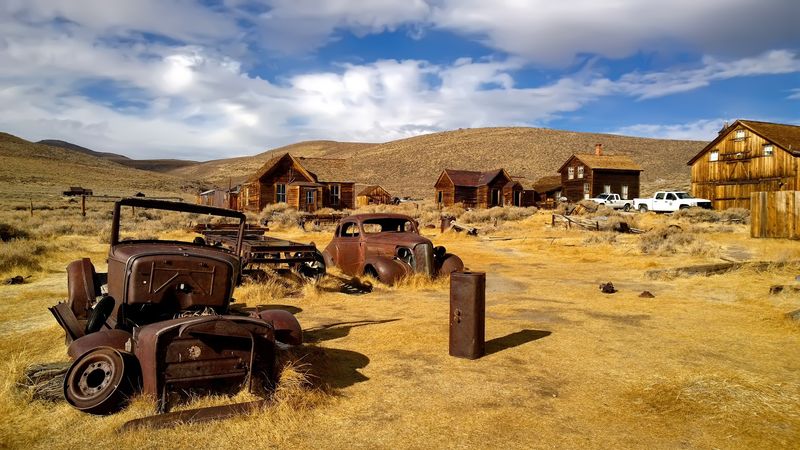
Everything about this town came out of the ground. Bodey’s 1859 discovery lit the match, but the rich gold and silver vein exposed in 1875 is what set the whole region on fire.
People poured in from every direction chasing that vein. A scattered camp became one of the largest towns in California in a shockingly short window.
The numbers still turn heads. Between 1877 and 1882, the mines pulled out more than $38 million in gold and silver.
By 1941, total output from those mines was estimated near $70 million. That is an enormous amount of metal hauled from a spot with no trees, no river, and no easy road in.
Gold got the glory, but wood kept the town alive. Stamp mills needed fuel, homes needed heat, and winters up there do not negotiate.
Chinese laborers handled much of the wood harvesting and hauling, feeding a constant demand that never really let up. Without that supply chain, people would have frozen.
The stamp mill still stands on the hillside, and guided tours walk visitors through how ore was crushed into gold-bearing powder. Seeing the machinery up close explains the noise, dust, and danger better than any sign can.
Resources built this place, and when they thinned out, the story changed fast.
Impact Of Economic Booms And Busts
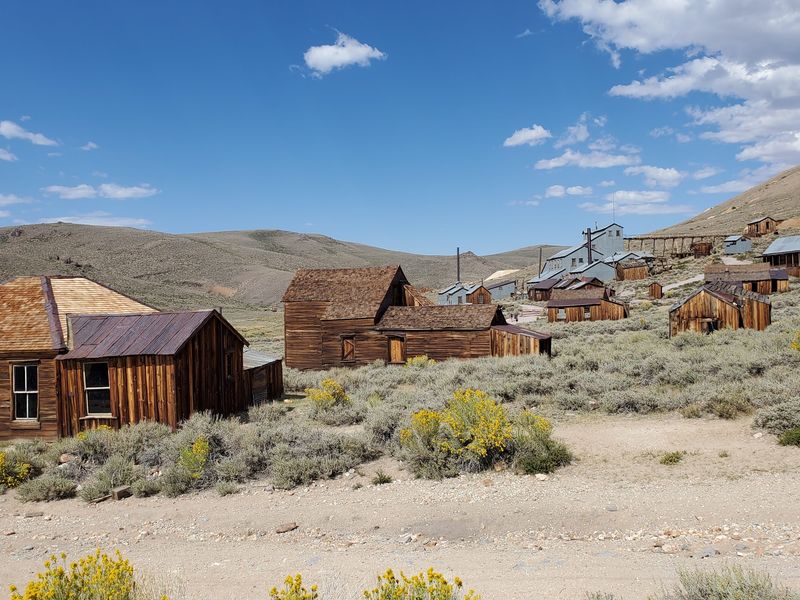
At its peak around 1879 and 1880, this town held somewhere between 8,000 and 10,000 people and roughly 2,000 structures. It ranked among the biggest communities in the entire state.
The schoolhouse enrolled as many as 625 students at one point. Picture that many kids running around a place that now has jackrabbits for residents.
The slide started early. By 1881, mines were already depleting, and fresh strikes in other territories pulled miners away like a magnet.
Boomtowns rarely die quietly, and fire did most of the heavy lifting here. A major blaze tore through in 1892, and another in 1932 wiped out a huge chunk of what remained.
Roughly three-quarters of the original town burned. For every five houses standing today, another 80 to 90 once filled the surrounding blocks.
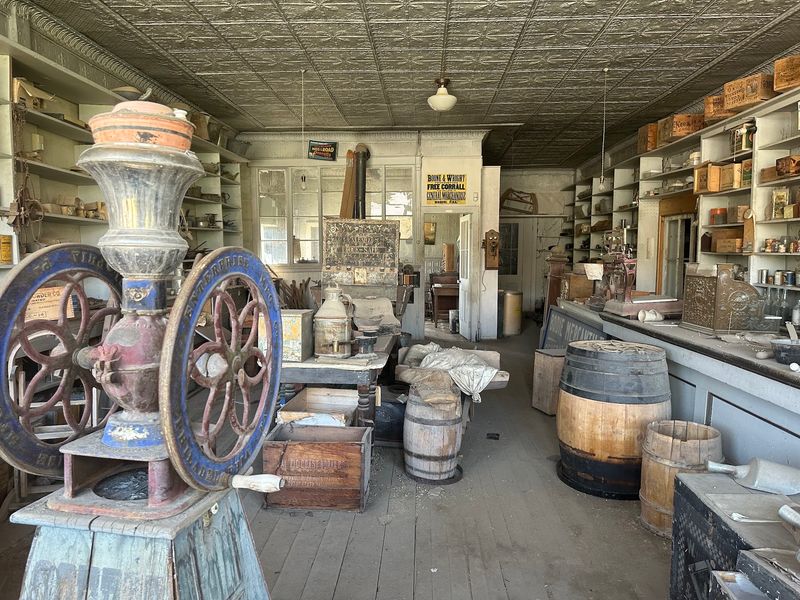
Official mining operations shut down in 1942, and the last stubborn residents finally packed up. Some of them left furniture, dishes, and stock on store shelves behind.
That abandonment is exactly why the site feels so strange now. Nobody staged a grand farewell; they simply walked away from an economy that stopped paying.
The empty gaps between buildings tell the story as clearly as the buildings themselves do. Wide dirt lots mark where entire neighborhoods once stood shoulder to shoulder.
Preservation Efforts And Challenges
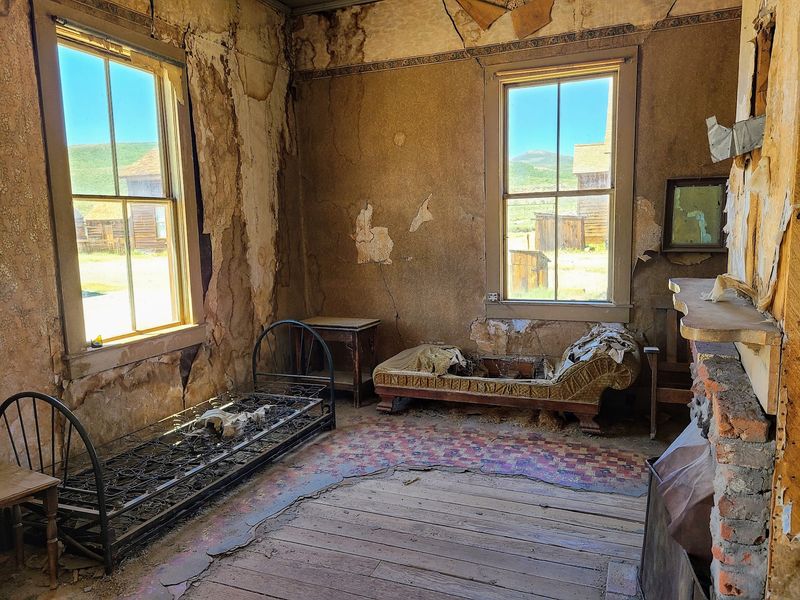
Arrested decay is the phrase everyone learns here, and it perfectly describes the approach. Buildings are not restored to look new; they are held steady exactly as they were found.
Peeling wallpaper stays peeling. Sagging ceilings stay sagging.
The site became a National Historic Landmark in 1961 and a State Historic Park in 1962. That protection came just in time.
Early caretakers deserve serious credit for what survived. While other abandoned camps across the West were stripped bare by vandals and souvenir hunters, someone was here watching the doors.
Interiors still hold furniture, tools, canned goods, and personal belongings. Peering through the glass feels less like visiting a museum and more like catching someone mid-move.
Keeping it that way is a constant battle. Wind-driven dust and sand sandblast the wood, rain works into seams, and heavy snow presses down on roofs that were never built for a century of service.
Crews stabilize what they can without changing the look. It is delicate work that has to be repeated year after year.
Visitors help by staying respectful. Don’t lean on walls, don’t climb through openings, and don’t pocket souvenirs, because broken glass and rusted machine parts are scattered around, and the site is deliberately left raw rather than sanitized.
Wildlife Surrounding Abandoned Areas
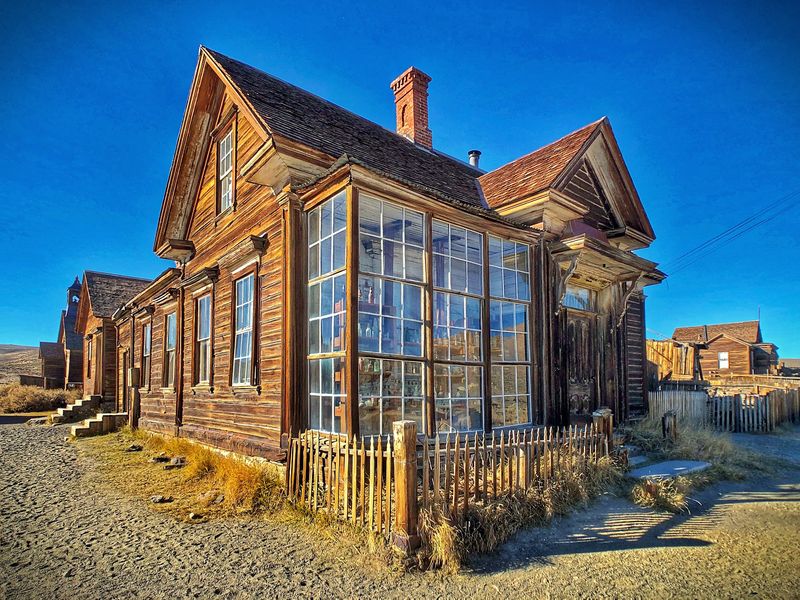
The buildings may be empty, but the hills around them are surprisingly busy. The Bodie Hills sit in a transition zone between the Sierra Nevada and the Great Basin, which stacks two ecosystems into one landscape.
That overlap creates real biological diversity. Sagebrush steppe rolls in every direction, dotted with pinyon pine, lodgepole pine, Sierra juniper, and Utah juniper.
Pronghorn antelope roam here in solid numbers, which is unusual for central eastern California. Spotting one sprinting across open sage is a legitimate highlight.
The area also serves as a stronghold for the Bi-State sage grouse, a distinct population segment that biologists watch closely. Their survival depends on healthy sagebrush habitat.
Bigger animals move through too. Black bears, mountain lions, and mule deer all use these hills, and golden eagles ride the thermals overhead.
Pikas live in the rockier spots, squeaking at anything that comes close. Still, the animal most visitors actually see is far less dramatic.
Jackrabbits. They bolt out of the brush constantly, ears up like radar dishes, and they clearly consider the townsite their turf now.
Bringing binoculars is smart, especially in early morning or late afternoon when animals are most active. Shade is nonexistent out there, so a hat and water matter as much as the wildlife checklist does.
Tourist Activities And Educational Programs
Most people explore on their own, guidebook in hand, wandering wherever the dirt streets lead. There are no roped-off paths or paved sidewalks, which is a big part of the appeal.
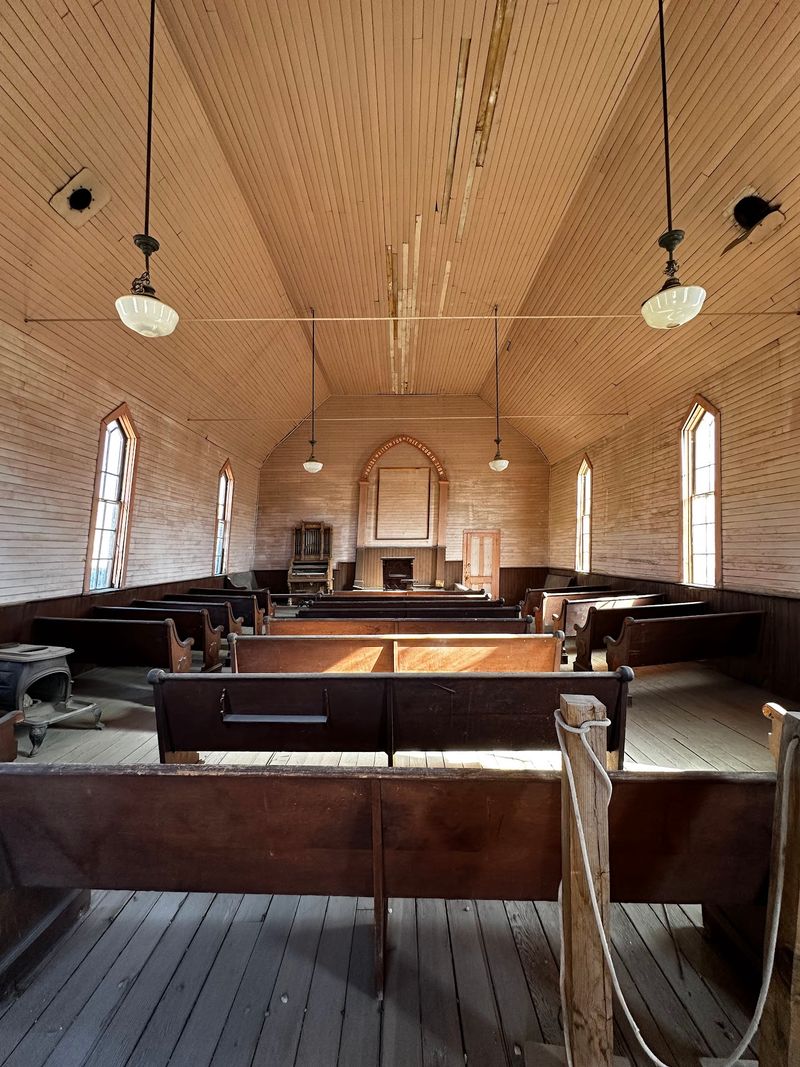
Over 100 buildings remain, and the windows are the main event. A schoolhouse still has desks lined up, a church still has pews, and general stores still have goods sitting on shelves.
From Memorial Day through Labor Day, daily guided tours run, including the stamp mill tour. That mill is the one building visitors can enter, and only with a guide.
Rangers also give free history talks that fill in the messy, human details signs can’t cover. Tickets for the mill tour sell out, and sales close about ten minutes before departure, so timing matters.
Evening programs like Ghost Walks and Star Stories or Twilight Tours run on select nights. After-hours access under a sky full of stars hits differently.
The cemetery on the edge of town is worth the walk. Individual headstones carry their own short biographies, and the view across the valley is excellent.
Practical notes help here. The last few miles are washboard dirt, there is no food service on site, and hours run 9 AM to 6 PM daily. Comfortable shoes, snacks, and sunscreen are non-negotiable.