
This Wisconsin County Park Hides 11 Caves Beneath The Surface And Most People Have Never Heard Of It
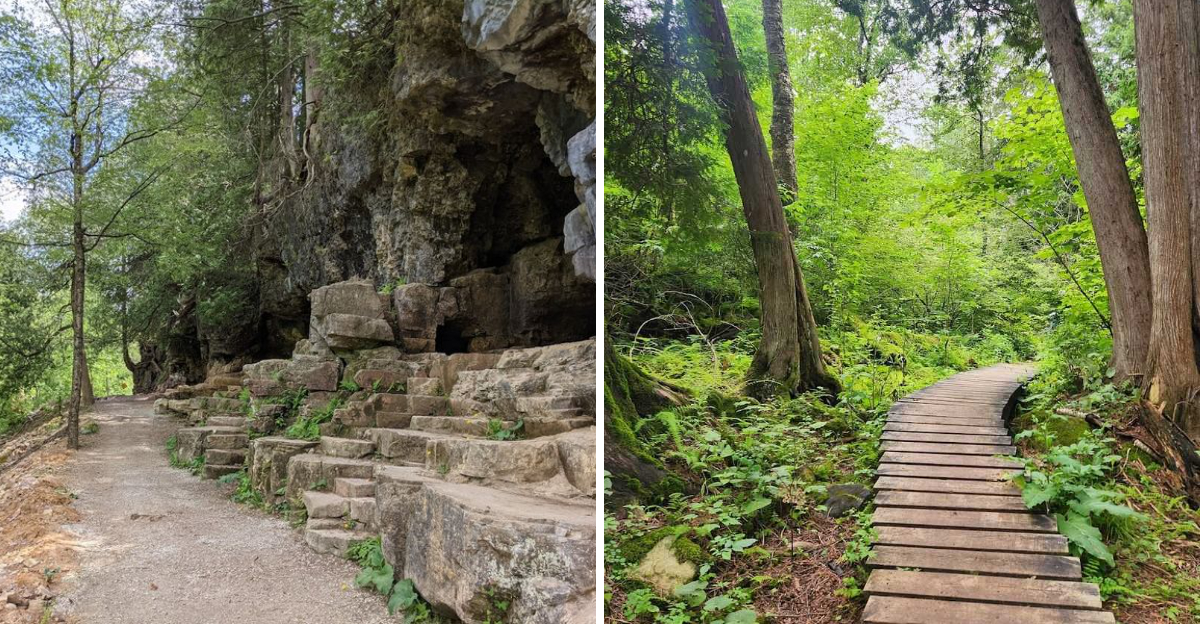
Below quiet farm roads and leafy trails, eastern Wisconsin keeps a rocky surprise made for curious knees and sturdy shoes. The adventure starts above ground with woods, cliffs, and winding paths, then drops into a cooler world of limestone openings, shadowy chambers, and stairways that make every step feel a little more daring.
Kids get the thrill of a real-life explorer day, while grown-ups get scenery that looks nothing like a typical picnic stop. Bring a flashlight, clothes that can handle dust, and a little courage.
The caves are not polished or flashy, and that is the fun. This is Wisconsin with mud on its boots, stone under its fingers, and stories carved deep below the trail.
This County Park Sits Along The West Twin River
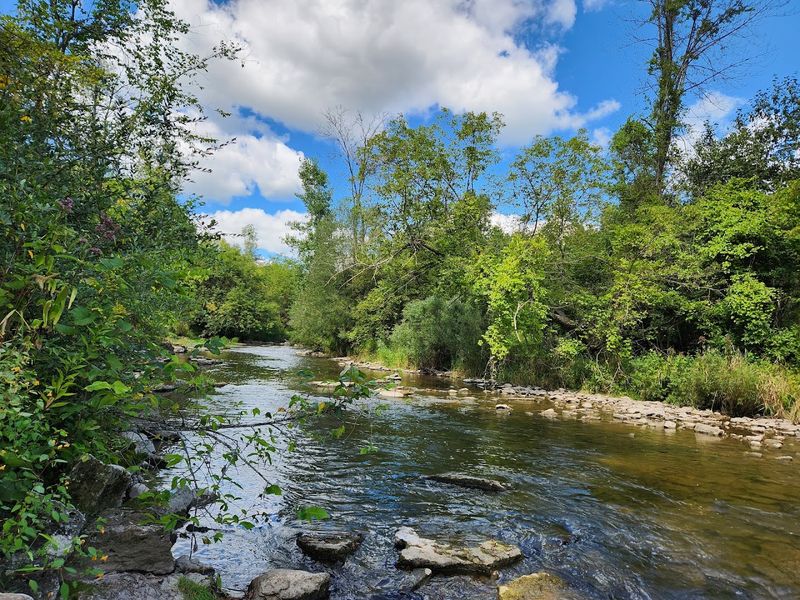
The West Twin River forms the natural backbone of this park, cutting through limestone bedrock and creating the dramatic topography that makes cave formation possible. Water flows steadily through the preserve, providing the constant erosive force that shaped these underground chambers over millennia.
The river corridor supports a dense canopy of hardwoods and creates habitat for eagles, which have been spotted fishing along the banks.
Trails follow the river at multiple elevations, giving visitors perspective on how water and geology interact. The sound of moving water accompanies most hikes through the property.
During spring runoff, the river swells and demonstrates the power that carved these passages from solid rock.
This waterway connects the park to a larger watershed system stretching across Manitowoc County. The relationship between surface water and underground formations remains visible throughout the preserve, making it an outdoor classroom for understanding karst landscapes.
The Caves Were Shaped By Glaciers And Ancient Rock
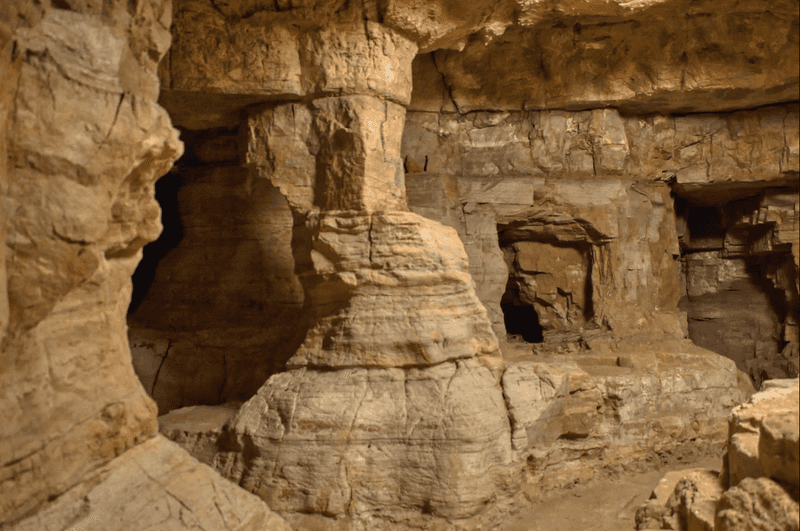
Glaciers retreated from this region roughly 12,000 years ago, leaving behind the landscape framework that allowed cave development. The bedrock here consists of Silurian-age dolomite, a type of limestone deposited when shallow seas covered Wisconsin some 400 million years in the past.
Acidic groundwater seeping through cracks in this soluble rock gradually dissolved passageways and chambers.
The glacial legacy appears in surface features as well. Erratics, large boulders carried by ice sheets and deposited randomly across the terrain, dot the park grounds.
Glacial till, a mixture of clay, sand, and gravel left by melting ice, caps the bedrock in many areas and influences drainage patterns that feed the cave systems below.
Understanding this geological timeline helps visitors appreciate the deep history beneath their feet. The caves represent only the most recent chapter in a story spanning hundreds of millions of years.
Every formation, from stalactites to flowstone, records environmental conditions from different eras.
A Rugged Cliff Line Runs Through The Park
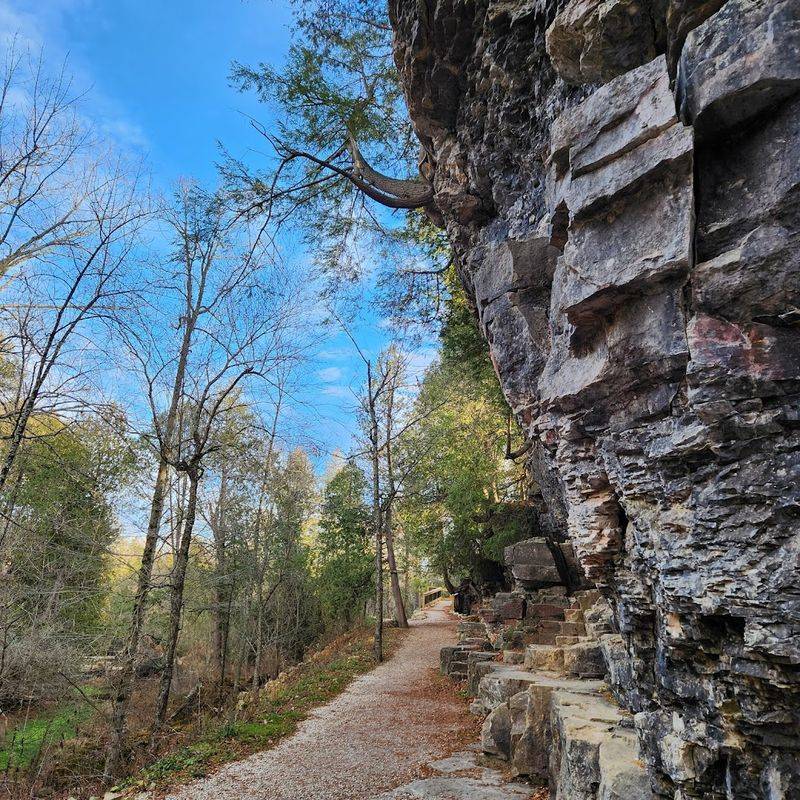
A prominent escarpment cuts across the park, creating a natural divide between upper and lower trail systems. This cliff face, rising up to 30 feet in places, exposes the layered dolomite bedrock and provides the vertical relief necessary for cave entrances to open at accessible heights.
The rock face shows clear stratification, with horizontal bands marking different depositional periods from the ancient sea floor.
Vegetation clings to ledges and crevices along the cliff. Ferns, mosses, and small shrubs find purchase where soil accumulates in pockets.
The microclimate along the cliff base stays cooler and more humid than surrounding areas, supporting plant species that prefer shaded, moist conditions.
The escarpment serves as the primary feature that makes this park distinctive. Without this geological uplift and subsequent erosion, the caves would remain inaccessible or nonexistent.
Visitors walking the lower trails can look up and see the full height of the formation that shelters the cave systems above their heads.
Several Cave Openings Can Be Reached By Trail
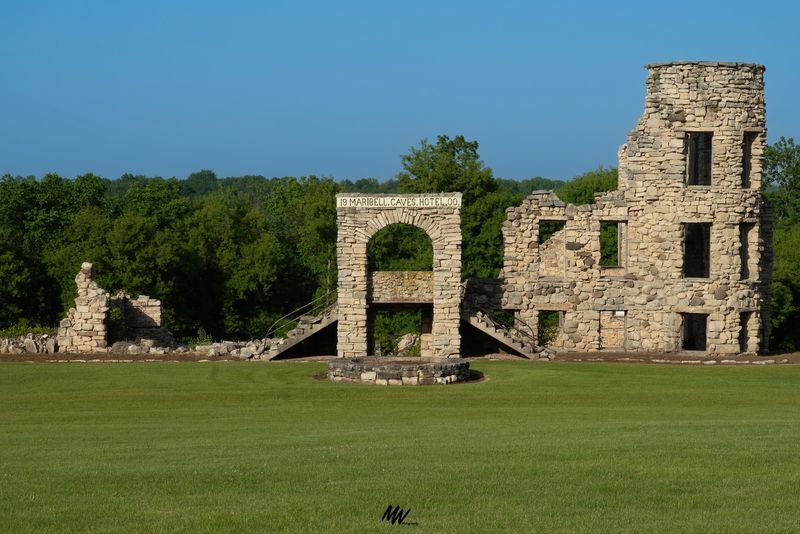
Well-maintained gravel paths lead to multiple cave entrances scattered throughout the property. Treasure Cave, Cooper Cave, and Pancake Cave all sit within easy walking distance of the main parking area, connected by clearly marked trails suitable for families.
Signage identifies each opening and provides basic information about formation and safety.
The accessibility of these caves sets this park apart from many underground sites that require technical skills or special permits. Visitors can walk right up to openings and peer inside without specialized equipment, though flashlights become essential for any exploration beyond the entrance zones.
The trails themselves wind through pleasant woodland, making the journey to each cave as enjoyable as the destination.
Trail conditions remain good throughout most of the year. The park maintains the paths regularly, clearing fallen branches and filling erosion channels.
Even during wet periods, the gravel surface provides better traction than dirt trails. Maps posted at trailheads show the layout and help visitors plan routes based on time and interest level.
Maribel New Hope Cave Is The Big Guided Tour Experience
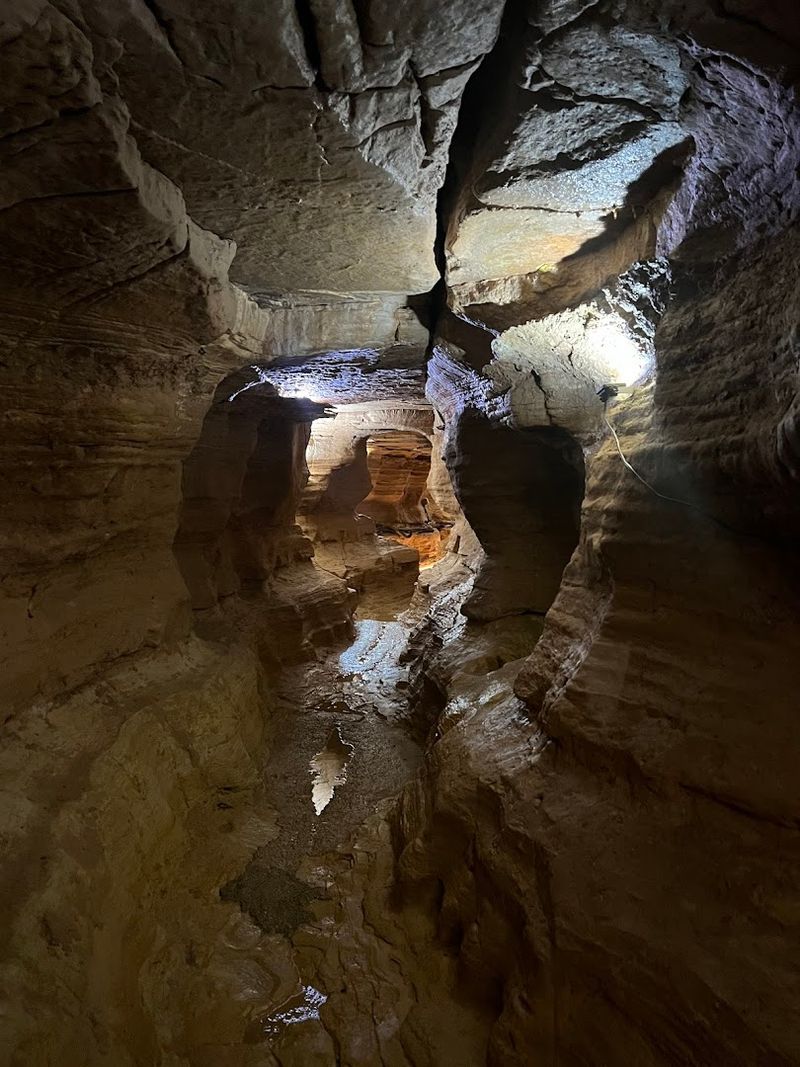
New Hope Cave represents the crown jewel of the park’s underground features, stretching deep into the bedrock with multiple chambers and passages. This extensive system remains gated and locked throughout most of the year, accessible only during guided tours offered on the third Sunday of each month from May through October.
The protection ensures formations stay intact and visitor safety remains manageable in the more challenging sections.
Tours last approximately one hour and require advance registration. Guides lead groups through rooms decorated with stalactites, stalagmites, and flowstone formations that take centuries to develop.
The temperature inside holds steady around 50 degrees regardless of surface conditions, making warm layers advisable even during summer visits.
The cave’s history includes use as a dance hall and event space during the early 20th century, when owners installed lighting and built platforms inside the largest chamber. Evidence of this commercial period remains visible, adding a layer of human history to the geological story.
Tour schedules and reservation information appear on the park website.
Tartarus Cave System Adds A More Mysterious Side To The Park
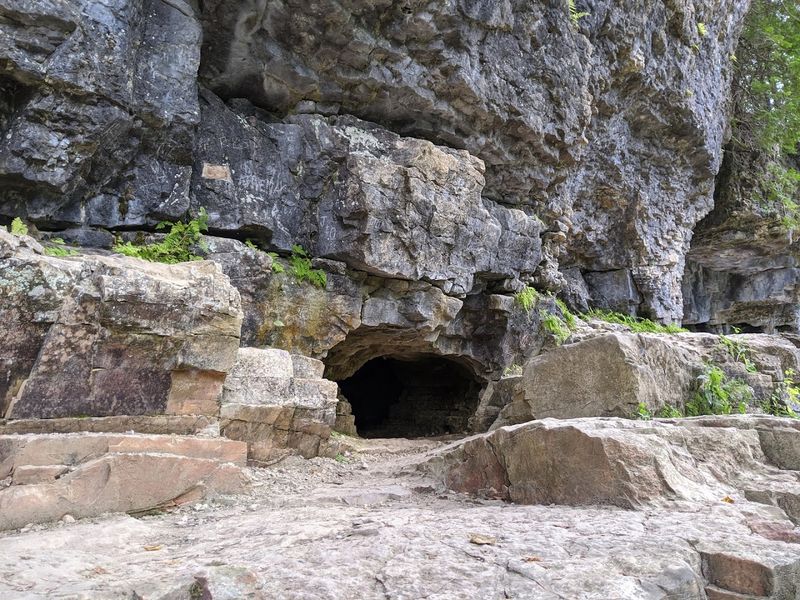
Tartarus Cave takes its name from the ancient Greek underworld, a fitting reference for this darker, more complex system. The entrance sits lower along the cliff line, requiring visitors to descend before accessing the opening.
Unlike the more visited caves, Tartarus maintains an air of genuine wilderness, with fewer improvements and more natural obstacles.
The interior passages branch in multiple directions, creating a maze that demands careful attention to avoid disorientation. Water seeps through cracks in the ceiling, creating slick surfaces and actively forming new mineral deposits.
The cave supports a population of bats during certain seasons, adding biological importance to its geological significance.
Exploring Tartarus requires more preparation than casual cave visits. The passages include tight squeezes, low ceilings, and uneven floors that challenge even experienced crawlers.
Proper lighting, protective clothing, and a companion become essential rather than optional. The park recommends that only those comfortable with confined spaces and willing to get muddy attempt this particular system.
The reward comes in seeing formations and passages that fewer people witness.
Some Caves Are Gated To Protect Formations And Bats
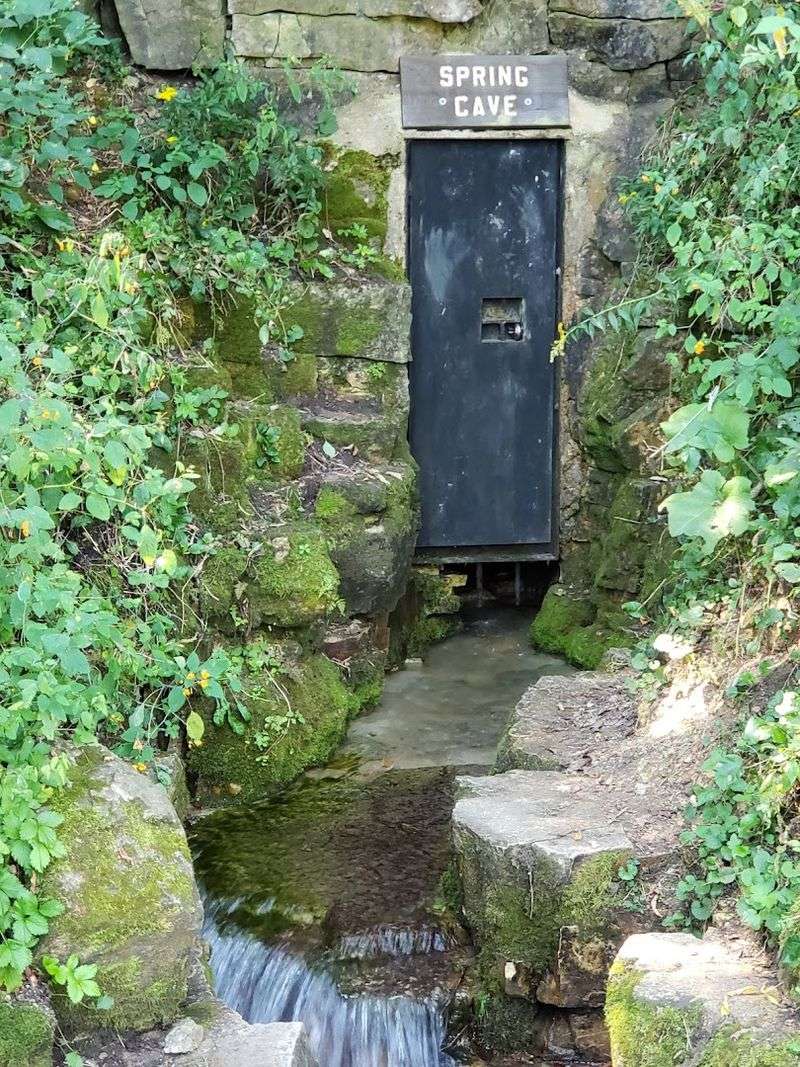
Several cave entrances throughout the park feature locked metal gates designed to balance protection with visibility. These barriers prevent unauthorized entry while allowing air circulation necessary for bat populations and formation preservation.
The gating program began after damage to delicate speleothems and disturbance to hibernating bats raised conservation concerns.
Bats use caves as hibernation sites during winter months, entering a state of torpor that makes them extremely vulnerable to disturbance. Even brief interruptions can cause them to burn critical fat reserves, potentially leading to death before spring arrives.
The gates include spacing that allows bats to fly through while keeping humans out during sensitive periods.
Formations inside gated caves continue growing undisturbed, a process requiring specific conditions of temperature, humidity, and mineral-rich water. A single broken stalactite represents centuries of lost growth.
Visitors can still peer through the gates to see interior features, and scheduled tours provide access to the most significant gated system. The protection ensures future generations can experience these underground wonders in their natural state.
Visitors Can Explore Wild Ungated Caves On Their Own
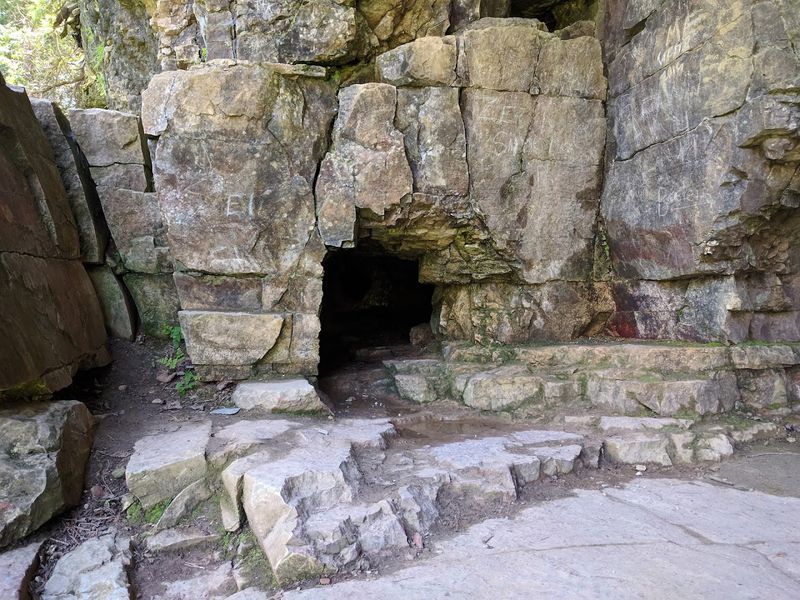
Three caves remain open for self-guided exploration, offering hands-on adventure without scheduled tours or special permissions. Treasure Cave, Cooper Cave, and Pancake Cave each present different characteristics and challenges, from short crawls to longer passages requiring commitment.
The park provides no lighting, supervision, or development inside these systems, preserving the wild character that appeals to serious cave enthusiasts.
Successful exploration demands preparation. Flashlights or headlamps provide essential illumination, with backup light sources recommended for safety.
Knee pads protect against the rough limestone surfaces that characterize most passages. Old clothing becomes necessary since mud, clay, and rock dust coat anyone who ventures beyond entrance areas.
Cave spiders inhabit the ceilings but generally ignore visitors who stay low.
The self-guided option attracts those seeking authentic underground experiences. Without railings, paved paths, or artificial lighting, these caves require visitors to navigate using judgment and physical capability.
The sense of discovery and accomplishment that comes from crawling through natural passages creates memories that sanitized commercial caves cannot match. Proper respect for the environment ensures these resources remain available.
The Park Has Trails Above And Below The Cliff Line
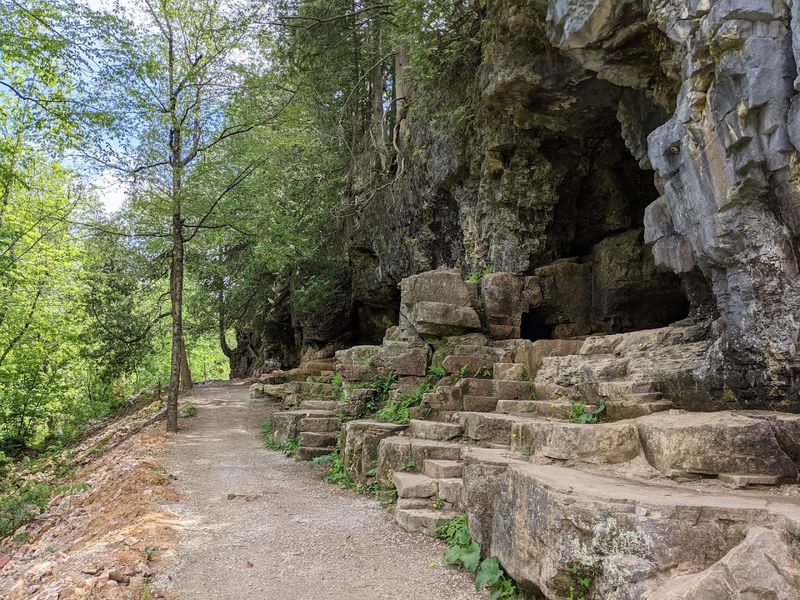
The trail network spans both the upland plateau and the lowland corridor along the river, connected by staircases that traverse the cliff face. Upper trails wind through mature forest, passing the playground, picnic areas, and restroom facilities before reaching viewpoints overlooking the gorge.
These paths remain relatively flat and accessible to most fitness levels.
Lower trails follow the cliff base and river edge, providing direct access to cave entrances and water features. The environment changes dramatically at this elevation, with cooler temperatures, different vegetation, and the constant presence of the limestone escarpment.
These paths involve more uneven terrain and occasional roots or rocks but still qualify as moderate rather than difficult.
The dual-level system allows visitors to customize their experience. Families with young children might stick to upper trails with occasional staircase descents to peek at caves.
Serious hikers can complete loops that include both levels, maximizing variety and covering several miles. Trail maps show distances and elevation changes, helping groups make informed choices.
The design ensures that everyone from casual walkers to dedicated explorers finds appropriate routes.
A Staircase Makes The Lowland Cave Area Easier To Reach
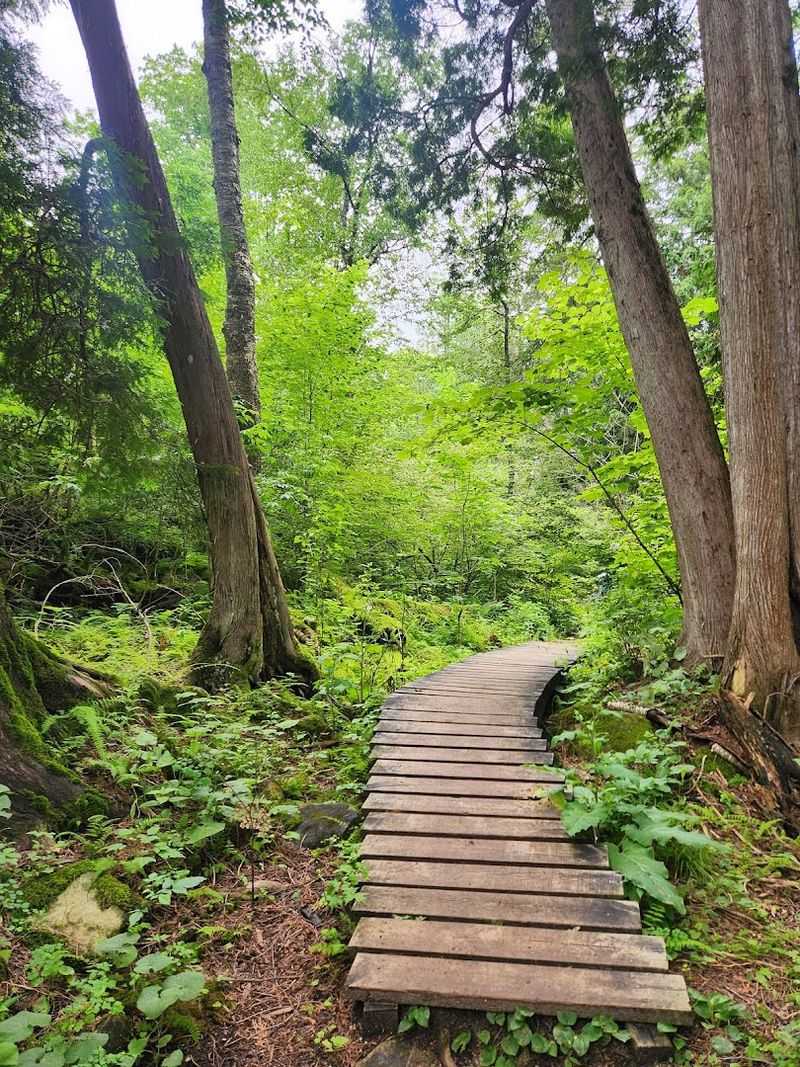
A substantial wooden staircase descends the cliff face, providing safe passage between the upper and lower trail systems. This structure includes approximately 25 to 35 steps with handrails, making the vertical transition manageable for visitors who might struggle with steep slopes or scrambling.
The stairs eliminate the need for difficult climbing while preserving access to the most interesting geological features.
Construction and maintenance of this amenity represent significant investment in visitor experience. The staircase must withstand freeze-thaw cycles, heavy use, and occasional flooding from the river below.
Regular inspections ensure structural integrity and safety. The placement was carefully chosen to minimize environmental impact while maximizing utility.
For many visitors, this staircase serves as the gateway to the park’s primary attractions. Without it, families with small children, older adults, or those with mobility limitations would miss the cave area entirely.
The stairs prove that thoughtful development can enhance access without compromising the wild character that makes natural areas valuable. They represent a successful balance between preservation and public enjoyment of geological resources.