
10 Safest And Most Peaceful Places To Live In Wyoming For A Slower Pace Of Life In 2026
If crowds, noise, and constant rushing have started to wear you down, these Wyoming towns offer a real chance for a slower pace heading into 2026. Streets stay quiet here, without the traffic or congestion bigger cities tend to bring.
Crime rates stay low across these areas, adding to the overall sense of safety residents mention often. Nature surrounds most of these towns, offering easy access to hiking, fishing, and open space.
Communities here feel close-knit, the kind where neighbors actually know each other by name. Housing costs stay reasonable compared to busier states nearby, making the slower pace even more appealing.
Local businesses reflect that same unhurried rhythm, without the rush bigger cities tend to demand. These towns proved that peace and safety can still define everyday life in 2026.
1. Thermopolis
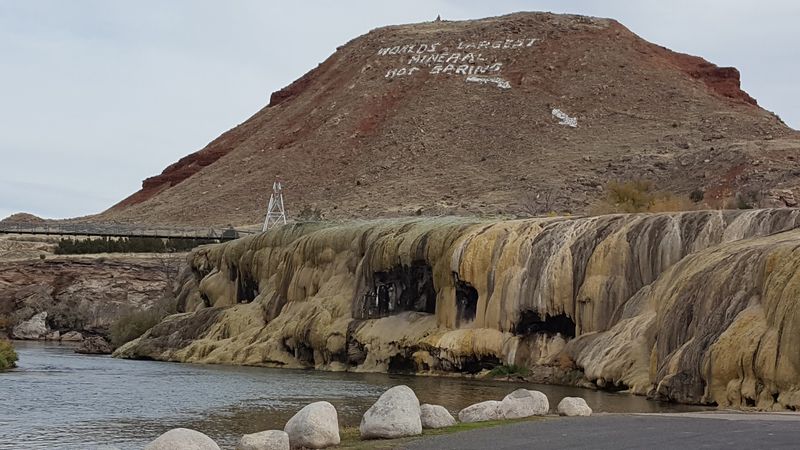
Free hot spring soaking, every single day, funded by an 1896 treaty agreement. That is the deal in Thermopolis, and it still holds.
Hot Springs State Park anchors the town with the world’s largest mineral hot springs. Water pours over terraces stained orange, rust, and cream, then flows toward the Bighorn River.
A herd of bison grazes the hills above the park, chewing away like they own the place. They sort of do.
The Swinging Bridge crosses the river nearby, and it wobbles just enough to make crossing feel like a small dare.
Dinosaur fans have serious reasons to stick around. The Wyoming Dinosaur Center holds a huge fossil collection, including Big Al the Allosaurus, and runs digs where regular people pull bones out of the ground themselves.
Head northwest and Legend Rock State Petroglyph Site waits with thousands of carvings pecked into sandstone. Some panels are believed to be several thousand years old.
Wind River Canyon runs south of town, walls climbing straight up while the river cuts through. Climbers, anglers, and bighorn sheep all share the space.
The climate here stays milder than much of Wyoming, which means shoulder seasons feel usable instead of brutal. Winters exist, obviously, but the soaking pools help.
Old West character lingers on the streets without feeling staged.
2. Glenrock
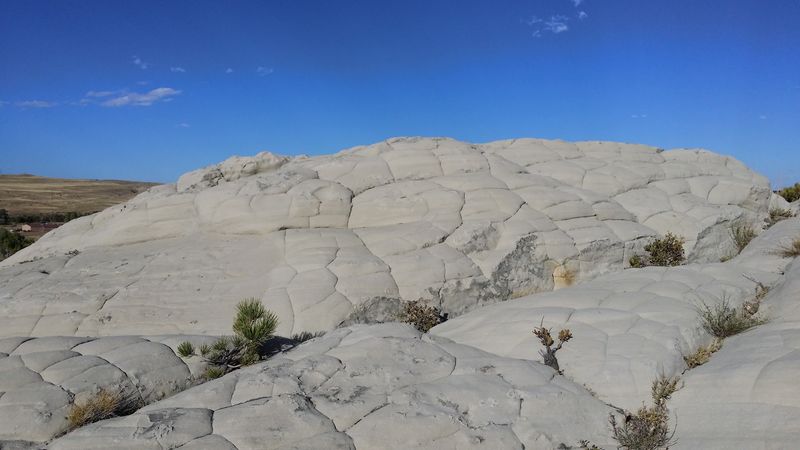
Prehistoric shark teeth in a landlocked state sounds like a tall tale. Around Glenrock, people actually find them.
The town sits near Rock in the Glen, a sandstone landmark where Oregon Trail travelers carved their names into stone. Wagon ruts and old signatures are still readable in spots.
Glenrock Town Square works as the social engine here. Summer brings concerts and movies on the grass, and winter turns part of it into an ice skating rink.
Warm months mean the splash pad runs constantly, kids everywhere, parents parked on benches. Basketball courts and walking paths circle the area, so nobody has far to go.
The Paleon Museum is small but packs in dinosaur material, much of it collected locally by students and volunteers. Fossil prep happens right there.
A recreation center with a pool covers the indoor days, which Wyoming supplies plenty of between November and March.
Medicine Bow National Forest and the Laramie Mountains sit within easy driving distance, opening up trails, camping, and fishing without a big commitment.
Population stays small enough that faces become familiar fast. The grocery store doubles as a place to catch up on news.
For anyone leaving a crowded metro area, the adjustment is mostly learning to slow down.
3. Worland
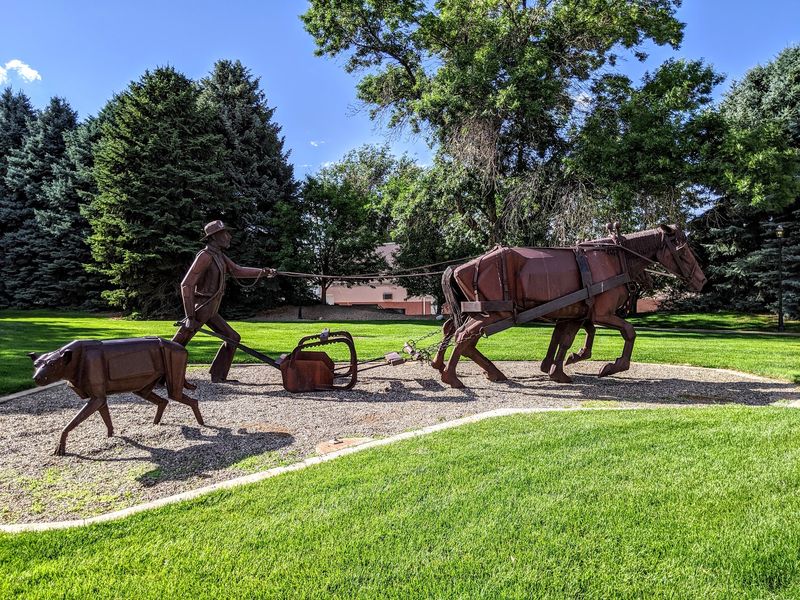
Worland regularly lands at the top of Wyoming’s safest city lists, with a crime rate well under the state average. Small population plus active local policing plus neighbors who notice things adds up.
Farm country surrounds the town. Sugar beets, malt barley, and hay fields stretch out between two mountain ranges, and the sunsets over those fields are genuinely absurd.
The Washakie Museum and Cultural Center handles the history side, covering mammoth hunters, paleontology finds, and pioneer settlement in one building. Traveling exhibits rotate through as well.
Families lean on the Worland Aquatic Center, which pairs an indoor pool with an outdoor splash pad. Golfers get Green Hills Golf Course and its tidy fairways.
Bighorn Mountain access sits close, so hiking, mountain biking, hunting, and trout fishing are weekend-normal rather than special occasions.
West of town, wild horses roam public land. North of town, petroglyph panels wait on canyon walls with almost nobody around to crowd the view.
Then there is the Painted Desert, sometimes called Wyoming’s Badlands, where striped rock formations look borrowed from another planet. An interpretive trail explains the layers.
Housing costs stay reasonable compared to the mountain resort side of the state.
4. Buffalo
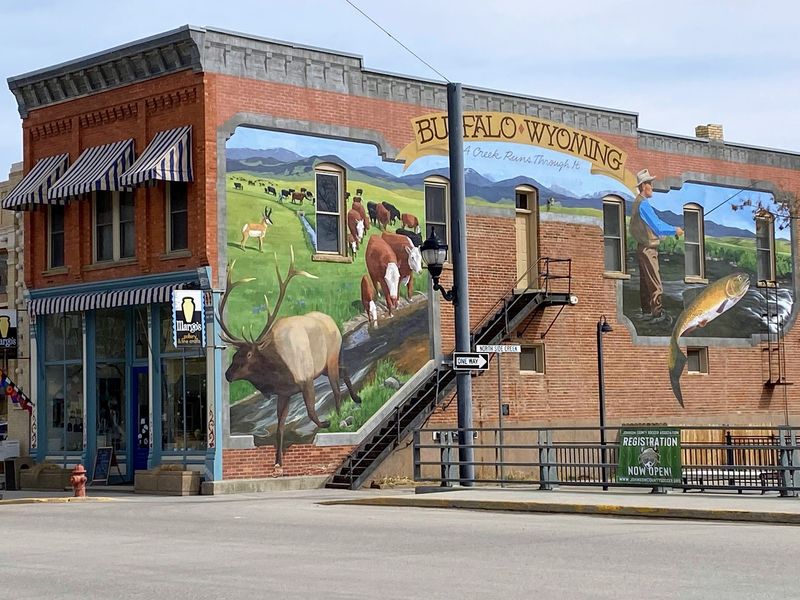
Butch Cassidy, Teddy Roosevelt, and Calamity Jane all passed through the Occidental Hotel. The building still stands on Main Street, pressed-tin ceilings and all.
Buffalo grew up in the foothills of the Bighorn Mountains, where the Great Plains stop rolling, and the peaks take over. The transition happens fast, almost within a mile.
Historic Main Street keeps its old brick fronts, filled with shops, cafes, and the Jim Gatchell Memorial Museum. That museum holds artifacts from the Johnson County War and the frontier army era.
Clear Creek runs right through town, and a paved trail follows it for miles. Locals walk dogs there year-round; coats optional depending on the month.
Cloud Peak Wilderness and Bighorn National Forest open the door to backpacking, alpine lakes, and snowmobiling once the snow settles in.
Lake DeSmet sits a short drive north, good for boating, swimming, and camping with mountain views reflected in the water.
About 13 miles east, the Dry Creek Petrified Tree Environmental Education Area preserves an ancient forest turned to stone. A loop trail explains how it happened.
Washington Memorial Park offers regulation horseshoe pits under old cottonwoods along the creek, which might be the most Wyoming sentence possible.
5. Douglas
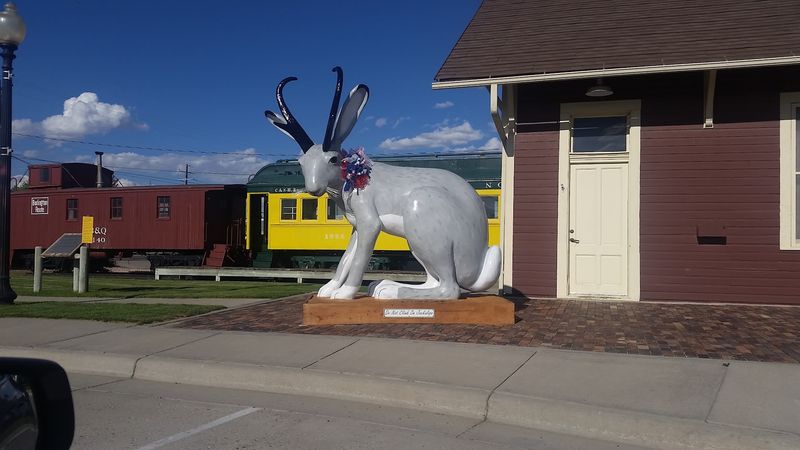
A town with an official jackalope hunting license program clearly does not take itself too seriously. Douglas issues them, valid only on June 31.
Beyond the mythical rabbit humor, real history stacks up here. The Wyoming Pioneer Museum holds an enormous artifact collection covering settlers, ranchers, and Native history across the region.
Fort Fetterman State Historic Site dates to 1867 and sits on a bluff above the North Platte River. Restored buildings and interpretive trails let visitors picture frontier duty, which sounds cold and lonely.
Railroad history gets its own home at the Douglas Railroad Museum and Visitor Center, where preserved rail cars are open for climbing aboard.
Ayres Natural Bridge Park deserves the drive. It is one of only three natural bridges in the country that spans flowing water, and the red rock arch over LaPrele Creek makes a shaded picnic spot hard to beat.
Jackalope Days brings street dances, live music, and general small-town chaos each summer. The Wyoming State Fair also lands in Douglas every August.
Daily life moves at a pace where errands take twenty minutes, and conversations take longer. School events fill the calendar, and high school football draws real crowds.
6. Sheridan
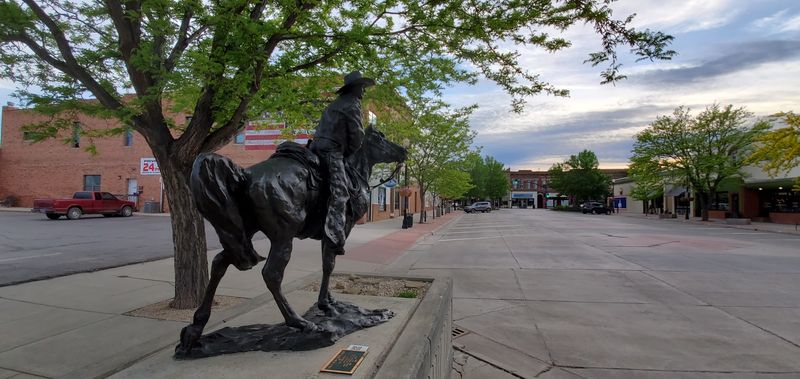
Rope and saddle making has kept going in Sheridan since 1946, when King’s Saddlery opened its doors. The attached museum holds hundreds of saddles and Western artifacts.
Downtown here is unusually strong for a town this size. Century-old brick buildings house galleries, bookstores, boutiques, and cafes, all within a few walkable blocks.
The WYO Theater has hosted live performances since 1923 and still books touring acts. The Mint Bar, open since 1907, keeps its cedar-shingle walls and brand-covered decor intact.
Bighorn National Forest sits directly west, which means trailheads, trout streams, and ski runs are all a short drive from a grocery run.
Tongue River Canyon delivers red rock walls, fly fishing water, and climbing routes. Golden eagles show up overhead often enough that people stop pointing.
Soldier Ridge Trail runs along ranch land with Cloud Peak Wilderness filling the horizon. Good for evening walks when the light goes gold.
Four real seasons happen here, and the town handles all of them without shutting down. Snow removal is efficient because it has to be.
Tourism exists but has not swallowed the place, so the Western identity feels lived in rather than performed. Medical care, schools, and shopping cover the practical side.
Look for it in Sheridan County, Sheridan, Wyoming.
7. Kemmerer
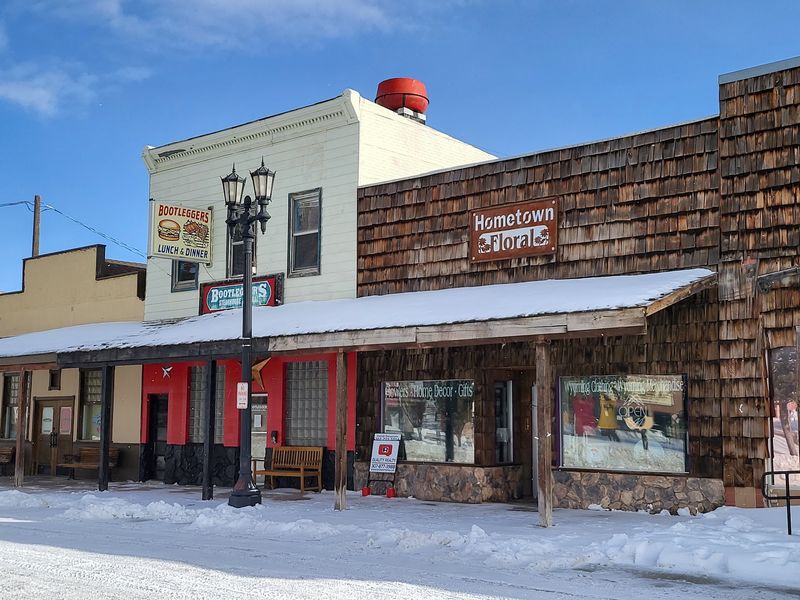
Fifty-two million years ago, a subtropical lake covered this corner of Wyoming. Fish vanish there turned into some of the most detailed fossils on the planet.
Kemmerer wears the nickname Fossil Fish Capital of the World, and Fossil Butte National Monument backs it up. Trails, a scenic drive, and a visitor center full of specimens fill a full day.
During summer, paleontologists work a quarry on site while visitors watch. Commercial quarries nearby let anyone split shale and keep common finds.
Retail history hides here too. James Cash Penney opened his first store in Kemmerer in 1902, and the original Mother Store still operates while his small home nearby serves as a museum.
Ham’s Fork River runs past town and holds trout worth chasing. Winter brings an annual ice fishing derby hosted by the Lions Club.
Lake Viva Naughton sits north of town, good for boating, kayaking, and paddling in summer, then snowmobiling and ice fishing once things freeze solid.
Rolling sagebrush hills surround everything, and the sky feels oversized even by Wyoming standards. Night skies are dark enough for serious stargazing.
The triangle-shaped town plaza downtown gives the place an odd, charming layout you will not see elsewhere. Lincoln County, Kemmerer, Wyoming.
8. Lusk
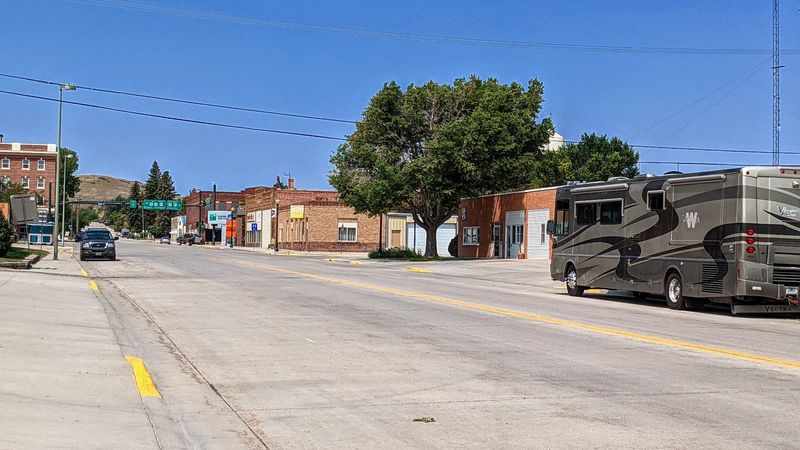
Niobrara County holds the title of least populated county in the least populated state. Roughly two people per square mile, give or take a jackrabbit.
Lusk serves as the county seat, and downtown keeps a handful of shops and cafes running with genuine warmth. Nobody is in a rush.
Painted quilt blocks are the town’s signature. The Wyoming Quilt Trail has placed over 100 bright wooden squares on barns, homes, and businesses, turning a drive through town into a scavenger hunt.
The Stagecoach Museum tells the frontier story, including the Cheyenne to Deadwood stage route that once passed through. Artifacts inside cover ranching, homesteading, and early travel.
Caboose Park sits right on Main Street with a historic rail car parked in it. Kids climb on it constantly.
Other city parks add playgrounds, walking paths, and a skateboard park, which is more recreation infrastructure than the population would suggest.
Once the sun drops, the real attraction shows up. Almost no light pollution means the Milky Way appears without any effort at all.
Crime is close to nonexistent, mostly because everyone would immediately know who did it. Doors go unlocked more often than not.
9. Newcastle
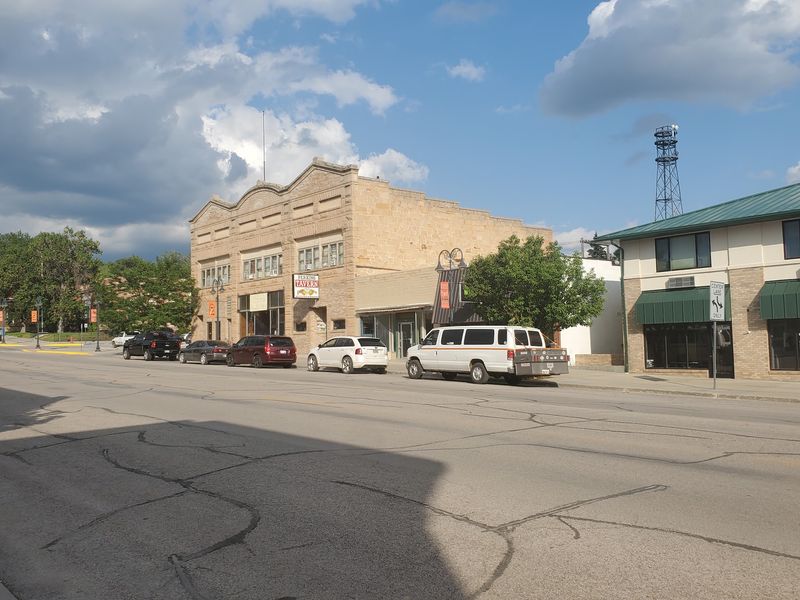
Named after Newcastle upon Tyne in England, this town owes its existence to coal and the railroad. The Cambria mine boom put it on the map in 1889.
Artesian water defines the place now. Crystal-clear springs feed ponds and fountains around town, including the well-known display at the Fountain Motor Inn.
Main Street mixes old brick buildings with local shops, and the history includes colorful characters like Johnny Owens, remembered as the Gambling Sheriff.
The Anna Miller Museum stores an impressive lineup of antique fire wagons plus artifacts hauled out of the abandoned Cambria Coal Camp.
Black Hills country starts right at the edge of town, pine-covered and cooler than the surrounding plains. The Flying V Trail system offers 11 trails for hiking and mountain biking.
Thunder Basin National Grassland stretches west with antelope, prairie dog towns, and horizon in every direction.
Keyhole State Park delivers boating, fishing, and camping with Black Hills views across the water. Closer in, Black Elk Pond is good for casting a line, and Lake Reservoir handles summer swimming.
Devil’s Tower is about a 90-minute scenic drive north. Jewel Cave National Monument, with all its crystal-lined passages underground, takes under 30 minutes.
10. Jackson
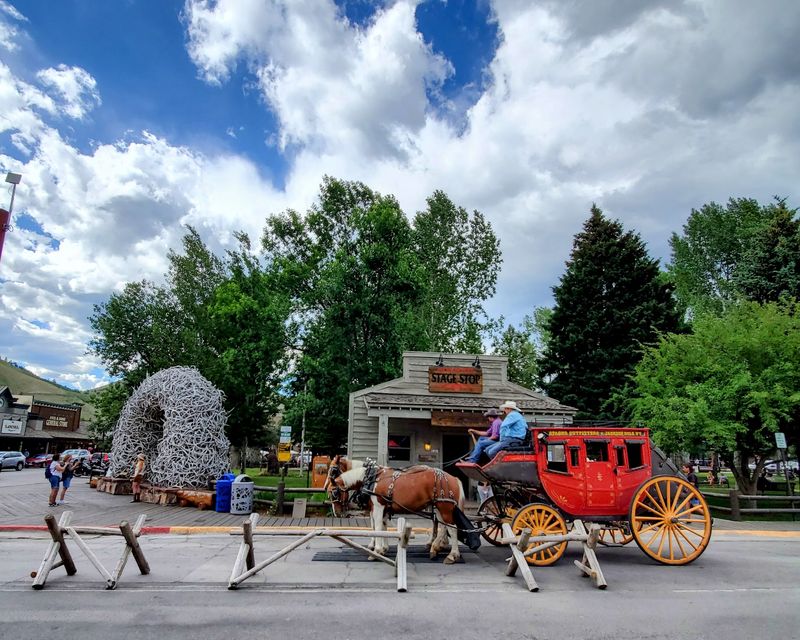
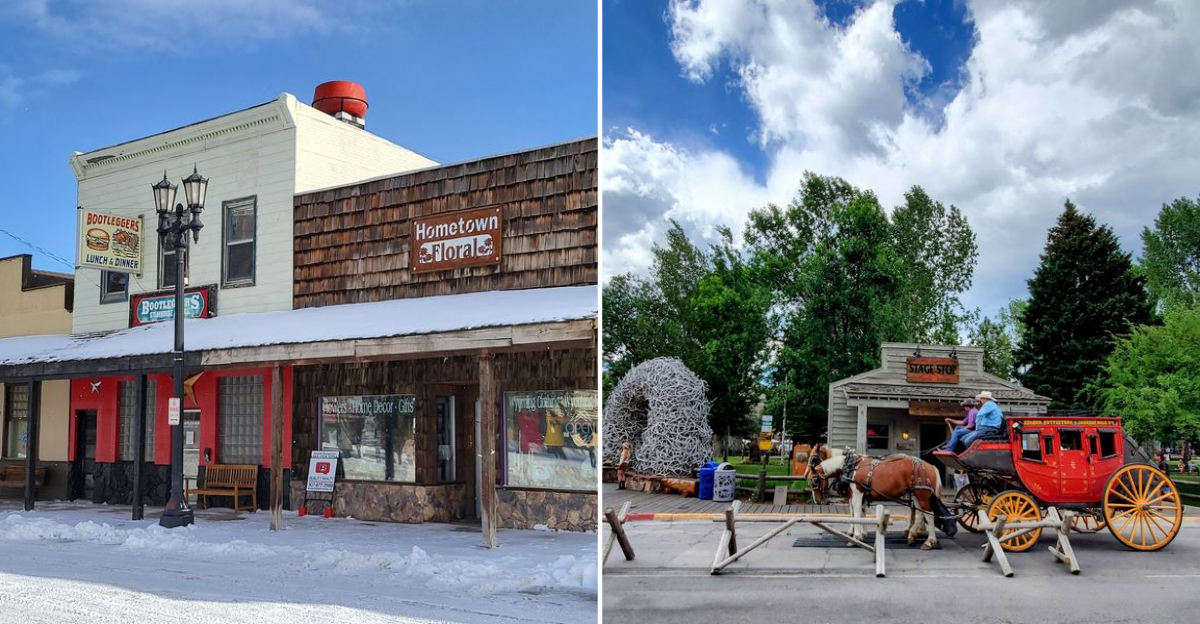
Four arches made of shed elk antlers frame the corners of Jackson’s Town Square. Boy Scouts collect the antlers from the nearby National Elk Refuge each spring.
Crime numbers here stay remarkably low for both violent and property categories. Strong local policing and a tight community keep it that way.
Grand Teton National Park begins minutes from town, and Yellowstone sits at the far end of the same highway. Very few places on earth offer that combination out the back door.
Wildlife viewing is not a special event; it is a commute hazard. Moose wander into yards, bison hold up traffic, and bald eagles perch along the Snake River.
Trail systems run in every direction, from mellow valley paths to serious alpine routes. Winter turns the whole valley into a snow sport playground.
The National Elk Refuge hosts thousands of elk each winter, and sleigh rides carry people right into the herd.
Yes, Jackson draws visitors, and yes, housing is the tightest in the state. Plenty of residents still find the tradeoff worth making for morning views of the Tetons.
Evenings quiet down fast once the day-trippers head out. Stars fill in over the peaks.