
Few People In Kansas Even Know This 1,585-Acre State Park Exists
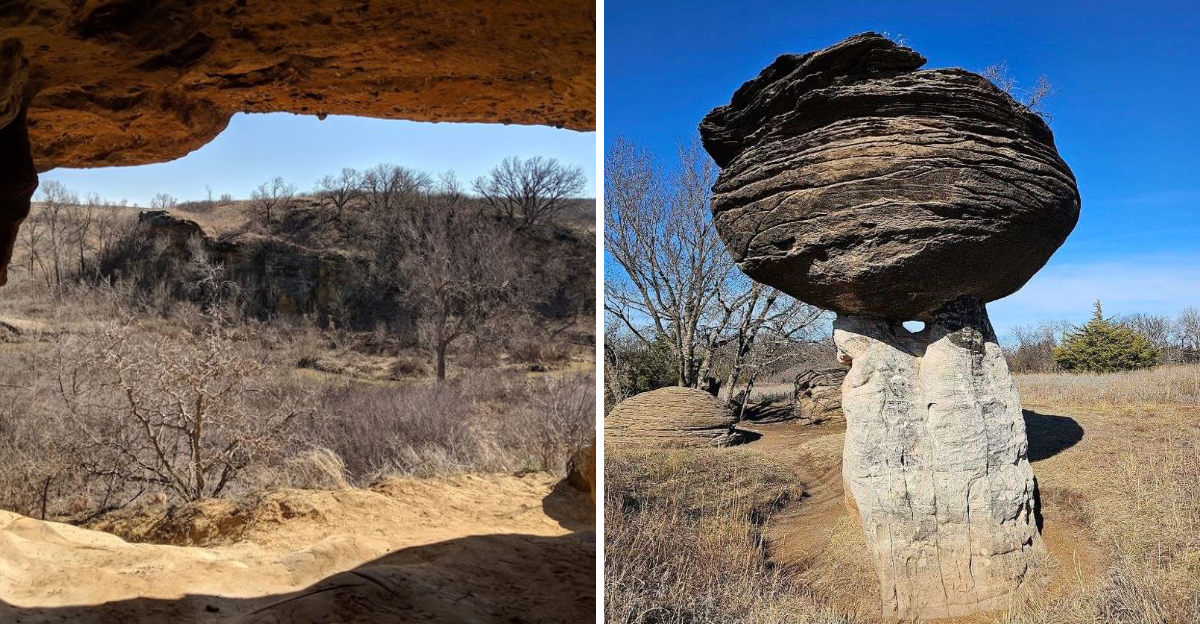
Red sandstone cliffs rise straight out of flat Kansas farmland like a scene from another state. The contrast alone is worth the drive.
Ancient seas covered this ground, leaving canyons that glow orange at sunset. More than thirty miles of trails wind through those canyons, crossing creeks, climbing ridgelines, and cutting past open prairie.
Hand-carved caves wait at the end of one trail. Settlers dug them into the sandstone and called them home.
Older markings still cover certain canyon walls, carved by people who called this valley home long before it had a name. Kansas carries more wild texture than most travelers expect, and this corner proves it on every single visit.
A weekend here starts to sound like a solid plan, with more discovery waiting down every trail.
Kansas’ Very First State Park Has Quite A Story To Tell
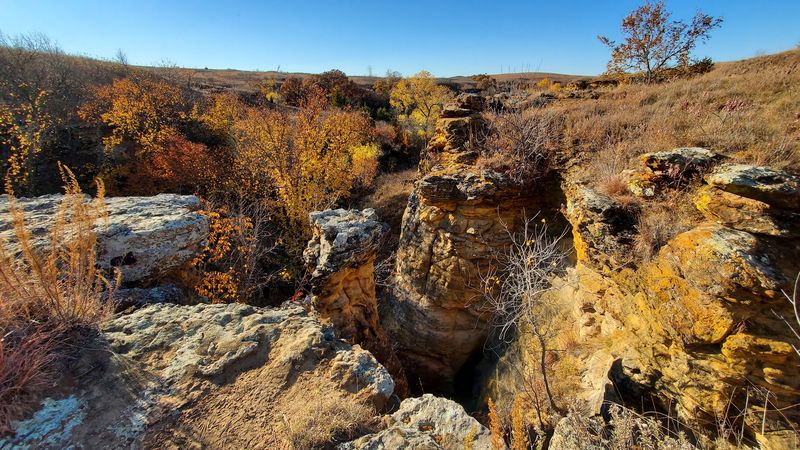
Long before most people had even heard of it, Kanopolis State Park was making history. Established in 1955, it holds the distinction of being the very first state park in Kansas.
That alone makes it worth the trip. The land around the Smoky Hill River Valley had been a vital resource for centuries before that designation arrived.
Ancient seas once covered this entire region. They left behind thick deposits of limestone and Dakota sandstone that now define the park’s dramatic visual character.
Prehistoric creatures including woolly mammoths and massive bison once roamed these rolling hills. Later, Native American tribes such as the Pawnee, Cheyenne, Apache, and Kiowa called these canyons home.
Their presence was not silent. Petroglyphs carved into the sandstone walls still survive today, offering a rare and humbling window into lives lived here thousands of years ago.
Standing in the park with that context in mind changes the experience completely. Every ridge and canyon feels charged with a story waiting to be discovered.
The Geology Here Will Stop You In Your Tracks
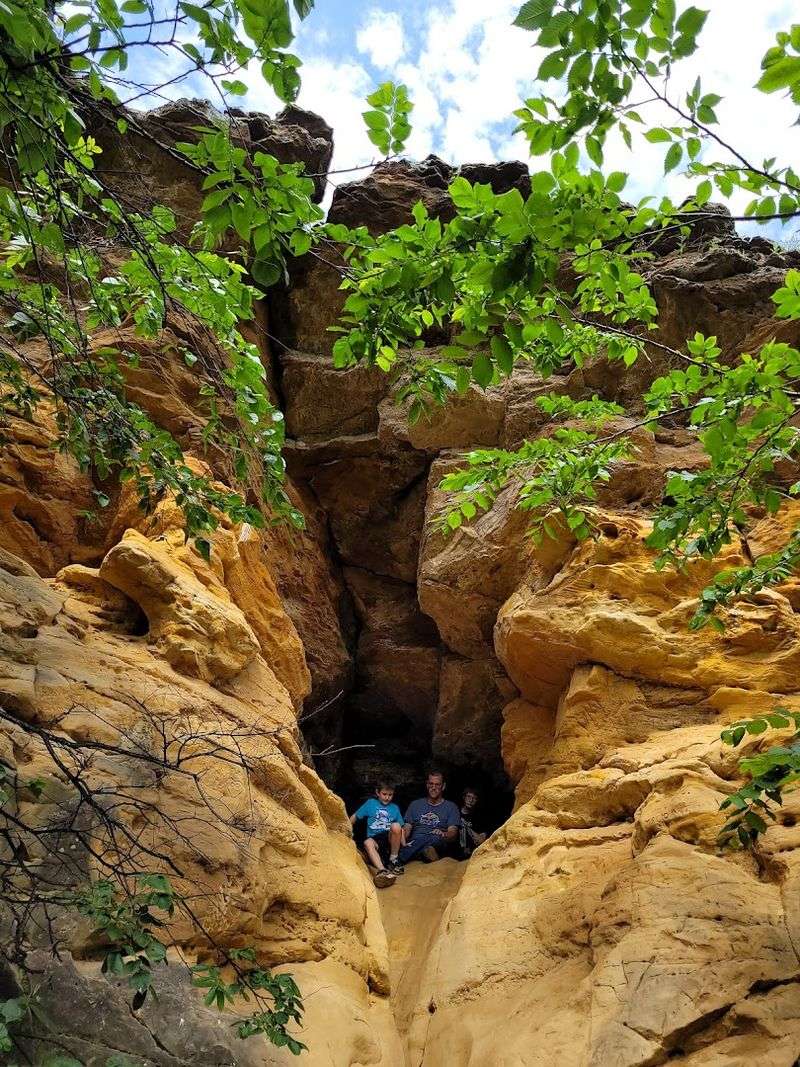
Red and orange rock walls rise unexpectedly from the Kansas prairie, and the effect is genuinely jaw-dropping. The park’s geology is one of its most underappreciated features.
Most of the striking formations are composed of Dakota sandstone and the older Kiowa Formation. These layers formed roughly 100 million years ago when a vast inland sea covered much of North America.
That ancient seabed is now a hiking trail. Visitors who look closely can spot selenite crystals glinting in the sunlight, along with cone-in-cone structures and unusual sandstone concretions scattered across the landscape.
Fossils of ancient marine animals also turn up here. Bivalves and gastropods are among the most commonly found remnants of that prehistoric aquatic world.
The park’s elevated bluffs offer sweeping views across the surrounding plains, making the geological drama even more vivid from above. It is a landscape that rewards slow, curious exploration.
Kansas is not supposed to look like this. That pleasant contradiction is exactly what makes Kanopolis so memorable for first-time visitors.
Over 30 Miles Of Trails Await Every Kind Of Explorer
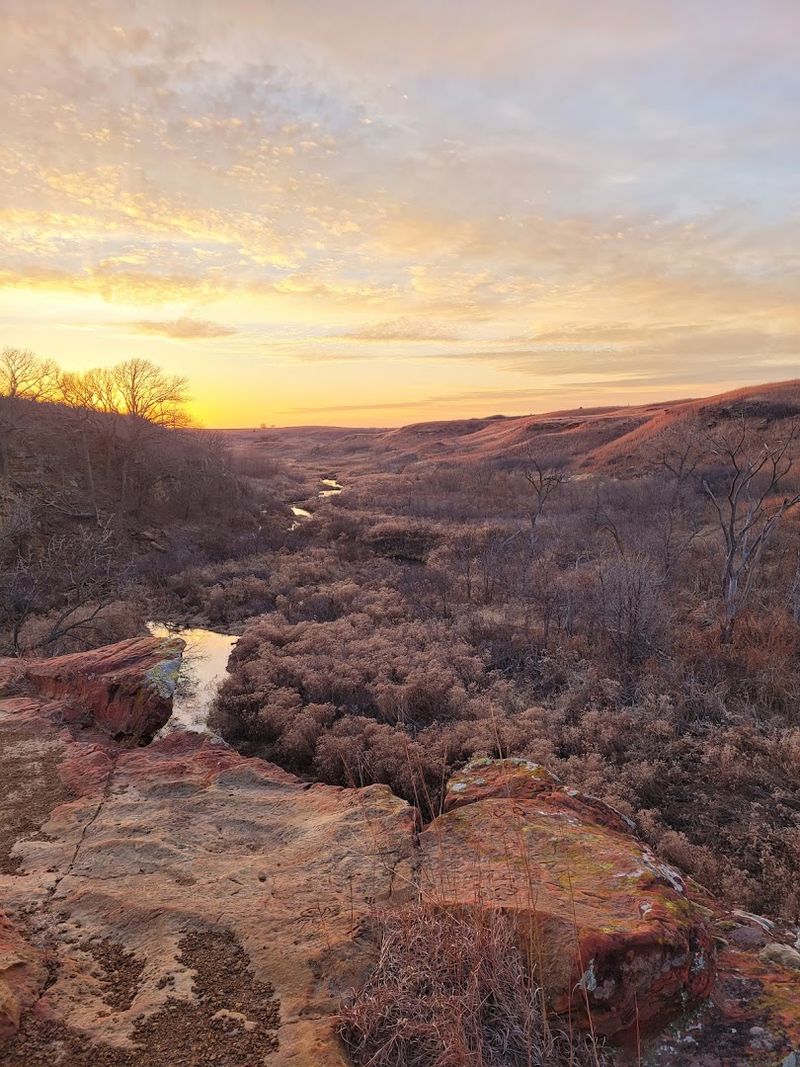
Pull on your boots and pick a direction. The trail system at Kanopolis stretches over 30 miles, weaving through terrain that shifts dramatically from open prairie to shaded canyon floor.
Hikers, mountain bikers, and horseback riders all find routes suited to their pace and preference. The variety is one of the park’s biggest strengths.
The Horsethief Canyon Trails cover about 5.5 miles and loop through captivating canyon scenery. Views along this route are consistently rewarding, with sandstone walls framing the sky above.
The Alum Creek Trails stretch over 8 miles across vast prairies with several creek crossings along the way. Crossing those creeks adds a playful, adventurous element that flat trail systems simply cannot match.
Worth noting: some trail sections are seasonal, typically open from February through October due to hunting season restrictions. Checking conditions before heading out is always a smart move.
Cell service can be unreliable in parts of the park. Downloading a trail map ahead of time saves a lot of frustration and keeps the adventure on track.
Horsethief Canyon Earned Its Name The Hard Way
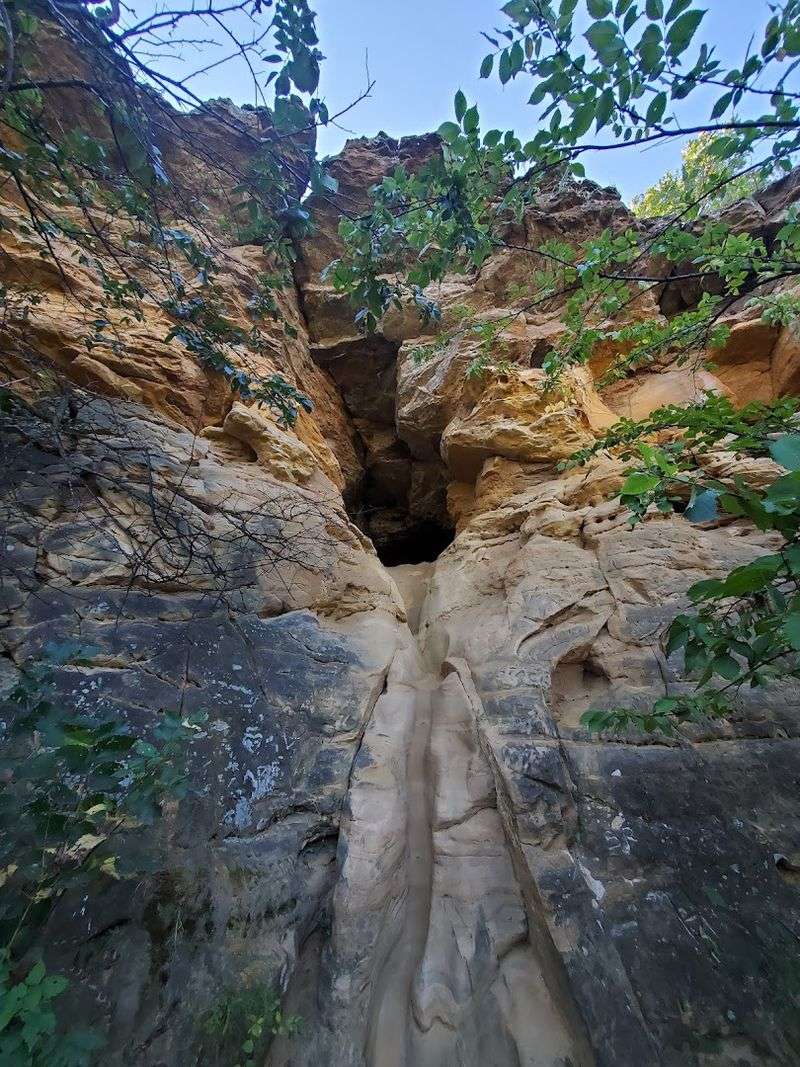
The name alone does most of the work. Horsethief Canyon carries a frontier mystique that feels earned rather than invented, and the landscape backs it up completely.
Rugged sandstone walls rise on either side of the trail, riddled with caves and crevices that once provided cover for those with reasons to hide. The Old West atmosphere here is thick enough to feel physical.
The broader Smoky Hill River Valley saw legendary figures from American frontier history pass through during the 19th century. That heritage runs deep in the soil of this canyon.
The red coloring of the sandstone here is more intense than in other parts of the park. Higher iron content in the rock creates that vivid, rust-toned palette that photographers love.
Rattlesnakes do inhabit the canyon area, so trail awareness matters. Watching where feet land and avoiding crevices keeps the visit safe and stress-free.
Horsethief Canyon is the kind of place that lingers in memory long after the drive home. It captures something raw and irreplaceable about the spirit of Kansas.
Kanopolis Lake Brings The Water Fun In A Big Way
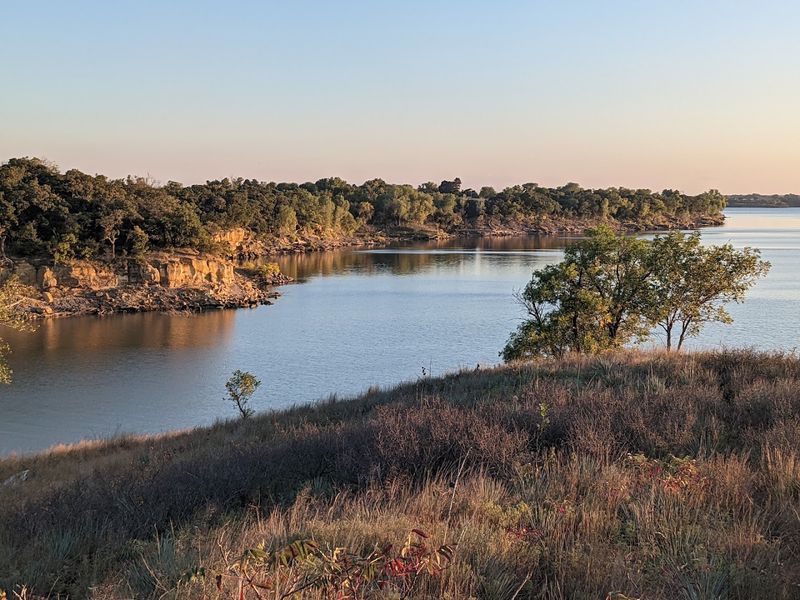
Right at the heart of the recreation area sits Kanopolis Lake, a man-made reservoir covering roughly 3,500 acres. It transforms the park into a full-scale water destination during warmer months.
Boating, water skiing, and jet skiing are popular ways to spend a summer afternoon here. The lake is large enough to accommodate serious watercraft without feeling crowded on most days.
A designated sandy beach within the park provides a comfortable spot for swimming. Facilities at the beach include a parking area, changing house, and restrooms, making it a practical family destination.
Anglers come for white bass, crappie, walleye, saugeye, wiper, largemouth bass, and channel catfish. The fishing quality can vary depending on conditions and season, so managing expectations is wise.
Kayaking is another popular option for those who prefer a quieter experience on the water. Paddling along the lake’s edges reveals shoreline details that powerboat riders never get to see.
The lake was completed in 1948, predating the park itself. Its presence turned this stretch of Kansas into something genuinely special.
Faris Caves Offer A Peek Into Pioneer Survival
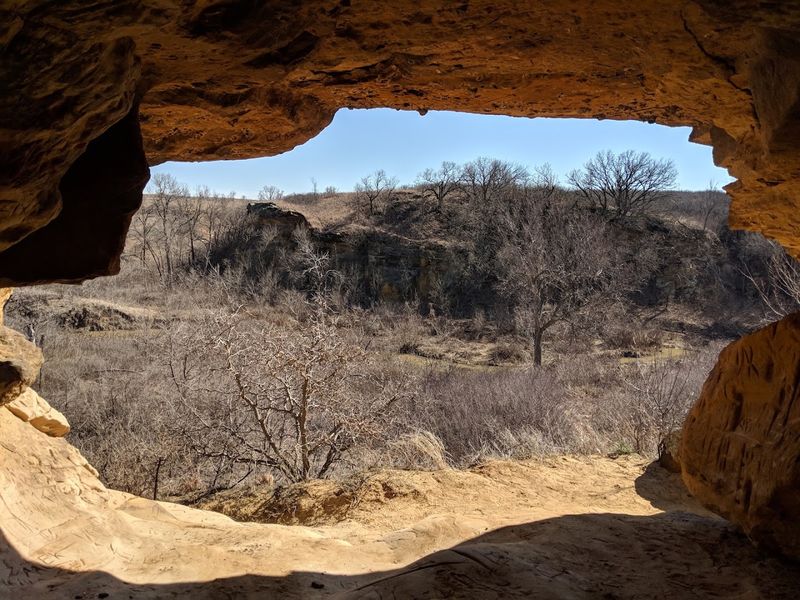
Most people do not expect to find hand-dug caves on a Kansas hiking trip. The Faris Caves, located in the northwest portion of the wildlife area, change that expectation fast.
A Colorado miner originally excavated these caves into the sandstone cliffs during the 1880s. They served various practical purposes over the years, including milk houses, schoolhouses, and living quarters for early settlers.
That ingenuity speaks volumes about frontier life in Kansas. People carved their homes directly into the rock because the land and the weather left them few other options.
Visiting the caves today feels like stepping into a chapter of American history that rarely gets told. The walls still bear the marks of the tools that shaped them.
Poison ivy grows heavily around the cave area, and the trails leading there can be wet and overgrown depending on the season. Wearing long pants and sturdy footwear is strongly recommended.
The effort to reach them is worthwhile. Few experiences in the park connect visitors to the past as directly as standing inside those modest, hand-carved rooms.
Ancient Rock Art Puts History On The Canyon Walls
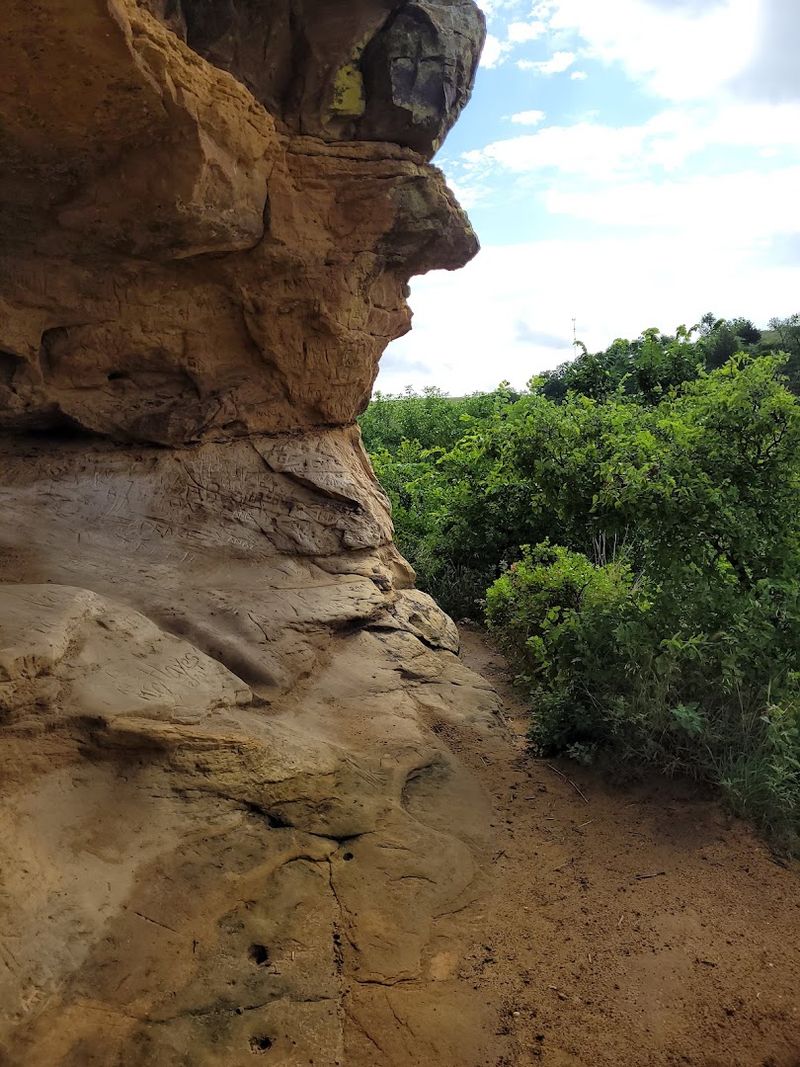
Carved symbols on canyon walls are not what most people picture when they think of Kansas. But the Indian Hill site at Kanopolis changes that picture entirely.
This rock art site is one of 30 Native American petroglyph locations in Kansas listed on the National Register of Historic Places. That designation reflects just how significant these carvings truly are.
The petroglyphs were left by the tribes who called this canyon system home long before European settlers arrived. Pawnee, Cheyenne, Apache, and Kiowa peoples all moved through and inhabited this region.
Standing in front of those carvings brings a quiet weight to the visit. These are not museum reproductions.
They are original marks made by human hands on the actual rock surface.
Approaching the site with care and respect matters deeply. These are irreplaceable cultural artifacts, and their preservation depends on visitors treating them accordingly.
Rock art sites like this one are rare in the central United States. Finding one embedded in an accessible state park trail system makes Kanopolis genuinely extraordinary among Kansas destinations.
Wildlife Spotting Here Goes Way Beyond Deer And Birds
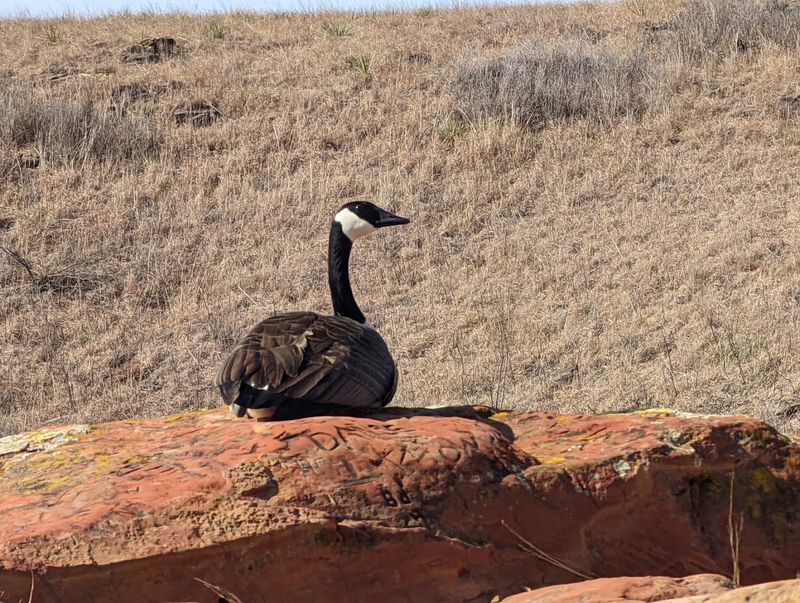
The park and its surrounding 12,500-acre wildlife area support a remarkable range of species. Wildlife viewing here is not just a side activity.
For many visitors, it is the main event.
Whitetail deer, wild turkey, pheasant, quail, and prairie chickens all call this landscape home. Spotting a turkey flock moving through the canyon scrub is a surprisingly common and entertaining experience.
Bald eagles and ospreys arrive during winter months to fish along the river. Watching an eagle work the water is one of those moments that earns a permanent place in memory.
A prairie dog colony also lives within the park boundaries. These small, social animals are best observed on warm, sunny days when they are most active above ground.
Songbirds fill the park with sound during spring and early summer. Wildflowers bloom across the prairie at the same time, creating a sensory richness that is easy to underestimate.
Ticks are present in significant numbers during warmer months. Treating clothing and gear before hitting the trails is a practical step that makes the whole experience far more comfortable.
Camping Options Range From Rustic To Remarkably Comfortable
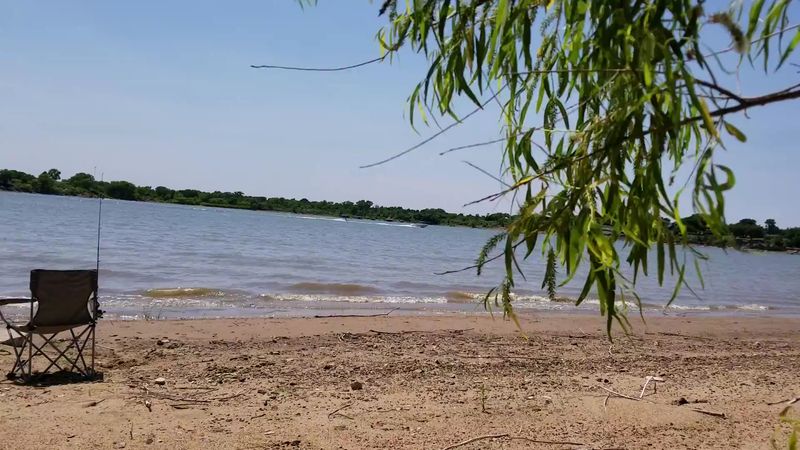
Sleeping under a Kansas sky full of stars is one of those experiences that sounds cliche until it actually happens. Kanopolis makes it easy to stay overnight in style or simplicity.
The park features 14 campgrounds spread across the Langley Point and Horsethief areas. That variety means campers can choose between lakeside settings, canyon-adjacent sites, and open prairie locations.
More than 200 primitive sites cater to those who prefer the basics. For campers who want more comfort, 133 utility campsites offer water, sewer, and electric hookups.
Six deluxe cabins are available year-round and sleep five to six people comfortably. Each cabin includes heating, air-conditioning, and a full kitchen, making them a smart option for families or groups.
The equestrian campground is a standout feature for horse owners. Large covered horse pens, hitching posts, and a wash rack make it one of the better horse-friendly campgrounds in Kansas.
Quiet hours apply in campground areas during overnight stays. Critters are known to investigate food left unsecured, so storing supplies properly keeps the night peaceful for everyone.
Mushroom Rock State Park Is Worth The Short Detour
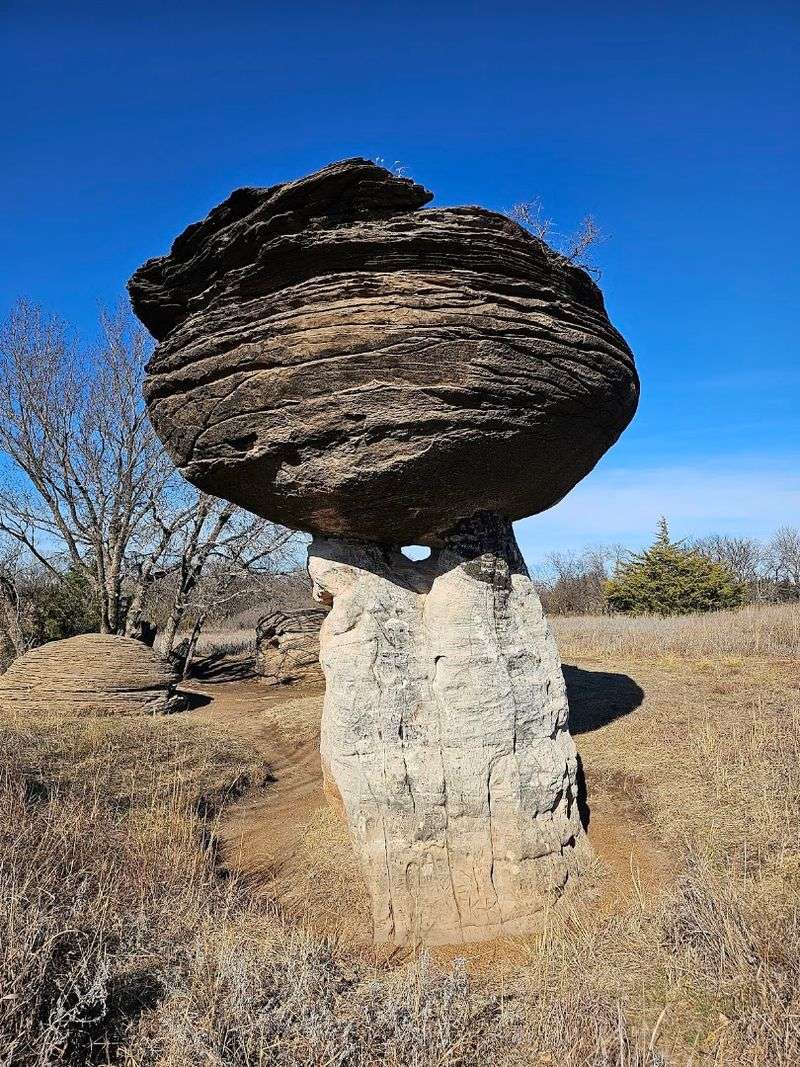
About 10 miles from Kanopolis sits one of the strangest and most photogenic geological features in all of Kansas. Mushroom Rock State Park is small in size but enormous in visual impact.
The park covers only five acres, but what those five acres contain is genuinely unusual. Massive sandstone concretions have eroded into unmistakable mushroom shapes, standing like natural sculptures on the open prairie.
These formations served as important landmarks for Native Americans and pioneers crossing the central plains. In a landscape without mountains or obvious markers, a cluster of giant rock mushrooms is hard to miss.
Managed by Kanopolis State Park, Mushroom Rock makes for a natural companion stop on any visit to the area. The drive between the two parks passes through scenic Kansas countryside worth slowing down to appreciate.
Photography opportunities at Mushroom Rock are outstanding, especially in early morning or late afternoon light. The low-angle sun deepens the color of the sandstone and sharpens the shadows dramatically.
Pairing both parks in a single day trip creates a well-rounded experience. Two completely different geological stories, told just a short drive apart across the Kansas plains.