
Visit The Underground Kentucky Cavern Where Nature Crafted Formations For Over 100 Million Years
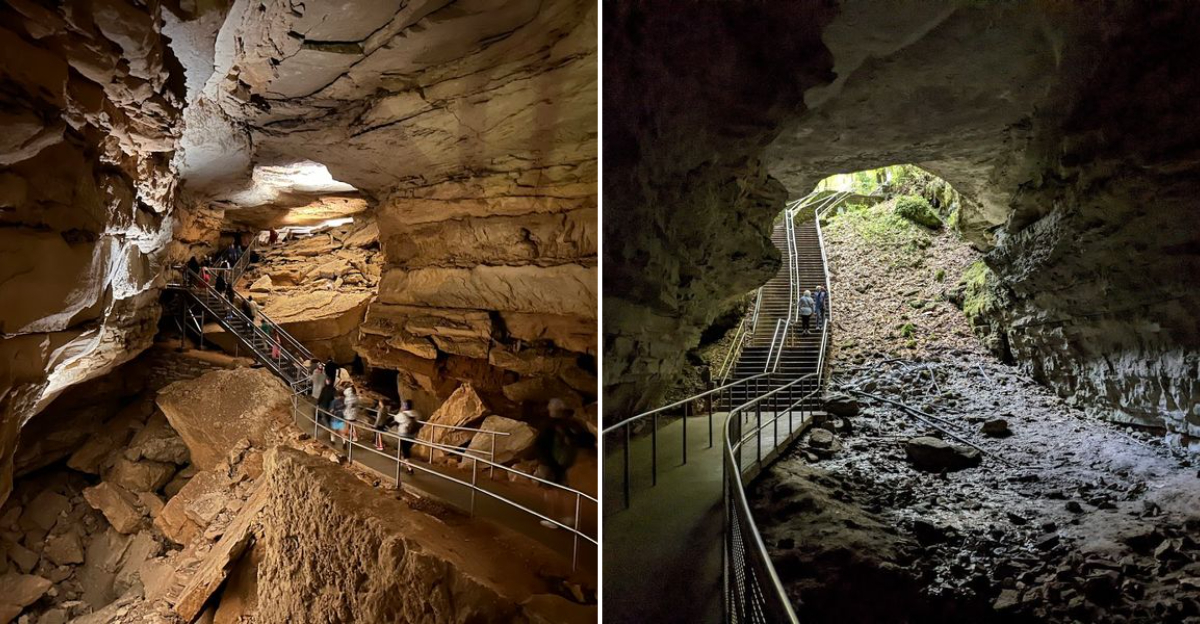
The air cools instantly to a sharp fifty-four degrees the moment the heavy cave door seals shut. Overhead, massive limestone ceilings swallow the glow of modern headlamps without effort.
Droplets of mineral-rich water fall through the pitch blackness in a slow, rhythmic heartbeat. This subterranean sanctuary has evolved in total darkness for epochs before human eyes ever looked inside.
Massive frozen waterfalls made of solid stone cascade into bottomless pits. Delicate soda straws hang like glass needles from the shadows.
Kentucky guards this ancient gallery where time is measured by the growth of rock. The silence down here feels heavy and permanent against the rush of the modern world.
Visitors move carefully between the giant pillars with a quiet sense of awe.
Geological Formation Processes Explained
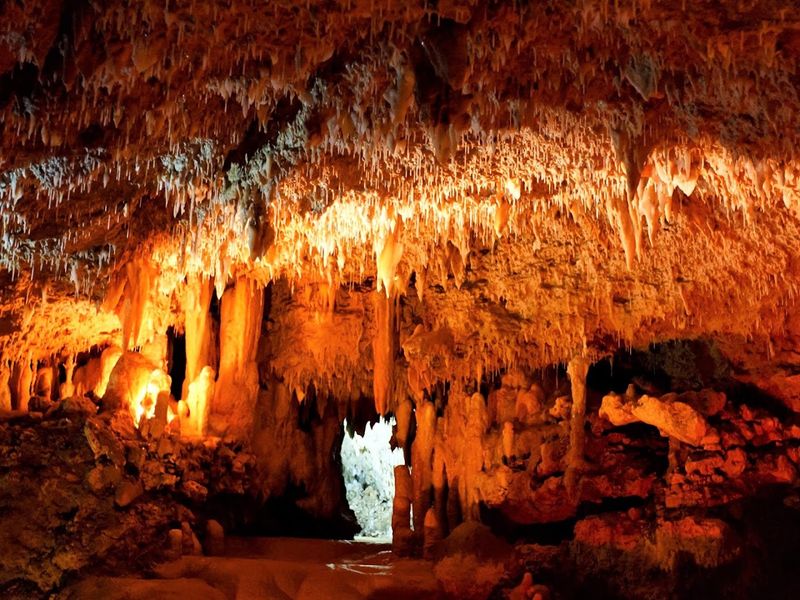
Water is the real architect here, and it has been working for a very long time. Rainwater mixed with carbon dioxide to form a weak acid.
That acid slowly dissolved the Mississippian-aged limestone beneath Kentucky. Those rock layers originally formed between 320 and 360 million years ago, when a shallow sea covered this region.
Passages began opening up around 10 to 15 million years ago. The Green River helped carve the karst landscape above and below ground.
Its erosional force shaped canyon passages and wide tube tunnels throughout the system. A tough sandstone caprock sits above the cave, protecting it from surface erosion.
Mammoth Cave National Park is the longest known cave system on Earth. Explorers and scientists have mapped over 400 miles of passages so far.
New sections are still being discovered, which means that the number keeps growing. The park sits in central Kentucky, and the address is Mammoth Cave National Park, Kentucky, United States.
The sheer scale of what water accomplished here is honestly hard to wrap your head around. Slow, patient chemistry did what no machine ever could.
Every tunnel and chamber tells a chapter of Earth’s long geological story. Visiting means walking through millions of years of natural history firsthand.
Rare Mineral Deposits Within The Cave
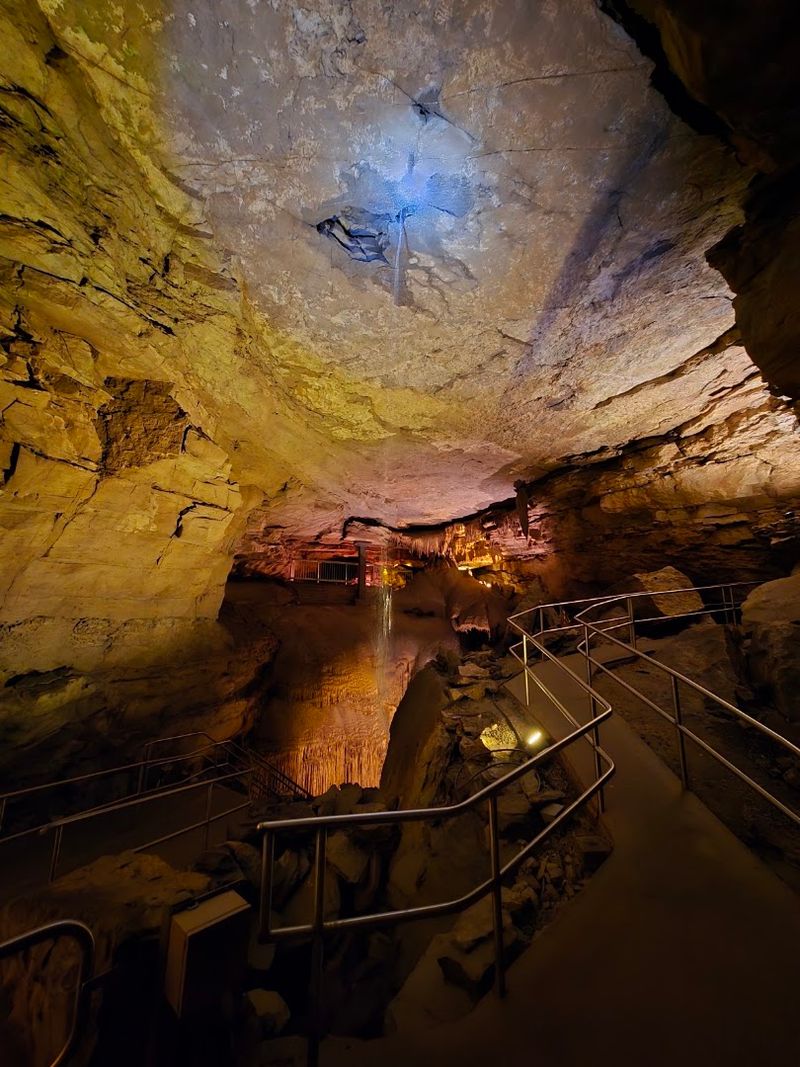
Mammoth Cave is not the flashiest cave in terms of decorations, but what it lacks in sparkle, it makes up for in scientific wonder. Gypsum is the star mineral here, forming strange and beautiful shapes throughout the dry passages.
Gypsum flowers are curving, petal-like crystals that grow outward from the wall, almost ignoring gravity entirely. Seeing them in person feels like spotting something that should not exist.
Calcite is also common, building stalactites, stalagmites, and smooth flowstone sheets over long stretches of time. Aragonite shows up occasionally, adding variety to the mineral mix.
In the driest sections of the cave, you can find rarer sulfate minerals like mirabilite, epsomite, and hexahydrite. Scientists have even identified eugsterite, an extremely rare sulfate mineral, within these passages.
Prehistoric Native Americans knew about some of these minerals thousands of years before modern scientists arrived. They mined gypsum and mirabilite for practical and ceremonial uses.
The sulfur in the gypsum likely came from pyrite oxidation inside the limestone. Mirabilite is especially interesting because it forms and dissolves based on humidity changes, making it almost seem alive.
Each mineral deposit represents a unique set of environmental conditions. Temperature, humidity, and chemistry all play roles in what grows where.
The cave is essentially a living chemistry lab that never shuts down.
Biodiversity Supported By The Underground Environment
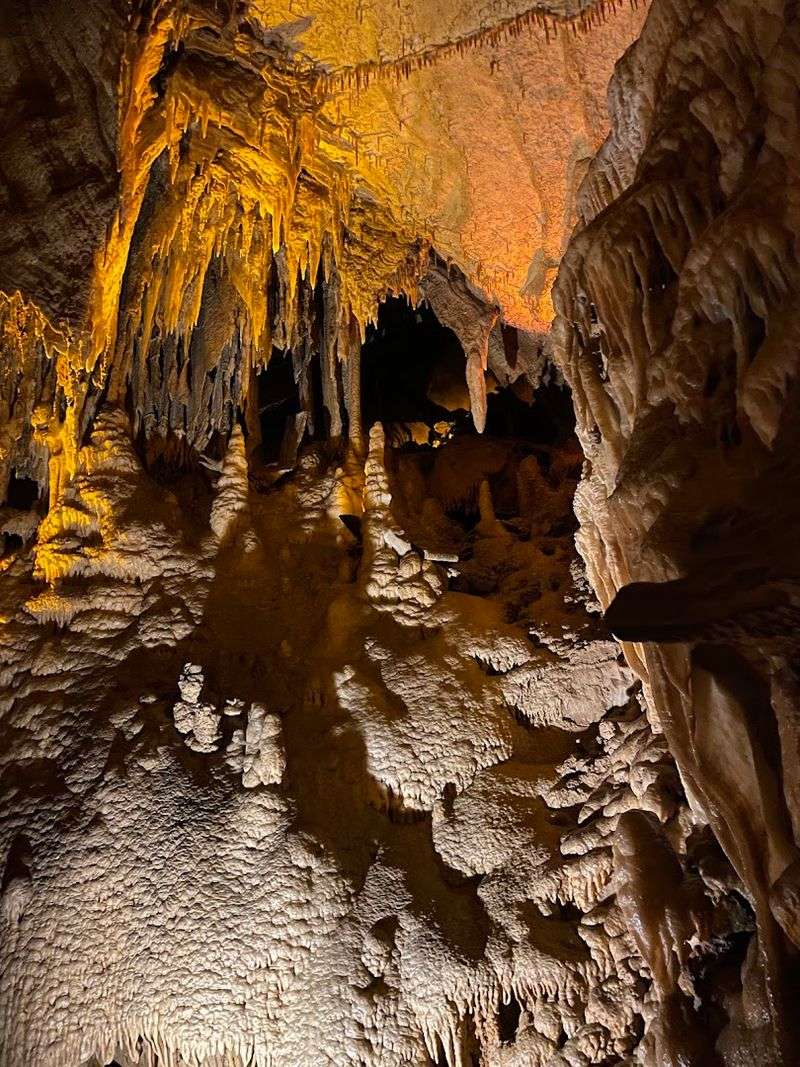
Most people do not think of caves as wildlife hotspots, but Mammoth Cave will change that thinking fast. Biologists have identified over 200 animal species living in and around this cave system.
About 160 of those species actually live inside the cave itself. Forty-nine of them spend their entire lives underground, never once seeing sunlight.
Seven species are endemic, meaning they exist nowhere else on Earth except Mammoth Cave. The Kentucky cave shrimp is one of the most famous, a tiny crustacean that evolved in total darkness.
Eyeless cave fish and eyeless crayfish navigate the underground streams without any vision at all. Cave crickets, fishing spiders, and several bat species also call this place home.
Bats are especially important to the cave ecosystem. Indiana bats and gray bats, both endangered, use the cave for shelter and hibernation.
Their droppings, called guano, provide essential nutrients that feed many smaller cave organisms. The entire food web down here depends on organic matter washing in from the surface and from bat activity.
The Green River running through the park supports dozens of fish and freshwater mussel species above and below ground. This interconnected ecosystem is one of the most complex cave environments ever studied.
Scientists keep finding new species here, which makes every research visit feel like an adventure.
Historical Significance And Human Interaction
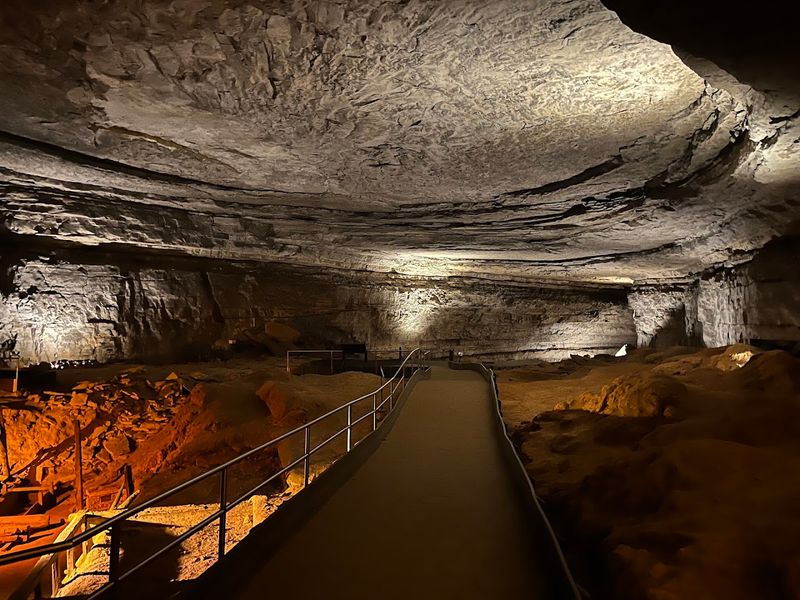
Humans have been drawn to this cave for at least 5,000 years. Native Americans explored deep into the passages, mining minerals like gypsum and mirabilite by torchlight.
They used river cane torches to navigate the darkness, and archaeologists have found those torches still preserved inside the cave. Evidence also suggests ceremonial use and burials took place here long before European contact.
European settlers rediscovered the cave in the late 1790s and quickly saw economic opportunity. Saltpeter mining began almost immediately, with production peaking during the War of 1812.
Saltpeter was a critical ingredient in gunpowder, making the cave strategically important. Enslaved African American men performed the dangerous and exhausting labor of extracting it.
Tourism began around 1816, and enslaved men were often the guides who led early visitors through the passages. Stephen Bishop became the most celebrated of these guides.
He explored vast new sections of the cave, named many of its features, and drew a remarkably accurate hand-drawn map that was used for decades. His contributions shaped how the world understood Mammoth Cave.
The cave became a national park in 1941. UNESCO designated it a World Heritage Site in 1981.
It then became an International Biosphere Reserve in 1990. Each recognition reflects how genuinely extraordinary this place is, both historically and naturally.
Guided Tour Options And Safety Protocols
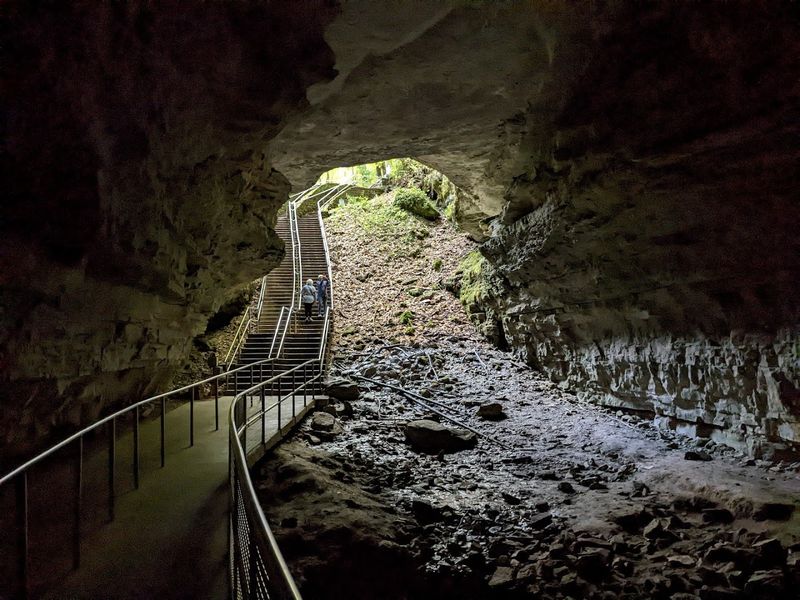
There is a tour here for almost every comfort level, which is one of the best things about visiting Mammoth Cave National Park. Tours range from easy, flat walks to serious crawl-through adventures.
The Historic Tour is one of the most popular, covering old passages and saltpeter mining history. The Frozen Niagara Tour is a shorter, easier option that focuses on beautiful flowstone formations.
The Domes and Dripstones Tour is more physically demanding, with lots of stairs and tighter spaces. Wild Cave Tours push the experience further, requiring helmets and coveralls as visitors squeeze through narrow passages.
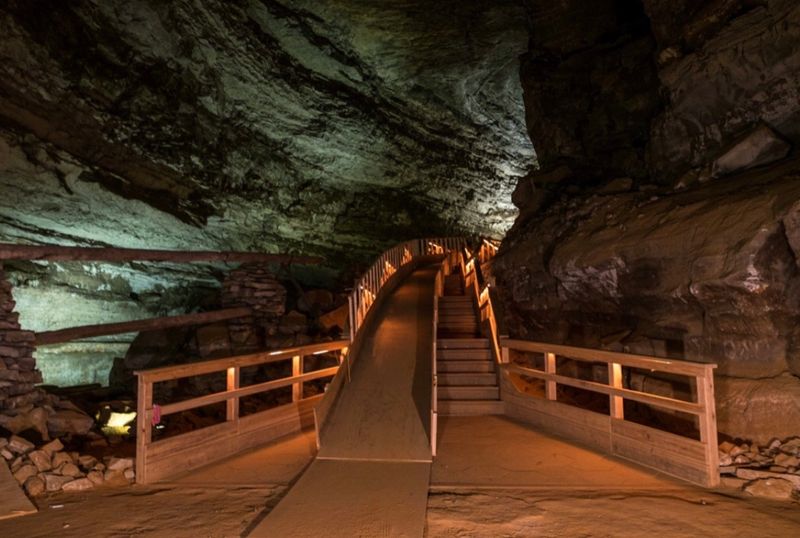
An Accessible Tour offers paved paths and elevator access for visitors with limited mobility. Lantern tours add an old-fashioned atmosphere that feels genuinely special after dark.
Reservations are strongly recommended because tours fill up quickly, especially during summer and holiday weekends. Sturdy, closed-toe shoes are essential since cave floors are uneven and sometimes slippery.
The temperature inside stays around 54 degrees Fahrenheit year-round, so bringing a light jacket is smart no matter the season outside.
Medical emergencies inside the cave can take hours to manage due to the remote passages. Touching formations is strictly prohibited because even skin oils damage them permanently.
Flash photography and tripods are also not allowed on most tours. Following the rules protects both visitors and the cave itself.
Stunning Speleothem Varieties To Observe
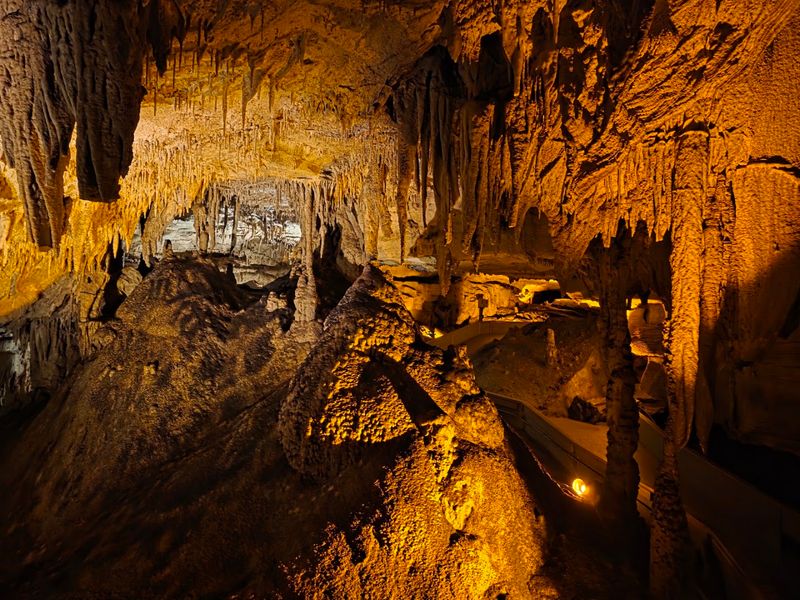
Speleothems are cave formations built by minerals depositing over long periods of time, and Mammoth Cave has a solid collection of them. Stalactites hang from the ceiling like stone icicles, while stalagmites rise from the floor below.
When the two meet and fuse, they form columns that can be impressively thick and tall. Flowstone is another common type, forming smooth sheets where mineral-rich water once flowed across surfaces.
Frozen Niagara is the most famous flowstone formation in the park. It looks like a waterfall that stopped mid-flow and turned to stone.
The layered, rippling calcite creates a visual effect that genuinely earns its dramatic name. Visitors consistently call it a highlight of the Frozen Niagara Tour.
Gypsum formations add a completely different texture to the experience. Gypsum flowers are delicate, spiraling crystals that grow outward from the walls in dry passages.
They form as sulfate-rich water evaporates slowly, leaving behind intricate crystalline structures. Gypsum snowballs are softer, rounder clusters that look almost fluffy against the dark cave walls.
Helictites are twisted, irregular formations that grow in seemingly random directions. Soda straws are hollow, thin stalactites that look fragile enough to break with a whisper.
Cave popcorn, which is actually a type of cave coral, dots surfaces throughout many passages. Every formation took thousands to millions of years to reach its current size.
Conservation Efforts Protecting The Cavern
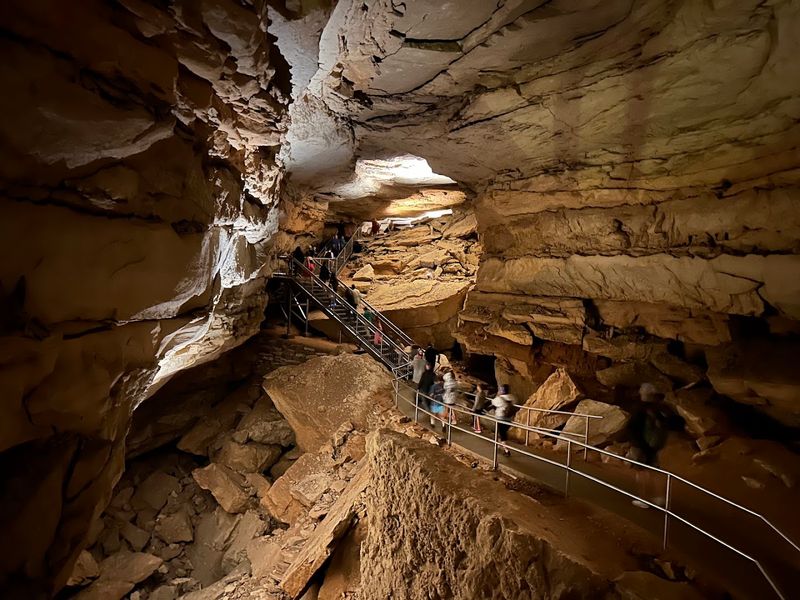
Protecting a cave this large and this complex takes serious, ongoing effort. Mammoth Cave National Park uses solar panels and rainwater harvesting at its visitor center to reduce its environmental footprint.
A Natural Resource Inventory and Monitoring Program tracks threats to the cave’s air and water quality over time. These monitoring efforts help scientists catch problems early before they cause lasting damage.
Groundwater contamination is one of the biggest challenges the park faces. Because the karst landscape absorbs surface water quickly, pollutants from farms and roads outside park boundaries can enter the cave system fast.
The park works with surrounding communities to reduce agricultural runoff and other contamination sources. Progress has been made, but the work is ongoing and never really finished.
White-nose syndrome is an urgent crisis for the cave’s bat populations. This fungal disease has affected millions of bats across North America, and some species at Mammoth Cave have declined by 99 percent.
Scientists are studying bat populations that show some resistance to the fungus, hoping to find solutions. Decontamination stations at cave entrances help prevent visitors from accidentally spreading the fungus.
The removal of Lock and Dam 6 from the Green River in 2017 restored natural water flow and reduced flooding in the cave. Conservation volunteers contribute to trail work, river cleanups, and recycling efforts regularly.
The American chestnut tree restoration program also supports the broader ecosystem above the cave.
Educational Programs About Subterranean Ecosystems
Learning about what lives and happens underground is genuinely fascinating, and Mammoth Cave National Park has built a strong set of programs around that curiosity. The Junior Ranger program is a great starting point for younger visitors.
Kids receive activity books matched to their age group and earn a badge by completing challenges throughout the park. It turns a regular visit into an interactive adventure.
Rangers lead regularly scheduled talks, guided walks, and hands-on activities covering geology, biology, and human history. School groups can arrange field trips that combine surface exploration with cave tours.
These trips connect classroom lessons to real-world environments in a way that textbooks simply cannot replicate. Teachers consistently report that students remember these visits for years.
Distance learning programs connect classrooms across the country with Mammoth Cave rangers through virtual sessions. This makes the park accessible to students who cannot travel to Kentucky in person.
Professional development workshops are also available for teachers who want to build cave and karst science into their curriculum. The park takes educator outreach seriously and has received awards for its innovation in environmental education.
The Nature Tracks for Kids program helps children identify plants, animals, and cave processes through guided discovery activities. Water quality studies and ecological field camps offer more advanced experiences for older students.
Behind-the-scenes maintenance tours give participants a rare look at how a cave park actually operates day to day. Educational groups can access reduced rates on public cave tours.