
The Tennessee Lake Where Clear Stones Sparkle Like Diamonds Along The Shore
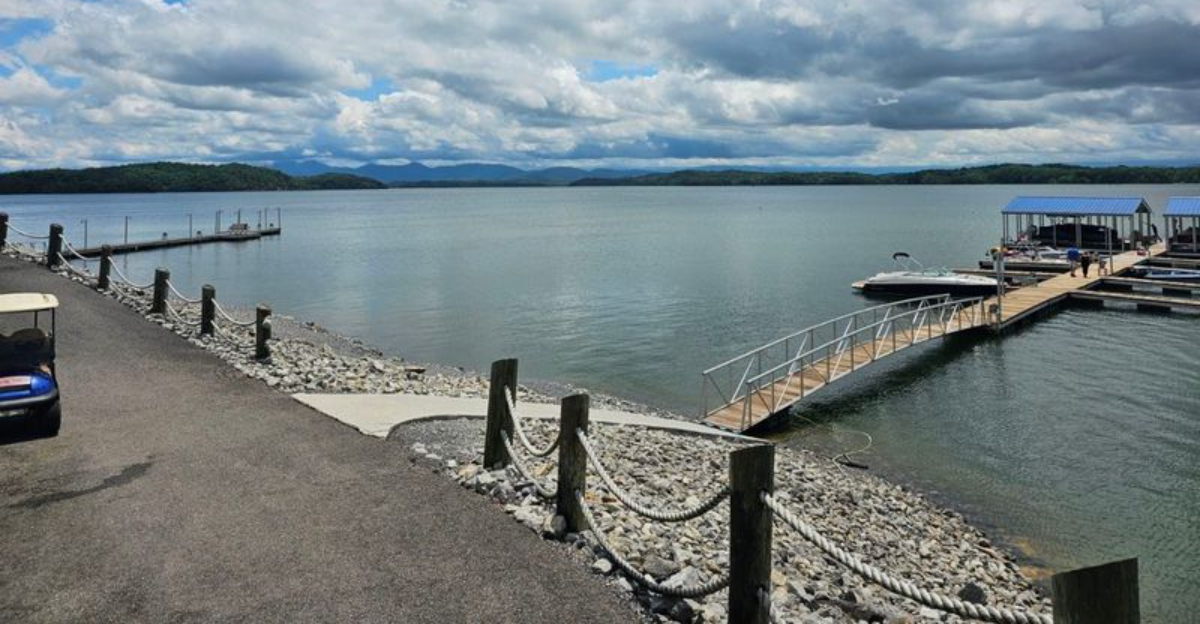
The shoreline looks ordinary until the sunlight hits it. Then the stones begin to sparkle, and suddenly every step feels like a treasure hunt.
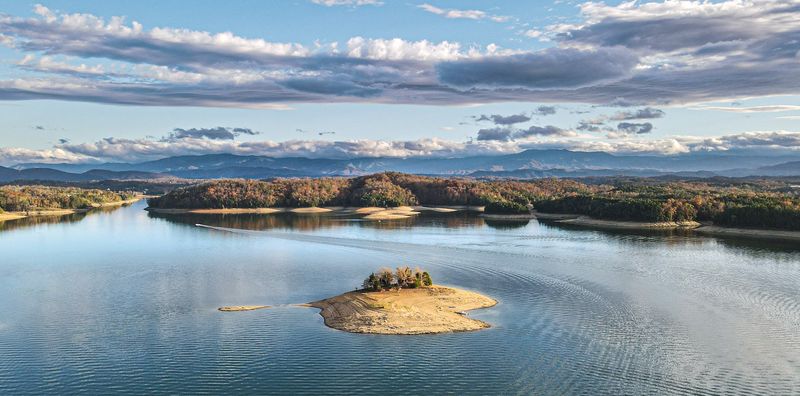
This Tennessee lake has clear water, broad mountain views, and beaches scattered with smooth stones that shine like tiny diamonds. Visitors often pause to study the ground, searching for the brightest pieces before the next wave rolls across them.
The lake offers more than a beautiful shoreline. Boating, fishing, swimming, and quiet picnic spots make it easy to spend an entire day near the water.
Morning brings calm reflections. Afternoon sunlight turns the shallows bright and glassy. No expensive equipment is needed to enjoy the best part. A slow stroll beside the water is enough.
Look closely, because the most memorable discoveries may be resting right beneath your feet.
Could this be one of Tennessee’s most overlooked lake experiences? The glittering shoreline makes a convincing case.
The Douglas Diamonds Phenomenon Explained
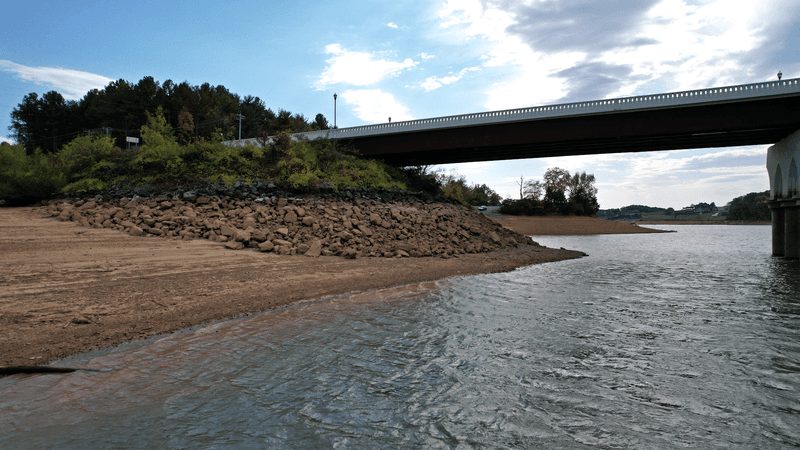
Long before anyone thought to name them, these crystals were forming in silence deep within ancient rock.
Douglas Diamonds is the local name given to the distinctive quartz crystals found along the shores of Douglas Lake in East Tennessee.
They are not actual diamonds, but their exceptional clarity and characteristic double termination make them easy to mistake for precious gemstones at first glance.
Geologists point to the Ridge and Valley province of East Tennessee as the source of this phenomenon. Silica-rich hydrothermal solutions seeped through fractures in the surrounding limestone bedrock over hundreds of millions of years.
The quartz slowly crystallized within those narrow pockets, growing into transparent, well-formed structures that eventually outlasted the softer rock encasing them.
As the surrounding limestone weathered and eroded, the chemically resistant quartz crystals were freed, settling into the sandy clay residue of the lakebed. When the lake level drops each winter, these crystals become visible across the exposed shoreline.
Collectors and curious wanderers alike find them lying in plain sight, gleaming against the pale earth.
Their resemblance to Herkimer Diamonds of New York is frequently noted, reflecting a shared elegance that geology sometimes produces in unexpected corners of the continent.
How Douglas Dam Shaped An Entire Landscape
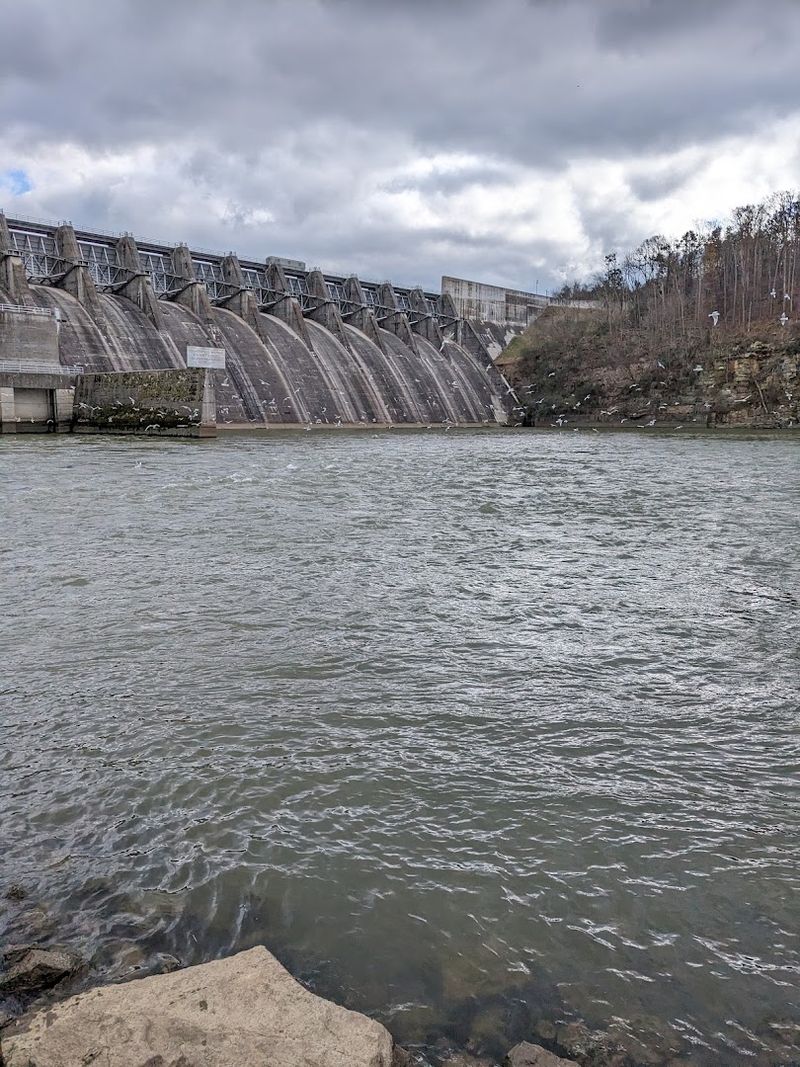
Built under wartime urgency, Douglas Dam stands as one of the more impressive feats of mid-century American engineering.
The Tennessee Valley Authority completed construction in 1943, achieving the project in roughly twelve months, a pace that remains remarkable by any standard.
The dam was erected primarily to generate hydroelectric power and assist with downstream flood control during a period when the nation needed both.
The French Broad River, which had long carved its way through the foothills of East Tennessee, was impounded by the dam to create what became Douglas Lake, also called Douglas Reservoir.
The resulting body of water stretches approximately 43 to 60 miles upriver from the dam itself.
At full pool, the lake covers between 28,000 and 30,600 acres and boasts an impressive 513 to 555 miles of shoreline.
Situated just east of Knoxville within Jefferson County, the lake occupies a landscape framed by rolling hills and distant ridgelines pointing toward the Great Smoky Mountains.
The dam fundamentally altered the geography of the region, transforming a river corridor into a broad, sprawling reservoir that now defines the character of the surrounding communities.
Its industrial origins stand in quiet contrast to the natural beauty it inadvertently created.
The Annual Water Drawdown And What It Reveals
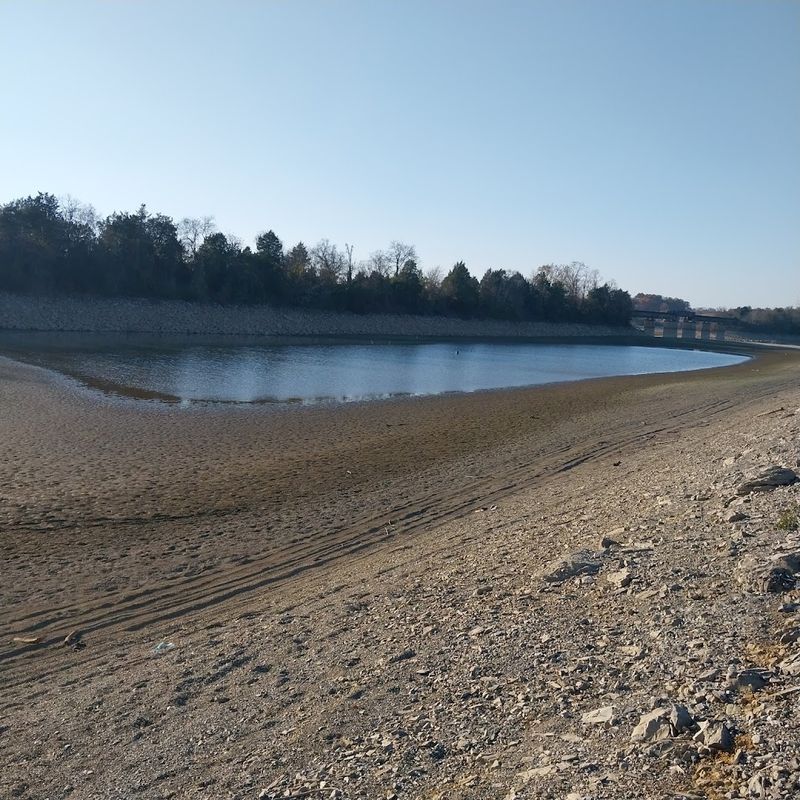
Every year, without fanfare, Douglas Lake undergoes a dramatic transformation that most people never witness.
Beginning after Labor Day and continuing through fall, winter, and into early spring, the Tennessee Valley Authority intentionally lowers the lake’s water level.
This seasonal drawdown accommodates anticipated rainfall and maintains effective flood control across the broader watershed.
The water level can fluctuate by as much as 41 to 60 feet during this period. What emerges as the waters recede is a landscape that spends most of the year hidden beneath the surface.
Vast stretches of lakebed become accessible on foot, revealing pale sandy clay flats, exposed rock formations, and the glittering quartz crystals that draw curious explorers each winter season.
The drawdown also reshapes the shoreline dramatically, exposing coves, points, and shallow basins that are completely submerged at full pool. Anglers adjust their strategies accordingly, as fish move to deeper water during cooler months.
For crystal hunters, however, this is prime time. The exposed lakebed offers the clearest conditions for spotting Douglas Diamonds resting on the surface.
The annual rhythm of the lake essentially creates a temporary gallery of geological wonders, open only to those who know when to look.
Walking The Shoreline In Search Of Quartz Crystals
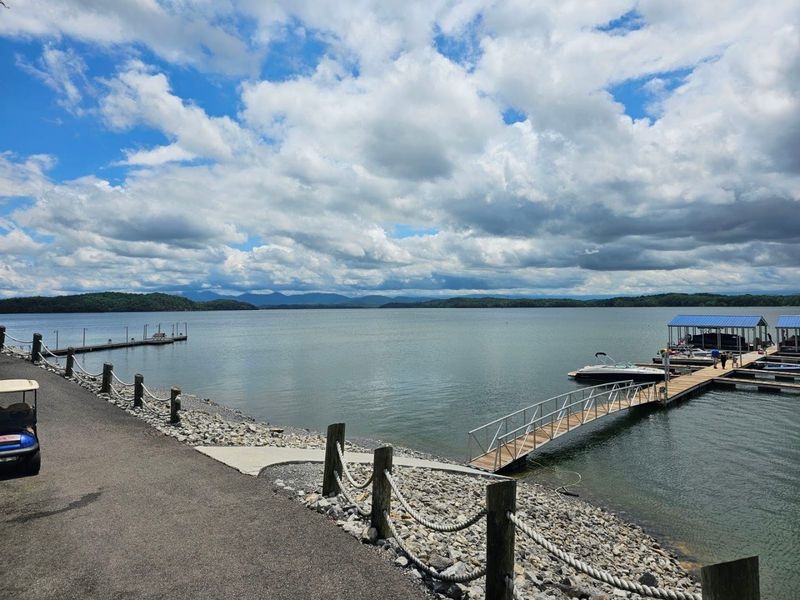
There is a particular kind of patience required for crystal hunting, and Douglas Lake rewards those who bring it.
The activity is most productive during the drawdown months, when the lakebed sits exposed and accessible beneath cool, clear skies.
Early morning light is especially useful, as low-angle sunlight catches the facets of quartz crystals and sends small flashes across the pale ground.
The technique is straightforward. Walk slowly, keep your eyes close to the surface, and let the glint of reflected light guide you.
Most crystals are small, ranging from a few millimeters to a couple of centimeters, but their transparency and sharp terminations make them stand out against the surrounding clay and sand.
Some appear singly, while others cluster in loose groups near eroded limestone outcrops.
No special equipment is necessary beyond comfortable footwear suited to uneven, sometimes muddy terrain.
The experience carries no commercial reward since these crystals hold no market value, but that absence of pressure is precisely what makes the pursuit enjoyable.
It becomes a meditative exercise, a quiet conversation between the walker and the ancient earth beneath their feet.
Public access points around Dandridge and the broader Jefferson County shoreline provide good starting locations for anyone wanting to explore.
Fishing On Douglas Lake And Its National Reputation
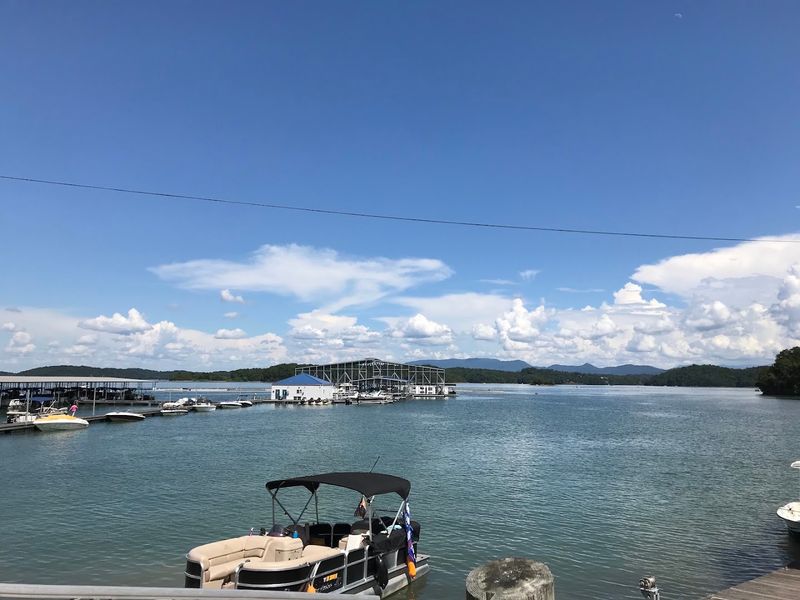
Ask any serious bass angler in the American South about Douglas Lake, and the response rarely requires much prompting.
The lake has built a national reputation for largemouth bass fishing that draws competitors and recreational fishers from across the country.
Tournament circuits regularly include Douglas Lake on their schedules, and for good reason: the fish are plentiful, the water conditions are favorable, and the lake’s extensive network of coves creates ideal habitat.
Crappie fishing here is equally celebrated. The lake consistently ranks among the top freshwater destinations in the nation for crappie, which tend to concentrate around submerged structure and the mouths of coves during their seasonal movements.
Catfish, striped bass, and bluegill round out a fishing profile that suits both the specialist and the casual weekend angler.
During the summer months, when the lake returns to full pool, boat traffic increases considerably. Early mornings remain the most productive time for fishing, before the recreational boaters arrive in numbers.
Launching facilities are available at multiple points around the lake, including the Dandridge Boat Dock Access at 157 Public Drive, Dandridge, TN 37725, and another public ramp at 1680 Boat Launch Road, Sevierville.
Both provide convenient entry to the main lake body and its many productive arms.
Boating, Kayaking, And The Open Water Experience
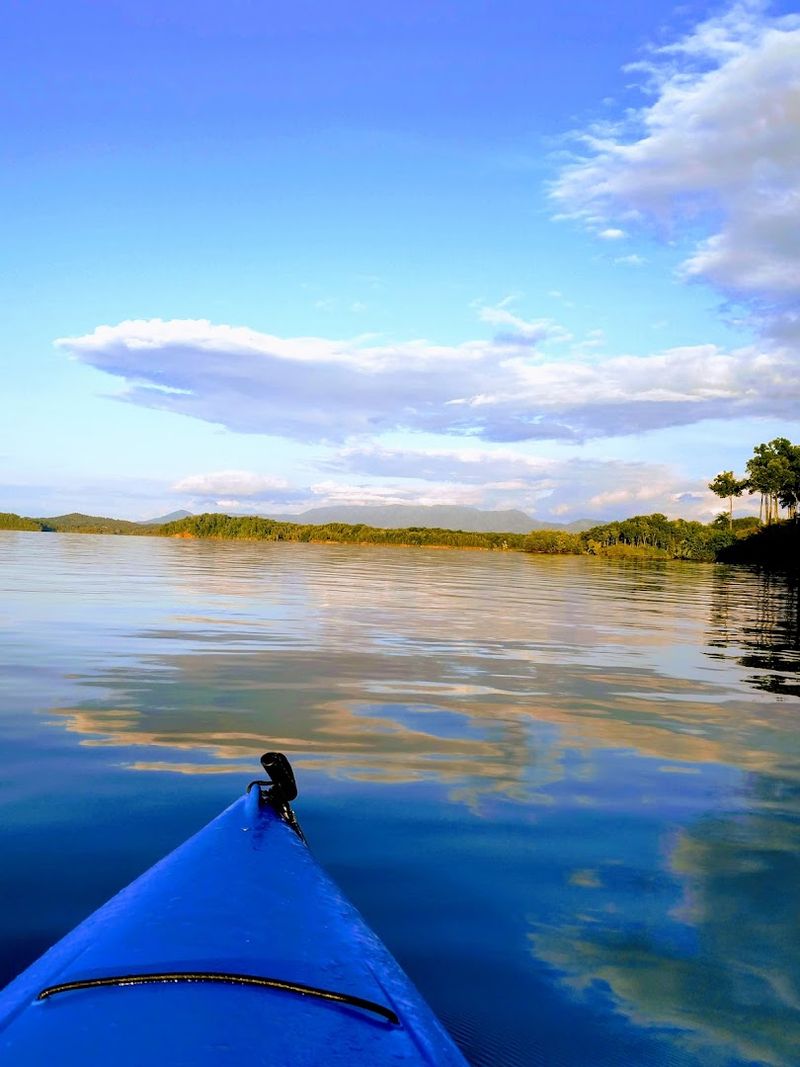
When full pool returns each spring and the lake swells back to its impressive 30,000-plus acres, Douglas Lake becomes a playground of considerable scale.
Pontoon boats are a popular choice for those who prefer a relaxed pace, offering comfortable platforms for afternoon cruises across the open water.
The lake’s size means there is always room to find a quiet cove or a stretch of open water far from the busiest launch areas.
Kayakers and canoe paddlers gravitate toward the lake’s many inlets and sheltered arms, where the pace slows and the scenery demands attention.
The shoreline, when viewed from the water, presents a layered landscape of forested ridges, rocky bluffs, and the occasional sandy beach.
Paddleboarding has also grown in popularity here, particularly during the calmer morning hours when the surface sits flat and the mountain views reflect clearly in the water.
Water skiing and tubing attract younger crowds and families looking for a more energetic afternoon.
Rental operations around the lake, including those based near Dandridge and Sevierville, offer access to boats and equipment for those arriving without their own.
The combination of scale, scenery, and variety of water activities makes Douglas Lake a genuinely versatile destination across the warmer half of the year.
Dandridge And The Communities That Define The Lakeshore
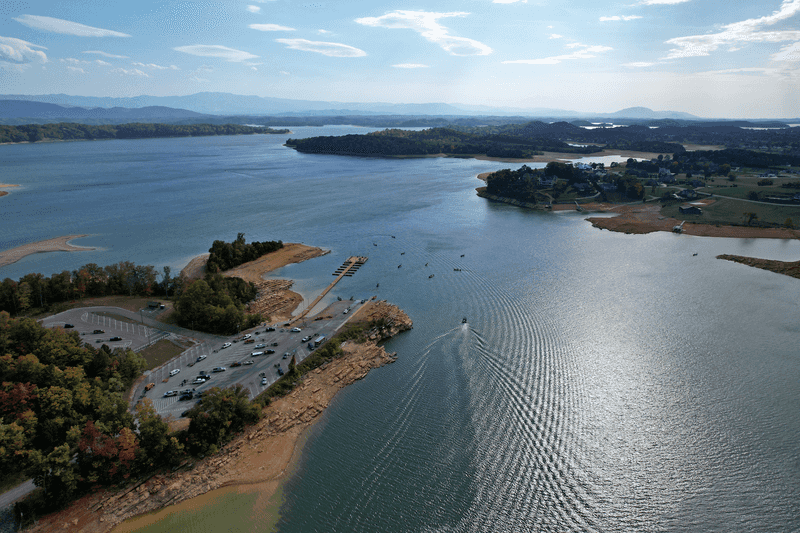
Dandridge carries the distinction of being the second-oldest chartered town in Tennessee, a fact that lends it a quiet historical gravity uncommon in smaller communities.
As the county seat of Jefferson County, it sits close to the lake’s southern shoreline and serves as a natural base for those exploring the broader Douglas Lake area.
The town’s modest downtown retains a period character that larger resort communities often sacrifice in pursuit of tourist traffic.
Sevierville, another community with lake access, sits closer to the mountains and carries a livelier commercial energy, shaped in part by its proximity to Pigeon Forge and the gateway corridors leading into Great Smoky Mountains National Park.
Together, these two towns frame the human geography of the Douglas Lake region, offering lodging, dining, and access points suited to different kinds of travelers.
The lake’s strategic position within East Tennessee places it within easy reach of several major regional attractions. The Great Smoky Mountains National Park lies a short drive to the southeast, while Knoxville anchors the western edge of the region.
This geographic convenience adds practical appeal to what is already a destination with strong natural credentials. For those planning extended stays, the surrounding area offers far more than the lake alone can provide.
Responsible Exploration And Preserving The Lakebed
The appeal of Douglas Lake’s quartz crystals brings a responsibility that every explorer should carry as naturally as their curiosity.
The Tennessee Valley Authority manages the reservoir and its surrounding land, and access to the lakebed during the drawdown period is generally permitted at public areas.
Collecting small, loose quartz pieces for personal enjoyment falls within acceptable practice, but removing large quantities or disturbing the lakebed structure crosses into territory that affects the experience for everyone who follows.
Minimal impact principles apply here with particular force. The exposed lakebed is a fragile environment during the drawdown months, when vegetation is absent and the soil is easily compacted or eroded.
Staying on established paths where they exist, avoiding disturbance to rock formations, and carrying out any waste brought in are straightforward habits that preserve the site’s character.
It is also worth checking current TVA regulations before any planned visit, as rules around collection and access can be updated. Posted signage at public launch areas typically reflects current guidelines.
The reward for this mindful approach is a landscape that continues to offer its quiet wonders to future explorers.
Douglas Lake’s geological character took millions of years to develop, and a few practiced habits of care ensure it endures for many generations of curious wanderers to come.