
10 Massachusetts Hikes That Reveal Mansions, Castles, And Lost Villages
History does not always wait inside a museum. In Massachusetts, old mansions, abandoned villages, and strange stone structures appear beside trails where the forest has slowly taken everything back.
What would you do if a quiet path suddenly ended at crumbling walls or a tower that looked completely out of place? Some routes uncover forgotten estates, while others reveal stories of towns lost beneath water or communities erased by fire.
The scenery keeps changing, but the feeling stays the same. Every broken foundation, overgrown garden, and weathered landmark gives hikers a reason to pause and look closer.
These trails turn an ordinary outing into part hike and part mystery. Wear sturdy shoes, follow posted rules, and treat yourself to an adventure where every mile brings another piece of the past into view.
1. J.C. Phillips Nature Preserve, Beverly
What if a single trail could lead you to a lost mansion, an ancient glacier ridge, and a lake that once supplied ice to royalty? That is exactly what J.C.
Phillips Nature Preserve delivers. This 85-acre preserve in Beverly is one of those rare places where every step feels like a small discovery.
The land was once part of Moraine Farm, a grand estate established in 1882. In 1913, William Phillips built an Italianate mansion called Highover atop Prospect Hill.
A fire destroyed it in 1968, but its outer foundation walls, courtyard remnants, and a weathered fountain still remain. A small headless statue adds a mysterious touch to the ruins.
The landscape itself was designed by Frederick Law Olmsted, the same visionary behind New York City’s Central Park. You are literally walking on a masterpiece.
The trails are easy and family-friendly, covering about 2.5 miles with minimal elevation changes.
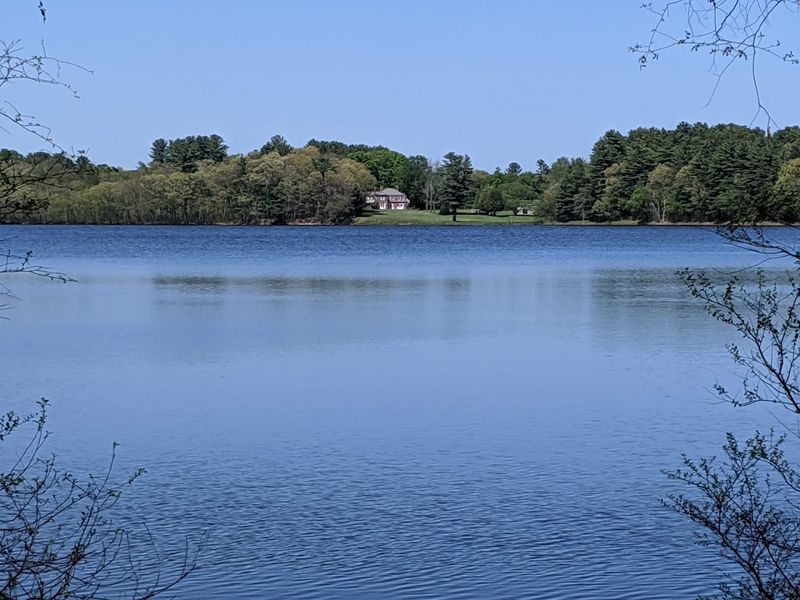
One highlight is the “Whale’s Back,” a long glacial ridge called an esker. It runs alongside Wenham Lake, a spring-fed body of water so remarkably clear it was once shipped worldwide.
Queen Victoria reportedly preferred it above all others. Ice harvesting here ended in 1935.
Beverly acquired the preserve in 1987 to protect its watershed. Today it offers peaceful trails and a tangible connection to Massachusetts’ Gilded Age.
You absolutely deserve this one.
J.C. Phillips Nature Preserve is located at 801 Cabot St, Beverly, MA 01915.
2. Mount Tom State Reservation, Holyoke
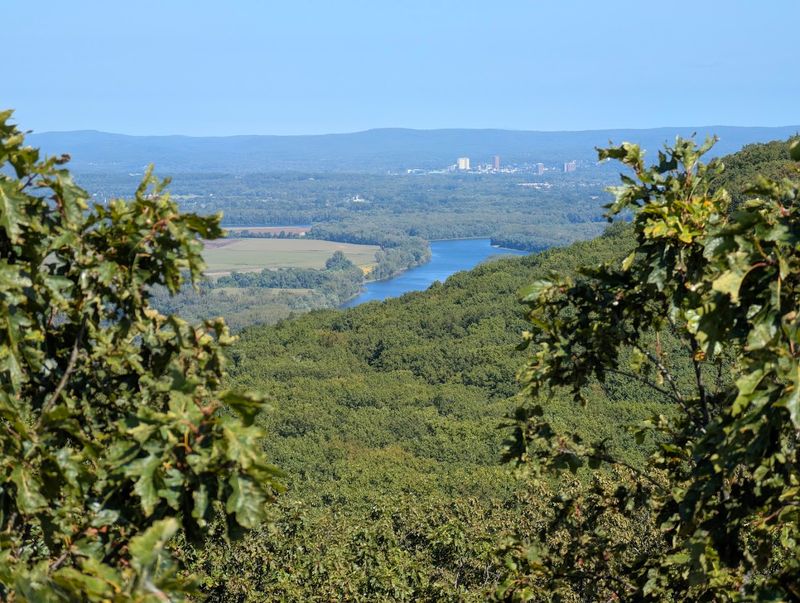
Standing on a ridge at Mount Tom feels like the whole world just opened up. The Connecticut River Valley stretches out below you.
The Berkshire Mountains rise to the west. The Pelham Hills roll gently to the east.
It is the kind of view that makes you forget everything waiting back home.
Mount Tom State Reservation covers more than 2,000 acres and offers 20 to 22 miles of trails. There is something here for every level of hiker.
Families with young kids can take the paved path to Goat Peak, where a lookout tower rewards the effort with sweeping views. Bray Tower is another accessible overlook, easy to reach and worth every step.
A section of the New England National Scenic Trail runs through this reservation. That alone makes it a bucket-list hike for trail enthusiasts.
In winter, the same paths transform into cross-country ski routes. Lake Bray becomes an ice skating spot that feels wonderfully old-fashioned.
Established in 1915, Mount Tom is one of the oldest state parks in Massachusetts. Its history is woven into the recreational culture of the region.
Generations of families have gathered here. Birdwatchers flock here each autumn to watch hawks ride the thermal currents above the ridge.
You do not need a grand plan to enjoy this place. Just show up, pick a trail, and let the landscape do the rest.
Mount Tom State Reservation is located at 125 Reservation Rd, Holyoke, MA 01040.
3. Tenney Castle, Methuen
There is something undeniably thrilling about stumbling upon castle ruins in the middle of New England. Tenney Castle in Methuen delivers exactly that feeling.
Once known as the Grey Court estate, this property belonged to Charles H. Tenney, a wealthy hat merchant who clearly had enormous ambitions for his home.
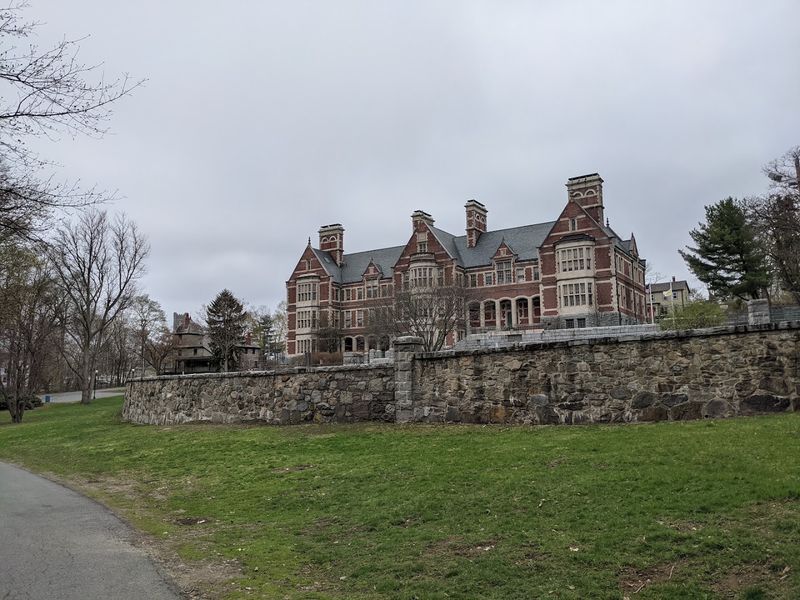
Built between 1890 and 1892, the mansion was modeled after the Chateau d’Yquem in France. Architects Carrere and Hastings, who later designed the New York Public Library, drew up the plans.
The estate covered 75 acres and was a showpiece of Gilded Age excess. A fire in 1978 brought it all down, leaving only partial tower walls and stone fragments standing.
Walking through Greycourt State Park today, you follow paved roads and dirt paths that wind through the former grounds. The ruins emerge through the trees with a quiet drama.
You can stand beside the old stonework and try to picture the grandeur that once filled this space.
The Tenney Castle Gatehouse is the only fully surviving structure on the property. Originally a farmhouse from 1830, it was redesigned in 1883 into a Queen Anne Victorian style.
It now serves as the Methuen Museum of History. Inside, replicated Anglo-Japanese wallpaper gives you a glimpse of the estate’s original interior character.
The estate later served as a seminary and a treatment center before its final abandonment. Every layer of its history adds to the story.
Tenney Castle is located at 1 Park St, Methuen, MA 01844.
4. Garden Of Remembrance, Shrewsbury
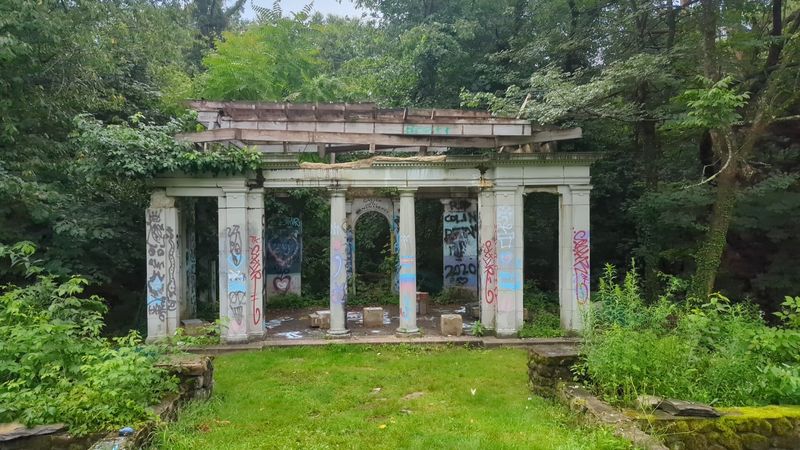
Some places carry love in their very stones. The Garden of Remembrance in Shrewsbury is one of them.
This quiet corner of Prospect Park was once the heart of a grand Georgian-style mansion called Juniper Hall, built in 1912 by carpet manufacturer Matthew J. Whittall on the town’s highest point.
Whittall and his wife Gertrude were passionate gardeners. Their estate bloomed with hundreds of flowers, wisteria, and irises.
Intricate stone pathways wound through formal garden beds. After Matthew passed in 1922, Gertrude dedicated a beautiful pergola to his memory.
She called it the Garden of Sweet Remembrance, and the name stuck.
The mansion itself was demolished in 1979, but the pergola still stands. It shows the weathering of decades, but its presence is powerful.
An empty reflecting pool and low stone walls hint at the elaborate landscape that once surrounded it. Standing here, you can feel the care that went into creating something meant to last forever.
The Town of Shrewsbury now owns the land as part of Prospect Park. A dedicated group of volunteers, the Friends of Prospect Park, spent years clearing overgrowth and restoring the garden.
Flowers now bloom again around the reflecting pool. Even Vice President Calvin Coolidge visited the estate in 1922 during its golden years.
This is a hike that rewards slowness. Take your time here.
It is a place meant for reflection.
Garden of Remembrance is located at 46 Vega Dr, Shrewsbury, MA 01545.
5. Quabbin Reservoir, Belchertown
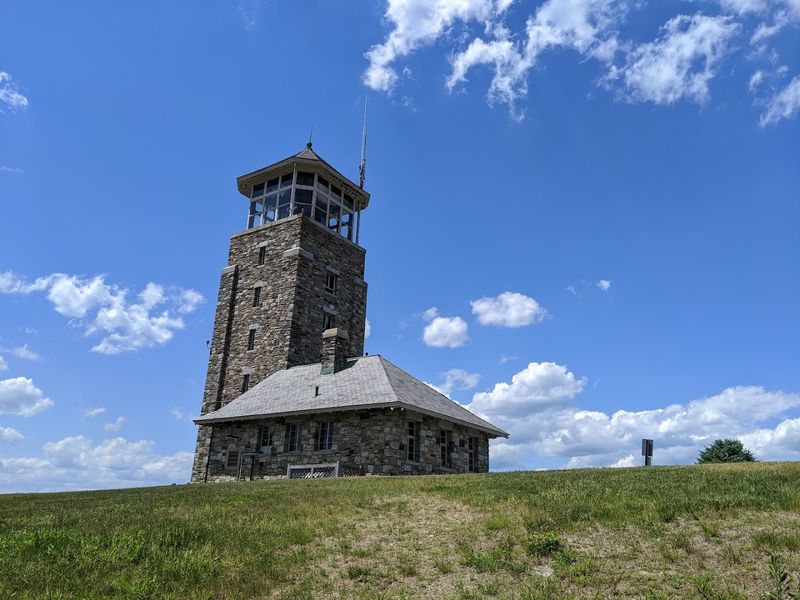
Imagine walking a road that ends at the edge of a lake, knowing an entire town lies beneath the surface. That is the haunting reality of Quabbin Reservoir.
In April 1938, four towns, Dana, Enfield, Greenwich, and Prescott, were disincorporated and flooded to create a water supply for Boston. About 2,500 residents were displaced.
Buildings were demolished before the flooding, but cellars were left intact. Old roads still trace paths into the former towns, stopping where the water begins.
Following these routes on foot is one of the most quietly powerful experiences Massachusetts has to offer. You are walking where families once lived, worked, and gathered.
Some remnants of Dana survive on higher ground. The former town green is still visible.
Foundations and stone walls peek through the trees. Enfield Lookout provides a sweeping view over the water, directly above where the town of Enfield once stood.
It is a view that stays with you long after you leave.
The Quabbin Reservoir offers extensive hiking through its 13 access gates. The Dana Common via Gate 40 Trail is a favorite for history seekers.
The Winsor Dam Trail offers scenic waterside walking. Each path leads through marked woodland with old foundations and walls that remind you of what came before.
Please note that dogs are not permitted on any trails within the Quabbin watershed. Check access information before your visit.
Quabbin Reservoir is located at 100 Winsor Dam Rd, Belchertown, MA 01007.
6. Blueberry Knoll Wildlife Area, Norton
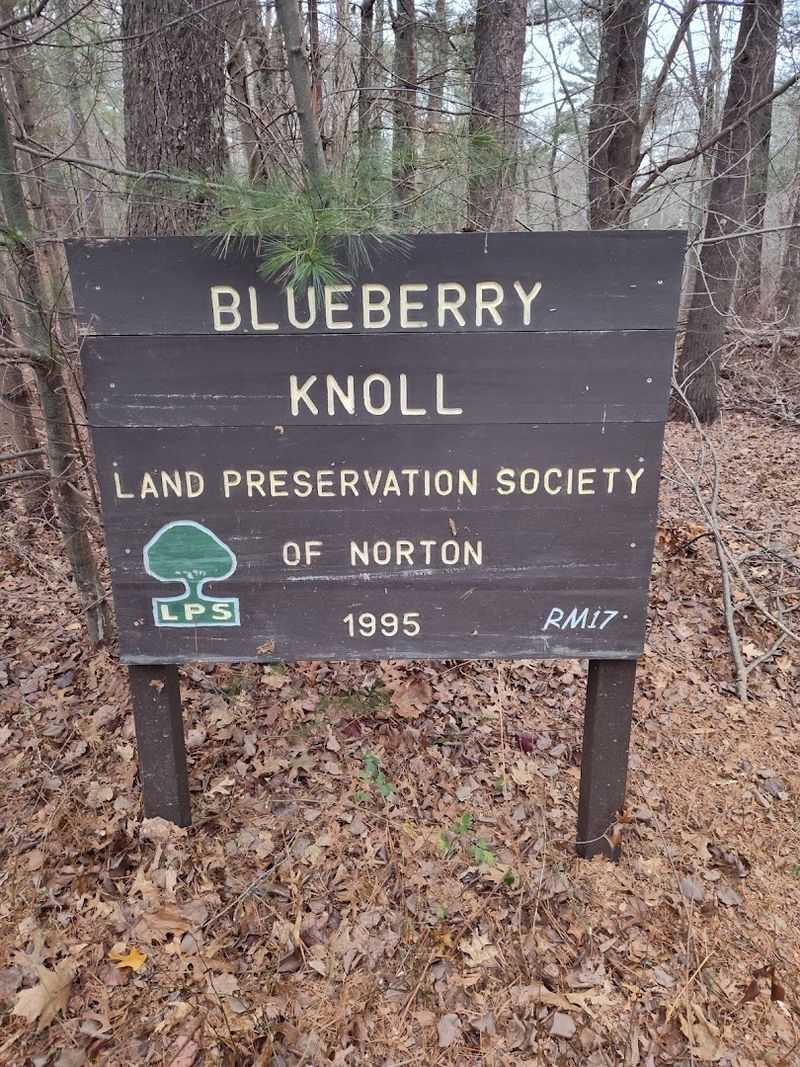
Not every great hike needs dramatic ruins or sweeping vistas. Sometimes the best adventures are the quiet ones.
Blueberry Knoll Wildlife Area in Norton is that kind of place, a peaceful stretch of open woodland where the pace slows down and the details start to matter.
The trails here wind through varied habitats. You move from open woods to wetland edges and back again.
Birds are active and vocal throughout the seasons. Birdwatchers will find plenty to observe without ever needing a map or a plan.
Just follow the sounds and see where they lead.
Look closely as you walk and you will notice old stone walls threading through the trees. These are not decorative.
They are real historical markers, boundary lines set by farmers and landowners generations ago. Much of Massachusetts’ wildlife land was once active farmland or logging territory.
Those quiet walls are the last evidence of that earlier life.
The landscape itself invites imagination. Think about the people who cleared these fields, planted crops, and built those walls by hand.
Their work shaped the very ground you are standing on. That connection to the past is subtle here, but it is real and worth pausing to appreciate.
Blueberry Knoll is the kind of place where you come to breathe. You slow your pace, you notice more, and you leave feeling genuinely restored.
It is a reminder that you do not always need a destination. Sometimes the walk itself is the whole point.
Blueberry Knoll Wildlife Area is located at Stanley Rd, Norton, MA 02766.
7. Catamount State Forest, Colrain
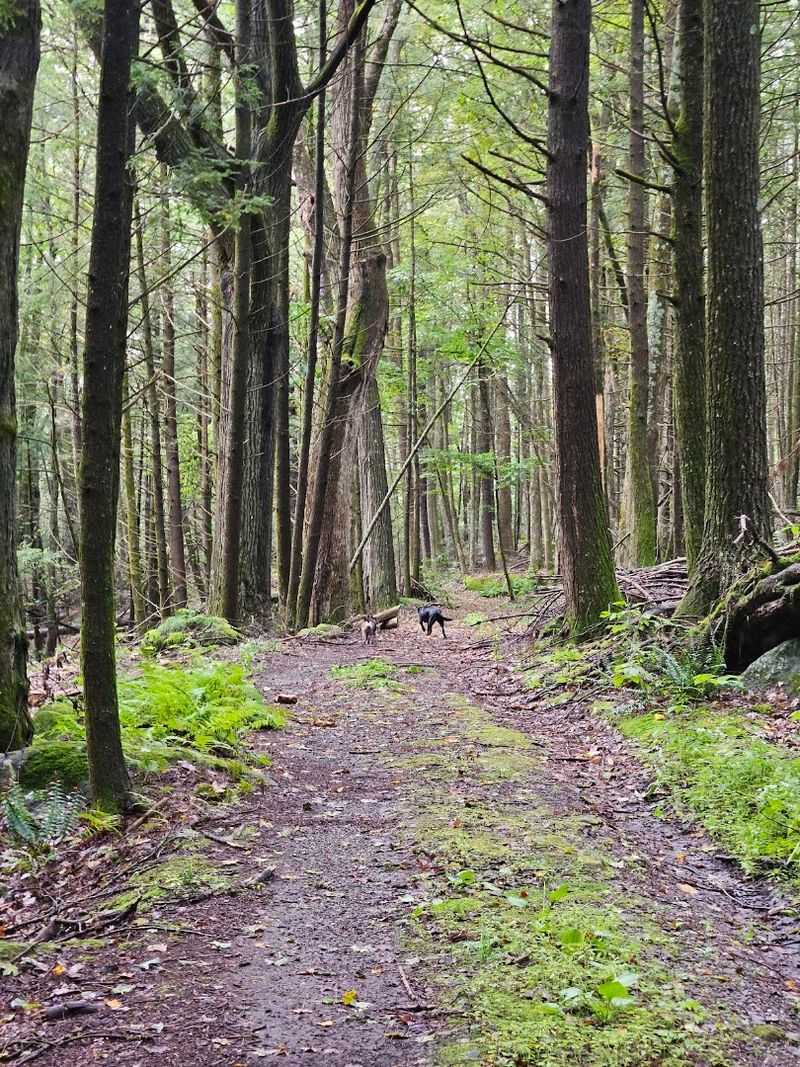
Catamount State Forest does not hold your hand. It is wild, a little rugged, and completely worth it.
Covering 1,125 acres across Colrain and Charlemont, this forest rewards hikers who like their trails with a bit of personality. Expect rocky singletrack, root-crossed paths, and the satisfying crunch of leaves underfoot.
The trail network here is a mix of unmarked singletrack, wider doubletrack, and old woods roads. That last category is where the history hides.
These old roads were once used by loggers, early settlers, and farmers who worked this land long before it became protected forest. Walking them today, you can feel the weight of that earlier use beneath your feet.
The Bridge of Flowers to Iron Bridge loop covers 3.4 miles and is one of the more popular routes. The Dutch and Mary Barnard and Waterthrush Trail Loop is a 2.0-mile trek that opens up to views of the Deerfield River Valley and Mount Greylock.
On clear days, that view is genuinely stunning.
Keep your eyes open as you go. Vernal pools appear in spring, filled with frogs and salamanders.
Wildflowers push up through the forest floor. And somewhere along certain trails, you might find the remains of an old chimney standing alone among the trees.
It is a quiet, unexpected reminder that someone once called this forest home.
That lone chimney says more than any historical marker ever could. This is a forest with layers.
Catamount State Forest is located in Colrain, Massachusetts 01340.
8. Monomoy Island, Chatham
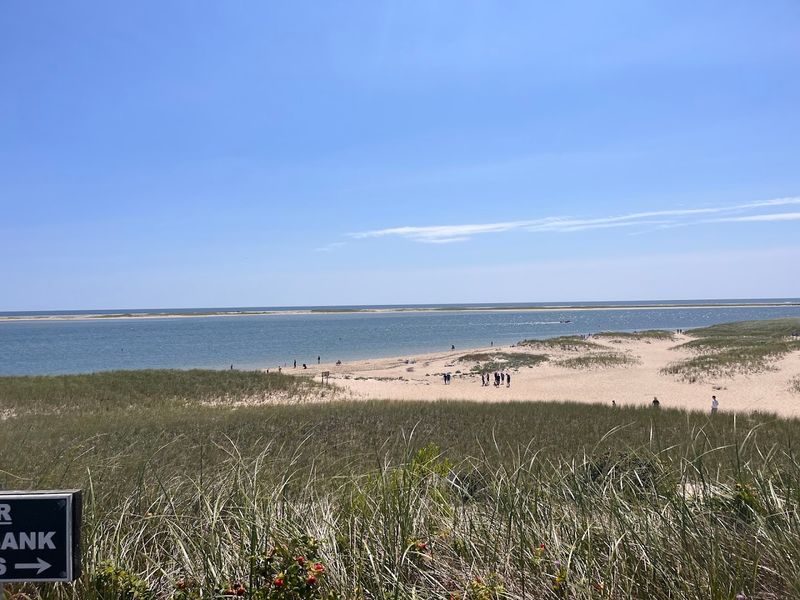
Monomoy Island plays by its own rules. This barrier island off the coast of Chatham has been shaped, split, and reshaped by Atlantic storms for centuries.
It is one of the most dynamic landscapes in all of New England, and hiking it feels like walking through a living geography lesson.
In the early 1800s, a small fishing and shipping community known as Whitewash Village grew up here. At its height, about 200 people called this island home.
There was a tavern, a school, and a working harbor. The shifting sands eventually closed the harbor, but residents held on into the 1930s, mostly as a summer community.
Today, their story survives only in records and the island’s quiet atmosphere.
The Monomoy Point Light adds another layer to the experience. First commissioned in 1823, the current cast-iron tower dates to 1828.
The lighthouse and keeper’s quarters were restored in 1988 and are listed on the National Register of Historic Places. The light stopped operating in 1923, but the structure stands as a proud landmark at the island’s southern tip.
Monomoy became a Federal Wildlife Refuge in 1970. Much of it is designated wilderness.
It hosts 285 species of migratory birds and a thriving gray seal population. The island has also reconnected to the mainland at points, reflecting its restless character.
Getting here requires a ferry or guided tour. Plan ahead and check schedules before visiting.
Monomoy Island is located in Chatham, Massachusetts.
9. Bancroft Tower, Worcester
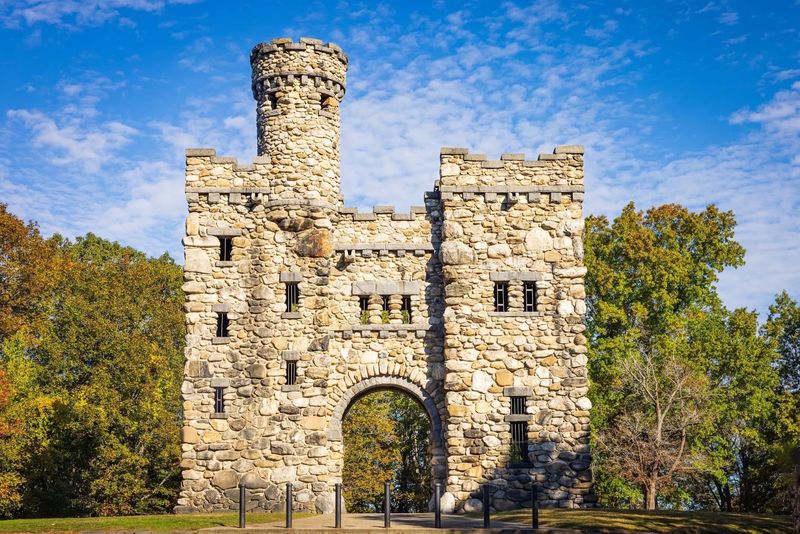
Worcester has a castle. It is not a famous one, and that is part of what makes it so enjoyable to find.
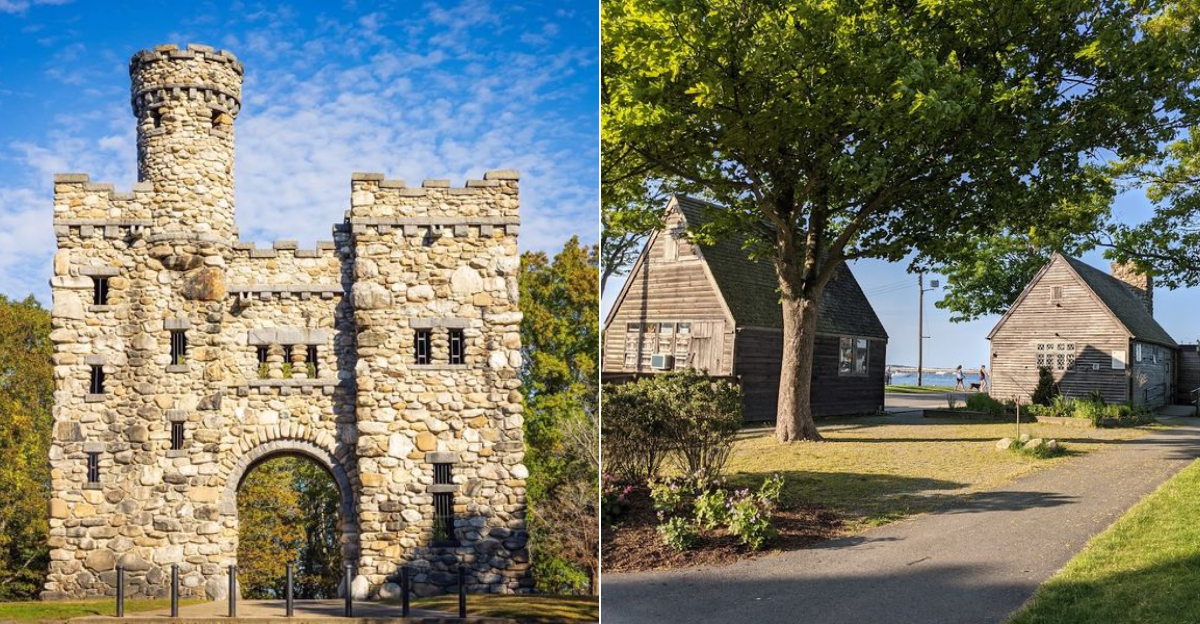
Bancroft Tower rises 56 feet from Prospect Hill, built entirely from natural stone and granite to resemble a miniature feudal fortress. It is quirky, dramatic, and completely unexpected in the middle of a New England city.
Stephen Salisbury III commissioned the tower in 1900 as a tribute to his father’s close friend, George Bancroft, a celebrated historian, diplomat, and former Secretary of the Navy. Architects Earle and Fisher designed it with spiral staircases, fireplace chambers, and open parapets.
The intention was to create a recreational gathering spot for the community. Picnics, social outings, and leisurely afternoons were all part of the original vision.
The tower is listed on the National Register of Historic Places and sits within Salisbury Park. A walking path circles the structure, originally built as a vehicular road.
Beyond the tower, a trail extends into the wooded areas of the park, connecting to Worcester’s 14-mile East West Trail. That trail links many of the city’s green spaces into one long, walkable route.
The tower closed to the public in the 1980s due to safety concerns, but it reopens on select days throughout the year. Those special openings are worth planning around.
The interior and upper views are a genuine treat for visitors who make the effort to time their trip right.
Bancroft Tower is located at Bancroft Tower Rd, Worcester, Massachusetts 01602.
10. Plymouth Rock, Plymouth
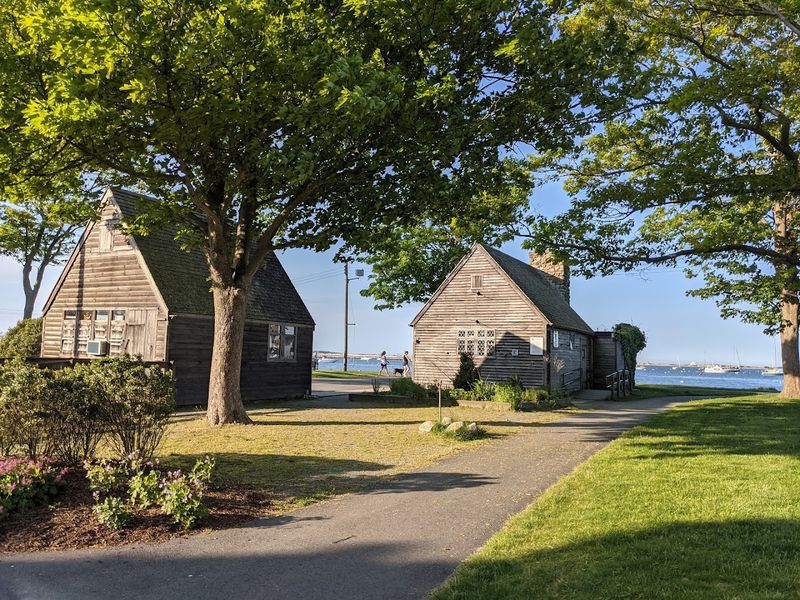
Few places in America carry as much symbolic weight as Plymouth Rock. This modest granite slab on the shore of Plymouth Bay is tied to one of the most defining moments in the country’s founding story.
Tradition holds that the Mayflower Pilgrims stepped onto this very rock when they landed in 1620, beginning the Plymouth Colony.
Here is a fun detail worth knowing. The Pilgrims themselves never mentioned the rock in their own writings.
The first recorded reference appeared in 1715, describing it simply as a great rock. Its connection to the Pilgrims was not publicly recognized until 1741, when a 94-year-old man named Thomas Faunce shared an oral tradition passed down through his family.
That story became history.
The rock itself has had a rough journey. It has been moved, cracked, and reassembled over the centuries.
Today it rests under a protective granite canopy at Pilgrim Memorial State Park, with the date 1620 carved into its surface, added in 1880. It is smaller than most visitors expect, but its presence is still striking.
The real reward here is the walk surrounding it. Head up to Cole’s Hill, which served as the Pilgrims’ first burial ground.
The view down over Plymouth Harbor is genuinely moving. Walk along Leyden Street, considered the oldest continuously used English street in America, and imagine the first homes being built on either side.
Plymouth Rock is located at 79 Water St, Plymouth, Massachusetts 02360.