
This Massachusetts Oyster Farm Takes You Onto The Bay Before Serving The Freshest Possible Lunch
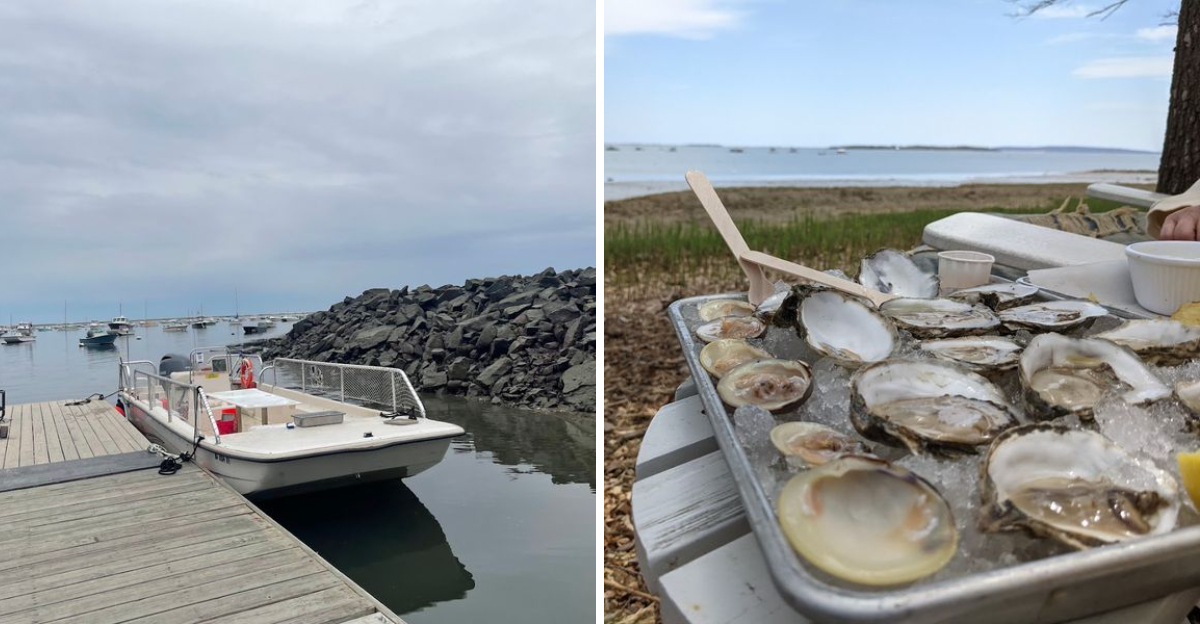
Salt air, cold water, and an oyster still warm from the sun. That combination sums up an afternoon here better than any menu description could.
Massachusetts has built a reputation around its oyster farms, and this one lets you experience the process firsthand instead of just eating the result.
A boat carries small groups out onto the bay, gliding past cages where oysters spend months growing before reaching a plate.
Visitors pull them straight from the water, rinse them off, and eat them on the spot. Few meals start this close to their source.
Once the boat returns, lunch continues with more oysters and seafood sourced locally, served in a relaxed outdoor setting. The whole afternoon moves at an easy pace, mixing education with genuinely good food.
It works well for couples, families, or anyone who wants a different kind of summer outing. Reservations fill up early once the season begins.
This Is Where You See Marine Cultivation Up Close And Personal
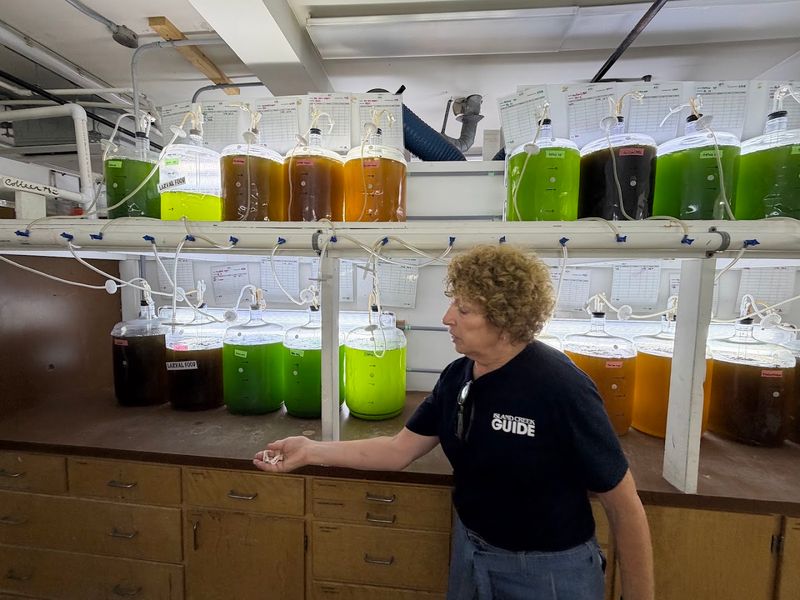
Before the boat, before the meal, there is the hatchery. Here, the cultivation process begins in a controlled indoor environment where oyster larvae are carefully bred and monitored.
It is a world most people never see, and stepping inside for the first time genuinely shifts how you think about shellfish.
The hatchery holds thousands of juvenile oysters at various stages of development. Temperature, salinity, and algae levels are managed with precision.
Each tiny oyster is essentially an experiment in patience, requiring months of careful attention before it is ready for open water.
Island Creek Oysters is one of roughly a dozen hatcheries in the United States that breeds oysters specifically adapted to Duxbury Bay’s cold, saline conditions. That specificity matters enormously to the final flavor.
The farm tour guides walk you through every stage with clarity, answering questions with genuine enthusiasm rather than rehearsed lines. By the time you leave the building, the science behind a single oyster feels both intricate and surprisingly personal.
Understanding the process makes what follows on the water feel earned.
The Pulse Of Duxbury’s Waters
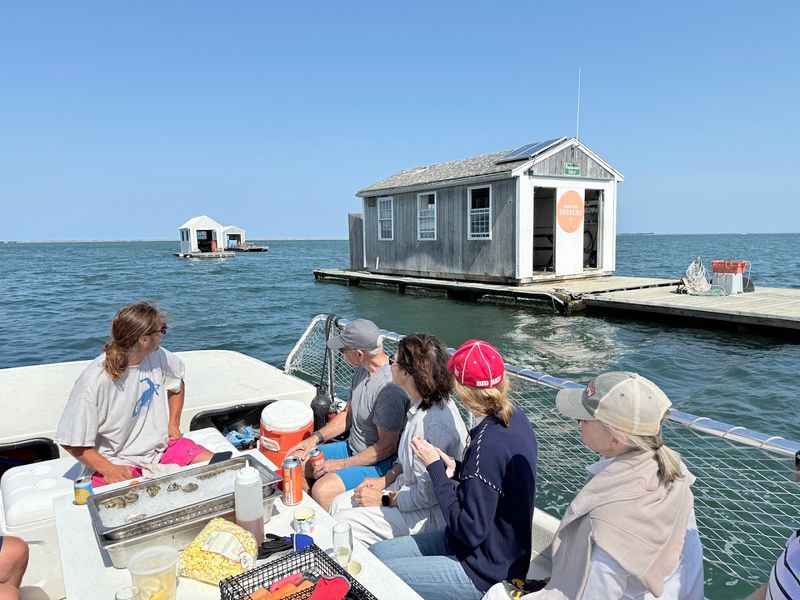
Duxbury Bay is not a dramatic body of water. It is quiet, wide, and deeply functional, shaped by tides rather than tourism.
The bay’s cold salinity and clean currents create conditions that are genuinely ideal for shellfish cultivation, and Island Creek Oysters has built its entire identity around that natural advantage.
Out on the water during the farm tour, the scale of the operation becomes clear. Oysters grow both in suspended trays and directly on the bay floor, each method producing subtle differences in texture and flavor.
The tidal rhythm controls everything here, from feeding cycles to harvest timing. Local oyster farmers often describe Duxbury Bay as having its own version of terroir.
In the oyster world, this is called merroir, and the bay’s particular combination of nutrients, temperature, and mineral content produces a flavor profile that is consistently described as briny, clean, and finished with a faint sweetness.
Standing on the boat with the shoreline in the distance, it is easy to understand why Skip Bennett chose this bay when he founded the farm in 1995.
A Heritage Reborn On The Shore
Oyster farming in New England has deep roots, but it nearly disappeared along much of the Massachusetts coastline before a handful of determined growers brought it back.
Skip Bennett, a Duxbury native, founded Island Creek Oysters in 1995 with a straightforward belief that the bay could produce world-class shellfish if treated with care and scientific rigor.
What began as a modest operation has grown into one of the most recognized oyster brands in the country.
The farm supplies restaurants across the United States, and the name Island Creek has become shorthand for a certain standard of East Coast oyster quality.
That reputation was built gradually, through consistency and a refusal to cut corners on cultivation practices.
The story of Island Creek is also the story of Duxbury itself, a town with a long maritime history that found renewed purpose through aquaculture.
The farm has helped define the region’s culinary identity and given younger generations a reason to stay and work the water.
At 403-9 Washington Street, the connection between place, people, and product feels entirely genuine, rooted in local pride rather than manufactured branding.
Heritage here is not decorative. It is operational.
The Art Of Nurturing Oceanic Delicacies
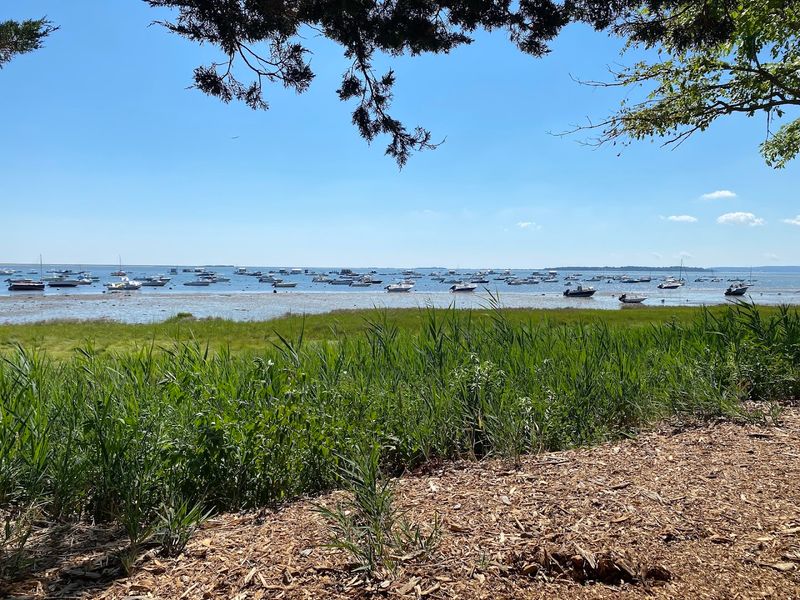
Growing oysters is slower and more demanding than most people expect. Each one requires consistent care across multiple growth stages, moving from the hatchery to protected nursery environments before eventually reaching open water.
The process at Island Creek Oysters spans many months and involves daily monitoring by a dedicated team.
On the bay tour, guides demonstrate how oysters are rotated, cleaned, and sorted as they mature. Fouling organisms attach to the cages and must be managed regularly.
Water quality is checked frequently because even small environmental shifts can affect growth rates and flavor development.
The farm uses both tray cultivation and bottom culture, placing some oysters directly on the bay floor where they filter feed naturally and develop a denser shell.
This dual approach allows the team to produce oysters with slightly different characteristics, offering variety within a consistent quality standard.
The guides explain each method without oversimplifying, which gives the tour an educational depth that feels substantive rather than superficial.
Watching someone shuck a freshly harvested oyster on the boat, right there on the water, and then tasting it immediately afterward, is one of those moments that makes the entire subject of aquaculture feel vivid.
This Feast Takes You Straight From The Bay To Your Plate
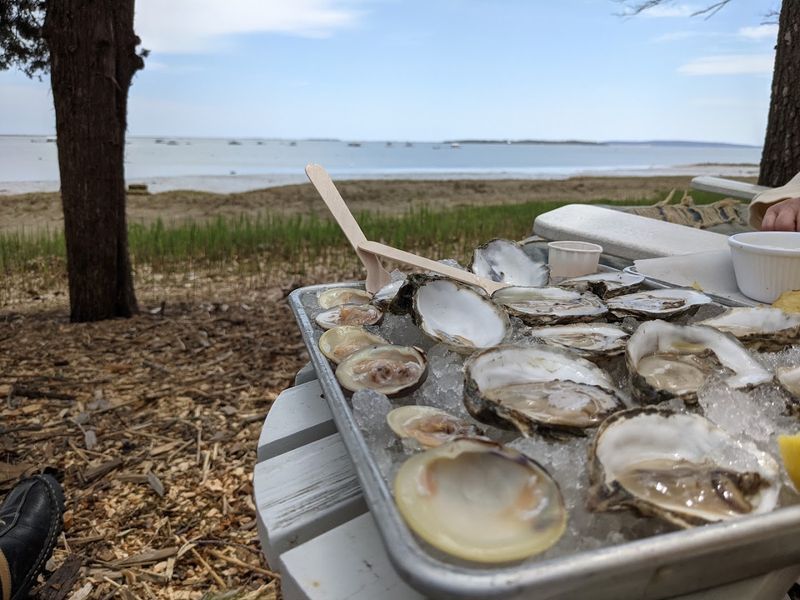
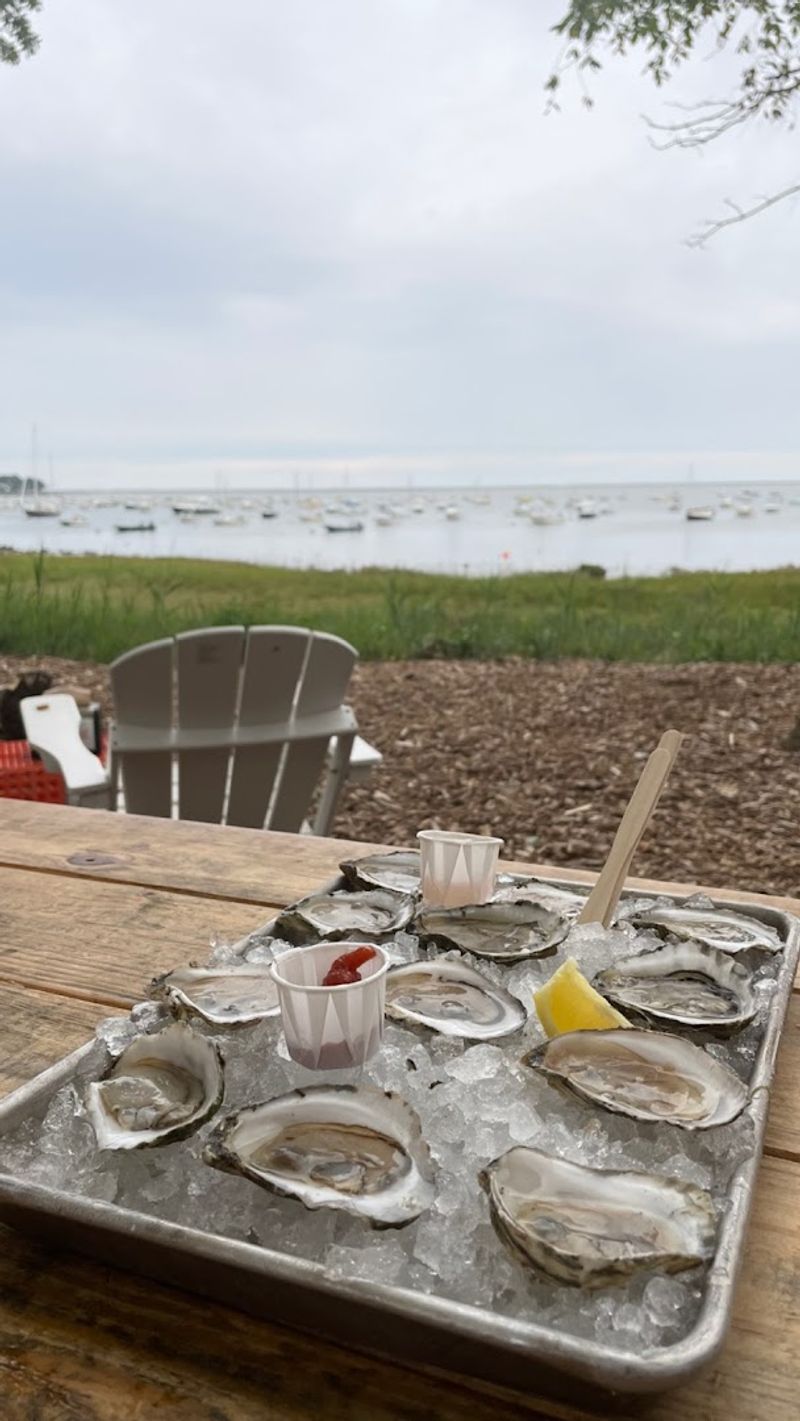
After the boat returns to shore, the Raw Bar is waiting. Set beside the water with an open, unhurried layout, it serves food that is uncomplicated in the best possible sense.
Freshly harvested oysters arrive on ice, accompanied by mignonette and lemon, and the proximity to the bay makes them taste almost impossibly fresh.
The menu extends beyond oysters to include caviar dogs, tinned seafood, and a rotating selection of seasonal items.
A Caesar salad and chicken salad sandwich have drawn consistent attention, and the food overall reflects a kitchen that prioritizes ingredient quality over elaborate preparation.
Seating spreads across indoor and outdoor areas, with picnic tables positioned to catch the bay views.
The atmosphere is relaxed and genuinely family-friendly, with an energy that comes from people who have just spent two hours learning something new and are now ready to eat well.
The Raw Bar does not try to be a fine dining destination. It succeeds precisely because it knows what it is and delivers that experience without pretension.
These Flavors Come Straight From The Tide Itself
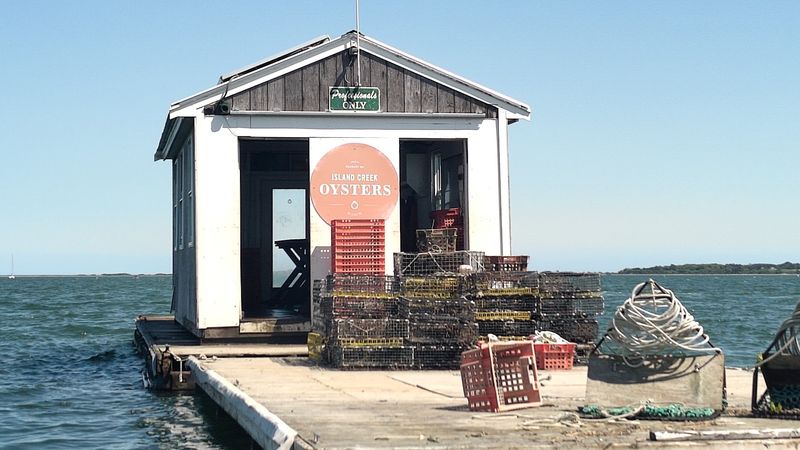
The flavor of an Island Creek oyster is specific enough that regulars describe it in consistent terms: a firm, briny opening followed by a clean oceanic middle and a finish that carries a faint, lingering sweetness.
That profile is not accidental. It is the direct result of Duxbury Bay’s water chemistry, the farm’s cultivation methods, and the timing of the harvest.
In the oyster world, merroir describes the way a shellfish absorbs and reflects the character of its environment. Duxbury Bay’s cold, mineral-rich waters produce a merroir that is widely considered among the most expressive on the East Coast.
The oysters cultivated here are often cited as a benchmark for what a classic New England oyster should taste like.
Eating them on the boat, freshly shucked minutes after being pulled from the water, removes every variable that typically stands between harvest and consumption.
There is no cold storage lag, no transit time, no gradual flavor fade.
What you taste is the bay itself, delivered as directly as possible. For anyone serious about understanding what oysters can be at their best, that immediacy is the point of the entire experience.
A Gathering Place By The Bay
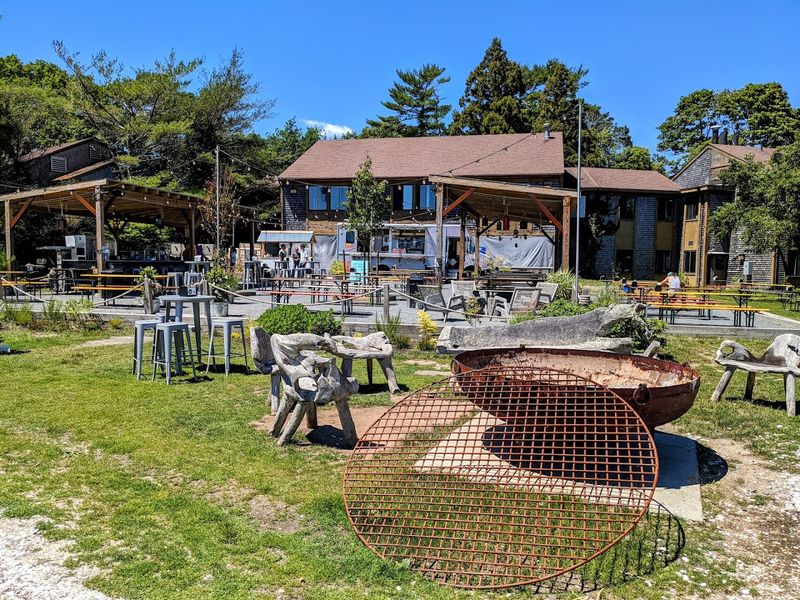
There is something about eating near water that slows people down in a good way. At the Raw Bar on Washington Street, the setting does a lot of the work before the food even arrives.
The bay stretches out in front of you, boats move quietly in the distance, and the air carries the particular saltiness that only a working coastal environment produces.
The space accommodates groups of various sizes and has a kid-friendly quality that makes it accessible without feeling juvenile.
Dogs are welcome in the outdoor areas, free parking is available, and the overall layout encourages lingering rather than rushing through a meal.
On busy summer days the crowd grows substantial, and the energy shifts into something lively and communal.
Inside, a wooden bar area provides a cozier alternative to the outdoor tables, and a downstairs section adds additional seating when the main floor fills up. A tinned fish vending machine in the basement has become a quirky point of local interest.
The Winsor House at 390 Washington Street serves as the farm’s more formal dining venue, offering lunch on Thursdays and Fridays and brunch on weekends in a warm, convivial setting.
The Dedicated Hands Of Aquaculture
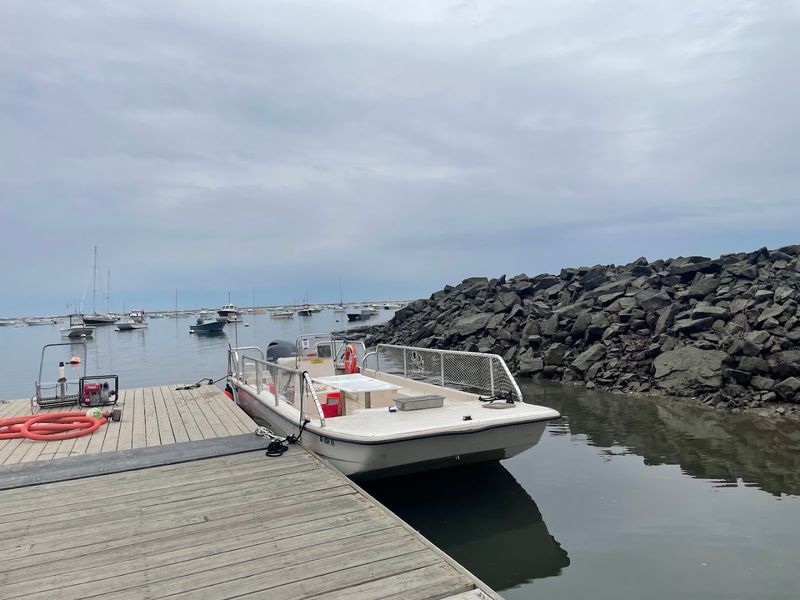
An oyster farm runs on consistent, physical labor performed in all weather conditions.
The people who work at Island Creek Oysters maintain the cages, manage the hatchery, lead the tours, and shuck oysters on a moving boat while simultaneously explaining the science of shellfish biology to curious strangers.
That combination of skill and communication is not easy to develop.
The tour guides bring real depth to the experience. They answer technical questions about algae cultivation and larval development with the same ease they use to show someone how to hold a shucking knife for the first time.
The tone is knowledgeable without being condescending, and the humor that surfaces throughout the tours feels natural rather than scripted.
Behind the scenes, the farm employs people across hatchery operations, water-based cultivation, harvesting, and hospitality. Each role contributes to a product that ends up on tables across the country.
Island Creek also supplies seed oysters to other growers, extending its influence across the broader aquaculture community.
The farm’s success has helped demonstrate that shellfish cultivation can be both economically viable and environmentally responsible in New England waters.
The people who make that possible are as much a part of the story as the bay itself.
The Inimitable Signature Of The Bay
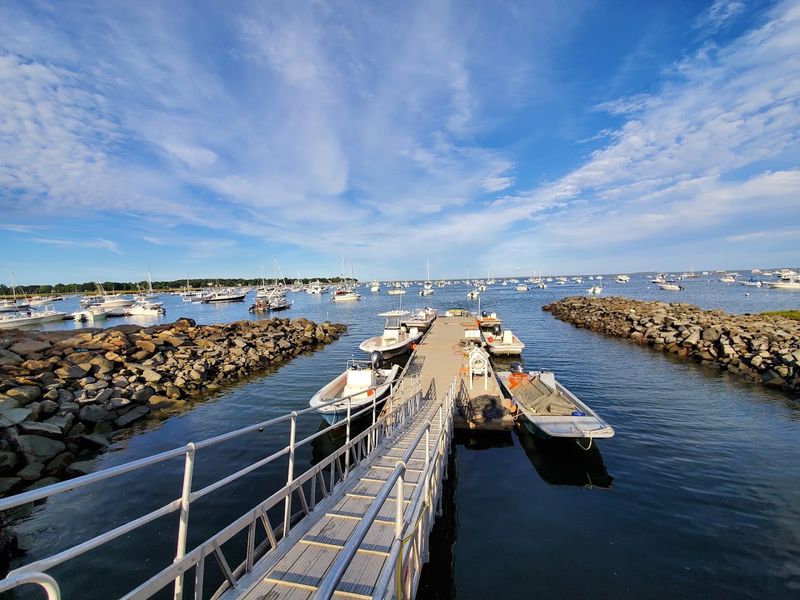
Every serious food region has a product that defines it, something so tied to its geography that moving it even a short distance would change what it fundamentally is. For Duxbury, that product is the Island Creek oyster.
The bay’s particular salinity, temperature range, and nutrient composition cannot be replicated elsewhere, and the farm has built its entire approach around honoring rather than overriding those natural conditions.
The oysters produced here are described as quintessential East Coast shellfish, expressing brine, seaweed, and a clean sweetness that reflects the bay’s cold, mineral character.
Chefs across the country have placed them on menus specifically because of that consistency, a quality that holds across seasons and years.
Taking the two-hour farm tour at Island Creek Oysters gives you a complete picture of how that consistency is achieved. You see the hatchery, ride the boat, learn the shucking technique, and eat the oysters while still on the water.
By the time lunch is served at the Raw Bar, the experience has already given you something most meals never provide: a genuine understanding of what you are eating and exactly why it tastes the way it does.
That is a rare and satisfying thing.