
6 Places To See Real Football History In Green Bay, Wisconsin
Football feels different when an entire community carries the story. The pride is everywhere. So are the memories, the traditions, and the names that still mean something generations later.
In Wisconsin, the game reaches far beyond the field. Historic landmarks preserve the moments that shaped a legendary team and turned local passion into something recognized across the country.
You can stand where major chapters began. You can visit the ground where unforgettable plays unfolded. Even ordinary streets hold stories that helped build one of football’s strongest identities.
The experience is not only for devoted fans. It is for anyone who appreciates loyalty, perseverance, and a community that refused to let its team disappear.
These stops bring the past closer. They replace old photographs with real surroundings and familiar stories with places you can see for yourself.
Come ready for more than sports trivia. This is football history built on local pride, shared memories, and a remarkable sense of belonging.
1. Lambeau Field
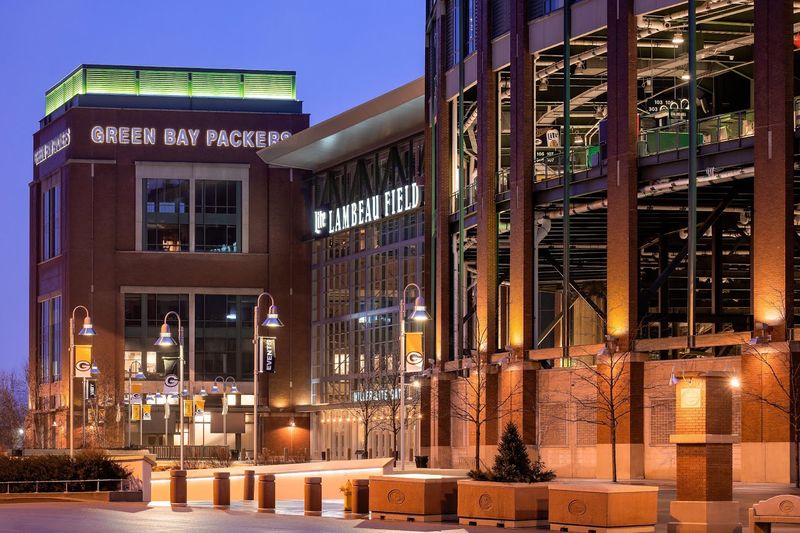
Few stadiums in professional sports carry the kind of weight that Lambeau Field does.Known as the Frozen Tundra, this legendary stadium has been home to the Green Bay Packers since 1957. Its game-day atmosphere is something you have to experience to fully understand.
The field itself sits in the heart of a neighborhood, surrounded by tailgaters and fans who treat every visit like a celebration.
You can tour the stadium even on non-game days, which makes it accessible for families and football fans visiting any time of year. The tours take you through the press box, the tunnel where players walk out onto the field, and even the field itself.
Standing on that grass, looking up at the stands that hold over 81,000 fans, puts the scale of the place into sharp perspective.
The stadium has gone through several expansions over the decades, but it has always kept the spirit of its original design. Renovations have added modern amenities without stripping away the classic character that makes it feel timeless.
Every corner seems tied to a defining moment, from championship runs to the unforgettable plays fans still talk about decades later. Even visitors with no strong team loyalty can appreciate how much football history has unfolded here.
You can feel the history in the architecture, in the worn paths near the gates, and in the way locals talk about the place with genuine reverence.
Lambeau Field is located at 1265 Lombardi Ave, Green Bay, WI 54304. Parking and tour information can be found on the official Packers website.
Plan to spend at least two to three hours here for the full experience. That gives you enough time to take a stadium tour and explore the nearby Titletown District, which offers activities for all ages just outside the gates.
2. Green Bay Packers Hall Of Fame & Museum
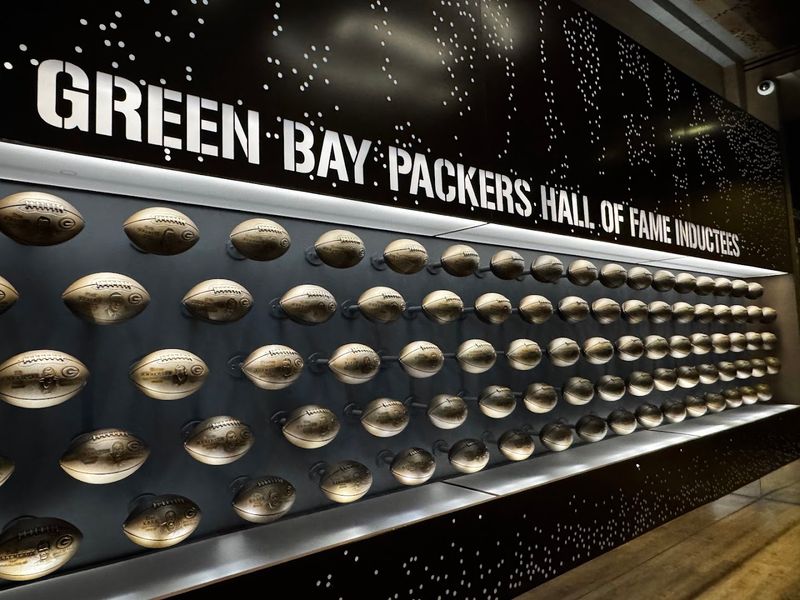
Right inside the Lambeau Field atrium, the Green Bay Packers Hall of Fame & Museum gives you a front-row seat to over 100 years of football greatness. This is not a typical sports museum where you walk past glass cases and feel disconnected.
The exhibits are designed to pull you into the story. Interactive displays, rare memorabilia, and vivid storytelling bring every era of Packers football to life in a meaningful way.
You will find Super Bowl trophies, jerseys worn by all-time greats, and equipment that tells the story of how the game itself has evolved.
The Hall of Fame traces the team from its very earliest days as a community-owned club through championship runs that stretched across multiple decades. Each section of the museum feels like a different chapter in a story that is still being written today.
One of the most impressive parts of the experience is seeing how deeply connected the Packers are to the people of Wisconsin.
The museum celebrates far more than the athletes on the field. It also honors the fans, workers, and community members who kept the team going through difficult seasons and championship years. That human element makes the whole visit feel personal rather than just informational.
The Hall of Fame is open year-round and is located at 1265 Lombardi Ave, Green Bay, WI 54304, inside the Lambeau Field complex. Admission is required, and combination tickets that include a stadium tour are available and offer great value.
Younger visitors especially enjoy the hands-on areas where you can test your football knowledge and feel like part of the game. Budget around two hours to take it all in without rushing through the exhibits.
3. Oneida Nation Walk Of Legends
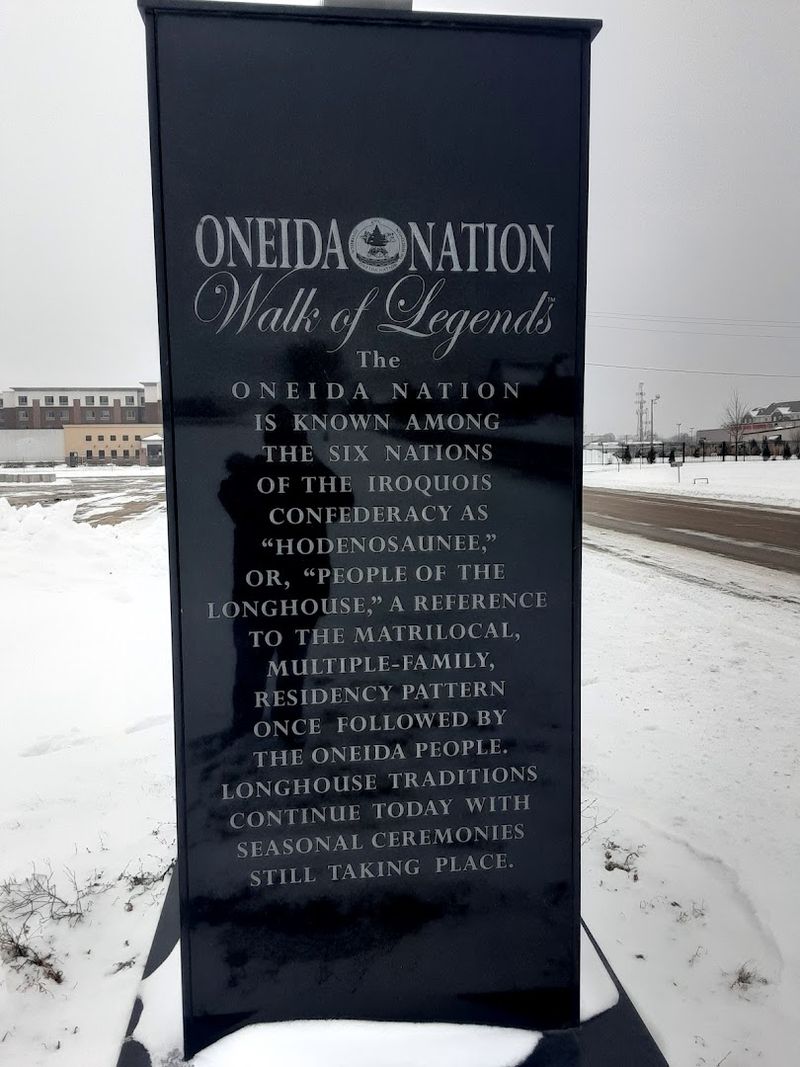
Along Lombardi Avenue, just outside Lambeau Field, a series of bronze statues stands as a permanent tribute to the greatest players and contributors in Packers history.
The Oneida Nation Walk of Legends is an outdoor gallery that you can visit any time of day, completely free of charge. Each statue captures a legendary figure in a pose that reflects who they were on and off the field, and the craftsmanship is genuinely impressive up close.
Vince Lombardi, Curly Lambeau, Brett Favre, Reggie White, and other iconic names are all represented here. Standing next to a life-sized bronze of one of the greatest coaches in NFL history gives you a sense of scale and presence that photographs simply cannot replicate.
Many visitors spend time reading the inscriptions and taking photos at each statue, turning the walk into a leisurely and educational stroll.
What makes this stop feel different from a typical monument is how public and open it is. There are no walls, no fees, and no schedule to follow. You can visit early in the morning before crowds arrive or in the evening when the light hits the bronze statues at a beautiful angle.
The surrounding area also offers views of the stadium and the Titletown District, making the whole stretch feel like a celebration of everything Green Bay represents.
The Walk of Legends runs along Lombardi Ave and S Oneida St, Green Bay, WI 54304. It is easy to include this stop as part of a broader stadium visit or Heritage Trail walk.
Spending 30 to 45 minutes here is usually enough to see every statue and read the accompanying information without feeling rushed.
Wisconsin residents and out-of-state visitors alike tend to find this stop genuinely moving and well worth the short detour.
4. Historic City Stadium
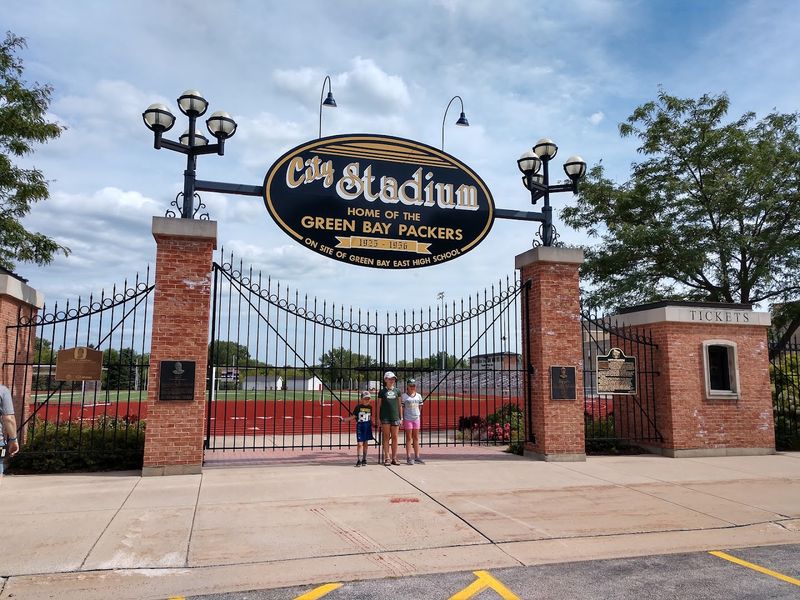
Before Lambeau Field existed, there was City Stadium. An earlier version of this venue hosted Packers games for decades.
The current Historic City Stadium, built in 1925 and renovated over the years, remains a powerful reminder of the team’s early days. Today it serves as the home field for Green Bay East High School, but its football roots run much deeper than a high school schedule.
The stadium holds the distinction of being one of the oldest continuously used football venues in the state of Wisconsin. The structure still reveals the outline of the old facility. Professional football was played here when the sport was still establishing its identity across America.
The bleachers and the layout reflect an era when football was simpler and more community-driven.
A historical marker near the stadium explains its significance and connection to the Packers franchise. Many visitors make this a quick but meaningful stop on a broader Green Bay football history tour.
You do not need to attend a game to appreciate the site, as the exterior and surrounding area are accessible and worth a short visit on their own.
Historic City Stadium is located at 1500 E Walnut St, Green Bay, WI 54301. Since it is an active school facility, access to the interior may be limited depending on the time of year and whether events are scheduled.
Visiting on a weekend or during a non-school period gives you the best chance to walk around the grounds comfortably. Pair this stop with Curly Lambeau’s nearby birthplace.
Together, they offer a fuller picture of the neighborhood where Packers football began and developed during the early twentieth century.
5. Birthplace Of The Packers Marker
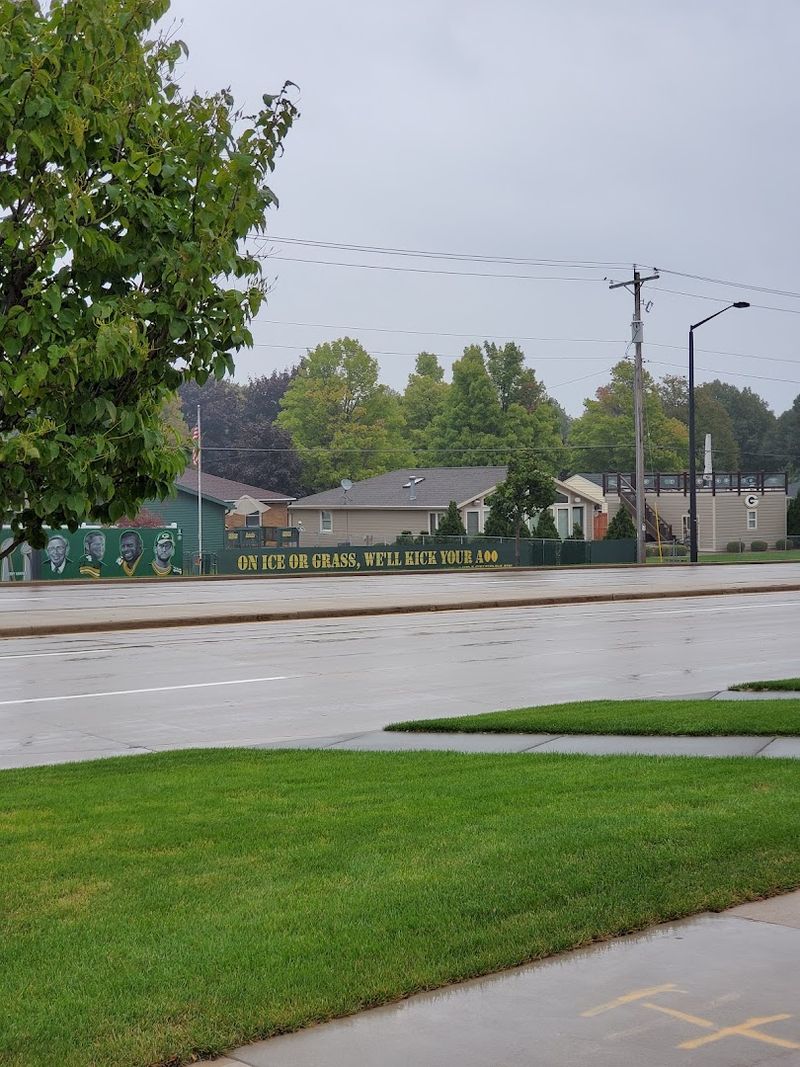
A single marker on a downtown Green Bay street corner holds more football history than most people realize.
The Birthplace of the Packers Marker stands near the site where Curly Lambeau and George Calhoun organized the original team. That meeting launched what would become one of the NFL’s most storied franchises.
In 1919, the two men met and began laying the groundwork for a team that would eventually win more NFL championships than any other franchise.
The marker is part of the Packers Heritage Trail and sits in a part of downtown Green Bay that still feels connected to the city’s working-class roots.
Reading the text on the plaque and looking around at the surrounding streets, you get a sense of how ordinary the beginning of something extraordinary can look. There was no grand stadium, no television deal, and no guarantee that the team would survive its first season.
Stopping here takes only a few minutes, but it tends to be one of those moments that stays with you. The simplicity of the marker against the backdrop of a regular city street makes the history feel accessible and real.
You are standing where a conversation changed professional sports in America. Few places can make that claim.
The marker is located at 200 N Adams St, Green Bay, WI 54301, in the heart of downtown. It is free to visit and open at all hours since it is an outdoor public marker.
Combining this stop with a walk through the rest of the Heritage Trail makes for an efficient and rewarding way to cover multiple historic sites in a single outing.
Wisconsin visitors who enjoy history and sports will find this marker a meaningful and grounding part of any Green Bay itinerary.
6. Curly Lambeau Gravesite
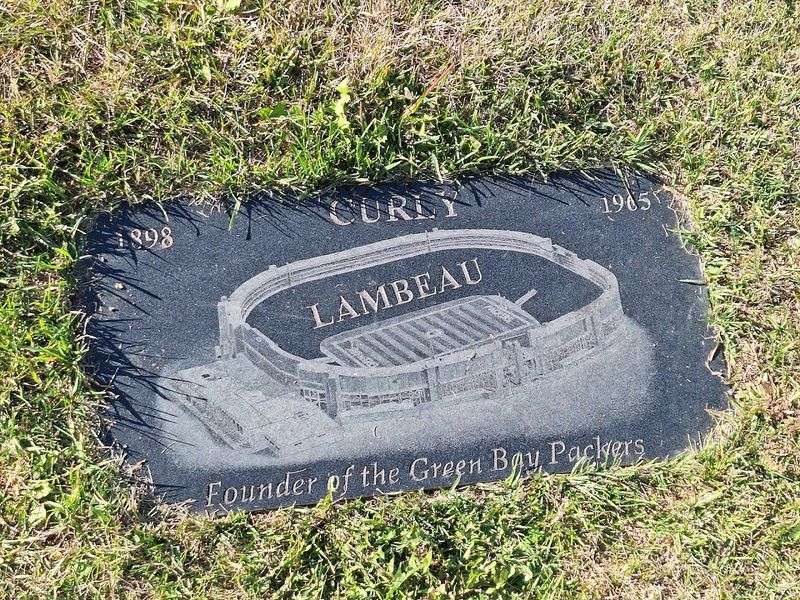
Earl Louis “Curly” Lambeau’s remarkable life came to an end on June 1, 1965. By then, he had helped transform a small-town football team into one of professional sports’ most enduring franchises.
He co-founded the Green Bay Packers in 1919, served as a player, and coached the team to six NFL championships. His final resting place offers a quiet, deeply personal connection to the man whose name now appears above one of football’s most famous stadiums.
Lambeau is buried in Section H near the southeast corner of Allouez Catholic Cemetery and Chapel Mausoleum. His grave is part of a modest family plot shared with his parents, Marcel and Mary, as well as his brother Oliver and Oliver’s wife, Dorothy.
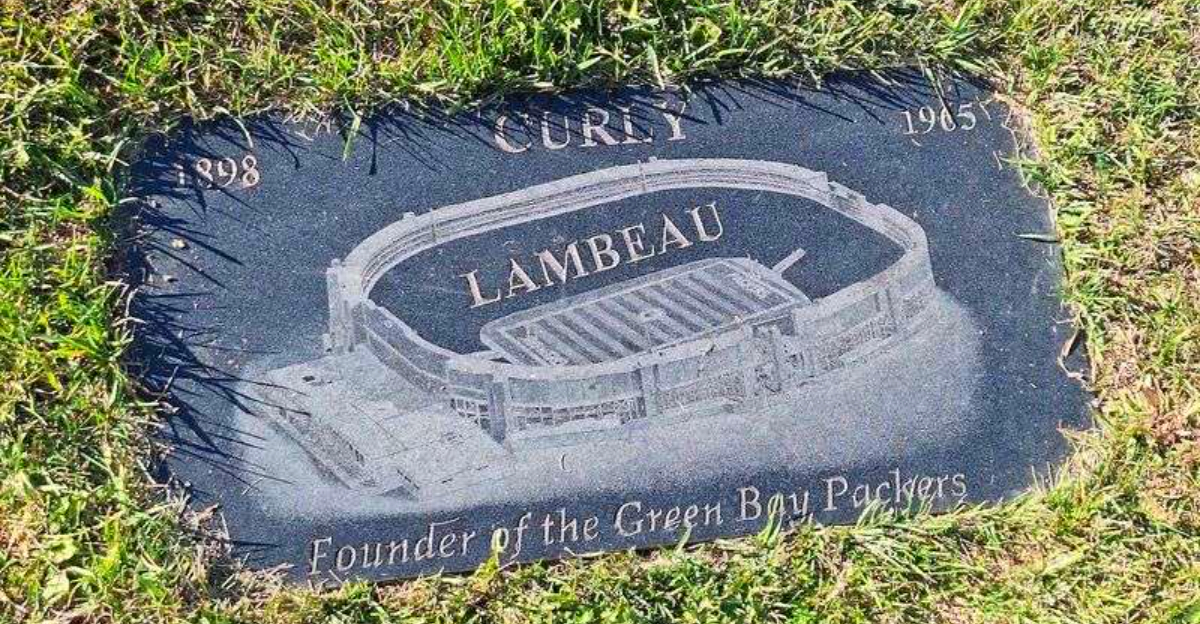
The main headstone is understated, while a separate foot marker features an image of Lambeau Field and identifies him as the founder of the Green Bay Packers.
The cemetery is located at 2121 Riverside Drive, Green Bay, WI 54301. Visitors should remember that this remains an active cemetery rather than a conventional tourist attraction.
Keep voices low, avoid disturbing services or other families, remain on established roads and paths, and leave the site exactly as you found it.
The cemetery’s official map can help with navigation, though contacting the office before visiting may make the family plot easier to locate.
This stop carries a different emotional weight than Lambeau Field or the Packers Hall of Fame. There are no crowds, dramatic exhibits, or roaring stadium speakers.
Instead, the simple marker reflects how one determined founder helped keep professional football alive in Green Bay during its most uncertain years.
The gravesite is also connected to the Packers Heritage Trail, although the trail plaque is not positioned directly beside the grave. It stands nearby along the publicly accessible Fox River Trail, outside the cemetery grounds.
Budget around 20 to 30 minutes for a respectful visit, allowing additional time to locate the plot and view the nearby heritage marker.
Combine the cemetery with Historic City Stadium, Lambeau Field, or another Packers Heritage Trail stop. Together, they provide a meaningful look at Lambeau’s life, legacy, and influence on Wisconsin football.
Green Bay does not keep its football history behind museum glass. It lives in stadiums, neighborhood streets, historic markers, and the stories that still connect the Packers to their community.
Visit these places, and the team’s past begins to feel surprisingly close.