
The Massive 45,000-Square-Foot North Carolina Antique Market Where You Can Find Rare Salvaged Barn Doors
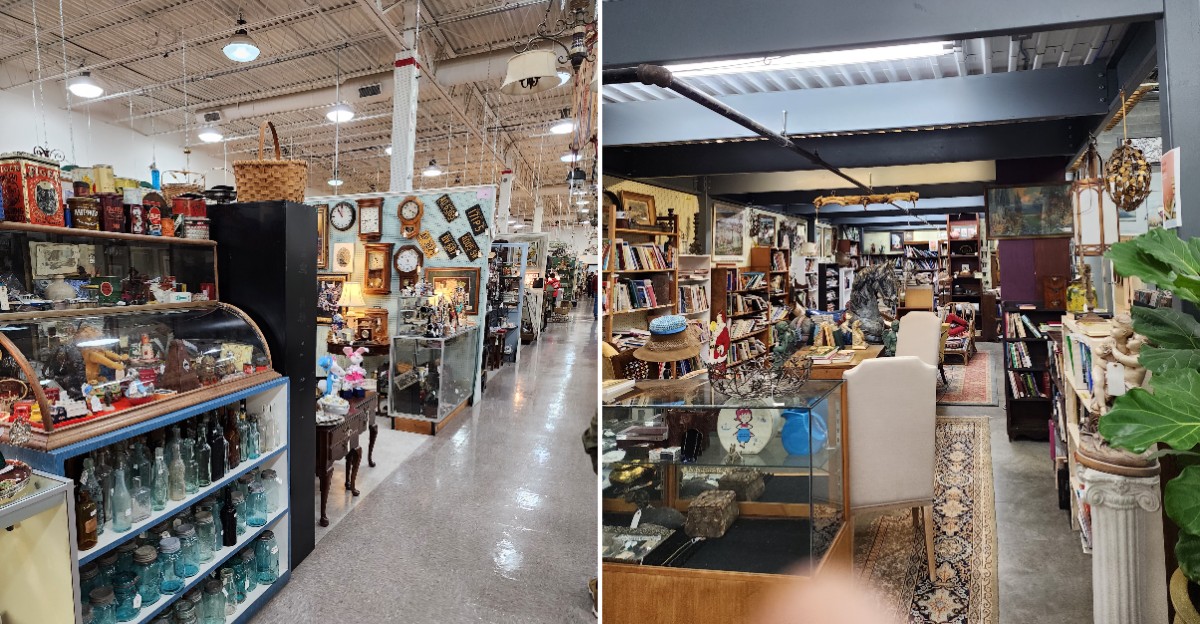
Some antique markets barely fill a single room, but this North Carolina spot spreads out far enough to make an entire afternoon out of exploring it. Rare salvaged barn doors sit among furniture, glassware, and collectibles worth actually searching through.
Shop owners often know the history behind specific pieces, adding context most big city antique malls never bother providing. Regulars return often, knowing inventory changes constantly as new estate finds come through the door.
Prices stay reasonable compared to more commercialized antique destinations elsewhere in the region. Walking the entire market takes real time, since pieces sit in corners, easy to miss on a quick pass-through.
This market proved that some of the best antique finds still come from places most people overlook entirely.
A Warehouse Built For Serious Wandering
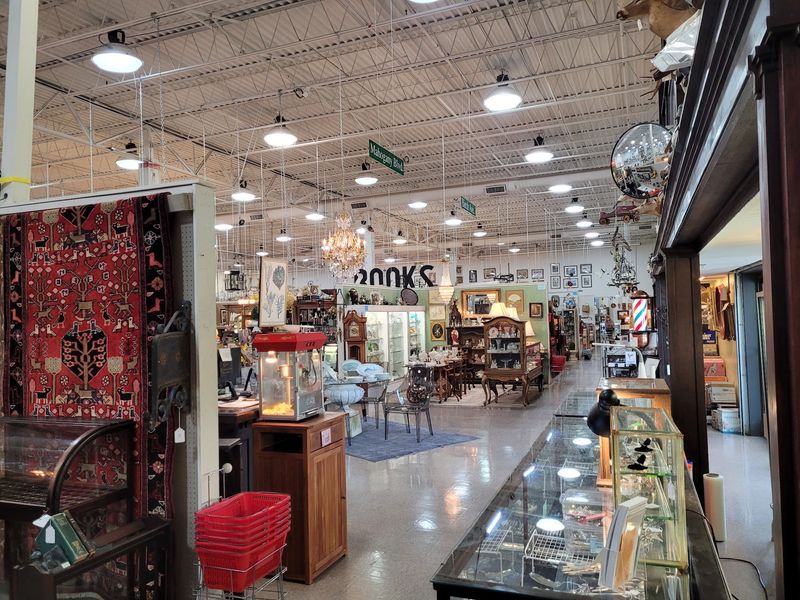
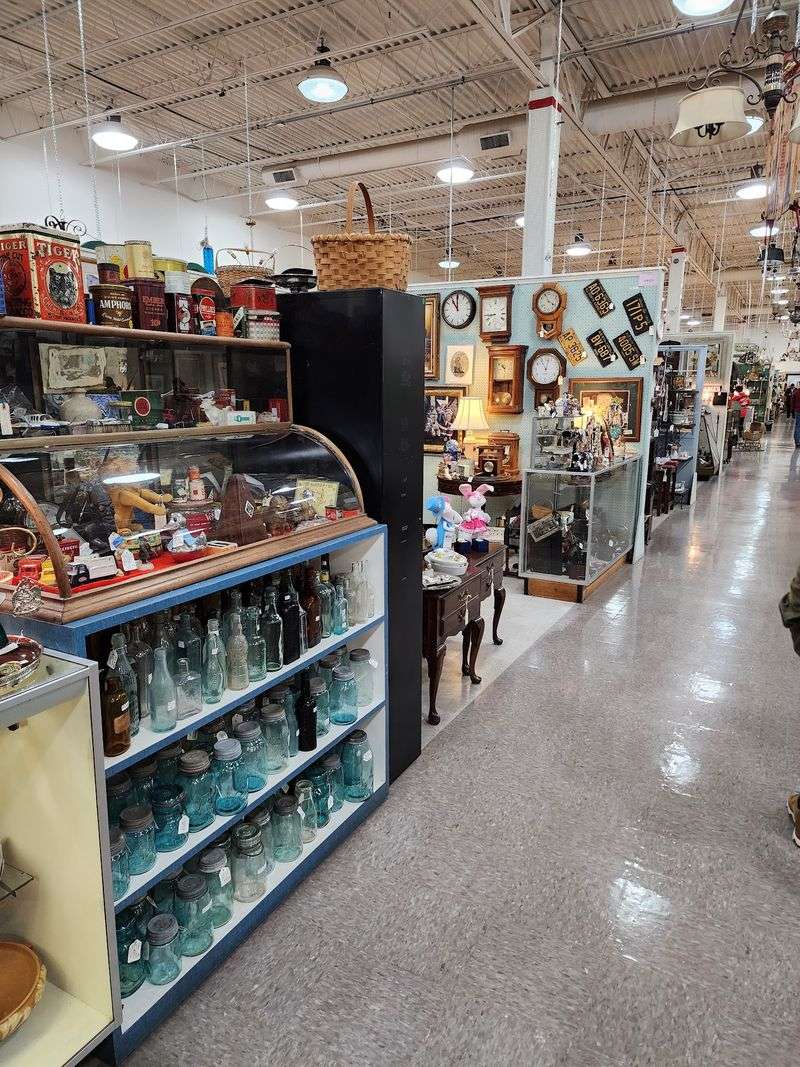
Forty-five thousand square feet sounds like a number on paper until you picture aisle after aisle of vintage furniture disappearing into the distance. Antique Market Place fills a building so large that first-timers often loop back to the same booth twice without realizing it.
The layout runs in organized rows, which helps, but the sheer volume is what gets people. Over 170 vendor booths sit side by side, each one styled differently by the person who rents it.
One booth might lean farmhouse, with ironstone pitchers and weathered wooden crates. The next could be full of mid-century lamps and chrome accents.
Then you turn a corner and find Civil War relics or Native American artifacts under glass.
That constant shift in style is exactly why browsing here takes hours instead of minutes. Shoppers regularly spend three or four hours inside and still leave with the feeling they missed a whole section.
The parking lot is large and easy to navigate, and the front of the building allows pull-up loading for bulky pieces. That matters when you fall in love with a heavy hutch or an oversized rustic door panel.
Air conditioning keeps things comfortable even during humid Carolina summers, which makes long browsing sessions a lot more pleasant. You can find it all at 6428 Burnt Poplar Rd, Greensboro, NC 27409.
Rustic Wood Pieces With Real Barn Character
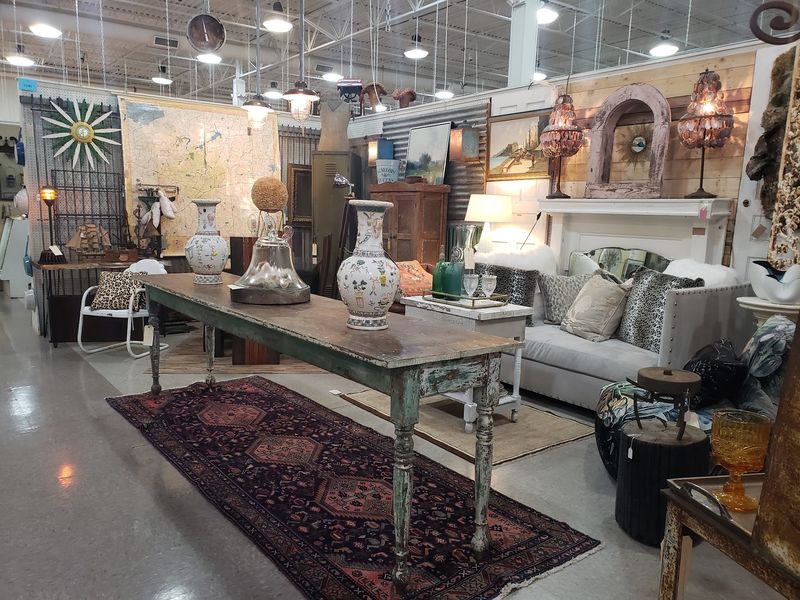
Farmhouse and primitive decor make up a big chunk of what vendors bring in here, and that means big slabs of old wood show up regularly. Think weathered planks, chipped paint, iron hardware, and doors that clearly spent decades earning their scratches.
Reclaimed pieces like these rotate through the market rather than sitting permanently. One week a booth might hold a tall paneled door with original hinges.
The next week it’s gone, and something else has taken its place.
Designers love these finds because a single salvaged door can become a headboard, a sliding closet panel, or a rustic tabletop. The wood grain on older pieces has a depth that new lumber simply cannot fake.
If you’re hunting specifically for architectural wood, bring measurements from home. Nothing stings quite like hauling a beautiful door back only to discover it’s four inches too wide for the doorway.
Primitive booths also stock the supporting cast: wooden boxes, old shutters, farm tools, and hand-hewn benches. Those smaller items work well when you want the barn look without committing to a hundred-pound door.
Since inventory changes daily, repeat visits genuinely pay off. Regular hunters know the rustic stuff moves fast, so checking back often is part of the strategy.
Furniture That Spans A Century Of Styles
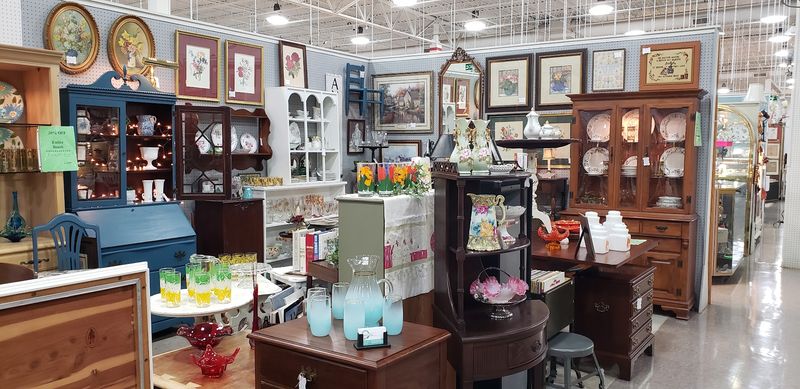
Furniture shoppers have a genuine field day in this building. Booths carry everything from primitive pine cupboards to polished Arts and Crafts pieces, with mid-century modern scattered throughout.
Stickley tabourets, velvet stools, carved buffets, and simple farm tables all coexist here. The mix means a single walk-through can cover roughly a hundred years of American design.
Heirloom furniture tends to be the heavy hitter, and vendors often stage entire room setups so you can picture how a piece might actually live in your house. Seeing a sideboard styled with lamps and mirrors beats staring at it alone in a corner.
Solid wood construction is the big draw. Dovetail joints, real veneer, and thick tabletops hold up in ways particleboard never will.
Some pieces arrive refinished and ready to go. Others still wear their original patina, which appeals to buyers who want the story left intact.
Delivery has been arranged for larger purchases in the past, so it’s worth asking at the counter if you find something too big for your trunk. Staff at the front desk are known for being quick and helpful.
Bring a friend if you’re serious about furniture shopping. A second set of hands and a second opinion both come in handy when you’re deciding between two cabinets.
Glassware Lamps And Chandeliers Everywhere You Look
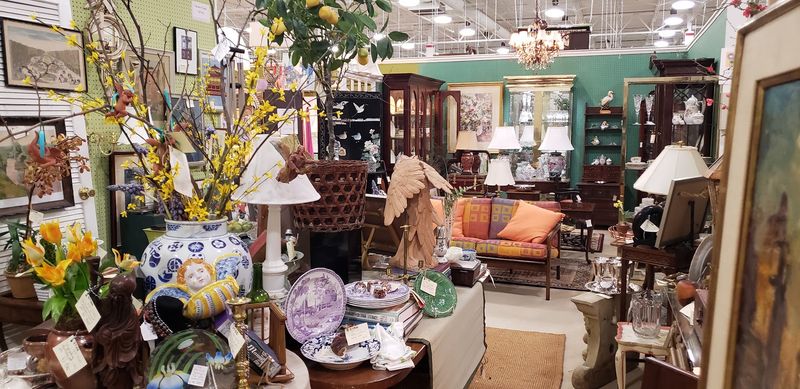
Light bounces around this place in a way that’s hard to ignore. Glass shelves loaded with colored tumblers, pressed glass bowls, and delicate teacups catch every overhead bulb.
Lamps show up constantly, and not just the boring table variety. Ship lights, brass floor lamps, novelty pieces shaped like animals, and stained glass shades all make appearances.
Chandeliers hang from booth ceilings, which makes the aisles feel more like a series of small parlors than a warehouse. Mirrors add to the effect by bouncing light deeper into each display.
Collectors of Depression glass, carnival glass, and milk glass have plenty to sort through. Patterns vary wildly from booth to booth since each vendor buys according to their own taste.
A practical tip for glass hunting: check rims and bases with your fingertips. Tiny chips are easy to miss with your eyes but obvious to touch.
Rugs and decorative accessories fill in the gaps between the shiny stuff. You’ll find mirrors with ornate frames sitting next to stacks of woven textiles.
For anyone redecorating a room, this section alone can supply the finishing touches. A single vintage lamp often does more for a space than a whole cart of new decor.
Oddities Quirks And Things You Cannot Name
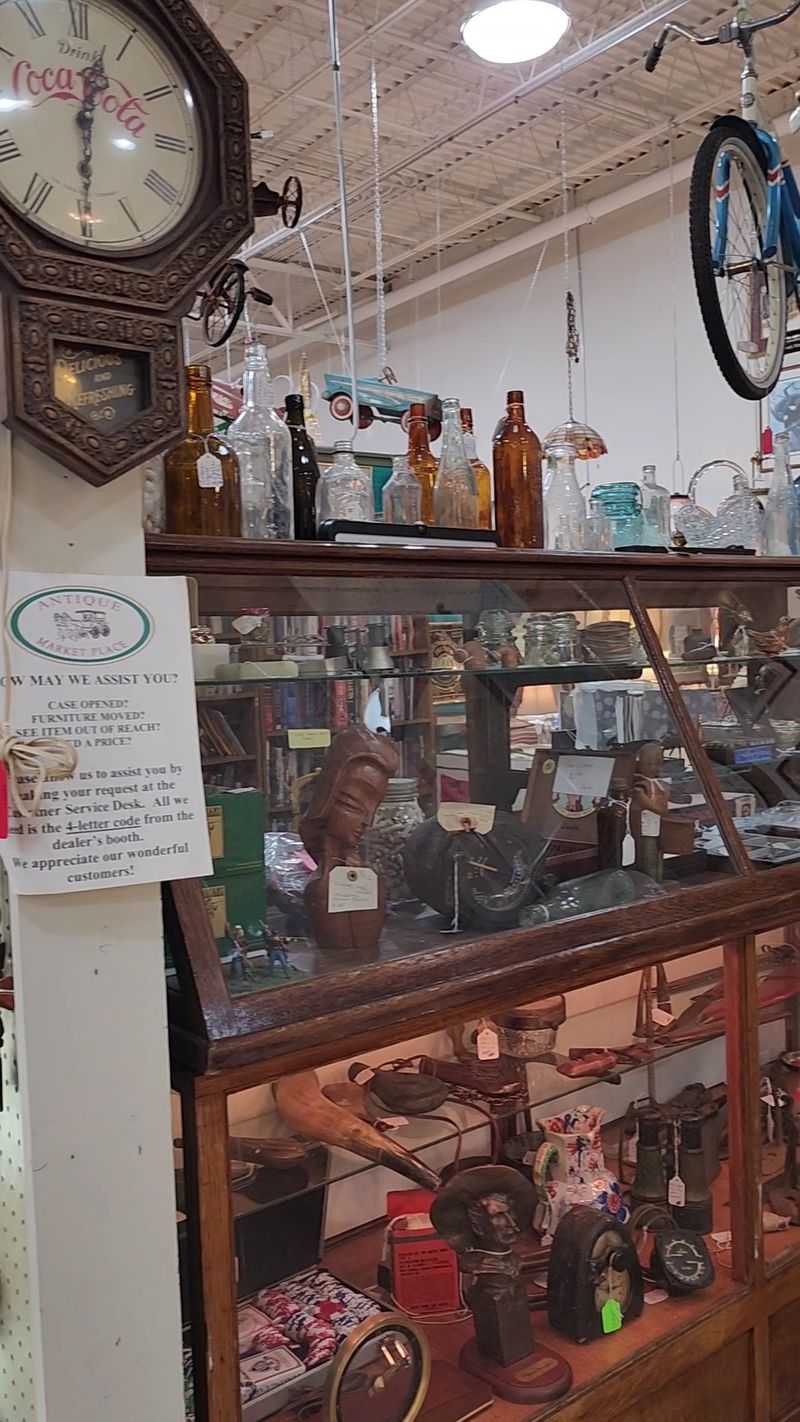
Here’s the fun part. Alongside the pretty furniture and polished glass sits a healthy supply of genuinely weird stuff.
Vendors here don’t shy away from the unusual, the quirky, or the flat-out peculiar. Old medical gadgets, strange figurines, industrial machine parts, and objects with no obvious purpose all find shelf space.
An antique metal hotel beverage dispenser from Cincinnati once turned up here. That’s the kind of item you don’t go looking for but absolutely take home once you see it.
Folk art shows up regularly too, made by hands that never worried about following rules. Hand-painted signs, carved figures, and homemade contraptions add personality to the aisles.
Old bottles and jars occupy their own corner of the oddity world. Apothecary bottles, soda bottles with faded embossing, and canning jars in odd colors are common finds.
Collectors who love conversation pieces do well here. A strange object on a shelf gets more questions from guests than any mass-produced decoration ever will.
Half the joy comes from not knowing what’s around the next corner. Inventory turns over daily, so the oddities you spot on one trip may be long gone by the next.
Jewelry Cases That Deserve Their Own Visit
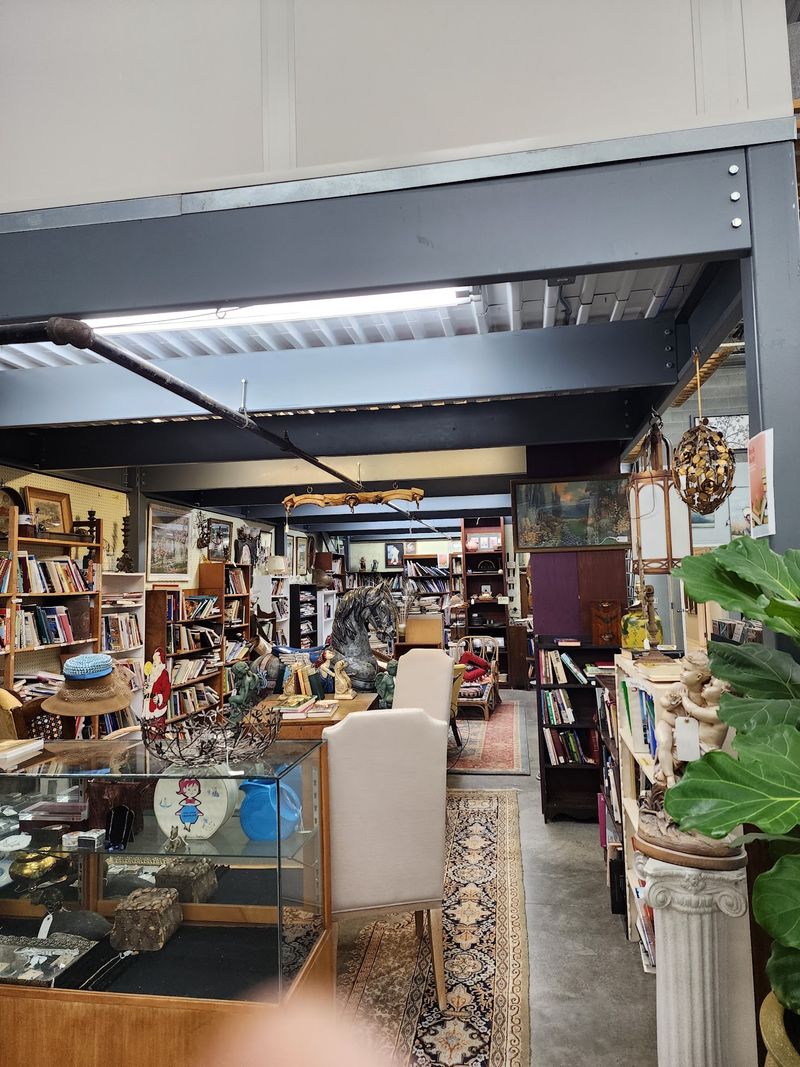
Jewelry gets talked about more than almost anything else in this market, and the display cases explain why. Rows of locked glass hold brooches, rhinestone necklaces, cameos, and estate rings.
Staff members carry keys and will open cases so you can actually handle pieces. That hands-on access makes a real difference when you’re trying to judge weight and craftsmanship.
Costume jewelry from the 1940s through the 1970s tends to dominate, with bold colors and designs you won’t find in a mall today. Signed pieces from known makers occasionally slip in among the rest.
Pocket watches, cufflinks, and tie clips give the cases some variety beyond earrings and pendants. Men’s vintage accessories are easier to find here than in most shops.
Bring a small flashlight if you’re picky about stones and settings. Case lighting is decent, but a direct beam reveals a lot more detail.
Patience pays off in this section. Cases are packed tightly, so the best piece is often hiding behind three others.
Staff knowledge helps here too. Asking about a maker’s mark or a clasp style frequently leads to a useful answer rather than a shrug.
Records Books And Nostalgia On Every Shelf
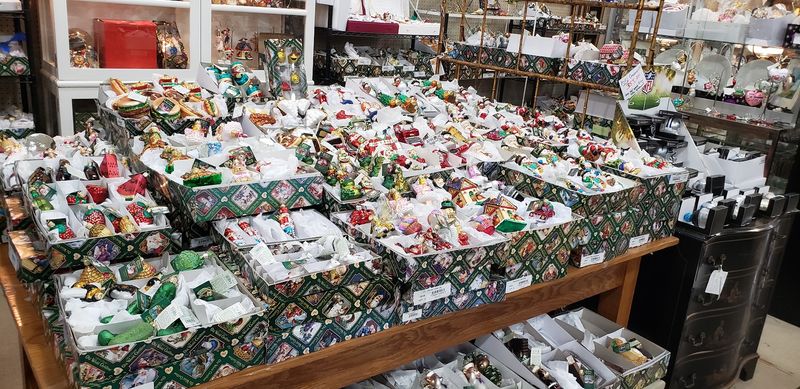
Crate diggers, this one’s for you. Vinyl records fill boxes throughout the building, covering everything from big band to classic rock to obscure regional releases.
Old books sit nearby in stacks and on shelves, including niche titles you’d never stumble across in a regular bookstore. Faded hardcovers, vintage cookbooks, and old textbooks all turn up.
Nostalgia does the heavy lifting in this part of the market. Shoppers regularly spot toys, tins, and kitchen gadgets identical to the ones from their grandparents’ houses.
Marbles, teacups, trading cards, and lunchboxes round out the smaller collectibles. These are the items people buy on impulse and never regret.
Flipping through records takes time, and that’s part of the appeal. The rhythm of moving album to album slows the whole visit down in a good way.
Check record condition by pulling the vinyl partly out of the sleeve. Surface scratches show clearly under the store lighting.
Smaller trinkets make solid souvenirs if you’re visiting Greensboro and don’t have room in the car for furniture. A vintage postcard or a single paperback travels easily.
Planning A Trip That Actually Works
A little planning turns a good visit into a great one. Shoppers who arrive early give themselves room to cover the whole floor without rushing the last few aisles.
Comfortable shoes matter more than you’d think. The concrete floor and the distance covered add up fast over three or four hours.
Write down room measurements before you leave home. Wall space, doorway widths, and vehicle cargo dimensions all become important once you spot a large piece.
The building stays clean, cool, and well organized, with restrooms kept stocked. Small details like that make long browsing sessions comfortable rather than exhausting.
Staff at the front are quick to help with case keys, questions, and larger purchases. Many of them know their inventory and their vendors well.
A store dog has been known to make the rounds, which is a nice bonus for anyone who likes a friendly greeting mid-hunt.
Since inventory turns over daily, treat one visit as a starting point instead of a complete tour. The regulars come back often precisely because the floor looks different each time.
Bring a friend, split up, and text each other photos of odd finds. That’s honestly the most efficient way to see a building this size.