
This Tennessee Children’s Museum Pairs Hands-On Exhibits With 25 Acres Of Wetland Trails And Wildlife
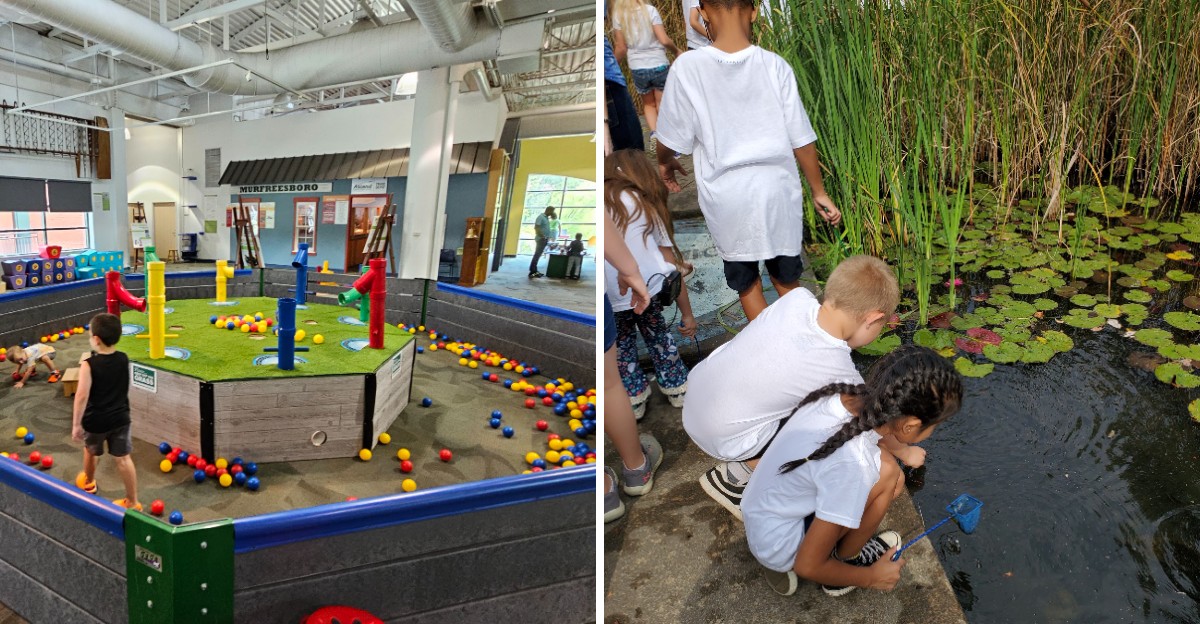
A children’s museum gets a lot more interesting when the adventure does not stop at the exhibit doors.
This Tennessee attraction mixes hands-on play with a 25-acre wetland park where boardwalks, wildlife, and nature trails add an entirely different side to the visit.
Inside, kids can climb, build, experiment, and learn through exhibits designed to keep curious minds busy. Then it is time to trade indoor displays for fresh air and see what is moving through the wetlands outside.
Birds, turtles, and other wildlife can turn a simple walk into its own little discovery mission. The boardwalks make it easy for families to slow down, look closely, and enjoy a quieter part of the day.
That combination makes this much more than a rainy-day stop. It is part children’s museum, part nature outing, and the kind of place that can easily fill an afternoon without everyone getting bored.
A Museum Built Entirely For Busy Hands
Most museums whisper the word no. Here, the whole point is yes, touch that.
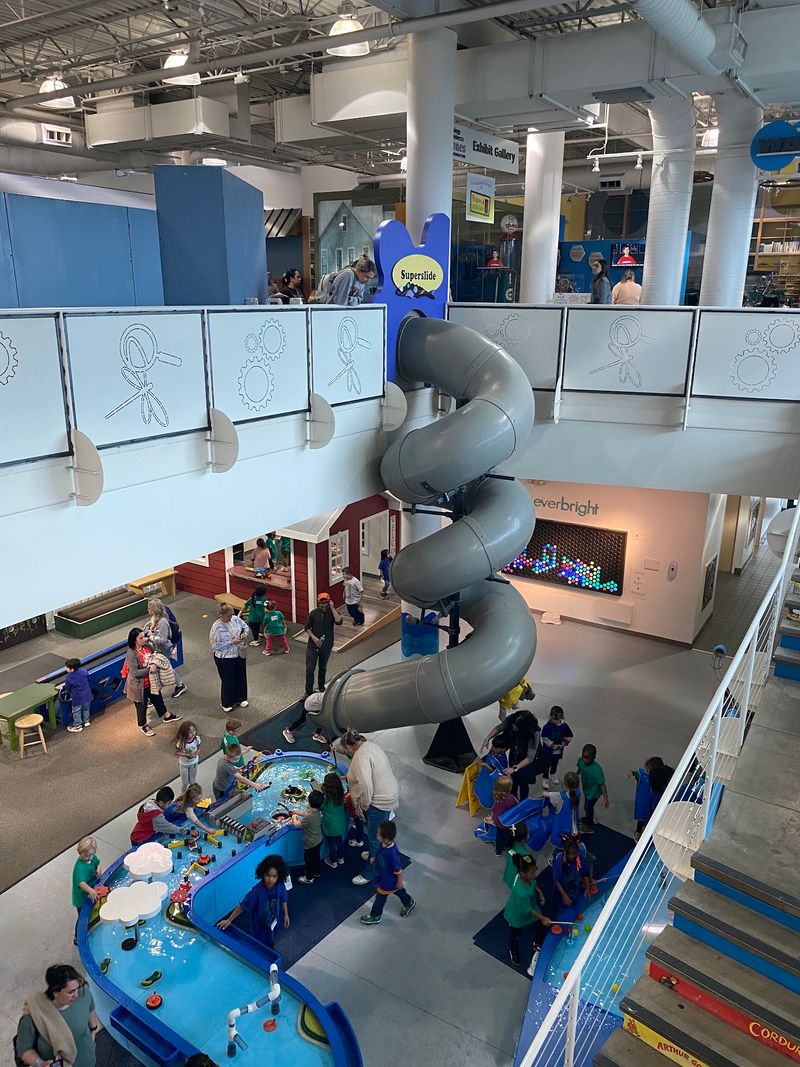
The Discovery Center at Murfree Spring fills its first floor with exhibits designed for small hands and short attention spans. Nothing sits behind glass waiting to be admired from a polite distance.
Kids sort themselves into zones almost instantly. There is an art area, a music corner, a train setup, and a dramatic play space where costumes make the rules.
The 5 Senses exhibit is a favorite for a simple reason. It turns the confusing science of human perception into something you can hear, feel and see in about ninety seconds.
Budding builders head straight for the LEGO Lab. Bricks, flat surfaces, and zero instructions make for surprisingly serious engineering conversations among six-year-olds.
Upstairs, the space rotates. That means a family who came in March might find something completely different in September, which keeps repeat trips from feeling stale.
There is also a calming room with headphones and weighted vests for children who need a quieter minute. Small detail, big kindness.
Plan on two to four hours if your kids are between two and eight. Bring snacks, since there is no food court, though the shop stocks drinks and chips. A slide running between floors handles the rest of the energy.
Tiny Town, Where Kids Run The Whole Neighborhood

Handing a four-year-old a shopping cart and a clipboard changes their entire personality. Suddenly they are in charge.
Tiny Town is a miniature village built to child scale, and it may be the most beloved corner of the whole place. Kids step into grown-up roles and figure out how a community actually works.
There is a pint-sized Publix where shoppers stock shelves and scan groceries with total seriousness. Nearby sits an MMC Pediatrics Clinic, complete with tools for checking imaginary patients.
The town grew recently with the addition of the SRM Concrete Mixing Zone. Construction-themed activities give young builders something loud and purposeful to do.
What makes this work is the cooperation it demands. Somebody has to be the customer. Somebody has to be the doctor. Negotiation happens naturally.
Parents of toddlers often say this single area justifies the trip, and many families buy annual memberships specifically because Tiny Town never gets old.
A practical tip: arrive on a weekday morning if you want elbow room. Weekends and school field trip days get genuinely loud.
The Discovery Center at Murfree Spring keeps staff stationed nearby, so the chaos stays supervised. That helps when three kids all want the stethoscope at once. Role-play here builds social skills without anyone announcing it.
WaterWorks Turns Splashing Into A Science Lesson
Bring a change of clothes. Consider that less a suggestion and more a survival strategy.
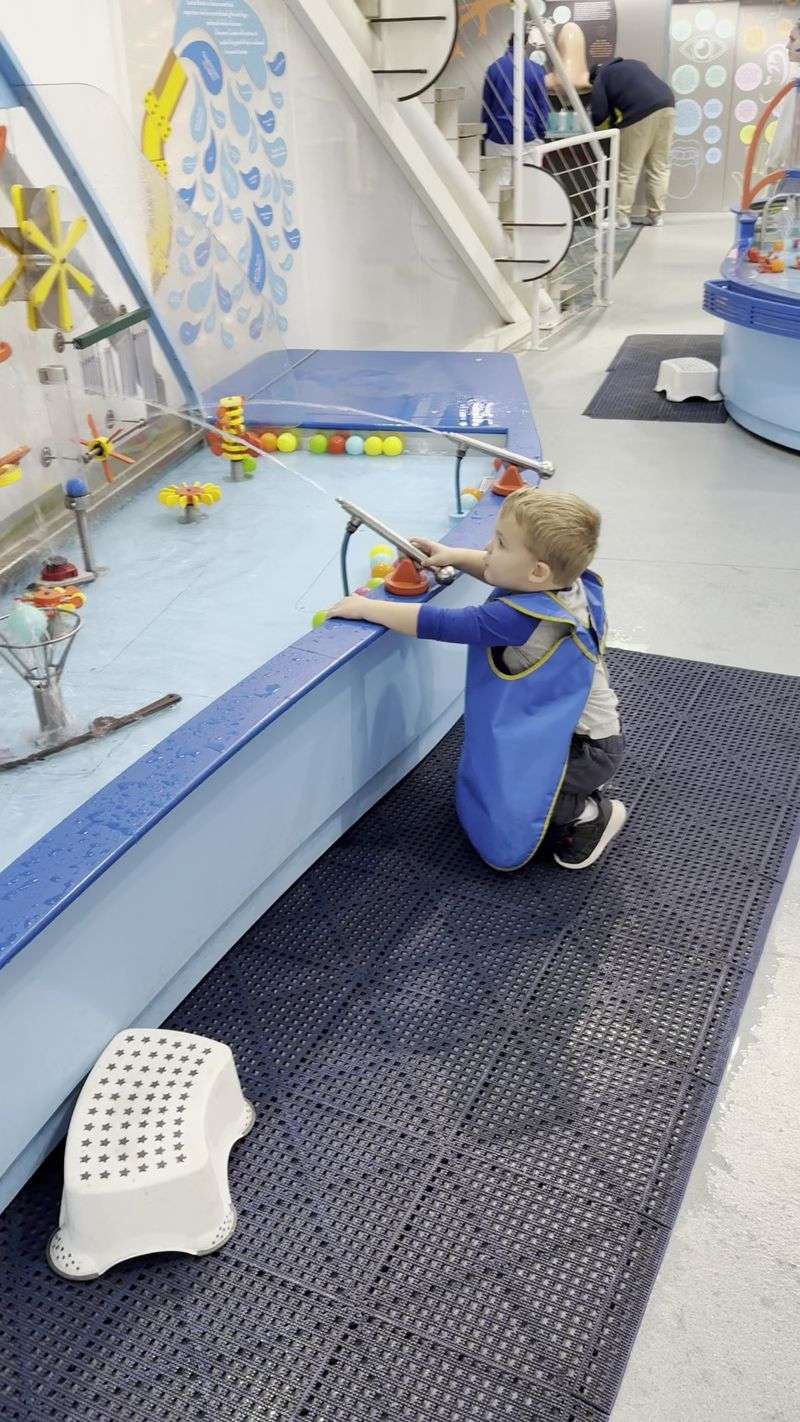
WaterWorks is the exhibit where getting wet is the entire curriculum. Giant water tables let kids move, dam, redirect and launch water however physics allows.
Squirt guns make an appearance. So do miniature boats that race down channels until somebody builds a blockade and ruins everything, which is also a lesson.
The standout piece is a working dam model that shows how moving water creates hydroelectric power. Kids raise and lower gates and watch the results immediately.
That connection is not accidental. The exhibit mirrors the real wetlands sitting just outside the walls, tying indoor play to the landscape beyond the glass.
Toddlers tend to plant themselves here for thirty minutes straight. Older kids get more strategic, testing how much water they can move at once.
Aprons are usually available, though they only slow the inevitable. Sleeves get soaked. Shoes get splashed.
Water play ranks among the most talked-about features at the Discovery Center at Murfree Spring, and it is easy to see why. Few activities hold a young child’s focus this completely.
Fun detail worth knowing: understanding water’s role in daily life is one of the center’s core teaching goals. WaterWorks just makes that goal wildly entertaining.
Turtles, Otters And The Great Outdoors Exhibit
Kids will abandon a perfectly good toy the instant a real animal moves. Live creatures win every time.
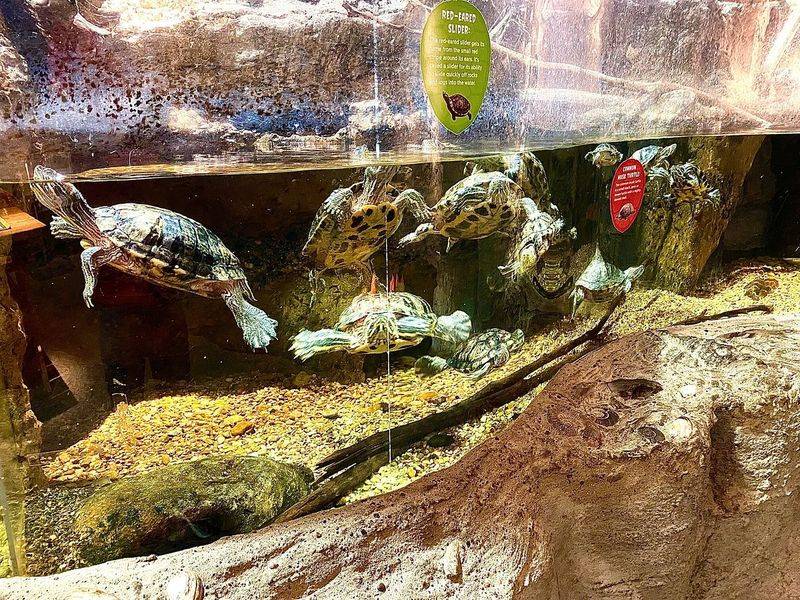
The Great Outdoors exhibit brings Tennessee wildlife indoors, with regional turtles as the headliners. A viewing area lets children watch them paddle, bask and ignore their audience completely.
Conservation is the quiet message underneath. Instead of lecturing, the exhibit lets kids observe long enough to start caring on their own.
Otters get plenty of attention too, and they rank among the most mentioned animals families talk about after a trip. Watching one move through water is genuinely hypnotic.
The turtle viewing area works well for a specific reason. It gives overstimulated kids a calm place to land between louder exhibits.
Staff members often stand nearby to answer questions, and the questions from six-year-olds can get delightfully strange. How old is that turtle. Does it have a name. Can it swim backwards.
Outdoor programs extend the same idea beyond the building. Nature is not treated as separate from the museum experience here.
What ties it together is location. The animals inside reflect the species living in the marsh outside, so the lesson continues the moment you step through the door.
Tennessee wildlife education rarely feels this immediate or this hands-on for younger children.
Finding The Place On SE Broad Street

Some destinations hide down gravel roads. This one sits comfortably inside a busy Tennessee city.
The address is 502 SE Broad Street, Murfreesboro, TN 37130, which puts it within easy reach of downtown and the interstate corridor. Families across Middle Tennessee treat it as a standard weekend option.
Hours matter here. Doors open at 10 AM Tuesday through Saturday, close at 5 PM, and Sunday runs noon to 5 PM. Mondays are closed.
Weekday mornings are the sweet spot for anyone who dislikes crowds. School groups do book field trips, and when they arrive the sound level climbs quickly.
Admission covers adults and children alike, so budget accordingly for a full family. Memberships exist and make sense for locals who plan to return often.
Free entry happens during certain special events, including cultural celebration days, which is worth watching the calendar for.
The Discovery Center at Murfree Spring also hosts birthday parties in private rooms, and there is a small shop selling toys, books and snacks near the entrance.
Outdoor restrooms serve the trail side. Handy when you are halfway through a boardwalk loop with a determined five-year-old.
Twenty-Five Acres Of Boardwalks And Willow Swamp
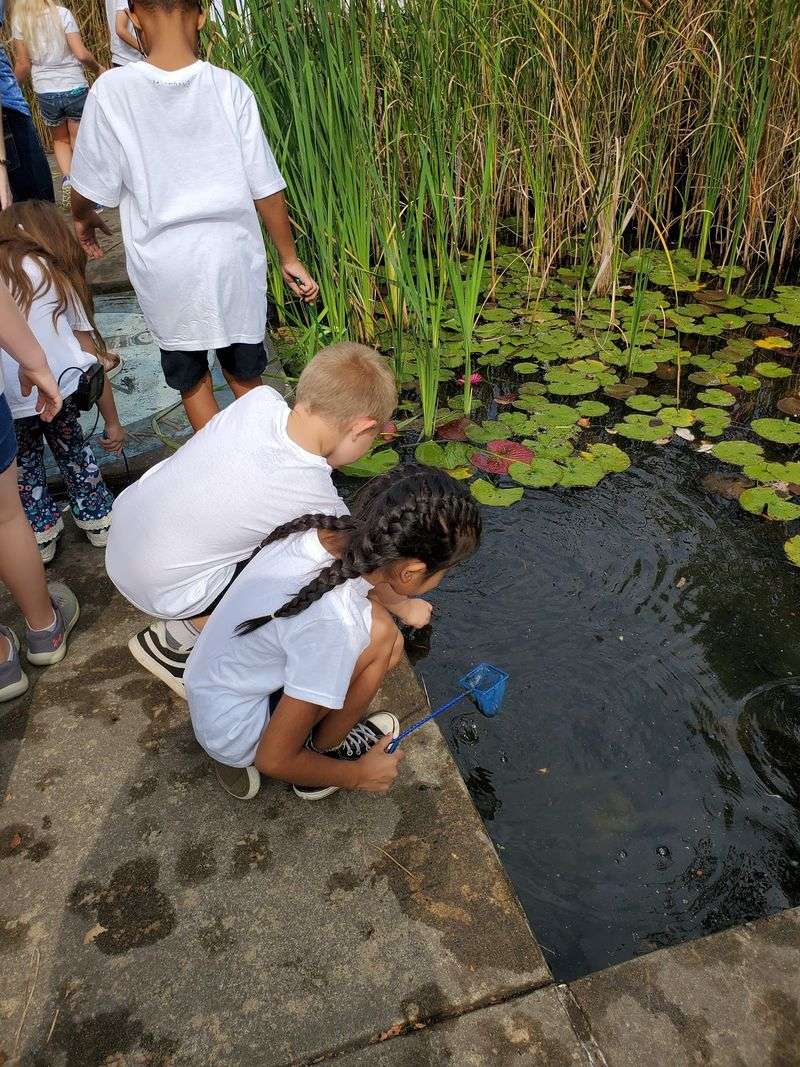
Step out the back and the volume drops. City noise fades behind cattails and willow branches.
The Murfree Spring Wetlands covers 25 acres as a dedicated city park, which is an impressive amount of preserved marsh for an urban setting.
Paved walking trails and raised boardwalks carry you over water without muddy shoes. That design choice makes the whole area workable for strollers and short legs.
The habitat shifts as you walk. Flooded willow swamp gives way to mature hardwoods, then opens into stretches of clear water.
One section crosses near a dam, where the sound of moving water does most of the atmospheric work. Benches let you sit and simply listen.
Best part for budget-conscious families: the wetland trails are free to walk. No admission needed to enjoy the outdoor portion.
Early morning is a lovely time out here, quieter and cooler, with better odds of spotting something moving in the shallows.
An outdoor playground sits nearby too, giving kids a place to burn off whatever energy the trails did not absorb.
Rainy days are the one weak spot, since the outdoor half is where much of the magic lives. Check the forecast before committing. Urban conservation on this scale is rare, and Murfreesboro clearly knows what it has.
Where Birdwatchers And Frog Choruses Collide
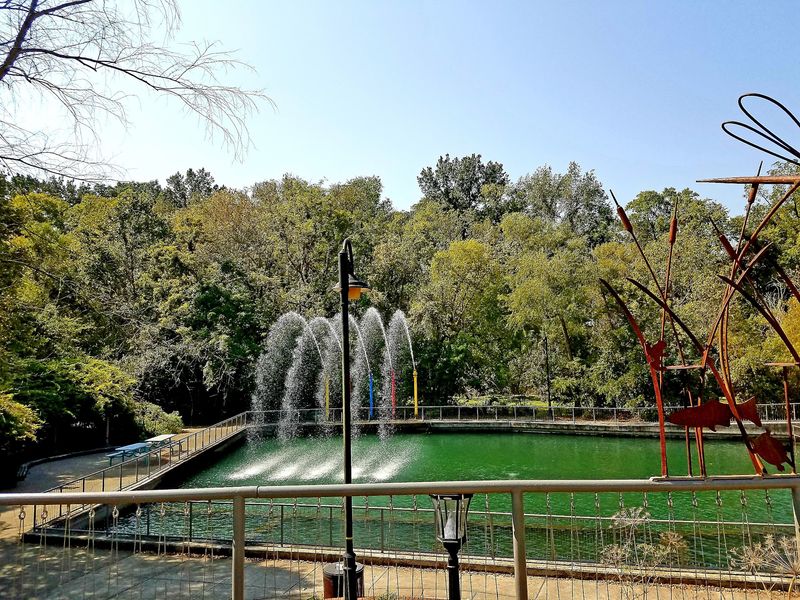
Pack binoculars. Seriously, the bird list out here earns them.
During spring and fall migration the wetlands fill with warblers, vireos, thrushes and flycatchers passing through. Birders and nature photographers show up specifically for these windows.
Turtles handle the daytime entertainment, lining up on logs to soak in sunlight like they are being paid for it. Kids spot them before adults do, every single time.
Otters make appearances too, sliding through the water with that unmistakable ripple. Catching one is a genuine thrill.
Then there are the frogs. Evening and after rain, the chorus gets loud enough that you stop mid-step just to take it in.
Moving slowly is the trick. Wildlife here is used to foot traffic, but quiet walkers see far more than noisy ones.
Herons, dragonflies and small fish round out the cast. The open-water sections tend to be the most productive for spotting activity.
Because the marsh sits beside the Discovery Center at Murfree Spring, the same afternoon can include an exhibit about turtles and a real turtle twenty yards away.
That pairing is unusual anywhere in Tennessee. Indoor learning and outdoor proof, separated by a single doorway. Bring a camera with some zoom. You will want it.
Rare Plants, A History Wall And Stories Along The Path
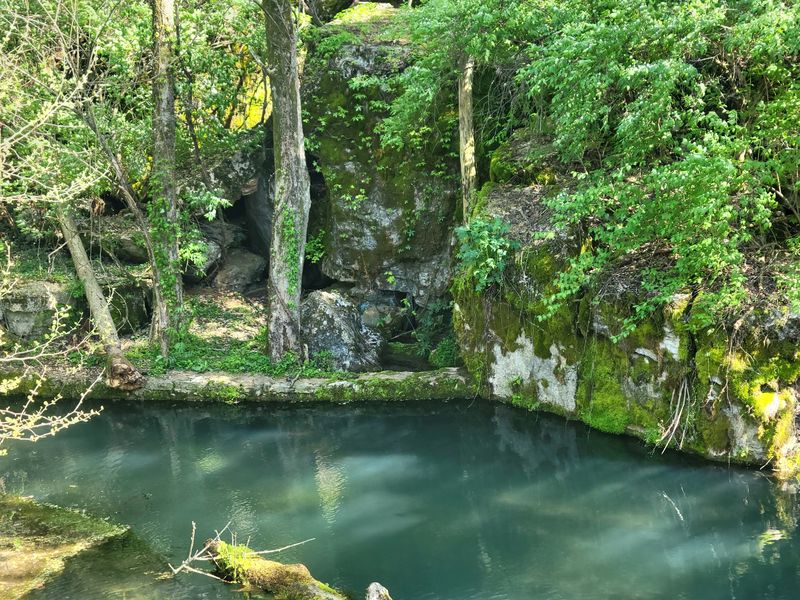
Reading signs sounds dull until one of them mentions a plant found almost nowhere else.
The marsh here holds Tennessee’s largest known population of sessile water-speedwell, a rare native plant. Walk past it and you would never guess its significance.
Interpretive signage lines the boardwalks, explaining the wetland plants and animals you are looking at right then. Timing beats textbooks every time.
A History Wall traces the site through a timeline that stretches from prehistoric times to the present day. Layers of story sit under a place most people cross in ten minutes.
Kids who can read love this part more than expected. Facts feel different when the subject is directly in front of you.
For teachers and homeschool families, the combination is genuinely useful. Environmental education happens without worksheets.
The signs also help adults, honestly. Most of us cannot name a willow swamp plant without assistance.
What the Discovery Center at Murfree Spring does well is refuse to separate fun from learning. The exhibits inside and the boardwalk outside deliver the same message in different languages.
Give yourself a full day if you can. Exhibits in the morning, trails in the afternoon, and a slow loop past the water to finish. Murfreesboro built something quietly excellent here.