
This Guide To 8 Affordable Mississippi Retirement Towns Highlights The Scenic Spots That Most Out-Of-Staters Miss
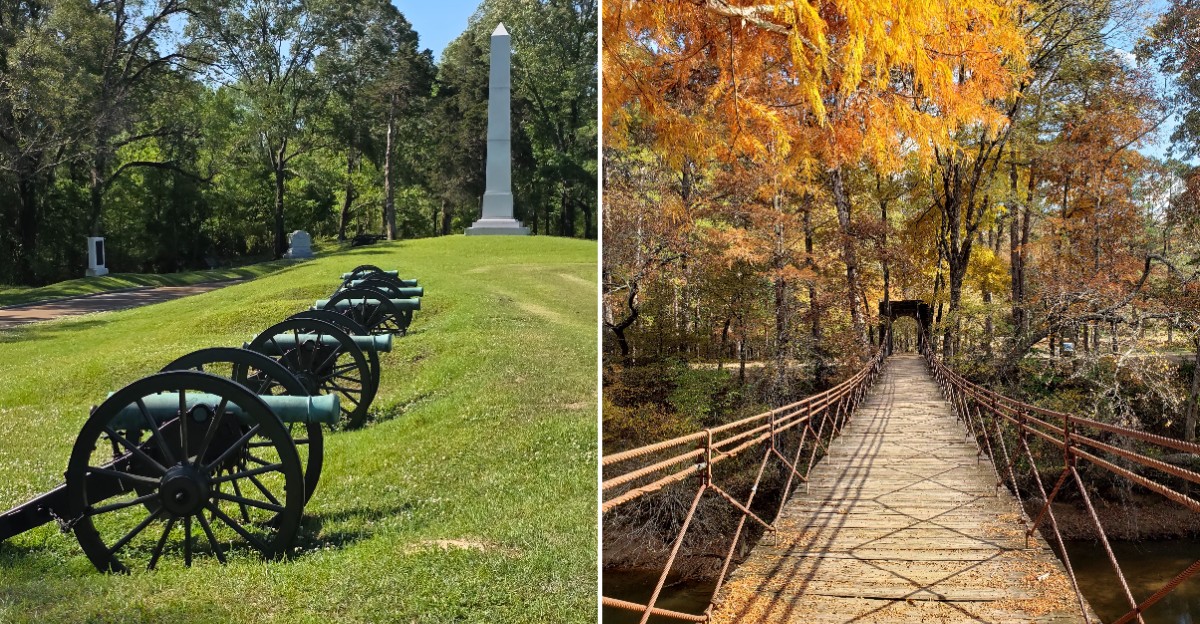
Retirement guides usually focus on the numbers, cost of living, tax rates, housing prices. This one takes a different approach, highlighting scenic spots most out-of-staters completely miss across these Mississippi towns.
Nature surrounds many of these communities, offering easy access to trails, water, and open space most retirees actively seek out. Historic downtowns stretch through several of these towns, often overlooked by visitors passing through too quickly.
Housing costs stay reasonable compared to retirement destinations in pricier states nearby. Local shops and healthcare facilities sit within easy reach of most homes in these towns.
Communities here tend to welcome retirees warmly, offering a slower pace most bigger cities can’t match. This guide proved that the best retirement spots often hide in plain sight.
1. Natchez
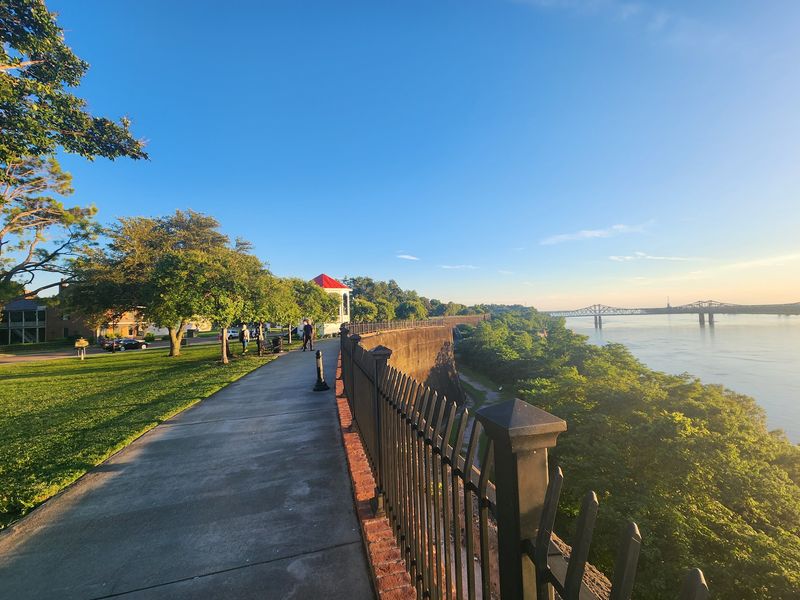
Around 14,000 people call Natchez home, and a good number of them end up on the bluff at sundown. The trail runs along the high ground above the Mississippi River, and the view stretches wider than most first-timers expect.
The river looks genuinely enormous from up here. You get a sense of scale that a highway bridge crossing never gives you, especially down at the river’s edge where the current moves fast and brown.
A lock bridge sits along the path, covered in padlocks left by people marking anniversaries and visits. There’s a visitor’s center nearby with exhibits covering Natchez history, including honest material on race relations in the region.
Walking conditions stay pleasant year-round. The path is well maintained, clean, and safe enough for early risers and late strollers alike, since it stays open around the clock.
Behind the trail, the old grand homes of Natchez line the streets, so a short walk turns into an architecture tour without much effort. Antebellum mansions sit shoulder to shoulder with modest cottages, and the whole downtown is genuinely walkable.
For retirees, that walkability is the real selling point. Housing costs here run far below what coastal states demand, and daily errands don’t require a long drive.
Tuesday mornings and Friday evenings draw the biggest crowds. Sunday nights are nearly deserted, which makes for a peaceful stroll if solitude is the goal.
Photographers show up in droves for sunset, and it’s easy to see why. The light hits the water, the sky goes orange, and the Louisiana side fades into silhouette.
Bring a jacket in winter, since wind off the river cuts sharper than the temperature suggests.
2. Ocean Springs
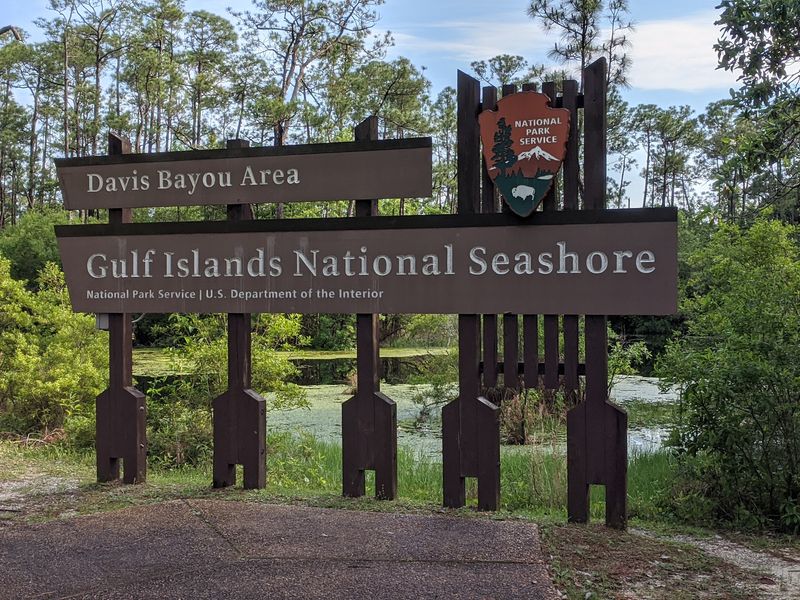
Alligators have a viewing platform here. That alone sets Davis Bayou apart from your average campground, and yes, turtles share the spot with them.
Live oaks and pines shade the RV, tent, and group sites, which keeps things bearable during Gulf Coast summers. Sites run spacious, and the showers and restrooms have been updated.
Kayakers treat this place like a home base. The water stays smooth enough for easy paddling, and adventurous types push out toward the small islands offshore.
A boat launch handles anglers heading out for the day. Nature trails wind through the marsh edges, and cycling lanes give riders somewhere to stretch their legs.
The National Seashore Visitor Center sits about a 25-minute walk or a 10-minute bike ride away. That’s a reasonable morning outing before the heat sets in.
Ocean Springs itself has roughly 18,000 residents, a tree-lined main street, and a genuinely active arts scene. Retirees land here for the coastal lifestyle without the price tag attached to Florida.
Downtown is close enough for a quick supply run or a wander through the shops. Beach areas sit nearby too, and the drive toward the Biloxi bridge passes some striking homes overlooking the Gulf.
Grills and picnic tables come standard, and there’s a playground for visiting grandkids. Dogs are welcome, which matters more than people admit when choosing where to retire.
Evenings bring the busiest stretch, particularly Thursday through Saturday nights. Weekday mornings and afternoons stay remarkably quiet.
Free and paid parking are both available on site. Reservations go through the recreation booking system, and popular weekends fill quickly.
You’ll find the campground at 3500 Park Rd, Ocean Springs, MS 39564.
3. Bay St Louis
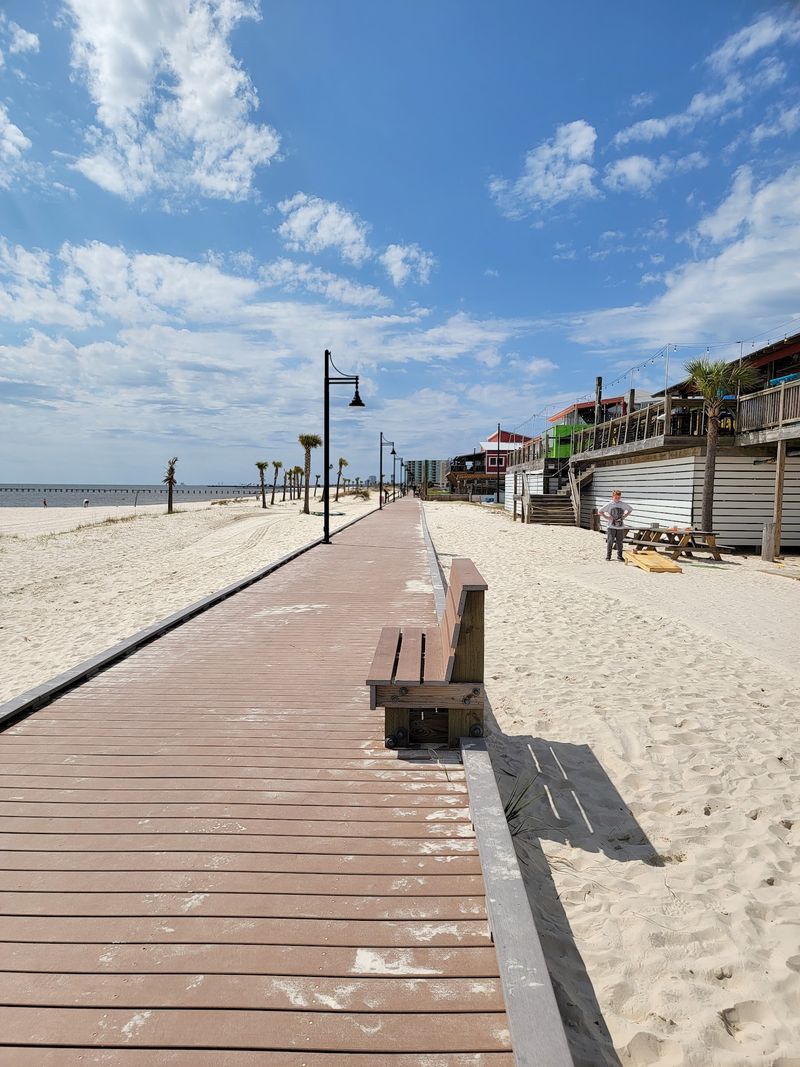
Empty beaches on a warm afternoon feel like a clerical error somewhere. Bay St. Louis manages it regularly, and the scenic byway route along the shore is the reason to show up.
Beach Boulevard runs beside calm Gulf water with sand stretching alongside it. Crowds stay thin compared to bigger coastal destinations, which is the whole appeal.
Parking is free and plentiful, a small detail that quietly makes or breaks a beach day. No circling, no meters, no stress.
The drive works as an afternoon activity on its own. Pull over wherever the view looks good, sit for a while, then move on to the next stretch.
Swimming here comes with a caution. Water conditions vary along this part of the coast, so many visitors stick to walking the sand and wading rather than going in deep.
Bay St. Louis has around 10,000 residents and a historic depot district full of character. Retirees gravitate toward it for the unhurried pace and coastal living that doesn’t demand a fortune.
Restaurants sit near the route, so a beach walk can easily turn into lunch. Families bring kids without much planning, since the setting is simple and low-key.
Sunday afternoons and evenings pull the biggest crowds, along with Monday and Saturday mornings. Midweek mornings and afternoons are close to deserted.
Access runs around the clock, which suits early walkers and anyone chasing a sunrise. Sunsets over the water get plenty of attention too.
What makes this route memorable is how little it asks of you. No tickets, no schedule, just coastline and open sky.
Start the drive at 100 S Beach Blvd, Bay St Louis, MS 39520.
4. Vicksburg
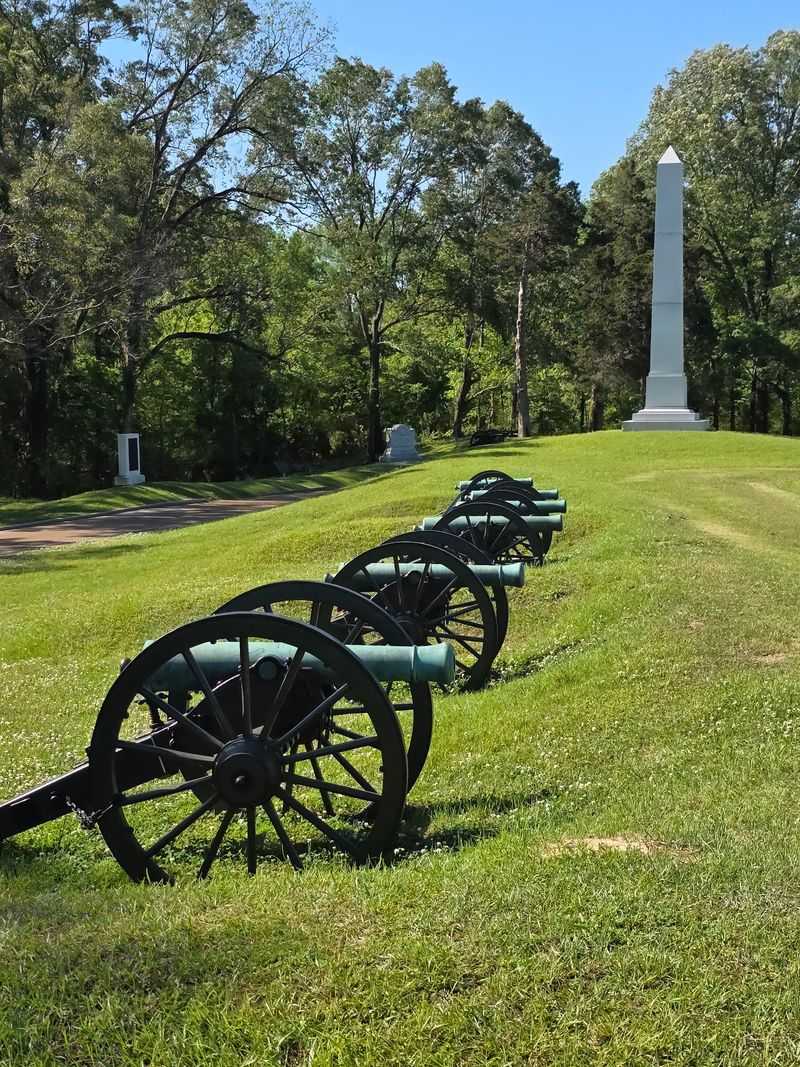
Sixteen miles of driving trail and twelve miles of walking trail wrap through hills covered in monuments. Vicksburg National Military Park is enormous, and most people underestimate how long a visit takes.
Plaques appear everywhere, marking positions, regiments, and turning points from the 1863 campaign. History buffs lose entire afternoons reading them.
The grounds have been preserved and restored to reflect how they looked that July. Rolling terrain, cannon placements, and dozens of statues make the strategy of the siege easier to picture.
From the bluffs, the Mississippi River appears far below. The strategic value of this spot becomes obvious the moment you look down at it.
Views extend across Delta bluff country as well. The landscape does a lot of heavy lifting even for visitors who aren’t especially interested in military history.
Inside, the U.S.S. Cairo museum displays a recovered Civil War gunboat and related exhibits.
A bookstore and museum shop round things out, along with a 20-minute film covering the campaign.
Cannon demonstrations happen on site and tend to draw a crowd. Restrooms are clean, and picnic areas make a half-day visit comfortable.
Cyclists use the park roads, and dogs are welcome on the grounds. Kid-friendly trails mean grandkids can tag along.
Vicksburg has about 21,000 residents and a compact downtown paved in brick. Housing stays affordable, and the cultural scene punches above its weight for a city this size.
The Mississippi Welcome Center sits roughly a minute’s walk away, so stopping by requires almost no detour. Parking is paid, and the park opens mid-morning through late afternoon.
Head to 3201 Clay St, Vicksburg, MS 39183.
5. Port Gibson
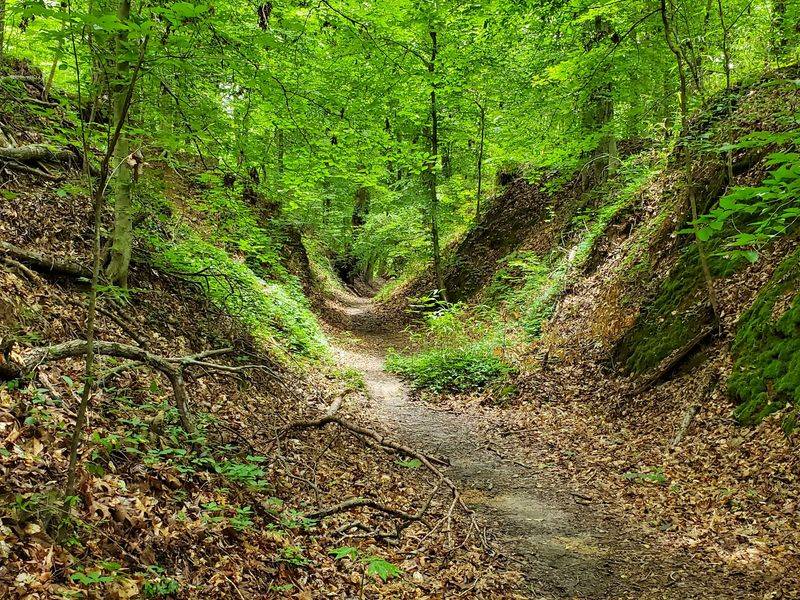
Centuries of footsteps carved this path below ground level. Walking the Sunken Trace feels a bit eerie, in the best possible way, with earthen walls rising on both sides and roots hanging overhead.
The stop sits along the Natchez Trace Parkway, which is a gorgeous drive on its own. Parking is easy, and the walk from the lot takes almost no time.
Ten minutes covers the whole thing comfortably. That short commitment makes it an ideal break during a longer parkway drive.
Interpretive signage explains what you’re looking at and why the ground sank this far. The trail follows a route traveled by generations before highways existed.
Light filters down through the trees in strange patterns. Photographers love it, and so does anyone who appreciates a quiet moment away from traffic noise.
Port Gibson, the nearest community, has roughly 1,200 residents. The town is known for its historic churches and a pace so unhurried it barely registers as motion.
Cost of living here lands well below the national average, which explains why retirees looking for rural quiet keep finding their way to this corner of the state.
6. Flora
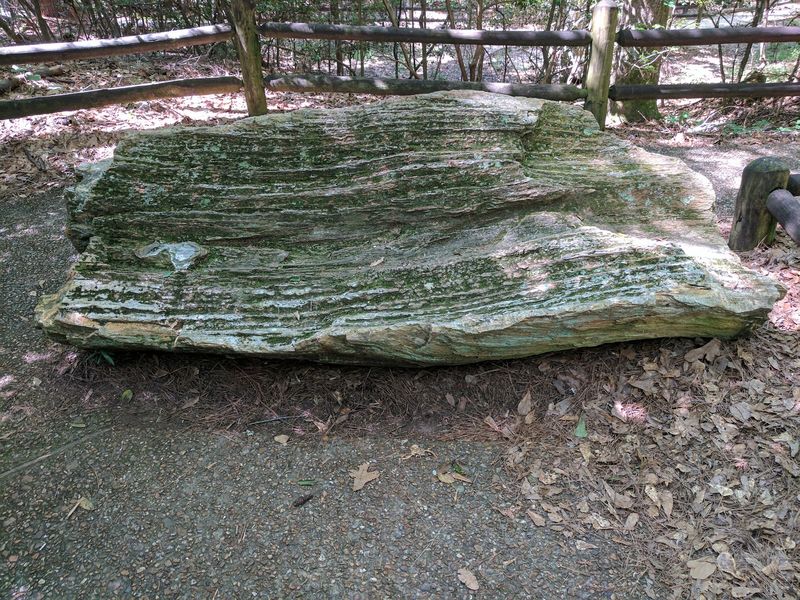
Thirty-six million years ago, a logjam of fallen trees settled into the mud here. What’s left today are stone logs sitting right where they landed, which is not something you expect to find east of the Mississippi River.
A half-mile to one-mile nature trail loops past the largest specimens. A printed brochure walks you through what you’re seeing at each stop.
The path is well maintained and manageable for most fitness levels. Shade from surrounding trees makes the walk pleasant even in warmer months.
Guides on site know the geology inside and out. Questions get real answers instead of vague shrugs.
The museum surprises people. Fossils, petrified wood samples, exotic minerals, and dinosaur remains fill the displays, and the collection is far deeper than a roadside attraction usually manages.
A gift shop stocks rocks, jewelry, pottery, art, and artifacts. Rock hounds should budget extra time and possibly extra money.
Gem mining is available on site, which turns a quiet nature walk into an actual activity for visiting grandchildren. A campground rounds out the property.
Facilities lean toward the older side, and nobody pretends otherwise. The trail and museum more than make up for it.
Flora sits nearby with around 1,600 residents and a historic main street. Country living here comes cheap, and Jackson is close enough for bigger errands.
Weekends bring the heaviest traffic, especially Saturday and Sunday mornings through afternoons. Weekday evenings are nearly empty.
Restrooms are available, though there’s no restaurant, so pack snacks. Parking is on site with free options.
The address is 124 Forest Park Rd, Flora, MS 39071.
7. Tishomingo
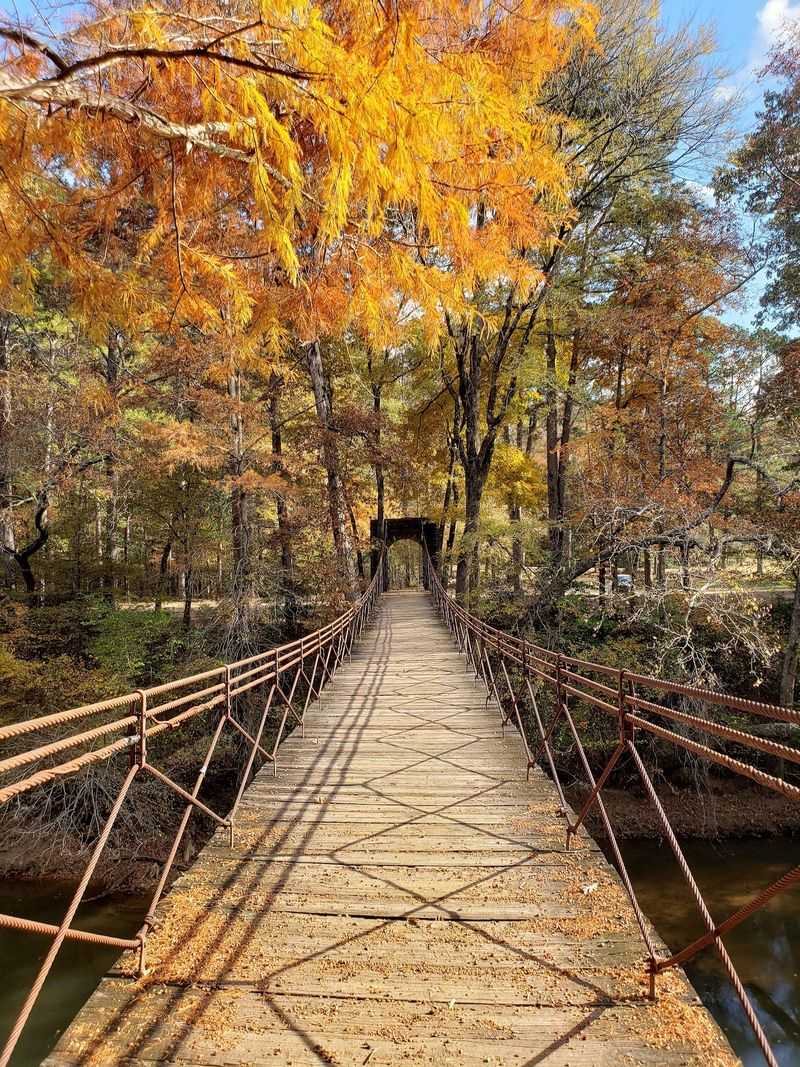
Mississippi isn’t supposed to have rock formations like these. Tishomingo State Park sits in the foothills of the Appalachians, and the boulders, bluffs, and mossy outcroppings look borrowed from a state several hundred miles north.
A swinging bridge crosses Bear Creek, and crossing it is practically mandatory. The creek runs clear beneath, framed by stone and hardwood forest.
Hiking trails wind past a waterfall, along the creek, and around a stocked lake with a fishing pier. Canoe trips add another angle on the same landscape.
Plant diversity here is remarkable, with species that don’t show up elsewhere in the state. Spring wildflowers put on a genuine display.
Trails stay well maintained and range in difficulty. Some are easy enough for kids, which makes family visits straightforward.
The Natchez Trace Parkway runs alongside, so walking and driving options connect neatly. Scenery along Bear Creek is the highlight either way.
Camping keeps people coming back for full weekends. Picnic tables, grills, restrooms, a playground, swings, slides, and a basketball court cover the practical side.
Dogs are allowed, and the park stays open around the clock. Parking requires a fee.
Friday evening through Saturday evening is the busiest stretch by a wide margin. Wednesday mornings are as quiet as it gets.
The town of Tishomingo has roughly 350 residents, which tells you plenty about the pace. Cost of living runs low, and retirees who want woods over neighbors do well here.
Fall color in these hills rivals anything in the region. Pack layers, since the creek valley holds cooler air.
Find the park at 105 Co Rd 90, Tishomingo, MS 38873.
8. Woodville
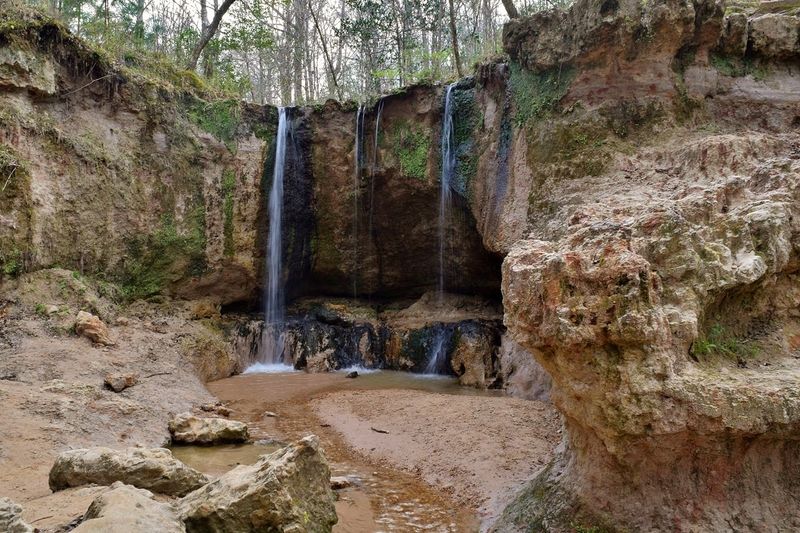
Over fifty waterfalls hide inside these 700 acres. Clark Creek Natural Area is the loudest argument against anyone claiming Mississippi is flat.
The terrain drops into steep ravines carved by creeks. Trails follow them down, and getting to the first waterfall takes a solid 30 to 45 minutes of real hiking.
Stairs help in places, but primitive sections involve scrambling and occasionally sliding down rock. Comfortable shoes with grip are not optional here.
Shade covers most of the route, which is a mercy in summer. Waterfalls provide the soundtrack, and cool water over tired feet is part of the reward.
Hardwood and pine forests mix throughout, with wildflowers scattered along the way. Deer and birds show up regularly.
Wild boar live in the area too, especially near the primitive trails and the scenic overlook. Keeping distance from piglets is the smart move, since sows nearby will not appreciate the company.
Loose gravel and gumballs make the uphill and downhill stretches trickier than the distance suggests. Trekking poles earn their keep.
Water and snacks matter more than most day hikers assume. There’s no shop out here.
Picnic spots and restrooms are available near the entrance. Dogs are welcome, and kid-friendly trail sections exist for less ambitious outings.
Saturday afternoons draw the biggest crowds. Weekday mornings and afternoons are close to empty, which is when the ravines feel most secluded.
Woodville sits nearby with around 900 residents, an antebellum square, and rolling countryside in every direction. Property here costs a fraction of what similar acreage runs elsewhere.
Parking is paid, both in the lot and on the street. The trailhead is at 366 Ft Adams Pond Rd, Woodville, MS 39669.