
This Mississippi Rescue Center Lets Kids Watch Sea Turtles And Dolphins Heal Before They Return To The Gulf
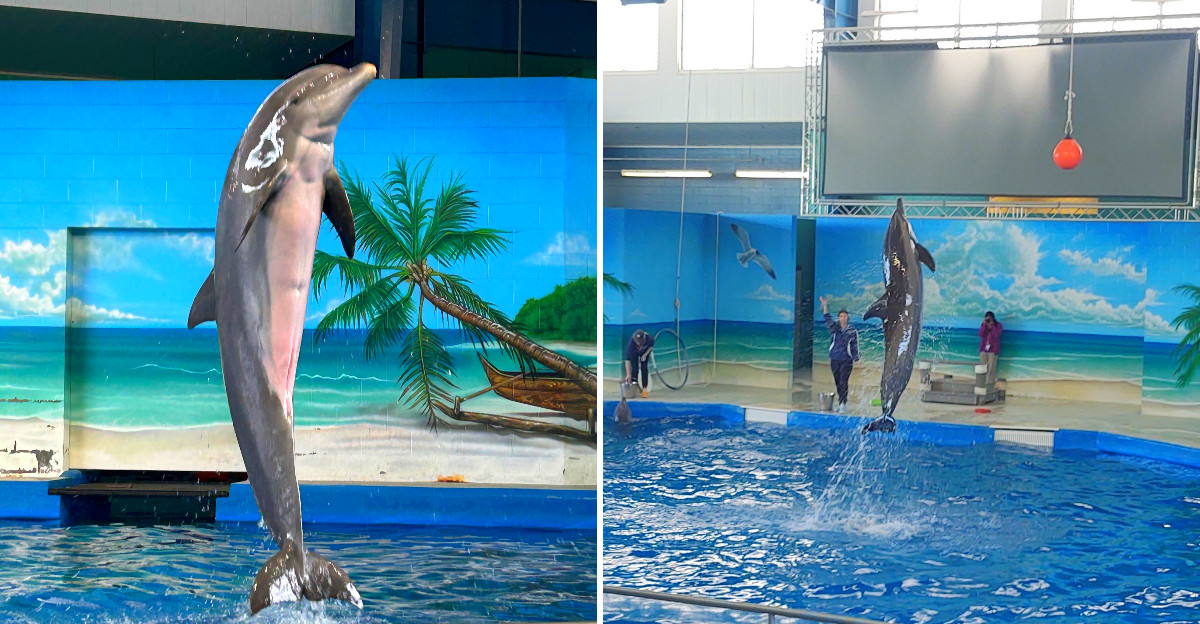
My plan for that Saturday was beach traffic and a gas station sandwich, until a hand-lettered arrow pointed inland toward a cluster of low buildings and saltwater pools on the Mississippi coast. Inside, a staff member was explaining how a cold snap can leave a sea turtle too stunned to swim, and how months of patient care can send it back to the Gulf.
Families were crouched around a shallow pool, fingertips trailing across the backs of stingrays, while a dolphin show drew laughter from the bleachers. It turned out to be one of the most affordable and genuinely useful mornings I have spent anywhere in the state.
A Rescue Campus Tucked Off Dolphin Lane
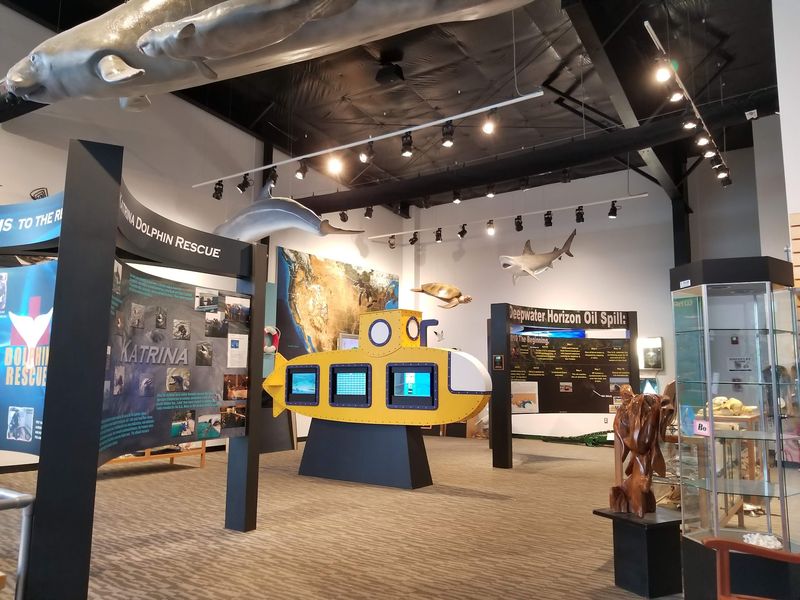
Down a short road named Dolphin Lane in Gulfport, Harrison County, sits the Institute for Marine Mammal Studies, a non-profit that looks less like a theme park and more like a working animal hospital with bleachers attached.
The address is 10801 Dolphin Ln, and the setup is split across two areas: a marine park side with pools and show seating, and a quieter Discovery Center building set farther back.
Founded in 1984, the organization built its identity around three things: public education, research, and the rescue of marine mammals and sea turtles along the Mississippi, Louisiana, and Alabama coast.
Google lists it simply as a non-profit organization and a by-reservation marine education center with interactive exhibits, touch pools, and dolphin programs. That reservation note matters, and planning ahead saves headaches.
What surprises most first-timers is the scale. It is not an enormous aquarium, and visitors often point that out, but the compactness works in its favor with young children who tire quickly.
Everything sits close together, paths are flat, and the whole campus can be covered in a couple of hours without anyone melting down from walking too far in Gulf Coast humidity.
Four Decades Of Stranding Response On The Gulf Coast
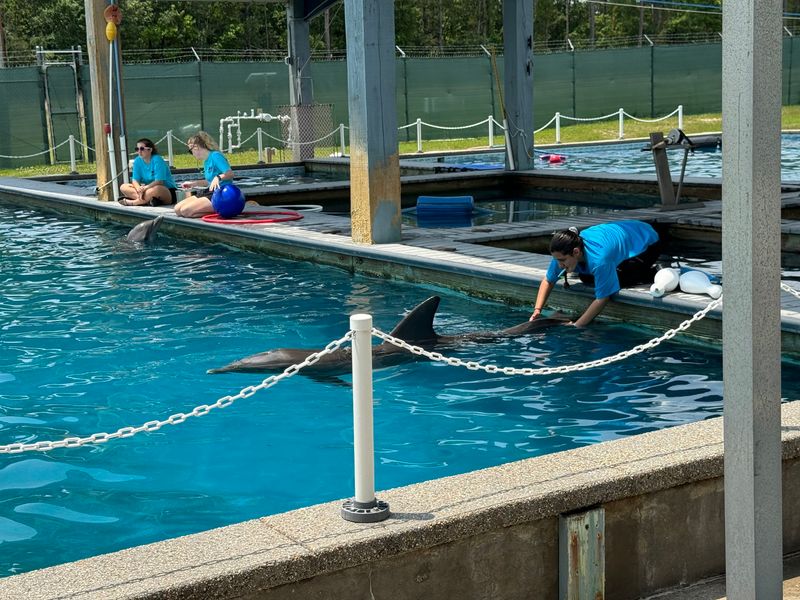
Long before it welcomed school buses, the institute was answering calls about animals in trouble. Since its founding in 1984, it has grown into a premier stranding response organization for the Mississippi, Louisiana, and Alabama stretch of the Gulf.
Since 2010 alone, staff and volunteers have responded to hundreds of sea turtle strandings. The species that turn up in Mississippi waters include loggerheads, green sea turtles, and the critically endangered Kemp’s ridley, the smallest and rarest of the sea turtles.
Cold stunning causes many of those calls. When water temperature drops suddenly, a turtle’s body slows to the point where it cannot swim or surface properly, and it washes in helpless.
Others arrive after being accidentally hooked or netted by fishermen who then phone for help, which is exactly what the network is built for.
Veterinary staff run full examinations, then move patients into specialized pools for weeks or months of monitored recovery, with routine checks along the way.
Release day is the point of all of it. Some turtles go back to the Gulf carrying tracking tags so researchers can follow where they travel after rehabilitation, turning one rescue into long-term science.
A visitor’s admission dollars help fund that work.
Touch Pools, Stingrays, And Shark Eggs
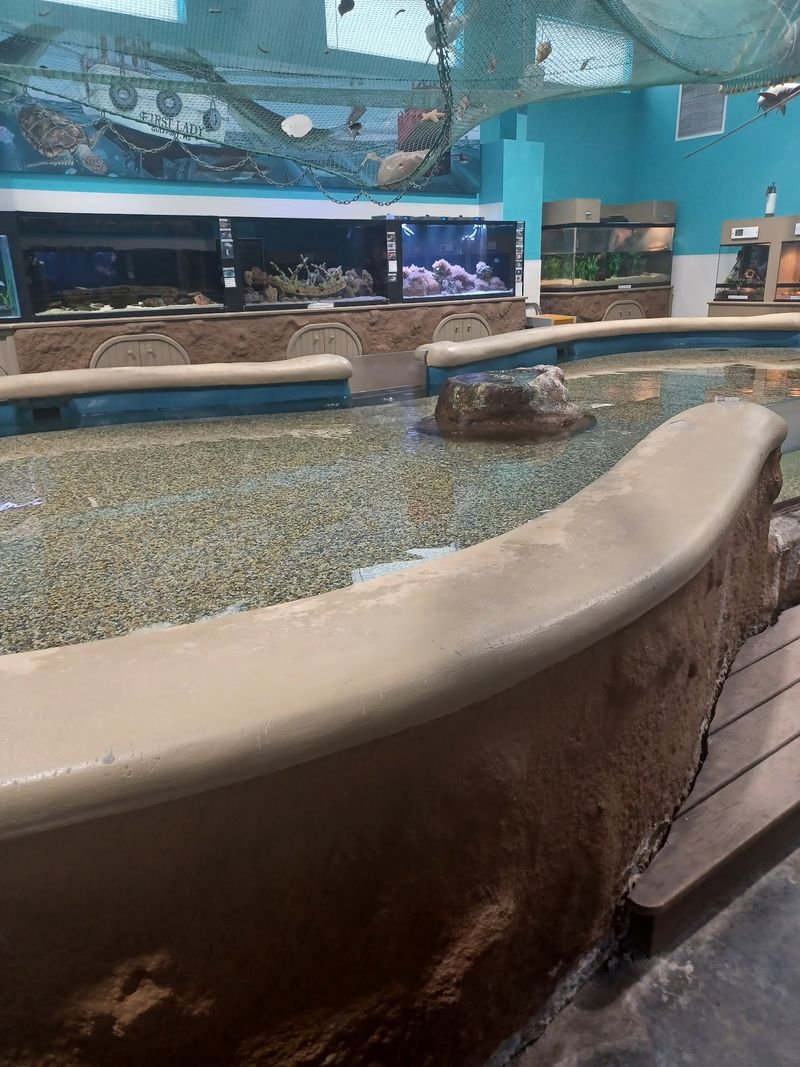
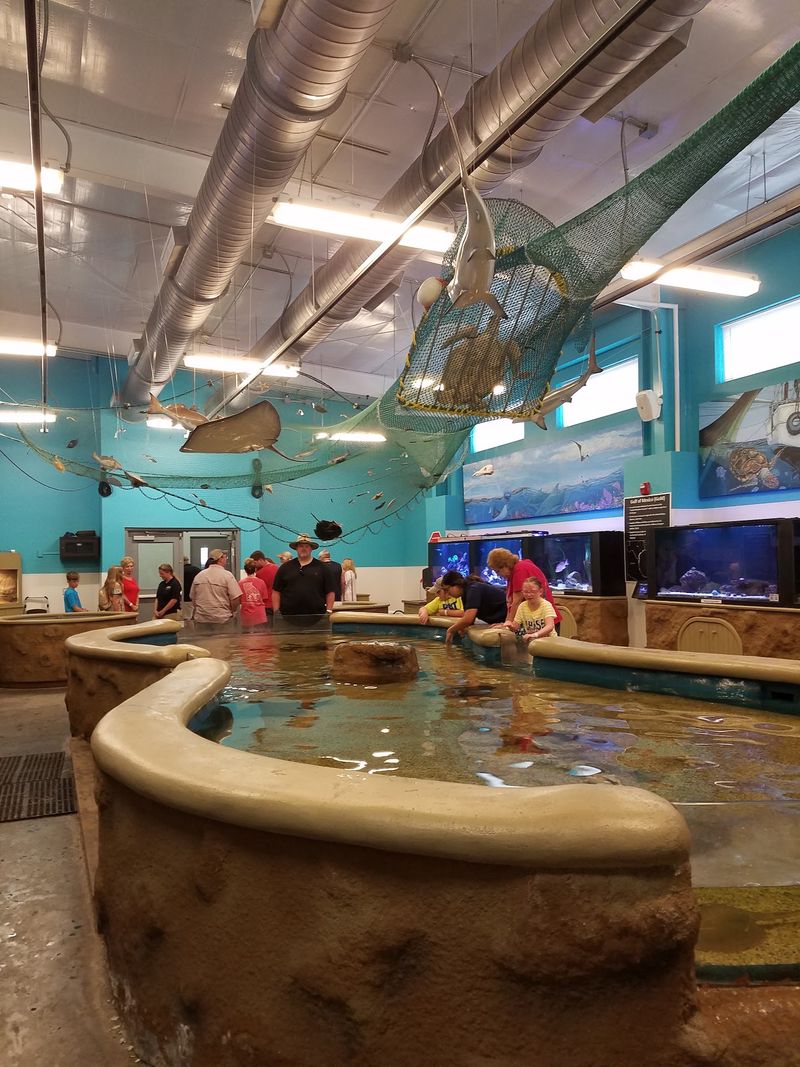
Fingertips in saltwater tend to be the memory kids carry home. The stingray pool is the headline attraction, shallow enough for short arms and busy with rays that glide right up to the rim.
Small sharks share the space, and visitors regularly mention petting both, always after a hand-washing stop that staff take seriously.
Inside the Discovery Center sits a second layer of hands-on tanks. Horseshoe crabs, starfish, hermit crabs, and shark eggs sit in separate containers, each with someone nearby ready to explain what a guest is actually holding.
Occasionally a tank goes off-limits when new animals have just been introduced, which regulars accept as a fair trade for animal welfare.
Another quiet favorite is the fossil dig where children sift for real sand shark teeth. Older kids who claim to be too cool for touch pools have been known to stay at that station longest.
One practical tip repeated by return visitors: the Discovery Center is set back from the main pools and easy to miss entirely, so ask a staff member for directions early rather than discovering it on your way out the gate.
Dolphin And Sea Lion Demonstrations On A Rolling Schedule
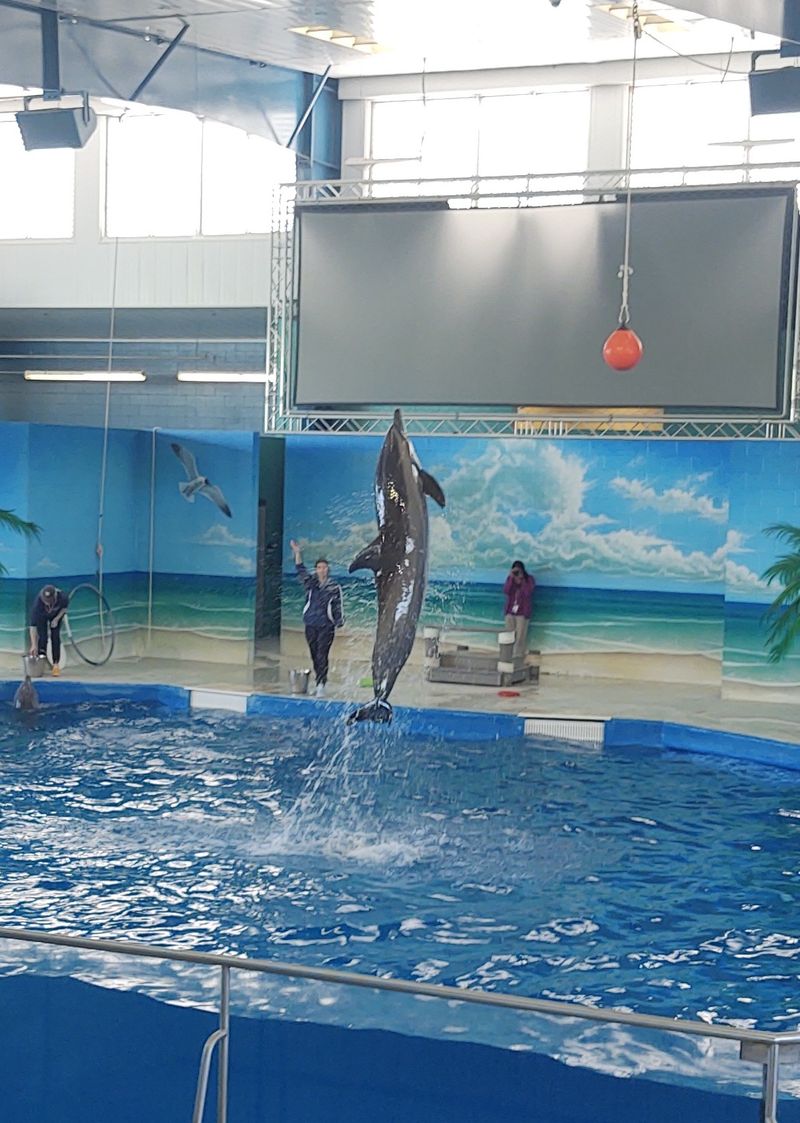
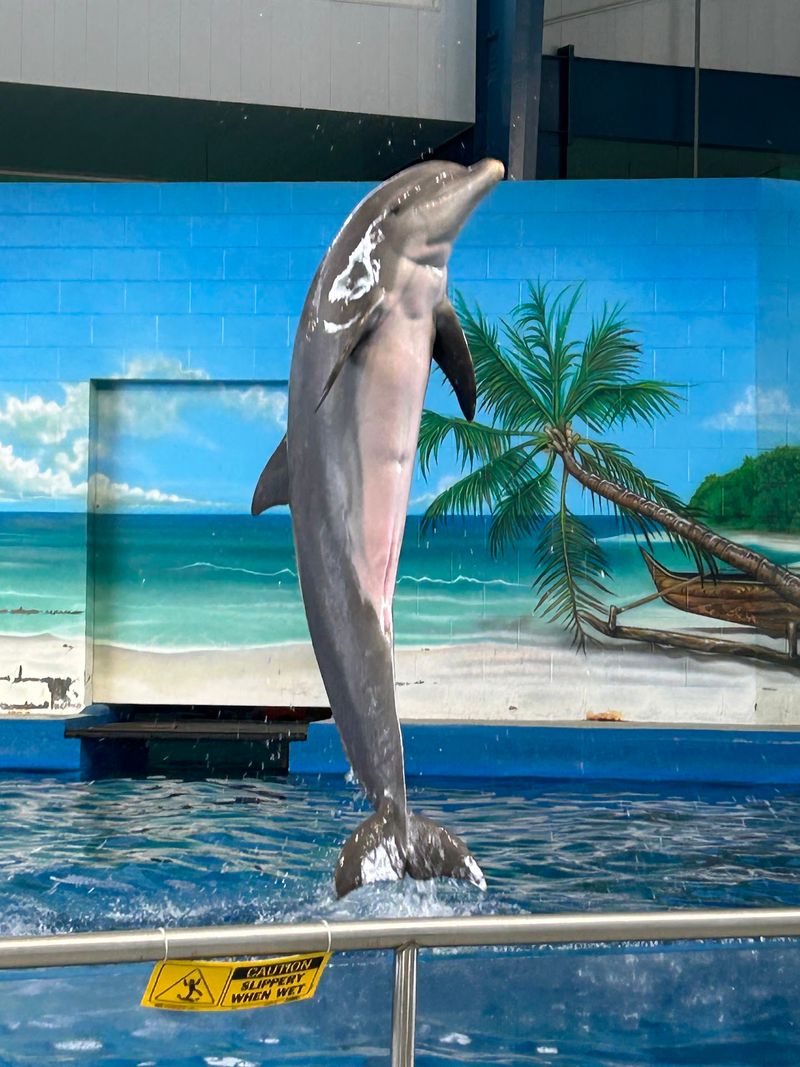
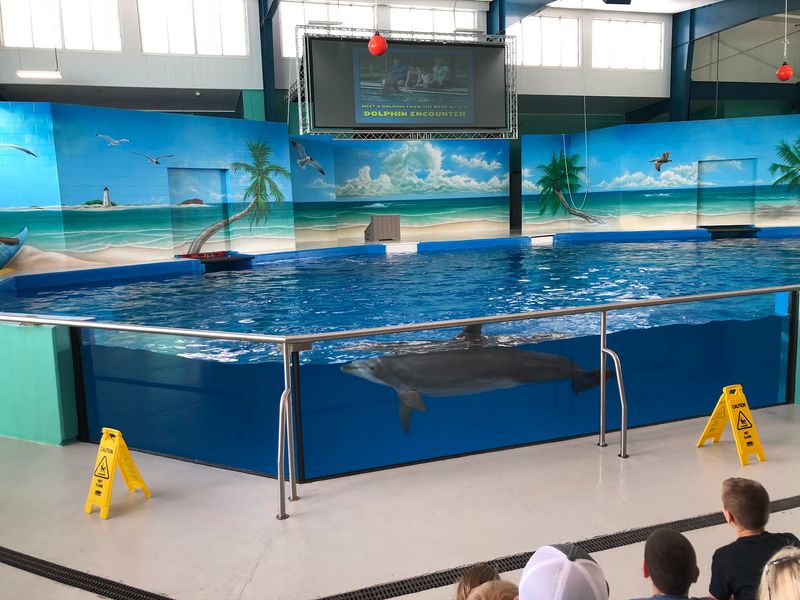
Ask anyone what they remember and the dolphin show comes up first. It is by far the most mentioned feature among visitors, followed closely by the sea lion demonstrations.
Shows are short by design, generally running about ten minutes, with something new starting roughly every fifteen to thirty minutes depending on the day’s schedule.
That rhythm is smarter than it sounds for families. Nobody has to sit still for an hour, and the gaps between presentations give everyone time to wander to the touch pools, grab water, or let a restless five-year-old burn off energy.
Trainers keep the question period open after each demonstration, and adults ask as many questions as children do.
A separate talk covers snakes and alligators, which visitors describe as genuinely informative rather than filler. There is a bird presentation too, rounding out the rotation.
Guests consistently credit the trainers and volunteers for their patience and obvious affection for the animals. Several have noted the staff seem to love the work, and that enthusiasm carries the shows more than any stunt does.
Check the posted schedule when you arrive so you can plan your loop around it.
The Aviary Where Parakeets Land On Your Arm
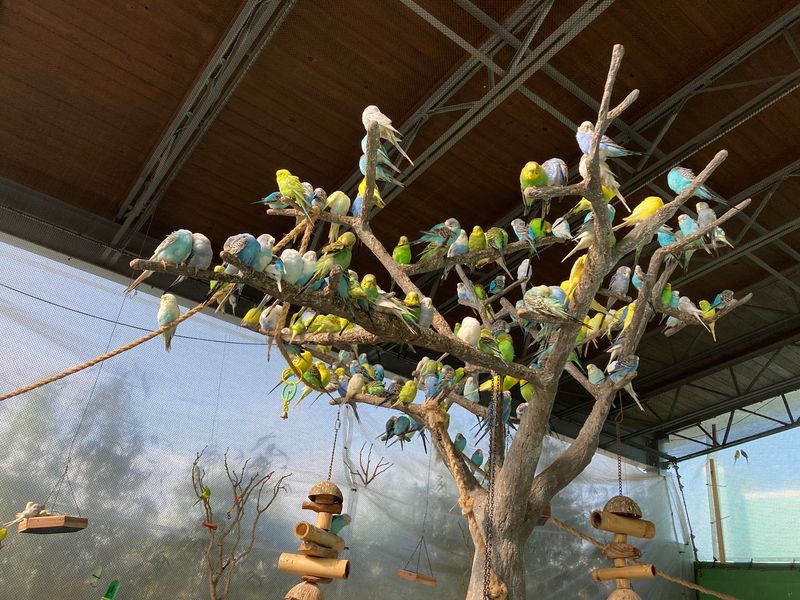
Bird feeding earns a surprising number of mentions for a place built around marine animals. The walk-through aviary holds dozens of tropical birds, mostly parakeets, and they are not shy.
A feeding stick costs a small extra amount, around a dollar and a half according to visitors, and the birds will crowd onto it and onto the hand holding it.
For nervous kids, the aviary is often the moment something clicks. Watching a bird choose to land on you is different from watching one behind glass.
Grandparents have mentioned enjoying it as much as the grandchildren, which makes it one of the more reliable multi-generational stops on the property.
A reptile exhibit sits nearby, and between the two there is plenty to hold attention while you wait for the next pool-side presentation to start.
Bring a phone, but keep a hand free. Seed gets everywhere, the birds move fast, and half the fun is the mild chaos of a dozen parakeets deciding you are the best option in the enclosure.
Hand-washing stations are available afterward, which the staff will happily point out.
Shade, Fans, And Beating The Gulf Coast Heat
July on the Mississippi coast does not negotiate. Anyone planning a summer visit should know the campus has covered benches with fans running actively beneath them, a detail visitors bring up gratefully after hot-day trips.
Sitting under one of those between shows resets the whole family.
Indoor space helps too. The Discovery Center and museum building offer air-conditioned relief and enough exhibits to fill the hottest stretch of the afternoon, which makes a midday retreat feel like part of the plan rather than a surrender.
One long-time visitor described the ray pool as a pleasant way to catch a break from summer temperatures.
Timing is your other tool. With doors opening at 9 AM and the weekday schedule wrapping by 2 PM, an early arrival lands you in the coolest hours of the day anyway.
Restrooms and facilities get repeat praise for cleanliness, which matters more than people admit when traveling with small children.
Pack refillable water bottles, hats, and sunscreen. Between shade structures, indoor stops, and short walking distances, the heat becomes manageable rather than the thing that ends your day early.
Who Has The Best Time Here
Sweet spot? Somewhere between ages six and twelve.
Parents report that a ten-year-old can be fully absorbed while a five-year-old starts squirming, mostly because the format leans educational with real sitting and listening involved.
Knowing that in advance changes how you pace the visit.
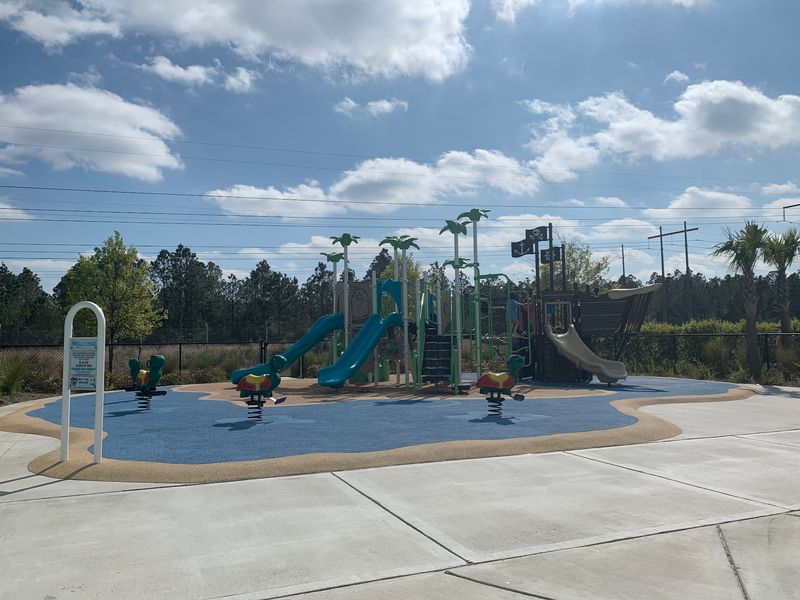
Younger children still have outlets. A playground with a pirate ship structure, a train that shuttles between areas, and the touch pools give small kids something physical to do between presentations.
Teenagers surprise their parents here too, with one family noting their 13 and 17-year-olds loved it as much as the adults did.
Grandparents fit easily into the day. Flat paths, short distances, shaded seating, and a two-hour core loop mean nobody has to power through a marathon.
Strollers work fine on the property, and the center’s reputation as a favorite for family tours reflects that accessibility.
School groups have used it for field trips for years, with some Mississippi families returning annually.
The one honest caveat: it is smaller than a major aquarium. Come for close contact and rescue stories, not for scale, and it delivers.
Turtle Cafe, Gift Shop, And Picnic Tables
Lunch does not have to be a problem. On-site sits the themed Turtle Cafe, where food and drinks are available if you would rather not leave the property mid-visit.
Picnic tables outside give families the option of hauling a cooler from the car instead, and visitors mention doing exactly that.
The gift shop skews toward small, affordable trinkets rather than big-ticket souvenirs. Parents describe it as a reasonable stop for something the kids can point at later and remember the day by.
Plush marine animals and turtle-themed odds and ends fill the shelves.
Budget-minded families can work this to their advantage. Packing sandwiches, setting a firm souvenir limit, and buying only the bird feeding sticks keeps the total close to admission itself.
That approach is why the place shows up so often in conversations about affordable Mississippi coast outings.
Either way, the break matters. A meal or a snack between shows gives everyone a reset, and the outdoor tables put you within earshot of the next presentation announcement so you do not miss the dolphins.
Hours, Tickets, And The Drive From Home
Practical details first. Doors open at 9 AM every day, with weekday closing at 2 PM and a slightly longer Saturday and Sunday window that runs to 3 PM, so weekends give you an extra hour of show rotations.
Programs operate on a reservation basis, so calling or booking online before you drive is the smart move.
Admission has run around fourteen dollars for adults as of recent reporting, with discounts often available for children and seniors. Visitors consistently call the pricing reasonable, though add-on encounters cost extra.
Verify current rates before you go, since they can shift.
Getting there is straightforward from most of south Mississippi. Hattiesburg drivers can expect roughly an hour to an hour and a half down US 49, while Jackson families should plan on something closer to two and a half to three and a half hours on the same route.
Biloxi visitors have mentioned a drive of about twenty minutes.
Parking sits in a medium-sized lot out front off the Highway 605 corridor. A few travelers have found GPS directions unreliable, so follow the official website’s route notes.