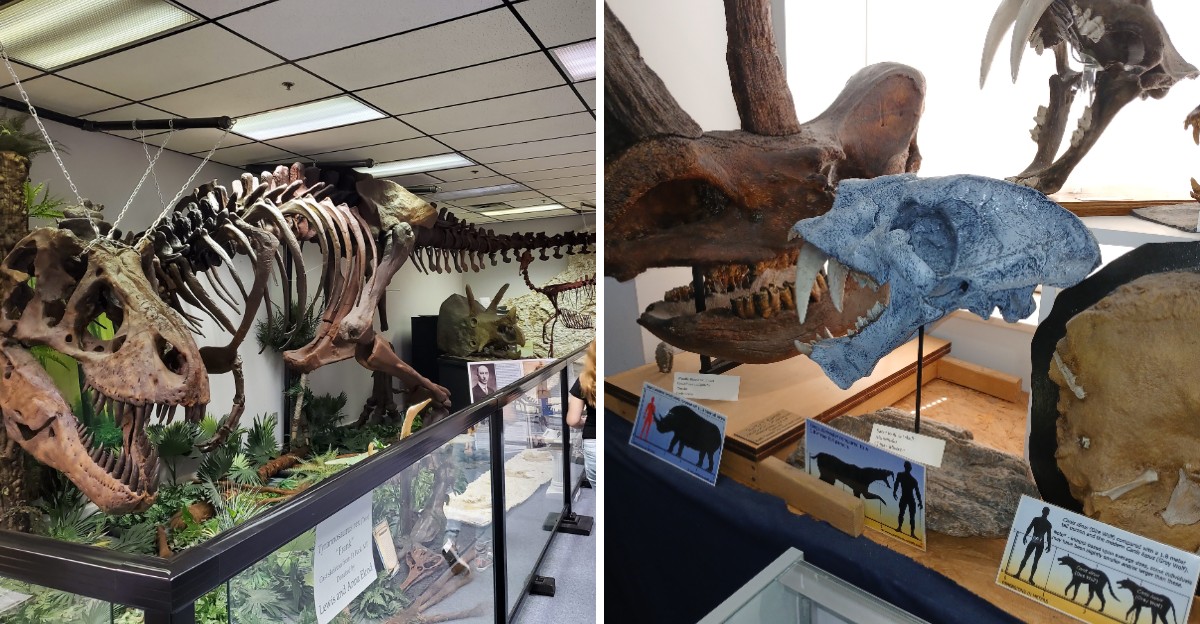
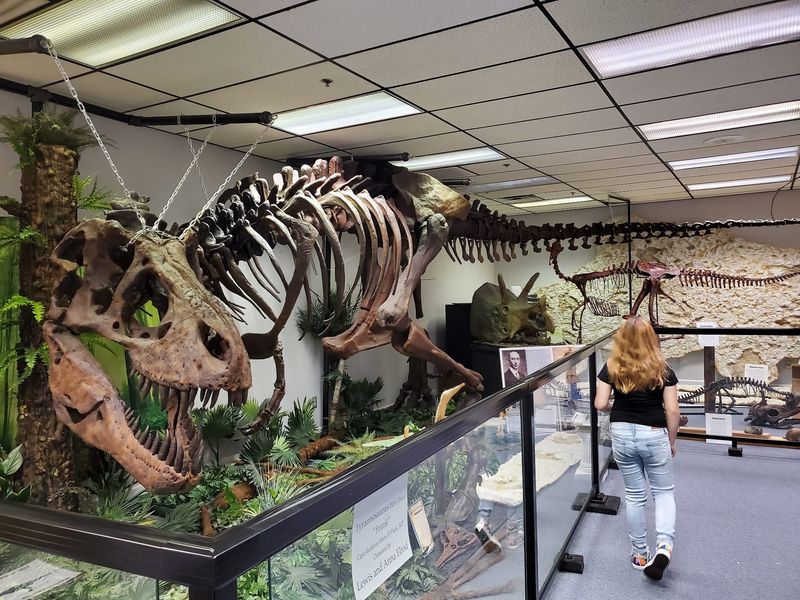
A 38-foot T. rex named Frank stands inside a small museum about 40 minutes from Nashville. Yes, the dinosaur has a first name.
And no, he does not seem bothered by the attention.
Frank is an exact cast of the Fort Peck T. rex from the Museum of the Rockies in Montana. Putting him together took 10 months.
I appreciate that kind of patience, because I can barely finish a jigsaw puzzle.
The real surprise sits a few steps away. Workers clean and repair real dinosaur bones in an open lab while visitors watch.
That’s science happening right there in Tennessee, not behind a locked door.
Then there are glowing rocks, a saber-toothed cat skull, and fossils pulled from Montana digs. So how did a place this cool stay so quiet?
Frank The T. Rex Is Bigger Than Your Living Room
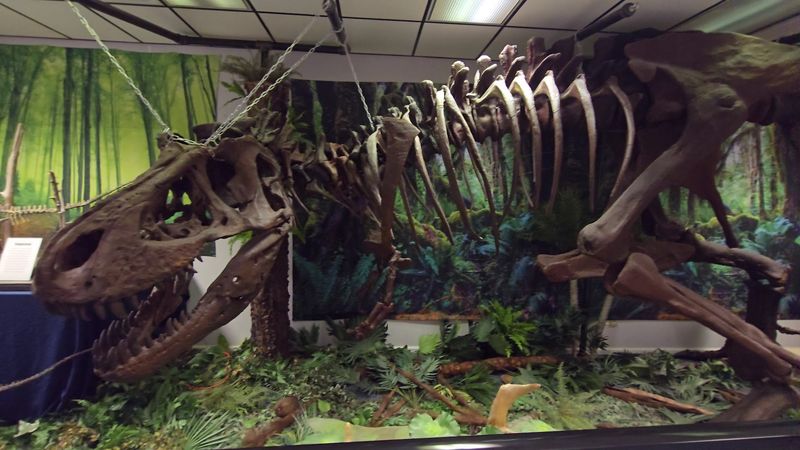
Thirty-eight feet of jaws, ribs, and tail greet you at Earth Experience – Middle Tennessee Museum of Natural History. His name is Frank, and he makes a strong first impression.
Frank is an exact replica of the Fort Peck T. rex. The original skeleton lives at the Museum of the Rockies in Bozeman, Montana.
Building him was no weekend project. The assembly took 10 months, and Frank finally went on display in October 2015.
Lewis and Anna Elrod bought the cast soon after the museum moved into its current home. That purchase gave Middle Tennessee its own towering celebrity.
I love that a giant predator ended up with such a friendly, everyday name. Frank sounds like someone who fixes your lawnmower.
Instead, he’s a meat-eater with teeth the size of bananas.
Bring your camera and step back as far as you can. Fitting his whole body into one photo is a fun little challenge.
Kids usually want to compare their height to his legs. Adults tend to stare at the skull a little too long.
Either way, Frank earns every second of attention he gets.
Real Dinosaur Bones Get Cleaned Right In Front Of You
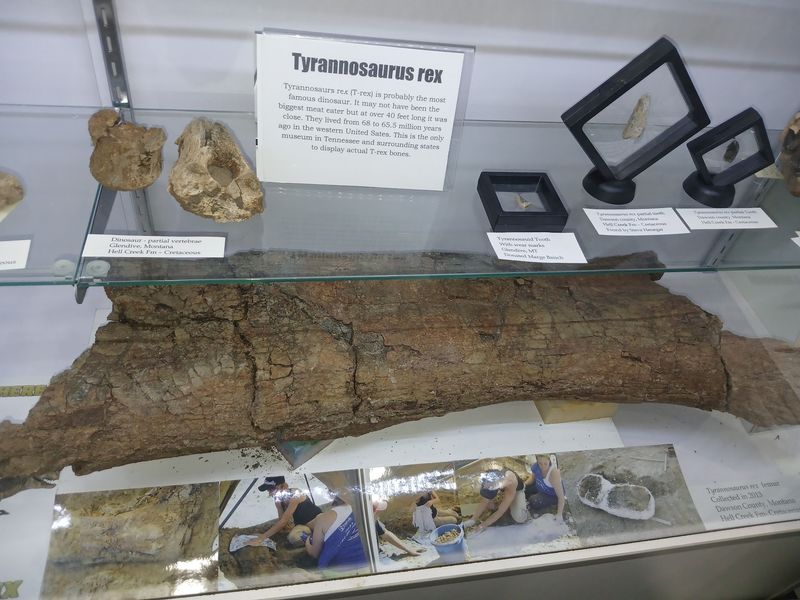
Most museums show you finished fossils. Here, you get to see the messy, careful work that happens before a bone ever reaches a display case.
The museum runs a working paleontology laboratory. Staff clean and repair real dinosaur bones while visitors look on.
Recently, the lab has been working on a Triceratops skull from Montana. Watching rock slowly give way to bone is oddly satisfying.
It’s like a very slow, very ancient magic trick.
The work takes steady hands and lots of patience. A single skull can take a long time to free from its stone wrapping.
Visitors are sometimes offered chances to take part in lab activities. That’s a rare treat for anyone who once dreamed of becoming a paleontologist.
Here’s my tip. Don’t rush past the lab window just to reach the next exhibit.
Stay a few minutes and watch the tools move. Ask questions if someone is free to chat.
You’ll leave understanding how much effort hides behind every fossil you’ve ever seen in a book. Honestly, that lesson might stick with you longer than any museum sign.
Go Ahead And Touch The Exhibits Here
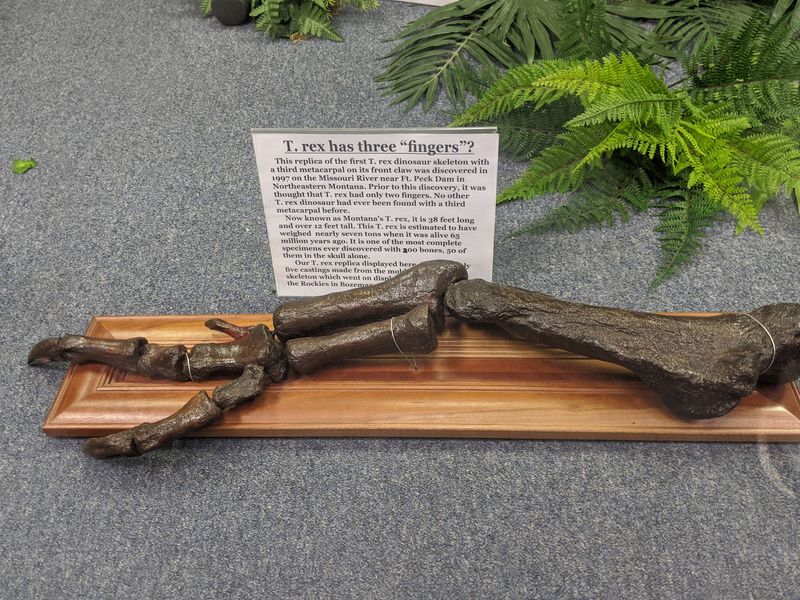
Hands off the glass? Not so much at this museum.
Earth Experience was built as an interactive, hands-on natural history museum.
Many exhibits invite touching. You can feel real dinosaur bones, petrified wood, rocks, and minerals.
That matters more than it sounds. Reading about a fossil is one thing.
Running your fingers across one that’s millions of years old is something else entirely.
Petrified wood is a great example. It looks like a log but feels like solid stone, because that’s basically what it became over time.
Younger visitors get a small play area with puzzles and dinosaur toys. It gives little ones a break when their attention starts to drift.
For parents, this setup is a gift. Kids who are usually told to keep their hands in their pockets finally get permission to explore.
Still, treat everything gently. These pieces need to last for the next curious kid too.
My advice is simple. Let everyone in your group pick one favorite thing to touch, then talk about why it felt cool.
You’d be surprised how much they remember later.
The Glowing Rocks Room Steals The Show
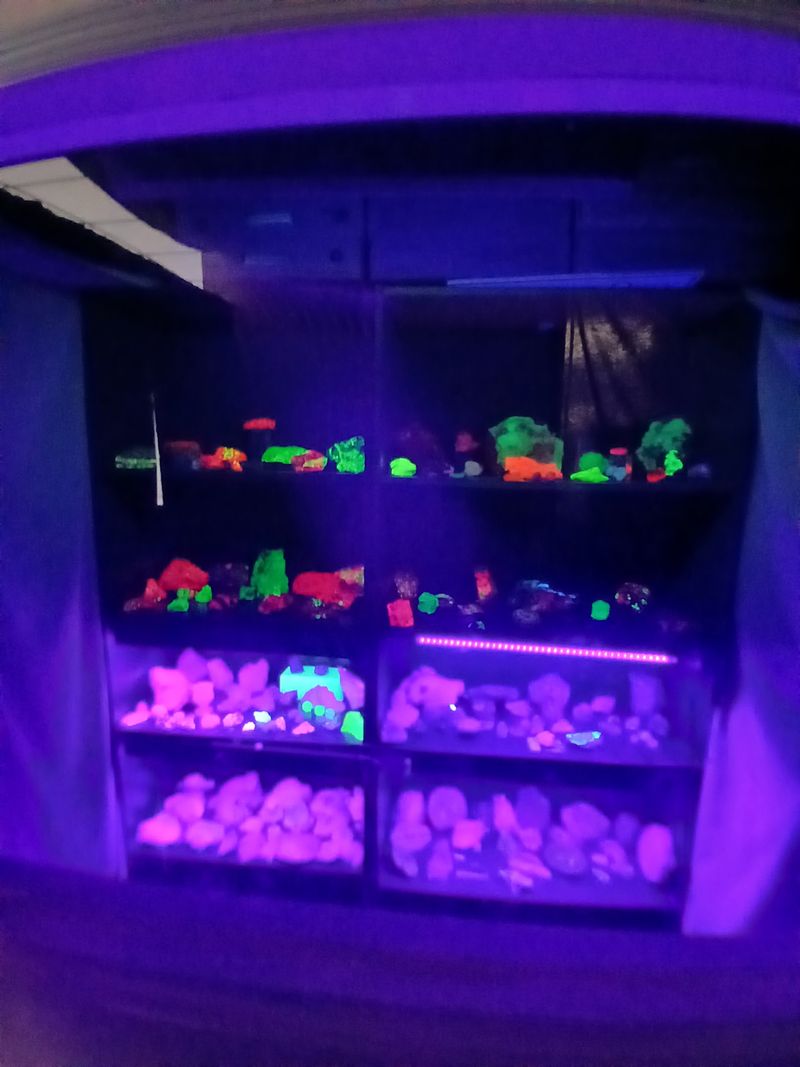
Turn down the lights, flip on a special lamp, and ordinary-looking stones suddenly burst into bright color. That’s the fun of the glowing rocks room.
These fluorescent minerals react to ultraviolet light. Under normal lighting, many look plain and gray.
Under UV light, they shine in greens, reds, and other bold shades.
It’s a little like a dance party for geology. No music, though.
Just rocks showing off.
The room is a favorite with families, and it’s easy to see why. Kids who don’t care much about rocks often change their minds in about two seconds.
I’d suggest taking a quiet moment in here. Let your eyes adjust so the colors look even stronger.
Phone photos can be tricky in low light. Hold your camera steady, turn off the flash, and give it a second to focus.
The best part might be the science behind it. Each mineral glows because of what it’s made of.
So that pretty light show is really a chemistry lesson hiding in plain sight. Sneaky, and pretty wonderful.
Fossils Traveled From Antarctica To Get Here
Antarctica. Madagascar.
The La Brea Tar Pits. Those are just a few of the places represented in this museum’s collection.
Earth Experience – Middle Tennessee Museum of Natural History holds fossils, minerals, rocks, gems, and archaeological relics from around the world. For a museum this size, that reach is impressive.
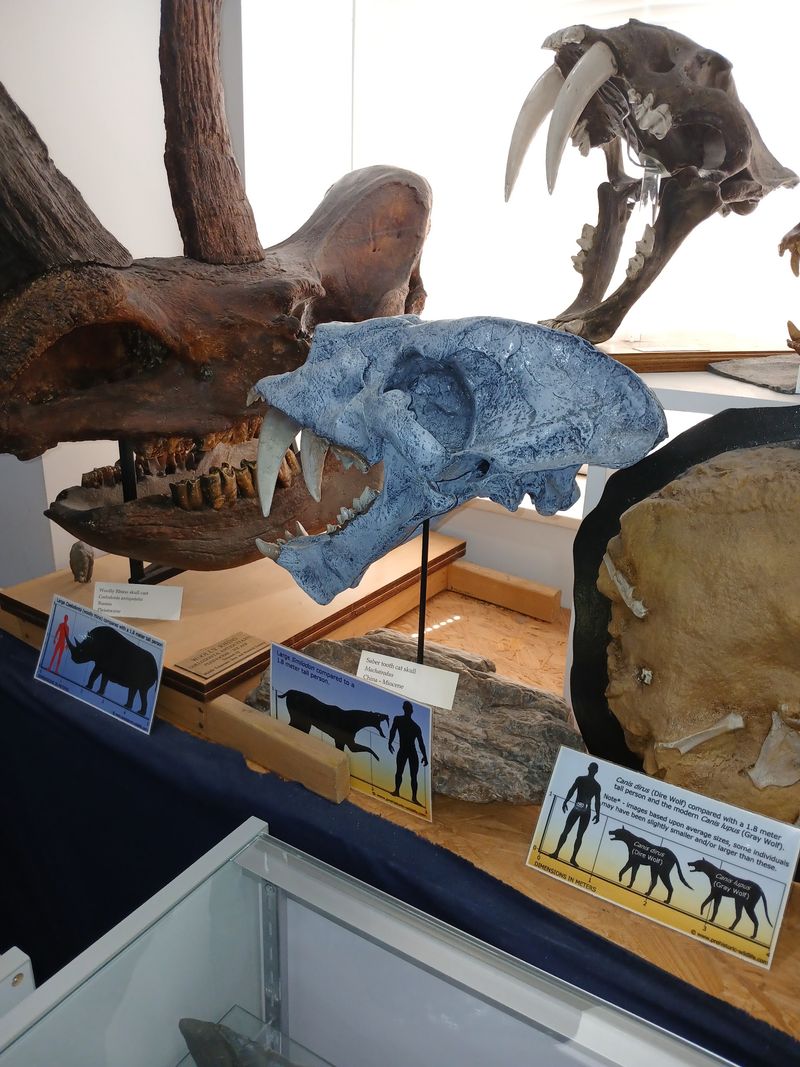
Some pieces really grab attention. A saber-toothed cat skull shows off those famous long teeth.
Nearby, a red panda fossil offers a less expected surprise.
There’s also a meteorite display. So yes, you can see rocks that came from space.
The museum is planning for a much larger home someday. Its collection could fill more than five times its current space.
Think about that for a second. What you see now is only part of what they own.
That’s why exhibits can change over time. A return visit might bring new things to discover.
Take your time reading the labels here. Each one tells a tiny travel story.
Some of these fossils covered more miles than most of us will in a lifetime.
Tennessee Has Its Own Treasures On Display
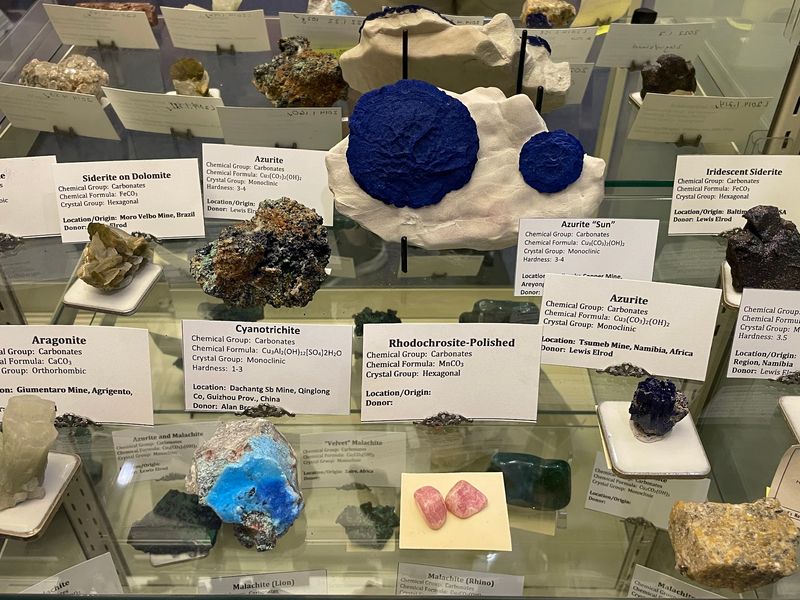
Dinosaurs get the headlines, but Tennessee’s own underground riches deserve a spotlight too. The museum covers the geology and ecology of the state in a big way.
One standout is a large mineral collection featuring zinc from Tennessee’s Elmwood Mine. Many people have no idea their home state produced such striking specimens.
These displays live in the Hall of Minerals. The hall honors Lewis and Anna Elrod, important supporters of the museum.
Lewis Elrod co-founded the museum in 2012 with Alan Brown. He served as its first president and board chairman.
Alan Brown leads the museum today as Executive Director.
You’ll also find fossils discovered right here in Tennessee. That local connection makes the past feel closer.
Somewhere under your own neighborhood, ancient life left its mark. That’s a fun thought on the drive home.
I like that the museum treats local finds with the same pride as faraway ones. It reminds visitors that cool science doesn’t only happen out West.
Sometimes it’s sitting in the ground beneath Middle Tennessee.
Where Ancient Fossils Meet Real-Life Reptiles
Cope and Marsh were two rival paleontologists whose famous competition is featured in the museum’s educational materials.
Their famous rivalry, known as the Bone Wars, is an important chapter in the history of paleontology.
The museum hosts special reptile events where visitors can learn about live reptiles from experts.
Kids often love this part. After seeing so many fossils, spotting a real reptile blink feels exciting.
It also creates a neat connection. Lizards are not dinosaurs, but looking at them can help kids picture scaly creatures from long ago.
Please be respectful around the animals. Keep voices calm and avoid tapping on their homes.
Ask a staff member about them if you get the chance. A quick conversation about prehistoric creatures can turn into a fascinating history lesson, and nobody even notices they’re learning.
Save Room In Your Bag For The Gift Shop
Souvenirs here have a backstory. Many come straight out of the museum’s own molding and casting operation.
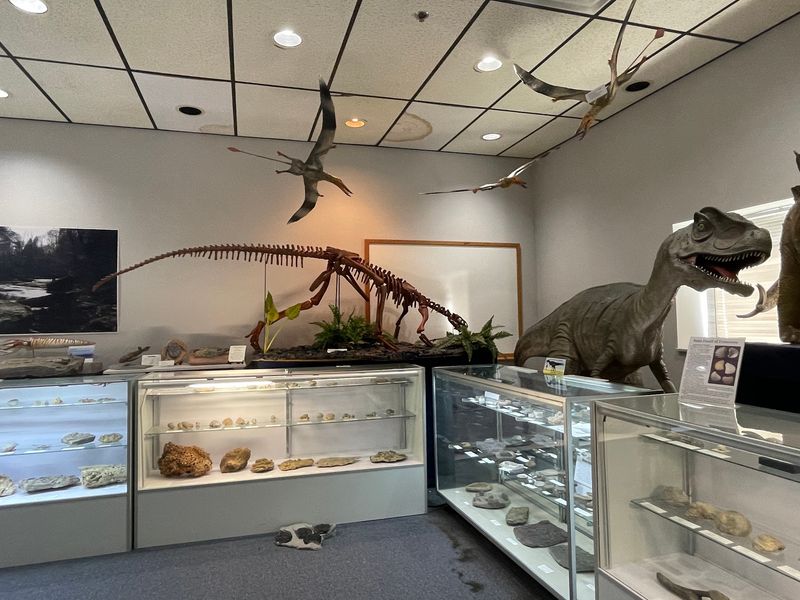
Visitors can watch that process in action. The same work creates dinosaur displays for the museum and replica pieces sold in the shop.
So that fossil cast on your shelf at home? It may have been made just down the hall from where you bought it.
The shop also carries jewelry made by a retired MTSU faculty member. You’ll find minerals, books, toys, and stuffed animals too.
Plan for a little extra browsing time. With so many choices, picking just one thing can turn into a serious decision.
Craft fans should know about another bonus. The Mid Tennessee Gem and Mineral Society is housed within the museum.
The society offers workshops in jewelry making and lapidary, which is the art of cutting and polishing stones. That’s a cool next step for anyone who falls hard for rocks.
Shopping here also supports a nonprofit museum. Your dinosaur keychain helps keep the lab and exhibits going.
Plan Your Trip Around These Short Hours
Timing matters with this one. The museum opens only Wednesday through Saturday, from 11 AM to 4 PM.
That means Sundays, Mondays, and Tuesdays are off the table. Check your calendar before you load up the car.
You’ll find it at 816 Old Salem Road, Murfreesboro, TN 37129. The drive from Nashville takes roughly 40 minutes.
That makes it an easy day trip for families around Middle Tennessee. It also works as a fun stop for travelers exploring the region.
Admission is budget-friendly, with lower rates for kids. Little ones age 3 and under get in free.
Some history adds to the charm. Founded in 2012, the museum moved into its current building in early 2014 and opened to the public that September.
It’s also known as the first natural history museum in Middle Tennessee. That’s a proud title for a place many folks still haven’t heard of.
The museum even runs a summer dig program in Montana. So who knows?
The next big find might end up right here in Tennessee, standing next to Frank.