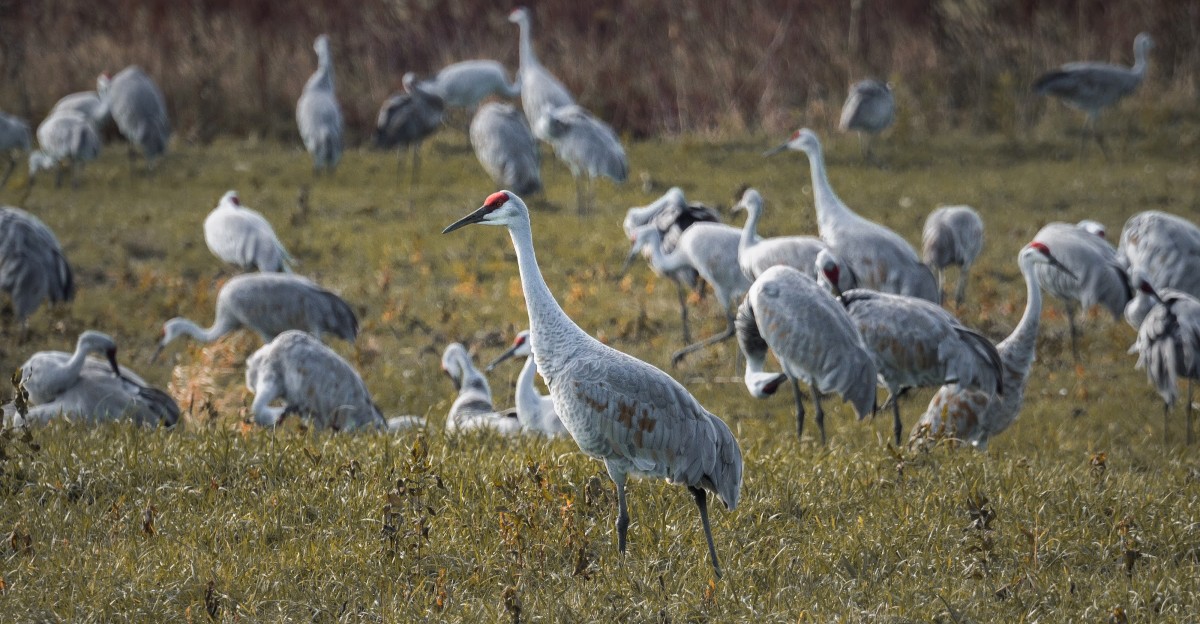
Late autumn evenings in Indiana come with a soundtrack few people expect. It starts as a rolling trill somewhere beyond the tree line.
Then the sky fills with long necks and wide gray wings. Tens of thousands of sandhill cranes glide down to rest in shallow marshes.
Can you imagine that many birds calling at once? Staff count them every week, and recent peaks have neared record numbers.
Admission is free, and the grounds stay open around the clock.
Why do the cranes put on such a show at sunset? They gather to socialize before settling into their roosts for the night.
Peak season usually arrives in late November or early December, so the biggest crowds may still be coming.
So where in Indiana does this sky party happen?
Welcome To The Biggest Crane Party East Of The Mississippi
Jasper-Pulaski Fish & Wildlife Area is the largest gathering site for sandhill cranes east of the Mississippi River. That’s a big claim for a state many people link with cornfields.
The birds prove it every fall.
The property covers 8,179 acres in northwest Indiana. Shallow marshes give the cranes safe places to rest.
Those wet spots are the whole reason the birds keep coming back.
Land purchases here began in 1929. In the 1930s, the area became a game farm and preserve, and wetland repair started.
Since 1972, the official name has been Jasper-Pulaski Fish & Wildlife Area.
The cranes weren’t always so plentiful. They were common in northwestern Indiana until 1929.
Then big wetland losses pushed them out as breeders for 53 years.
Nesting returned to northern Indiana in 1982. Today the migration crowds are huge.
Some sandhill cranes have even spent winters in Indiana since 1983.
It’s a comeback story you can watch with your own eyes, and it happens in the sky above you.
Mark Your Calendar For Late November
Fall migration here usually runs from mid-October through mid-December. Peak numbers tend to show up in late November or early December.
So the best part may still be ahead of you.
Peaks have shifted over time. They once came from late October to mid-November.
Warmer fall weather may be one reason for the change.
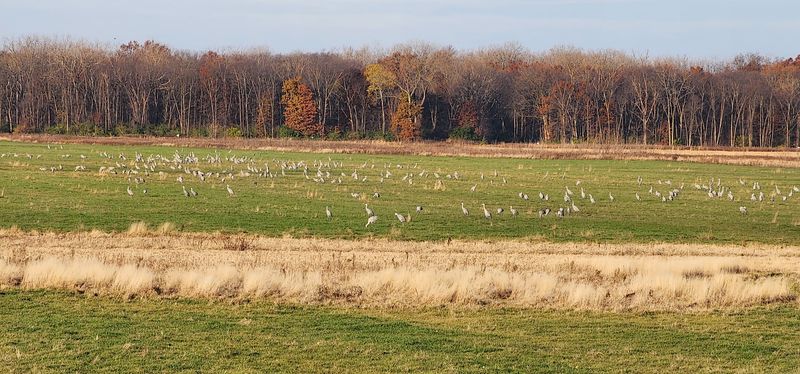
Recent numbers are big. Nearly 33,000 cranes were counted on November 28, 2023.
Nearly 32,000 showed up on December 8, 2022.
The record daily count has approached 35,000. Think about that many birds in one place.
It’s hard to picture until you hear them.
Indiana DNR staff do weekly counts, usually on Tuesdays, from October to December. The numbers go up on the DNR page for the area.
Check them before you drive out.
Counting started in 1967. Back then the annual peak was around 2,500 birds.
Now it’s tens of thousands, which is quite a glow-up.
Sunset Is When The Sky Gets Loud
Plan to arrive about one hour before sunset. That’s when cranes return to the refuge near the observation area.
They socialize first and then head to their roosts at dusk.
The trilling calls carry far across the open land. You’ll often hear the birds before you spot them.
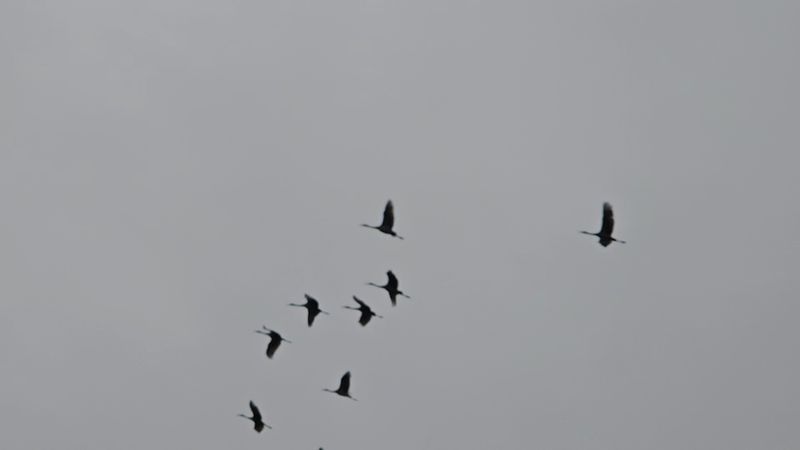
Then the sky starts to fill.
Courtship rituals can happen here too. Cranes bow, leap, and call to each other.
It looks a bit like a very tall dance class.
Sunrise is the other great window. Flocks leave their roosting marshes then to feed in nearby farm fields.
Early risers get a different kind of show.
Cold evening? Dress warmer than you think.
Birds may not arrive until closer to sunset on bitter days.
Wear orange or check hunting dates if you visit at dawn or dusk. It’s an active hunting area.
A little planning keeps the evening smooth.
Stay as long as the light lasts. The last flights can be the best.
Climb The Platform At Goose Pasture
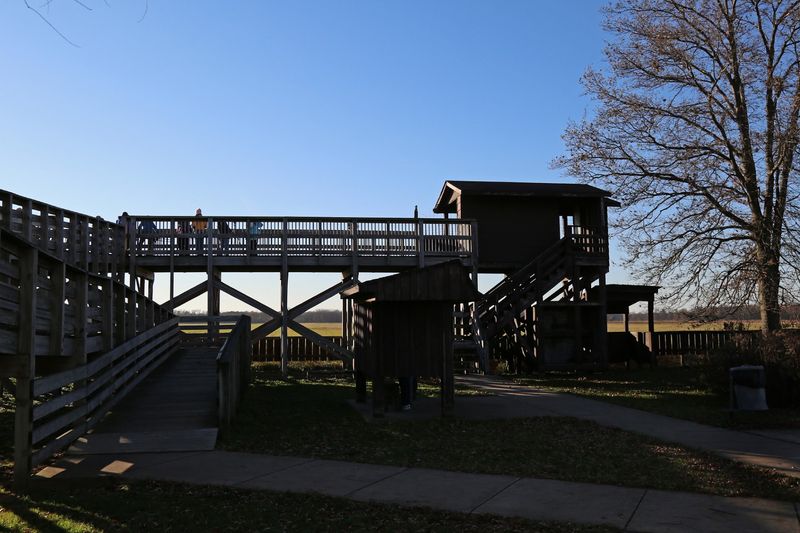
The Goose Pasture Viewing Area has an elevated platform with a ramp and railings. It’s ADA accessible.
Everyone gets a high view over the marsh.
A paved interpretive trail leads from the parking lot to the platform. Along the way, you can learn about the birds.
It’s an easy walk.
Some scopes are mounted on the platform. They’re handy for a close look.
Still, bring your own binoculars or spotting scope for a better view.
The main crane observation area has its own parking lots off CR 1650 W. Turn north on CR 1650 W from CR 550 N.
Then follow the signs to the lot.
The roosting marshes are labeled Waterfowl Resting Areas. They’re closed to public entry so the birds aren’t disturbed.
Stay in the public viewing zones.
Respect nearby private farmland too. Don’t walk toward the cranes or try to flush them.
Let the birds do their own thing.
Shade is nearby as well. A picnic area sits close to the viewing spot.
Pack snacks, since food is not sold on site.
Saturdays Come With Crane Experts
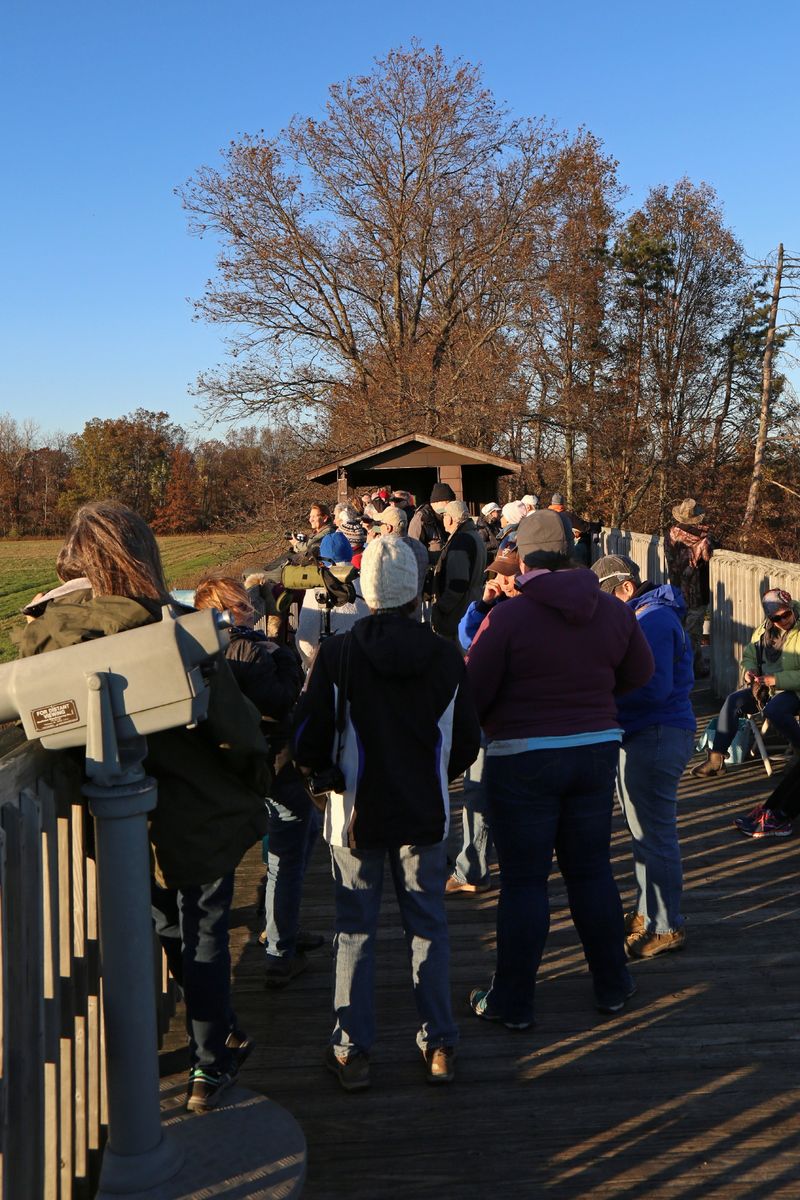
Got questions about cranes? Saturday evenings can help.
The International Crane Foundation staffs the viewing tower to answer them.
The program runs from 5:30 p.m. to 7:30 p.m. ET.
Dates run from October 17 through December 19, 2026. Halloween and Thanksgiving weekends are skipped.
It’s a smart time to learn what you’re seeing. Why do they trill?
How do they pick roosts? Ask away.
Whooping cranes, an endangered species, are sometimes spotted here as well. Staff may help you tell the difference.
Those sightings are occasional, so keep your eyes open.
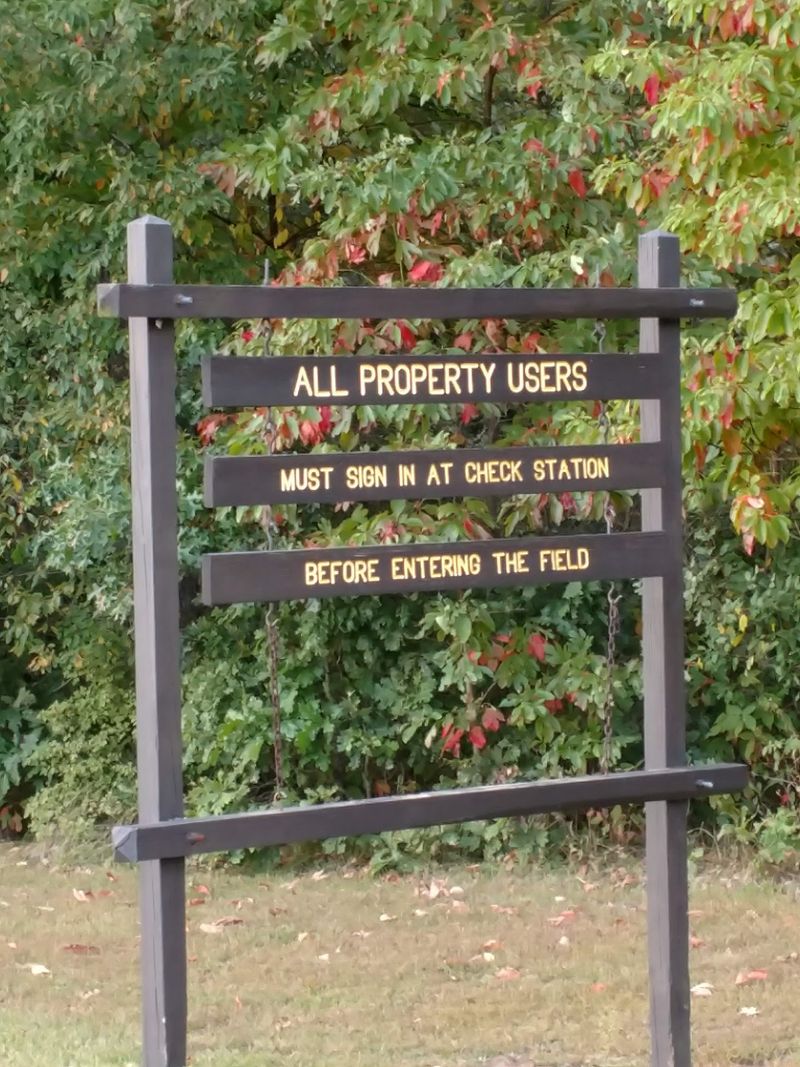
A free sign-in is part of the visit. Hunters, range users, and dog runners must get a one-day access permit before entering the field, and all other visitors are encouraged to get one.
Drop it in a self-service booth, a drop box, or the property office before you leave.
The office is open Monday through Friday from 8 a.m. to 3:30 p.m. ET.
The grounds themselves are open 24 hours a day, seven days a week.
Admission is free. That’s hard to beat for this much wildlife.
Plan The Trip To 5822 Fish and Wildlife Lane
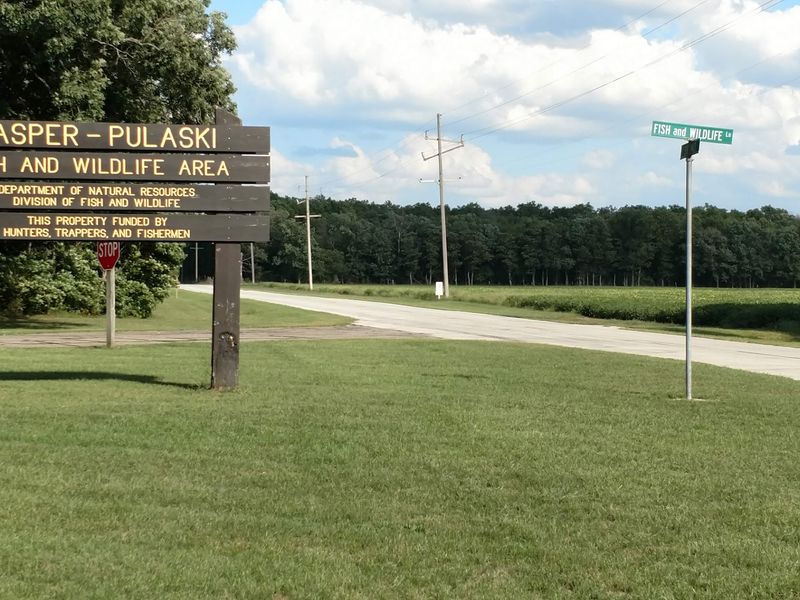
The property office is at 5822 Fish and Wildlife Lane, Medaryville, IN 47957. That’s the main hub.
Start there for permits and information.
Restrooms with flushing toilets are open 24 hours a day at the headquarters building. During crane season, portable toilets also sit at the observation area.
Roughly October to December is when they’re out.
Medaryville sits in Indiana’s northwest corner. The area is rural and open.
Expect wide fields and big skies.
Food isn’t sold at the property. Pack a lunch or snacks.
A shaded picnic area is near the Goose Pasture Viewing Area.
Skip bare ground and tall grass if bugs bother you. Insect repellent can be smart earlier in the season.
Layers are smart later.
Dress for weather, and wear orange if hunting is underway. Check the hunting dates before you go.
Good prep makes the evening easy.
Bring binoculars and a camera. A folding chair can help, too, for longer waits.
Trails, Ponds, And More Than Birds
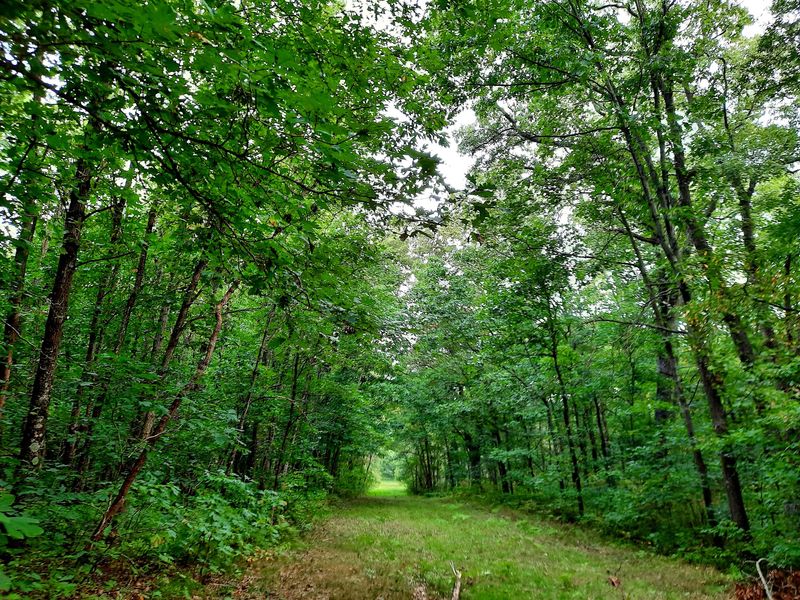
Cranes steal the spotlight, but the land offers plenty more. There are no designated hiking trails, but fire lanes wind through the property.
Anglers can fish for catfish, bluegill, and largemouth bass. Spots include Ryan Ditch, gravel pits, and ponds.
Bring your own gear.
People also gather berries, mushrooms, and nuts here. It’s a classic outdoors perk.
Follow the area rules when you do.
There’s a designated dog training area as well. Dog owners with working breeds may like that.
It’s one more way the property serves different folks.
Hunting is part of the story. Deer, quail, rabbit, squirrel, snipe, dove, sora rails, woodcock, waterfowl, and wild turkey are listed.
Hunting began here in 1958.
The area became a fish and game area in 1965. Some families have hunted here for generations.
That long tradition shows how much the place matters.
Target shooting is allowed only at the property’s established ranges, and wetland trapping is available by drawing only.
Gear Up For Better Crane Watching
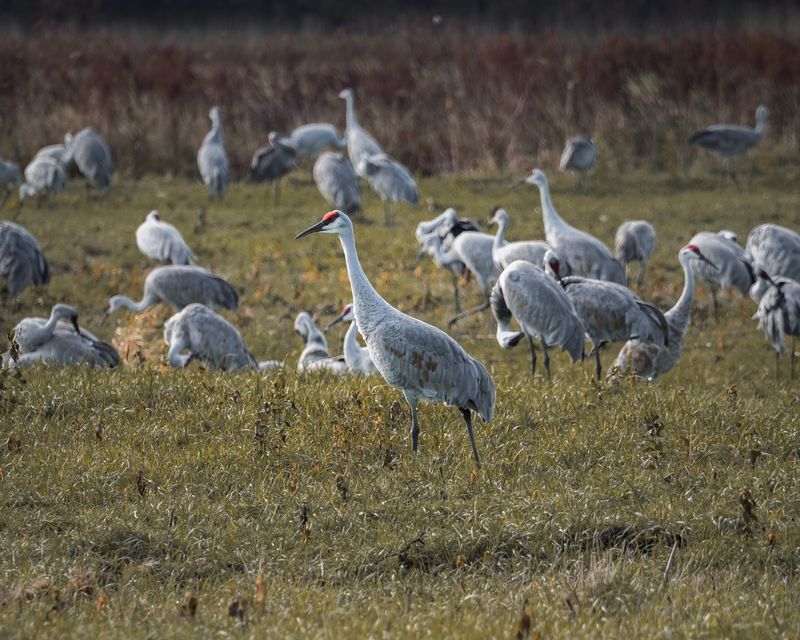
A good crane night starts with the right gear. Binoculars top the list.
A spotting scope is even better.
Free scopes are on the platform. They’re handy, but you may wait for a turn.
Your own pair keeps you flexible.
Warm layers matter. Late fall evenings in northwest Indiana get cold fast.
Gloves and a hat help a lot.
Bring a camera with a zoom lens if you like photos. The birds often fly overhead near sunset.
Silhouettes against the sky make striking shots.
Patience pays off. The cranes may feed in nearby fields at first.
Then they glide in as the light fades.
Be a good guest. Stay in public viewing areas and keep noise low.
Don’t approach birds or push them to fly.
Take trash home with you too. That keeps the land nice for the next crowd.
Simple habits protect the show.
Make It A Bigger Day Out
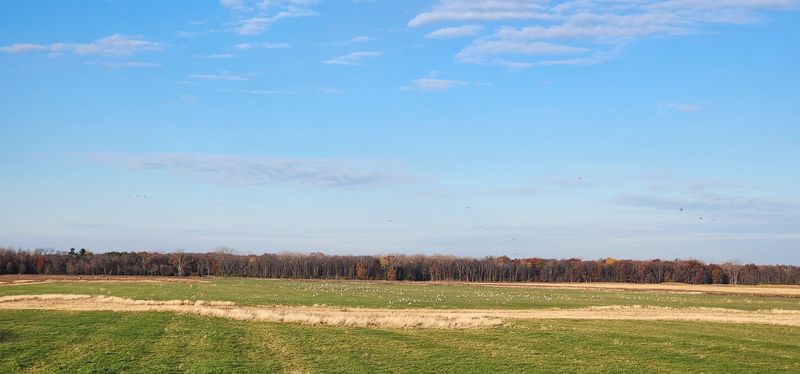
Daytime leaves room for other stops nearby. Kankakee Sands Nature Preserve is within reach and is known for bison.
Fair Oaks Farms is another option.
A short drive south brings you toward Monon. The Whistle Stop Restaurant there has a train memorabilia museum. t’s a fun stop before the evening crane flights.
Back at the crane area, you can also drive country roads south of the viewing zone. Cranes sometimes feed near those roads.
Slow down and watch for birds crossing.
Go early in the season for smaller crowds. Late fall brings the biggest flocks.
Both have charm.
The area works for families. Kids can try the crane quiz questions along the trail.
Answers are posted at the end.
Jasper-Pulaski Fish & Wildlife Area gives Indiana something special. Tens of thousands of cranes, free entry, and a great sunset.
Go before the peak passes, and bring a jacket.