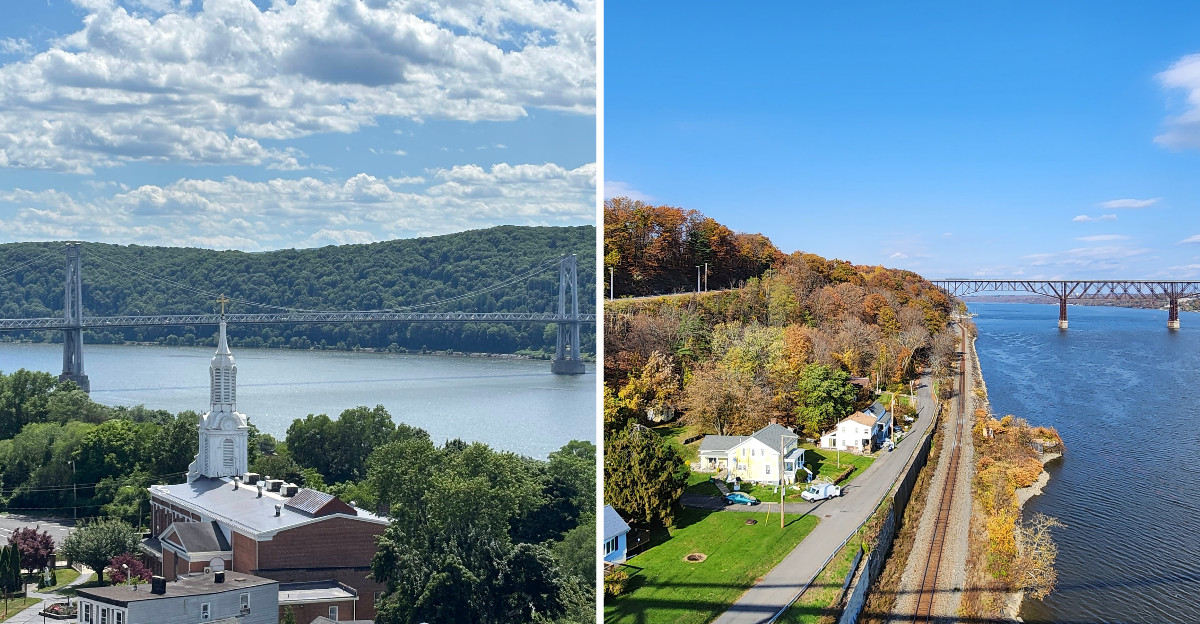
A freight train can rumble along the riverbank about 212 feet below your sneakers. Meanwhile, you’re strolling across an old railroad bridge that now carries walkers, runners, and bikes instead of boxcars.
The span stretches 1.28 miles from gate to gate. It’s billed as the world’s longest elevated pedestrian bridge, which feels like a pretty big brag for a quiet morning walk.
The path is flat and paved, so nobody needs mountain gear to earn these views. On a clear day, the Catskills sit to the north and the Hudson Highlands roll off to the south. I appreciate that the reward shows up without a single uphill switchback.
This corner of New York took a burned-out rail bridge and gave it a second act. So how exactly does a freight bridge become everyone’s favorite stroll?
You Will Feel Taller Than The Treetops The Second You Step On
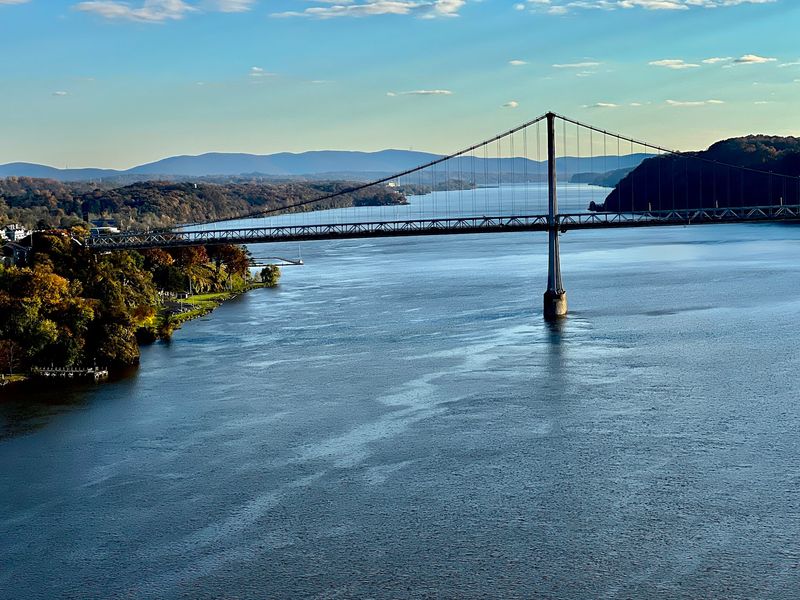
Walkway Over the Hudson State Historic Park puts you about 212 feet above the river. That’s higher than many ships could ever dream of reaching.
The bridge links the city of Poughkeepsie in Dutchess County with Highland in Ulster County. From gate to gate, it covers 1.28 miles of smooth, flat pavement.
That flat part matters more than it sounds. You get mountain-sized views without mountain-sized effort, which is my favorite kind of deal.
Walkers, joggers, cyclists, and leashed dogs all share the wide deck. The space feels roomy, so a slow stroll and a brisk run can happen side by side.
Look north, and the Catskill Mountains rise on the horizon. Turn south, and the Hudson Highlands fold into the distance like rumpled green blankets.
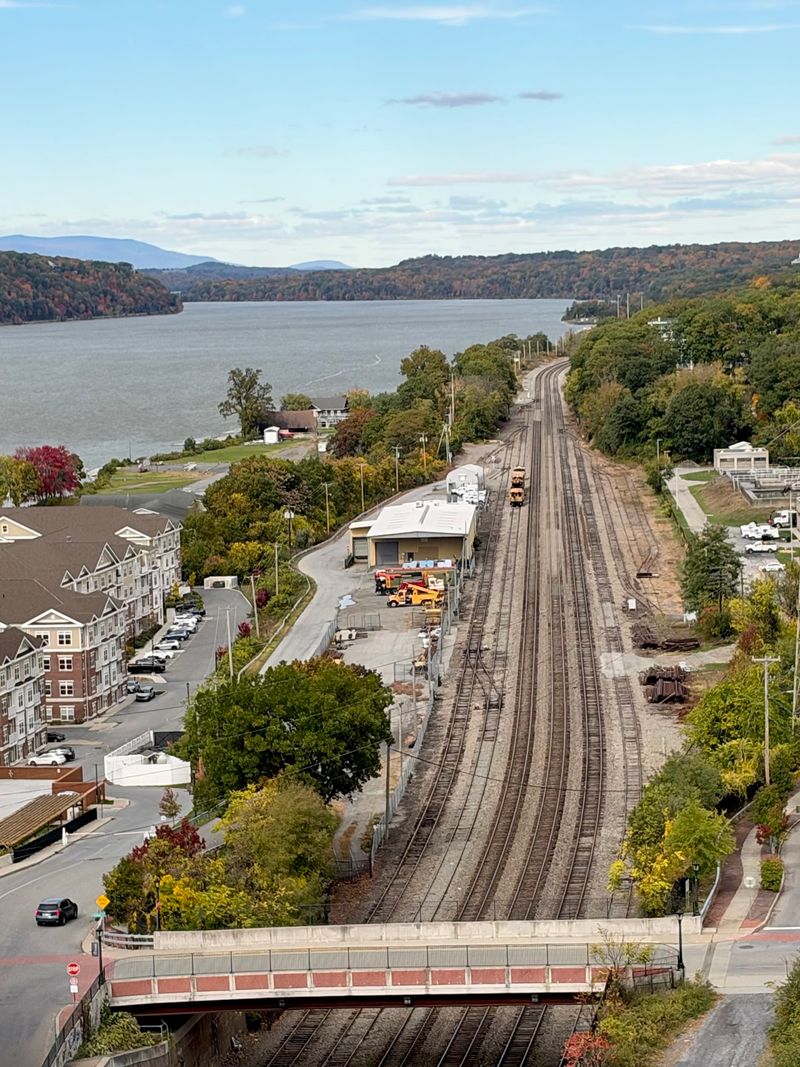
The river itself steals plenty of attention too. Boats look like bath toys from up here, and trains roll along the shoreline far below.
Plan for roughly a mile and a quarter each way if you cross and return. Comfortable shoes are a smart call, and so is a jacket, since wind loves a bridge this high.
Even a short walk to the middle and back delivers the big wow.
Trains Ruled This Bridge Long Before Your Sneakers Did
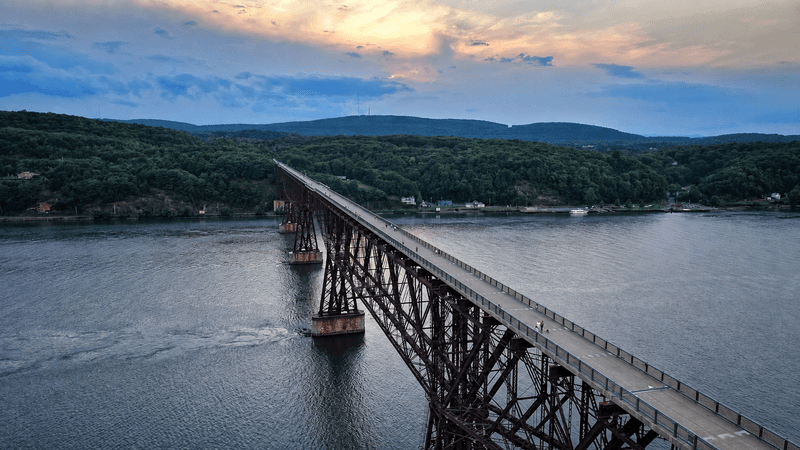
Back on January 1, 1889, this span opened as the Poughkeepsie-Highland Railroad Bridge. It carried a double-track railway and was called an engineering marvel.
At the time, it even ranked as the longest bridge in the world. Not bad for a project finished before cars were a common sight.
The bridge became an important link in the Maybrook Line. Freight and passengers crossed the Hudson here for decades.
Then things changed on May 8, 1974. A fire damaged about 700 feet of decking, and trains stopped using the bridge for good.
For years afterward, the giant steel structure just sat there. It stayed tall and stubborn, waiting for someone to notice its potential.
Knowing this history adds real depth to your walk. Those massive steel supports were built to hold heavy locomotives, so a crowd of strollers is basically a light snack.
Keep an eye out for interpretive signs along the path. They explain the bridge’s past and its engineering in quick, readable bites.
It’s a fun reminder that you’re walking on a piece of New York railroad history. The trains left, but the story stayed put.
A Rusty Leftover Got The Comeback Story Of The Century
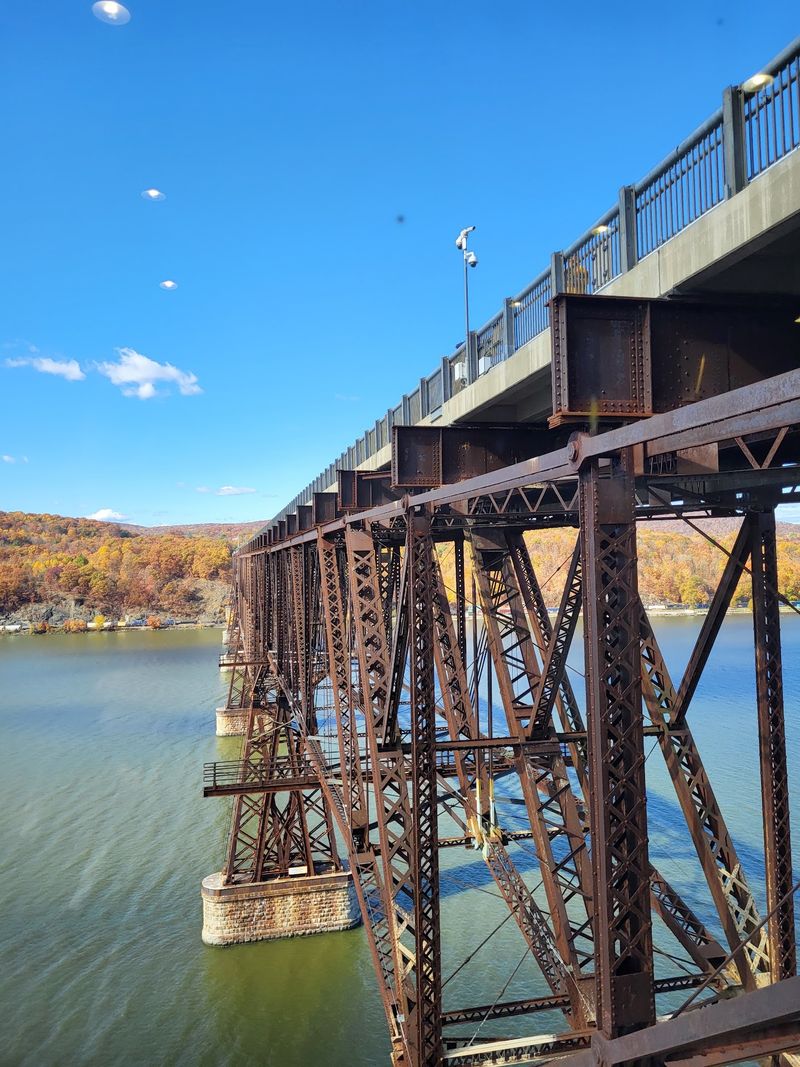
Plenty of old bridges simply fade away. This one had a group of determined people who refused to let that happen.
In 1998, the nonprofit Walkway Over the Hudson acquired the abandoned structure. Their goal was bold and simple: turn the unused rail span into a place for people.
Years of work and restoration followed. Finally, on October 3, 2009, Walkway Over the Hudson State Historic Park opened to the public.
The timing was perfect. The opening tied into celebrations marking 400 years since Henry Hudson sailed up the river in 1609.
That same year, the bridge was named a National Historic Civil Engineering Landmark. It’s quite a glow-up for something that sat unused for decades.
Today, the New York State Office of Parks, Recreation and Historic Preservation manages the park. A nonprofit friends group helps support it too.
I love a good second-chance story, and this one is hard to beat. Every step across the deck exists because people chose to save something instead of tearing it down.
Think of that the next time someone calls an old building hopeless. Sometimes it just needs a new job.
Take The Glass Elevator For A Dramatic Grand Entrance
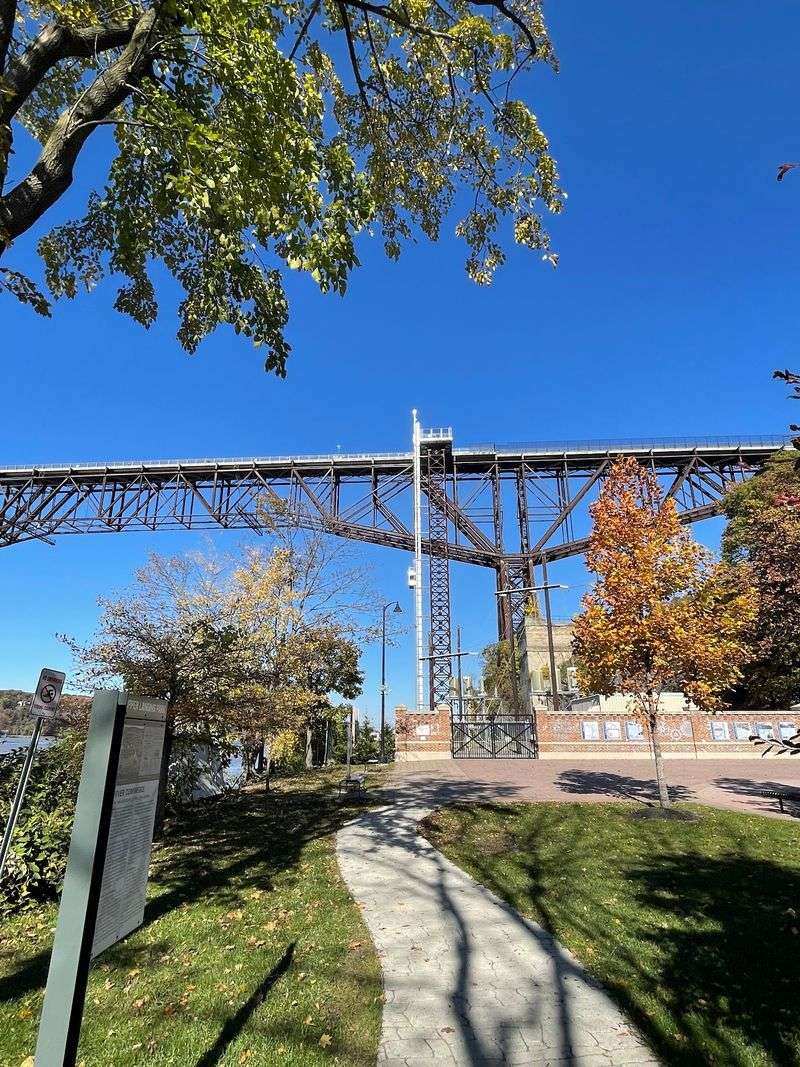
Most bridges make you start at one end. Here, a 21-story glass elevator normally provides access from the riverside, but it is currently closed for maintenance.
The ADA-compliant elevator sits at Upper Landing Park, reached from 83 N. Water St. in Poughkeepsie, NY. Parking for this entrance is available at the nearby Poughkeepsie Train Station.
Prefer the classic approach? The main east-side parking and entry are at 61 Parker Avenue, Poughkeepsie, NY 12601.
Over on the Highland side, the west approach is at 87 Haviland Road, Highland, NY 12528. Since January 1, 2025, the Town of Lloyd charges for parking in lots and marked spaces along Haviland Road.
Here’s a tip worth remembering. Pay close attention at the parking kiosk and keep your receipt so you know the payment went through.
The park generally opens at 7 a.m. and closes at sunset. Weather and special events can change the schedule, so check before heading out.
Arriving by train is a sweet option for New York visitors. The station sits close to the elevator, so you can skip driving altogether.
Either way, you’ll be up in the breeze before long.
Restrooms, A Free Ride, And Even A Dog Fountain
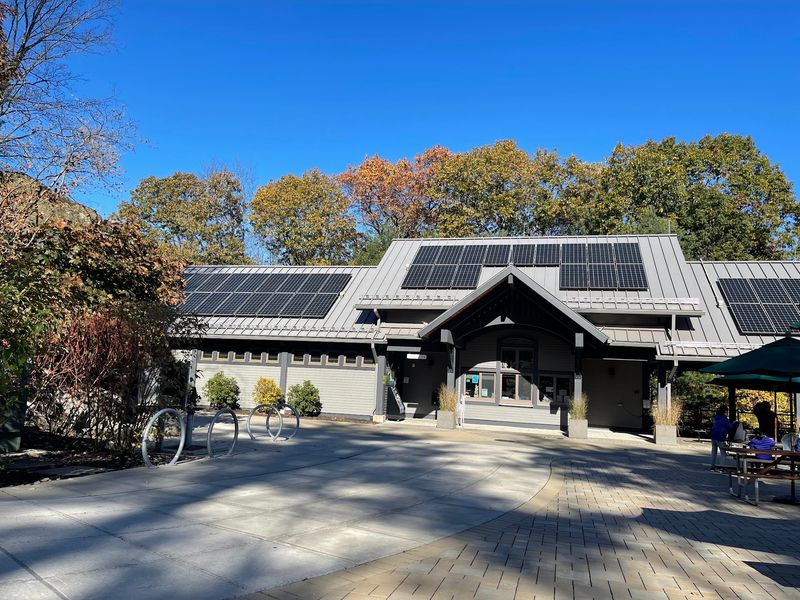
Good news for anyone who plans walks around bathroom breaks. Indoor restrooms sit inside the welcome centers on both the Poughkeepsie and Highland sides.
They include accessible stalls and baby-changing stations. That’s a relief for families hauling strollers and snacks.
The Dutchess Welcome Center on the Poughkeepsie end opened in 2019. It offers bike racks, tourist information, and an outdoor patio with seating.
Dogs get their own perk there too. A dog-friendly water fountain keeps four-legged hikers happy after the crossing.
Not everyone can comfortably walk 2.5 miles round trip. An all-electric, wheelchair-accessible tram seats 12 people and runs during select hours.
The free tram operates seasonally from early April through late November, generally seven days a week from 10 a.m. to 3:30 p.m., weather permitting. The tram takes approximately 30 to 45 minutes to cross the bridge in one direction, with a full round trip taking longer.
Wheelchairs are also available to borrow at pavilions near the gates on both ends. That thoughtful touch opens the views to far more people.
I appreciate a park that plans for grandparents, toddlers, and tired legs alike. Everyone deserves a turn at the railing, staring down at the river and grinning.
Bring Binoculars Because The Sky Has Its Own Show
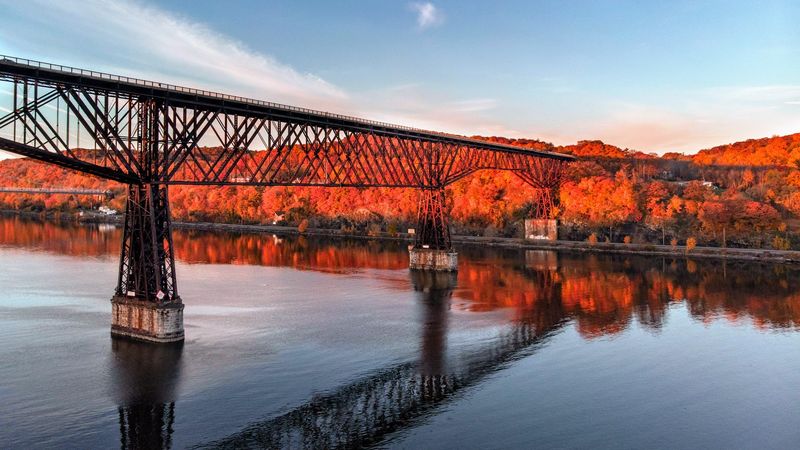
Bald eagles and red-tailed hawks sometimes cruise past at eye level. Few bridges can offer that kind of bird-watching seat.
Raptors are especially worth watching for during migration seasons. Having binoculars handy can turn a quick walk into a nature hunt.
Meanwhile, the scenery keeps changing all year. Summer brings deep greens, autumn paints the hills in warm colors, and winter adds a crisp, sparkling look.
The 360-degree views mean there’s no bad side of the bridge. Pick a spot along the railing and just slowly turn around.
Curious minds get plenty to chew on too. Signs along the path cover the bridge’s history, its engineering, and the ecology of the Hudson Valley.
There’s also a mobile audio tour, sometimes nicknamed the Talkway Over the Walkway. You can access it through a free phone tour or QR-coded signs.
That means your phone becomes a pocket tour guide. Pop in an earbud and learn while you wander.
Honestly, the hardest part is choosing between looking up at the birds and looking down at the river. Good luck picking just one.
Your Bike Ride Doesn’t Have To End At The Gate
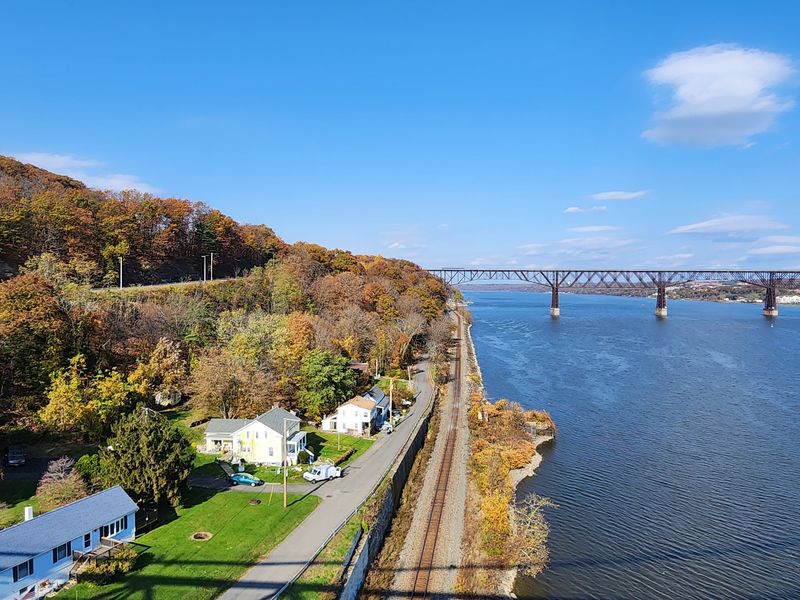
Cyclists, take note. This bridge is a junction, not a dead end.
On the east side, it connects to the William R. Steinhaus Dutchess Rail Trail. On the west side, it links up with the Hudson Valley Rail Trail.
Together, these paths form part of New York’s huge Empire State Trail. That means miles of car-free riding in both directions.
You could easily turn a simple crossing into a half-day adventure. Ride out along a rail trail, cross the river, and loop back with legs pleasantly tired.
Runners and walkers benefit too. Former rail routes stay gentle and level, so they’re friendly for all skill levels.
One word of caution helps everyone. Electric bikes can move fast on the bridge, so stay aware and keep to your side.
Bike racks at the Poughkeepsie welcome center make it easy to park and wander on foot. Mixing both styles gives you the best of everything.
The Walkway Over the Hudson might be the star, but the trails around it are a terrific supporting cast. Pack water and see how far curiosity takes you.
Fireworks From 212 Feet Up Hit Differently
Fireworks over the Hudson are pretty great from the shore. From a bridge high above the water, they become unforgettable.
The July 4th Fireworks Spectacular ranks among the park’s big celebrations. It turns the river into a giant stage with a sky-high audience.
The fun keeps going through the calendar. Holiday on the Walkway brings seasonal cheer, and First Day Hikes kick off each new year.
Summer adds Twilight Summer Concerts and Movies Under the Walkway. Music and films with a historic bridge overhead? That’s a pretty memorable backdrop.
After dark, solar lights and color-changing LED lights glow along the overlooks. They give the old steel a playful, modern sparkle.
Event details and dates can shift each year. Checking the park’s calendar ahead of time saves you from showing up a day late.
I love that a former freight route now hosts concerts and holiday gatherings. It’s become a community living room, just with better views and fewer couches.
If you can only visit once, timing it with an event adds bonus magic. If you visit twice, try day and night.
Save Energy For The Treasures Waiting Nearby
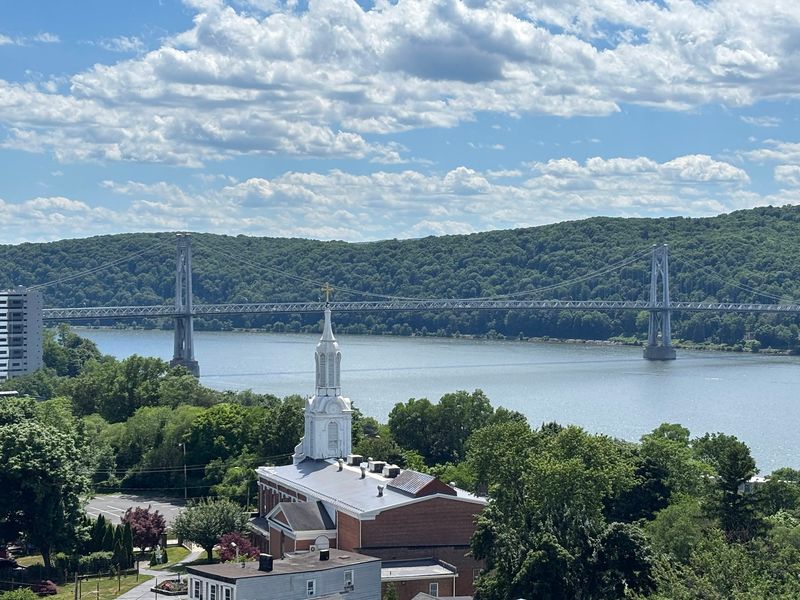
Crossing the river is just the opening act. The Hudson Valley around Walkway Over the Hudson State Historic Park is packed with places to explore.
On the Poughkeepsie side, Locust Grove sits a short drive away. It was the estate of Samuel Morse, the inventor famous for the telegraph and Morse code.
Art fans can head to the museum at Vassar College. It’s an easy way to add a little culture between walks.
Presidential history sits close by too. The Franklin D. Roosevelt Presidential Library and Museum and the Home of FDR National Historic Site are both in the region.
Across the river in Highland and nearby towns, farm country takes over. Seasonal u-pick farms make a tasty reward after all that walking.
Planning a full day in New York’s Hudson Valley is easy from here. Start on the bridge in the morning, then branch out wherever your interests lead.
The bridge also makes a great anchor for return trips. Each season brings a new reason to come back and cross again.