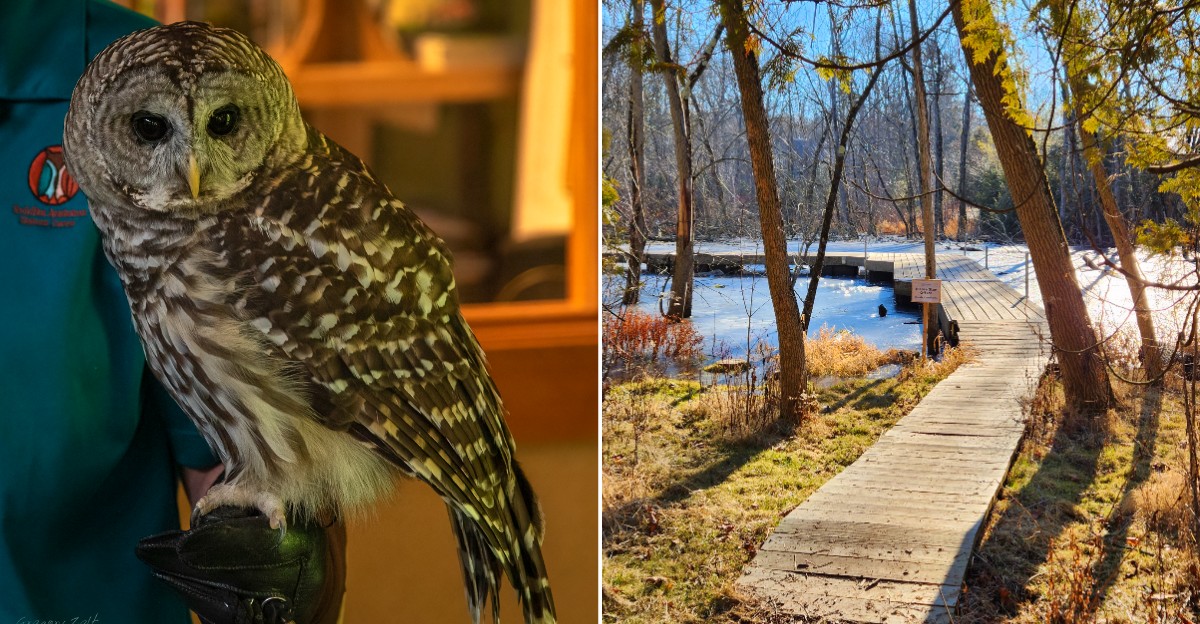
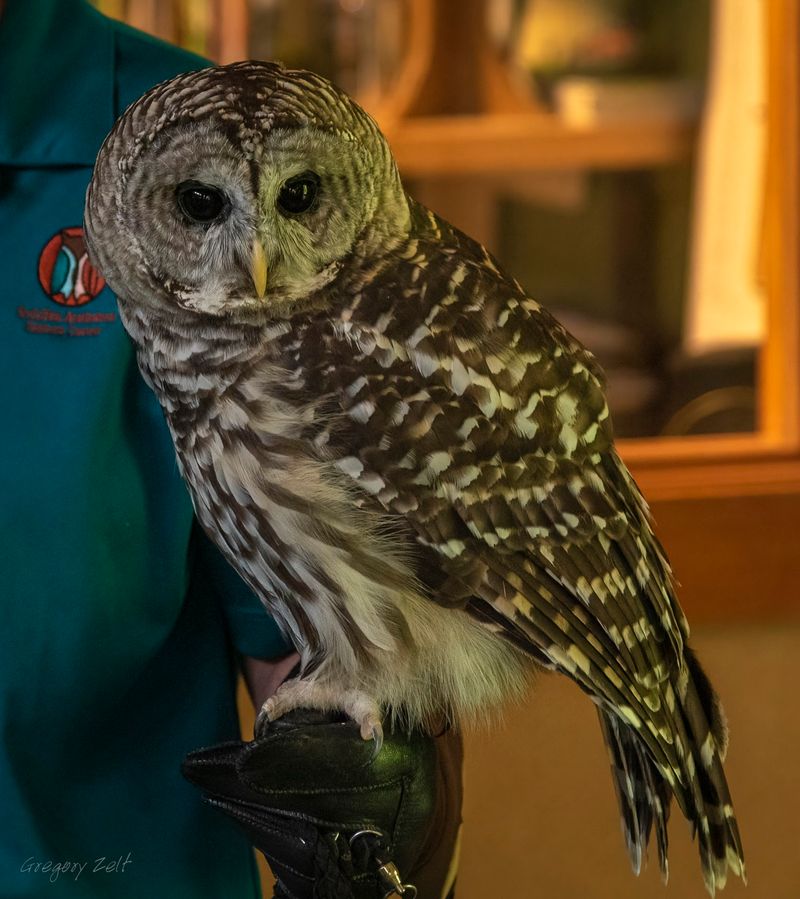
A Barred Owl named Perseus has a special connection with humans. After spending nearly two weeks around humans as a young owl, she became too accustomed to people to return safely to the wild.
He has plenty of company. Sixteen non-releasable birds live here in permanent care, including eagles, hawks, falcons, a Turkey Vulture, and one very clever American Crow.
I love it when a rescue story becomes a teaching moment. Every bird here has a reason it can’t go back to the wild, and staff share those stories up close.
Then there are the trails, the bluffs, and a tower above Lake Michigan. All of it sits just minutes from a busy Wisconsin city. So who’s ready to meet a bald eagle face to face?
Sixteen Feathered Survivors Are Ready To Meet You
Nicco the Broad-winged Hawk had a rough day with a car. Now he helps teach visitors at Schlitz Audubon Nature Center, along with fifteen other resident birds.
The Raptor Program was established in 1987, and it still steals the show. Every bird here is non-releasable, which means it can’t survive in the wild.
Some birds were injured, like Nicco. Others imprinted on humans, which basically means they got a little too comfortable with people.
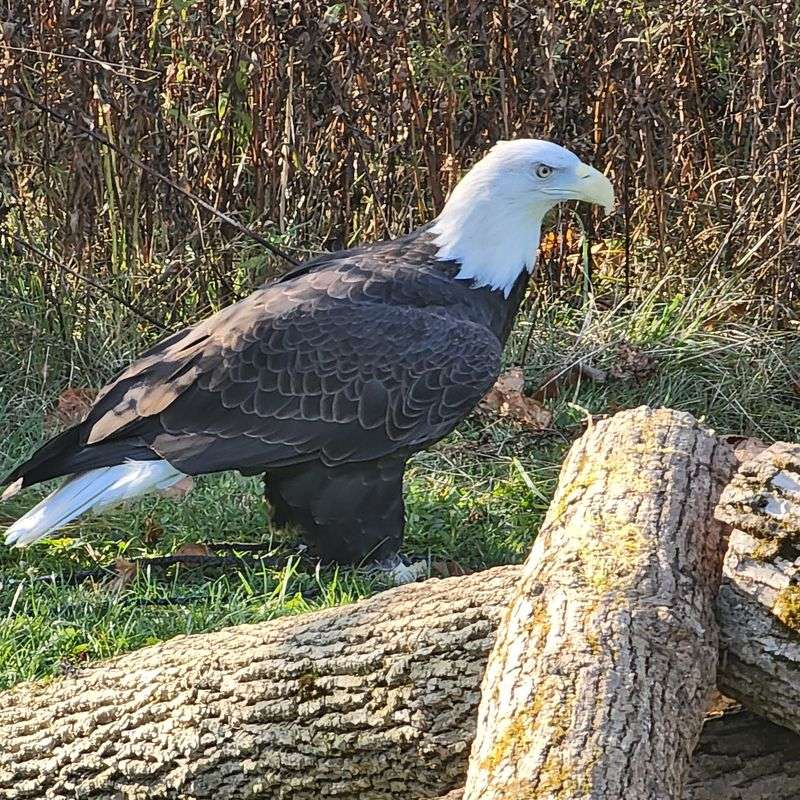
Valkyrie the Bald Eagle is a great example. She learned to connect humans with food, so wild life stopped making sense for her.
The lineup includes eagles, hawks, owls, and falcons. A Turkey Vulture and an American Crow round out the crew, and both deserve more fan mail.
Every bird brings a true story about what can go wrong in nature. That makes the visit feel personal instead of like a quick look at pretty feathers.
Kids tend to remember names like Perseus and Valkyrie. Adults usually walk away thinking harder about windows, roads, and feeding wildlife.
Plan to ask questions. The staff and volunteers know these birds as individuals, and their stories are the real treasure here.
Weekend Afternoons Belong To The Birds
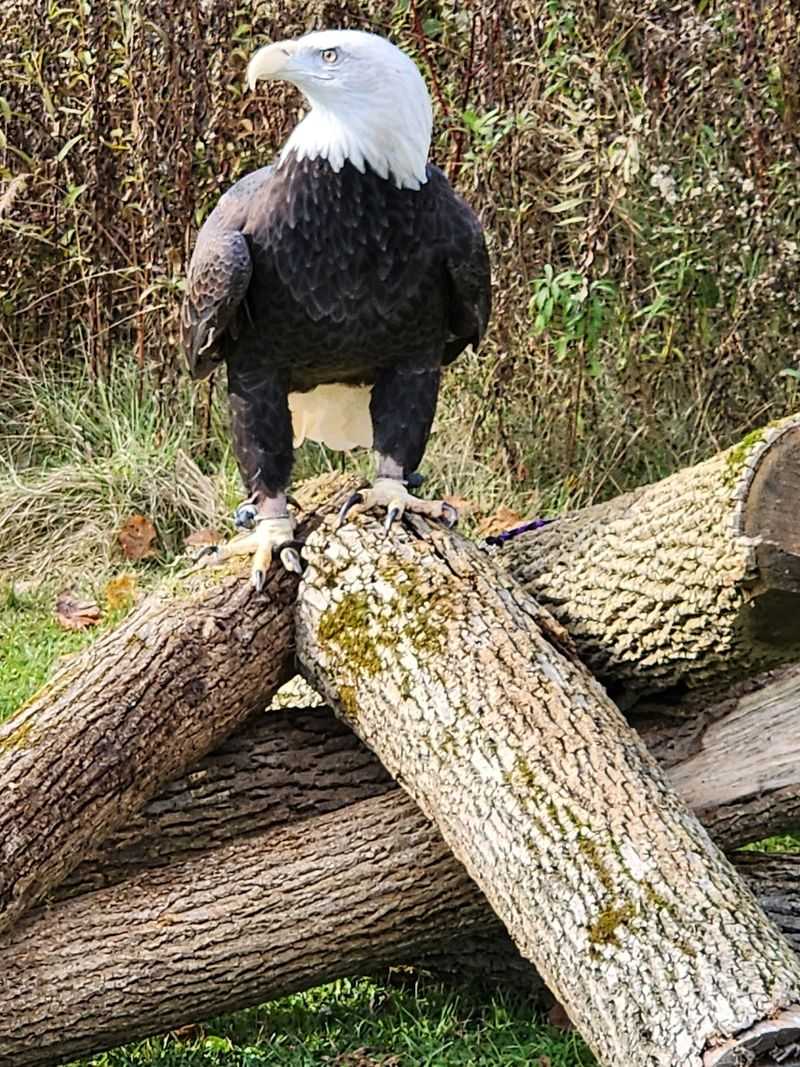
Saturday and Sunday at 1:00 pm is a time worth circling on your calendar. That’s when Raptor Encounters usually happen at the Visitor Center.
The session runs for about an hour. Handlers bring out resident birds and share how each one ended up in permanent care. Seeing a hawk’s talons from a few feet away changes your sense of scale fast. Those feet are built for business, and you’ll notice it.
Timing matters, so build your day around this hour. Hike in the morning, then head to the Visitor Center before 1:00 pm. Bring a camera, but bring curiosity too. The best moments often come from simple questions about what a bird eats or how it sees.
Families with young kids should snag a spot early. Little ones do better when they can see clearly without craning around taller grownups. Special raptor events also pop up during the year. Checking the center’s calendar before your trip is a smart move.
And here’s a fun twist. These birds can even be booked for special events and business meetings, which beats another slideshow every single time.
Horses Grazed Here Long Before The Hawks Arrived
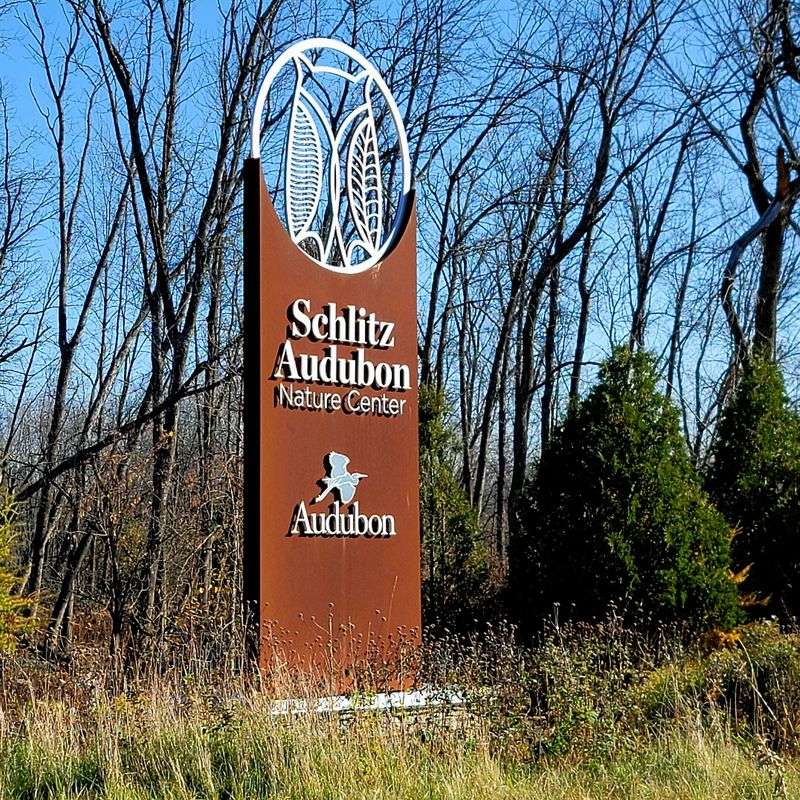
Long before any owl had a fan club here, this land fed draft horses. From the late 1800s, it served as Nine Mile Farm, a pasture for a famous Milwaukee company’s horses.
Earlier still, the Menominee people lived on this land until 1836. That deeper history matters, and it’s part of the full story.
In 1971, the Schlitz Foundation donated all 185 acres to the National Audubon Society. The goal was simple and bold: create a place for environmental learning.
Schlitz Audubon Nature Center opened to the public in 1973. One year later, bird surveys began, and they’ve been building valuable data ever since.
Mystery Lake came along in 1987 after crews excavated it. The Raptor Program followed in 1987, adding another chapter to the center’s history.
The center marked its 50th anniversary in 2021. That’s half a century of teaching people to slow down and pay attention.
Knowing this history makes the trails feel different. You’re walking across a former horse pasture that became one of Wisconsin’s favorite outdoor classrooms. Not bad for a farm. Those horses would probably approve of the view.
Six Miles Of Trails Pack In A Surprising Amount Of Scenery
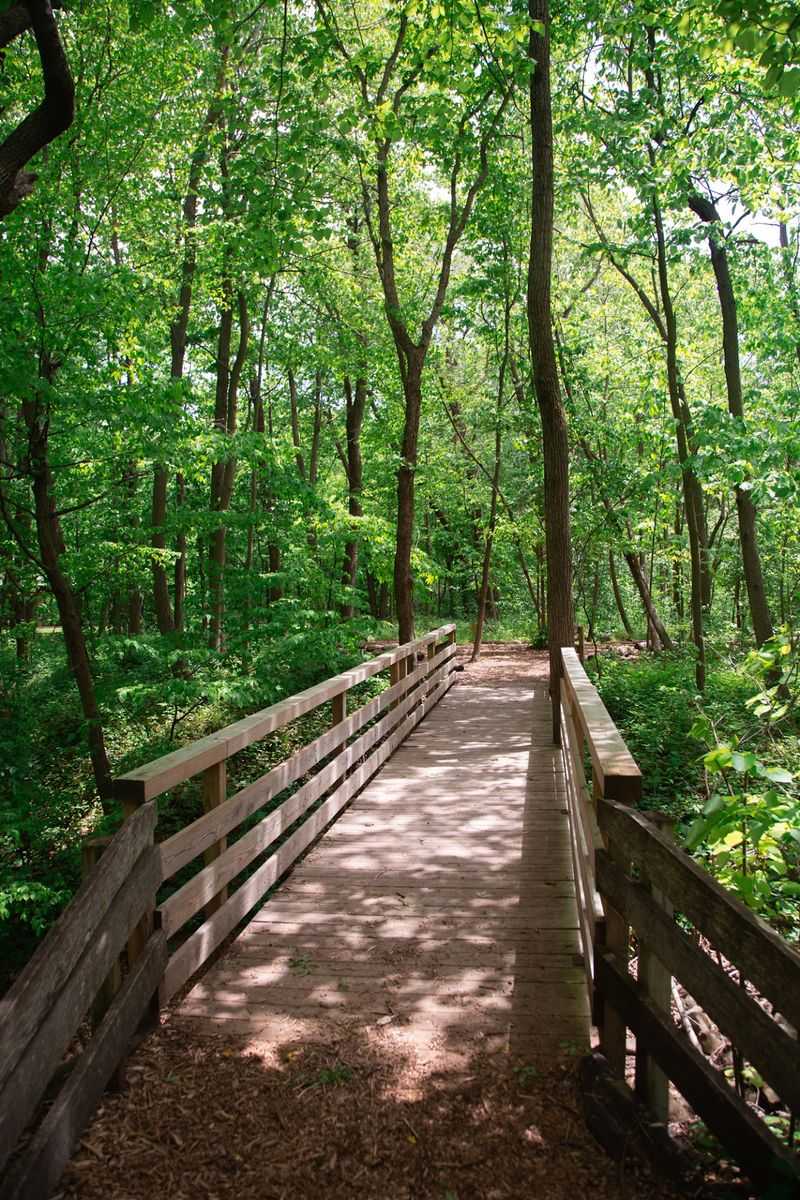
Forest, wetland, prairie, ravine, bluff, and beach all fit inside 185 acres. That variety is the real magic of these six miles of trails. You can start in shady woods and end up staring at Lake Michigan. The shift happens quicker than you’d expect.
Restored prairies add color and texture in warmer months. Wetlands bring a quieter mood, with ponds and wildlife tucked along the edges.
Mystery Lake is a favorite stop for many hikers. Its boardwalk makes the walk easy and gives you a good look at the water. The ravines and bluffs bring a bit of drama. They also remind you how Lake Michigan shaped this corner of the state.
Most loops are manageable for casual walkers. You don’t need fancy gear, just comfortable shoes and a little patience for wildlife sightings.
Grab a trail map at the Visitor Center before heading out. It helps you plan a route that fits your energy and your schedule. Go slow. Deer, turtles, and birds tend to show up for people who stop talking for a minute.
Climb Sixty Feet For A Lake Michigan Payoff
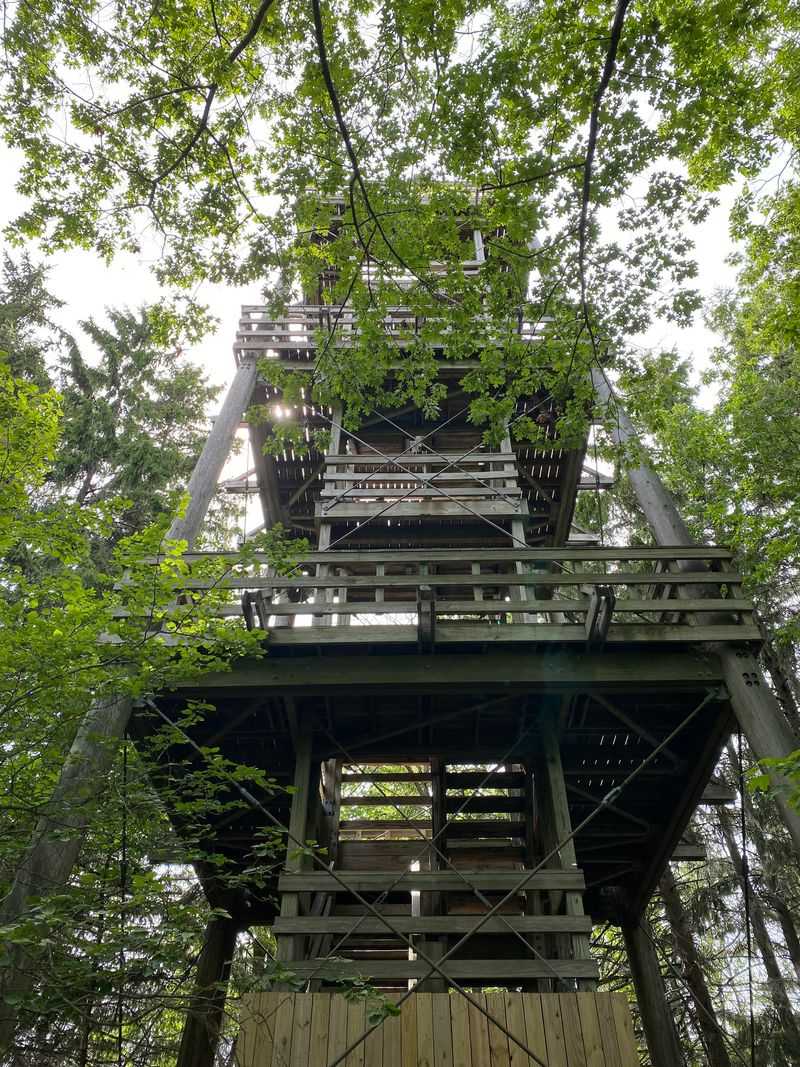
Sixty feet doesn’t sound like much until you’re at the top. Then Lake Michigan stretches out in front of you, and the whole property spreads below.
The observation tower is one of the most popular spots at Schlitz Audubon Nature Center. It’s easy to see why once you reach the top.
Treetops roll out in every direction. On a clear day, the lake looks huge and blue, almost like an ocean that forgot the salt. Birders love the tower too. During migration, a high view can help you spot flying birds you might miss from the ground.
Bring binoculars if you own a pair. They turn distant specks into hawks, gulls, and maybe something rare enough to brag about. Photographers should consider timing. Morning and late afternoon light can add warm color to the trees and water.
Plan your climb as a reward in the middle of a hike. Your legs earn a break, and your eyes earn the best view on site. Just hold onto your hat. Lakeside breezes have opinions.
A Green Building With A Bird Buffet Out Back
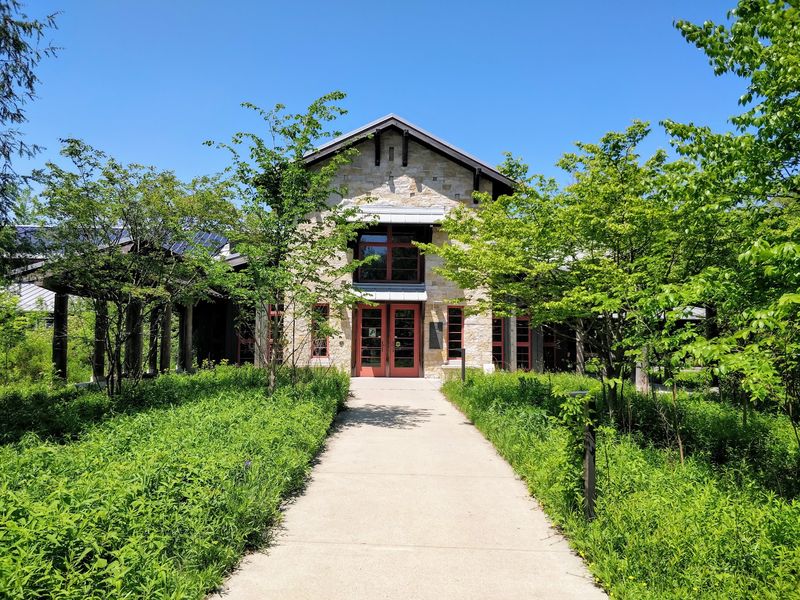
Gold LEED certification isn’t something every nature center can claim. The Dorothy K. Vallier Environmental Learning Center earned it after opening in 2003.
The Kubala Washatko Architects designed the building. It’s filled with natural light, which feels just right for a place devoted to the outdoors.
The Great Hall is the showpiece. A two-story beamed ceiling rises overhead, and a stone fireplace anchors the room. Now for the fun part. Big windows look out on the Feeder Grove, where local and migrating birds stop for snacks.
It’s basically bird television, and nobody needs a remote. Chilly days make this spot especially appealing. The building also holds classrooms, a Hearth Room, an auditorium, and a conference room. It’s a working hub for programs, not just a lobby.
Accessibility is well covered here. An elevator connects levels, and accessible restrooms are on every floor.
Sensory packs are available on request at the Visitor Center too. That’s a thoughtful touch for visitors who need a calmer, more supported experience. Plus, other animal ambassadors live inside, including reptiles, amphibians, and turtles.
Bird Nerds, You Have Found Your Headquarters
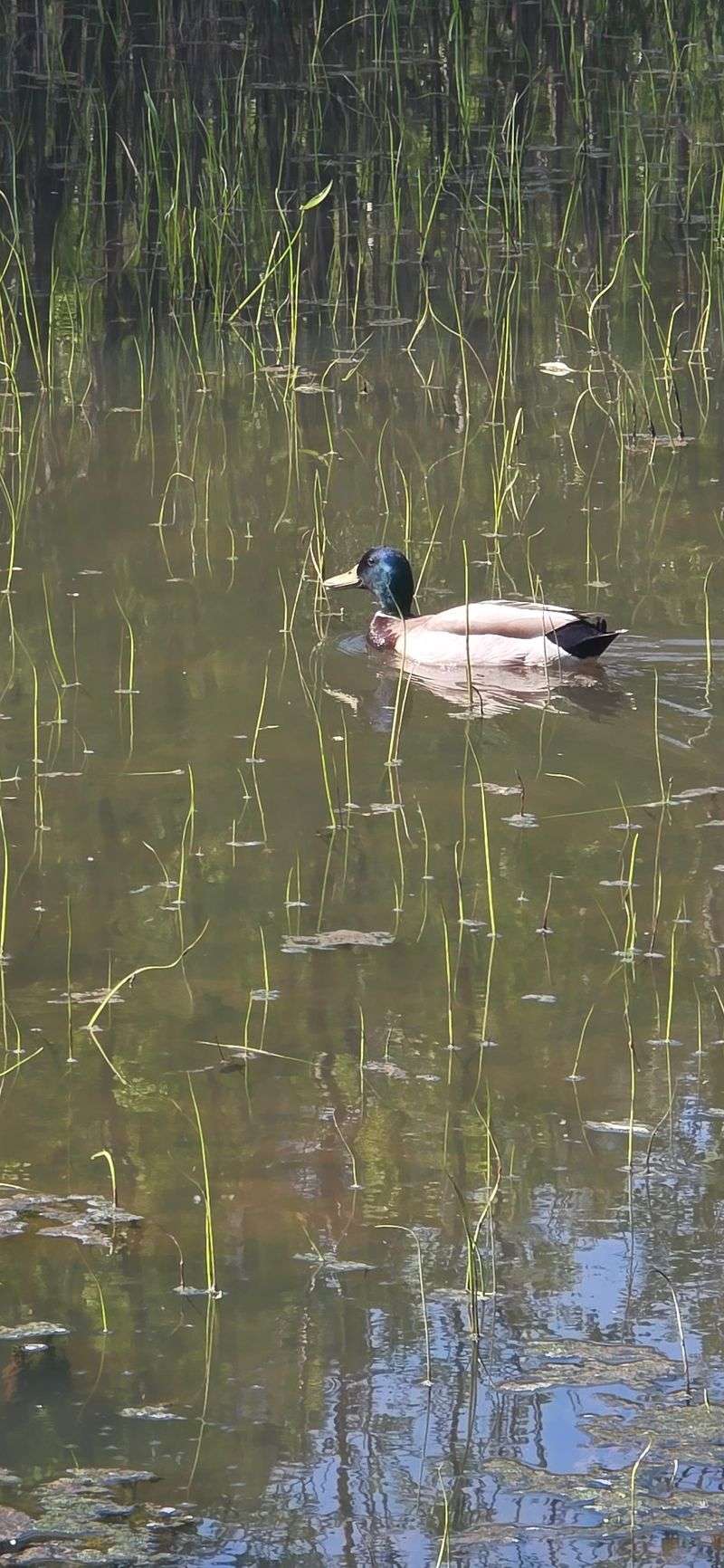
More than 260 species. That’s how many birds have been recorded here since surveys began in the 1970s. Thirty-six of those are warblers. If you know warblers, you just sat up a little straighter.
Schlitz Audubon Nature Center is recognized as an Important Bird Area. That’s a big deal, and it explains why serious birders keep coming back.
Location helps a lot. Sitting along Lake Michigan, the property catches birds moving along the shoreline during migration. Spring and fall are prime seasons for variety. Bring binoculars, a field guide, or a birding app, and prepare to lose track of time.
Beginners shouldn’t feel left out. The Barbara Stover and Susan Bell Birding Academy offers in-person learning for people building their skills.
Guided hikes help too, especially on weekends. Nature ambassadors can point out details you’d walk right past on your own.
Here’s a friendly tip. Stand still near the wetlands for five minutes and listen before you look. Your ears often find birds faster than your eyes do. Patience really is the cheapest birding gear around.
Snowshoes, Summer Camps, And A Gift Shop Worth Browsing
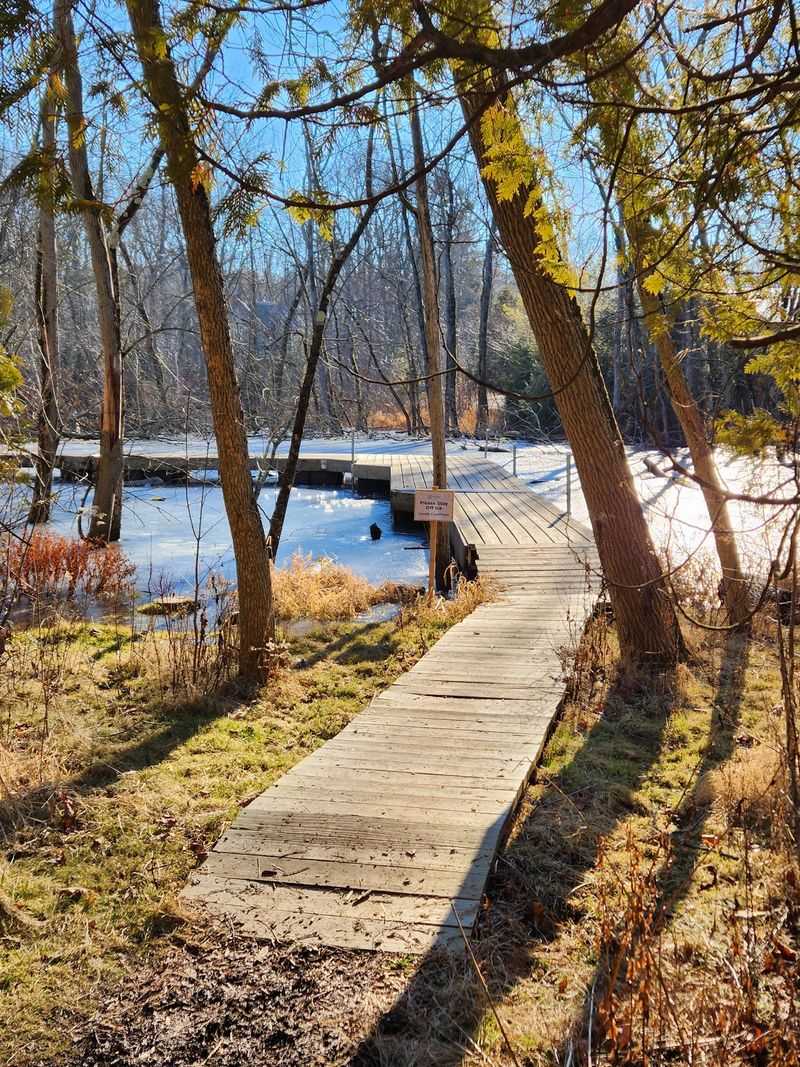
Winter doesn’t shut the fun down here. When snow cooperates, you can rent snowshoes and stomp across the trails. Cross-country skiing is another winter option. Quiet snowy woods might be the most peaceful version of this place.
Warmer months bring a different kind of energy. Summer camps, youth programs, and a Nature School keep young explorers busy and curious.
Adults get their turn too. Workshops and guided hikes offer chances to learn something new without sitting at a desk.
Members get perks, including free snowshoe use. Frequent visitors may want to compare membership options before buying single admissions repeatedly.
Before heading home, swing through the Nature Store. It carries books, logo wear, local artwork, and nature-themed gifts. That’s a great place to pick up a field guide after a good hike. It’s also handy for a birthday gift that isn’t another plastic toy.
The Birding Resource Center adds tools for curious bird watchers. Plan a little extra time, because browsing tends to take longer than expected.
Plan Smart And Get There Early
Trails open daily at 8:30 am and close at 5:00 pm. Early birds get the quietest paths, which feels fitting here. You’ll find the center at 1111 E. Brown Deer Road, Milwaukee, WI 53217. It sits along the North Shore, just a short drive from downtown Milwaukee.
Some maps list the location as Bayside, so don’t panic if your app shows that. You’re headed to the right place. The center closes on Thanksgiving, Christmas Eve, Christmas, and New Year’s Day. Plan holiday outings around those dates.
Visitor Center hours can change for special events, especially on weekends. A quick check before you leave saves disappointment.
Accessible trails cover more than one mile, including the Central Wetlands Loop and Mystery Lake boardwalk. They use crushed gravel or boardwalk surfaces.
Dress for Lake Michigan weather, which can shift fast. Layers are smart in nearly every season in Wisconsin.
Come for the raptors, stay for the tower, and leave room for a slow lakeside walk. Perseus the owl will probably act like she expected you all along.