Thousands of bats pour out of a bat house beside a campus lake around dusk. Alligators share that same lake with the birds.
And yes, this is a top-ranked public university, not a nature preserve.
As it happens, the school behind all this keeps stacking up national praise. U.S.
News placed it No. 7 among public universities in its 2026 rankings. SmartAsset went even further and called it the No. 1 best-value public university in the country.
I’ve always felt that great schools should feel alive, not stuffy. This one has chimes ringing every 15 minutes and a live butterfly rainforest.
It also has a football stadium famous enough to have its own swampy nickname.
So how did a Florida campus with gators and bats end up near the top of every list?
The Rankings That Put Everyone Else On Notice
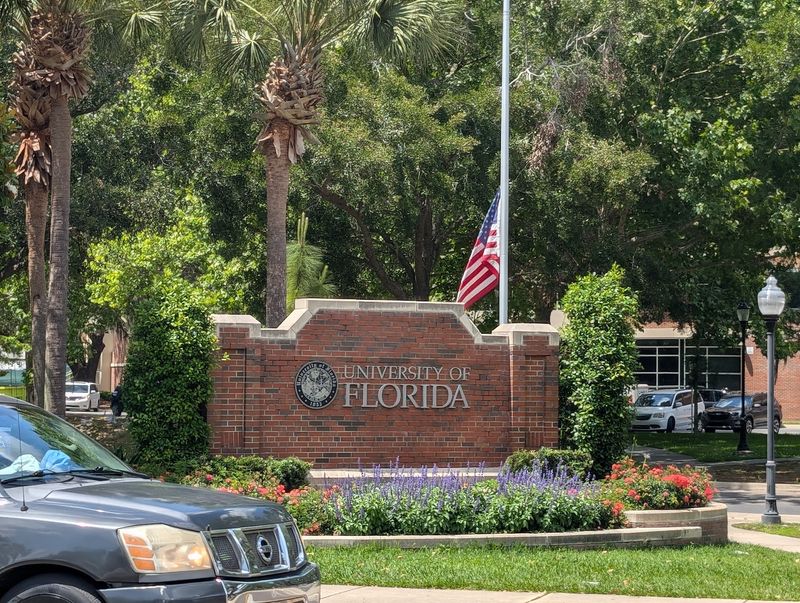
Numbers rarely get exciting, but these ones come close. The University of Florida landed at No. 7 among public universities in the U.S. News 2026 Best Colleges rankings.
That alone would earn bragging rights in most states. Then SmartAsset named UF the No. 1 best-value public university in the nation for 2026.
SmartAsset looked at more than 500 public schools, weighing cost against real results. UF stood out with a 91% graduation rate, which is seriously impressive for a school this big.
Graduates also tend to do well later on. Median alumni earnings sit around $71,000 a decade after enrollment, according to that same report.
Other lists piled on the praise too. Forbes ranked UF No. 5 among public colleges, and TIME placed it No. 4 in its first-ever college ranking.
The newest U.S. News list puts UF at No. 7 among publics.
That makes ten straight years in the national top 10, which is not exactly a lucky streak.
For Florida families, this matters a lot. It means a top-tier education is available without leaving the state, and possibly without draining the savings account.
Every 15 Minutes, Century Tower Reminds You Where You Are
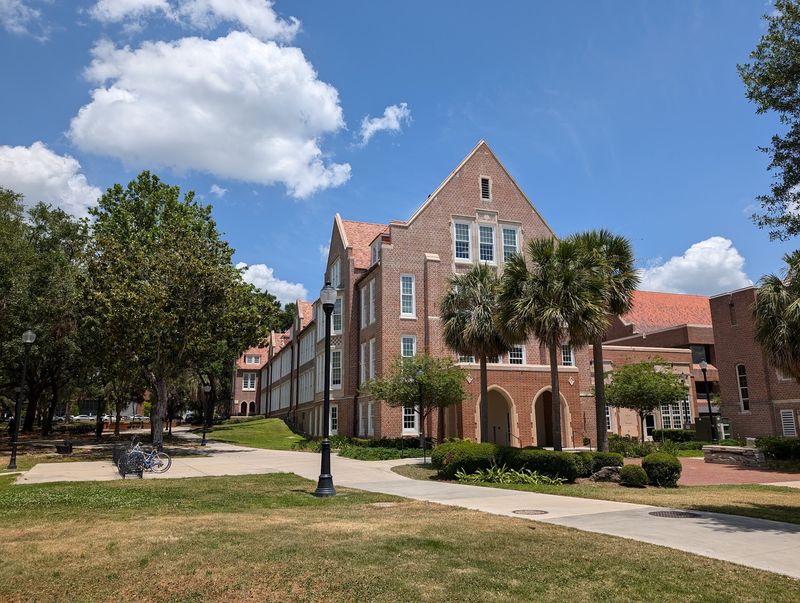
Ding, ding, ding. Every 15 minutes, chimes ring out from Century Tower and float across the University of Florida campus.
It’s one of those details that makes a place feel like home base. Students can practically set their walking pace by it.
The tower stands as one of UF’s most recognizable landmarks. It shows up in graduation photos, campus tours, and probably a few thousand phone wallpapers.
Nearby, the Plaza of the Americas acts as a big central gathering space. It’s the kind of open lawn where campus life naturally spills outdoors.
Smathers Library, also called Library East, sits close to this area too. Its classic look fits right in with the older side of campus.
The University Auditorium adds another stately landmark to the neighborhood. It hosts performances and events throughout the year.
Here’s a tip for visitors who want the full effect. Plan a stroll around this part of campus and listen for the chimes as you go.
It makes a great starting point for any self-guided tour. And it’s a lot more charming than staring at a map app.
Some Of These Buildings Are Older Than Your Great-Grandparents
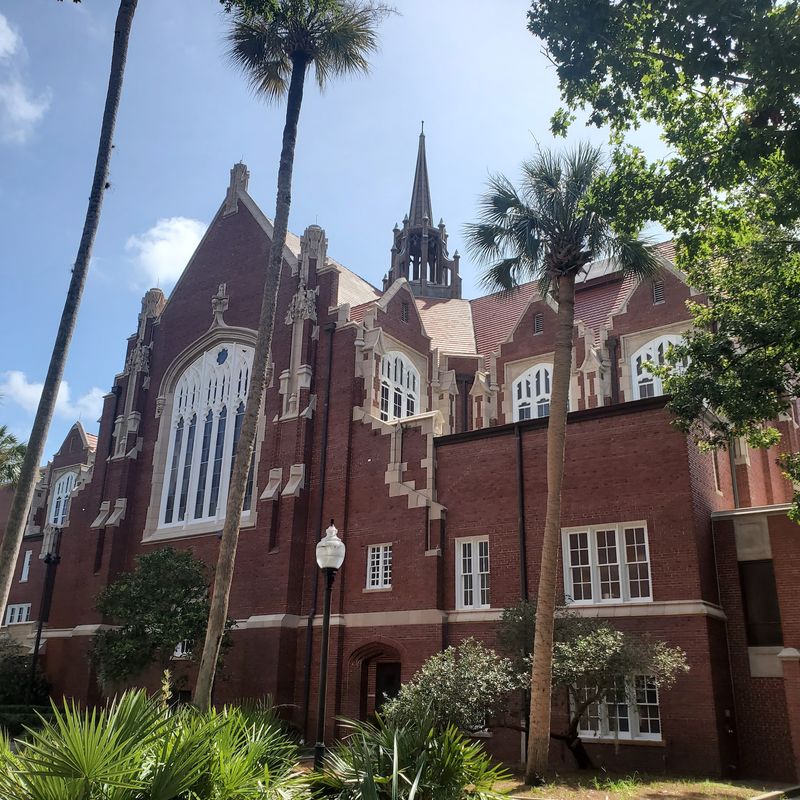
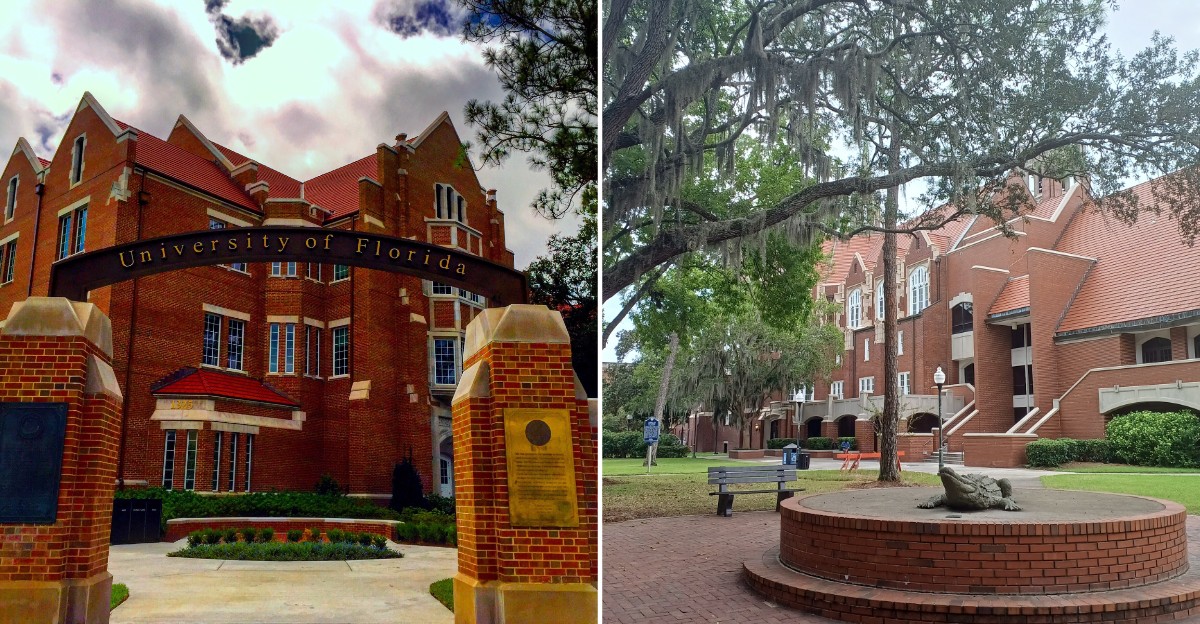
Back on September 27, 1906, two brand-new buildings opened on a quiet Gainesville campus. Buckman and Thomas Halls were the very first, and both still stand today.
They were built in the Collegiate Gothic style. Think pointed details, red brick, and a look that feels straight out of an old storybook.
The school’s roots go back even further. It traces its beginnings to 1853 and the East Florida Seminary in Ocala, which explains the date on the university seal.
In 1905, the school officially became the University of Florida. Its name was shortened from the University of the State of Florida in 1909.
Not everything old was safe forever, though. In the 1970s, a successful movement saved several Gothic buildings from demolition during a wave of modernization.
That effort led to the Campus Historic District. Dauer, Peabody, Anderson, Newell, and Flint Halls are among the preserved buildings.
Many of them have been repurposed for modern use. So students now study in rooms that have watched more than a century of Florida history roll by.
Yes, The Campus Lake Comes With Alligators And Bats
Most colleges have a pond with ducks. The University of Florida has Lake Alice, home to alligators and plenty of birds.
It’s a natural lake right on campus. That makes it a pretty fitting spot for a school whose mascot is the gator.
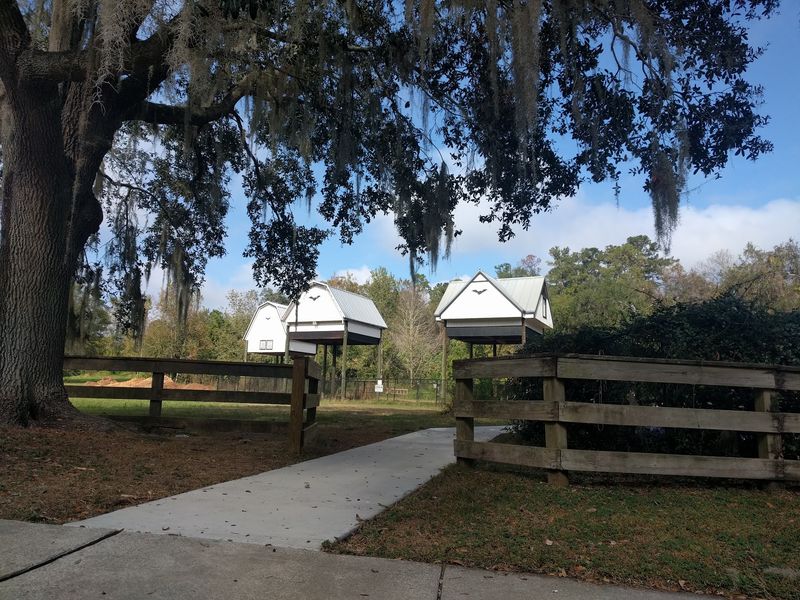
Wait for dusk if you can. Thousands of bats stream out of a bat house near the lake, and it’s quite a sight.
Bring patience and maybe some bug spray. Nature runs on its own schedule, not a class timetable.
Just beside the lake sits the Baughman Center. This lakeside chapel is known for its striking architecture and calm, peaceful setting.
People use it for quiet reflection and small events. It’s the kind of place that makes a busy campus suddenly feel very still.
A friendly reminder for first-time visitors seems wise here. Enjoy the gators from a respectful distance, because they are very real and not campus statues.
Speaking of statues, the bronze versions are coming up later. Those ones are much happier to pose for pictures.
Hundreds Of Butterflies Are Waiting Next To World-Class Art
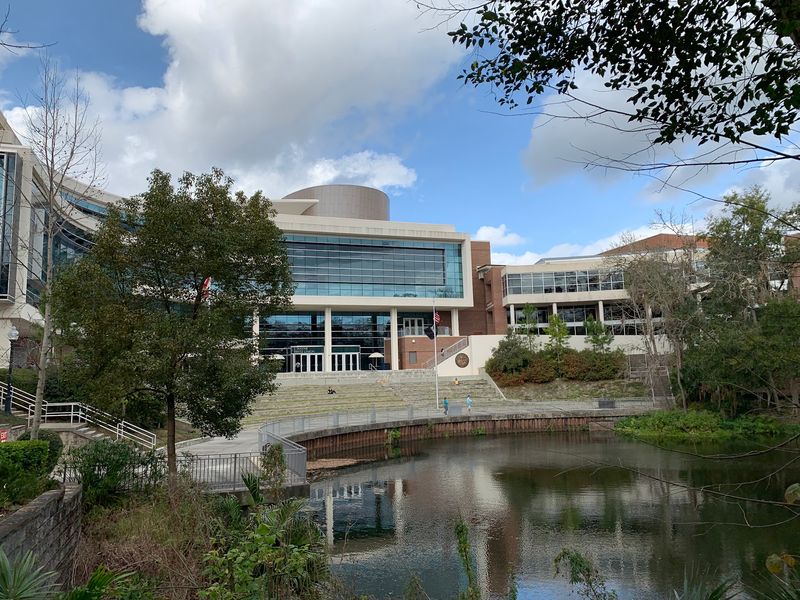
Hundreds of live butterflies flutter around the Butterfly Rainforest. It’s an outdoor exhibit at the Florida Museum of Natural History, right on the UF campus.
The museum ranks among the top natural history museums in the country. It’s also the largest of its kind in the southern United States.
Exhibits cover Florida’s plants, animals, and cultural heritage. So you can learn about the state while standing in the middle of it.
Right next door is the Samuel P. Harn Museum of Art.
It’s one of the largest university art museums in the South.
The collection includes contemporary, African, and Asian art. Photography and rotating exhibitions keep things fresh between visits.
Pairing the two museums makes a smart day out. Science in the morning, art after lunch, and suddenly you feel very cultured.
Families and curious adults will both find plenty here. And for students, having these museums so close is an incredible perk.
For live entertainment, the Curtis M. Phillips Center for the Performing Arts hosts shows on campus.
Check its schedule before planning a visit.
Game Day In The Swamp Is Its Own Kind Of Loud
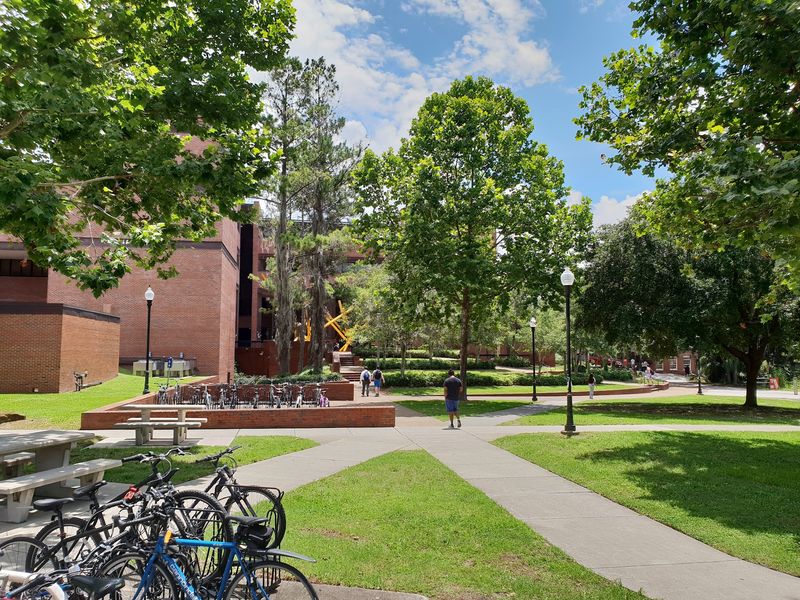
Orange and blue everywhere you look. That’s Ben Hill Griffin Stadium, better known as The Swamp, home of Florida Gators football.
It’s one of the most famous venues in college sports. On game days, the energy around campus is hard to miss.
Out front stands the Bull Gator, a notable landmark. It honors major athletic donors and features plaques for All-American football alumni.
On the stadium’s west side, you’ll find life-size statues of Heisman Trophy winners. Tim Tebow, Steve Spurrier, and Danny Wuerffel all get their bronze moment.
Football isn’t the only show in town. The Exactech Arena at the Stephen C.
O’Connell Center hosts basketball, gymnastics, volleyball, and swimming and diving.
Baseball fans head to Florida Ballpark. Softball plays at Katie Seashole Pressly Stadium, while soccer and lacrosse use Donald R.
Dizney Stadium.
There’s also a tennis complex, a track stadium, and the Mark Bostick Golf Course. That’s a lot of places to yell Go Gators.
A quick planning tip helps here. Big game days bring heavy crowds, so give yourself extra travel time.
Albert, Alberta, And A Sculpture Nicknamed The Potato
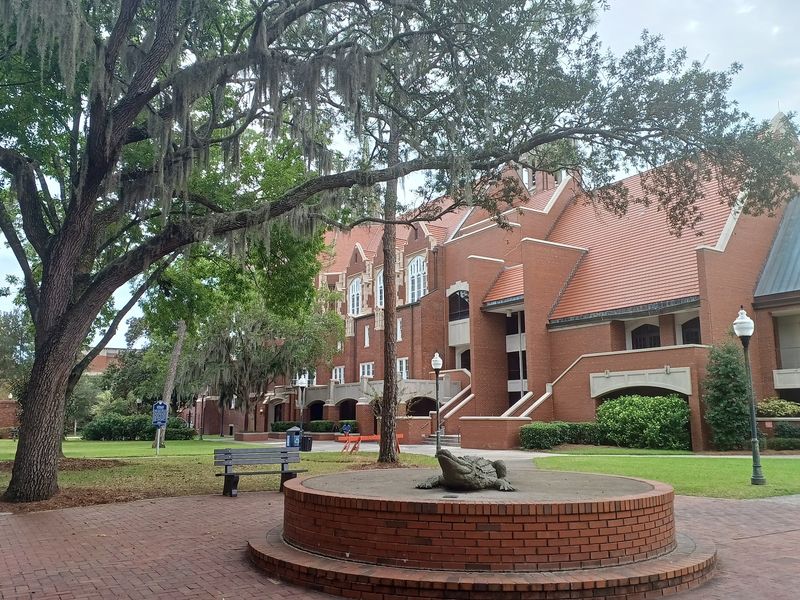
Funny story about the mascot. The alligator became UF’s symbol in 1911 almost by accident, after a local vendor sold pennants featuring a gator.
Somehow, it stuck forever. Today, life-size bronze statues of Albert and Alberta stand outside Emerson Alumni Hall.
They’re easily among the most photographed spots on campus. Bring a friend, strike your best chomp pose, and you’re set.
The school colors have a fun backstory too. Orange and blue likely came from blending the colors of two earlier schools that merged into UF.
Then there’s the Potato. That’s the informal nickname for a sculpture sitting in front of Turlington Hall.
Nobody needs an official title when a nickname works this well. It’s one of those quirky campus landmarks that students simply know.
Hunting down these statues makes a great mini scavenger hunt. It’s a lighthearted way to explore campus without a strict plan.
Kids especially enjoy the bronze gators. Honestly, so do plenty of grown-ups who claim they’re just taking photos for the kids.
Bowling, Sailing, And Climbing Walls Count As Student Life Here
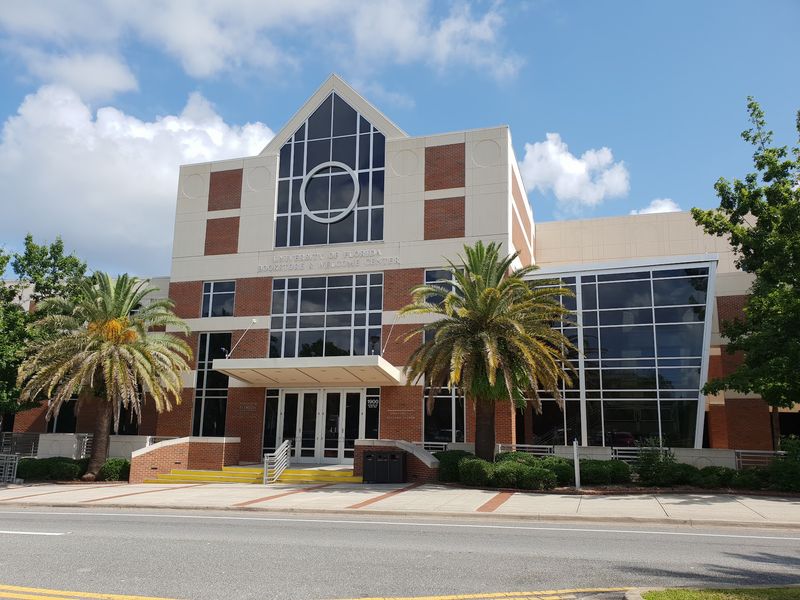
Bowling between classes sounds like a dream. At the J. Wayne Reitz Union, it’s simply part of the building.
The Reitz Union serves as a central hub for student activities. It offers dining options, a bookstore, an arts and crafts center, and a game room with pool tables.
For visitors, the address is 655 Reitz Union Drive, Gainesville, FL 32611. It’s a handy landmark when navigating this huge campus.
Need more fresh air? Lake Wauburg, managed by UF Rec Sports, brings outdoor fun for students and staff.
The list there is long. Boating, sailing, fishing, swimming, climbing walls, disc golf, and biking trails all make an appearance.
There’s even an outdoor team challenge course. It’s perfect for groups who want to test teamwork without a group project grade attached.
Back on campus, students can use fitness facilities, classes, and intramural sports. Staying active is easy when the options are this wide.
For anyone weighing colleges in Florida, this matters. A good balance of study and play can make campus feel like home.
The Big Brainpower Goes Way Beyond The Classroom
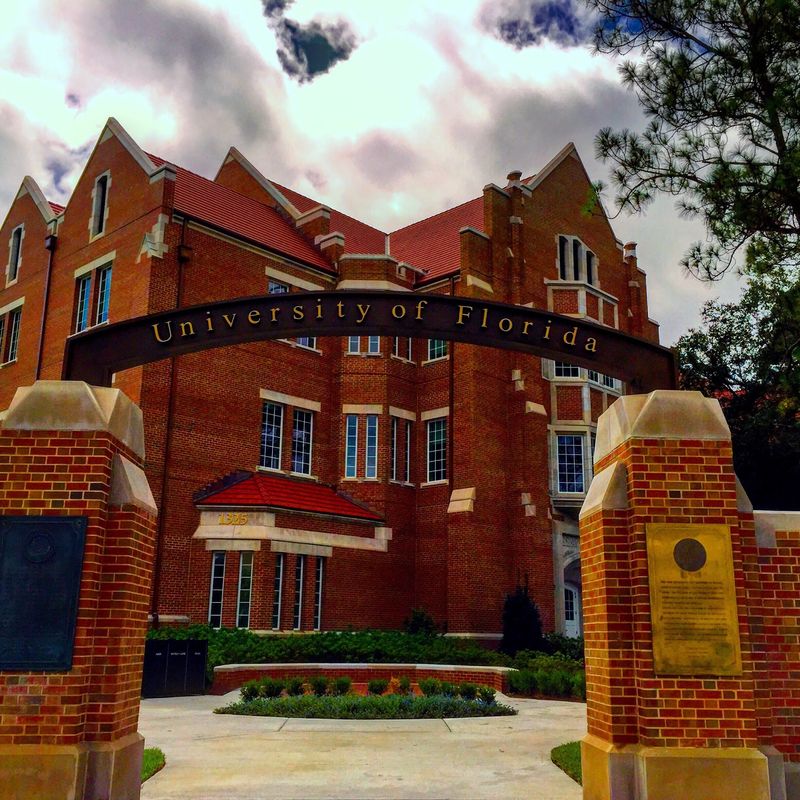
More than 180 research centers and institutes call the University of Florida home. That’s a big reason the rankings keep rolling in.
UF is a public land-grant research university in the State University System of Florida. In plain terms, it’s built to share knowledge with the whole state.
UF Health is a major piece of that mission. It’s recognized as the Southeast’s most comprehensive academic health center, with campuses in Gainesville and Jacksonville.
Shands Hospital, now a core part of UF Health, opened in 1958. That same year, the university also became racially integrated.
Women were first admitted in 1947. Each milestone helped shape the broad, diverse school UF is today.
Then there’s UF/IFAS, the Institute of Food and Agricultural Sciences. It supports research for Florida’s farms, natural resources, and food industries.
So the next time you eat Florida-grown produce, there’s a decent chance UF research helped somewhere along the way. That’s a pretty tasty connection.
Planning a campus visit? Main offices typically keep weekday hours, so schedule tours Monday through Friday for the smoothest trip.