
Locals Say This Upstate New York Swimming Hole Is One Of The State’s Best Summer Getaways
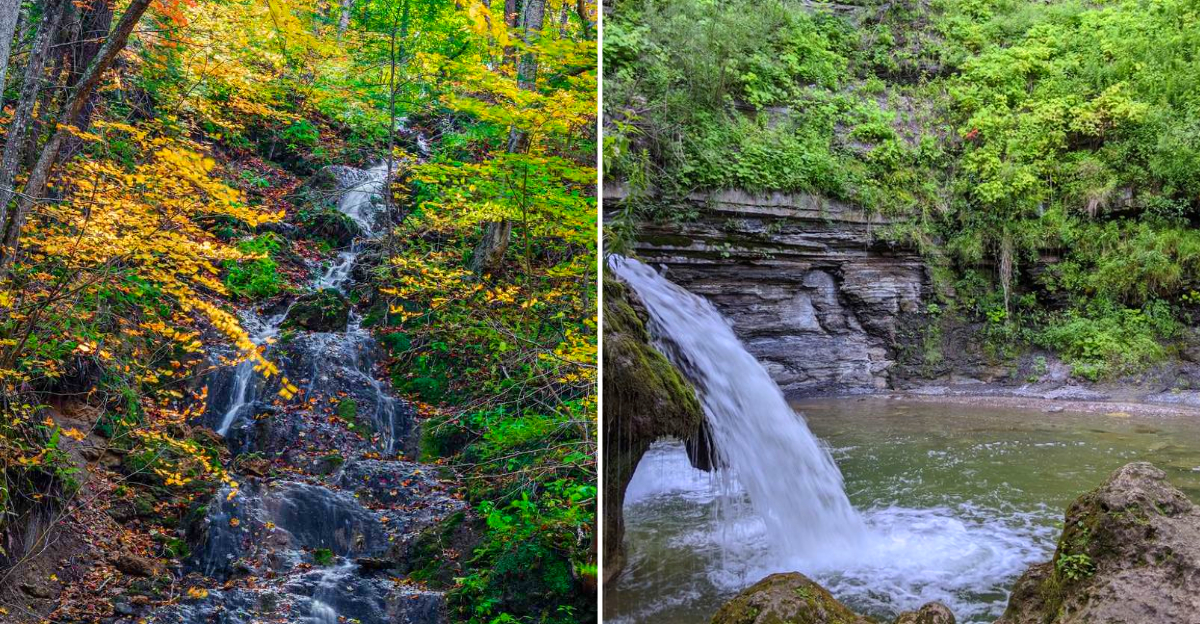
Getting a bunch of upstate New York locals to agree on anything is basically a lost cause, except when it comes to one particular swimming hole. Mention it and watch the eye-rolling stop.
The water here does that thing where it’s cold enough to knock the breath out of you on a 90-degree afternoon, then somehow becomes the only place you want to be twenty minutes later. Look straight down and you can count the rocks on the bottom.
You can tell nobody built this place with tourists in mind. There’s no gift shop, no paved lot, just rope swings hanging off branches that have clearly been holding up cannonballs for decades.
Even on the busiest summer weekend, the crowd spreads thin enough that claiming your own patch of water takes almost no effort.
Locals stay a little cagey about the details, and about ten minutes in, you understand the instinct completely. Some places you just want to keep for yourself.
A Gorge That Earns Every Step
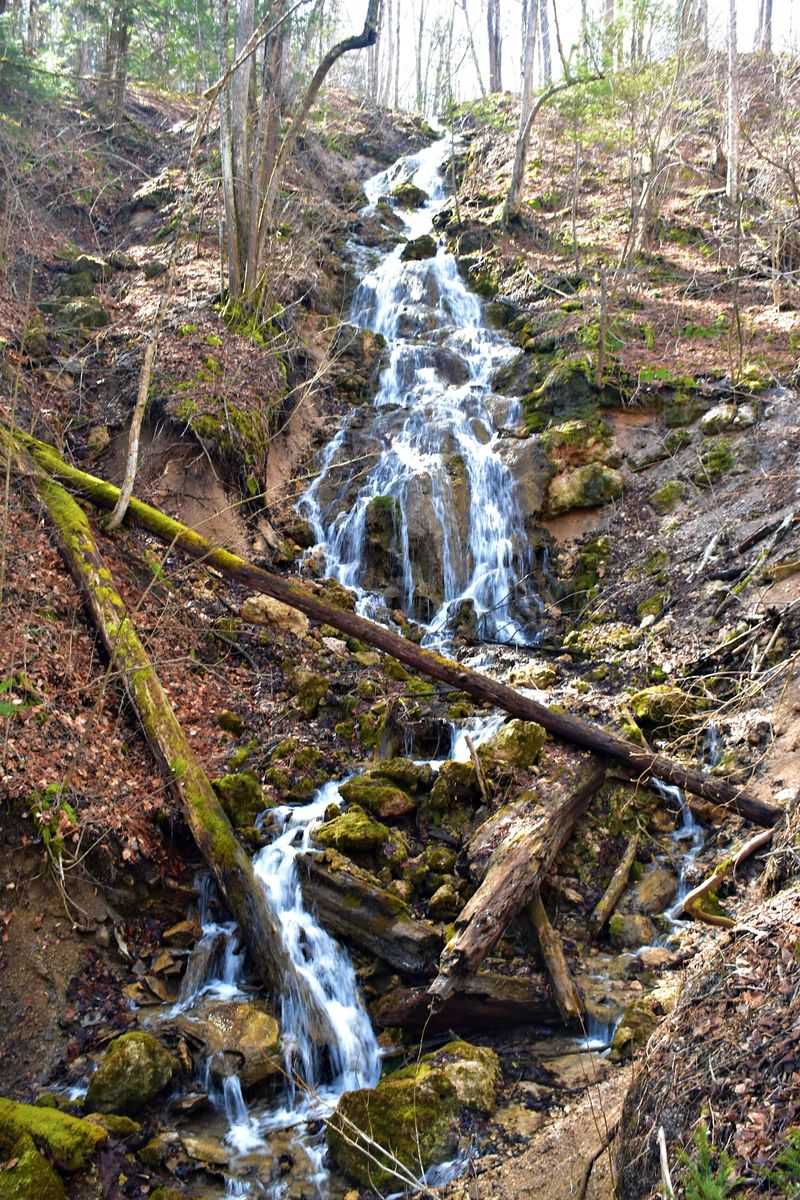
Most trails make you work for the view. At the Otsquago Creek gorge, the reward starts before you even reach the end.
The trail cuts right alongside the creek, and the sound of rushing water follows you the whole way.
Ferns, mossy rocks, and towering trees frame the path on both sides. The air feels cooler here than almost anywhere else on a hot afternoon.
It is the kind of place that makes you slow down without even trying.
The gorge was carved over thousands of years by the movement of water through limestone bedrock. That slow, patient process left behind walls of layered rock that tell a geological story most people never get to read up close.
Every turn along the trail reveals something new. A small cascade here, a cluster of wild plants there, and always that steady sound of moving water keeping the rhythm.
Families with young kids love how manageable the trail feels while still offering genuine adventure. Bring a camera, because your phone storage will not survive this walk with room to spare.
The Outdoor Learning Center In Van Hornesville
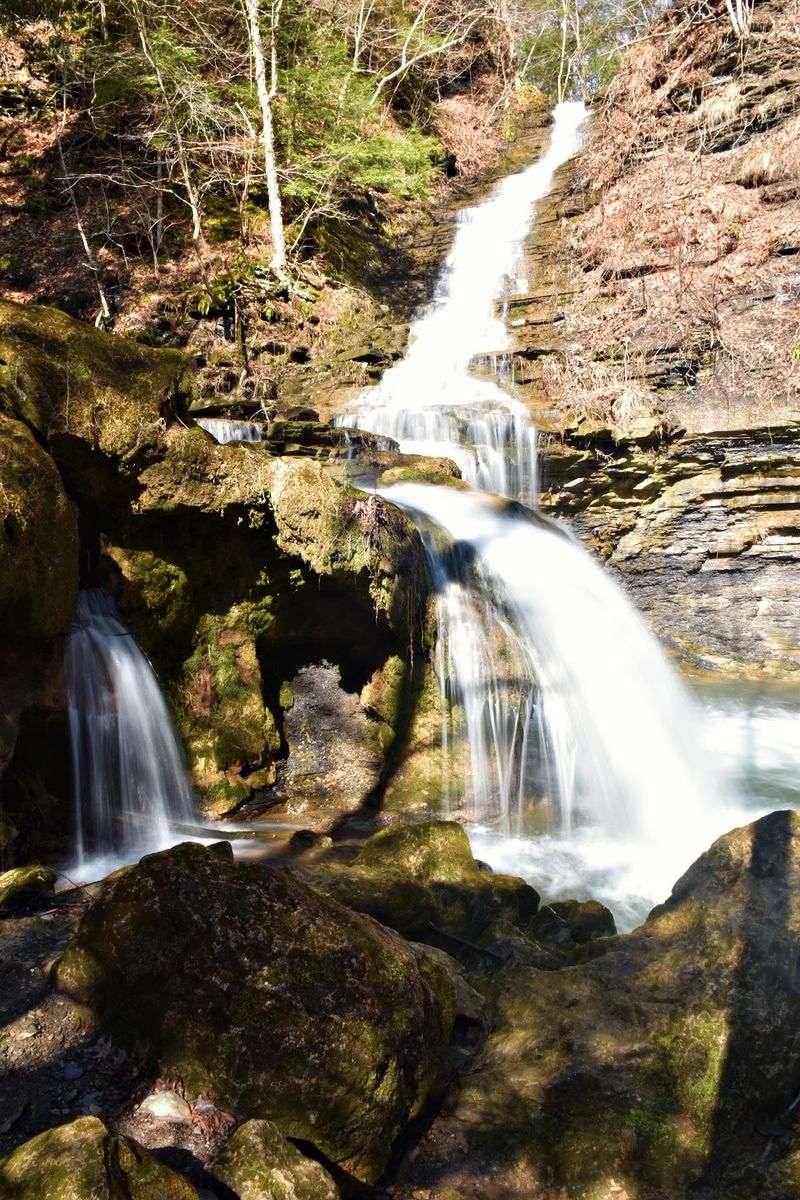
The Robert B. Woodruff Outdoor Learning Center sits at 2316 State Route 80 in Van Hornesville, New York, right on the property of Owen D.
Young Central School. The trailhead entrance is on the north side of the school building, and parking is available in the school lots below.
The center is a nature preserve open to the public on weekends, school holidays, and throughout summer. On weekdays when school is in session, access is limited before 3:30 PM out of respect for students and staff.
Named in honor of Robert B. Woodruff, the preserve was designed to connect people with the natural world through hands-on outdoor experience.
That mission still holds up today, and the space has only gotten better with trail improvements over the years.
A donation box sits near the trailhead. The preserve is free to visit, but a small contribution goes a long way toward keeping the trails maintained and the experience great for everyone.
A trail map and informational pamphlet are available at the start, so first-time visitors can orient themselves before heading in.
Creamery Falls And Its Natural Waterslide Charm
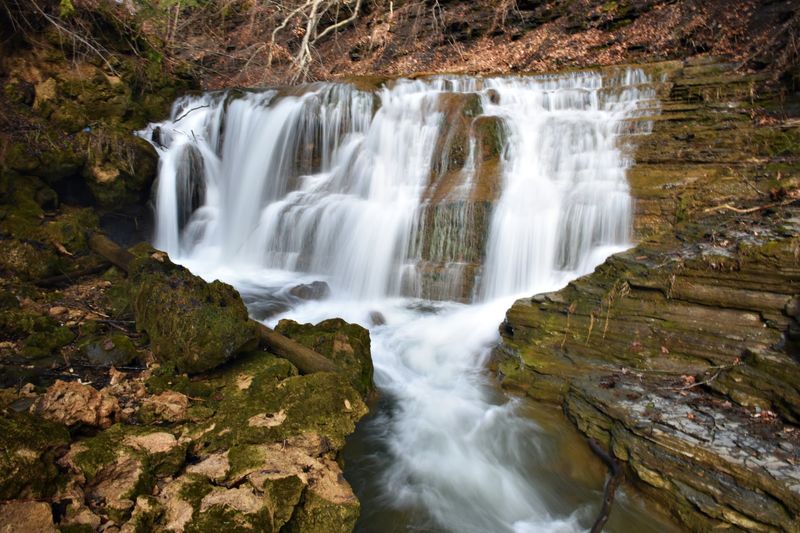
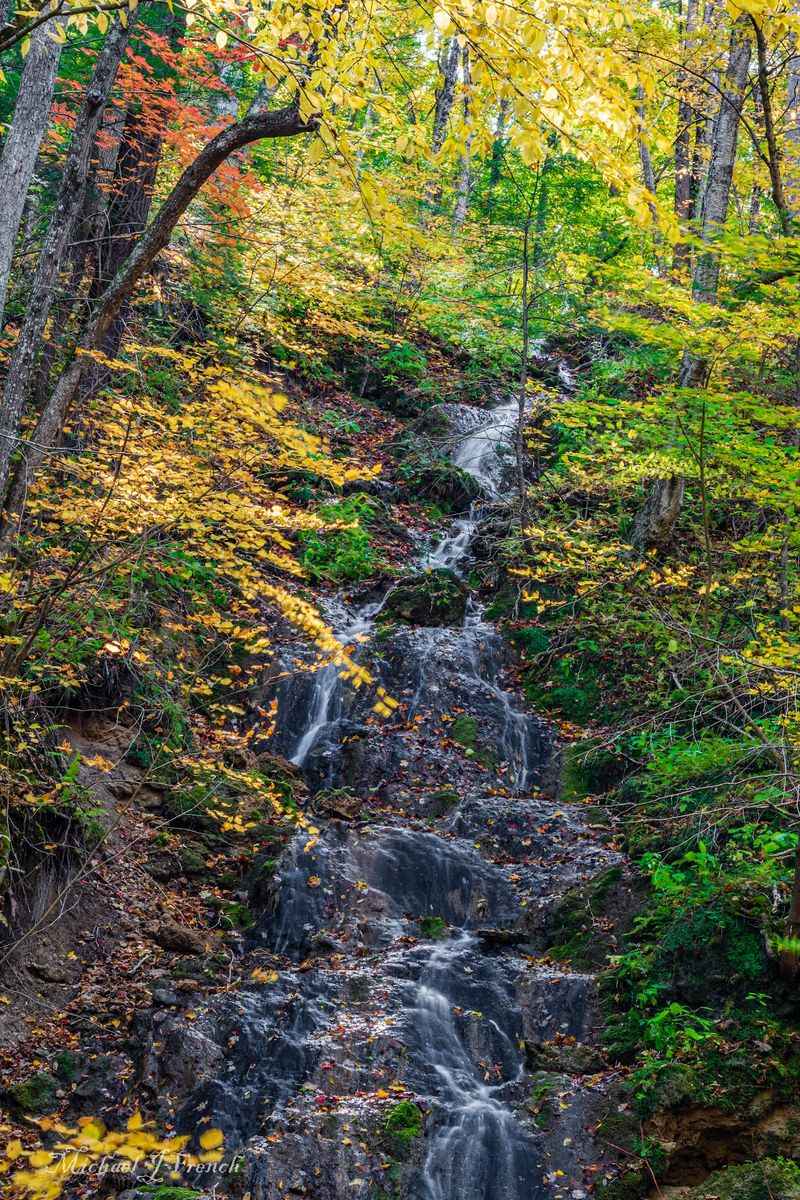
Creamery Falls is the star of the show, and it knows it. The water pours over a smooth, angled rock face in a way that looks less like a waterfall and more like something a landscape architect dreamed up.
The natural shape mimics a waterslide so convincingly that visitors do a double take.
The falls are named after the old creamery that once operated in the area. Traces of that industrial past are still visible along the trail, giving the spot a layered character that goes beyond just pretty scenery.
Swimmers have been spotted enjoying the water near the falls, and while no official signage prohibits it, visitors should always use their best judgment and prioritize safety. The water runs cold and clear even in the peak of summer.
Getting down to Creamery Falls requires navigating a staircase that can be steep in places. Wear shoes with solid grip and take your time on the descent.
The view from the bottom is worth every careful step, and the sound of the falls up close is one of those things you simply have to hear for yourself.
Limestone Caves That Rewrite The Rules Of A Nature Walk
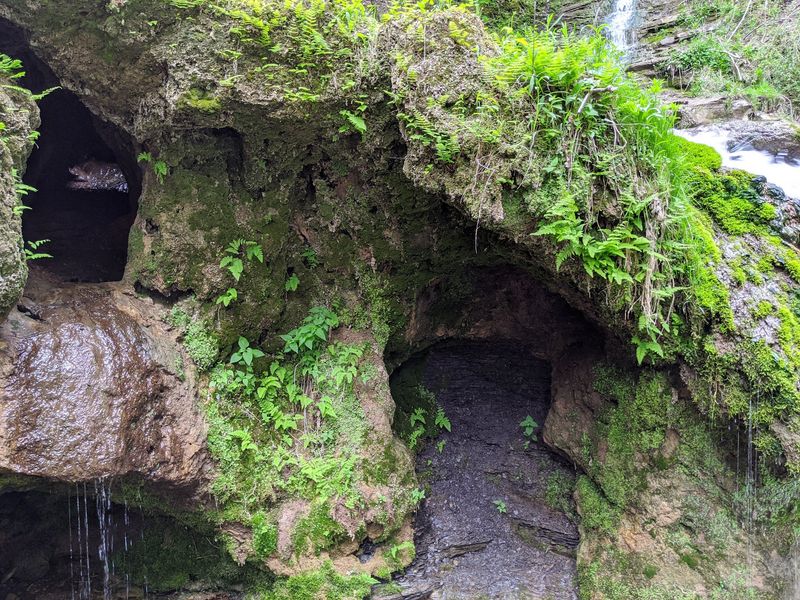
Not many easy hiking trails come with caves, but this one does. The limestone caves along the Owen D.
Young Nature Trail are small enough to feel intimate and curious enough to make every visitor stop and peer inside. A few of the openings are large enough to walk into, while others require a low crouch to explore.
The caves formed through a process called tufa deposition, where calcium carbonate builds up over time as water moves through limestone. The result is a series of unique formations that feel almost otherworldly for a one-mile trail in rural New York.
Here is a fact worth carrying with you on the hike. The tufa caves at Woodruff were featured on a mural at the 1939 World’s Fair.
That detail alone reframes what might seem like a quiet local trail into something with real historical weight.
Kids absolutely love the caves. Adults tend to get equally absorbed in them, often spending more time at the cave section than anywhere else on the trail.
Bring a small flashlight if you plan to peek deeper inside. The caves reward curiosity in the best possible way.
The Owen D. Young Nature Trail Breakdown
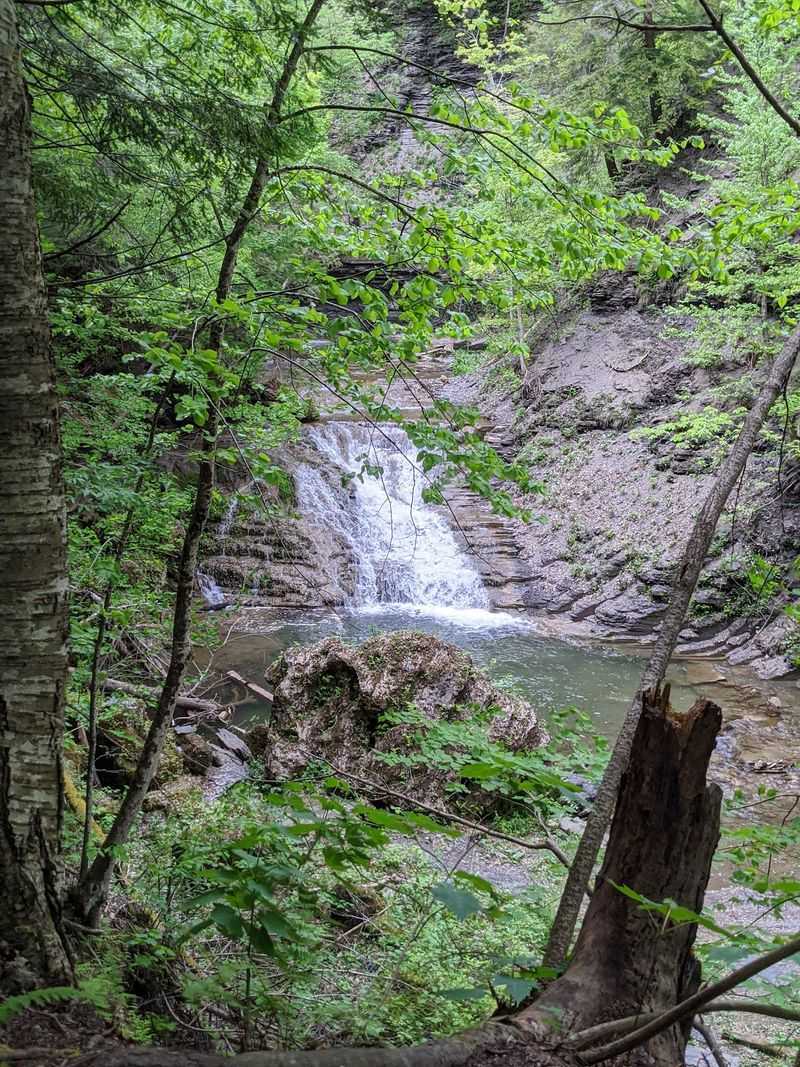
The Owen D. Young Nature Trail runs 1.4 miles out and back through the gorge, making it one of the more approachable hikes in the region.
The total distance might sound modest, but the trail packs in waterfalls, caves, creek views, and historic landmarks at a pace that keeps things interesting the entire way.
Trail markers are clear and well-placed throughout, so getting turned around is not a real concern. Informational signs appear at key points along the route, explaining the geology, plant life, and history of the area.
The educational element adds depth to what could otherwise just be a pleasant walk.
Wear proper footwear regardless of how easy the trail looks on paper. Some sections near the falls and along the creek bank can be slippery, especially after rain.
Solid trail shoes or light hiking boots are the right call here.
The trail is rated easy overall, making it a solid option for families, older adults, and anyone who wants big scenery without a big physical commitment. Plan to spend one to two hours exploring at a relaxed pace.
Rushing through this one would be a genuine waste of a good afternoon.
Historic Mill Remnants Along The Creek
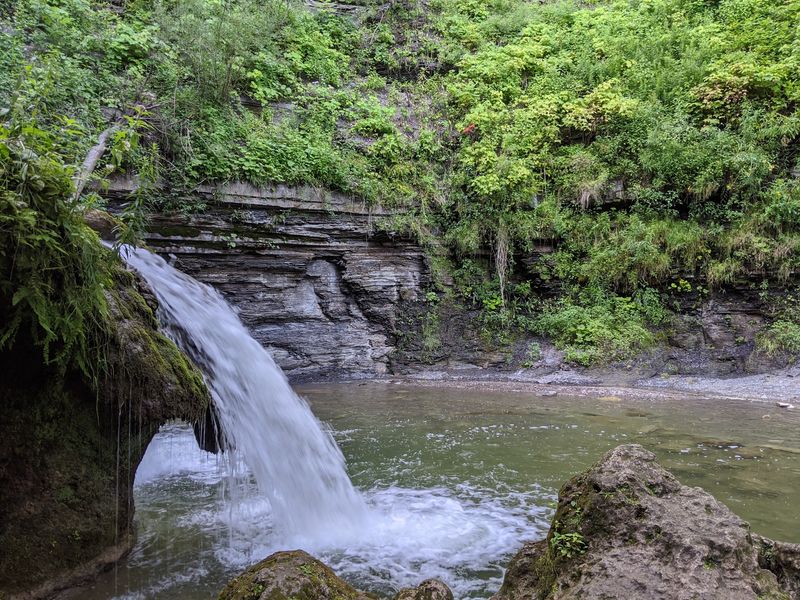
The gorge along Otsquago Creek was not always a quiet hiking destination. For much of the 19th century, it was a working industrial corridor powered entirely by moving water.
Old mills once lined the creek banks, and the remnants of their foundations are still visible along the trail today.
Sawmill Falls and Cheesebox Falls carry their names directly from the operations that once ran nearby. Standing at either one and knowing the history gives the scenery a completely different texture.
The water that carved this gorge also powered entire local industries for generations.
Historical postings along the trail explain what each site once was and how it functioned. These interpretive signs turn the hike into something closer to a living history lesson without any of the classroom energy.
Kids who might tune out a museum exhibit tend to pay close attention when the subject is right in front of them.
The mix of natural beauty and human history is one of the trail’s most underappreciated qualities. A lot of hiking destinations offer one or the other.
Woodruff delivers both on the same path, and that combination is genuinely rare for a trail this short and this accessible.
Picnic Tables, Parking, And Practical Trail Tips
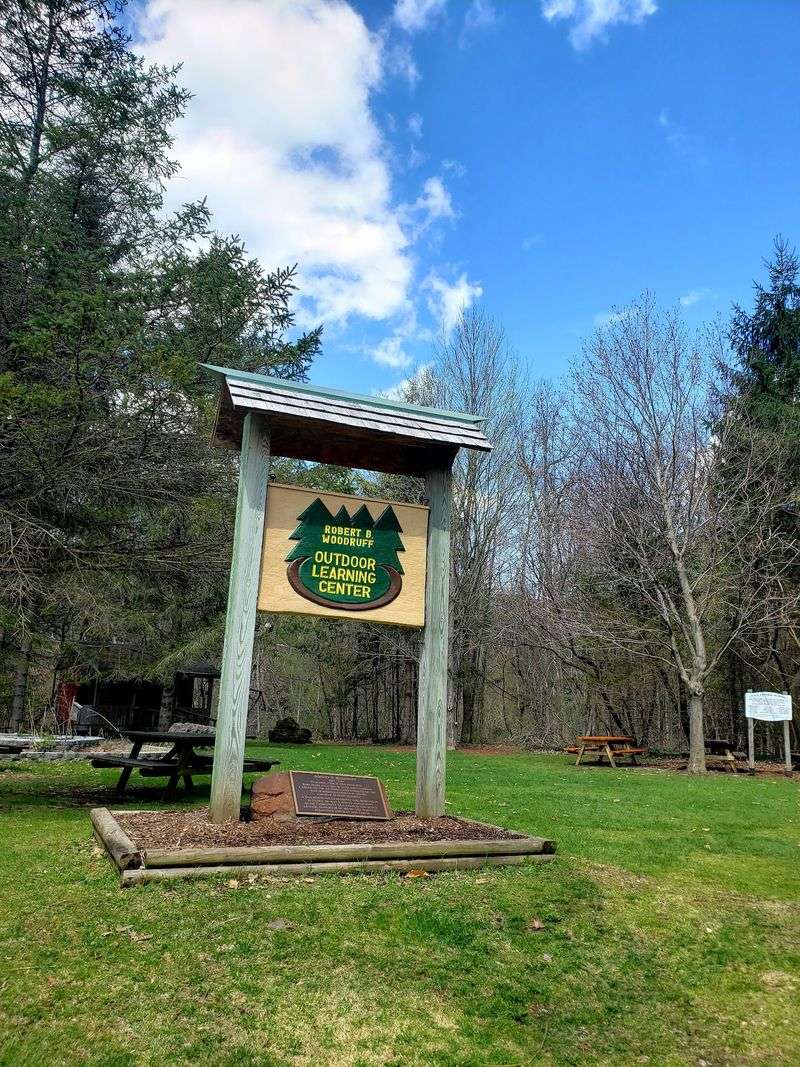
Good logistics make or break an outdoor trip, and Woodruff handles the basics well. Ample parking is available in the Owen D.
Young Central School lots, with the lower lot sitting closest to the trailhead. On busy summer weekends, arriving earlier in the day helps secure a good spot without stress.
A small picnic area with tables sits near the trailhead, making it easy to set up a meal before or after the hike. Packing a lunch and eating beside the trees is a simple pleasure that fits the whole tone of the place.
An outhouse is also available near the start of the trail.
The preserve is free to enter, but a donation box at the trailhead accepts contributions. Leaving a few dollars supports trail upkeep and helps keep the experience great for future visitors.
Trail pamphlets and a map are available at the entrance board for anyone who wants a guide.
Dogs are welcome on the trail. Keep them leashed around the water and on the stairs near the falls.
The trail can get muddy after heavy rain, so checking the weather before heading out is always a smart move. A little preparation makes the whole visit run smoothly.
Why Locals Keep Coming Back Every Summer
A 4.9-star rating is not something that happens by accident. The Robert B.
Woodruff Outdoor Learning Center earns its reputation through a combination of natural beauty, accessible trails, and a genuine sense of discovery that holds up on repeat visits.
Families return because the trail offers something different depending on the season and the recent rainfall. More rain means more waterfalls and side falls that appear along the trail edges.
Dry spells reveal more of the rock formations and creek bed geology. The gorge is a living system that keeps changing.
People who grew up nearby describe hiking the trail as kids and bringing their own children back decades later.
The experience at Woodruff is straightforward and honest. No admission fees, no crowds fighting for space, and no over-developed infrastructure pulling you away from the natural setting.
Just a well-maintained trail, remarkable geology, and the sound of water moving through ancient stone. That simplicity is exactly what makes it worth the trip.