
9 Massachusetts Cemeteries Surrounded By Eerie Legends And Ghost Stories, Locals Swear Are Too Creepy To Visit Alone
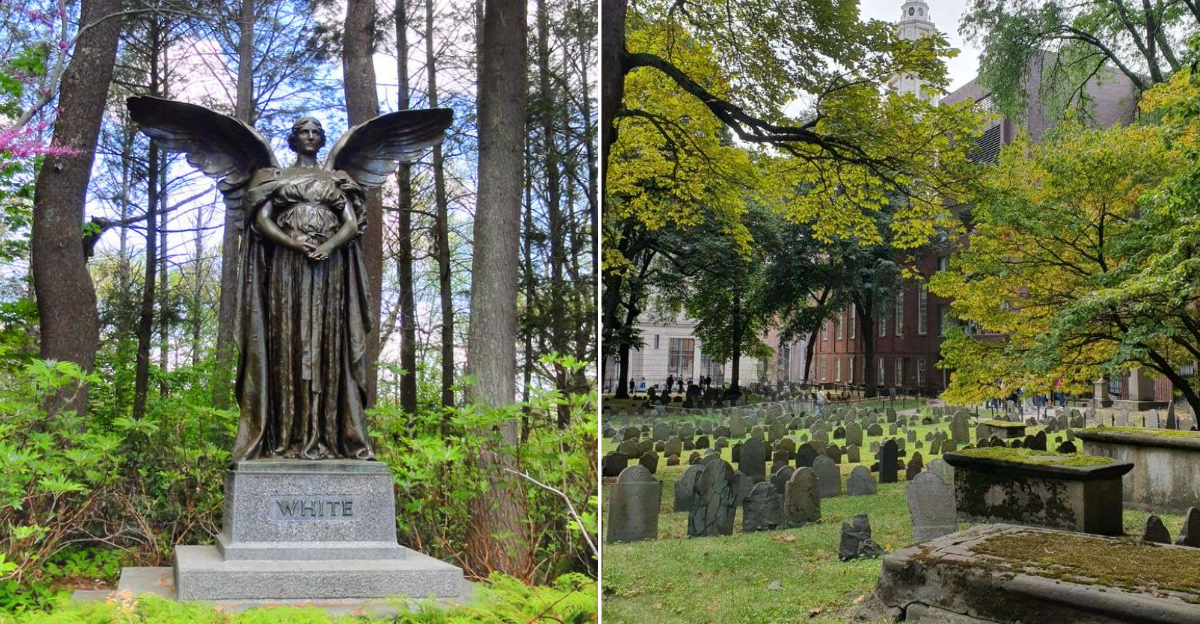
Massachusetts holds some of the oldest burial grounds in the country, and many of them come with stories that locals repeat with a nervous laugh.
Some sit right in the middle of busy Boston sidewalks. Others hide at the end of quiet woodland trails where the only sound is your own footsteps crunching on leaves.
You do not need to believe in ghosts to enjoy these places, either. Half the fun is reading names carved in slate three hundred years ago and realizing those people walked the same paths you are walking now.
The other half is that little chill you get when the wind picks up and the trees start creaking. Think of it as a walking history lesson with goosebumps included.
If you have been looking for a weekend trip that is a bit different from the usual beach or mall run, this is your excuse. Bring a camera and maybe a friend who does not scare easily.
Massachusetts rewards the curious, and these stops prove it.
1. Spider Gates Cemetery, Leicester
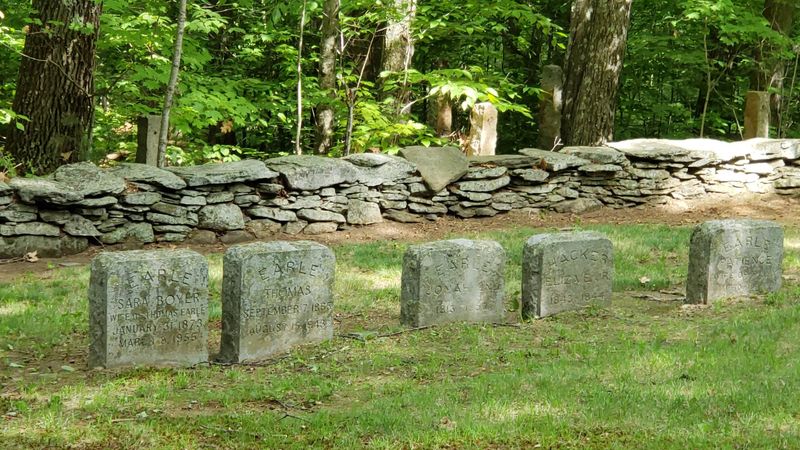
Start with the strangest one. Hidden in the woods of Leicester, the Quaker Cemetery has a nickname that locals use far more often: Spider Gates.
The iron gate at the entrance has a web-shaped pattern, and that single design detail launched decades of wild rumors.
The biggest one? People call it the Eighth Gate to a place you would rather not visit.
Story goes that passing through several hidden gates deep in the woods takes you somewhere else entirely. There is no history backing any of it, but that never stopped a good tale.
Then there is the hanging tree near the entrance, said to mark a tragic loss long ago. And the grave of Marmaduke Earle, where legend claims that walking around the stone ten times at midnight while saying his name gets you an answer.
Here is the practical part. The cemetery sits at the end of a wooded trail, so wear real shoes and go in daylight.
Cell service is spotty, and the walk back feels twice as long once shadows stretch out.
Visitors describe odd sounds near Kettle Brook and that itchy feeling of being watched. Whether that is folklore or your imagination doing overtime, you decide.
This spot is easily one of the most talked-about places in Massachusetts. Find it at Quaker Cemetery, 15 Earle St, Leicester, MA 01524.
2. Granary Burying Ground, Boston
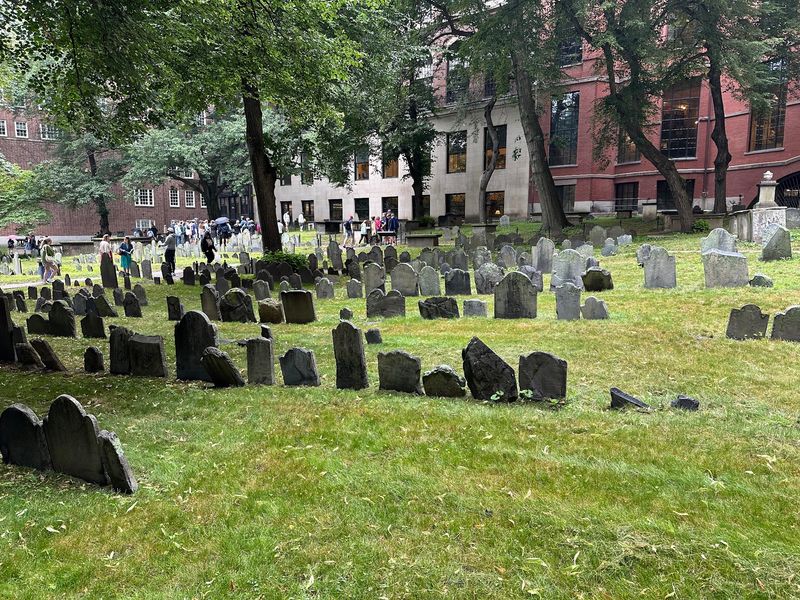
Ever walked past Samuel Adams, John Hancock, and Paul Revere all in one afternoon? Granary Burying Ground opened in 1660, making it Boston’s third oldest cemetery, and it packs revolutionary heroes into a small city block right on Tremont Street.
Now for the spooky side. James Otis Jr., a famous lawyer struck by lightning in 1783, supposedly still walks here.
Visitors report a tall figure in colonial clothing near his stone who wanders a few rows and then simply is not there anymore.
Paul Revere gets his own legend too. A few people swear they have glimpsed him on horseback, still riding, still warning somebody.
Reports include faint hymns, drifting lights, sudden cold pockets, and footsteps with nobody attached. Photos sometimes come back with strange orbs.
Some folks blame the 19th century rearranging of gravestones into neat rows, which may have left spirits looking for their real spots.
Practical tip: come early morning when the crowds are thin and the light is beautiful for photos. Check current visiting days before you go, since gates close seasonally.
The Boston Massacre victims’ section feels heaviest of all. Stop there for a moment.
You will feel it. Granary Burying Ground is at Tremont St, Boston, MA 02108.
3. The Burying Point, Salem
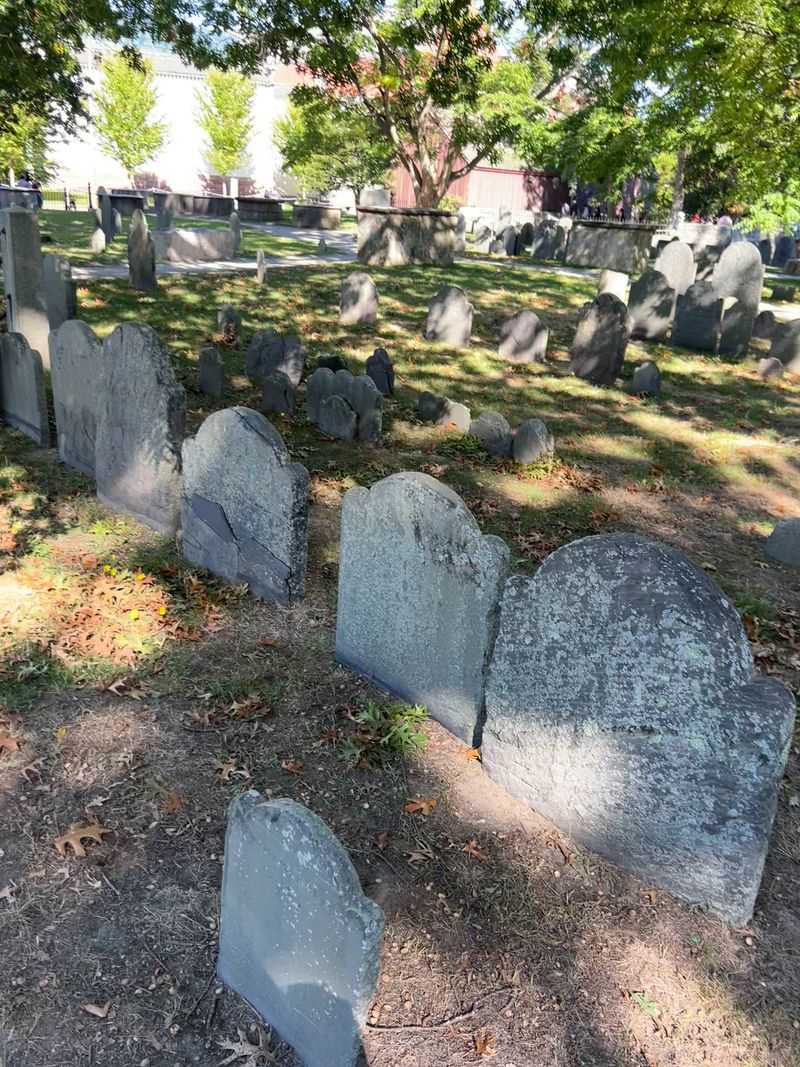
Salem does not need help feeling eerie, and The Burying Point delivers anyway. Opened in 1637, it is Salem’s oldest cemetery and the second oldest in the entire United States.
Let that sink in for a second.
Judge John Hathorne rests here, the stern judge from the witch trials and great-great-grandfather of author Nathaniel Hawthorne. Visitors claim his figure shows up in photographs as a dark shape near the older stones.
Others describe a sudden weight in the chest, like sadness that is not their own.
The Ghostly Lady in White is the other regular. She reportedly appears near the graves, in the parking lot, and around nearby buildings.
Camera shy, according to those who have tried, often showing up as a bright orb instead of a figure.
Right beside the cemetery sits the memorial to the wrongly accused, with stone benches carved with their names. It is quiet, respectful, and honestly moving.
Many people find that part more powerful than any ghost story.
Go on a weekday if you can, because October in this Massachusetts city gets packed shoulder to shoulder. Confirm hours ahead of time, since access changes with the season.
People report whispers, temperature drops, and shadows slipping between markers. Hawthorne himself strolled these grounds at night looking for inspiration.
The Burying Point is at 51 Charter St, Salem, MA 01970.
4. Burial Hill, Plymouth
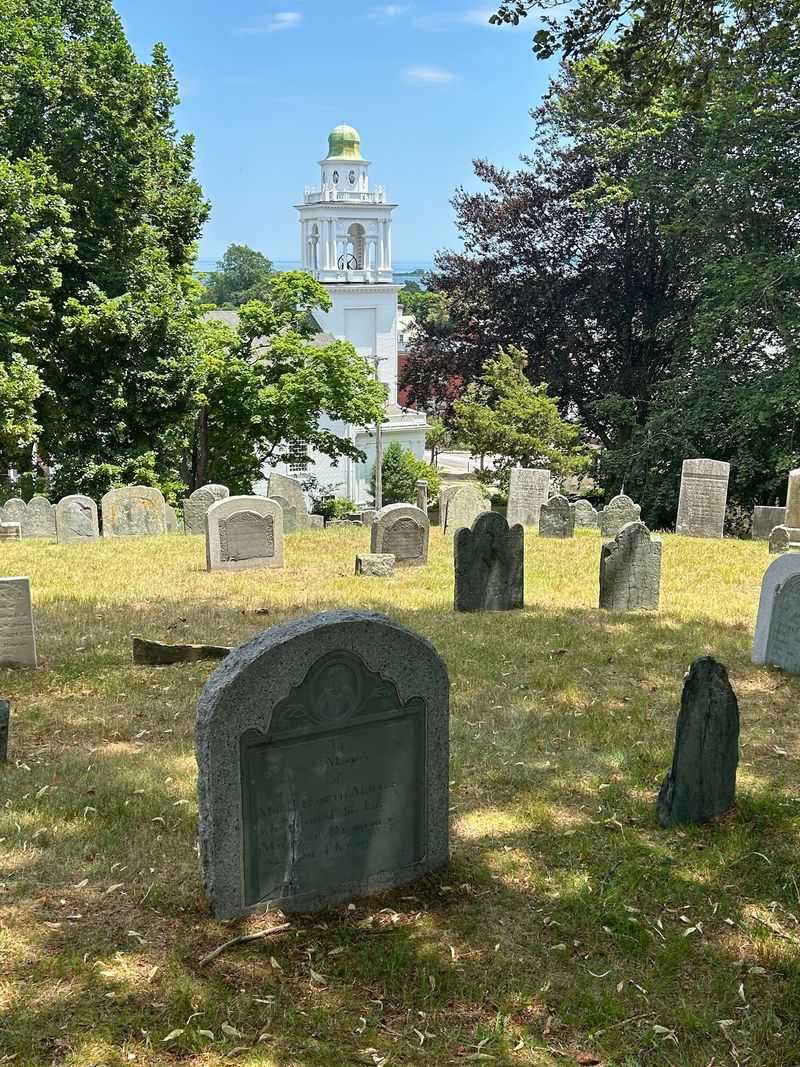
Climb the stairs off School Street and you are standing where the Pilgrims built their first fort. Burial Hill became a burying ground in 1622, and Governor William Bradford rests up here along with many Mayflower passengers.
Some stones date to the 1600s.
The saddest legend involves the ship General Arnold. In 1778, a blizzard trapped the crew, and 70 men froze.
They were buried together on this hill. Captain James Magee survived but asked to be laid beside his men, and people say his figure still paces near the monument.
Then there is the Victorian couple. They reportedly float up from Summer Street toward the grave of little Ida Elizabeth Spear, who passed in 1860 at age two.
Witnesses describe them as heavyhearted and oddly invisible below the knees.
Mother Crewe adds another layer. Believed to be a witch, she cursed a landowner who evicted her, and he was thrown from his horse the very next day.
He was buried on this hill, exactly as she said.
Look for the old tree with roots shaped like fingers, tied to stories of Native American spirits. If sudden panic hits you, folklore says leave politely.
Bring a jacket. The hilltop wind never quits.
Views over Plymouth make the climb worth it either way. Burial Hill, School St, Plymouth, MA 02360.
5. Canton Corner Cemetery, Canton
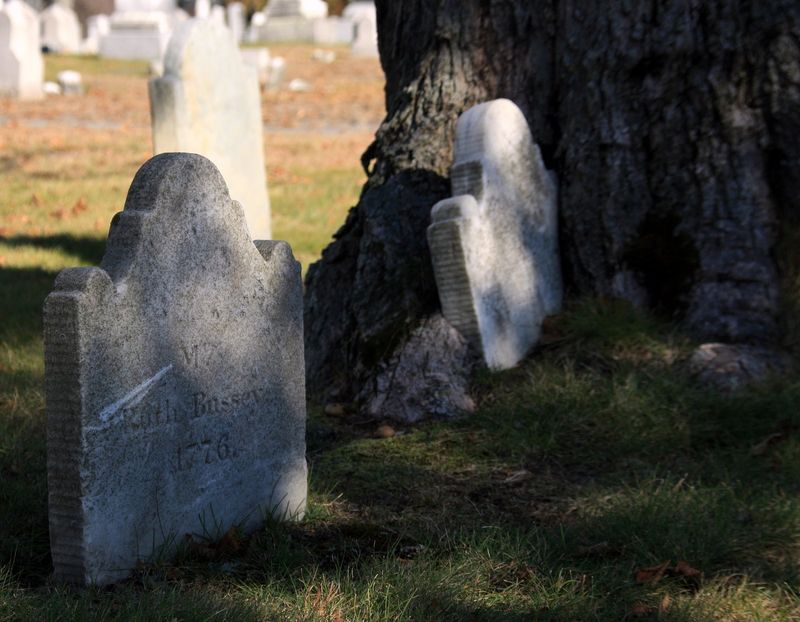
Pretty by day, unsettling by dusk. That is the short version of Canton Corner Cemetery, a tidy and genuinely lovely burial ground along Washington Street that changes personality once the sun drops behind the trees.
What do people report here? Mostly the feeling of being watched.
Not dramatic, just persistent, the kind that makes you glance over your shoulder twice. A few describe a still, silent man standing far off in the fading light who never moves and never leaves.
Laughter is the strange one. Disembodied giggling, usually from the back left corner, has been reported often enough that locals mention it casually.
Some also describe small shadowy shapes darting between headstones, like children playing a game nobody else can see.
Back in the 1920s, a handful of visitors said they heard a mournful song in a language that sounded like Gaelic drifting from the north end. Nobody found a singer.
Canton itself has form here. In 1770, residents of the old Packeen district were terrorized by a wailing in the woods, described as part woman’s cry and part wildcat.
A deacon reportedly stepped in to settle things down.
Go during daylight for the peaceful walk, or at golden hour for atmosphere. This corner of Massachusetts is quietly weird.
Find Canton Cemetery at 1600 Washington St, Canton, MA 02021.
6. Springfield Cemetery, Springfield
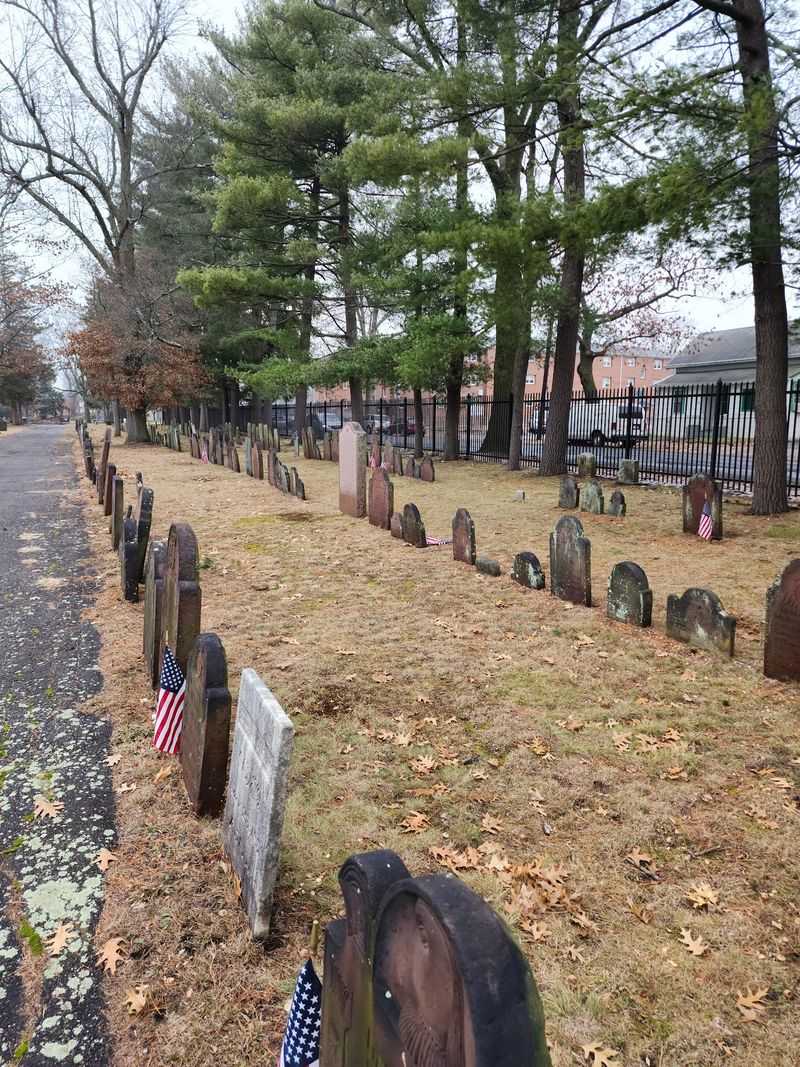
Here is a change of pace. Springfield Cemetery opened in 1841 as a rural garden cemetery, meaning it was designed to be beautiful rather than grim.
Winding paths, big shade trees, ornate monuments, and a surprising amount of calm for a spot in the middle of a city.
The history runs deeper than the date suggests. Remains of some of Springfield’s earliest settlers from the 1600s and 1700s were moved here, so you are looking at centuries of local stories in one place.
You will not find a famous ghost with a name here. What you get instead is atmosphere, and plenty of it.
Old stones, heavy silence, and the strange awareness that thousands of lives ended up on this quiet hillside.
The Springfield Preservation Trust leans into it with Voices From the Grave tours, usually around Halloween. Costumed interpreters play notable residents and tell their real stories.
Kids actually love these, and adults leave knowing more about western Massachusetts than they expected.
Tour dates change every year, so check ahead before planning your trip around them. Regular visiting days vary too.
Bring a camera to 171 Maple St, Springfield, MA 01105. Victorian monuments photograph beautifully in late afternoon light, especially in fall.
Walk slowly, read a few names, and let the place do its thing.
7. Forest Hills Cemetery, Boston
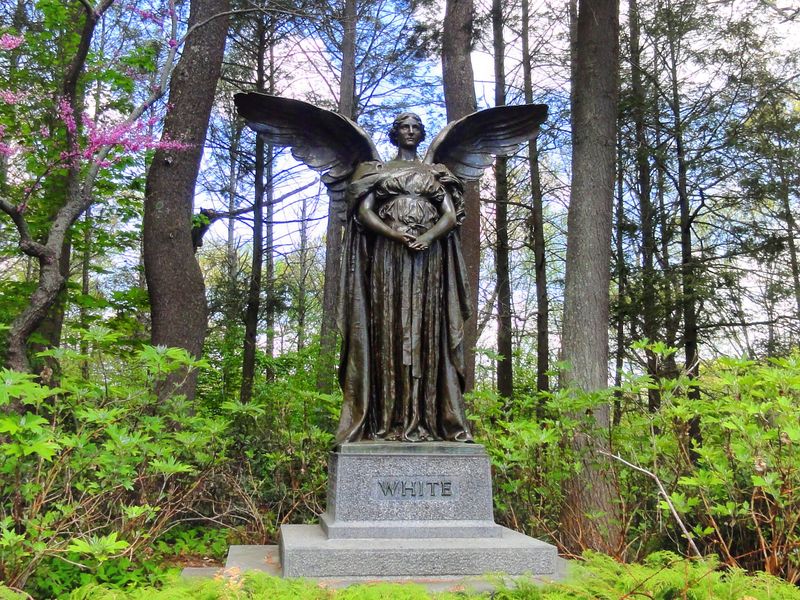
Part sculpture park, part burial ground, entirely worth an afternoon. Forest Hills Cemetery opened in 1848 and covers a huge stretch of Boston with statues, ponds, and curving paths that feel more like a museum garden than anything spooky.
Until you hear the stories. The best known involves Eugene Nydam, a young man lost in a bicycle accident.
Visitors near his grave mention sudden chills and that watched feeling. A few claim they heard bicycle spokes whirring with no rider anywhere.
The Lady in Black at 95 Forest Hills Ave, Boston, MA 02130 shows up in accounts too, a weeping figure near certain graves. Nobody knows who she is.
The popular guess is a grieving mother who never stopped mourning.
Then there is the statue of a woman with a broken heart carved into her chest. People report a wave of sadness there, and a few say they heard soft sobbing.
Even skeptics admit the sculpture is haunting to look at.
After dusk, reports pile up: shadows near mausoleums, whispers on the wind, odd lights in photographs.
Come in October when the trees blaze orange, and give yourself two hours minimum. The art alone justifies the trip, and it is free to wander.
Confirm gate hours before heading out.
8. Copp’s Hill Burying Ground, Boston
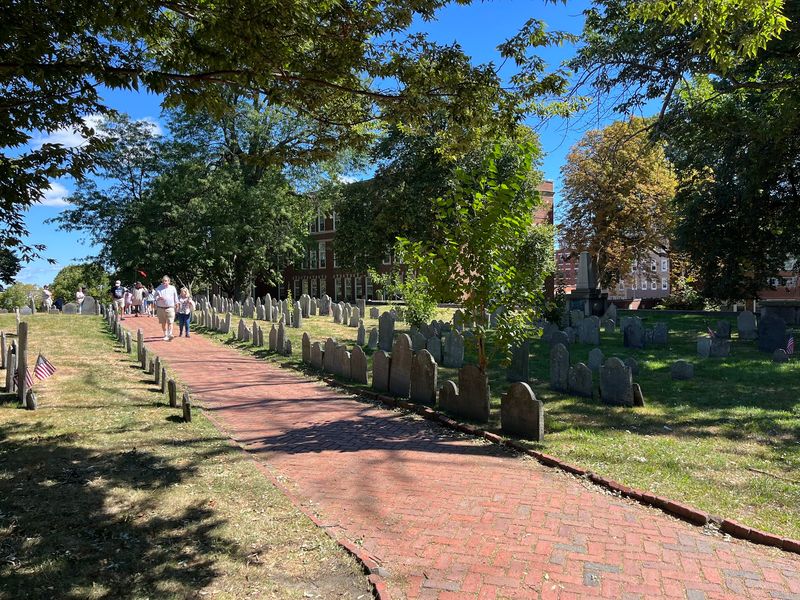
Bullet holes in a gravestone. That is what draws most people up the hill in the North End.
Copp’s Hill Burying Ground dates to 1659, making it Boston’s second oldest cemetery, and the Daniel Malcom headstone still shows musket ball damage.
The story is that British soldiers used his stone for target practice during the Revolution. Visitors report chills around that grave, and a few insist they have heard phantom musket fire crack through the air.
Increase and Cotton Mather rest here too, both powerful and controversial Puritan ministers. Some people describe a heavy, judged feeling near their tomb, which honestly fits their reputations perfectly.
Thousands are buried on this hill, many in unmarked graves. Reports include cold spots on hot days, faint moans, disembodied voices, and the sensation of a light touch on the shoulder.
Figures in colonial clothing supposedly wander the older sections before vanishing.
Practical stuff: the hill is steep, the paths are uneven, and the harbor views from the top are excellent. Pair it with the Freedom Trail and the nearby North End streets for a full day.
Go at sunset if you want atmosphere, though check closing times first. Few places in Massachusetts mix skyline views with 360 years of history this well.
Copp’s Hill Burying Ground sits at 45 Hull St, Boston, MA 02113.
9. Central Burying Ground, Boston
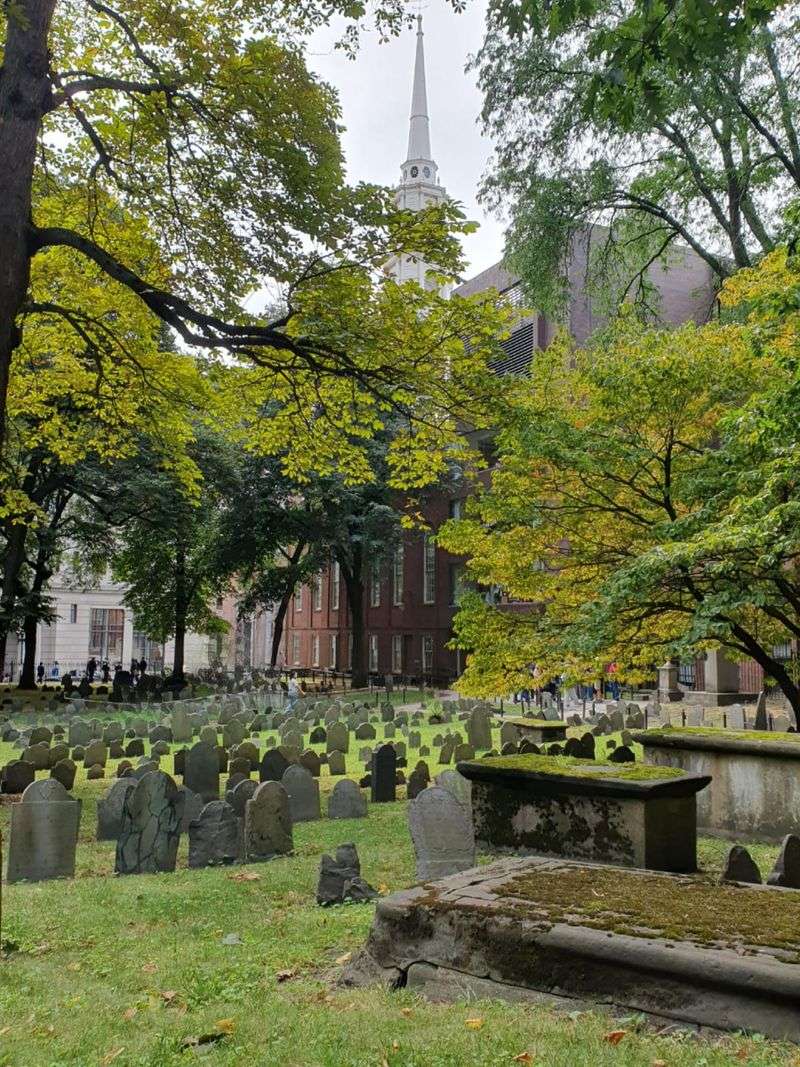
Placed along Boylston Street beside Boston Common, Central Burying Ground dates to 1756 and has a darker history than its peaceful setting suggests. It became the final resting place for poorer residents, sailors, foreigners, British soldiers, and others who lacked plots in Boston’s more prominent cemeteries.
The grounds were disturbed during road improvements in 1836 and again in 1895 during subway construction, when additional remains were discovered and reburied. Notable people buried here include painter Gilbert Stuart and several Boston Tea Party participants.
Today, the cemetery is also associated with ghost stories, including reports of a mysterious figure called the Girl Without a Face.
You’ll find Central Burying Ground at Boylston St, Boston, MA 02116, right on Boston Common, making it easy to visit during a Freedom Trail walk. It is generally open during daylight hours, but check current City of Boston hours before visiting.