
Nobody Leaves This Winnemucca Basque Dining Room Hungry Because The Platters Keep Circling
Driving across northern Nevada, you get used to long stretches of sagebrush and the occasional grain elevator breaking up the horizon. Then you pull off near a railroad track, walk into an old brick building, and find yourself seated at a long table with strangers while bowls of soup, beans, and potatoes make their way toward you.
Nobody tells you to stop eating, and nobody expects you to leave with room to spare. It is one of the oldest dining traditions in the state, and it still runs exactly the way it always has.
An 1898 Rooming House Across From The Tracks
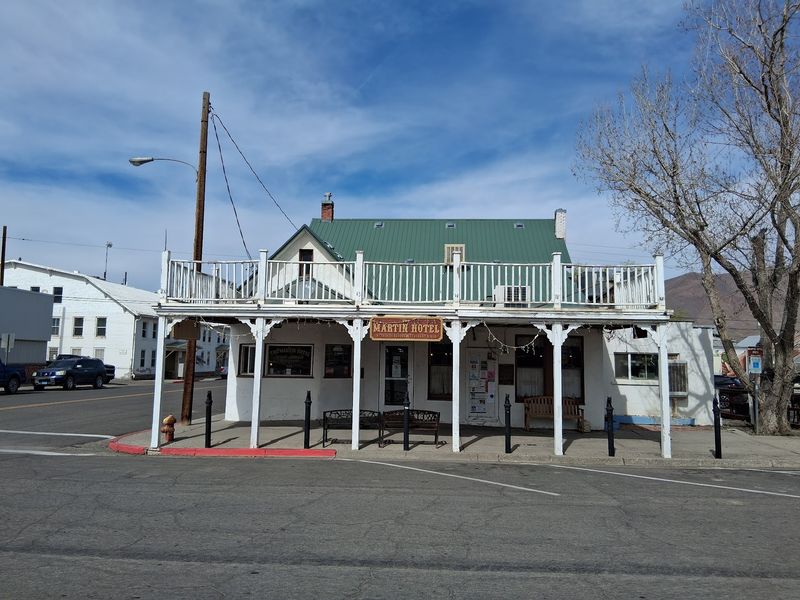
At 94 W Railroad Street in Winnemucca, a brick building faces the rail line the way it has since the tail end of the 19th century. The Martin Hotel started life as a rooming house in 1898, back when trains dropped travelers and sheepherders into town with little more than a bag and an appetite.
The name says hotel, but the draw today is the dining room, listed simply as a Basque restaurant. Guests still walk in off Railroad Street into a space that was built for feeding working people quickly and generously.
Winnemucca sits on Interstate 80 in Humboldt County, roughly a three-and-a-half hour drive northeast of Reno. That geography matters, because this was always a stopping point rather than a destination, a place where the road and the rails met and people needed a hot meal.
Visitors regularly mention how fitting it feels that the building sits directly across from the old depot. You can stand outside, look at the tracks, and picture the whole arrangement making perfect sense in 1898.
It still does.
Basque Sheepherders And The Boardinghouse Tradition
Nevada’s Basque story begins with sheep. Herders from the Pyrenees region came west and spent months at a time in the northern ranges, and boardinghouses sprang up in towns like Winnemucca to give them somewhere familiar to land.
Those houses were more than beds and meals. They functioned as community hubs where a herder could hear his own language spoken, collect mail, find work, and sit down to food cooked the way it was cooked back home.
The Martin Hotel traces its roots to 1898, right in that era, which puts it among the longest-running examples of the tradition anywhere in the state. Many similar boardinghouses across the West closed decades ago as the sheep industry shrank.
What survived here is the table itself. Long communal seating, shared platters, and a fixed rhythm of courses were practical solutions for feeding a dozen hungry men at once, and nobody saw a reason to change the format once tourists started showing up.
Guests often say reading about the history on the walls added as much to the evening as the meal. Heritage is not decoration here.
It is the operating manual.
Pressed Tin Ceilings And Family Photographs
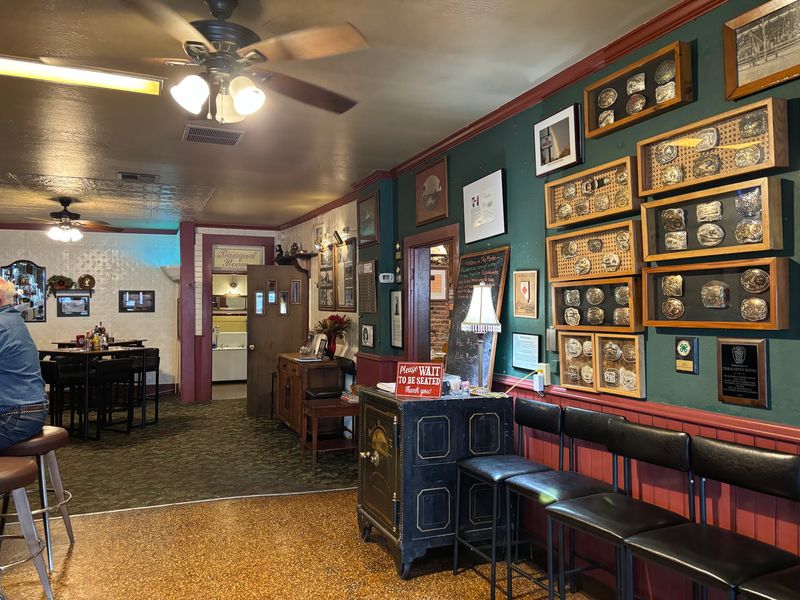
Look up. The dining rooms keep their original pressed tin ceilings and wall panels, the kind of detail that rarely survives a century of remodels and even more rarely gets installed new.
Framed photographs cover much of the remaining wall space, showing families, ranch scenes, and pieces of Winnemucca’s past. Guests frequently spend a few minutes reading them before sitting down, and several have said the pictures gave them a sense of who passed through this building over the decades.
Honest description matters here: the place reads as old, warm, and worn rather than polished. One visitor summed it up as thinking old west instead of expecting showroom condition, which is a fair way to set expectations for anyone traveling with a fussy eye for newness.
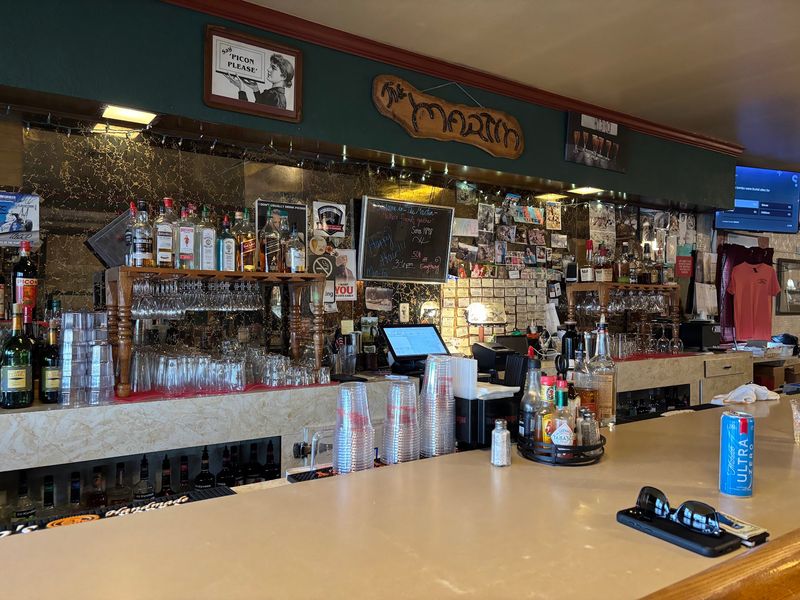
There is also a bar area with its own slightly different menu, useful for early diners or anyone who does not want the full family-style commitment.
A quirky bit of building trivia: behind the bar sits a trap door leading down to an old cellar, still used for deliveries. Guests have been genuinely startled to see it swing open mid-meal.
How Family-Style Seating Actually Works
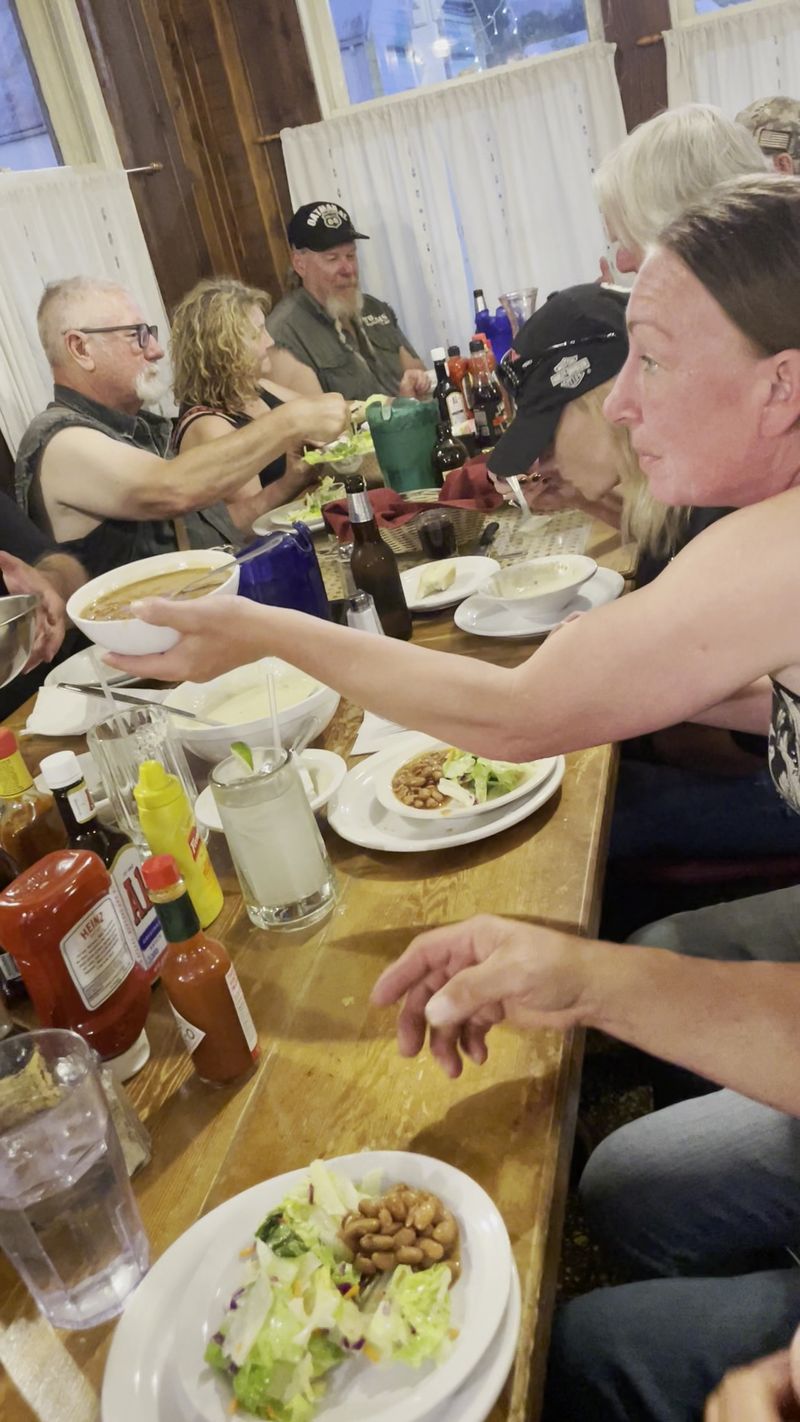
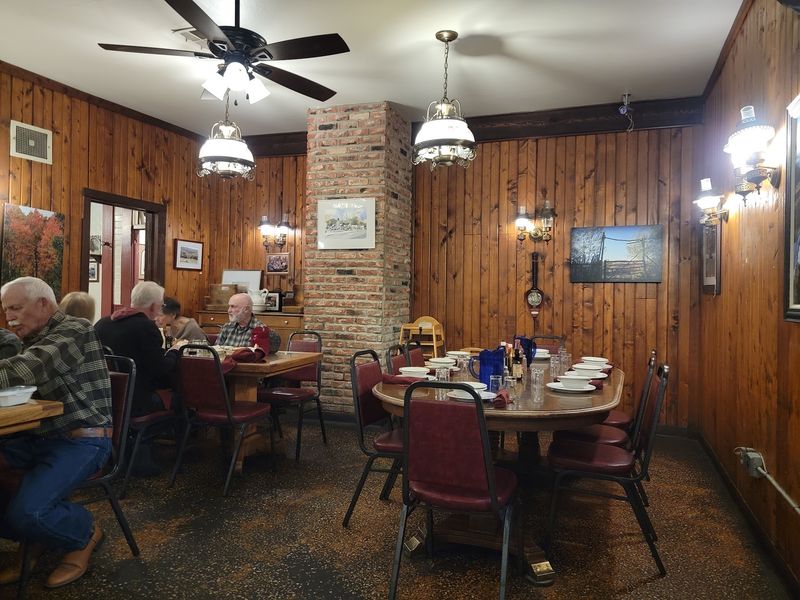
Here is the part that surprises first-timers: you may not get your own table. Seating is communal, so a family of four might be placed at a table for eight and join up with whoever arrives next.
Each person orders an individual entree from the menu. Everything else arrives in large serving dishes meant for the whole table, and you help yourself from platters as they circulate.
The shared courses are included in the price of your entree, which is why the structure trips people up at first. If somebody in your group skips an entree, there is a separate per-person charge for eating only the family-style portion.
Some travelers have said the system could be spelled out more clearly on the menu, since locals treat it as second nature. Asking your server directly, before ordering, saves confusion later.
The social side wins people over. Diners repeatedly mention striking up long conversations with tablemates who turned out to be road-tripping through the same stretch of Nevada, and one guest described the room as pleasantly full and loud with talk.
Soup First, And It Rotates
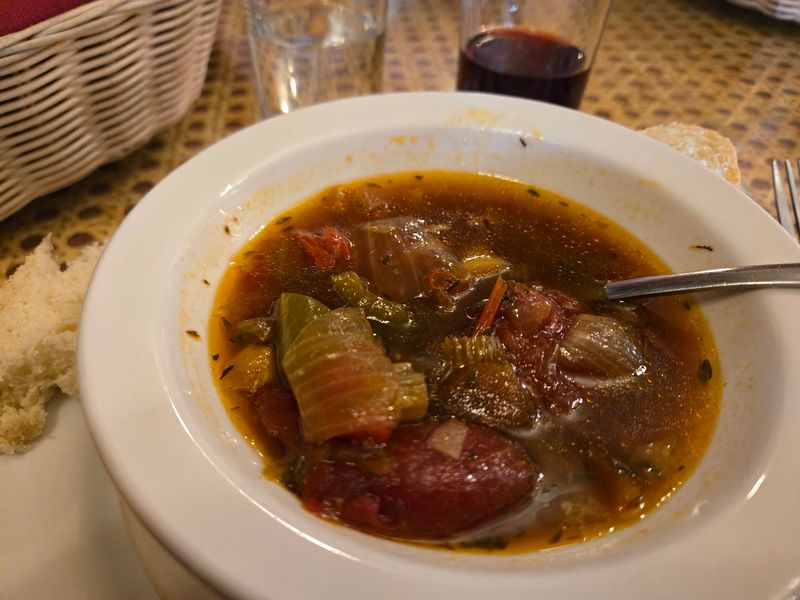
Soup opens the parade. The selection rotates by day, and among the options guests bring up most often are clam chowder and a mushroom soup, with tortellini soup turning up as well.
Chowder seems to be the favorite. One traveler stopping through said the clam chowder alone could have been his meal, which tells you something about the size of a cup here.
The mushroom soup draws steady praise too, though at least one diner wished for a heavier hand with the actual mushrooms. Flavor, by most accounts, holds up regardless.
Soup arrives alongside bread, and both get replenished. Refills on the soup and the side dishes are part of the deal, which is worth knowing before you decide how deep to go on the first round.
Strategy note for anyone who cares about finishing an entree: this is the course where appetites go to be defeated. Several guests admitted they were already comfortably full before the main plate reached the table, and the soup bowl usually deserves most of the credit.
The Garlicky Salad And Those Smoky Beans
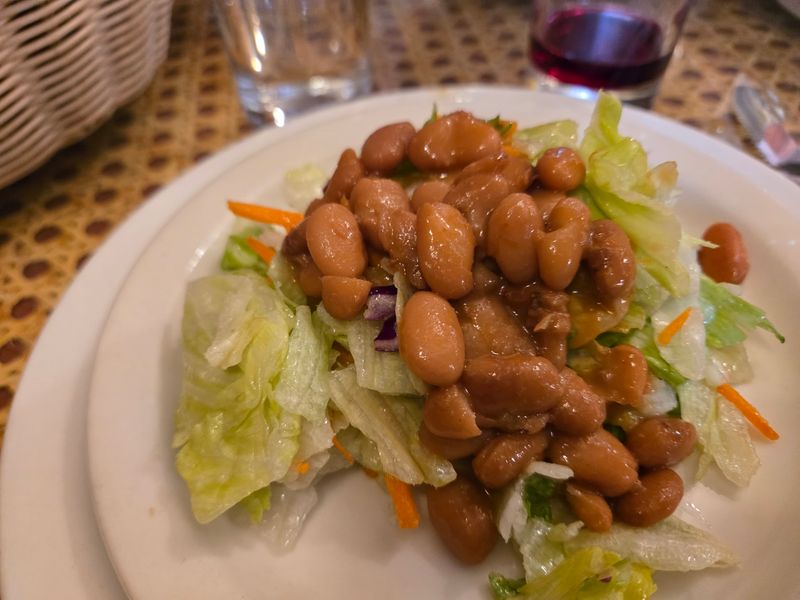
Garlic shows up early and does not apologize. The house salad comes dressed with fresh garlic, and the smoky slow-cooked Basque beans are served right alongside it so you can spoon them straight onto the greens.
Those beans are a signature of the tradition, the kind of dish that fed herders through long stretches in the hills. Guests describe them as awesome, smoky, and the sort of thing you keep going back to even after the platters have moved on.
One fair critique worth passing along: the salad dressing runs heavy on oil, and at least one diner found it more than she wanted. If that matters to you, ask for the dressing lightly applied.
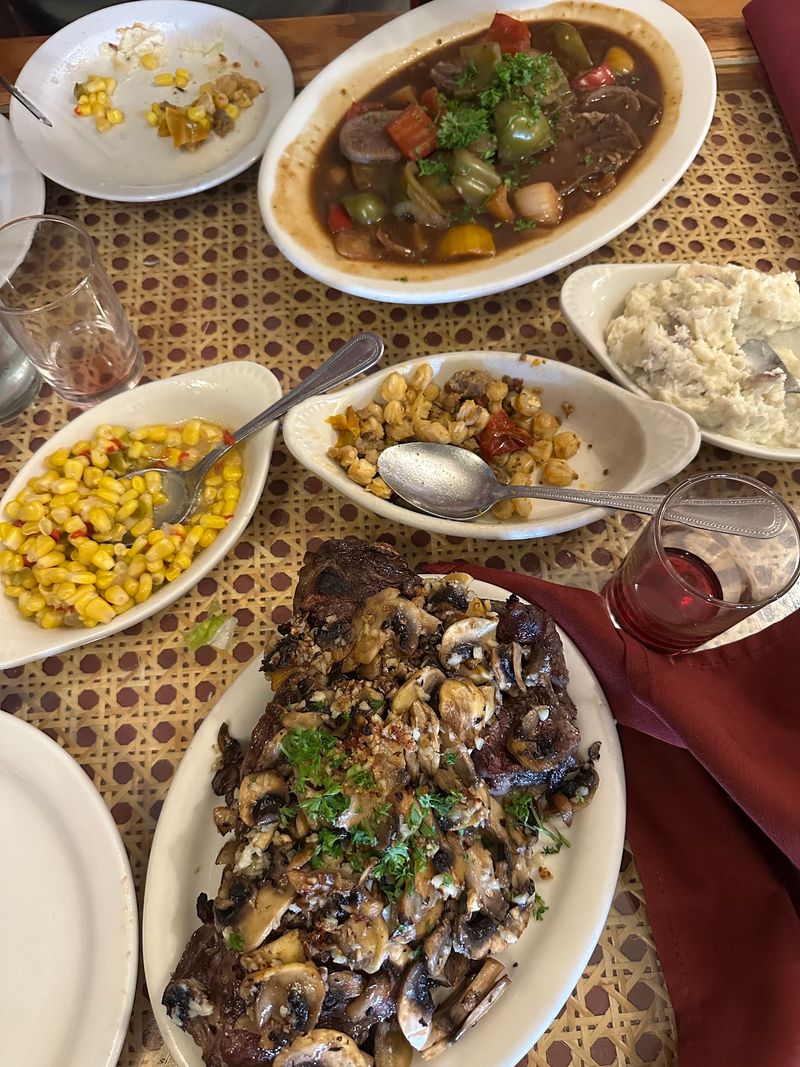
Beyond salad and beans, the rotating side lineup has included hominy with chorizo, green beans with bacon, garbanzos, glazed carrots, corn, and rice depending on the evening.
Seasoned regulars treat the beans as the benchmark. Order a chorizo sandwich off the lunch menu and they arrive as your side, and travelers have called that combination reason enough to pull off the interstate.
Mashed Potatoes And Fries On The Same Table
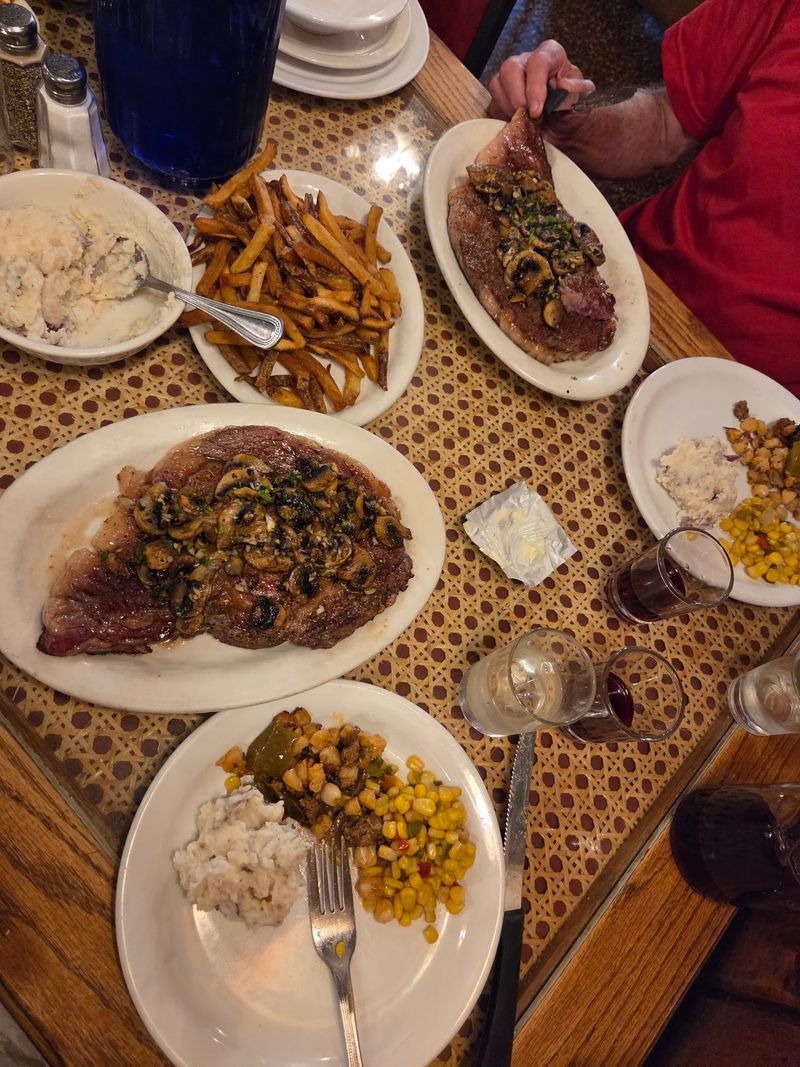
Two starches, no choosing. Mashed potatoes and hand-cut fries both land on the table as part of the family-style spread, which strikes newcomers as excessive right up until they finish both.
The mashed potatoes get singled out constantly. One guest called them the tastiest part of the entire Basque side lineup, and they arrive hot in a shared dish big enough for everyone to take a real serving.
Fries come out crisp and in volume. Pair them with the beans and you have essentially built a full plate before your entree exists.
Fresh bread stays available throughout, restocked as it disappears, which is how the old boardinghouse tables would have worked.
Why so much starch? Practicality.
Herders and rail crews burned serious calories, and a kitchen feeding them could not afford to send anyone away half-fed. That mindset never got edited out of the menu.
Families traveling on a budget tend to appreciate the math. Between the soup, salad, beans, both potato dishes, and the rotating vegetables, the shared portion functions as a meal in its own right.
Lamb Shanks, Solomo, And The Signature Rib-Eye
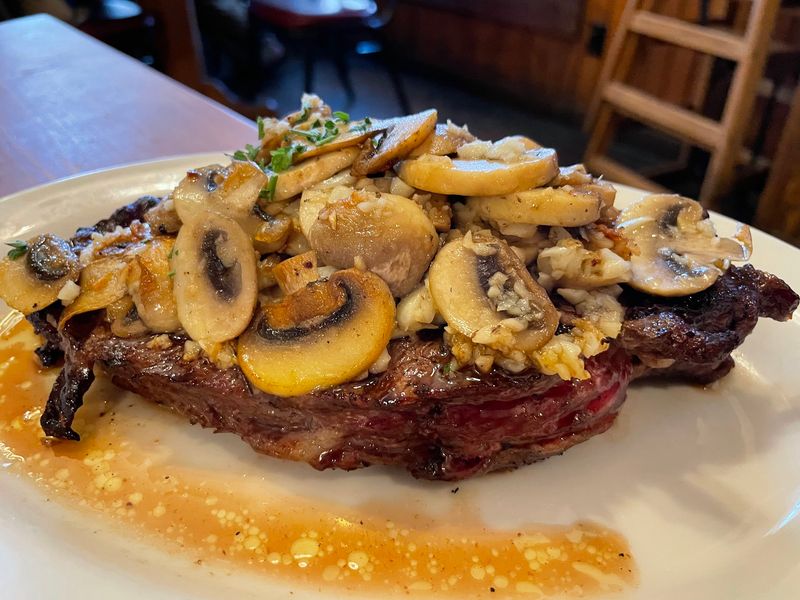
Entrees are where the Basque kitchen shows its hand. Lamb shank arrives fall-off-the-bone tender with plenty of garlic, and lamb chops hold a steady following among repeat guests.
Then there is solomo, a boneless pork loin simmered with fresh garlic and pimentos. One diner researched it on the spot, ordered it instead of the sweetbreads he had been eyeing, and left planning to learn the recipe at home.
An open-faced solomo sandwich appears on the lunch menu and gets its own enthusiastic mentions.
Steaks run large. The signature rib-eye comes with lemon, pepper, sauteed mushrooms, and garlic, and guests joke that a listed 10 or 12 ounces looks closer to twenty on the plate.
The rest of the menu covers more ground than you might expect: chicken fried steak, chicken, salmon, seafood pasta, French dip, liver and onions, and battered deep-fried sweetbreads for the adventurous.
Not every plate lands perfectly, and a few visitors have found certain entrees underseasoned. Staff have been known to send out a freshly prepared replacement unprompted when the kitchen was not satisfied.
Bread Pudding Closes The Evening
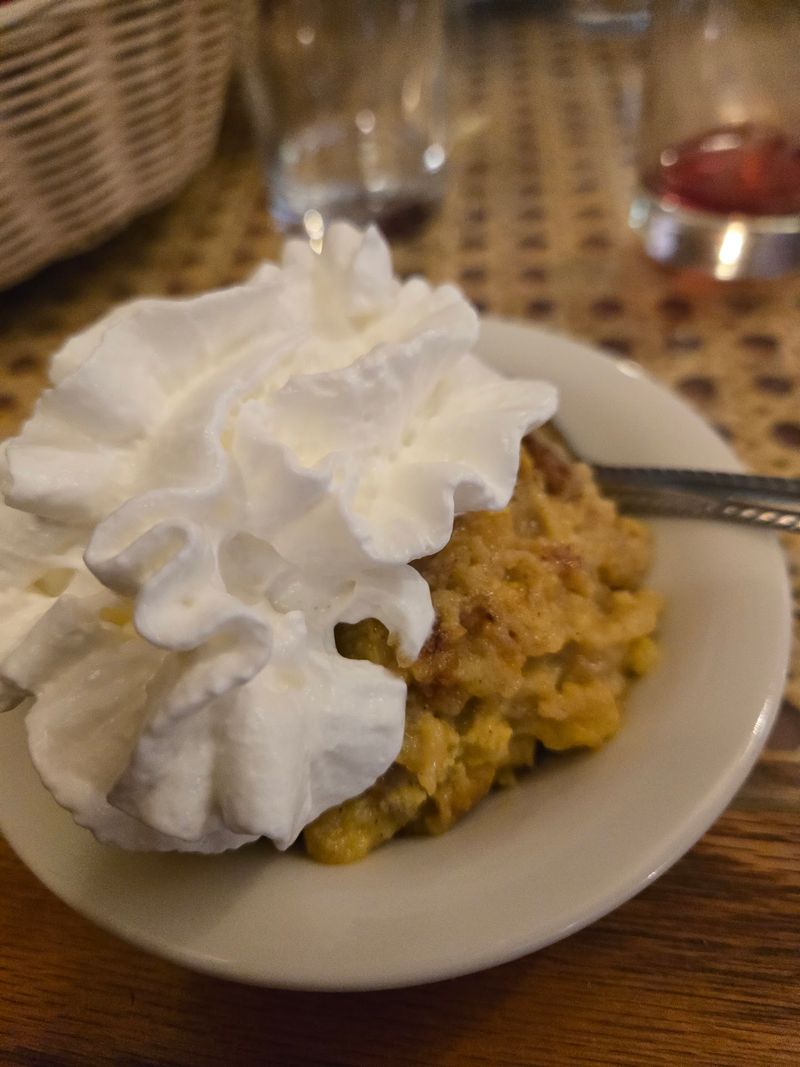
Dessert is not optional in the sense that it simply shows up. Bread pudding arrives after the entrees, included, and it is the single most talked-about item on the whole table.
The recipe is locally famous enough that people order the meal partly to get to the end of it. Regulars mention it more than the lamb, more than the steaks, more than the beans.
Texture opinions vary. Most guests describe it as homemade and satisfying, while one diner found it dense and would have preferred it warmed and served with ice cream.
Refills on dessert have been reported, so a second square is not out of the question.
Cheesecake also turns up on the menu as a bakery-style slice, which a visitor noted is not traditionally Basque but tasted good anyway.
Here is the honest scenario: by the time the bread pudding reaches you, most of the table has already surrendered. Boxes get requested.
One guest walked out with a full second meal for the following day, which is arguably the best value in the building.
Who Fits Right In At These Tables
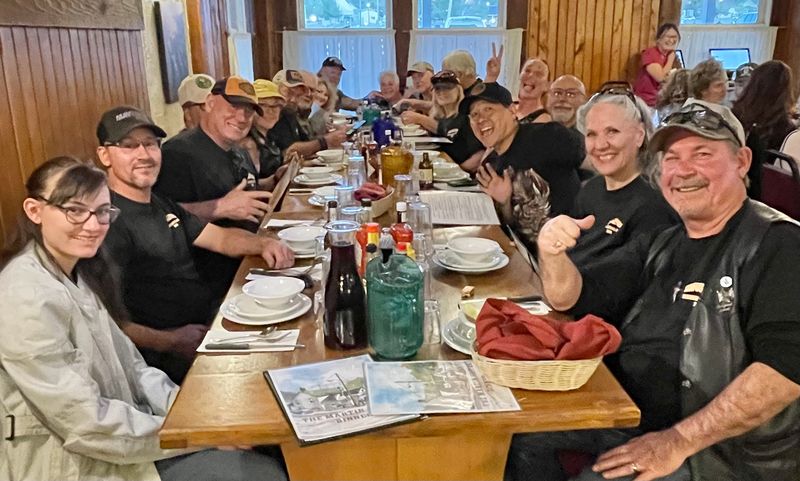
Sociable eaters get the most out of this room. If sitting beside people you have never met sounds like an evening rather than an imposition, the format works in your favor, and travelers frequently walk away having talked with families crossing Nevada in the opposite direction.
Kids are accommodated. A children’s menu covers burgers with fresh vegetables on a quality bun, battered prawns, and chicken tenders, and staff have been described as patient with the noise and mess that comes with a table full of tweens.
Retirees and anyone who prefers an early dinner have an alternative: the bar serves a slightly different menu, and guests who arrived ahead of the dinner rush found that setup perfectly satisfying.
Big appetites obviously come out ahead. So do leftover-lovers, since portions routinely produce a second meal.
Worth flagging for planning purposes: the dining room gets loud when full, and the communal arrangement means you cannot count on a quiet corner. Couples wanting a hushed table should consider the bar side or an off-peak hour instead.
Hours, Cost, And Getting There From Reno
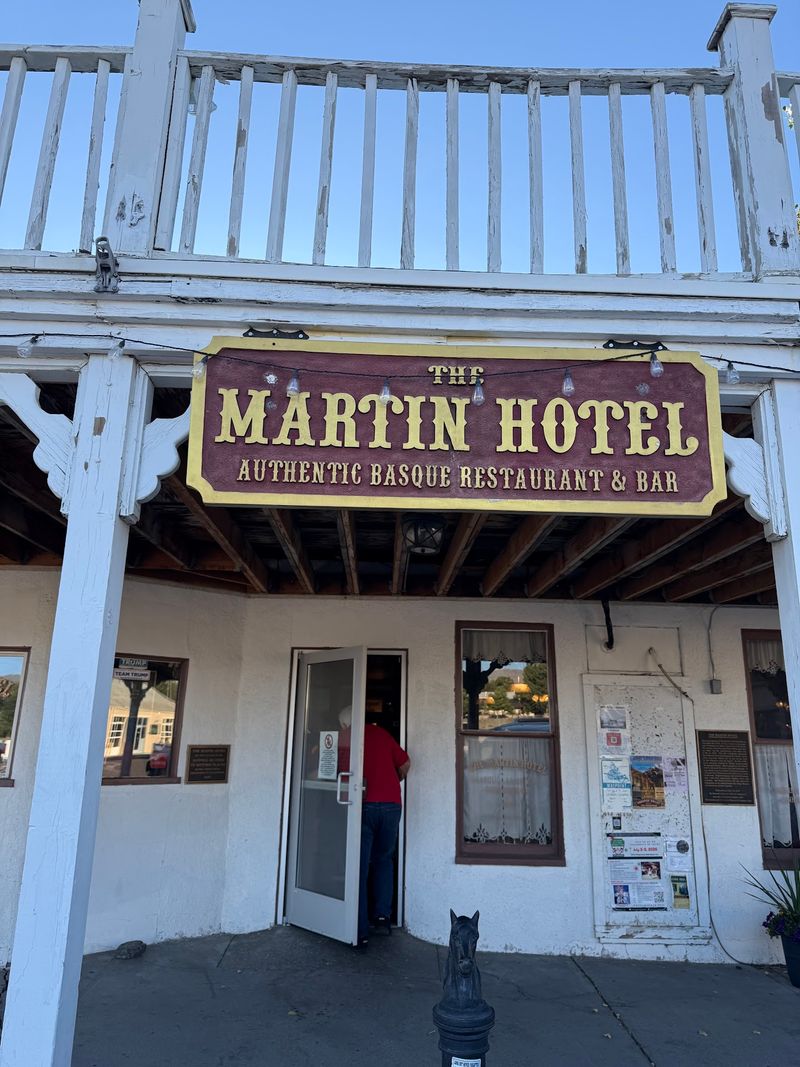
Timing first. Monday through Friday the doors open at 11 AM and close at 9 PM, while Saturday and Sunday run 4 PM to 9 PM only, so a weekend lunch plan will not work here.
Pricing generally falls in the $20 to $60 range per person, with everything shared included in an entree. Diners without an entree pay a separate per-person charge for the family-style courses, and that amount has varied, so ask when you sit down.
Real-world reports put a larger group with a few kids’ meals at over $30 per head, though others called the prices fair or even low for the quantity delivered. Both can be true depending on what you order.
Getting there is straightforward. Winnemucca sits on Interstate 80, roughly three and a half hours northeast of Reno and about an hour west of Battle Mountain, with the restaurant on West Railroad Street near the old depot and easy street parking.
Reservations help. Guests who booked a day ahead were seated immediately.
Confirm hours and pricing before driving, since small-town details shift.
Why The Platters Keep Winning People Over
More than 960 people have weighed in on this place, and the overall mark sits at 4.6 stars. That kind of consistency over a century-old building with communal tables and rotating side dishes says the formula holds.
What people carry home is rarely one dish. It is the sequence: soup, then garlicky salad with beans, then potatoes arriving from two directions, then an entree the size of a small roast, then bread pudding you probably cannot finish.
Not everything is flawless, and travelers have flagged an underseasoned plate or a confusing bill. The kitchen has also been known to remake a dish on its own initiative when it fell short.
For Nevada families and retirees measuring an outing by what it delivers, the math is friendly. One entree price covers five or more courses, and leftovers often stretch into the next day.
Drive in hungry, plan on two hours, and expect to talk to whoever sits down beside you. That combination has been working on Railroad Street since 1898, and it shows no sign of tiring.