
Seven Free Stops Along The Natchez Trace In Mississippi Turn One Drive Into A Whole Day
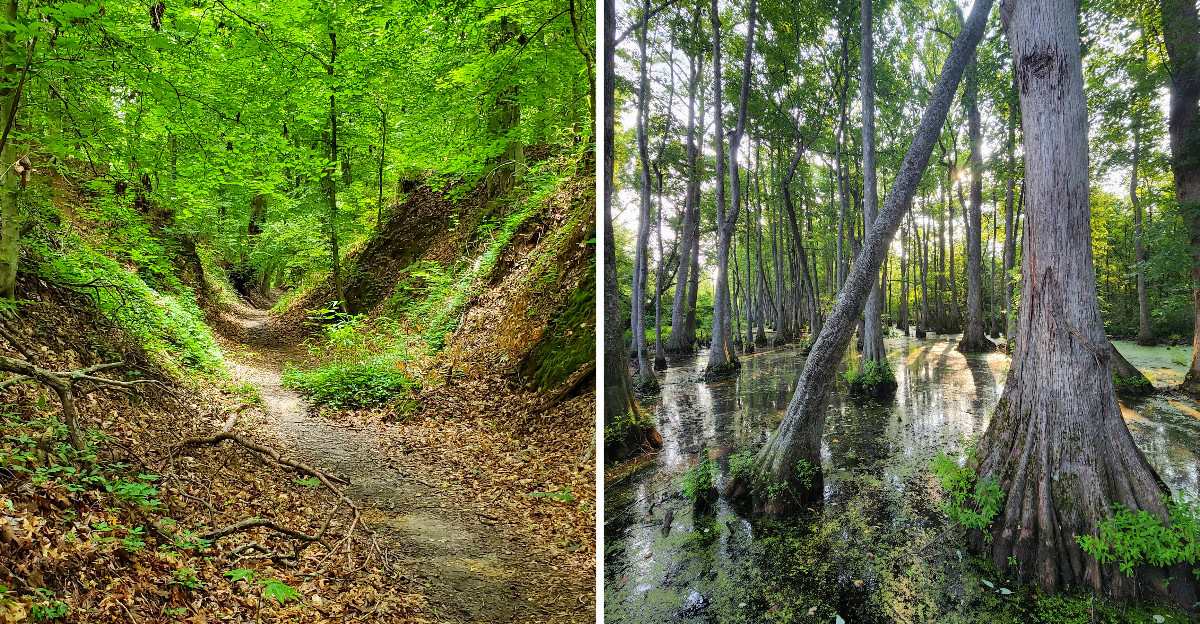
A two-lane road through Mississippi with no billboards, no traffic lights, and no trucks sounds almost too quiet to be interesting. Then you pull into the first gravel turnout, follow a short path, and realize the woods have been hiding something older than the state itself.
Every few miles there is another sign, another trail, another place where you can park for free and stretch your legs. String enough of them together and a simple afternoon drive quietly becomes a full family day out.
1. Emerald Mound
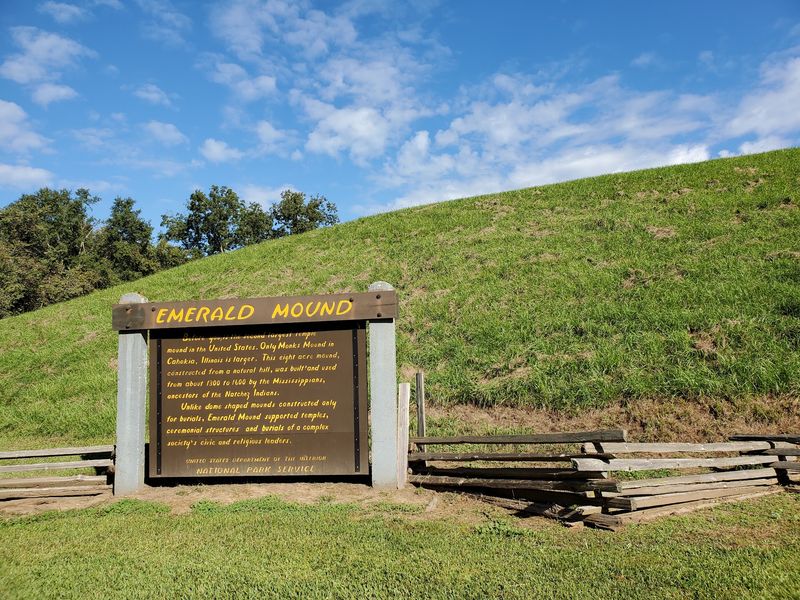
Eight acres of earth, shaped by hand, still sitting in a quiet clearing off a country backroad northeast of Natchez. Emerald Mound is the second-largest Native American mound site in the United States, and standing at its base gives you a real sense of how much labor that scale represents.
Access could hardly be simpler. The parking area sits right beside the mound, with clear signage and interpretive plaques that lay out the history in plain language before you ever start walking.
A short path climbs to the flat summit, where two smaller mounds rise from the top surface. From up there the surrounding countryside opens up, and it becomes much easier to picture the ceremonial center that once occupied this ground.
Kids tend to treat the climb as a challenge, which works in a parent’s favor when the day is long. Admission is free, parking is free, and the site generally keeps daytime hours.
Mornings midweek are often the calmest. Weekend mornings can draw more cars, though the site rarely feels crowded given how much open space there is to spread out across.
2. Mount Locust
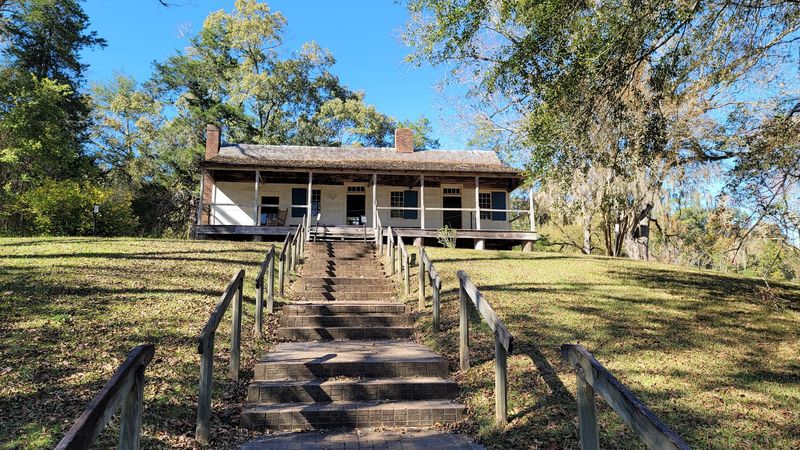
Rocking chairs on a shaded porch are the first thing most travelers notice at Mount Locust, and they are there to be used. The house dates to the 1780s and served as an inn, one of the old roadside stands where Trace travelers found a meal and a place to sleep.
Volunteer guides and rangers are often on the grounds, offering informal tours that explain how the farm operated and who lived and worked here. A cemetery on the property is part of that fuller story, including the enslaved people whose labor built the place.
Behind the house, a preserved section of the original Trace trail is open to walk. It is short, shaded, and gives younger visitors something to do besides listen.
Practical notes matter on a long drive: there is an information center with a gift shop, clean restrooms, a water fountain, and generous parking that accommodates RVs. The site operates Wednesday through Sunday during daytime hours and closes early in the week, so plan the route accordingly.
Everything outdoors is free to explore at your own pace.
3. Sunken Trace
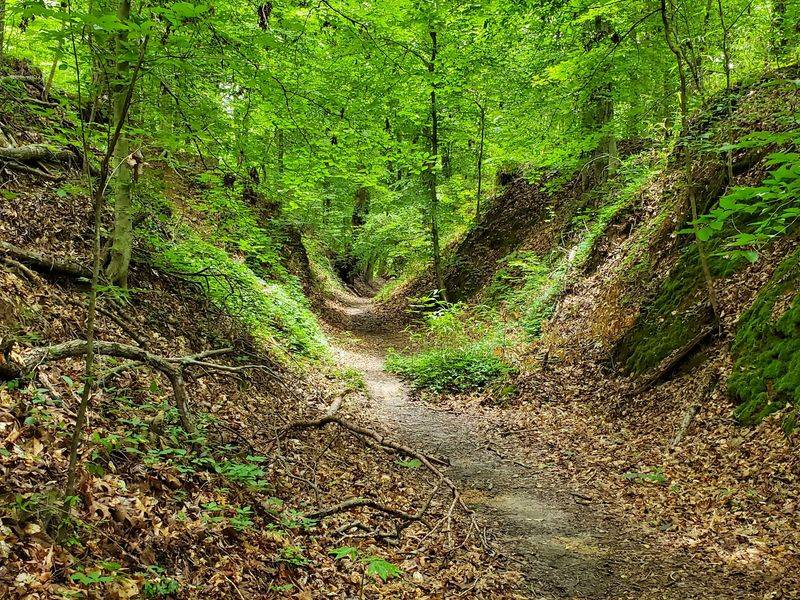
Picture a footpath worn so deep that the ground rises well above your shoulders on both sides. Centuries of foot traffic, horses, and wagon wheels cut this corridor into soft loess soil near Port Gibson, and walking it is the closest thing to time travel the Parkway offers.
What makes the stop so easy to fit into a day is the distance involved. The trail begins right next to the parking lot, including wheelchair accessible spaces, so nobody has to hike in to see the good part.
Interpretive signs explain how travelers once slogged through mud and rock along this route, and how weather kept carving the channel deeper year after year. The walk itself takes only a few minutes at an unhurried pace.
Photographers love it for the light. Overhead branches filter sun into stripes across the earthen walls, and the shade makes it a welcome pause on a hot Mississippi afternoon.
Traffic here stays light through most of the week, with Sunday afternoons drawing the biggest share of cars. There is no fee, no gate, and no reason to rush.
4. Rocky Springs Campground
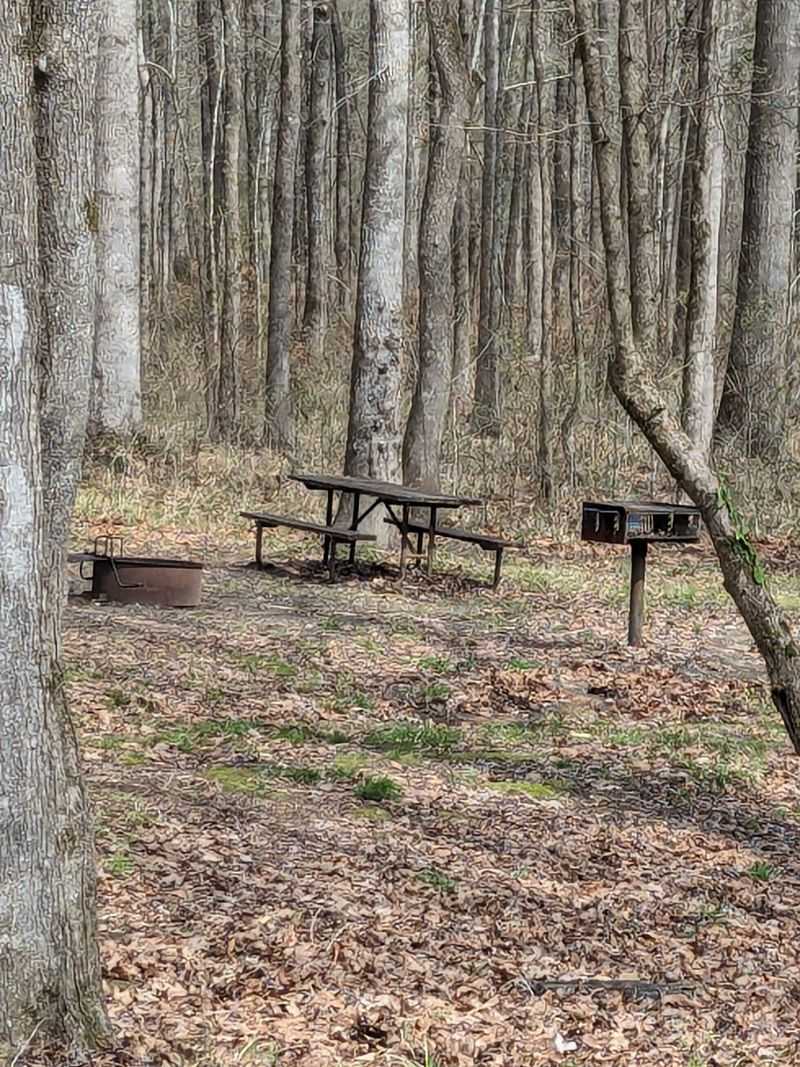
Milepost 54.8 near Hermanville hides a campground that costs nothing to use, which surprises people who expect a fee station at the entrance. Sites are spread through hardwood forest, each with room for a few tents, a fire ring, and a picnic table.
Even if you have no plans to stay overnight, the loop makes a fine place to eat a packed lunch. Restrooms with flush toilets are on site, and shade covers most of the area through the afternoon.
Camping here is primitive in the true sense. There are no showers and no potable water available, so anyone planning to stay should arrive with jugs filled and expectations set.
Dogs are welcome, and parking is free throughout.
Night is when the place earns its reputation. Light pollution is minimal in this part of Claiborne County, and on a clear evening the Milky Way can be visible straight overhead, which turns a simple camp into an astronomy lesson.
Trails leading from the area connect to the old town site and surrounding woods, so stretching a quick stop into an hour or two happens naturally.
5. Cypress Swamp
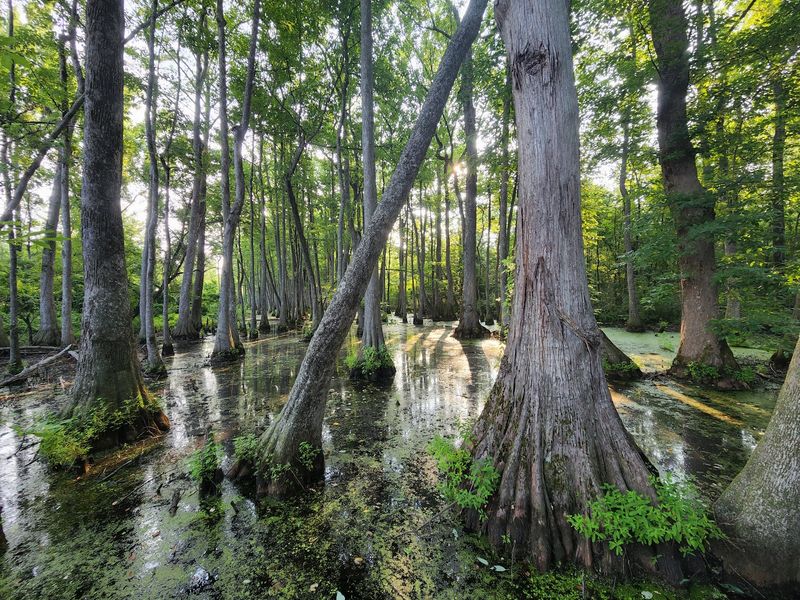
Dark water, knobby cypress knees, and tupelo trunks standing in still shallows give this stop near Canton an atmosphere unlike anything else on the Parkway. A wooden boardwalk carries you out over the water on a short loop, with bridges connecting the drier stretches.
Ten to fifteen minutes is enough to walk the whole thing, which is exactly why it works with restless kids in the car. Interpretive panels along the way explain how these water-tolerant trees survive with their roots submerged.
Wildlife spotting is the main event. Turtles line up on fallen logs, wading birds stalk the shallows, frogs call from the edges, and small alligators can sometimes be seen sunning themselves, which tends to end all complaining about walking.
Footing deserves a mention. Boards get slick after rain, so shoes with grip beat flip-flops on a damp morning, and little ones should stay on the planks.
Parking is free and sits directly off the Parkway with no admission of any kind. Afternoons on weekends see the most visitors, while early mornings are quiet, cooler, and better for spotting animals along the water.
6. Jeff Busby Park
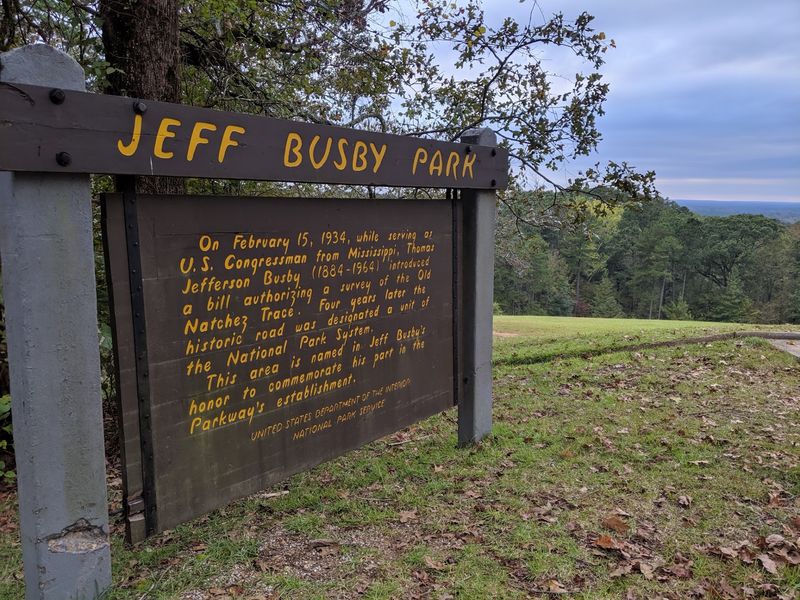
Mississippi is not a state known for elevation, which makes the climb to Little Mountain at Jeff Busby Park a small novelty. At 584 feet, it ranks among the highest points around, and the overlook opens onto rolling forest that stretches to the horizon.
You can drive most of the way up, then step out to a view that rewards almost no effort. Interpretive exhibits explain the landscape, and benches give grandparents a comfortable spot while everyone else wanders.
Down at the base sits a free campground with well-spaced sites, grills, fire rings, and picnic tables. Restrooms are on site and generally kept clean, and the area is wheelchair accessible with parking for cars, buses, and RVs.
Hikers have options. A nature loop drops into a shaded hollow for an easy half hour, while a longer trail of about a mile and a half climbs to the top, passing a natural spring along the way.
Wildlife shows up often in the quieter hours near Ackerman. Weekend afternoons bring the most activity, so a Tuesday morning visit may feel like you have the hill to yourself.
7. Witch Dance
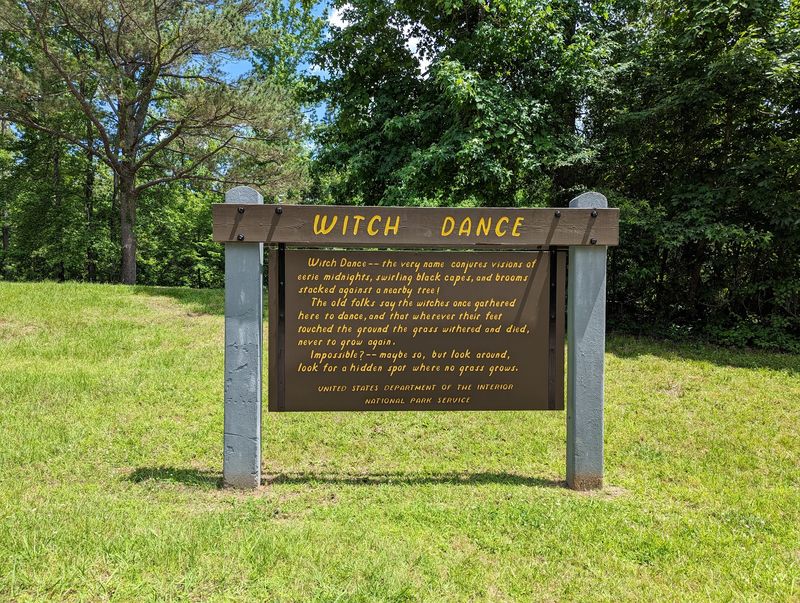
Folklore gets its own pull-off on the Parkway near Houston, and the name alone is usually enough to get kids out of the car. Legend holds that witches once danced here, floating above the earth, and that the bare scorched patches of ground mark where their feet touched down.
A plaque shares the story, though no markers point directly to the patches themselves, so finding them becomes part of the fun. Rugged horse trails and hiking paths lace the surrounding woods for anyone wanting to explore further.
Facilities here are better than the spooky reputation suggests. Picnic tables, barbecue grills, clean public restrooms, and a free parking lot make it a practical place to spread out a cooler lunch, and a creek runs nearby.
Dogs are welcome on leash, and the shaded pine woods keep temperatures manageable when summer settles over north Mississippi.
Access runs around the clock, though daylight makes far more sense with a family in tow. Friday evenings and Saturday afternoons attract the most traffic, while Sunday mornings stay peaceful enough to hear nothing but birds and wind.