
Sunlight Pours Through The Stained Glass At These 7 Historic Mississippi Churches Worth A Slow Drive
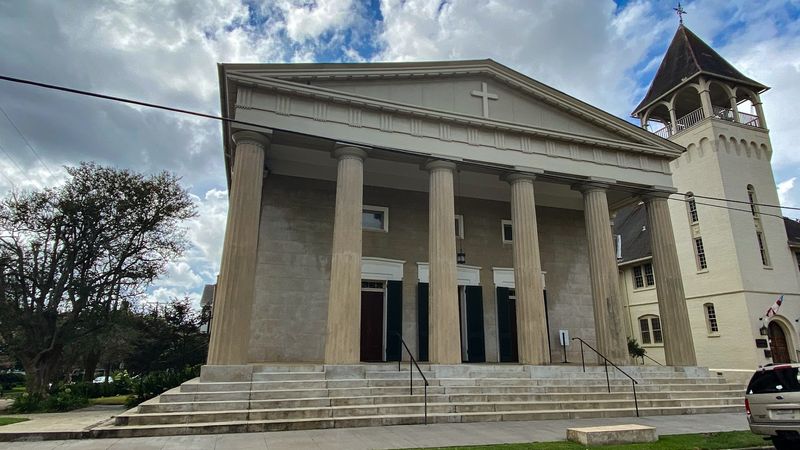
I pulled off a quiet Mississippi back road one Sunday just to stretch my legs, and a little brick church stopped me cold. The afternoon sun was hitting its windows, and the whole place seemed to glow from the inside.
Many of these churches were built before the Civil War, and they still hold services today. Here are seven worth planning a slow drive around, each with its own story told in colored light.
1. The Chapel of the Cross, Madison, MS
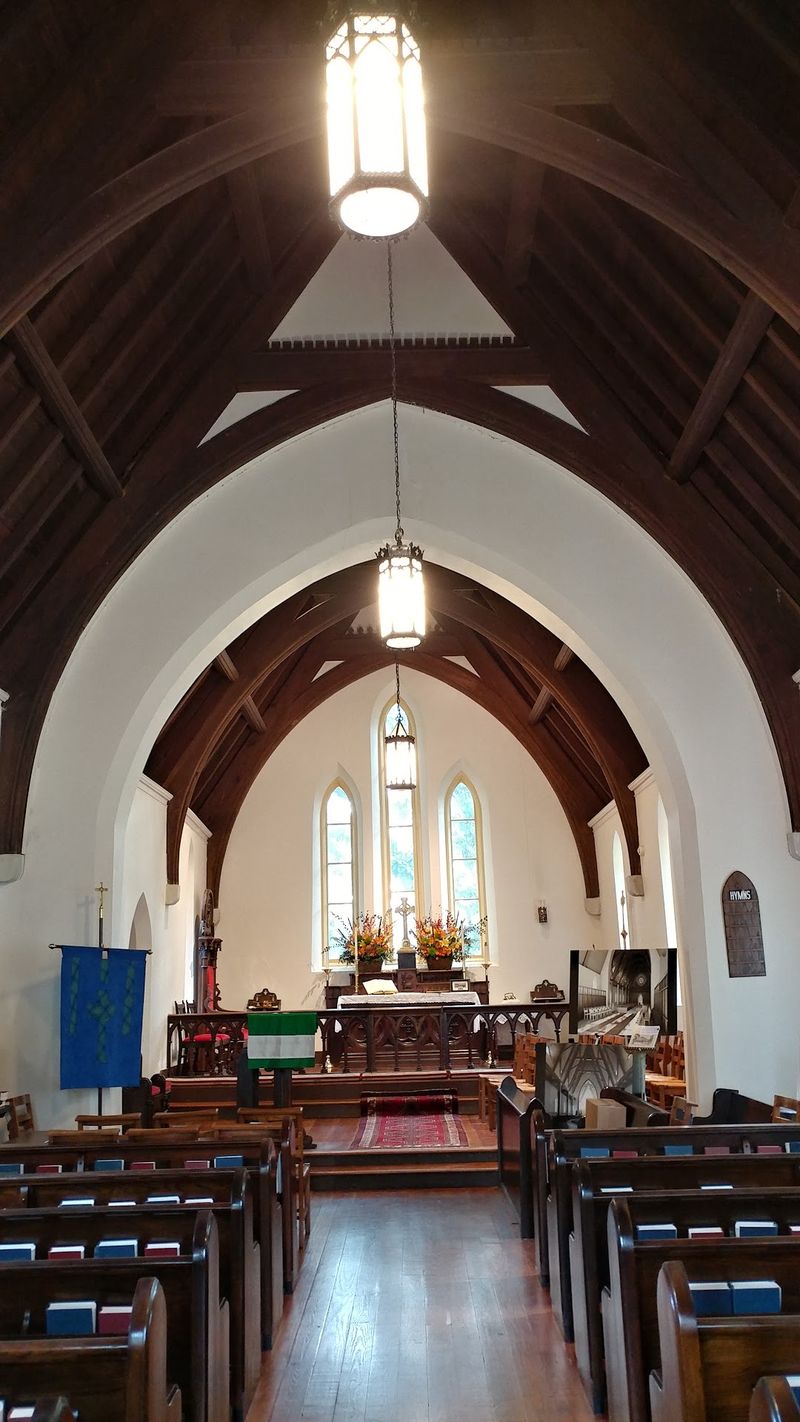
Picture a country lane, a stand of old trees, and then a brick chapel that looks like it wandered over from an English village. Construction started in 1850 and wrapped up in 1852 on the grounds of the antebellum Annandale plantation.
The design leans fully into Gothic Revival style, with a steep roof and pointed shapes everywhere you look.
Tall, slender lancet windows line the brick sanctuary. Each one holds historic stained glass, and when the sun sinks lower in the sky, color spills across the pews in long stripes.
A rose window in the choir loft adds another layer, though that piece came later from a Jackson studio.
Still an active Episcopal parish, the chapel sits along the historic Mannsdale corridor north of Jackson. Sunday hours run from 7:30 AM to 6 PM, which makes it one of the easiest stops on this list for an afternoon visit.
Weekday hours are 8 AM to 4 PM, and it closes on Saturdays.
Practical perks help too. A free on-site parking lot means no hunting for a spot, and restrooms are available.
Bring a camera and some patience, because the best light shows up when the shadows start stretching across the grounds.
2. St Mary’s Basilica, Natchez, MS
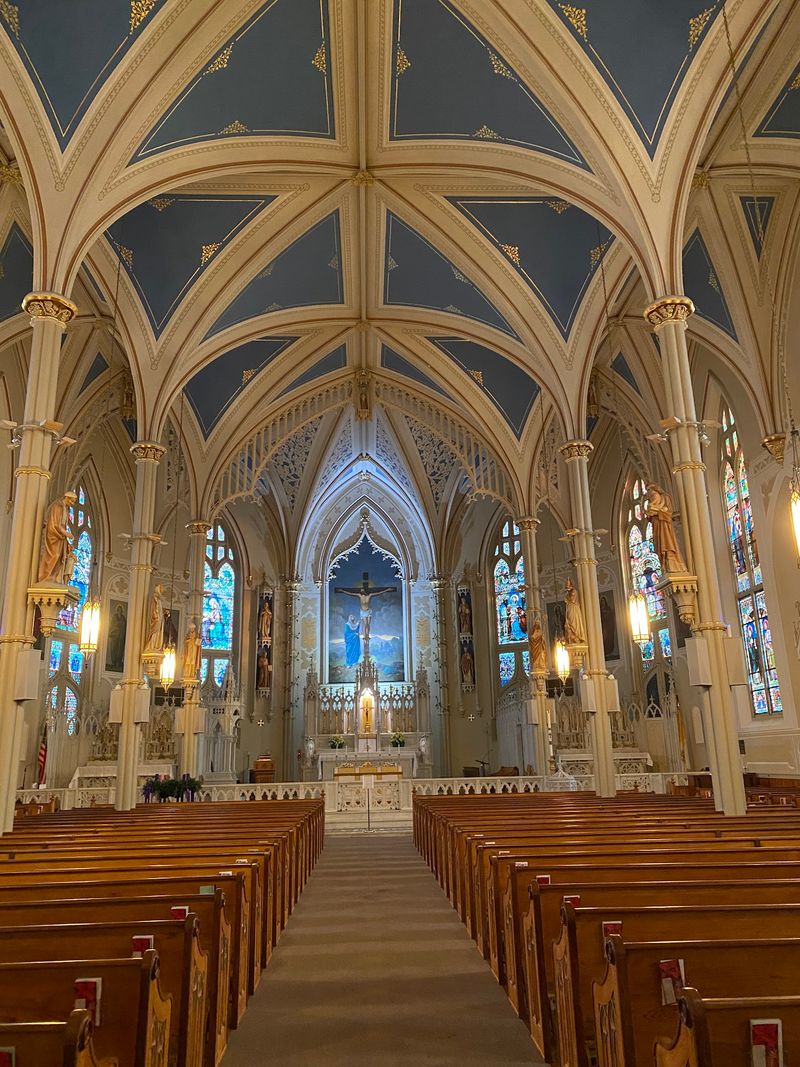
Few buildings in the South can match the scale of this one. Work began in 1842, back when Natchez was booming, and the church was dedicated on Christmas Day in 1843 as the Cathedral of Our Lady of Sorrows.
Today it holds the honored title of minor basilica.
Step inside and the windows take over. Twelve Austrian stained-glass windows were installed between 1884 and 1893, made by a glass studio in Innsbruck.
Some pieces were brought over from Munich, Germany, and four more windows joined the collection in 1961.
Together they line the nave and chancel with deep reds, blues, and golds. On a bright afternoon, the light inside feels thick enough to touch.
The Gothic Revival arches pull your eyes upward, so expect a sore neck from staring at the ceiling.
Visiting is simple. Doors open daily from 7:15 AM to 4:15 PM, including Sundays, and restrooms are available.
Sunday mornings and Saturday afternoons draw the biggest crowds, so a mid-afternoon Sunday arrival often means a calmer look around.
Since it sits on South Union Street in historic downtown, you can easily pair it with a stroll past nearby antebellum homes.
3. Trinity Episcopal Church, Natchez, MS
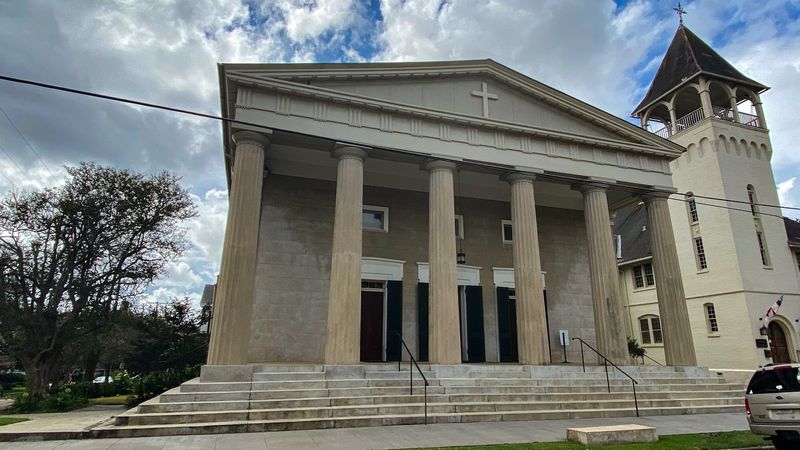
Start with a date: 1822. That is when builders began work on Trinity, and no older church building survives in Natchez.
It also ranks as the oldest surviving Episcopal church building in the city and one of the earliest houses of worship erected anywhere in the state.
The building began in the Federal style. In 1838, a remodel added a Greek Revival portico with stately columns, giving the front its dignified look.
So you get two architectural chapters stacked in one structure, which is a fun puzzle for history fans.
Inside, vivid stained glass fills the gallery and chancel windows. Several of the panels are memorial windows, each one honoring someone from the congregation’s long past.
Reading those small inscriptions turns a quick peek into a slow, thoughtful walk.
Timing matters here. Sunday hours run only from 9 to 11:45 AM, so this one fits better as a morning start before St. Mary’s a few blocks away.
Weekday hours are 9 AM to 4 PM Monday through Thursday and until noon Friday.
Restrooms are on site. Its spot on South Commerce Street keeps it close to the river bluff and plenty of other architecture worth photographing.
4. Christ Episcopal Church, Vicksburg, MS
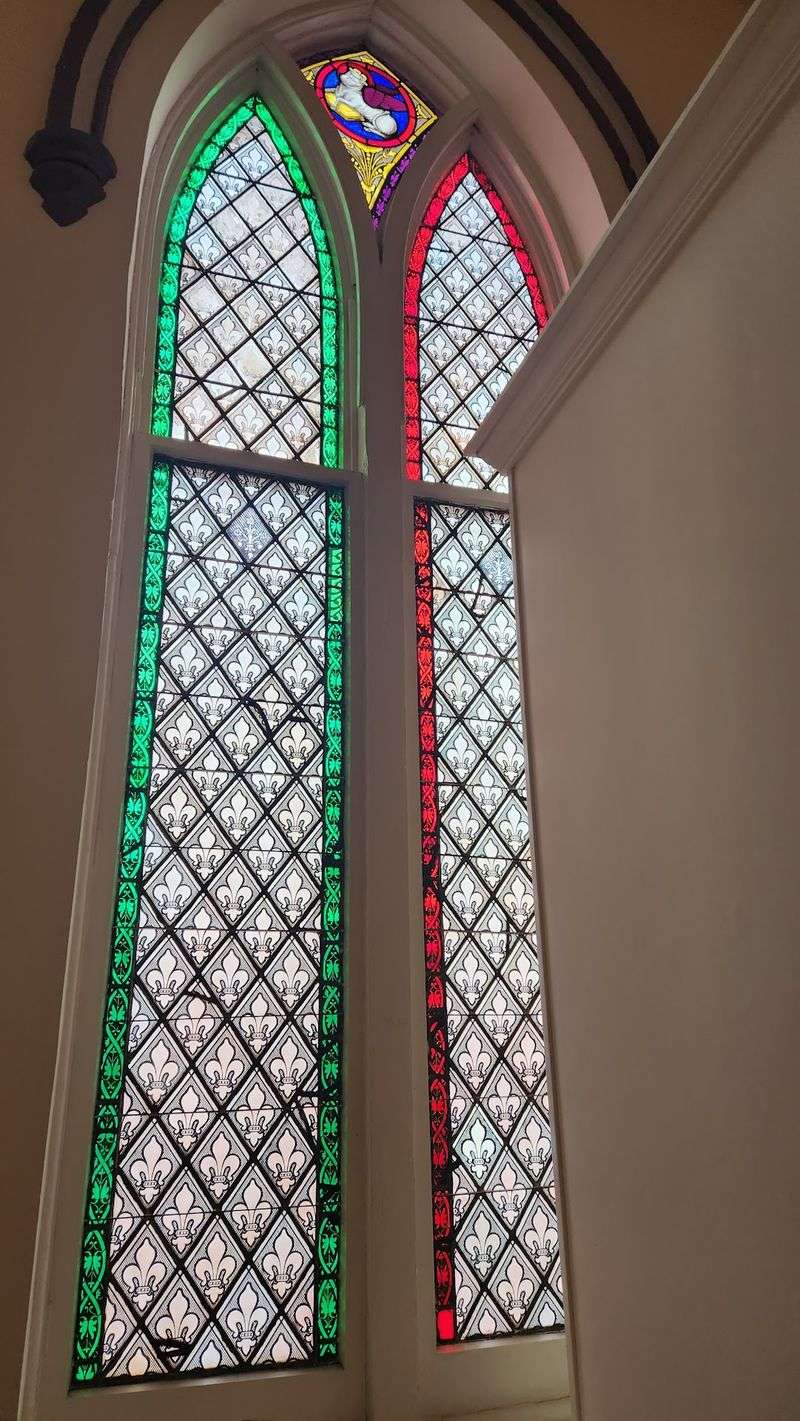
Vicksburg went through a brutal siege in 1863, yet this church came through standing. Built between 1839 and 1843, it watched the town change around it and kept its doors open as a parish church.
What draws glass lovers here is the collection. The church is known for its antique stained glass, including treasured Tiffany windows.
Tiffany glass has a layered, almost painterly quality, with colors that shift as clouds move across the sky outside.
How do you plan around it? Office hours run Monday through Thursday from 8 AM to noon, and the building is closed Friday through Sunday outside of services.
A Sunday drive might mean admiring the exterior, then circling back on a weekday morning for a proper look at the windows.
Even from the sidewalk, the setting is worth the stop. Main Street climbs and dips with Vicksburg’s hills, and the church sits prominently in the historic district.
Brick homes, old storefronts, and river views are all within a short walk.
Restrooms are available when the building is open. Pair a visit with the nearby downtown area and the military park, and you have a full afternoon of history in one town.
5. St Peter’s Episcopal Church, Oxford, MS
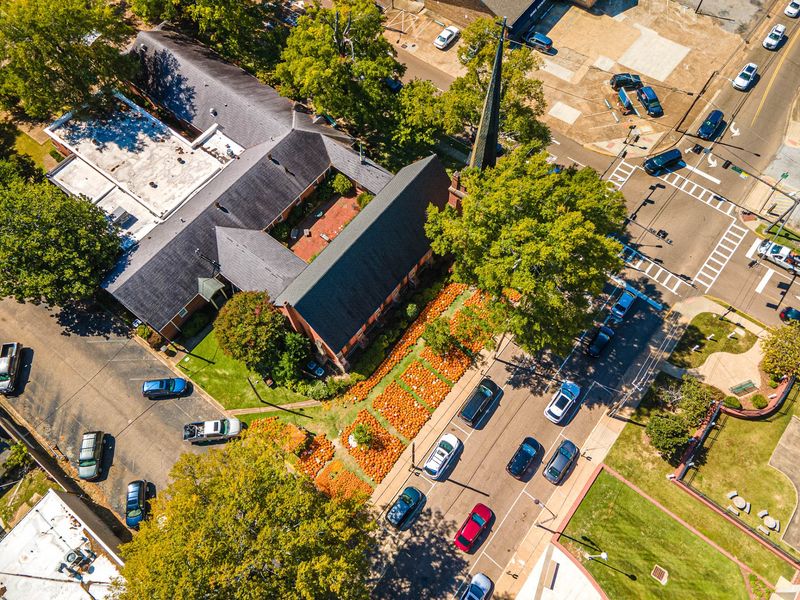
Here is a name architecture buffs will recognize: Richard Upjohn. The famed designer behind many Gothic Revival churches in the Northeast drew the plans for this Oxford sanctuary, which went up between 1859 and 1860.
It was consecrated right on the eve of the Civil War.
That timing makes it the latest built church on this list, and also the farthest north. If the rest of your route sticks to the river towns, this one gives a reason to swing through the hill country.
Lancet windows carry richly colored stained glass, and the pointed arches frame the color neatly. The effect feels intimate rather than grand.
Late-day sunlight warms the interior and makes the brick and wood glow along with the glass.
Location is a big plus. The church sits on South 9th Street, just off the courthouse square, so parking the car and walking the square fits naturally into the stop.
Bookstores, shops, and cafes surround the square, giving the visit an easygoing, small-college-town rhythm.
Restrooms are available. Since posted hours are not listed, checking the church website before driving out is a smart move, especially if seeing the interior is your main goal.
6. St. Paul’s Episcopal Church, Woodville, MS
Woodville has fewer than a thousand residents, and it moves at the pace of a porch swing. Tucked into that calm is a church consecrated in 1824, recognized as the oldest Episcopal church building in Mississippi.
Think about that for a moment. When this congregation first gathered inside these walls, Mississippi had been a state for only seven years.
The building has outlasted wars, storms, and nearly two centuries of change, and it still serves an active parish.
The windows here follow an early American Gothic style, with pointed arches holding stained glass. They are simpler than the imported European glass in Natchez, and that plainness is part of the charm.
Soft colors wash over the interior without overwhelming it.
Getting there is half the fun. Woodville sits along historic Highway 61, a road lined with farmland and old towns between Baton Rouge and Natchez.
The church anchors Church Street near the courthouse square, so a short loop on foot shows off the town’s well-kept historic buildings.
Restrooms are available. Hours are not posted, so treat the exterior as a sure thing and the interior as a bonus.
Either way, the quiet streets alone make the detour feel rewarding.
7. First Presbyterian Church, Port Gibson, MS
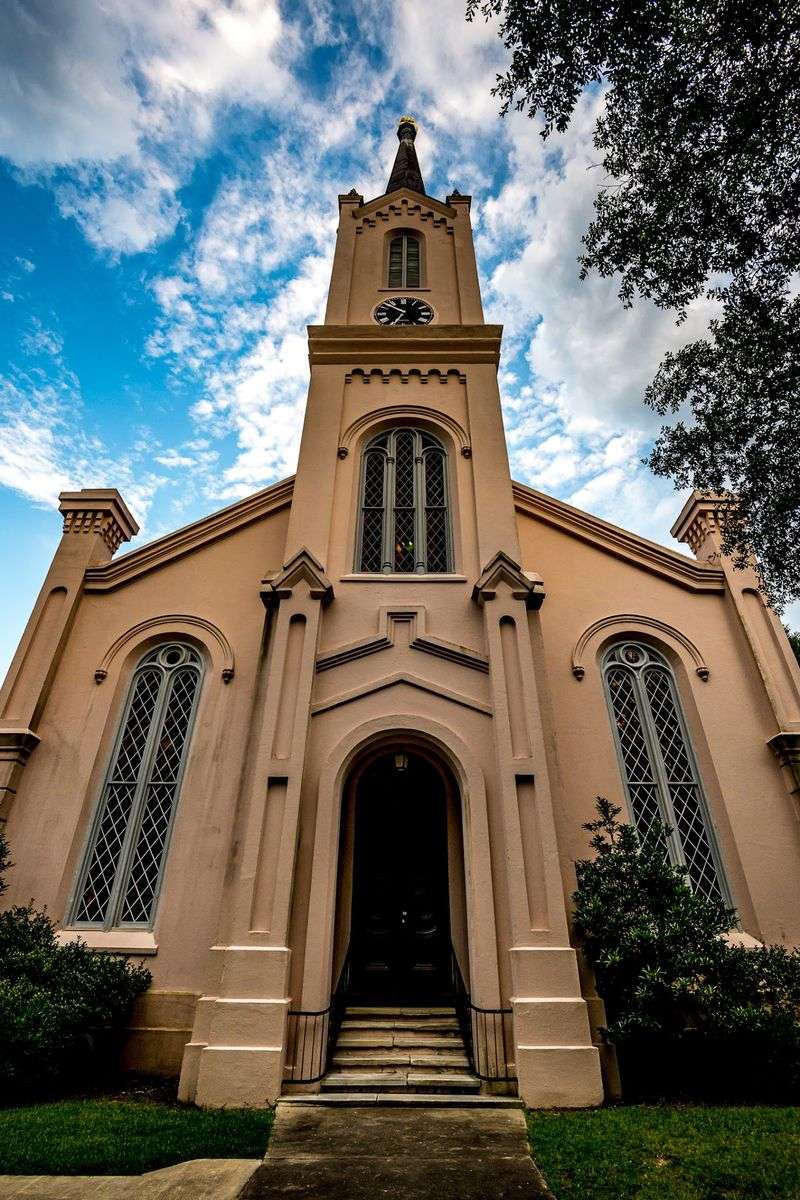
Look up before you look in. A gilded hand sits atop the steeple, one finger pointing straight to the sky, and it has been a local landmark for over 160 years.
Nobody forgets this church once they have seen it.
Built between 1859 and 1860 and dedicated that December, the Romanesque Revival building was spared during General Grant’s Civil War campaign. Port Gibson itself is famous for the same reason, often described as the town too beautiful to burn.
Gothic arched stained-glass windows were added in 1903 at a cost of just $888. Windows at the front still hold their original flash glass from that installation, a technique where a thin layer of color is fused onto clear glass.
Inside, the light falls across the sanctuary beneath historic brass chandeliers.
For the interior, contacting the church office ahead of time is recommended. The exterior, though, is a full experience on its own, especially with that golden hand catching the afternoon sun.
Church Street is lined with trees and other historic churches, and restrooms are available. With Port Gibson sitting between Natchez and Vicksburg, this makes a natural midpoint on a longer river-country drive.