
The Apple Pancake At This Wilmette, Illinois Pancake House Comes Out Puffed And Caramelized
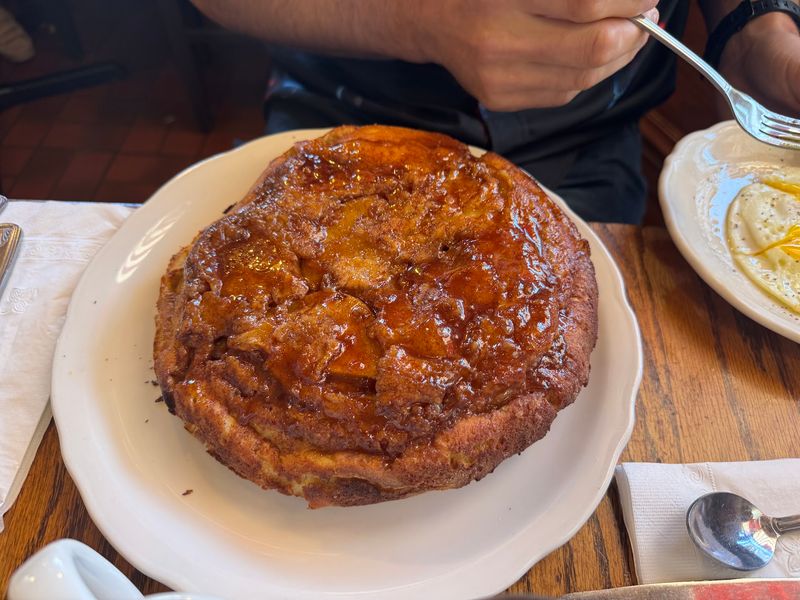
Breakfast in Illinois usually means eggs, toast, and a stack of flapjacks you forget about by lunchtime. Then there’s the plate that arrives at one North Shore breakfast room looking like it belongs under glass in a bakery window: nine inches wide, two inches tall, glossy with cinnamon sugar that has gone amber in the oven.
It takes time to bake, it feeds two people comfortably, and it has quietly turned a suburban morning meal into something families drive across Chicagoland for. Here is what makes it worth the wait.
A Green Bay Road Breakfast Room With a Long Memory
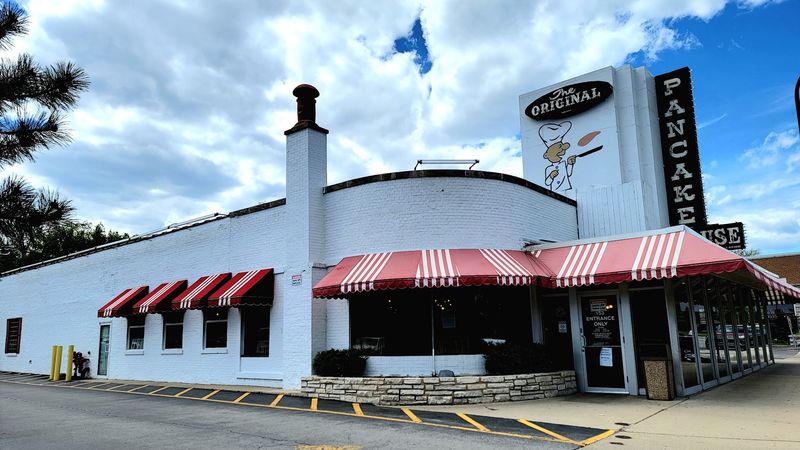
At 153 Green Bay Road in Wilmette, a short walk from the Metra tracks and a few minutes off Lake Michigan, sits Walker Bros. Original Pancake House.
Google lists it plainly as a pancake restaurant, which undersells what happens inside.
Wilmette itself is a North Shore suburb roughly a half hour north of downtown Chicago when traffic behaves, and the drive pulls in families from Evanston, Skokie, Glenview, and well beyond Cook County.
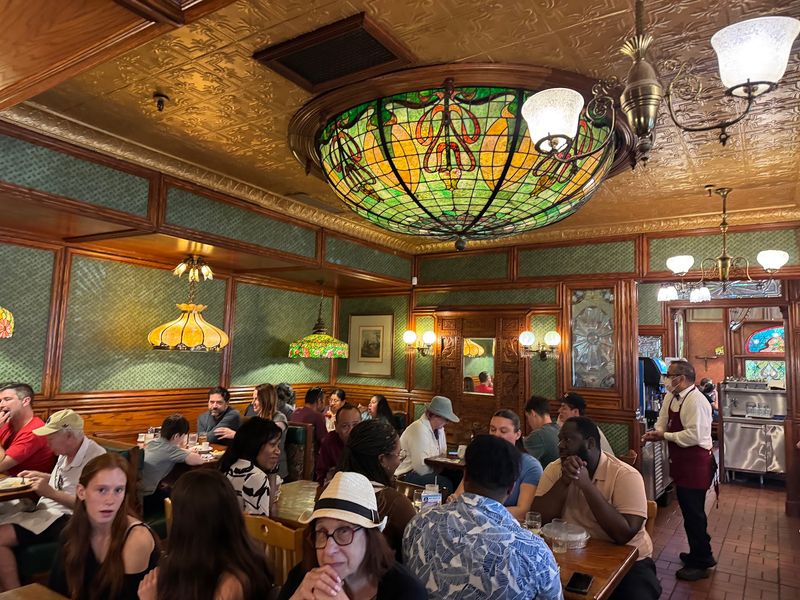
The building announces itself less through signage than through the line that tends to form outside on weekend mornings. Inside, brass fixtures, dark wood, and colored glass set a tone closer to an old print shop than a modern brunch spot, something visitors mention often.
Breakfast and lunch are the whole business here. Hours run 7 a.m. to 2:30 p.m. every day of the week according to current listings, with both dine-in and carryout available, though it is always sensible to check ahead before making the drive.
Most people come for one dish in particular. The apple pancake has become the reason this address appears on so many Chicagoland breakfast lists year after year.
Two Brothers, One Idea, and the Year 1960
Back in 1960, brothers Victor and Everett Walker opened this Wilmette room as the first Walker Bros. location, and everything that followed grew out of it. That makes the restaurant older than most of the shopping centers around it.
Six decades is a long run for any restaurant, and longer still for one that closes in the early afternoon and never touches the dinner rush. The model works because the kitchen does a narrow thing extremely well.
Regulars describe multi-generational habits without much prompting. Visitors mention being brought here as children and now bringing parents or their own kids, which is the kind of loop that keeps a place full on a random Monday.
The Wilmette location is reportedly the busiest of all the Walker Bros. establishments, which tracks with the crowds outside on Saturday mornings. Being the original carries weight with people who grew up on the North Shore.
History alone would not keep tables turning, of course. What sustains the place is consistency, and the food arriving the same way it did decades ago.
What the Apple Pancake Actually Looks Like When It Lands
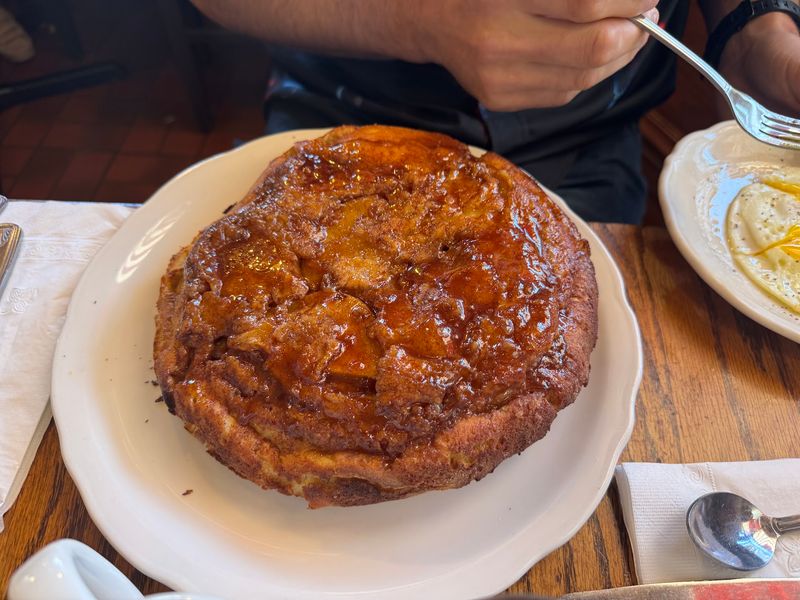
Picture a skillet coming toward your table with something domed and blistered inside it, edges pulled up and browned, the top lacquered a deep amber. That is the apple pancake, and it does not look much like a pancake at all.
Measurements help: roughly nine inches across, about two inches tall at the center. It rises in the oven rather than on a griddle, which explains the soufflé-like lift people describe.
Fresh Granny Smith apples are baked right into the batter, tart enough to push back against the sugar. A cinnamon-sugar glaze caramelizes during baking, hardening into a golden crust that sometimes shatters slightly under a fork.
The middle stays soft and custardy. Comparisons to a Dutch baby, an apple cake, or bread pudding all get thrown around, and all of them capture part of it without quite landing.
Visitors consistently call it shareable, and the physical size backs that up. Two adults can split one and still leave satisfied, particularly with a side of bacon between them.
Granny Smiths, Cinnamon Sugar, and the Oven Doing the Work
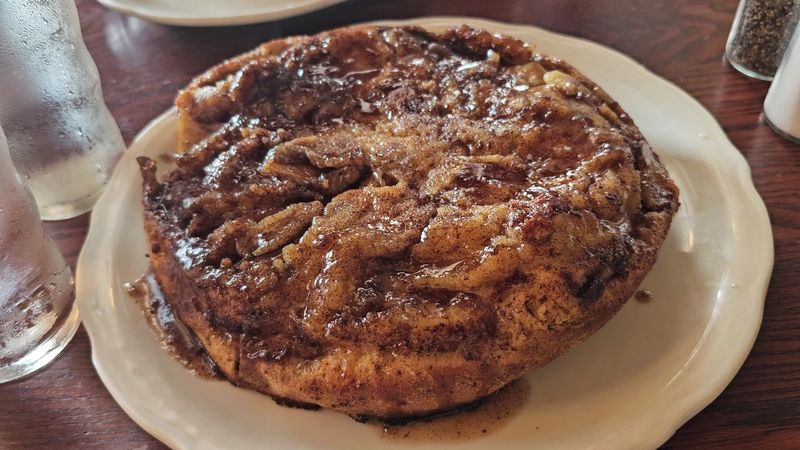
Tartness is the quiet engineering trick here. Granny Smith apples hold their shape under heat and keep their acidity, so the finished pancake never collapses into pure sweetness.
Cinnamon carries the aroma. Regulars mention smelling it before the plate reaches the table, and the warmth of it sits alongside the caramelized sugar rather than competing with it.
Sugar meeting a hot pan is where the real transformation happens. As the pancake bakes, the glaze darkens and tightens along the rim, producing crisp brown edges that contrast with the tender interior.
Eggs in the batter give the center its custardy set, closer to a baked pudding than to a griddle cake. That structure is what allows the thing to puff several inches above the plate and hold.
Apples inside stay tender without turning to mush, and one review described the balance of sweetness and cinnamon as close to ideal. Autumn visitors in particular tend to say it tastes like the season, which may explain why October weekends get busy.
Simple ingredients, then, arranged carefully and left alone in the heat.
The Twenty-Five Minute Bake and Why Patience Pays
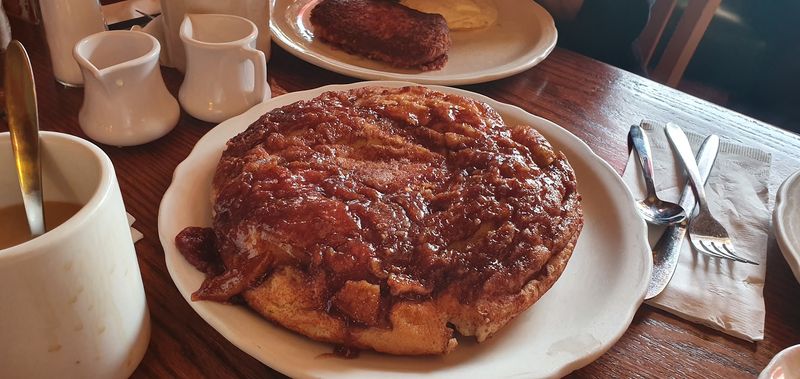
Ordering the apple pancake means signing up for a wait beyond the usual. Cooked entirely from scratch, it typically takes around 25 minutes in the oven, which is an eternity in breakfast time.
Staff have a workaround. The kitchen often pre-starts pancakes during busy stretches, trimming the wait at your table down to roughly ten minutes, though this can vary with how packed the room is.
Parents with restless kids should plan accordingly. Ordering the apple pancake first thing, even before deciding on anything else, is a practical move that regulars figure out quickly.
Coffee refills tend to arrive without asking, which helps bridge the gap, and visitors frequently note attentive service during those in-between minutes.
Consider the wait part of the dish rather than an obstacle. Nothing about this pancake can be rushed, since the puff and the caramelization both depend on sustained oven heat.
A useful comparison: think of it less like ordering pancakes and more like ordering a small baked dessert at breakfast. Adjusting expectations makes the whole meal go smoother.
Stained Glass, Brass, and a Room That Feels Older Than It Is
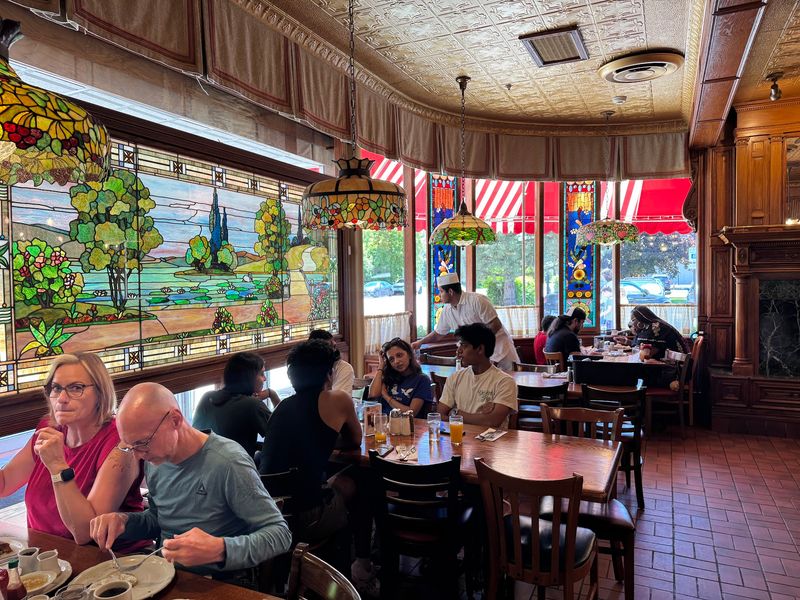
Colored glass panels filter the morning light into pools of amber and green across the tables, and they come up in conversation almost as often as the food does. Stained glass is among the most-mentioned features of this location.
Dark wood trim runs throughout, joined by antique-looking carved mirrors and brass lamps. One visitor compared the effect to an old print shop, another to something art nouveau and vaguely English.
Victorian is the usual shorthand for the style, and it lends the room a formality that never tips into stuffiness. Kids in soccer uniforms fit in just as easily as grandparents in their Sunday clothes.
Booths and tables sit close enough that the room hums when full, which is most of the time on weekends. The noise level works in a family’s favor, since a fussy toddler barely registers.
Guests often describe feeling transported to a more elegant era, and that impression does real work here. It turns a breakfast stop into something that feels like an occasion, even when it is only Tuesday.
The German Pancake and Other Oven-Baked Contenders
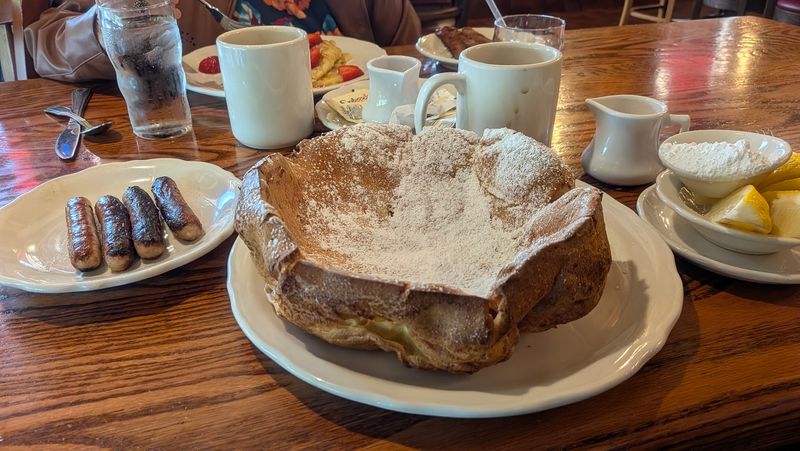
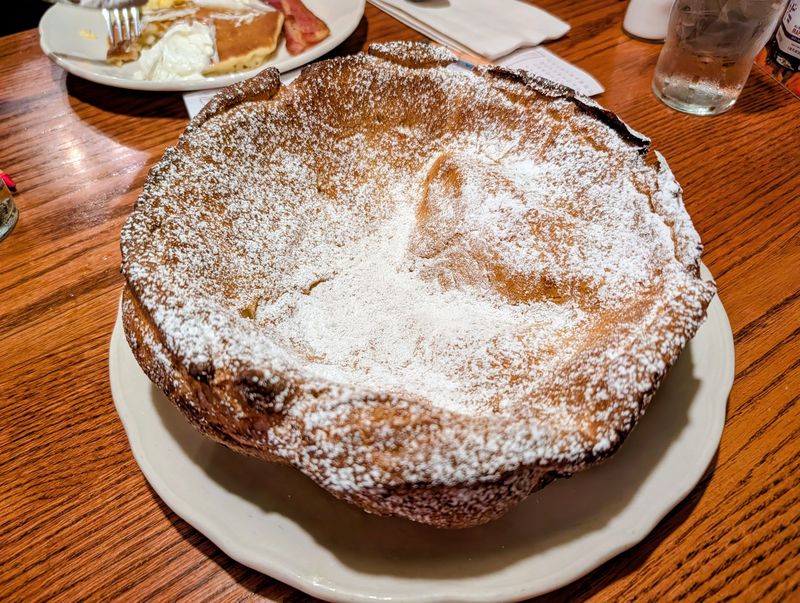
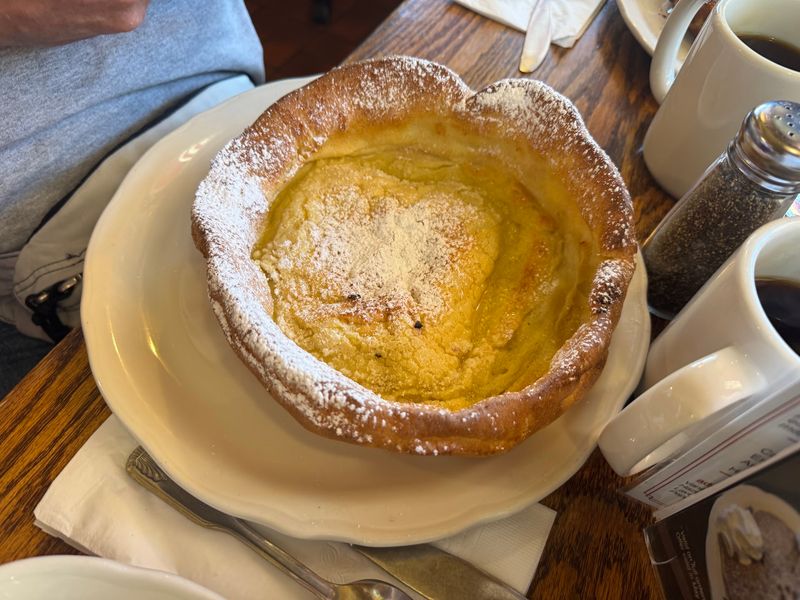
If the apple pancake is the headliner, the German pancake is the co-star, and it actually edges out its sibling in how often diners bring it up. Also called a Dutch baby, it comes out of the oven puffed and hollow-centered, typically finished with lemon and powdered sugar.
Going with a table of four? Ordering one of each and splitting them is the standard strategy, and it lets everyone compare the tart brightness of the German against the caramelized sweetness of the apple.
Both share the same oven-baked approach, so both require the same patience. Neither is a griddle pancake, and neither behaves like one on the fork.
Texture is where they diverge most. The German collapses into delicate folds as it cools, while the apple version stays dense and custardy at the center.
Worth knowing: the apple pancake can be ordered with a scoop of French vanilla ice cream for an added charge, which nudges it firmly into dessert territory. Prices change, so check the current menu when you arrive.
Beyond the Baked Stuff: Griddle Cakes, Eggs, and Hash
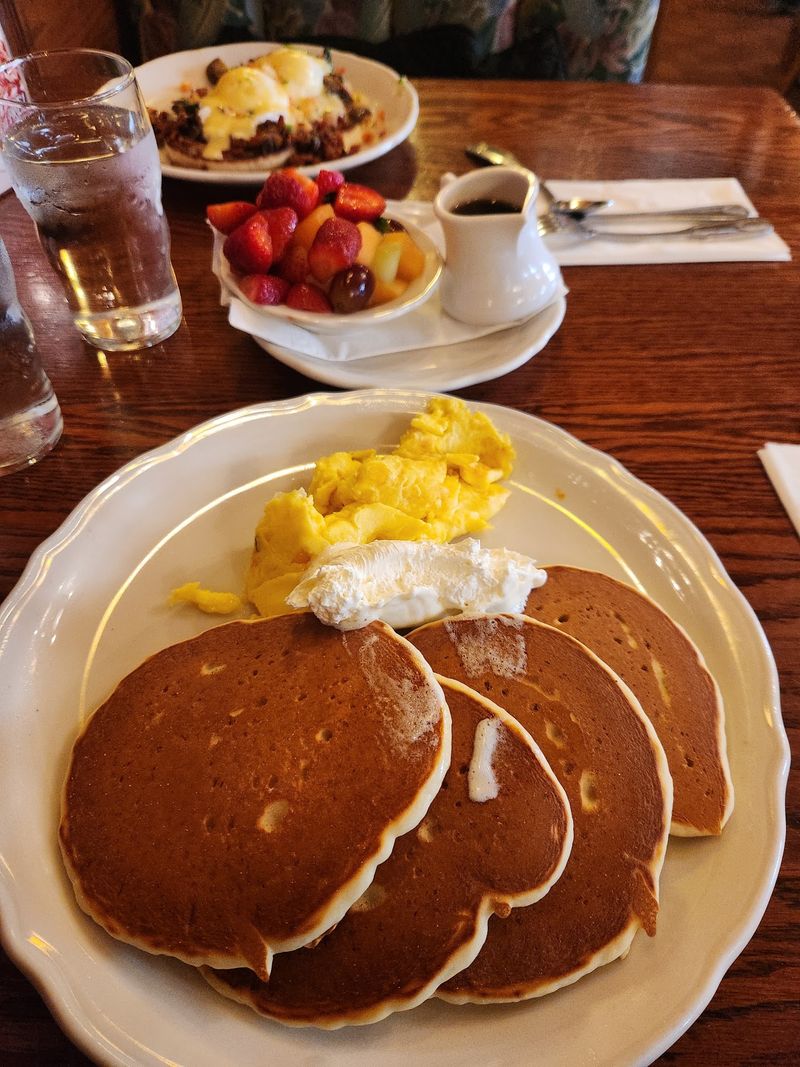
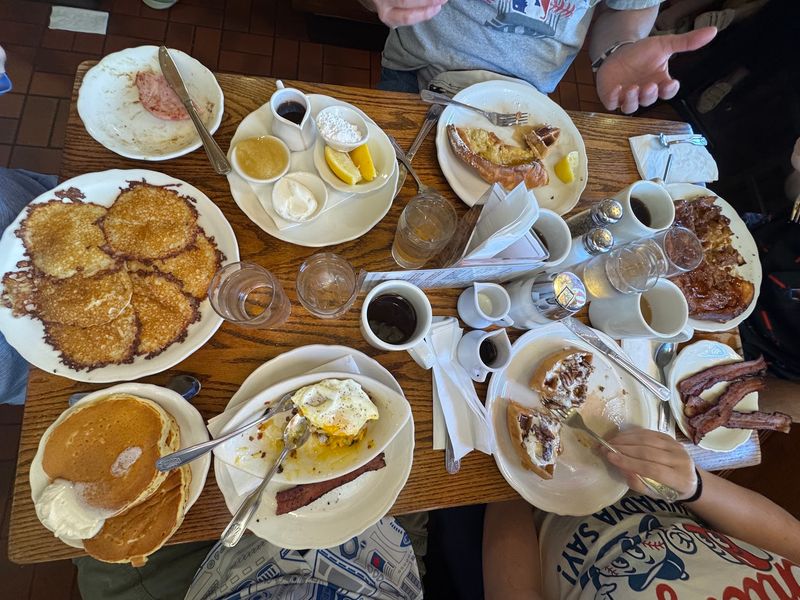
Not everyone at your table will want a nine-inch baked apple, and the menu accounts for that generously. Buttermilk, blueberry, sourdough, and buckwheat pancakes all hold down the traditional griddle side of things.
Blueberry versions get singled out repeatedly for how heavily the berries are packed into the batter. Gluten-free pancakes are available too, which matters for families juggling different needs.
Bacon has a small following of its own, described as reliably cooked right, and basted eggs draw similar praise from longtime customers. Freshly squeezed orange juice is another detail regulars point to.
Savory options run deep: omelettes including a spicy Santa Fe version and a Bacon Cheddar that has been highlighted at this location, plus corned beef hash with an unusually soft texture that one diner likened to a crab cake.
Potato pancakes, crepes, French toast, and Benedicts round things out. Portions across the board are large, so ordering a full entree per person plus a shared apple pancake will almost certainly leave leftovers.
Weekend Lines and How the Staff Move Them
Reservations are not part of the system. You arrive, you give your name, and you wait with everyone else, which sounds worse than it usually plays out.
Saturday and Sunday between roughly 9 and 11 a.m. is peak pressure, and the queue can extend outside the door. Smaller parties of two tend to slip in faster than groups of six.
Staff have decades of practice at turning tables, and visitors frequently note that the line moves more quickly than its length suggests. Some report walking in with no wait at all on weekday mornings and holidays.
Illinois weather factors in. A January line outside with lake-effect wind coming off Michigan is a different proposition than a mild May morning, so families with young kids may want to aim for a 7:30 a.m. weekday arrival.
Arriving right at opening is the single most reliable trick. With a 7 a.m. start and a 2:30 p.m. close, the early slot is quiet and the kitchen is fresh, though hours can shift and checking ahead never hurts.
Parking Around Downtown Wilmette
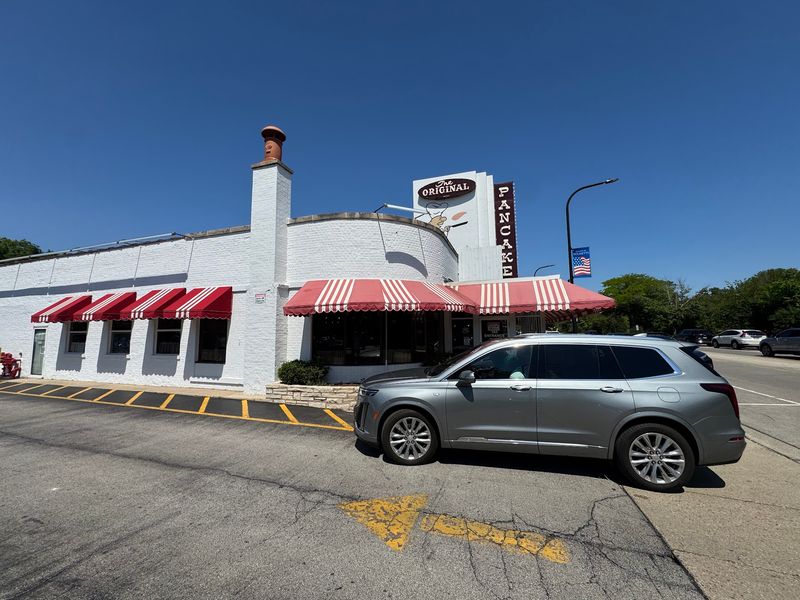
Parking rarely becomes the headache people fear. Free on-street spaces surround the area, generally posted with one to four hour limits during the day.
Evening restrictions lift entirely between 5 p.m. and 2 a.m., and Sundays are typically free, though a pancake house closing at 2:30 p.m. means most visitors are dealing with daytime rules anyway.
Several free downtown lots sit within a short walk, operating under similar time limits. Signs vary block to block, and some spaces are permit-restricted, so a quick read before locking the car saves trouble.
For families with strollers, the walk from most lots is short and the sidewalks are flat, which makes the logistics manageable even in winter.
Metra riders have an easy option too, since the Union Pacific North line stops in downtown Wilmette. Coming from the city without a car is genuinely practical, and it sidesteps the parking question entirely.
Restrictions can change with village policy, so glance at posted signage rather than relying on memory from a previous visit.
Bringing Kids Without Losing Your Morning
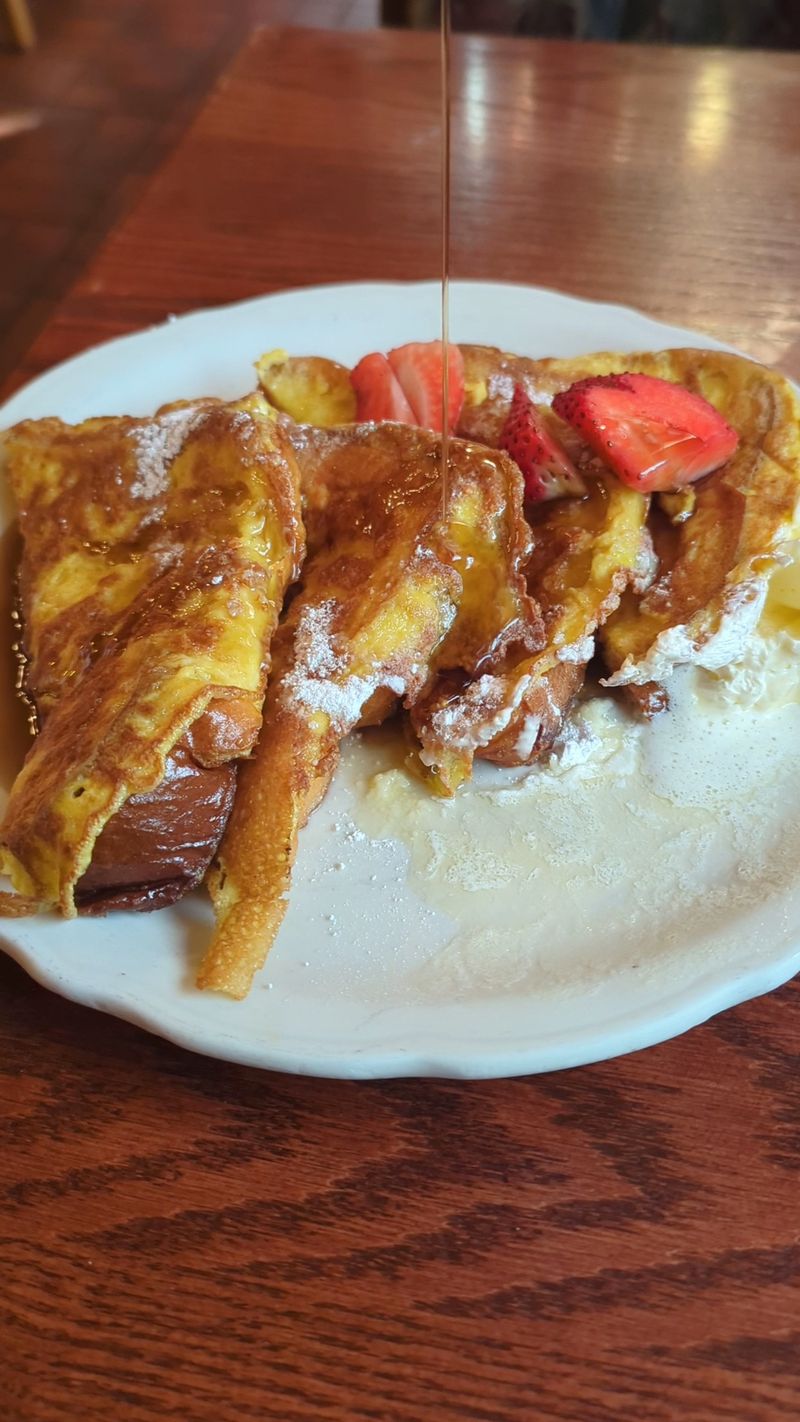
Few restaurants handle a table of kids as smoothly as this one, largely because the whole room is already loud and cheerful. Nobody notices one more child announcing opinions about syrup.
Portion sizes make sharing the default rather than the exception. A single apple pancake split three ways works fine for younger children, and it cuts down on both cost and waste.
Order strategy matters more than usual: put the baked pancake in early so it arrives alongside everything else instead of twenty minutes later.
Classic buttermilk stacks and plain eggs give picky eaters an easy landing spot, and the gluten-free pancakes cover another common need.
Servers tend to be patient and quick with refills, which visitors bring up often. That attentiveness keeps the meal moving, and a moving meal is the difference between a pleasant outing and a meltdown.
Weekday mornings during the school year are the calmest window by a wide margin. Summer and holiday breaks bring more families, so expect a livelier room and plan a slightly longer visit.
Fall Apples and Other Reasons to Time Your Visit
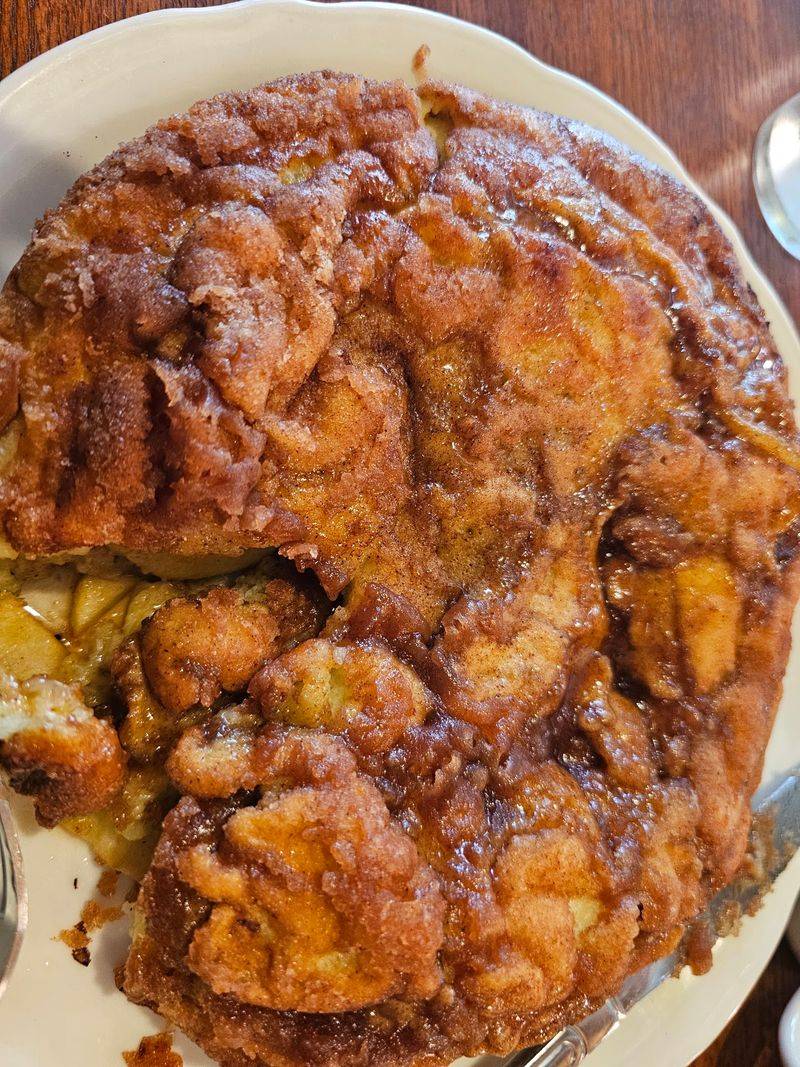
October does something to this dish. Cinnamon, baked apples, and cool air outside line up so neatly that diners describe the apple pancake as tasting like the season itself.
Illinois families already spend fall weekends at orchards and pumpkin patches across Lake and McHenry counties, and a breakfast stop here slots naturally into that kind of day trip.
Winter has its own logic. When the wind comes hard off Lake Michigan, a warm room full of stained glass and hot coffee becomes a legitimate destination rather than a stop along the way.
Summer brings a different crowd, including families heading to the lakefront and the Baha’i House of Worship nearby. Early arrivals beat both the heat and the line.
Spring tends to be the quietest stretch, with shorter waits and easier parking on weekday mornings.
Hours have held steady at 7 a.m. to 2:30 p.m. daily according to current listings, but holidays can alter that. A quick check before setting out is the sensible move any time of year.
What a Table of Four Will Actually Spend
Budget-wise, listings put the typical spend in the $20 to $30 per person range, which lands this squarely in sit-down breakfast territory rather than diner-cheap.
Sharing brings that number down meaningfully. One apple pancake between two people, plus a side of bacon and coffee, covers a satisfying meal for less than two full entrees would.
Adding French vanilla ice cream to the apple pancake costs extra, and it is the kind of upgrade that turns the dish into a shared dessert for the table.
Freshly squeezed orange juice and the recently added espresso drinks like lattes will nudge the total upward, so factor those in if everyone is ordering a beverage.
Leftovers are a real consideration given portion sizes, and carryout boxes get plenty of use. Half an apple pancake reheats reasonably well the next morning.
Menu pricing shifts over time, as it does everywhere, so treat these figures as a general guide and check current prices when you sit down.
Is the Wait Worth the Pancake? A Fair Answer
Honest assessment: yes, with a small asterisk. If you arrive expecting a quick, cheap breakfast, the line and the 25-minute bake will frustrate you.
Arrive treating it as the morning’s main event, though, and the calculation changes completely. The apple pancake is genuinely unusual, and there is no real substitute for it elsewhere in Chicagoland.
Not everyone leaves converted. A few diners have found hash browns undercooked or pancakes thicker than they prefer, and those experiences are part of the picture too.
The overwhelming pattern, however, points the other direction, with a 4.6 average across more than 2,600 ratings and a steady stream of people who have been coming since childhood.
What holds it together is the combination: a dish that cannot be made faster, a room that has looked this way for decades, and staff who keep the coffee moving.
Get there early, share the pancake, and let the morning take its time. That approach tends to produce the version of this place people rave about.