
The Mississippi Ruins Where You Can See 23 Giant Columns Left Standing After An 1890 Fire
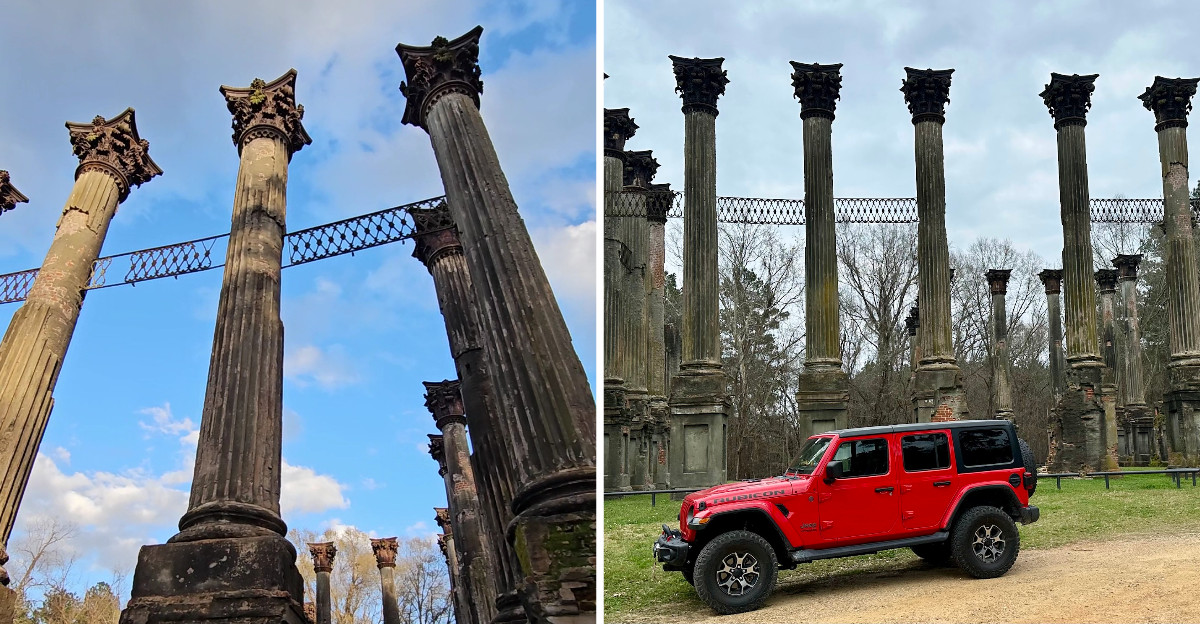
We almost drove right past it, a quiet gravel turnoff on a winding back road in rural Mississippi. Then a row of giant stone columns rose out of the trees like something from an old storybook.
The kids went silent, which almost never happens in our car. That short stop turned into one of the most talked-about moments of our whole trip, and it taught us more history in twenty minutes than a week of homework.
A Colonnade in the Woods of Claiborne County
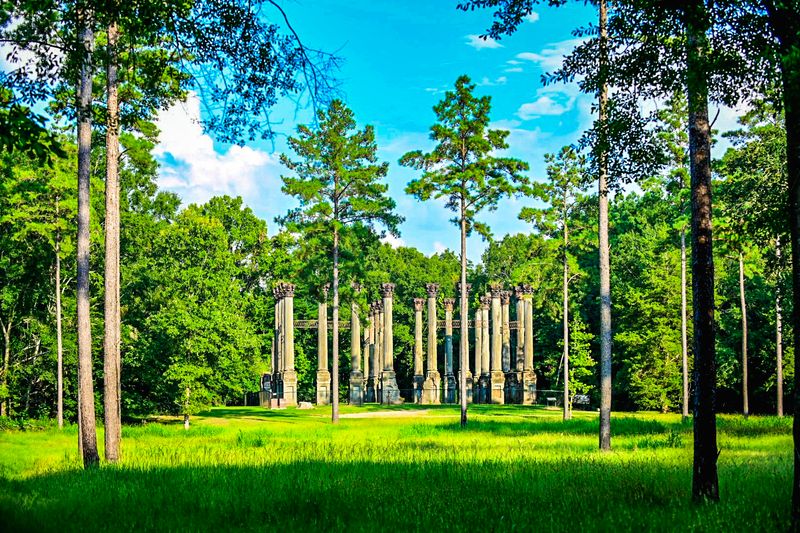
Tucked along Rodney Road outside Port Gibson, Mississippi, the Windsor Ruins sit in what many visitors describe as the middle of nowhere. Thick woods line the drive, and the land around the site feels wild and untouched.
Then, with almost no warning, a cluster of towering stone columns appears in a clearing.
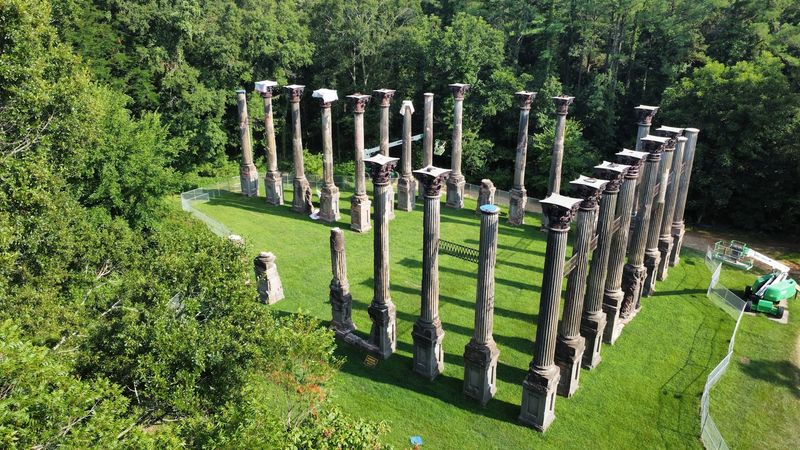
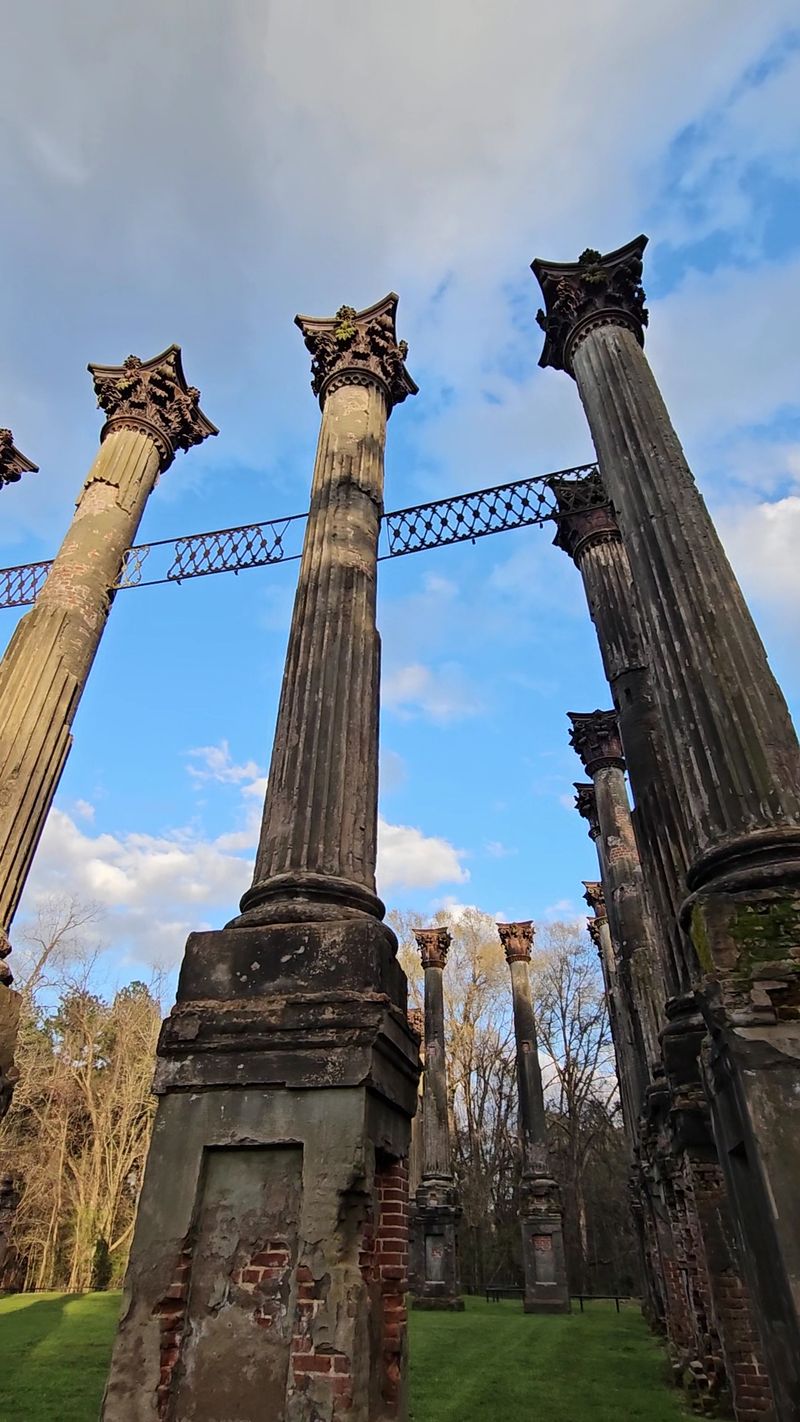
Those columns are all that remain of the Windsor Mansion, once the largest Greek Revival plantation house ever built in the state. A fire in 1890 destroyed the home, but the pillars refused to fall.
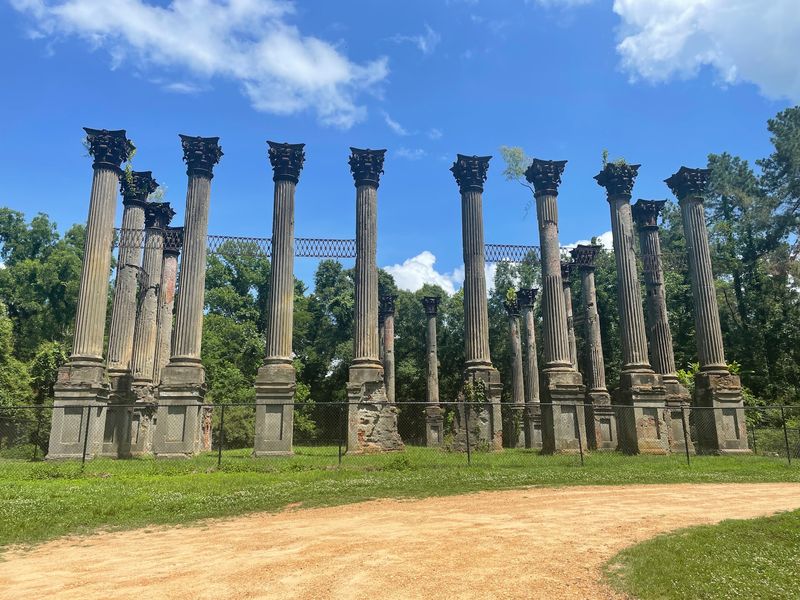
Today, 23 full columns and 5 partial ones still stand on a 2.1-acre site.
The Mississippi Department of Archives and History manages the grounds, which were donated to the state in 1974 by descendants of the original owners. The property joined the National Register of Historic Places in 1971 and became a Mississippi Landmark in 1985.
For families, the setting itself is half the fun. Kids who expect a dusty museum get an open-air puzzle instead, a giant outline of a house they can try to rebuild in their minds.
Parents get an easy, low-cost stop that fits neatly into a longer road trip through the southwest corner of the state.
The Planter Behind the Grand Vision
Smith Coffee Daniell II was a wealthy cotton planter with big plans. Between 1859 and 1861, he built Windsor on a sprawling 2,600-acre plantation, aiming for a home that would outshine anything nearby.
He blended Greek, Italianate, and Gothic styles into one eclectic design.
The price tag was staggering for its time. Building the mansion cost around $140,000, with another $35,000 spent on furnishings.
New England artisans handled much of the fine work, while a large number of enslaved people provided the labor that made the project possible.
Sadly, Daniell did not get to enjoy his creation for long. Visitors reading the site’s history learn that he passed away only weeks after the house was finished.
His family remained, but the story of Windsor quickly became tied to larger events sweeping across the South.
Talking about this chapter with children opens real conversations. Who paid for the house, and who actually built it?
Older kids often connect the story to lessons about the Civil War era, while younger ones simply marvel that one family wanted a home this huge. Either way, the history gives the columns meaning beyond their size.
Forty-Foot Corinthian Columns
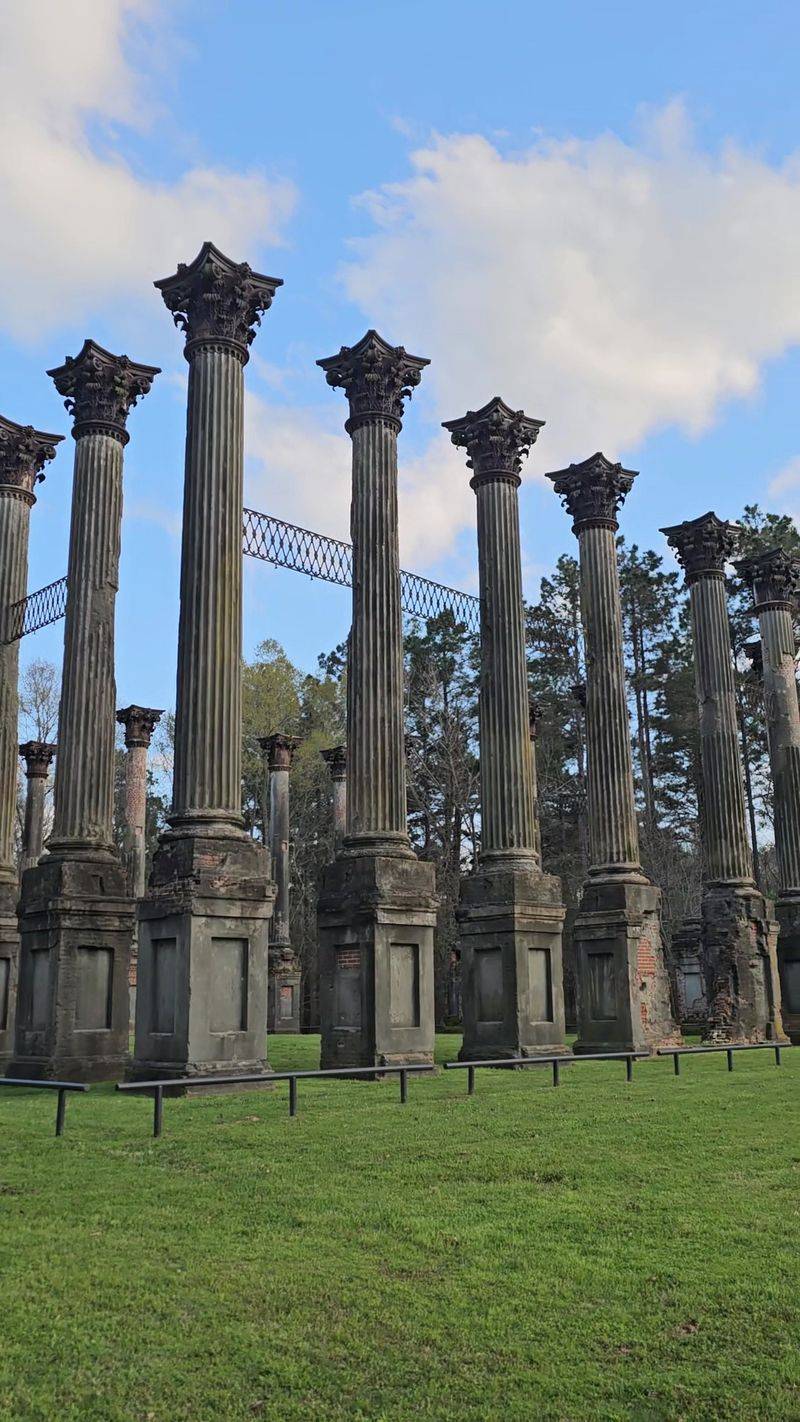
Stand at the base of one pillar and tilt your head back. Each column once rose about 40 feet, roughly the height of a four-story building, topped with carved Corinthian capitals that still show leafy details.
Originally, 29 of them wrapped around the mansion.
Craftsmanship is what impresses many guests most. Visitors often point out the hand-shaped details on the pillars and the decorative iron pieces that survived the fire.
Fragments of balustrades still cling to some columns, hinting at the porches that once stretched between them.
Kids love trying to measure scale here. Have them count the columns, or stand beside one for a photo so they can later compare their size to the stone giant behind them.
It turns sightseeing into a mini math challenge that sticks in their memory.
Photographers and artists find endless angles too. One visitor suggested the site would be wonderful for painting outdoors, and it is easy to see why.
Light shifts across the weathered surfaces throughout the day, making the columns look golden in the morning and moody in late afternoon. Every walk around the colonnade reveals a slightly different view of the same remarkable structure.
Inside a Lost Mansion of 25 Rooms
Nothing of the interior survives, yet the written records paint a vivid picture. Windsor held 25 rooms, and every single one had its own fireplace with a marble mantel.
That detail alone tends to amaze kids who have never seen a fireplace in every bedroom.
The house was surprisingly modern for its day. A tank in the attic collected rainwater that fed indoor bathrooms, a rare luxury in the mid-1800s.
Wide porches, about nine feet across, wrapped the second and third floors.
Crowning it all was a rooftop observatory. From up there, the family could look out over the entire plantation and spot boats moving along the nearby Mississippi River.
That lookout would later play a role in the Civil War.
A fun family activity is to stand among the columns and guess where rooms might have been. Where was the kitchen?
Which side faced the river? Visitors frequently say they cannot stop picturing what the house looked like, and that sense of wonder is contagious.
Bringing a printed sketch of the original mansion from home can help children match the ruins to the full building and spark plenty of questions on the drive afterward.
Walking Trail and Interpretive Signs
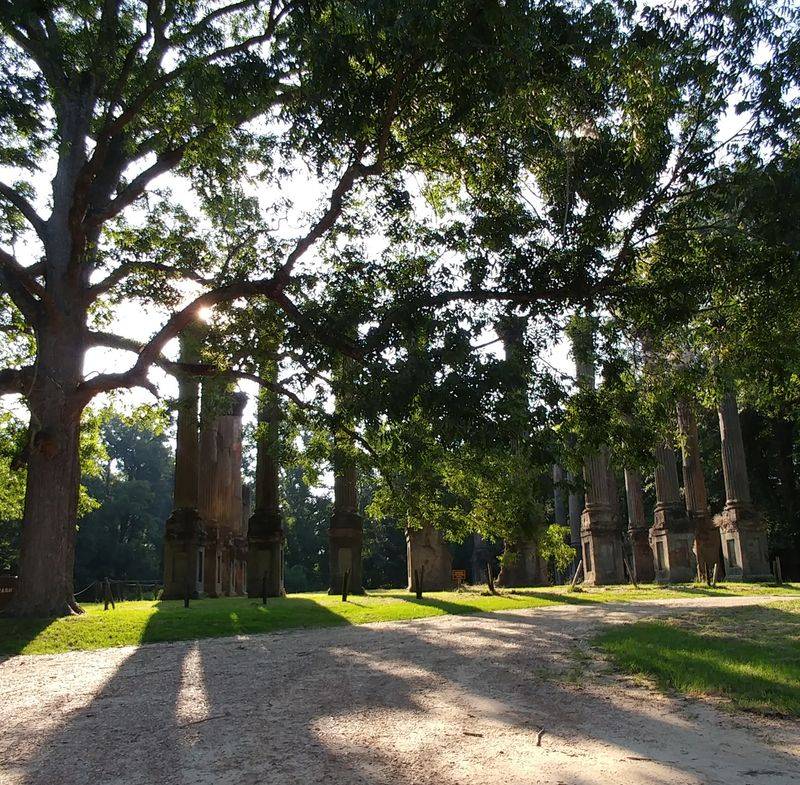
Recent preservation work, completed in 2025, gave the site a fresh look. A walking trail now loops around the columns, dotted with new interpretive signs.
The path is gravel and fairly level, so strollers and little legs can manage it without trouble.
Those signs tell a fuller story than older markers did. They cover the lives of the Daniell family and also the enslaved people who lived and worked on the plantation.
Visitors say the placards add much-needed context, turning a pretty view into a meaningful history lesson.
Some guests have noted that portions of the history presentation feel uneven, so it helps to read thoughtfully with older kids. That can become a valuable discussion about how history gets told and who tells it.
Families can talk through what they read on the walk back to the car.
Reading every sign takes only a few minutes per stop. Assign each child a different marker and ask them to share one fact with the group.
It keeps restless kids engaged and makes everyone part of the storytelling. By the time the loop ends, the whole family will have pieced together the story of Windsor together.
Low Rails and Up-Close Views
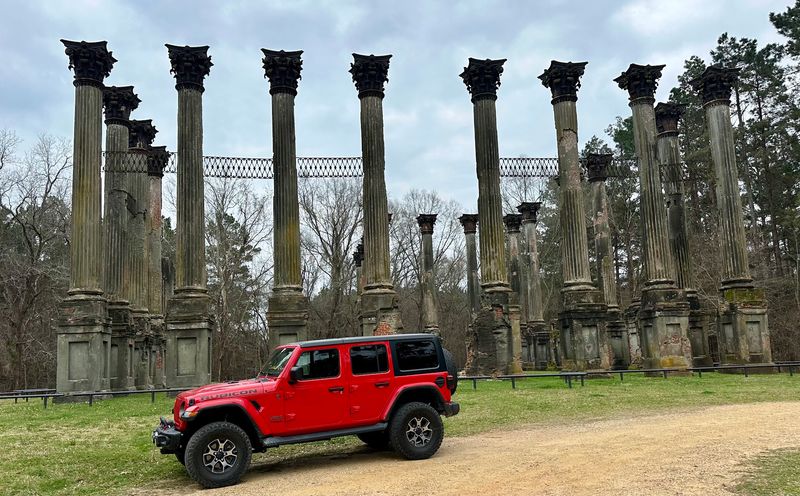
Safety matters around structures this old. The columns are not stable enough to climb on or wander between freely, so a barrier keeps visitors at a careful distance.
Recent visitors describe a low pipe rail that replaced earlier restoration fencing.
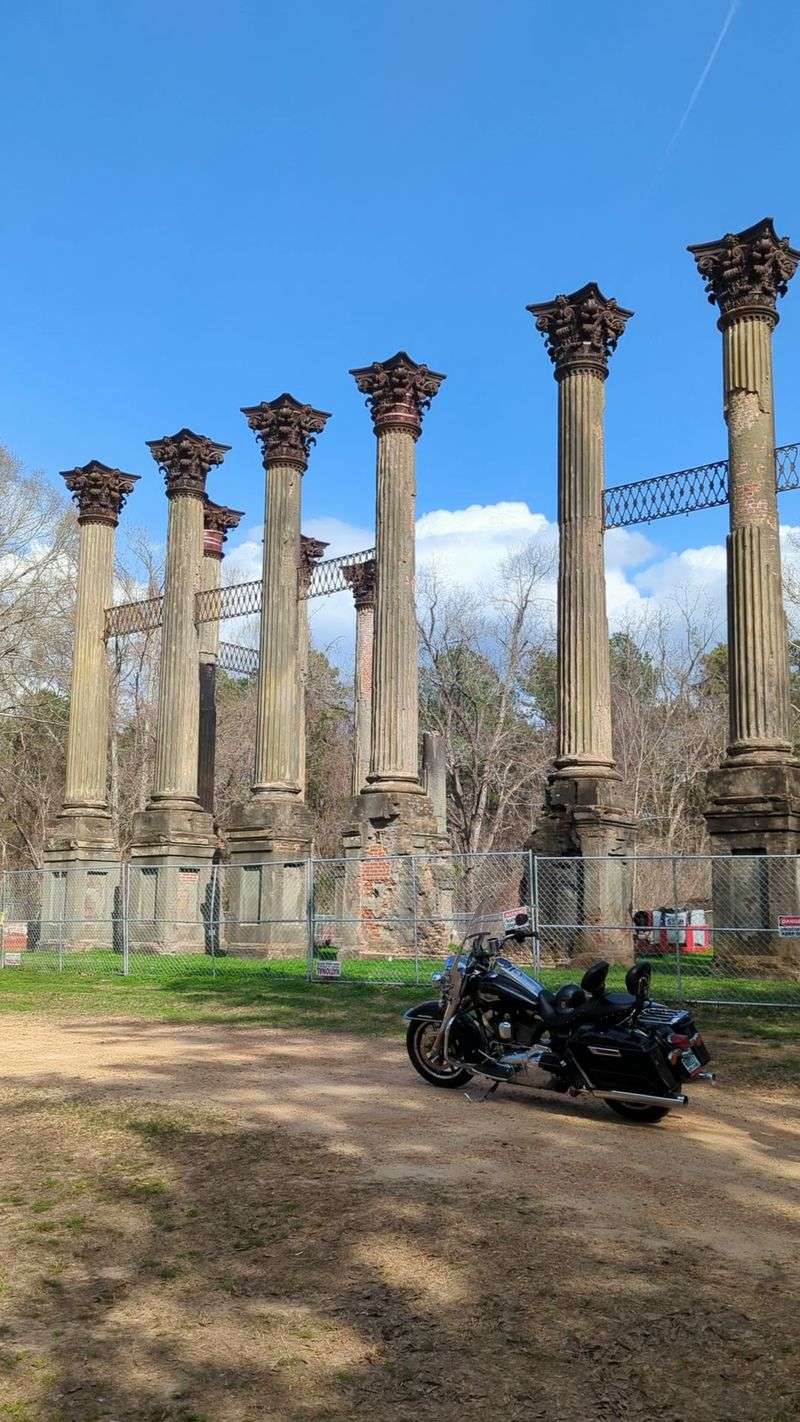
Earlier trips sometimes came with taller fences during repair work. Several guests from past years mentioned being kept back while crews protected the pillars from decay.
Newer accounts say that fencing has been removed, making the experience feel more open.
Even with a barrier, you can still get close enough for impressive photos. One visitor praised how easily they captured dramatic shots despite the safety rail.
For families, it provides a clear boundary that is easy to explain to children.
Before arriving, set simple ground rules. No climbing on the rail, no tossing rocks, and stay on the path.
Kids usually respect the rules once they understand the columns are fragile survivors more than 160 years old. Many guests are pleased to see the site staying clean and free of graffiti, and teaching children to protect it helps keep things that way for the next family who pulls into the gravel lot.
Who Enjoys a Stop Here Most
History-loving families top the list. Students studying the Civil War or the antebellum South gain a hands-on view that textbooks cannot match.
Even kids who claim history is boring tend to perk up when they see the size of these pillars.
Road trippers are another natural fit. Driving between Natchez and Vicksburg, many travelers call Windsor an easy detour that breaks up the miles.
The visit doesn’t take long, which suits families with short attention spans.
Motorcycle riders and scenic-drive fans also rave about the trip. The roads leading in are hilly and winding, and one grandparent even used them to teach a teenager how to drive a manual truck.
Getting there becomes part of the adventure.
Photographers and artists enjoy the dramatic setting, while quiet seekers appreciate the calm. Families with very young children should know there is little to do beyond walking and looking, so keep expectations simple.
Toddlers may enjoy running on the grass, but older kids get more from the stories behind the stones. Matching the stop to your family’s interests will make the short visit feel truly rewarding for everyone in the car.
A Short Detour With Lasting Impact
Few roadside stops leave such a strong impression in so little time. Windsor offers no rides, no exhibits behind glass, and no snack bar.
What it does offer is space to wonder, learn, and talk together as a family.
Visitors return again and again to the same word: breathtaking. Many say photos never quite capture the scale, and that standing among the columns stirs a sense of the past that is hard to describe.
Kids feel it too, even if they cannot put it into words.
The site also invites honest conversations. It shows the wealth of the plantation era alongside the people whose forced labor built it, and newer signs make that full picture clearer.
Those discussions can shape how children understand history long after the trip ends.
For parents, the practical side is hard to beat. It is free, open daily, easy to walk, and fits neatly into a drive through southwest Mississippi.
Pack water, bug spray, and a picnic, then let the columns do the teaching. Chances are your kids will still be talking about the giant stone pillars in the woods weeks after you have returned home.