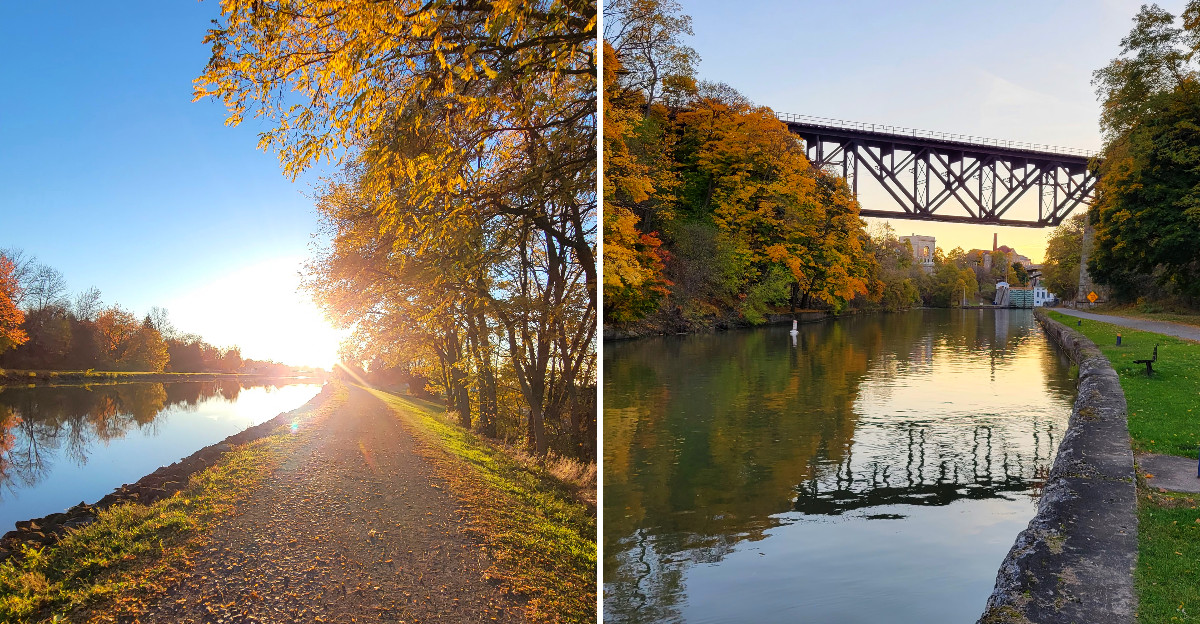
Mules once plodded this exact path, hauling canal boats across an entire state. Today, the towpath belongs to bikes, sneakers, and the occasional cross-country skier.
The route runs roughly 360 miles, and more than 80 percent of it stays off-road. Even better, the average grade is about 1 percent. That’s flatter than most driveways.
Along the way, you pass old stone locks, lift bridges, aqueducts, and canal villages stocked with ice cream. New York packs a whole history lesson into this ribbon of gravel and pavement.
I’d happily ride it in short chunks, one town at a time. Others aim for the full end-to-end trip. Which kind of traveler are you?
You Could Cross Most Of A State Without Dodging A Single Car
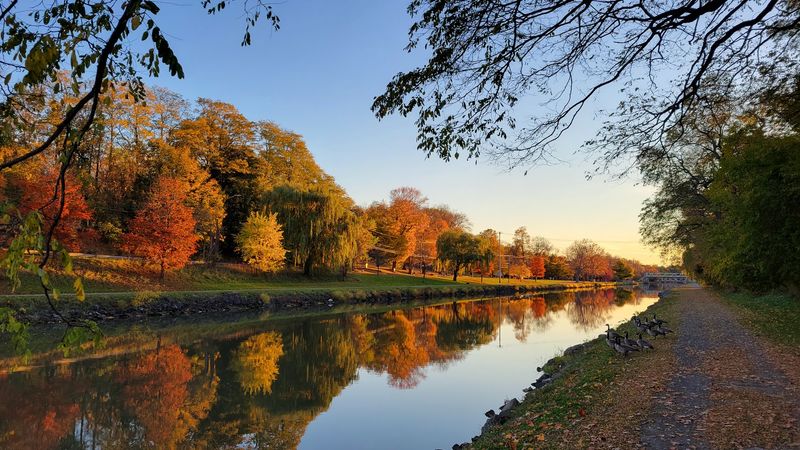
Here’s a fun math problem. The Erie Canalway Trail runs about 360 miles, and more than 80 percent of it is off-road.
That means you can spend most of your time worrying about snack breaks, not traffic. The trail links Buffalo in the west to Albany in the east. In between, it passes through Lockport, Rochester, Syracuse, Rome, Utica, Schenectady, and plenty of small towns.
The surface changes as you go. Roughly 45 percent is paved, about 41 percent is stone dust, and around 14 percent uses on-road sections. Some stone dust stretches are getting upgraded to asphalt, so smoother rides keep spreading.
The Erie Canalway Trail is also part of the 750-mile Empire State Trail. That bigger network is the longest multi-use state trail in the country. Pretty big bragging rights for New York.
Since there’s no single address, you’ll start from whichever community fits your plans. The western end begins on Erie Street in Buffalo. The eastern finish lands at Corning Riverfront Park on Quay Street in Albany.
My advice? Pick a manageable segment first. Thirty flat miles can feel like a breeze, and you can always come back for more.
Mules Did The Hard Work So Your Legs Wouldn’t Have To
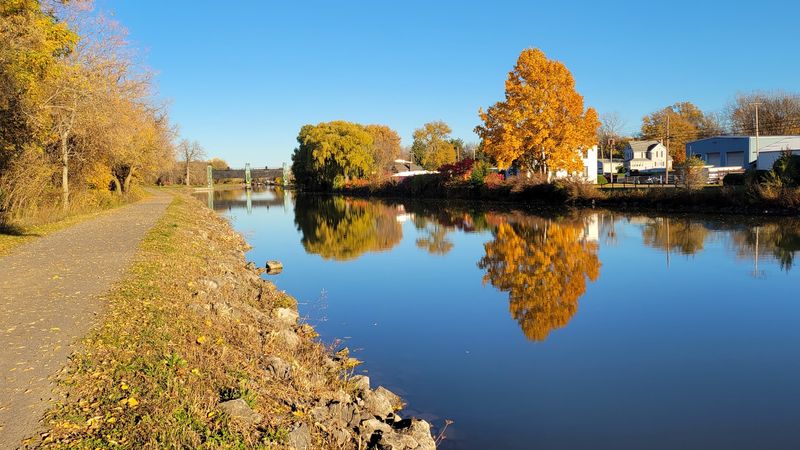
Before bikes showed up, this path had a very different job. Mules walked the towpaths, pulling canal boats along the water with long ropes.
Much of today’s trail follows those same historic towpaths. Other stretches use old or active rail corridors. Either way, the builders picked routes that stayed level for practical reasons.
That’s great news for you. The average grade is just about 1 percent, which makes it friendly for kids, casual riders, and anyone who dislikes hills. The Mohawk Valley does have some steeper bits, so save a little energy there.
The canal itself had to climb, though. Engineers used 83 locks to handle a 565-foot elevation change between Albany and Buffalo. Boats rose and dropped like they were riding a slow, watery staircase.
Thousands of laborers built the canal largely by hand. Many of them were Irish immigrants. Keep that in mind the next time a gentle incline feels annoying.
Walking the towpath gives you a real link to that past. You’re not reading about history in a book. You’re literally rolling on top of it, one easy mile at a time.
People Once Called It A Ditch, Then Called It A Wonder
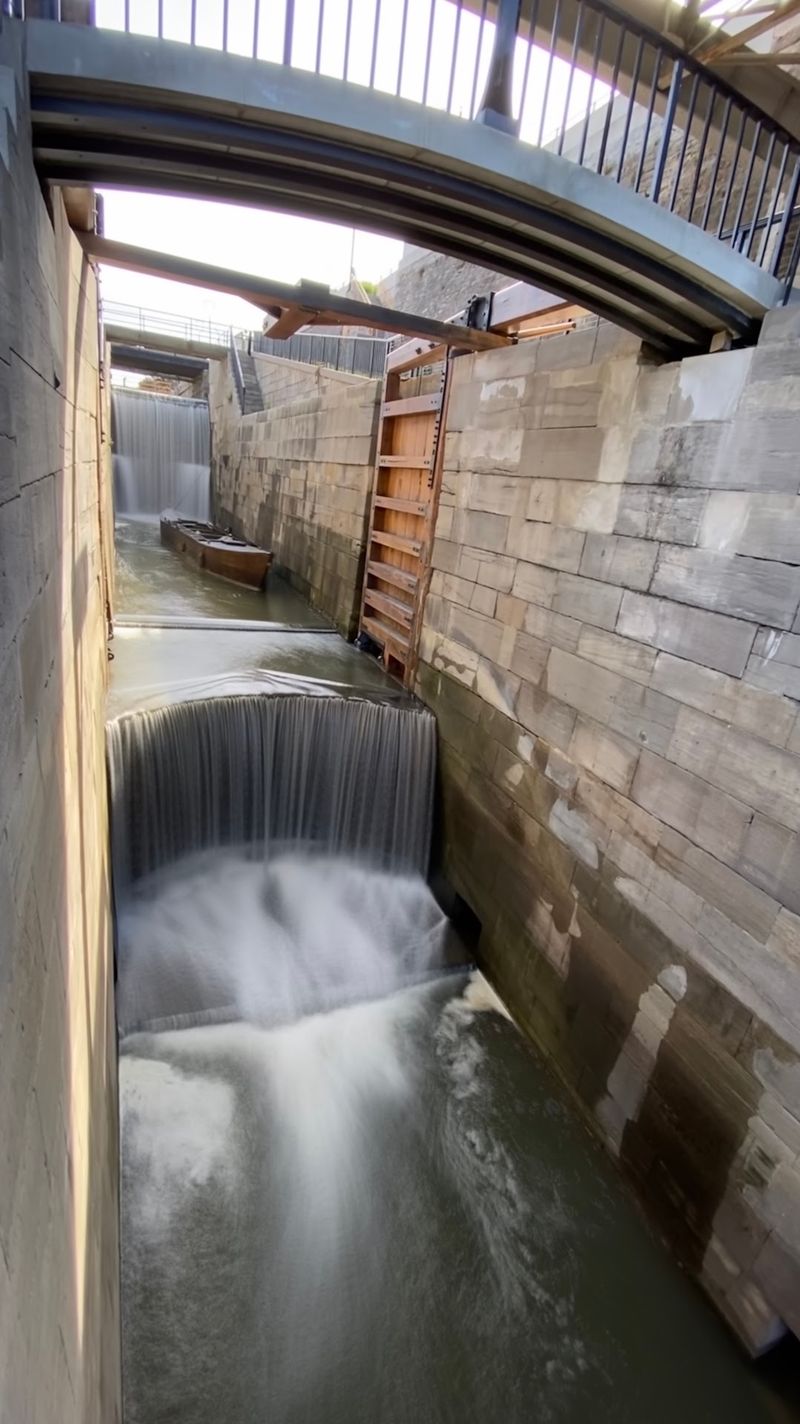
Not everyone believed in this canal at first. Critics nicknamed it Clinton’s Ditch, poking fun at the big dream behind it.
The idea of linking the Hudson River to the Great Lakes floated around in the 1780s. The New York State Legislature finally approved construction in 1817. Workers broke ground on July 4, 1817, near Rome.
Eight years later, on October 26, 1825, the canal officially opened. The original channel stretched 363 miles. It was 40 feet wide and only 4 feet deep.
Four feet deep! You could almost stand up in it. Still, that shallow ditch changed everything.
The canal gave New York City a huge edge over other American ports. Goods moved faster and cheaper, and towns along the route boomed. Soon, folks were calling it the Eighth Wonder of the World.
Talk about a comeback story. The trail idea grew in the 1970s, gained new energy from a 1995 plan, and the canal became a National Heritage Corridor in 2000. Now the Erie Canalway Trail lets you follow that whole wild success story at bicycle speed.
Five Locks In A Row Will Make You Stop Pedaling In Lockport
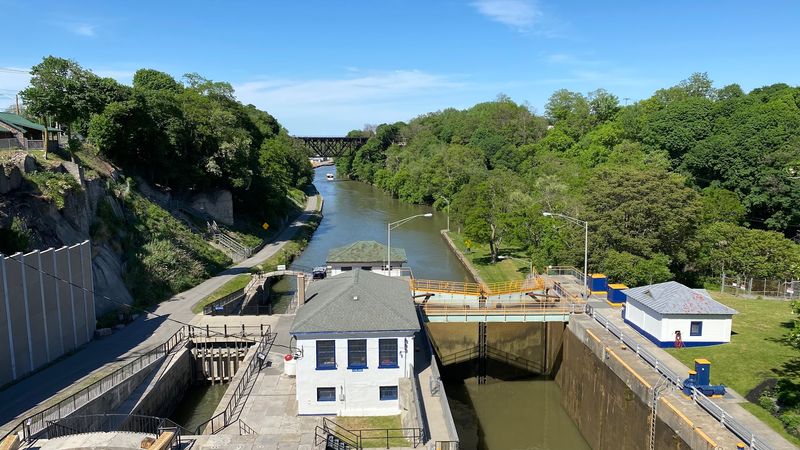
Some towns earn their names honestly. Lockport is famous for the Flight of Five, a stepped set of canal locks that looks like a giant stone staircase for boats.
Engineers had a tough problem here. They carved the Deep Cut through solid dolomite rock to keep the canal moving west. That took serious grit long before modern machines.
Lockport also offers historic canal attractions, including the restored Flight of Five locks and narrated canal cruises. Visitors can explore the canal’s engineering history through guided tours and cruises instead. It’s a fun twist after hours of sunshine on the trail.
Narrated canal cruises run here too, with docks close to the trail. Letting someone else do the steering might feel like a nice reward for your legs.
Farther west, the Buffalo end has its own perks. The Riverwalk follows the Niagara River, with Riverside Park offering recreational facilities and the former LaSalle Park undergoing redevelopment as Ralph Wilson Park. Viewing platforms look out toward the river and Lake Erie.
East in Orleans County, Albion has around 180 bluebird nesting boxes along the canal. Holley adds wooded trails and history kiosks. Pack binoculars, because a flash of blue might steal your attention.
Save Room For Ice Cream In The Canal Villages Near Rochester
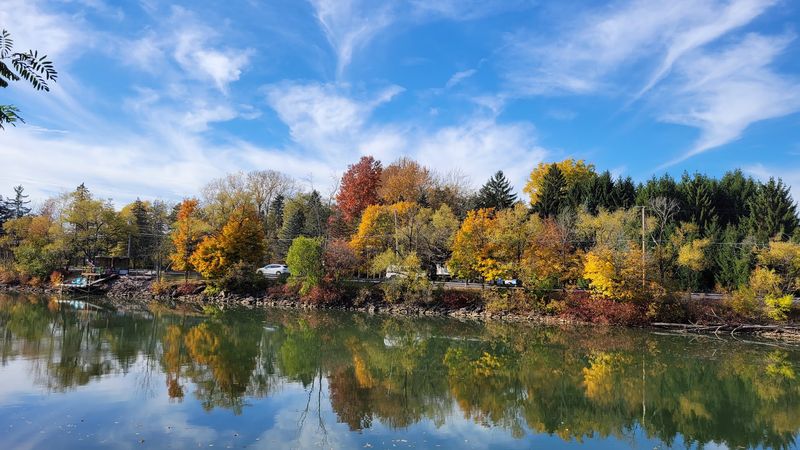
Fairport and Pittsford know how to tempt a hungry cyclist. These canal villages near Rochester bring boutique shops, ice cream spots, and a cheerful small-town pace.
Pittsford’s Schoen Place sits right beside the canal. It’s packed with shops and restaurants, so a lunch stop practically plans itself. I’d call that a strong argument for riding slowly.
Canal engineering pops up here too. Lock 32 in Pittsford and Lock 33 in Rochester are easy to spot from the area. Watching water levels shift is weirdly relaxing.
Want to switch from wheels to water? Sam Patch Erie Canal Boat Tours run canal excursions in this stretch. Cruises with nearby docks also operate in Fairport.
Food and lodging show up in many communities along the Erie Canalway Trail. Pittsford and Fairport are both on that list. That makes this section great for a weekend trip with a cozy overnight.
Honestly, this might be the easiest part of New York to sell to a reluctant friend. Tell them there’s ice cream. Mention the mileage later.
A Bridge For Water Is Waiting Near Syracuse
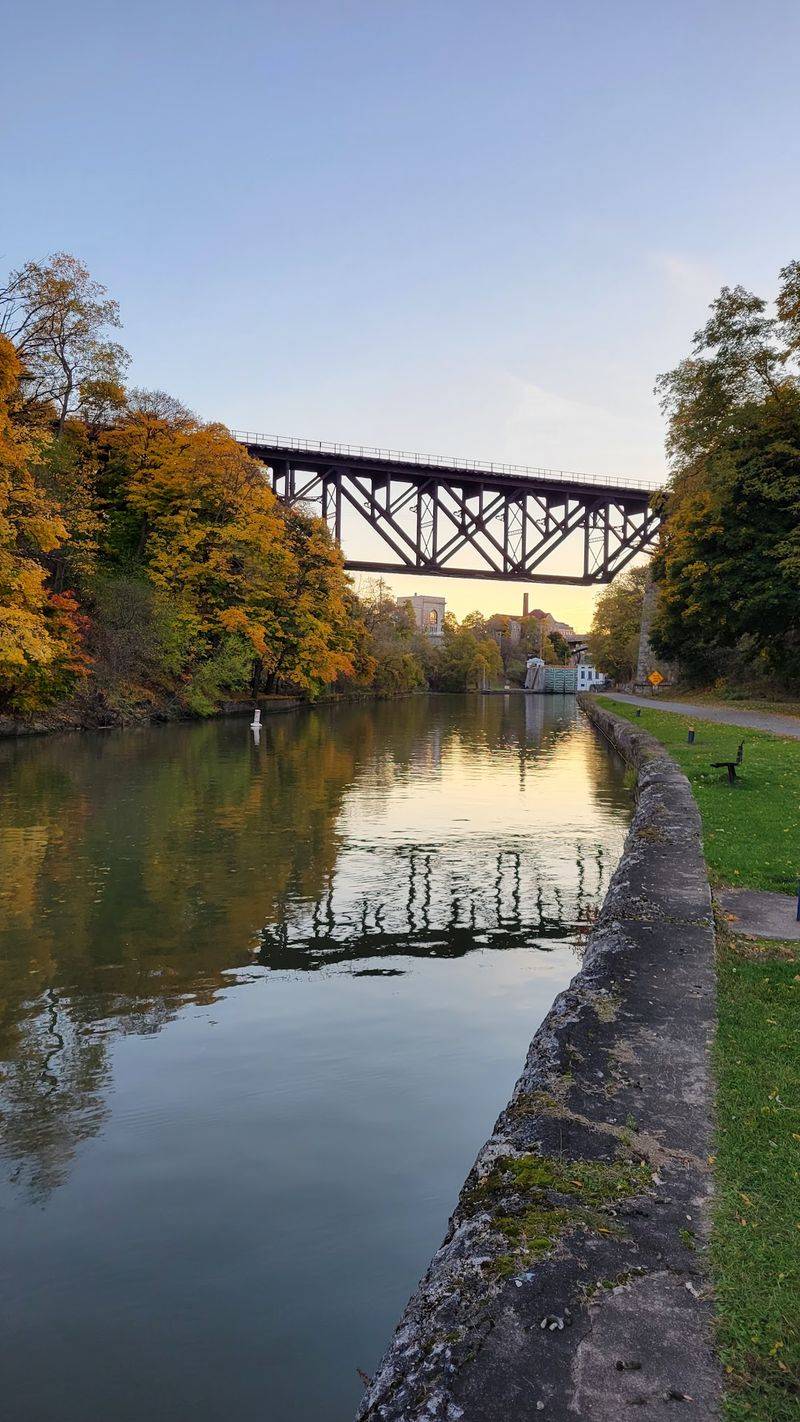
Bridges usually carry cars or trains. At Camillus Erie Canal Park, the Nine Mile Creek Aqueduct carries a canal right over a creek.
The original canal needed 18 aqueducts to cross rivers and streams. Seeing one in person helps the whole engineering puzzle click. Water flowing over water feels like a magic trick.
The park also has Sims Store, a replica of a mid-1800s store. It works as a museum and gift shop. Small, charming, and easy to fit into a ride.
Syracuse brings the big history stop. The Erie Canal Museum sits inside a former Weighlock Building, where canal boats were once weighed. It covers 200 years of canal history.
Need a break from bricks and boats? Green Lakes State Park has two striking blue-green lakes. You can go boating, swimming, or camping there.
The Chittenango Landing Canal Boat Museum is another worthwhile stop in central New York. Mixing museums, lakes, and trail time keeps the day interesting. You’ll feel like you earned a history badge without sitting in a classroom.
The Whole Canal Started With A Shovel Near Rome
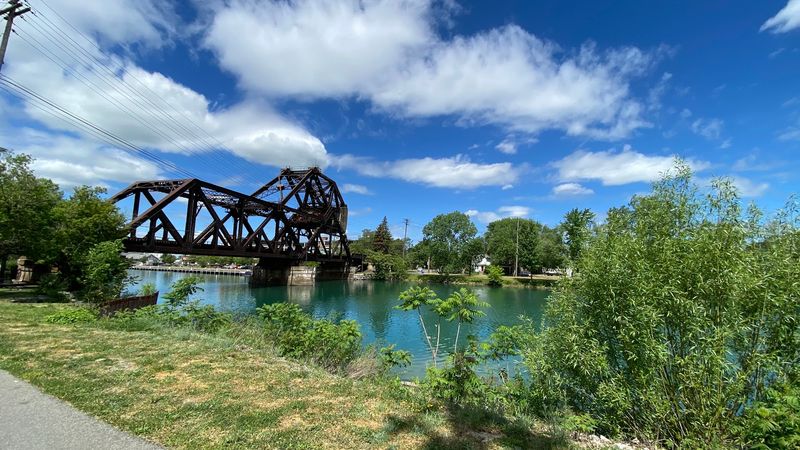
Rome holds a special spot in canal history. Ground for the Erie Canal was first broken nearby on July 4, 1817.
Erie Canal Village sits close to that famous starting point. It’s a fitting place to pause and think about how one shovel turned into 363 miles of canal.
Rome also has Fort Stanwix National Monument. Guides tied to the American Revolution era share stories about the fort’s past. It adds a whole extra chapter to your trail day.
One stretch here has a rare twist. Horseback riding is generally banned on the trail, but it’s allowed on a 36-mile section inside Old Erie Canal State Historic Park. Horses and bikes, sharing history.
Food and lodging are available in Rome, Oriskany, and Utica. That makes this region handy for multi-day riders. You can rest up without detouring far.
Keep an eye on detours, though. Construction near Utica Harbor Lock has closed a section of the trail through December 31, 2026, while maintenance at Lock E21 near Rome has created an additional detour expected to last until May 2027. Checking the Empire State Trail conditions page before you go saves headaches.
Lift Bridges And Old Stone Homes Fill The Final Stretch
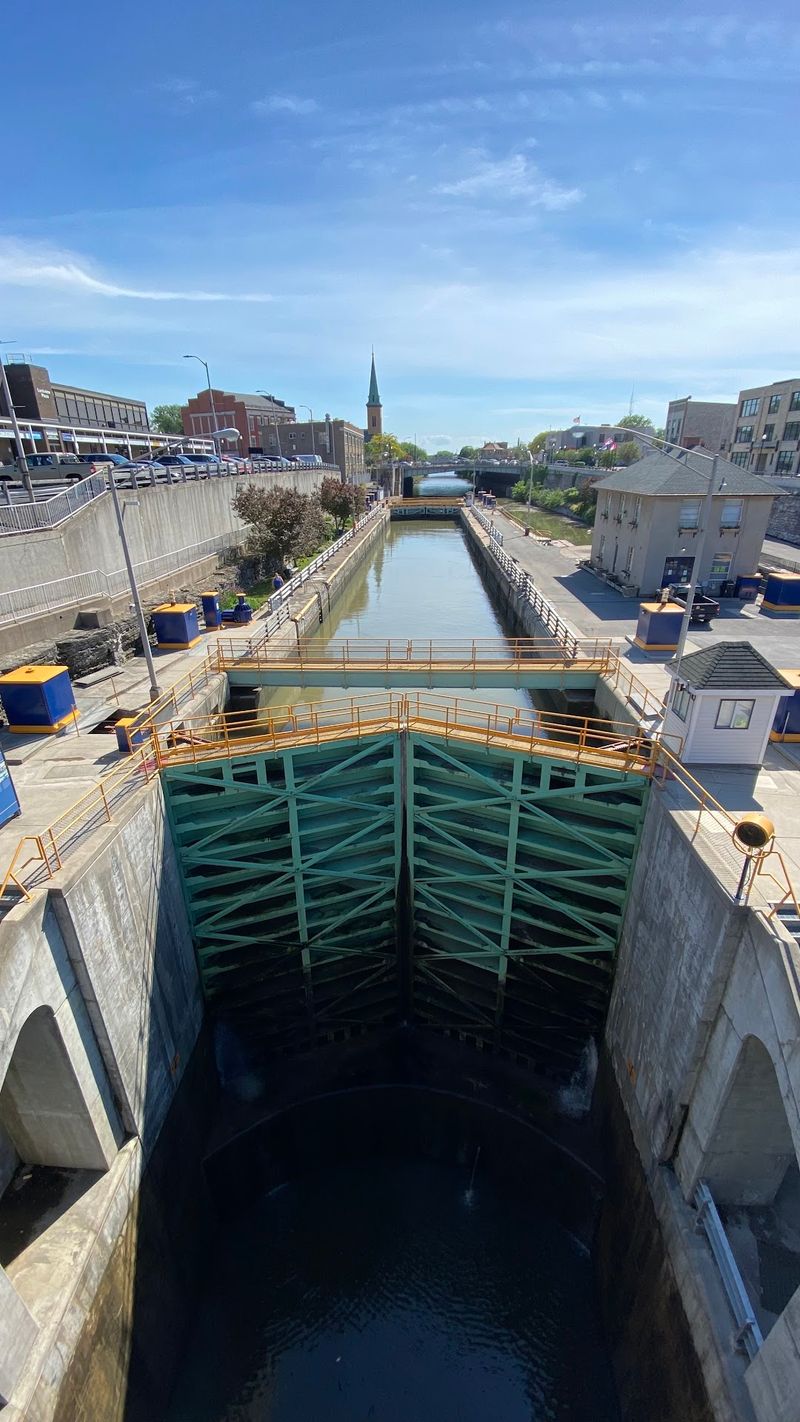
Some of the Erie Canal’s most distinctive bridges rise vertically to let boats pass beneath them.
These historic lift bridges are concentrated along the western Erie Canal, particularly around Fairport, Spencerport, Brockport, Albion, Medina, and Lockport.
Lift bridges along the canal can raise and lower so boats can pass underneath.
They’re among the most recognizable symbols of the Erie Canal. Spotting one in action feels like a bonus round.
The scenery gets prettier here too. The Erie Canalway Trail passes through Little Falls and Amsterdam, with river views and rolling hills. Just know that some steeper sections pop up in this valley.
Schenectady’s Stockade Historic District is a must for history fans. It holds preserved homes and churches from the 1600s and 1700s. Nearby, the Mabee Farm Historic Site adds another look at early life in the region.
Herkimer offers narrated canal cruises, another chance to see locks from the water. Near Colonie, the path slips into a wooded stretch along the Mohawk River.
The trail wraps up at Corning Riverfront Park in Albany. A semi-permanent detour sits at the Dunn Memorial Bridge crossing, so plan that last bit. Then enjoy the finish line feeling.
Pack Smart And Pick Your Season Before You Roll Out
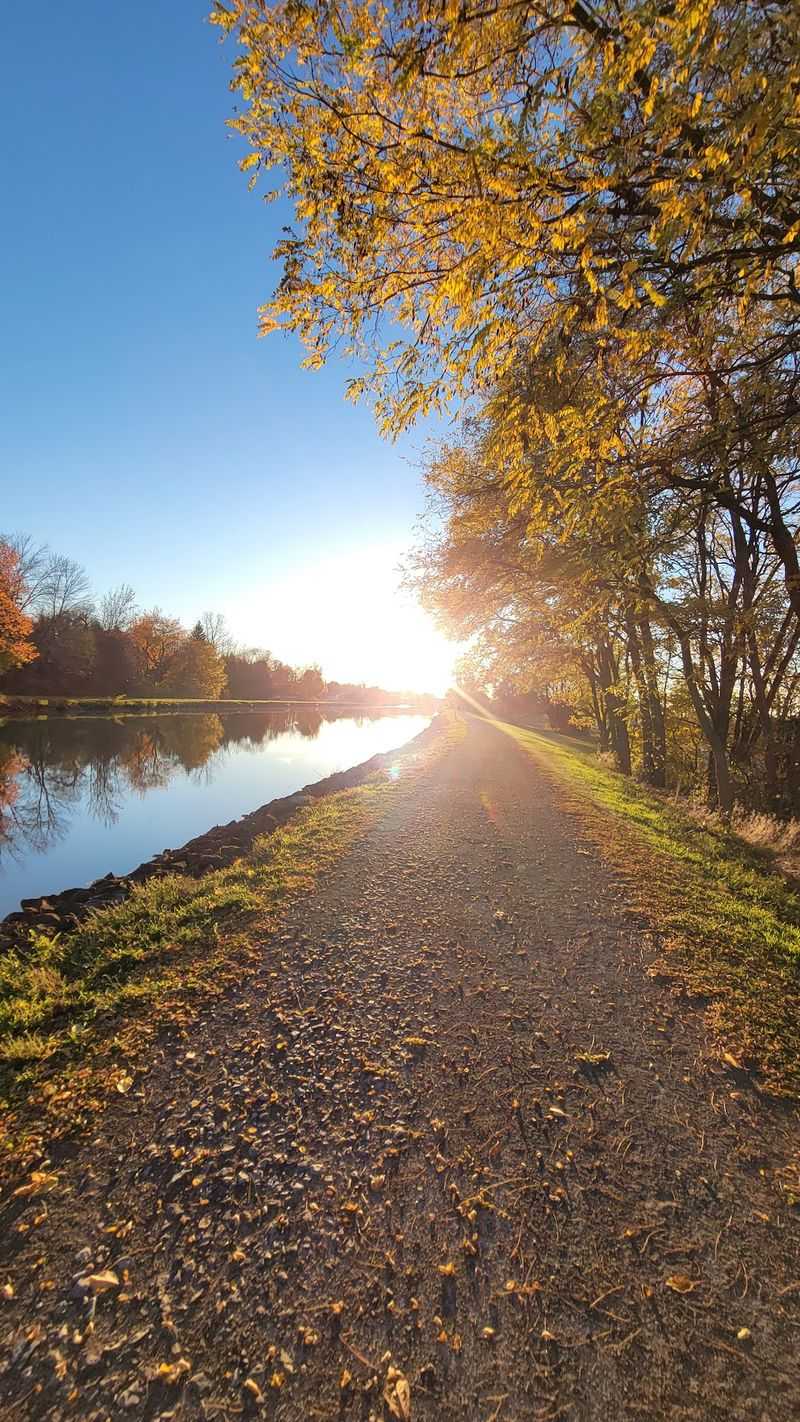
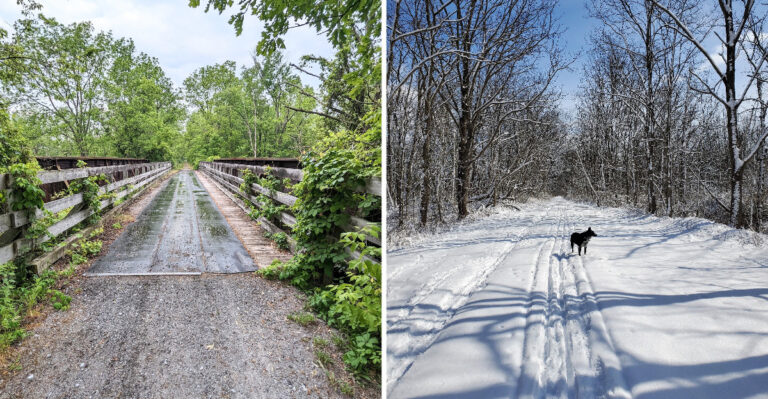
Snow doesn’t shut this trail down. In winter, the western and central sections become popular for cross-country skiing thanks to plenty of snowfall.
Warmer months bring cyclists, walkers, joggers, and runners. Paddlers can also explore the Canalway Water Trail. Few paths give you this many ways to play.
Plenty of helpful stops dot the route. Look for trailhead parking, interpretive kiosks, picnic tables, benches, bike racks, and bike fix-it stations. A flat tire becomes a small hiccup, not a crisis.
Know the rules before you go. ATVs, electric skateboards, e-scooters, and Class 3 e-bikes are all off-limits. Keep it simple and human-powered, or close to it.
Closures happen too. Recent work affected spots near Palmyra and between Walworth Park and Pal-Mac Park near Macedon. The Empire State Trail website lists current conditions.
Above all, pick a pace that feels fun. The Erie Canalway Trail stretches across New York, but nobody says you must finish in one go. Ride a little, eat something good, and come back for the next chapter.