
This Active Tennessee Fossil Dig Keeps Unearthing Rhinos, Red Pandas, And Alligators
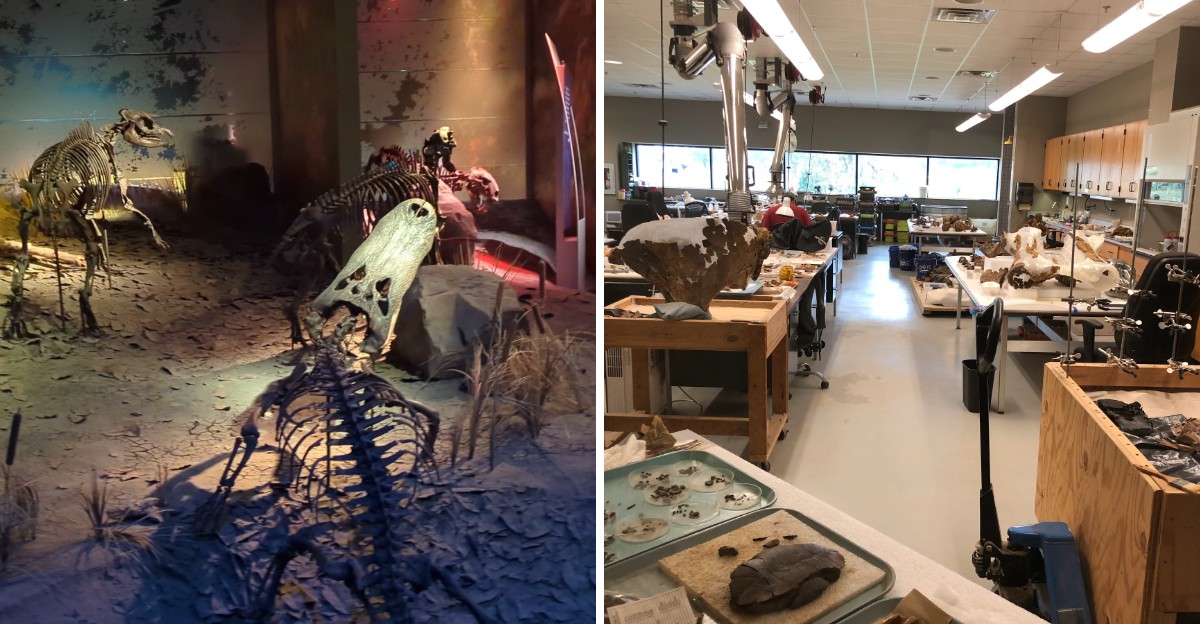
What would you expect to find beneath the soil in Tennessee? Probably not rhinos, red pandas, alligators, and other animals that seem completely out of place today.
That is exactly what makes this active fossil dig so fascinating.
Paleontologists are still uncovering remains that reveal what the region looked like millions of years ago, when the climate and landscape supported creatures most people would never associate with Tennessee.
Each discovery adds another piece to a much bigger prehistoric story.
Visitors can learn how fossils are found, cleaned, studied, and used to understand ancient ecosystems. The work is still happening, which makes the experience feel different than simply looking at specimens behind glass.
With new finds continuing to surface, this place offers a rare chance to see science unfolding almost in real time and to rethink what once roamed this part of the country.
A Highway Detour That Changed Science Forever
In May 2000, a Tennessee Department of Transportation crew was widening State Route 75 near Gray. Their equipment turned up dark, greasy clay full of strange bones.
Work stopped almost immediately.
What they had found was not a pocket of gravel. It was an ancient pond bed, sealed inside a collapsed sinkhole, loaded with fossils.
The bones belonged to animals that vanished long before the first humans reached North America.
Officials faced a real choice. Pave it and forget it, or move the road.
They moved the road. That decision turned a construction headache into one of the most important paleontology projects in the eastern United States.
East Tennessee State University stepped in to lead research, and the site has been in active study ever since. Today the address is 1212 Suncrest Drive in Gray, and the parking lot sits within easy walking distance of the pit itself.
Consider how close this came to disappearing under asphalt. A few more passes with a grader and the whole record might have been scraped away.
Instead, tens of thousands of fossils have been cataloged and studied.
Few places can claim a highway project as their origin story. The Gray Fossil Site can, and the detour signs are long gone while the science keeps rolling.
Rhinos Once Wallowed In Northeast Tennessee
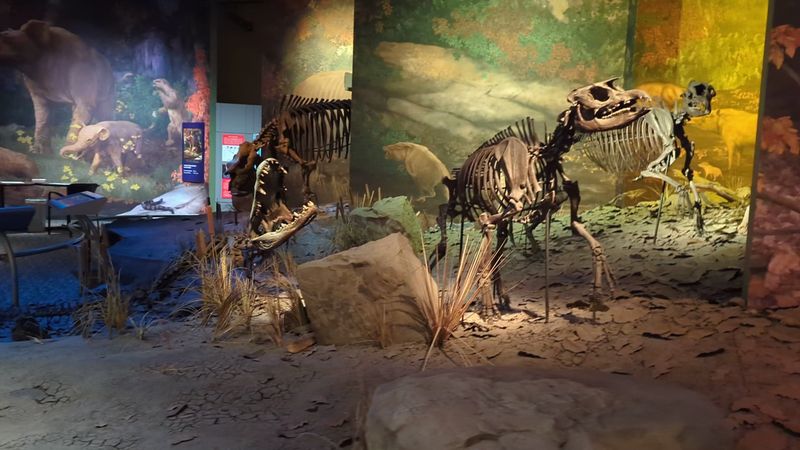
Picture a rhino built like a hippopotamus, short-legged and barrel-chested, standing shoulder deep in warm water. That animal was Teleoceras, and its bones turn up in the Gray clay.
It did not look much like the rhinos on wildlife documentaries today. The legs were stumpy, the body was heavy, and the horn was small or absent.
Scientists think it spent plenty of time in and around water, much like a hippo does. Finding rhinos in Tennessee sounds like a mistake. It is not.
Rhinos roamed North America for millions of years before disappearing from the continent entirely.
The museum displays full-scale replicas so you can stand next to one and judge the size for yourself. Photographs never quite capture the bulk.
Standing beside the model does.
Here is a detail worth remembering. The pond at the site acted like a natural trap, and animals that came to drink sometimes did not make it back out.
That is part of why the bone bed is so rich.
For anyone with a kid who loves big animals, this exhibit tends to be the showstopper. Rhinos in Appalachia is a sentence that sticks in the brain. The evidence sits right there in the display case.
The Only Fully Known Fossil Red Panda In The Americas
Red pandas live in the mountain forests of Asia. That makes the Gray discovery genuinely startling.
Researchers here described a brand new species, Pristinailurus bristoli, found nowhere else. It is the only completely known fossil red panda in the Americas.
Two nearly complete skeletons came out of the ground, which makes it one of the best documented fossil red pandas anywhere on the planet.
Most fossil mammals are known from a handful of teeth or a jaw fragment. Getting a near-complete skeleton is rare. Getting two is extraordinary.
The anatomy shows clear similarities to living Asian red pandas. That points to ancient connections between continents, when forests and land bridges linked places that feel worlds apart now.
Staff at the Gray Fossil Site treat this animal as something of a mascot, and for good reason. It rewrote part of the story of where these creatures once lived.
Think about what that means for a small town in Tennessee. A species new to science, named and described from local clay, now appears in scientific literature worldwide.
When you tour the exhibits, take a slow look at the panda display. The bones are modest in size. Their scientific weight is anything but.
Alligators Prove Tennessee Used To Be Steamy
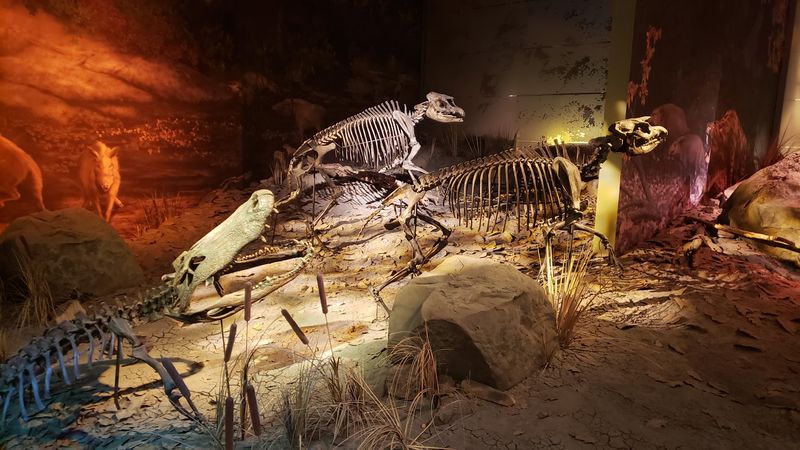
Alligators in the Appalachian foothills sound like a tall tale. The fossils say otherwise.
Alligator remains show up regularly in the excavation, and they are among the clearest clues about the old climate. Alligators need warmth.
They cannot survive long stretches of hard freeze.
Their presence tells scientists that northeastern Tennessee was once considerably warmer and wetter than it is now. Think dense, humid forest wrapped around a quiet pond, closer to the modern Gulf Coast than to a mountain winter.
The museum includes alligator replicas so you can see the scale rather than just imagine it. Kids usually stop dead in front of these.
Fossils work like a thermometer pointing backward in time. Cold-blooded animals are especially useful for that job, since their range depends so heavily on temperature.
The pond itself deserves some credit too. It formed in a sinkhole carved from limestone bedrock, and the low-oxygen mud at the bottom protected bones from decay.
That is why the preservation here is so unusually good.
Put the pieces together and a picture forms. Warm water, thick forest, and animals that would look right at home much farther south. All of it now sits under a quiet Tennessee hillside.
The World’s Biggest Haul Of Fossil Tapirs
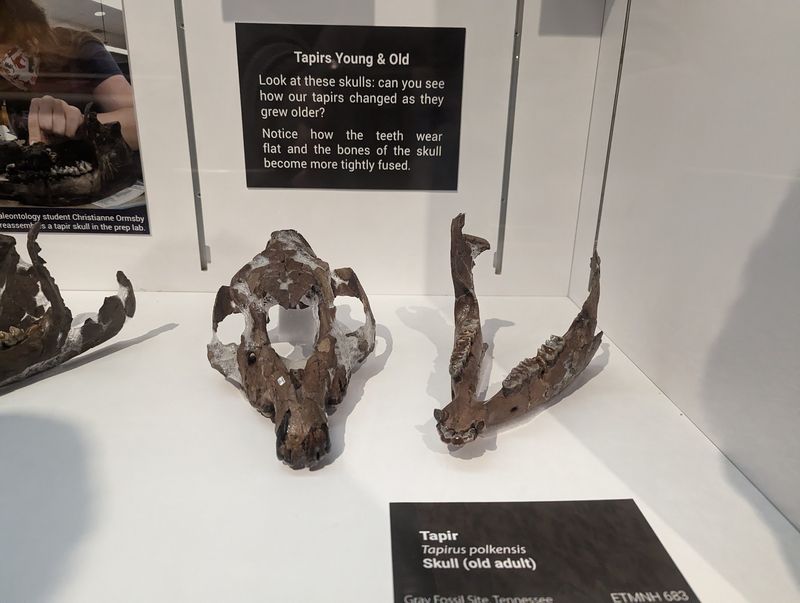
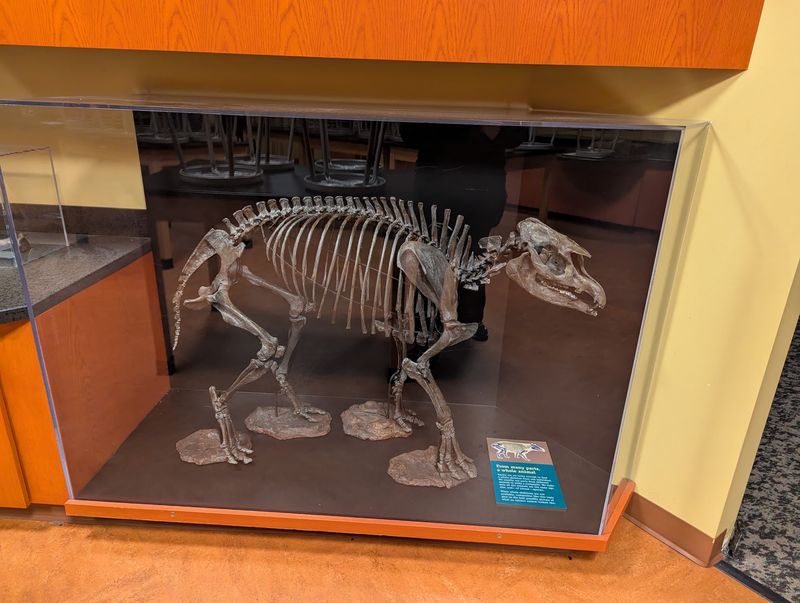
Tapirs are the odd, snuffling relatives of horses and rhinos, with a short flexible snout and a body like a small pig on stilts. Gray has more of their fossils than anywhere else on Earth.
That is not a modest claim. The site holds the world’s largest known collection of fossil tapirs, which gives researchers something they almost never get.
With so many individuals, scientists can compare young animals to old ones, males to females, and healthy bones to injured ones. A single skeleton tells you what one animal looked like.
Hundreds tell you how a whole population lived.
Tapirs preferred wet, forested ground, which fits the pond environment perfectly. They likely browsed the shoreline plants in large numbers.
Modern tapirs still exist in Central and South America and in Southeast Asia, so you can see living cousins at some zoos. Comparing those animals to the Gray fossils makes the ancient forest feel less abstract.
The museum uses these specimens in displays and in ongoing research projects. Students in the graduate program work with them directly.
Quantity matters in paleontology more than people expect. Gray’s tapir collection is a reminder that a pile of bones can answer questions a single treasure never could.
Mastodons, Saber-Toothed Cats, And The Oldest Known Wolverine
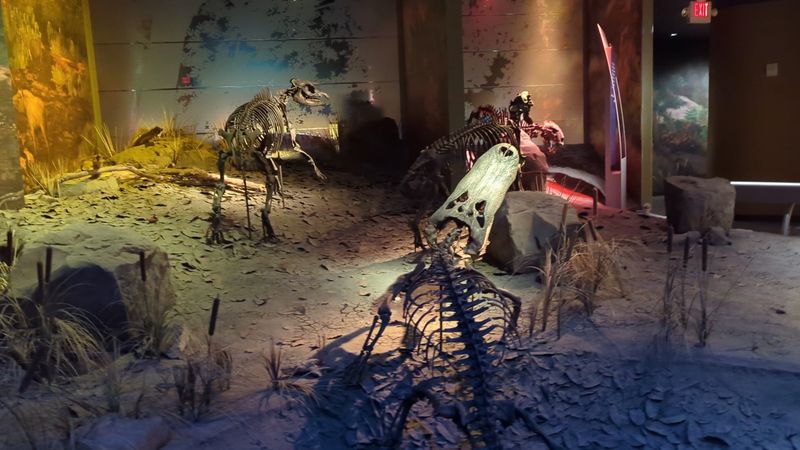
The guest list at this ancient pond keeps getting stranger. Over 100 species of animals have been identified so far.
Mastodons lumbered through the forest, and their remains are among the largest recovered. Saber-toothed cats prowled the same ground.
Short-faced bears, enormous and long-limbed, also left bones behind.
One of the most quietly impressive finds is Gulo sudorus, the oldest known fossil wolverine. Modern wolverines are famously tough animals of the far north.
Their earliest known relative turned up in a warm Tennessee forest.
Giant flying squirrels are on the list as well, including Miopetaurista webbi. Imagine one gliding between branches overhead.
Smaller creatures matter just as much to the researchers. Fish, frogs, turtles, and other small vertebrates have all been identified, and they help reconstruct the pond and its shoreline in fine detail.
Big animals get the headlines. Tiny bones fill in the everyday texture of the ecosystem.
More than 45,000 fossils have been cataloged from the site so far, and that number keeps growing. Each one is cleaned, labeled, and stored for study.
Walking through the galleries, the variety is what lands hardest. This was not a single famous animal preserved by luck. It was an entire living forest, captured in mud.
Watch Real Paleontologists At Work
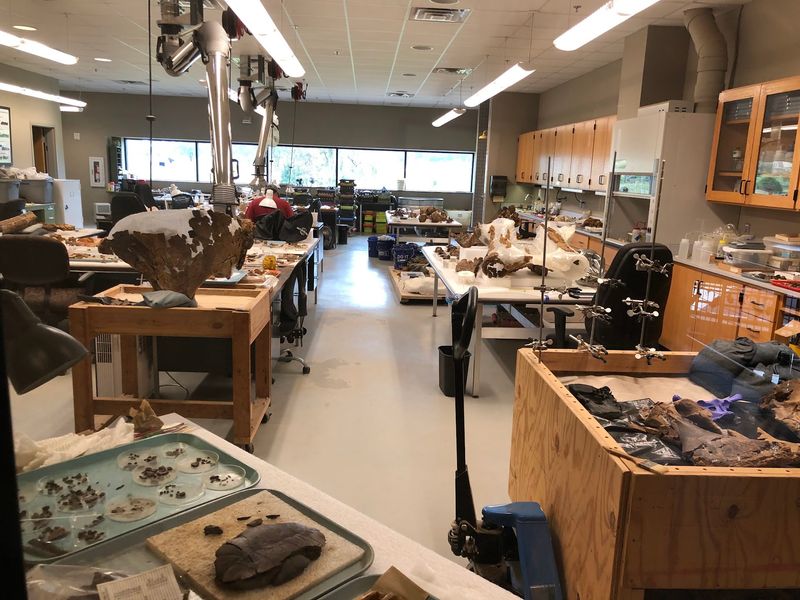
Most museums show you the finished product. Here you can watch the work in progress.
Excavation continues every year, typically starting in May and running for several months. The 2024 season opened new areas with working nicknames like the Mystery Pit and the Micro Pit.
From inside the building, an upper-level view looks out over the dig. When crews are out, you can see them scraping, sifting, and bagging material by hand.
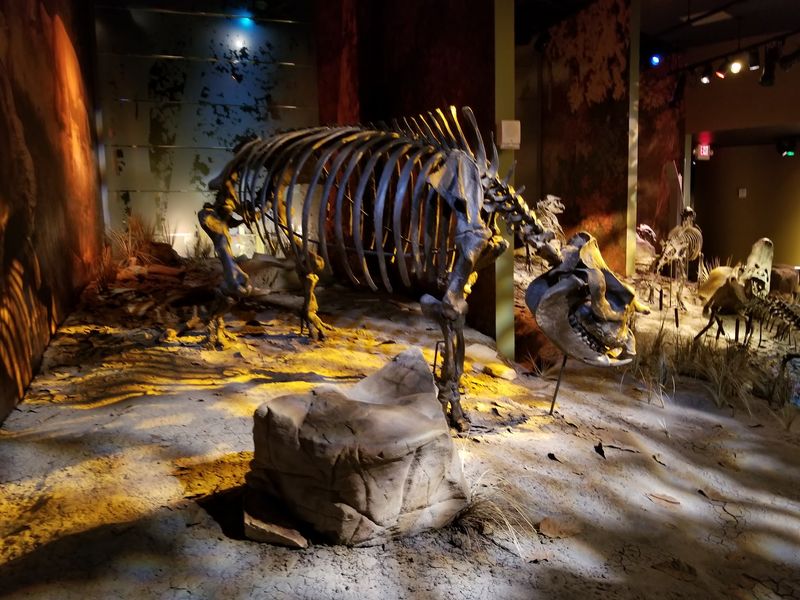
Lab work runs year-round, so even in colder months there is science happening. Preparators clean fossils under bright lights and magnifiers, a slow and patient process.
East Tennessee State University operates the site and runs a Master’s program in paleontology. Students come from across the country and abroad to train here.
Guided tours of the active dig are offered through the partnership with the Hands On! Discovery Center.
A guide explains what each pit is producing and why it matters.
Seeing discovery happen in real time changes how the exhibits feel. Those cases are not a closed chapter. They are a running total that gets updated every summer.
Planning Your Own Trip To The Pit
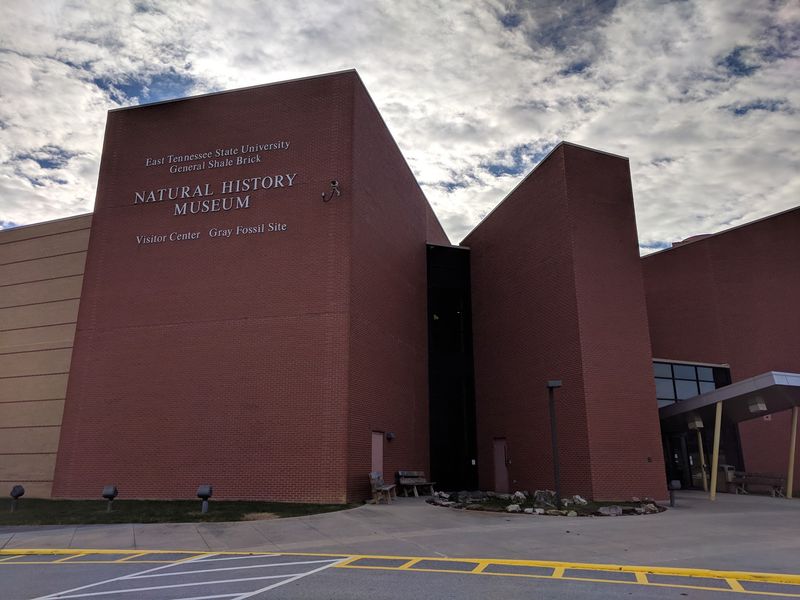
Getting here is easier than the science suggests. The museum sits at 1212 Suncrest Dr, Gray, TN 37615, just off the interstate corridor near Johnson City.
Doors open at 10 am Tuesday through Saturday and close at 5 pm. Sunday hours run from 1 pm to 5 pm, and Monday is closed.
The museum opened in 2007 and shares its building with the Hands On! Discovery Center. That pairing means interactive stations sit alongside serious fossil displays.
Families with grade-school kids get the most out of it. There are building activities, a topography sand table, and a singing Tesla coil that is genuinely loud, so plan accordingly with noise-sensitive children.
Budget around an hour or two for the main galleries. Add more if you take the guided tour to the excavation area, which is worth the upgrade during field season.
Picnic tables sit out front, and a garden area offers a quiet spot outdoors. Packing lunch is a sensible move.
Special programs called The Big Dig let people aged twelve and up work alongside the crew on select Saturdays. Spots are limited, so check the schedule early.
Tennessee has plenty of scenic stops. Few let you stand above a five-million-year-old forest while someone digs it up.