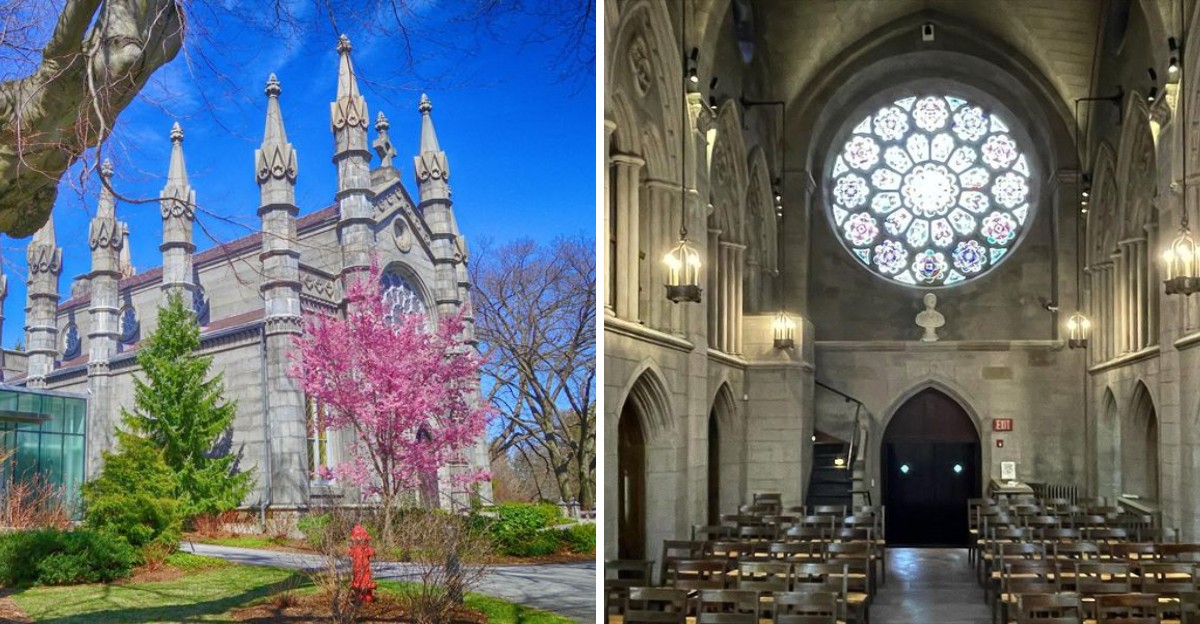
Pointed granite spires, colorful stained-glass windows, and intricate Gothic details make one historic Massachusetts chapel look remarkably different from its surroundings.
Standing among peaceful gardens and winding pathways, this architectural treasure feels more like something you would encounter in the European countryside.
Its fascinating history stretches back to the 1840s, when a Boston physician helped bring his ambitious architectural vision to life. Despite structural challenges and extensive reconstruction, the chapel has retained much of its original character.
Today, historic craftsmanship meets contemporary architecture through a thoughtfully designed glass pavilion and carefully restored interiors.
The surrounding landscape is equally captivating, with seasonal flowers, mature trees, and tranquil ponds making this unexpected Cambridge landmark well worth a visit.
A Tiny Cathedral With Big European Energy
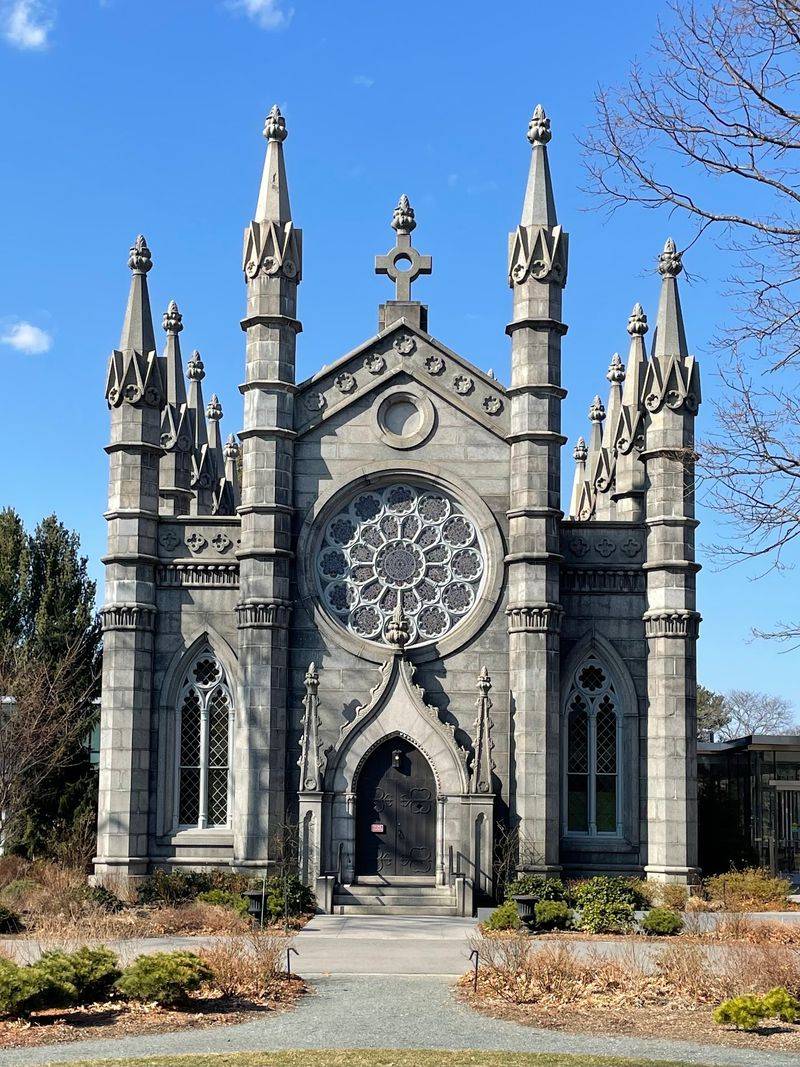
Some buildings whisper, but this one practically sings in stone. Bigelow Chapel looks like a European Gothic cathedral that decided to shrink down and move to Massachusetts.
It is small, yet it carries itself with serious style.
The first thing to catch your eye is the color. The walls are built from Quincy granite, a tough gray stone quarried just south of Boston.
It gives the chapel a solid, timeless look that seems ready to stand for centuries.
Then there are the spires. Tall pinnacles poke toward the sky like stone candles on a birthday cake.
They pull your eyes upward before you even reach the door.
Look closer and you will spot octagonal buttresses along the sides. These eight-sided supports are both strong and decorative.
Builders used them to hold up the walls while adding extra charm.
The design is called Gothic Revival. It was a style that brought back the pointed arches and dramatic lines of medieval churches.
In the 1840s, it was fresh and exciting in America, and this chapel was an early example.
Here is a helpful tip for your camera. Step back and frame the whole building with trees around it.
The contrast between gray stone and green leaves makes a picture you will want to print and hang on the wall.
The Doctor Who Dreamed In Granite
Not every architect carries a stethoscope. The mind behind this chapel belonged to Dr. Jacob Bigelow, a Boston physician with a surprising love for design.
He was also a principal founder of the cemetery where the chapel stands.
Bigelow sketched out his vision in the 1840s. He wanted a building that felt reverent but fit with the natural beauty around it.
It was a big dream for a doctor, but he had a clear idea of what he wanted.
To turn those ideas into real plans, he needed help. Architect Gridley J. F. Bryant stepped in and drew up the working plans.
Bryant was a well-known Boston builder, so the project was in skilled hands.
Construction wrapped up in 1846. That makes the chapel older than many famous American landmarks.
Think about it, this was before the Civil War and long before cars or electric lights.
For decades, the building did not carry its creator’s name. That changed in 1936 when it was officially renamed Bigelow Chapel.
It was a fitting thank-you to the man who first imagined it.
Fun fact for your next trivia night. Bigelow also helped shape the idea of the garden cemetery in America.
So his influence reaches far beyond this one lovely building.
Rebuilt Stone By Stone, Looking Exactly The Same
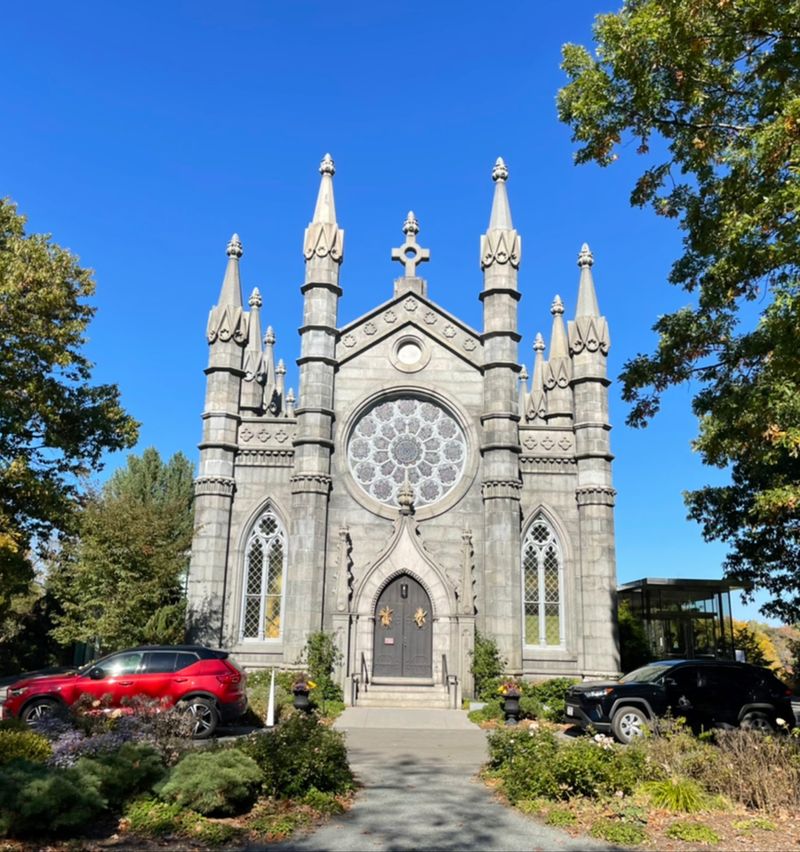
Ever had to redo a school project because something went wrong? The chapel knows that feeling well.
Only a few years after it opened, builders found serious structural defects.
The fix was not a quick patch. Between 1853 and 1858, the whole chapel was rebuilt.
That is five years of careful work on one building.
Here is the amazing part. The new version kept the original look.
The builders honored the first design instead of starting fresh with a new idea.
So when you stand in front of it today, you see what Bigelow pictured back in the 1840s. The spires, the buttresses, and the pointed arches all follow his plan.
It is like a faithful copy that became the real thing.
This story shows how much people cared about the chapel’s beauty. They could have built something cheaper or simpler.
Instead, they chose to protect the design they loved.
Keep this in mind as you walk around the outside. Run your eyes along the neat lines of granite blocks.
Much of the chapel’s granite exterior dates to its reconstruction between 1853 and 1858.
It is a quiet lesson in patience. Sometimes getting it right means doing it twice.
Windows That Paint The Room With Color
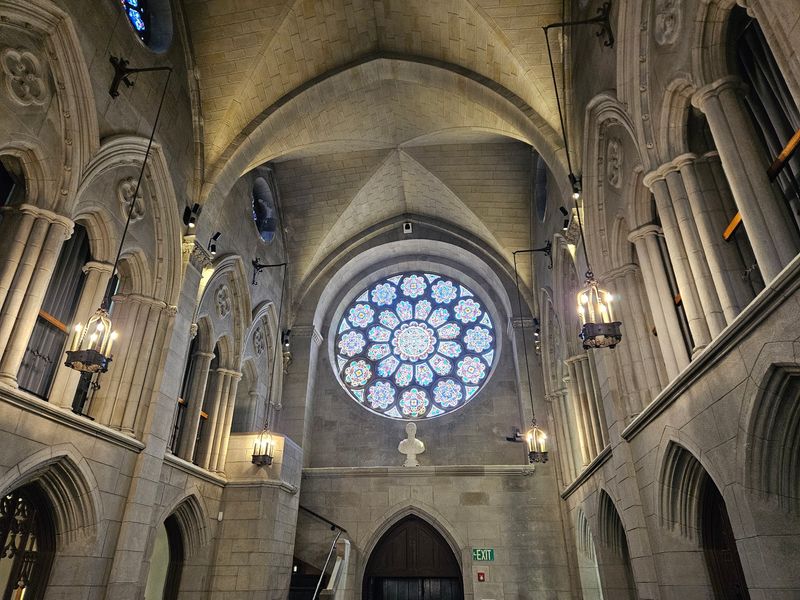
Sunlight gets a serious makeover inside this chapel. Two giant stained-glass windows turn plain daylight into pools of rich color.
They are the true stars of the show.
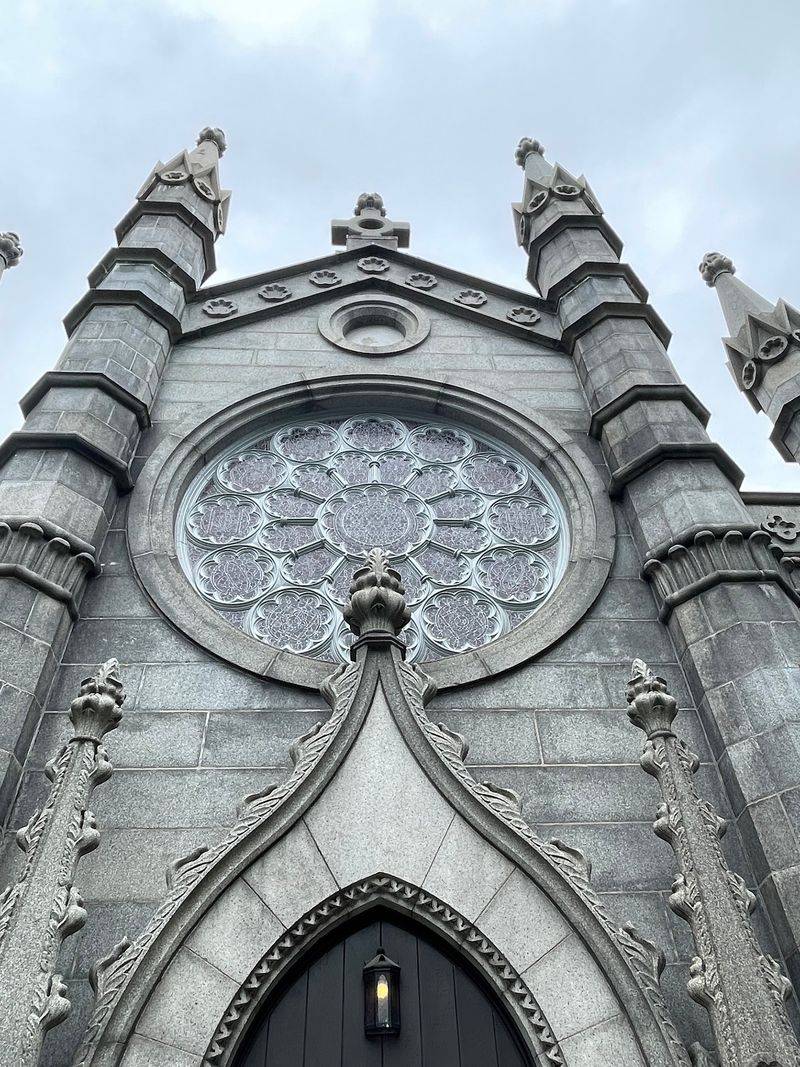
The Chancel Window sits above the altar on the north wall. Across the room, the Rose Window glows above the entrance on the south wall.
Together they balance the space like two bright bookends.
These windows traveled a long way. They were crafted by Ballantine and Allan, a firm in Edinburgh, Scotland.
They were installed in 1846 and are rare early examples of painted stained glass in the United States.
The colors are what grab people. The blues are deep and bold.
The reds seem to glow with a warmth all their own.
Timing matters here. The light shifts throughout the day, so the colors on the floor and walls change too.
A bright afternoon can look very different from a cloudy morning.
Try this simple trick. Stand in the center aisle and slowly turn from one window to the other.
You will notice how each one sets a different mood.
During the recent restoration, the Rose Window was carefully refreshed. Its glow is now as vivid as it has been in a very long time.
A Glass Pavilion That Knows Its Manners
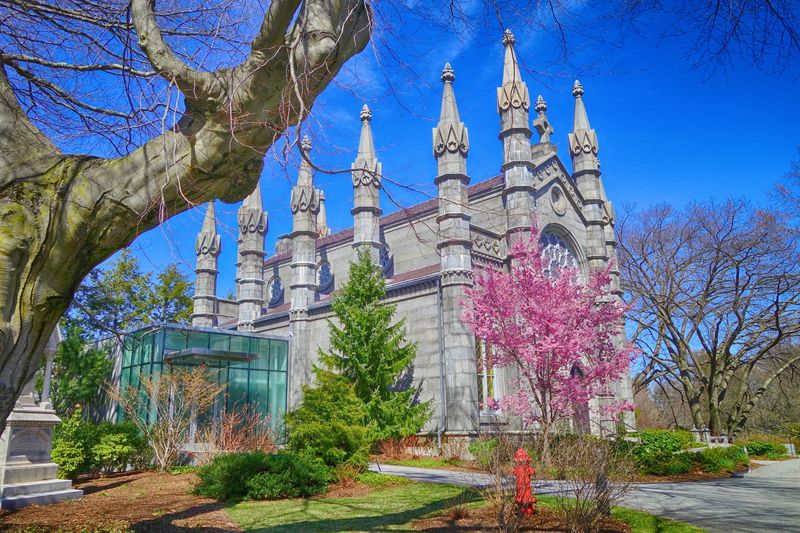
Mixing old and new is tricky, like pairing sneakers with a fancy suit. Yet the chapel pulls it off with grace.
In 2018, a big revitalization project gave it a stylish modern partner.
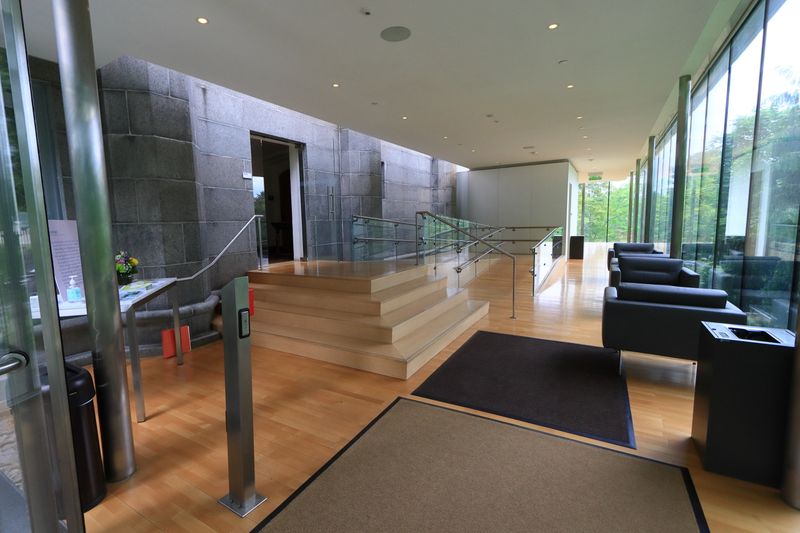
The firm William Rawn Associates designed a long glass-enclosed pavilion. It sits alongside the historic building without stealing the spotlight.
The Gothic chapel is still clearly the main character.
The materials are simple and warm. Wood and glass work together to create a calm, open feeling.
Nothing shouts for attention.
The best feature might be the view. Large glass walls look out over the cemetery grounds.
Trees, lawns, and seasons all become part of the room.
The revitalized chapel hosts activities such as meditation and yoga, while the pavilion provides additional space for gatherings and events. It is a peaceful space where people can slow down and breathe.
The scenery outside does a lot of the relaxing work for you.
Architecture fans often point to this project as a smart example of respectful design. The new part supports the old part instead of competing with it.
That balance is harder than it looks.
If you enjoy comparing styles, stand where you can see both at once. The pointed granite spires and the clean glass lines make a fascinating pair.
Smart Upgrades Hiding In Plain Sight
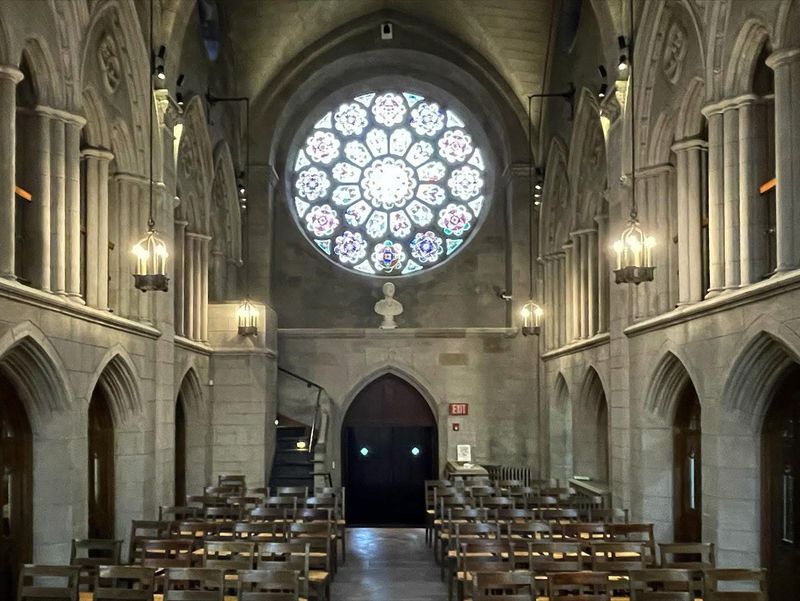
The best improvements are often the ones you barely notice. During the 2018 revitalization, designers made clever changes that blend right in.
The chapel feels historic but works like a modern space.
Accessibility got real attention. The altar was lowered so more people can use the front of the room easily.
Getting around the building is now simpler for everyone.
Lighting was another quiet win. New lights were carefully built into the ceiling arches.
They brighten the room without spoiling the old Gothic lines.
Sound matters too. The project improved the acoustics, so voices and music carry more clearly.
That helps a lot during gatherings and programs.
The original interior was already roomy. It has an open layout with a wide central aisle.
The upgrades kept that airy feeling while making the space more comfortable.
Here is a useful tip. Look up at the arches and try to spot the lighting.
It is tucked so neatly that many people miss it on first glance.
These changes show that caring for history does not mean freezing it in time. A building can stay beautiful and still grow with the people who use it.
This chapel is proof of that idea.
A Space For Everyone, Whatever The Occasion
Flexible is not a word people usually use for a stone chapel. Still, this one has changed roles more than once.
Its story is full of fresh chapters.
In 1899, the building was adapted to serve new needs for the cemetery. It became one of the first places of its kind in a Massachusetts cemetery to offer cremation services.
That was a forward-thinking step for the late 1800s.
The 2018 project carried that tradition into the present. A modern, fuel-efficient facility was included.
It reflects the same practical spirit from more than a century earlier.
The chapel has been non-denominational since its original construction in the 1840s. That means it welcomes people of all beliefs and backgrounds.
No single faith owns the space.
It hosts memorial services, public programs, and a range of events. Some gatherings are quiet and reflective.
Others celebrate lives, art, or community.
A handy piece of advice. The chapel interior is not always open to the public.
Check the Mount Auburn schedule before you plan your trip.
Open house days and special programs are great chances to step inside. Keep an eye on the cemetery calendar so you do not miss one.
The Garden Setting That Steals Half The Show
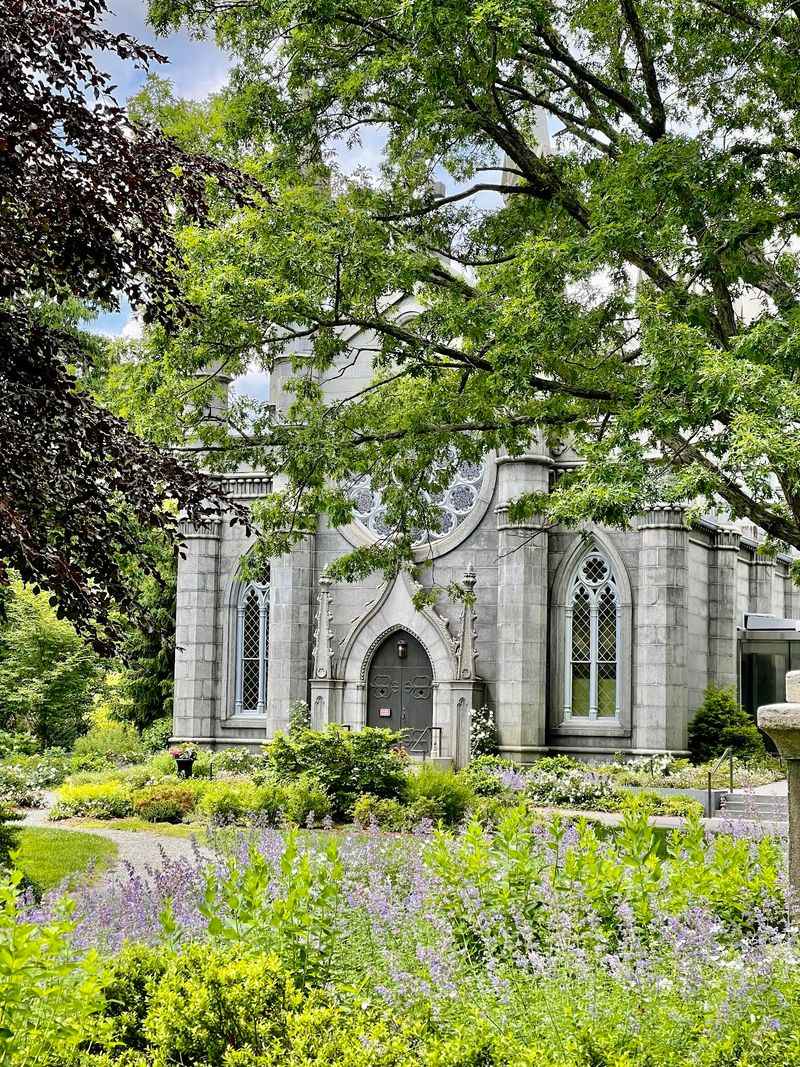
A great building deserves a great backyard, and this one got a famous one. Bigelow Chapel sits within Mount Auburn Cemetery at 580 Mount Auburn Street in Cambridge.
The grounds are a destination all their own.
Mount Auburn opened in 1831 as America’s first garden cemetery. Its founders designed it as a peaceful landscape of hills, ponds, trees, and winding paths.
It inspired similar spaces across the country.
The chapel sits on the first hill near the main entrance. You can spot its spires from the gate and from many points around the grounds.
It works like a friendly landmark while you explore.
The landscape is famous for its trees and flowers. Spring brings blossoms, and fall turns the hills into shades of gold and red.
Birdwatchers love it too.
A few simple tips help. Wear comfy shoes, because the paths wind up and down gentle slopes.
Grab a map at the entrance so you can find your way back to the chapel.
Remember that this is still an active cemetery. Walk quietly and treat the space with respect.
Few places in Massachusetts blend art, nature, and history so gracefully. It is the kind of spot that rewards a slow, curious stroll.