
This Crystal-Clear Spring in Florida Is So Blue It Looks Photoshopped Until You See It in Person
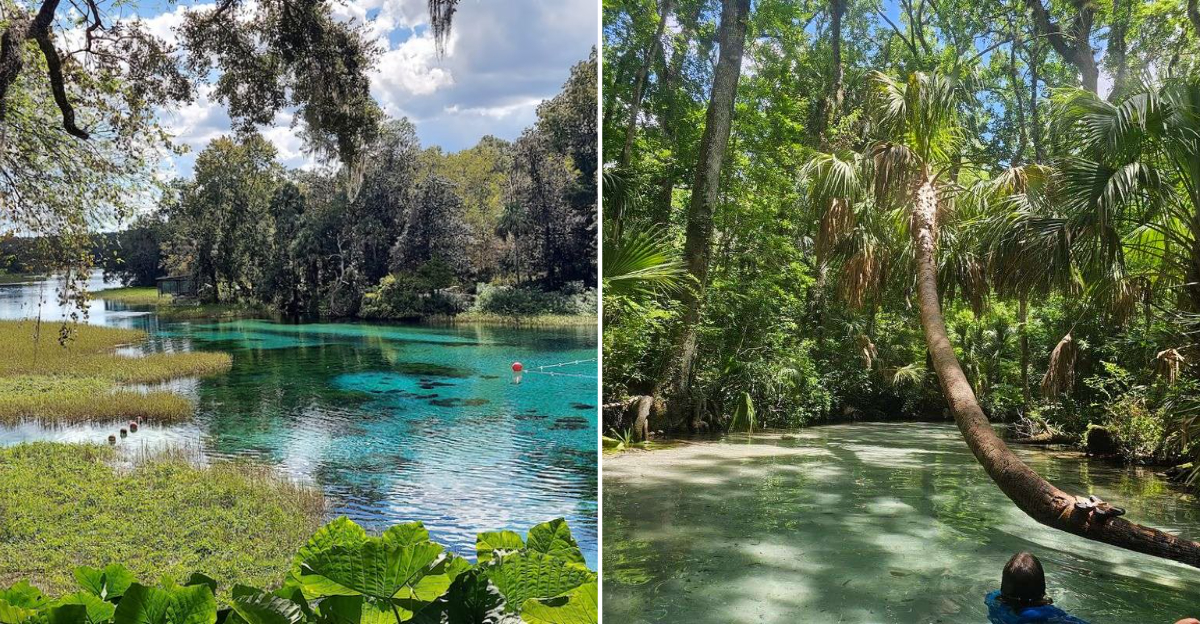
If you are searching for a place that feels like a fantasy movie set, this pristine oasis is exactly what you mean. It offers a rare chance to escape the frantic workweek and truly bond with the untouched wilderness.
Growing up, my weekends meant splashing in murky lakes and building fragile sandcastles that the tide always claimed. This basin shatters those muddy childhood memories with a shocking display of pure, electric turquoise.
The water is so transparent that swimmers seem to float suspended in thin air. Local birds chirp softly from the dense canopy of ancient cypress trees overhead.
Florida holds countless natural wonders, but this geological miracle completely redefines the meaning of scenic beauty. You simply cannot comprehend the hypnotic depth of this blue until you stand on the wooden dock yourself.
Understanding The Geology Behind Crystal Clear
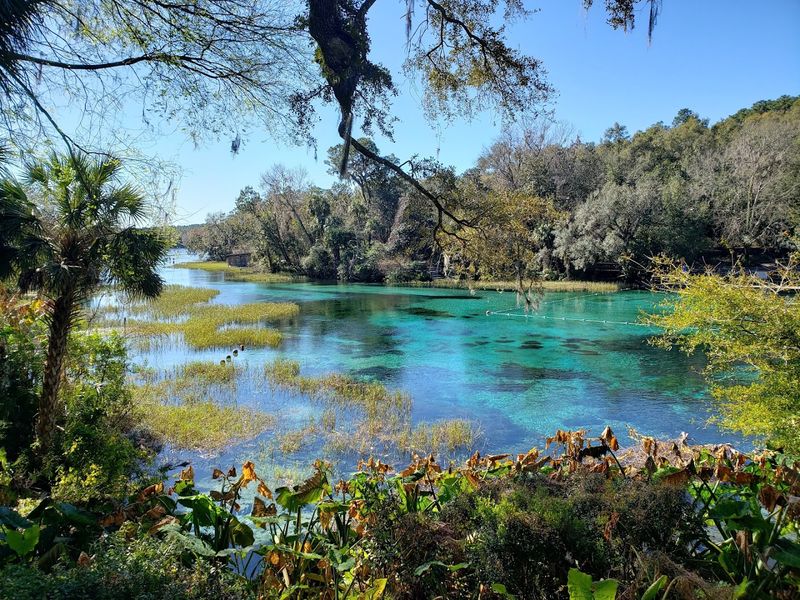
Florida sits on top of one of the most impressive natural plumbing systems on Earth. Rainwater slowly filters down through layers of soil and limestone for thousands of years.
The result is some of the clearest water you will ever see.
Here is the cool part. As rainwater falls, it picks up carbon dioxide from the air and soil.
That creates a mild carbonic acid. The acid quietly dissolves the limestone rock underground over long stretches of time.
That dissolving process carves out massive cave networks beneath the surface. These caves fill with groundwater as part of the Floridan Aquifer system.
The aquifer holds an enormous amount of clean, filtered water beneath central Florida.
When pressure builds up enough, the water pushes upward through natural openings in the ground. That upward push creates a spring.
Rainbow Springs is one of Florida’s first-magnitude springs, meaning it releases over 100 million gallons daily.
The limestone acts like a giant natural filter. Particles and debris get trapped before the water ever reaches the surface.
That is why the spring looks almost unreal when you see it for the first time.
Rainbow Springs State Park sits at 19158 SW 81st Pl Rd, Dunnellon, FL 34432. The geology here has been working on this masterpiece for millions of years.
The Role Of Flora In Maintaining Spring Water Clarity
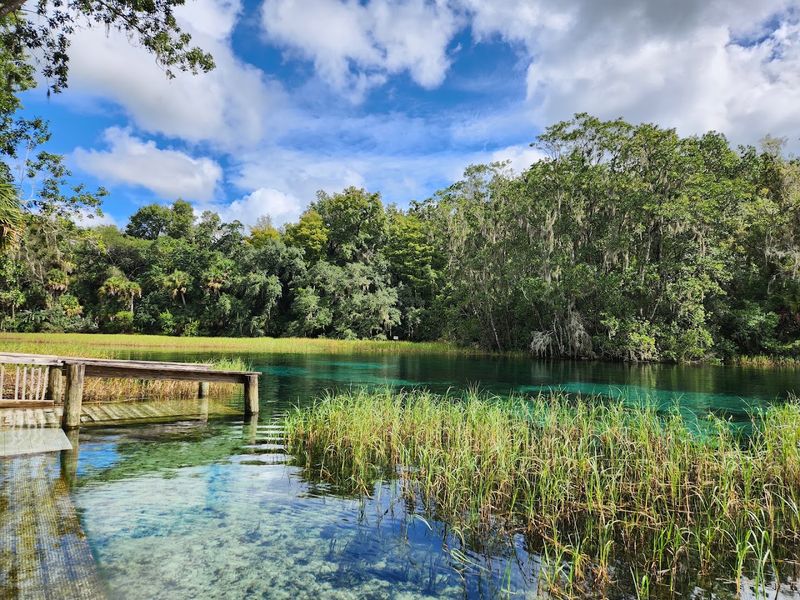
The water at Rainbow Springs does not stay clear by accident. Native aquatic plants work around the clock to keep things pristine.
Without them, the whole ecosystem would look very different.
Eelgrass is one of the biggest heroes here. It anchors itself to the sandy riverbed and holds loose sediment in place.
When sediment stays put, the water above stays clear and blue.
These plants also absorb excess nutrients floating in the water. Nutrients like nitrogen and phosphorus can trigger algae growth if left unchecked.
Algae blooms are the enemy of clarity, so the plants keep them under control.
Dense underwater plant beds create miniature neighborhoods for wildlife. Fish hide among the leaves.
Turtles rest on the stems. Even manatees graze on the vegetation when they visit during cooler months.
The gardens throughout the park above the waterline also play a role. Tree roots help filter runoff before it reaches the spring.
Native flowering plants attract pollinators and reduce erosion along the banks.
Florida has lost a significant portion of its native spring vegetation over the decades. Pollution and overuse have taken a toll on many springs across the state.
Rainbow Springs has worked hard to restore and protect its plant communities.
Walking through the park, you can see restoration areas where native plants are being reestablished. It is a quiet, ongoing effort that makes a visible difference in water quality every single day.
Wildlife You Can Encounter Around Natural
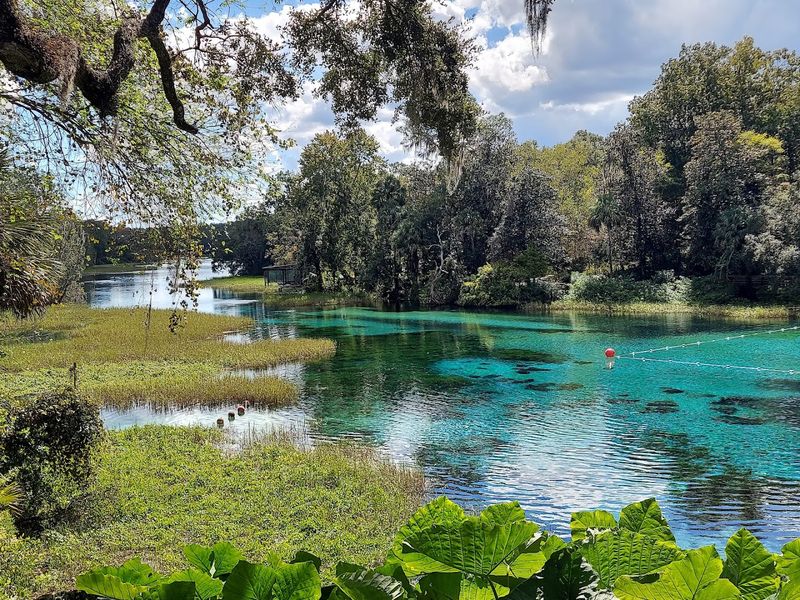
Rainbow Springs is not just a pretty body of water. It is a full-on wildlife neighborhood.
Animals live here, pass through here, and put on a show whether they mean to or not.
River otters are crowd favorites. They zip through the water with an energy that is almost comedic.
Spot one and you will be watching it for a solid ten minutes straight.
Turtles are absolutely everywhere. They pile onto logs, float near the surface, and paddle alongside kayakers without a care.
You will lose count of how many you see in a single afternoon.
Alligators are present too, and yes, that is completely normal in Florida. They tend to stay near the banks and leave people alone.
Keep a respectful distance and everyone has a fine day.
Birdwatchers have a serious reason to visit. Red-shouldered hawks, barred owls, and great blue herons are regular sightings.
The tree canopy along the trails provides excellent habitat for dozens of species.
Gray squirrels and white-tailed deer move through the wooded areas of the park. Early mornings are the best time to spot deer near the trail edges.
They tend to disappear once the crowds arrive.
Here is a fun fact most visitors do not know going in. The park once housed a private zoo in the 1930s.
Some descendants of those animals, including monkeys, still roam the surrounding area today.
Seasonal Changes Affecting The Appearance Of
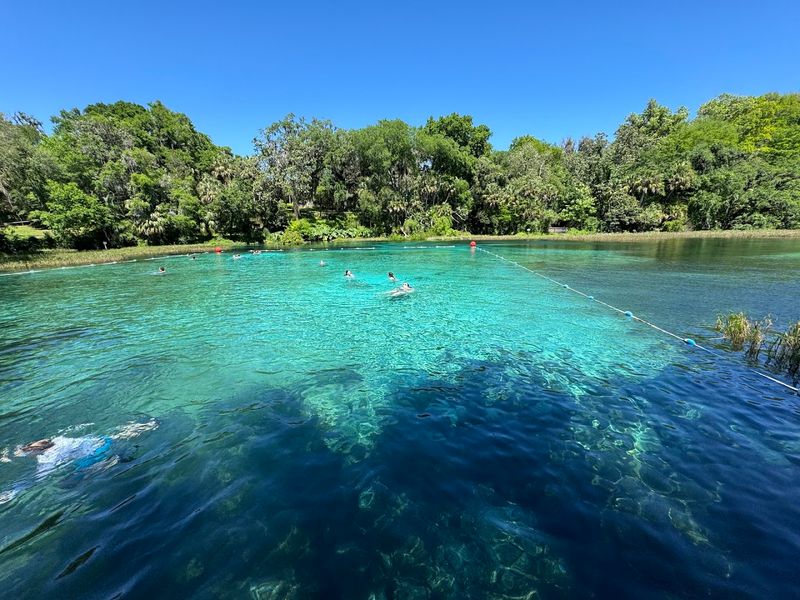
One of the most interesting things about Rainbow Springs is the water temperature. It stays right at 72 degrees Fahrenheit every single day of the year.
No exceptions, no surprises, just consistent coolness no matter the season.
That steady temperature makes it a popular winter destination. When air temperatures drop across Florida, manatees seek out warm spring water.
Rainbow Springs becomes a reliable refuge for these gentle giants during the cooler months.
Summer brings a different kind of energy to the park. The crowds grow significantly as families pour in during school breaks.
Arriving early is the smart move because the park closes when it hits capacity.
Rainfall patterns affect how the spring looks from season to season. Heavy summer rains boost the aquifer levels and can actually increase the spring’s flow.
More flow generally means stronger, cleaner water pushing up from below.
However, heavy rains can also stir things up in a less flattering way. Murky water from the surrounding Rainbow River can get pushed upstream toward the headsprings.
When that happens, clarity near the swimming area drops noticeably.
The best water clarity tends to happen during drier periods. Late fall and early spring often offer the most stunning views through the water.
The blue-green color is at its most vivid when conditions are calm and flow is strong.
Algae blooms are more common in warmer months when nutrient levels rise. Visiting during cooler seasons reduces the chance of encountering them.
Popular Activities That Showcase Unique Qualities
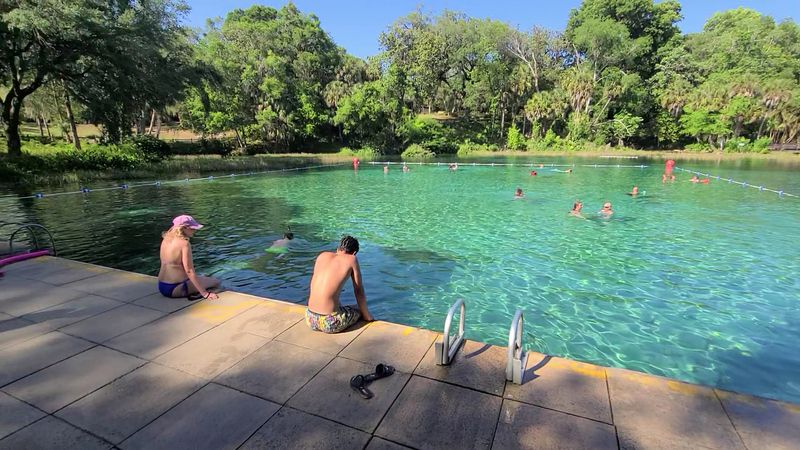
Getting on the water is the whole point of visiting this place. The clarity is so remarkable that kayaking here feels like paddling over glass.
You can see the sandy bottom stretching out ten, twenty, sometimes over a hundred feet below you.
Kayak and canoe rentals are available right at the park. Single kayaks run around thirty dollars per hour depending on the day.
Paddleboards are another option for those who want to stand above the water and look straight down.
The designated swimming area at the Headsprings is a crowd favorite. The water is cool, clear, and refreshing on a hot Florida afternoon.
Bring a pool noodle because the water runs eight to twelve feet deep and there is no shallow end.
Snorkeling in the swimming area gives you a front-row view of underwater life. You might see fish, turtles, and the swaying aquatic plants below.
The visibility is so good that even basic snorkel gear produces incredible results.
Tubing down the Rainbow River is a separate experience accessed from a different entrance. The float can take several hours depending on how far you go.
It is relaxed, slow-moving, and wildly scenic the entire way.
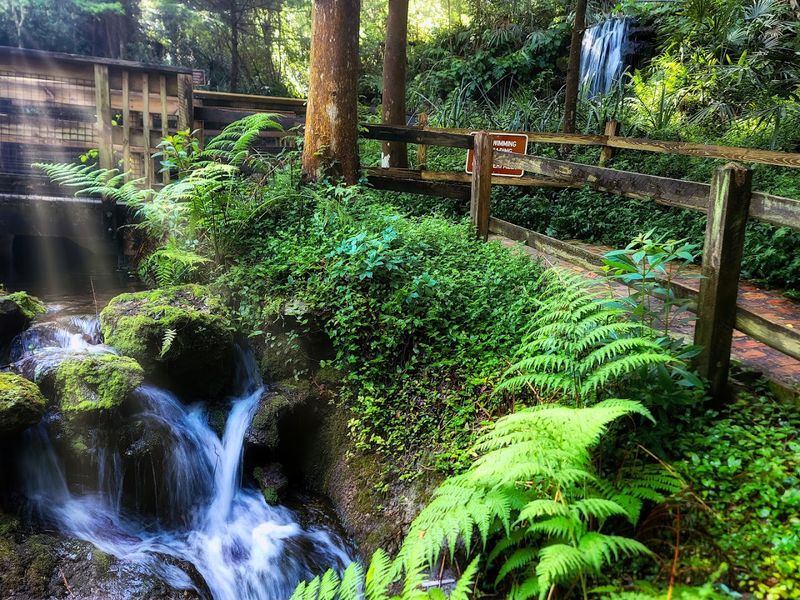
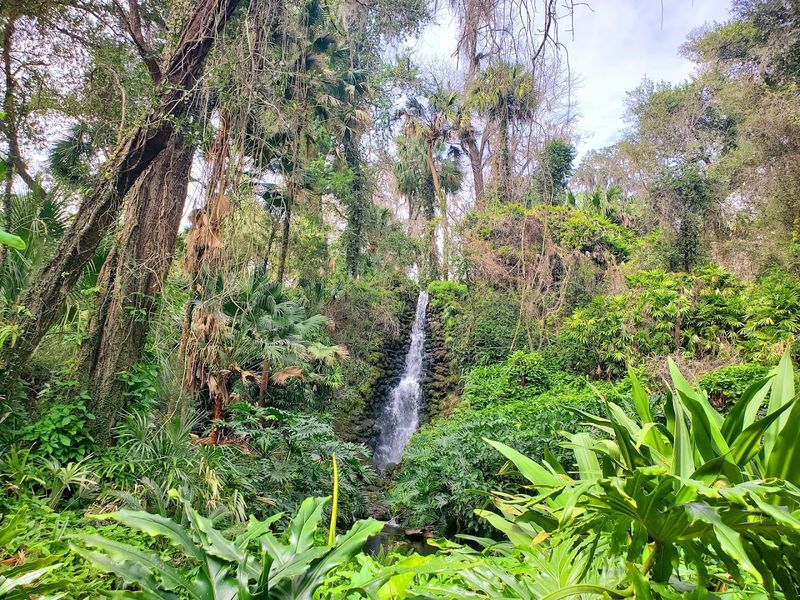
Hiking trails wind through the park past man-made waterfalls and historic remnants of the old tourist attraction. The walk to the waterfalls takes about ten minutes and is well worth it.
A cafe and gift shop are on-site for post-adventure refueling.
Environmental Efforts To Preserve Pristine Spring Ecosystems
Rainbow Springs is beautiful, but it faces real threats. Nitrate pollution from agriculture and septic tanks has been one of the biggest challenges for Florida springs over the past few decades.
High nitrate levels encourage algae growth and choke out native plants.
Basin Management Action Plans are the state’s formal response to this problem. These plans set specific targets for reducing pollution entering the spring’s watershed.
They focus on improving wastewater treatment and cutting back on fertilizer runoff from nearby farms.
Conservation zones within the park protect the most sensitive areas. No-wake rules on the water reduce erosion caused by boat wakes.
Slower water movement keeps sediment settled and plant beds intact.
Volunteer programs bring community members into the restoration process. Groups regularly remove invasive plant species that compete with native vegetation.
Native plants are then replanted to restore the natural balance of the ecosystem.
The park also educates visitors about responsible behavior near the water. Signs remind guests not to wear sunscreen before swimming, since certain chemicals harm aquatic life.
Small choices made by thousands of visitors add up to a significant impact over time.
Florida’s springs have seen a measurable decline in flow and clarity over recent decades. Rainbow Springs is one of the better-maintained examples, partly because of consistent conservation investment.
The work is ongoing and never really finished.
Supporting state parks financially through entrance fees and permits directly funds these preservation efforts. Every visit contributes to keeping the spring in the condition that makes it worth visiting.
Photographing The Vibrant Colors Of Freshwater
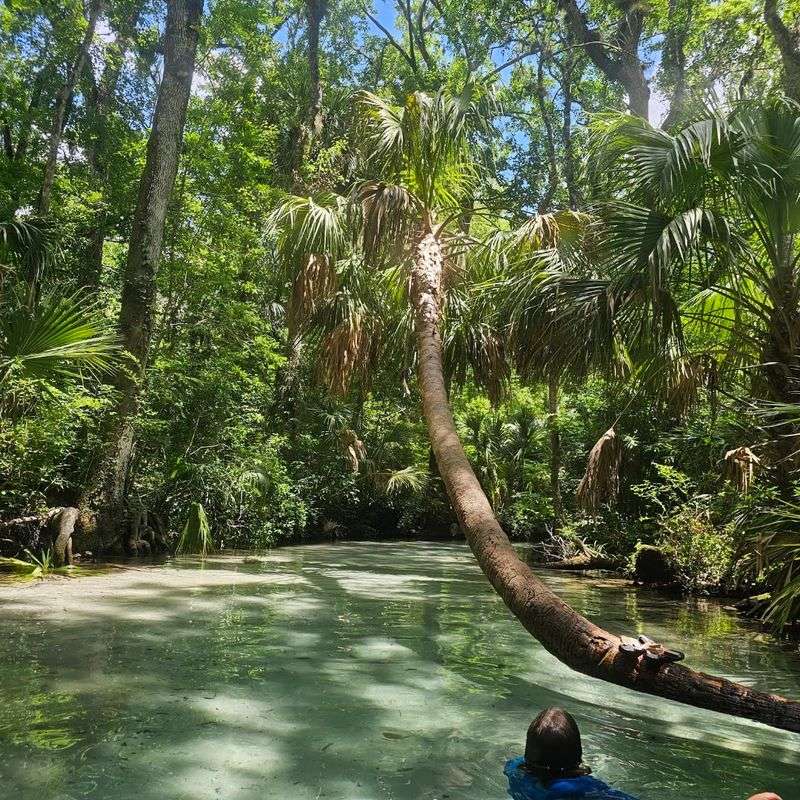
Rainbow Springs is genuinely one of the most photogenic places in Florida. The water color alone stops people mid-scroll when photos pop up online.
That blue-green hue is not a filter. It is just what the spring actually looks like.
A polarizing filter is your best friend here. It cuts through the surface glare and lets the camera see what your eyes see.
Without one, photos often come out washed out and flat despite the stunning real-world color.
Golden hour lighting transforms the park into something extraordinary. Early mornings just after the park opens at 8 AM offer soft light and smaller crowds.
Late afternoon light warms the water color and adds depth to every shot.
Overcast days are underrated for spring photography. Even cloud cover eliminates harsh shadows and produces consistent, flattering light across the water.
Colors actually appear more saturated on cloudy days than in direct midday sun.
Clear kayaks are available at some Florida springs and offer a unique photography angle. Shooting straight down through the hull gives the impression of floating in mid-air above the riverbed.
It is a perspective that regular kayaks simply cannot offer.
The man-made waterfalls along the hiking trail are a reliable photography subject. Lush greenery frames each waterfall naturally.
A slow shutter speed creates a silky water effect that looks intentional and polished.
Wildlife photography requires patience and a zoom lens. Otters and herons move fast.
Set up near the water early and let the animals come to you for the best results.
Cultural History Surrounding Natural In Florida
Rainbow Springs has a human story that stretches back over ten thousand years. Long before it was a state park, Native American groups, including the Timucua people, used the spring as a vital resource.
The water sustained communities for generations across this region of Florida.
The late 1800s brought a very different kind of activity to the area. Phosphate mining boomed across central Florida, and the land around Rainbow Springs was no exception.
That era left a mark on the local landscape and economy that lasted for decades.
By the 1930s, the spring had been transformed into a private tourist attraction. Entrepreneurs saw the spring’s natural beauty as a business opportunity.
Submarine-style glass-bottom boat tours were introduced so visitors could see the underwater world without getting wet.
Man-made waterfalls were constructed throughout the property during this period. Exotic animals were brought in to create a small zoo on the grounds.
Monkeys were among the animals kept there, and some of their descendants reportedly still live in the surrounding woods today.
The attraction thrived for several decades before declining attendance forced it to close in the 1970s. The site sat largely unused until Florida acquired the land for conservation purposes.
Rainbow Springs officially reopened as a state park in 1990.
Walking the trails today, you can still see stone remnants of the old animal enclosures and the original waterfall structures. History literally sits alongside nature at every turn.
It gives the park a layered character that goes well beyond a typical outdoor destination.