
This Fascinating Massachusetts Museum Is Filled With Rare Artifacts And Incredible Stories
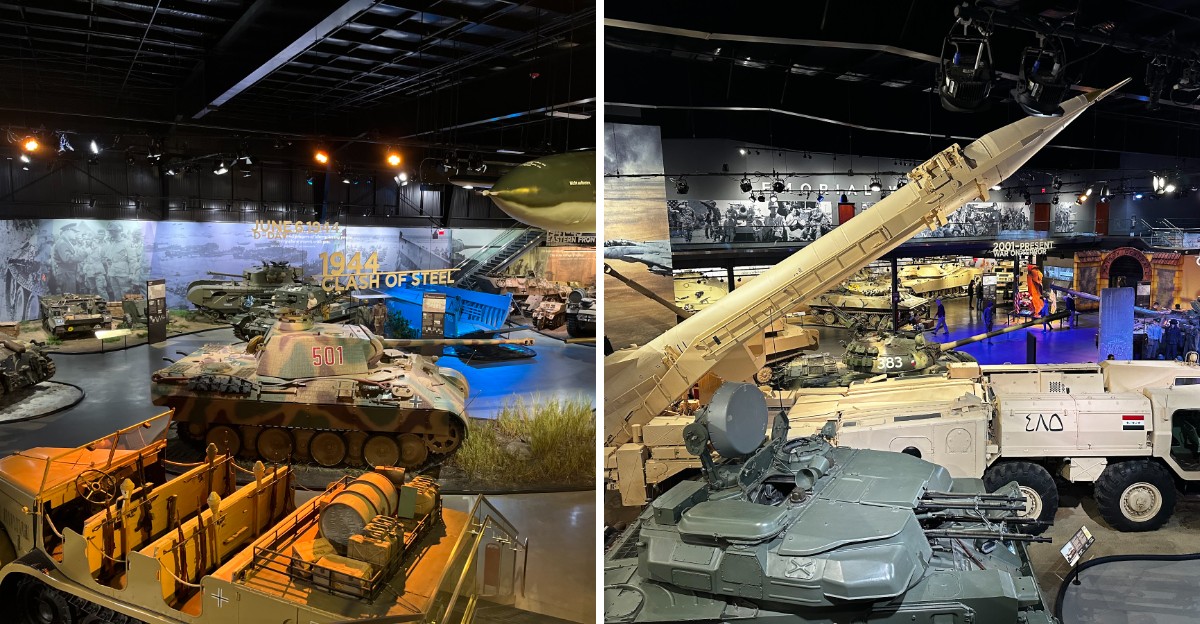
What if you could see some of the most remarkable pieces of history up close instead of reading about them in a textbook? Not behind the pages of an old history book, but right there in front of you.
Massachusetts has a fascinating museum where the past feels surprisingly real, and every exhibit has a story worth hearing.
Inside, rare artifacts and carefully preserved pieces of history reveal extraordinary moments that helped shape the world we know today.
You might arrive expecting a typical museum visit, only to find yourself spending hours examining details and learning things you never knew. And the experience goes well beyond simply looking at old objects.
Immersive displays and powerful stories help visitors understand what people experienced during some of history’s most challenging moments.
Even if history was never your favorite subject in school, this museum might change your mind. It is the sort of experience that stays with you long after the visit ends.
A Collection Born From One Man’s Lifelong Passion
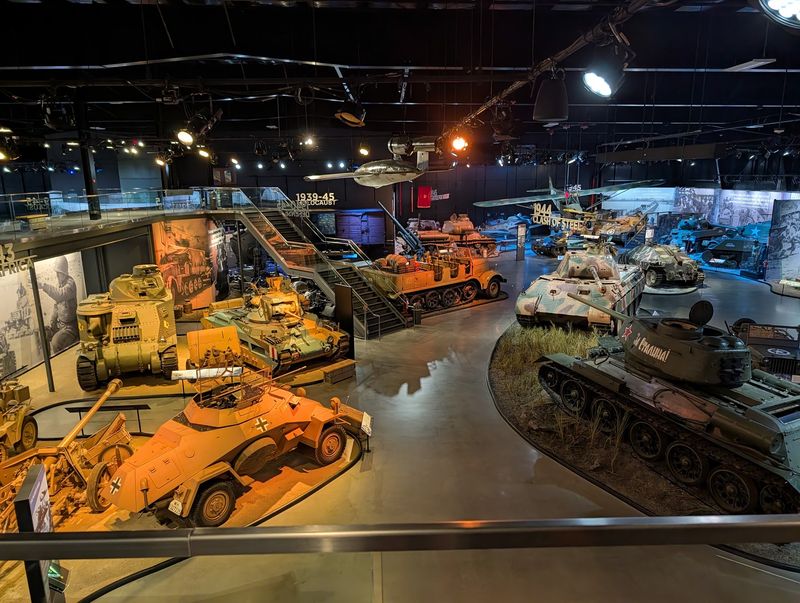
Some people collect stamps, but Jacques M. Littlefield collected tanks.
For decades, this military vehicle historian restored rare armored machines with great care. His collection grew into one of the largest private groups of its kind in the world.
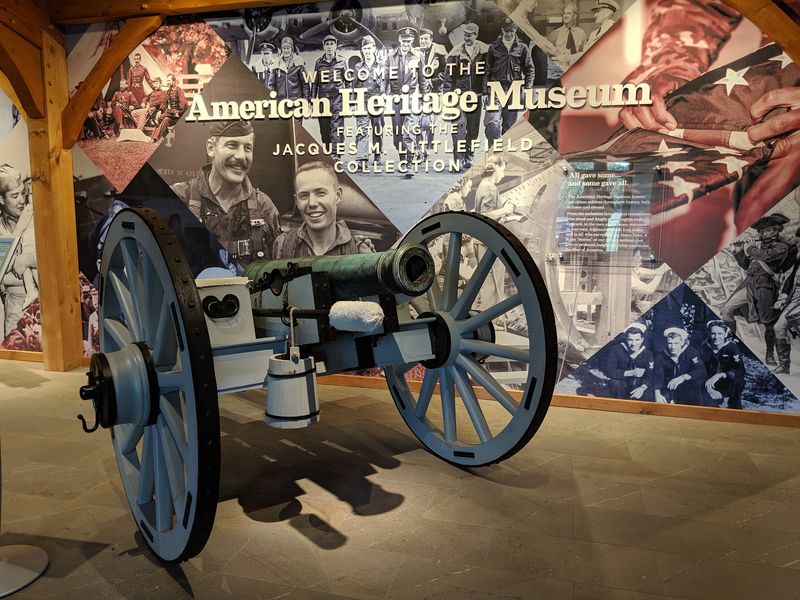
In 2013, the Collings Foundation received the Littlefield Collection. That gift sparked the idea for the American Heritage Museum.
The foundation is a nonprofit group focused on education, so the plan was always about teaching, not just showing off.
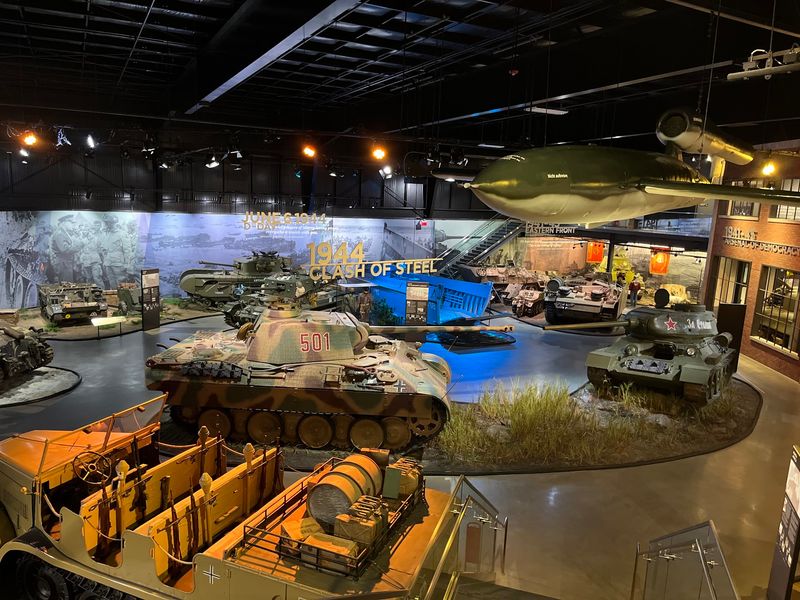
Today, the museum fills a huge building of roughly 66,000 square feet. Inside, you will find more than 100 large artifacts.
Tanks, trucks, artillery, and aircraft share the space like old friends at a reunion.
Here is a fun bit of trivia. Many of the vehicles still run, thanks to constant restoration work. That means these machines are not frozen in time. They are living pieces of history that can still move under their own power.
Tip for planning your day: give yourself plenty of time. Many people find that two hours feels rushed once they start reading the signs and watching the short films.
Comfortable shoes are a smart choice, since the halls are large and full of things worth a second look.
Steel Giants You Will Not Find Anywhere Else
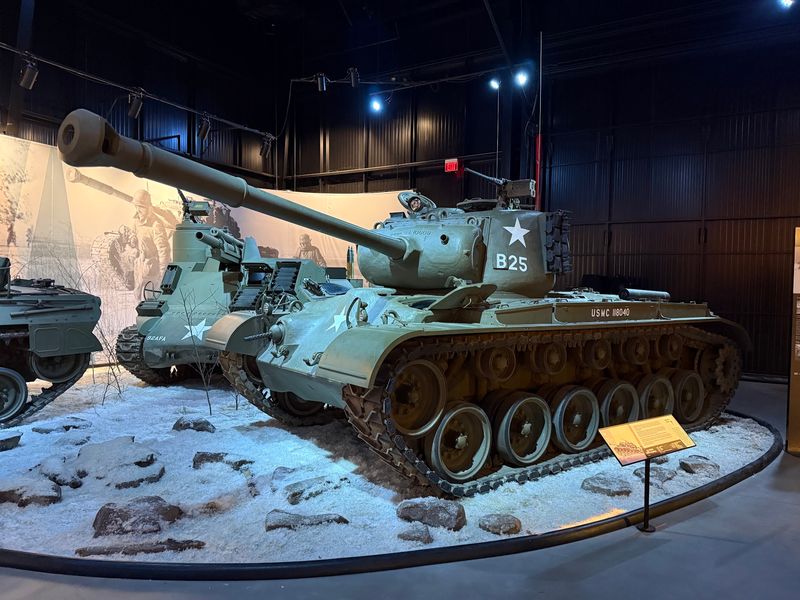
Rare does not even begin to describe what sits on these floors. Several vehicles here are the only ones on public display in North America. A few are the only known examples left on Earth.
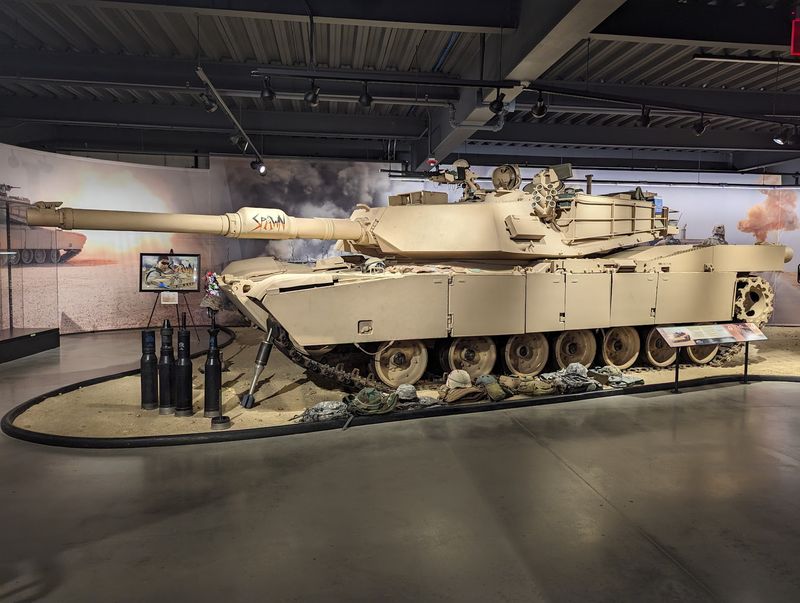
Take the M1A1 Abrams tank. It is a modern machine, and seeing one this close is extremely unusual for the public.
Nearby, the Soviet T-34 and the heavy IS-2 show how tank design changed during World War II.
Fans of odd designs should look for the Japanese Type 4 Ho-Ro. It is believed to be the only surviving example in the world.
The Jumbo Sherman, the tiny Panzer I, and the British Matilda II add even more variety.
Over half of the collection comes from the World War II era. Still, the story stretches much further. Displays cover conflicts from the Revolutionary War all the way to recent operations.
Pay attention to the paint and markings. Many tanks still carry their original unit symbols. Old photos often sit beside them, showing the same machine in action decades ago.
Bring a camera with plenty of storage space. With so many one of a kind vehicles in one spot, you will want to remember the details long after you head home.
Stepping Inside A World War I Trench
Mud, sandbags, and narrow walls set the scene right away. The museum has rebuilt a World War I trench so you can stand inside it. It is one of the most talked about exhibits in the building.
A film plays while you stand in the trench. The story is told through the eyes of a nurse, which gives the experience a caring and very human angle.
Instead of only facts and dates, you hear how ordinary people coped with a hard situation. Students often learn about trench warfare in class. Reading about it is one thing.
Standing in a cramped space with the sounds around you makes it much easier to understand.
The World War I area also holds rare equipment. One standout is a 17cm Mittlerer Minenwerfer, a German trench mortar. Only about 11 of these are thought to remain anywhere in the world.
Here is a helpful idea for families. Talk with kids before and after the trench film. Ask them what surprised them most about daily life for soldiers and nurses.
That small chat can turn a museum trip into a lesson that sticks. It also helps younger guests process what they see in a calm and thoughtful way.
Wings That Helped Shape History
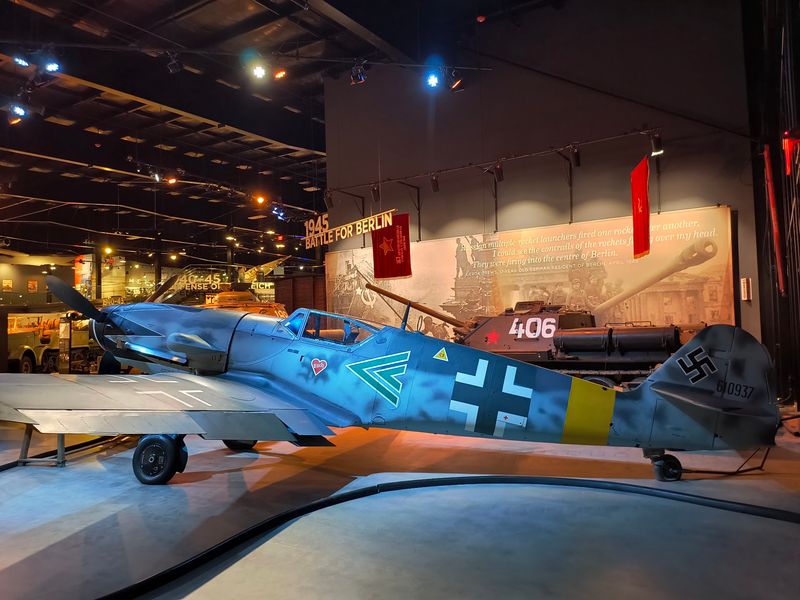
Tanks may get most of the attention, but the aircraft deserve a long look too. The museum has a separate space where historic planes hold their own spotlight. Each one has a story worth hearing.
The star for many is a P-40B Tomahawk fighter. This plane survived the attack on Pearl Harbor in 1941. Very few aircraft from that day still exist, so seeing one is a real treat.
The early aviation collection goes back even further. A 1918 Nieuport 28 represents the first fighter flown by American pilots in combat. It looks fragile next to modern jets, which shows how quickly flying technology grew.
Then there is the 1914 Curtiss Model F Flying Boat. It has been fully restored and can actually fly. Picture a boat and a plane combined, and you have a good idea of how it works.
Aviation fans in Massachusetts have extra reason to smile. The museum has shared plans to grow its aircraft displays in the future.
More of the Collings Foundation planes may eventually come together in one place.
For now, take your time with each plane. Look closely at the wood, fabric, and metal. You will notice how builders solved problems with simple but clever ideas.
Powerful Pieces From Modern Times
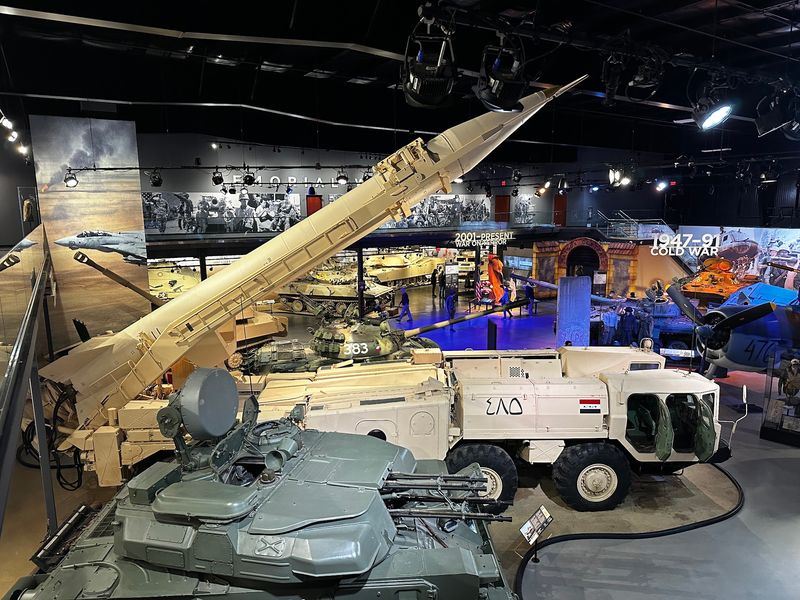
History did not stop in 1945, and neither does this collection. Later galleries bring the story closer to the present day. Some of the objects here might surprise you.
A SCUD B missile and its launcher are among the most unusual displays. This system was used during the Gulf War. Its sheer size helps people understand news events that many adults still remember.
Next, look for a piece of the Berlin Wall. For years, that wall split a city and its families apart. When it came down in 1989, it became a symbol of freedom and hope around the world.
The museum also holds a section of steel from the World Trade Center. It is a quiet reminder of September 11, 2001. Many guests pause here for a moment of reflection.
Another striking exhibit is a reconstructed prison cell from the Hanoi Hilton, the camp used during the Vietnam War. It tells a story about courage and endurance under very tough conditions.
These modern pieces are great conversation starters. Grandparents, parents, and kids may each remember different events.
Sharing those memories can make the visit feel personal and meaningful for everyone in the group.
Stories That Put People First
Behind every machine stands a person with a story. The American Heritage Museum works hard to keep that idea front and center. Its goal is understanding, not celebrating conflict.
One of the most moving exhibits features an original Deutsche Reichsbahn rail car from the World War II era. Cars like this were used to carry millions of people to concentration camps during the Holocaust.
The display invites quiet reflection and helps guests connect with that history.
In 2025, the museum opened a Holocaust virtual reality experience called A Promise Kept. It uses modern technology to share an important story in a fresh way.
People who prefer to skip VR can still learn plenty from the main exhibit.
Personal stories show up in other places too. When the M1A1 Abrams arrived, the museum invited troops who served in it to see the tank again. Moments like that link steel with real lives.
Some displays may feel heavy for very young kids. Helpful signs mark those exhibits, so families can decide what fits best.
Friendly guides are spread throughout the halls. Many of them know amazing details about the people behind each artifact. A simple question can open the door to a story you will never forget.
Ride Or Drive A Real Tank
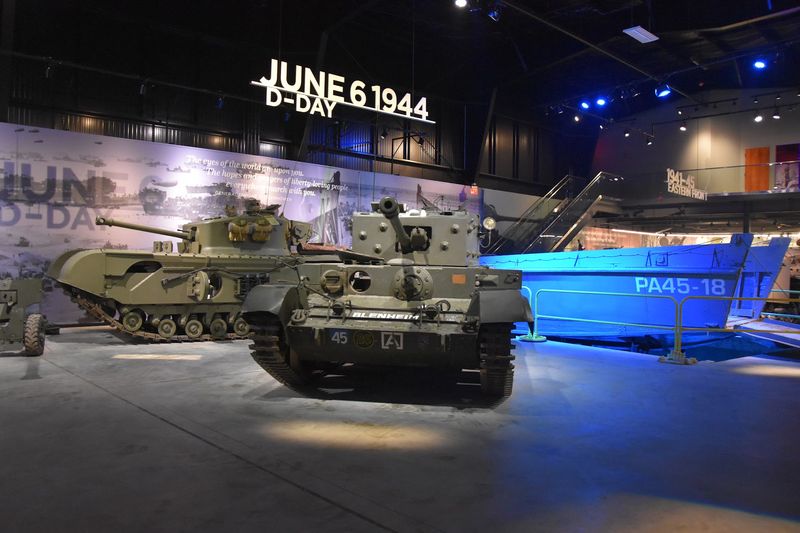
Ever wanted to sit inside a tank as it rumbles across the ground? Here, that dream can come true. The museum offers special tank experiences for an extra fee.
Guests can ride in or even drive real World War II tanks. Options have included the famous M4 Sherman and the speedy M24 Chaffee. On some event days, other vehicles join the lineup as well.
These experiences sell out, so booking ahead is a wise move. Check the official website for current choices, prices, and age rules. Details can change with the seasons and special events.
You do not need to ride a tank to enjoy the museum, of course. Simply watching these huge machines move is exciting. During warmer months, vehicles are often driven around outside the buildings.
Here is a quick fact that makes the rides even cooler. Many of the tanks on display are kept in running condition. That takes skilled mechanics, rare parts, and a lot of patience.
Think of a ride as a gift idea for a history lover. Birthdays, graduations, and anniversaries all feel more exciting with a tank involved.
Just be ready for a bumpy, noisy, and unforgettable adventure.
Turn Your Visit To Hudson Into A Memorable Day Out
Good news for planners: getting there is simple. The museum sits at 568 Main Street in Hudson, Massachusetts. It is an easy drive from Boston and just up the road from Worcester.
Regular hours run from 10 AM to 5 PM, Wednesday through Sunday. The museum is closed on Mondays and Tuesdays. Arriving early gives you the best chance to see everything without rushing.
Special events fill the calendar all year. Living history weekends bring reenactors, working vehicles, and historic aircraft together.
The Battle for the Airfield WWII Reenactment Weekend is a big favorite with families.
Memberships offer extra perks. The museum belongs to the North American Reciprocal Museum Association.
A qualifying membership can give you free entry to hundreds of other museums across the United States and Canada.
Kids get plenty to do as well. A scavenger hunt can help younger guests stay curious while exploring the halls. The gift shop, where tickets are sold, is also the first stop as you enter.
The Collings Foundation hopes every guest leaves with a deeper respect for the spirit and innovation that shaped America. It is a lesson worth taking home.