
This Florida Spring Draws Hundreds Of Manatees Every Winter With Its Warm Waters
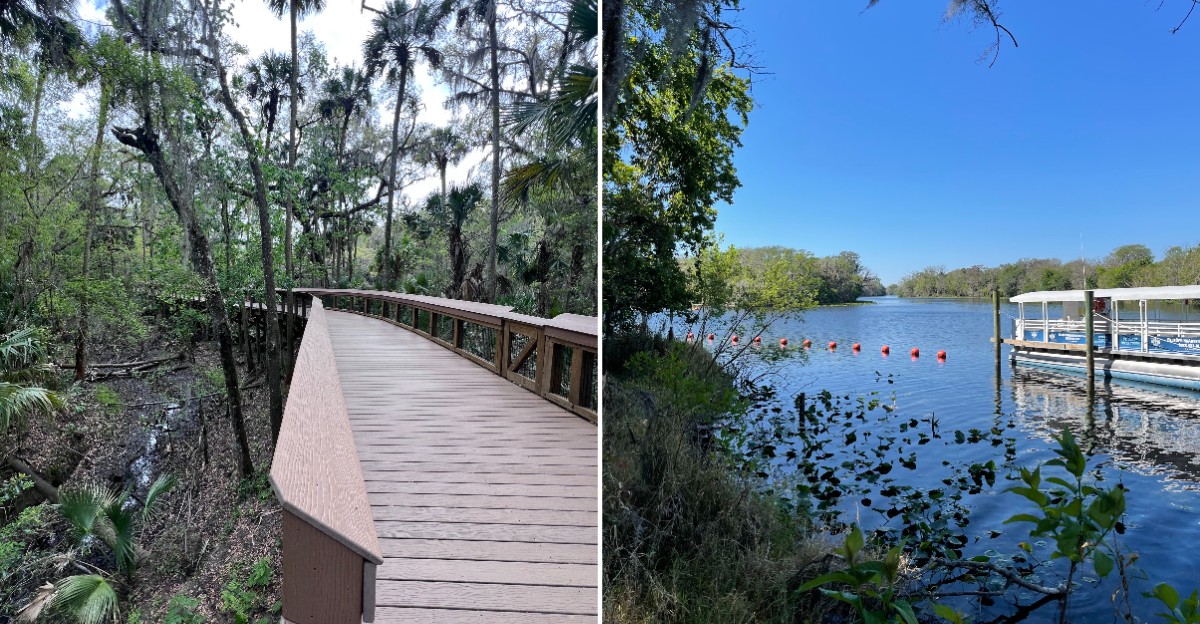
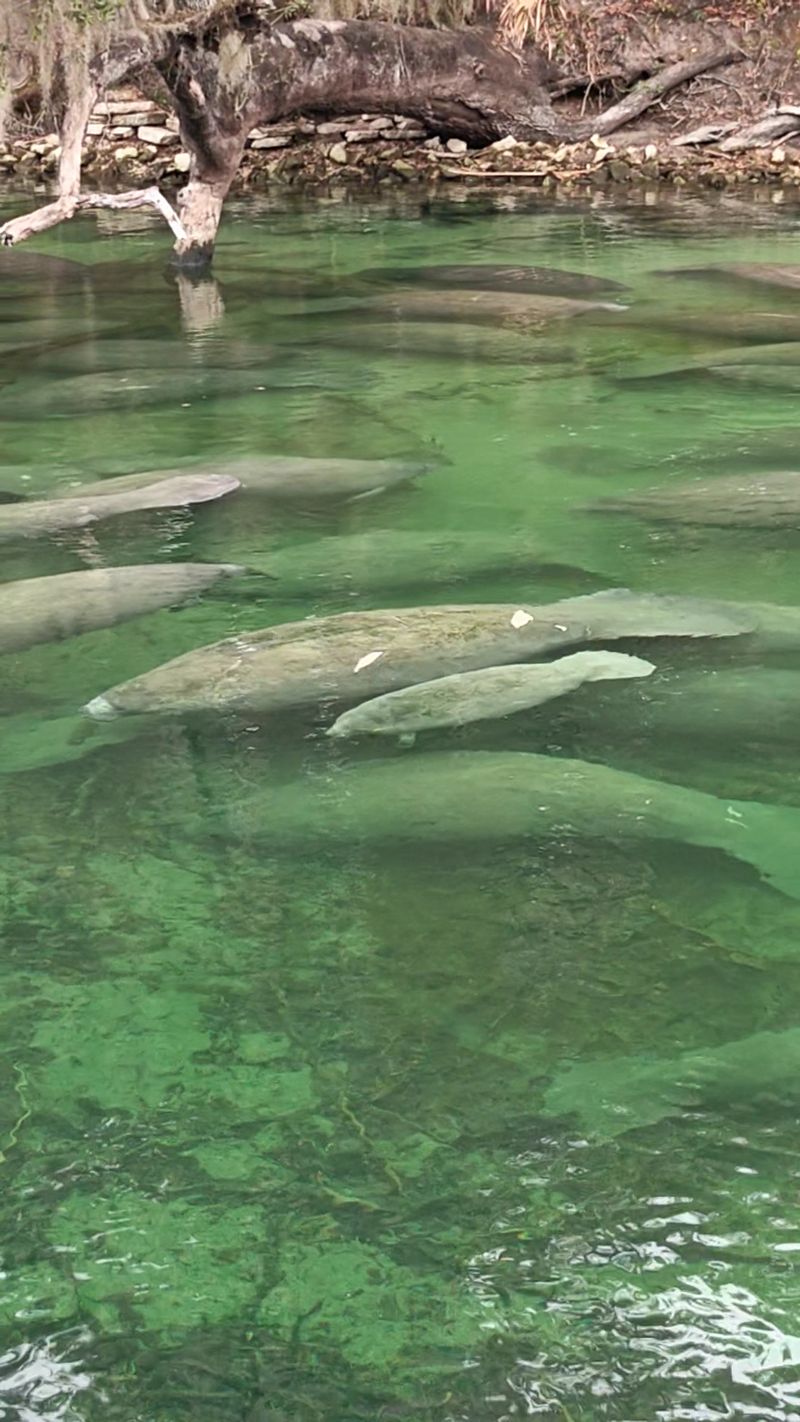
On January 21, 2024, someone counted 932 manatees packed into one spring. That’s not a typo. Nearly a thousand sea cows showed up at once, all chasing the same cozy water.
The water stays at 72 degrees all year. When the nearby river turns chilly, the manatees know exactly where to go.
They have little body fat, so a warm hangout matters a lot.
The funny thing is, back in 1970, only 14 of them were tracked here. Now the winter crowds keep growing.
I’ve come to realize that few comeback stories in Florida are this easy to watch from a boardwalk.
You won’t be swimming with them, though. Swimming stops completely during manatee season.
It just feels right to give these gentle giants their space while you watch from above.
In summer, the same clear spring turns into a swimming hole. There are cabins, trails, river cruises, and even a firefly season.
So which visit sounds better to you, the manatee winter or the splashy summer?
Hundreds Of Manatees Pick This Spot As Their Winter Hot Tub
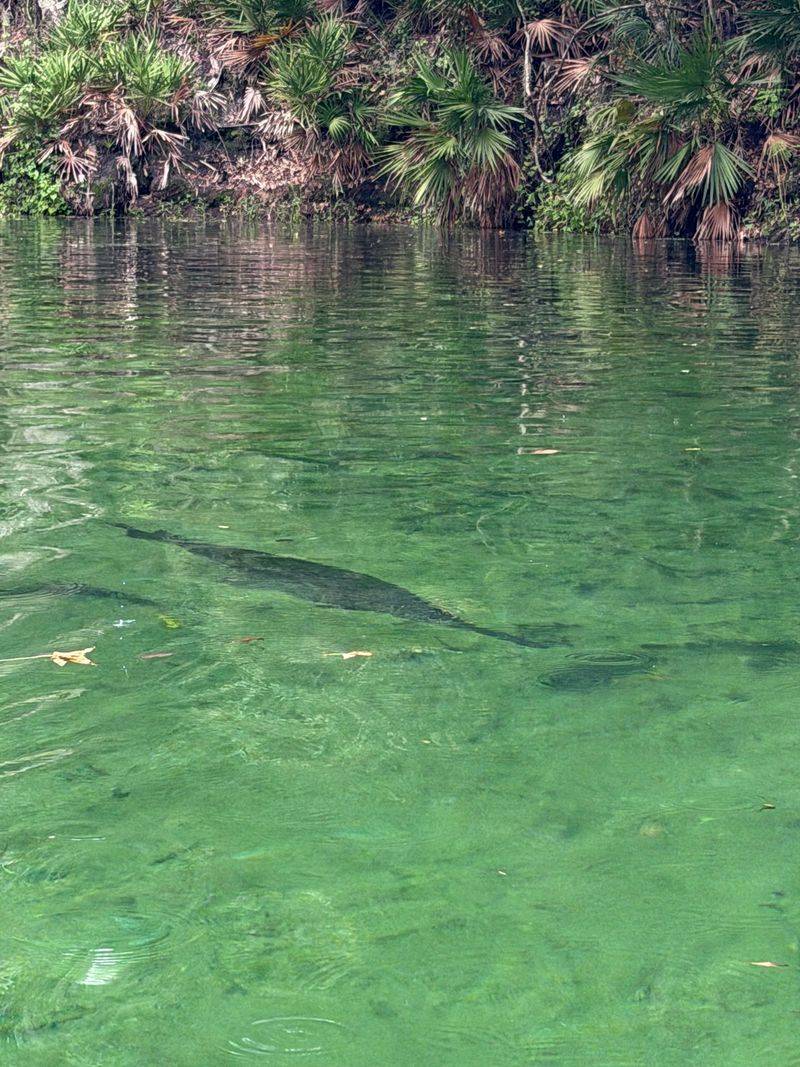
Every November, a slow-motion parade begins in the St. Johns River. Manatees leave the cooling river and head straight for Blue Spring State Park, where the water holds steady at 72 degrees.
That warmth isn’t a luxury for them. Manatees carry little body fat and have slow metabolisms, so long stretches in water below 68 degrees can cause cold stress.
The season runs roughly mid-November through March. January and February usually bring the biggest crowds, especially on cold mornings.
A chilly day for you means a packed spring for them.
The numbers tell a happy story. In 1970, only 14 manatees were tracked here.
By 2005, the count passed 200, and by 2018 it topped 485.
Then came January 21, 2024, when 932 manatees crowded the spring. That’s a record, and it’s hard to picture without seeing photos.
Recent cold snaps have also brought counts of 700 to 800 or more.
The park is a designated Manatee Refuge, so the animals get real protection here. For anyone who loves wildlife, few winter sights in Florida beat this one.
Pack a jacket and check the forecast for a cold front before you go.
The Boardwalk Gives You A Front-Row Seat Without Getting Wet
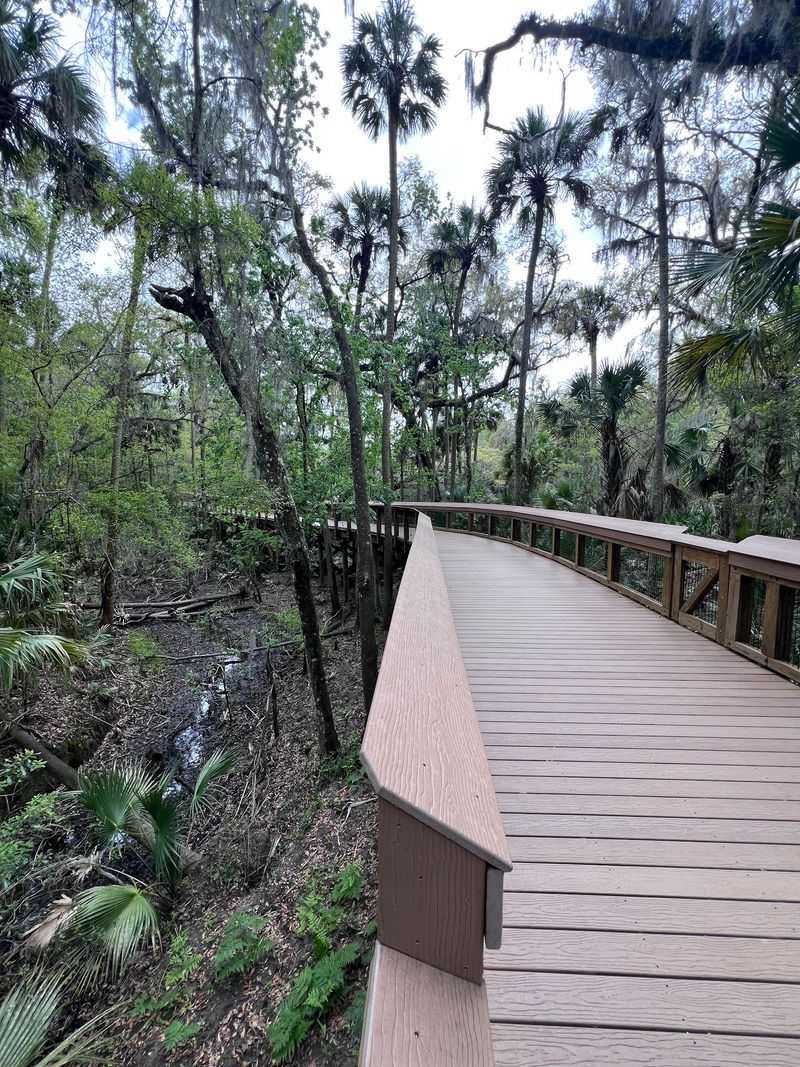
Good news for anyone who hates cold toes. The best manatee viewing happens from elevated boardwalks and observation decks that follow the water’s edge.
During manatee season, the spring and spring run close to all water activities. No swimming, no paddling, no snorkeling.
Swimming or diving with manatees is strictly prohibited, and honestly, the animals have earned their nap time.
The boardwalk is self-guided and accessible. It leads you along the spring run all the way to the headspring.
Along the way, you’ll find several spots to stop, lean on a rail, and watch.
From above, the clear water makes it easier to spot those big gray shapes. You might also catch fish, turtles, or an alligator cruising by.
Patience pays off here.
A smart move is to walk the full length instead of stopping at the first deck. Manatees spread out along the run, so each viewpoint can show you something different.
Bring binoculars if you have them. A camera with a decent zoom helps too.
Cold mornings in January and February often bring the most activity, so the early bird gets the best manatee view.
Summer Flips The Script And Lets You Jump Right In
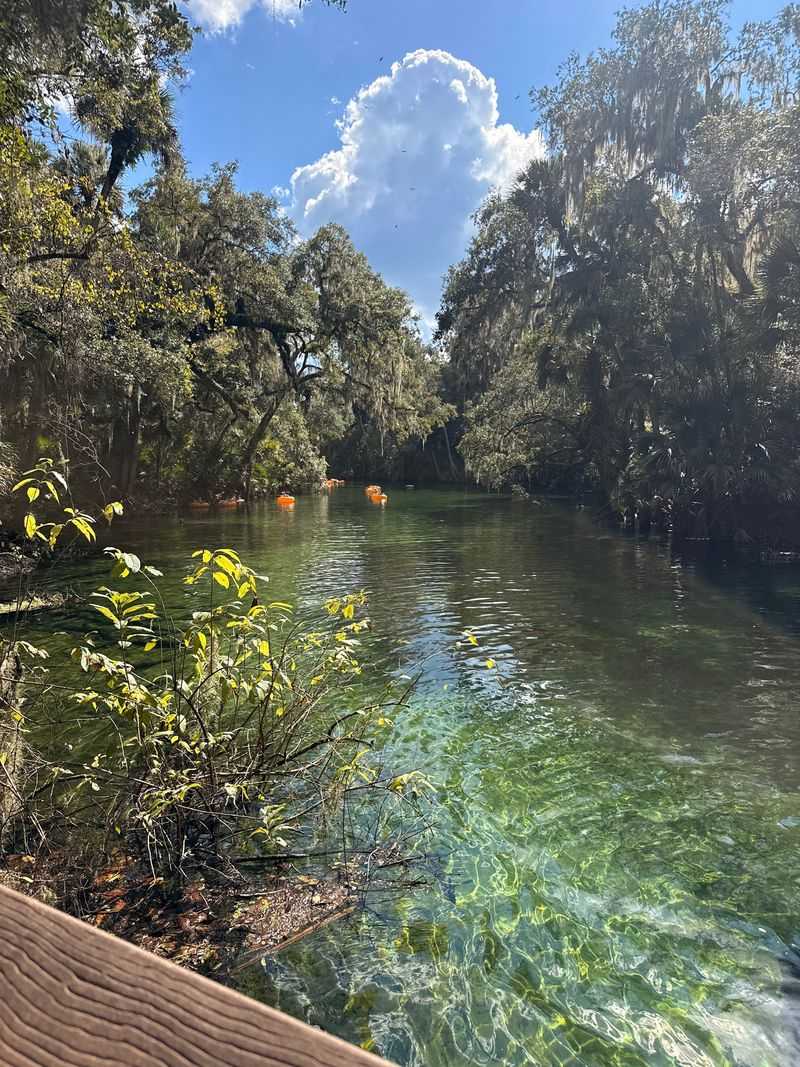
Once the manatees head back to the river, the spring opens up for people. Roughly April through mid-November, swimming, snorkeling, and tubing take over.
Tubing here is short and sweet. You float about an eighth of a mile from an upper entry point down to the main dock.
Then you can walk back and do it again, which is very tempting.
Snorkelers get a clear look at fish gliding through the spring run. The water runs cool compared to Florida summer air, so expect a little gasp on that first plunge.
Certified scuba divers have an extra treat. A limited underwater cave system can be explored in season.
It’s for trained divers only, so leave the cave to the pros if you’re not certified.
Canoes, kayaks, and paddleboards are available from the park’s official concessionaire, Blue Spring State Park Adventures. Guided paddling tours are offered too.
Keep in mind that manatees sometimes linger into warmer months. If one swims near you, give it plenty of room.
That small courtesy keeps the spring a safe place for everyone, flippers included.
A TV Legend Helped Turn This Spring Into A Protected Park
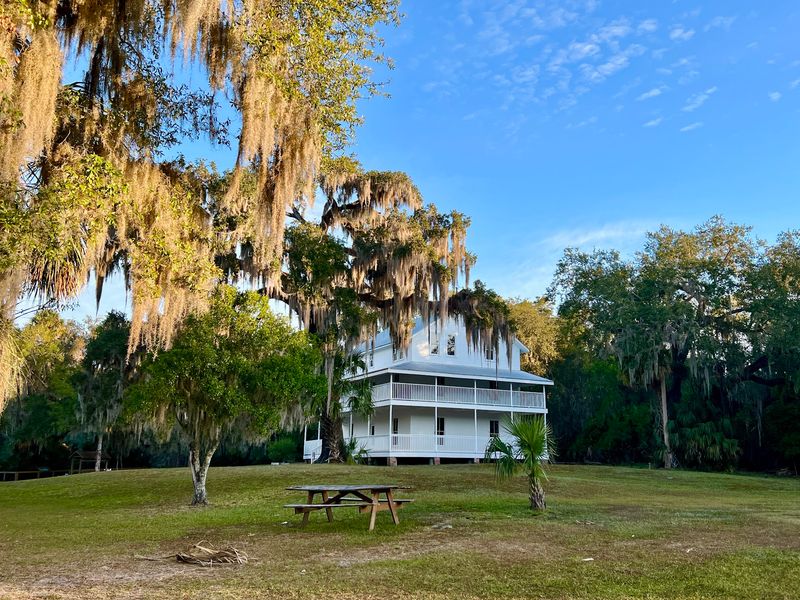
Jacques Cousteau, the famous ocean explorer, filmed manatees here for a 1971 TV episode called The Forgotten Mermaids. A year later, in 1972, the area became Blue Spring State Park.
The story goes back much further, though. For hundreds of years, Timucuan people lived around the spring.
They left behind massive shell mounds that archaeologists still study today.
In 1766, British botanist John Bartram explored the St. Johns River and Blue Spring. He was one of the early scientists to write about the region’s plants and landscape.
Later came Louis P. Thursby.
He set up a steamboat landing by 1868. In 1872, he built a two-story frame house right on top of a shell midden.
That Thursby House still stands, and it now holds historical displays. It’s a neat stop between manatee sightings.
You get a peek at what life looked like when steamboats ruled the river.
Protection grew stronger with the Florida Manatee Sanctuary Act of 1978. That law helped give manatees legal safety in refuges like this one.
Not bad for a story that a TV show helped kick off.
Ride The St. Johns River And Keep Your Eyes Peeled For Gators
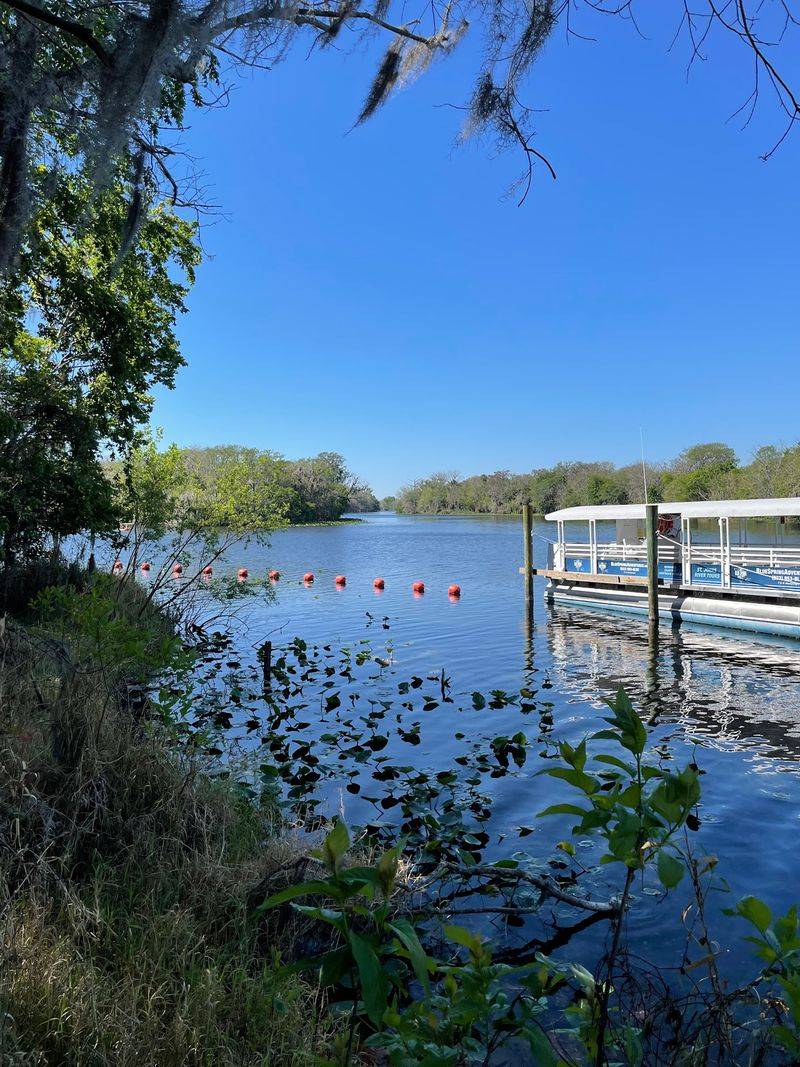
Two hours on the river can teach you more than a stack of textbooks. Narrated ecological cruises on the St. Johns River leave daily at 10 a.m. and 1 p.m.
The guides share the river’s history while you scan the banks. Wildlife sightings can include alligators, turtles, river otters, and plenty of birds.
You never know what’s lurking near the shoreline.
It’s a relaxed way to see a bigger slice of the area. The spring run is lovely, but the river opens up a whole wider world.
Paddlers can explore on their own too. Canoe and kayak rentals make it possible to head out at your own pace.
Hontoon Island State Park sits a short paddle away down the river, which makes a great goal for confident paddlers.
Anglers aren’t left out either. Fishing is permitted in the St. Johns River, so bring your gear and your fishing license.
One tip from common sense: pack water, sunscreen, and a hat. Florida sun reflects off the river fast.
A little prep keeps the trip fun instead of crispy.
Lace Up For Scrub-Jays, Pine Forests, And A Long Quiet Trail
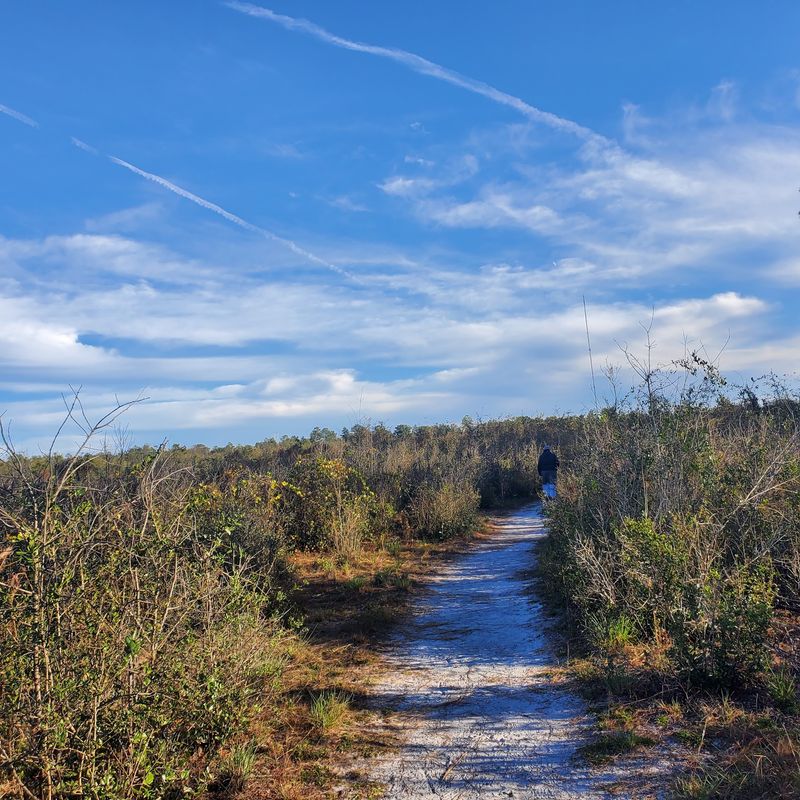
Not every star here has flippers. The Pine Island Trail stretches roughly 3.6 miles one way, winding through several kinds of plant communities.
The trail is mostly flat, which makes it friendly for many hikers. Still, that length adds up fast if you plan to walk back.
Start early and carry more water than you think you need.
Birders, this one is for you. Sightings can include Florida scrub-jays, ospreys, woodpeckers, and other songbirds.
Scrub-jays live only in Florida, so spotting one feels like a small prize.
Bigger animals roam the park too. Bears and raccoons can show up, along with deer.
Keep snacks packed away and give any wildlife lots of space.
Prefer wheels? Bicycle rentals are available on-site for exploring the park’s trails.
It’s a good option if younger kids get tired legs halfway through.
For a twist, keep an eye on the park’s events. Full Moon Hikes let you see the trails after dark with a guide.
Hearing the woods at night is a completely different kind of adventure.
Sleep Steps Away From The Manatees In A Cabin Or Campsite
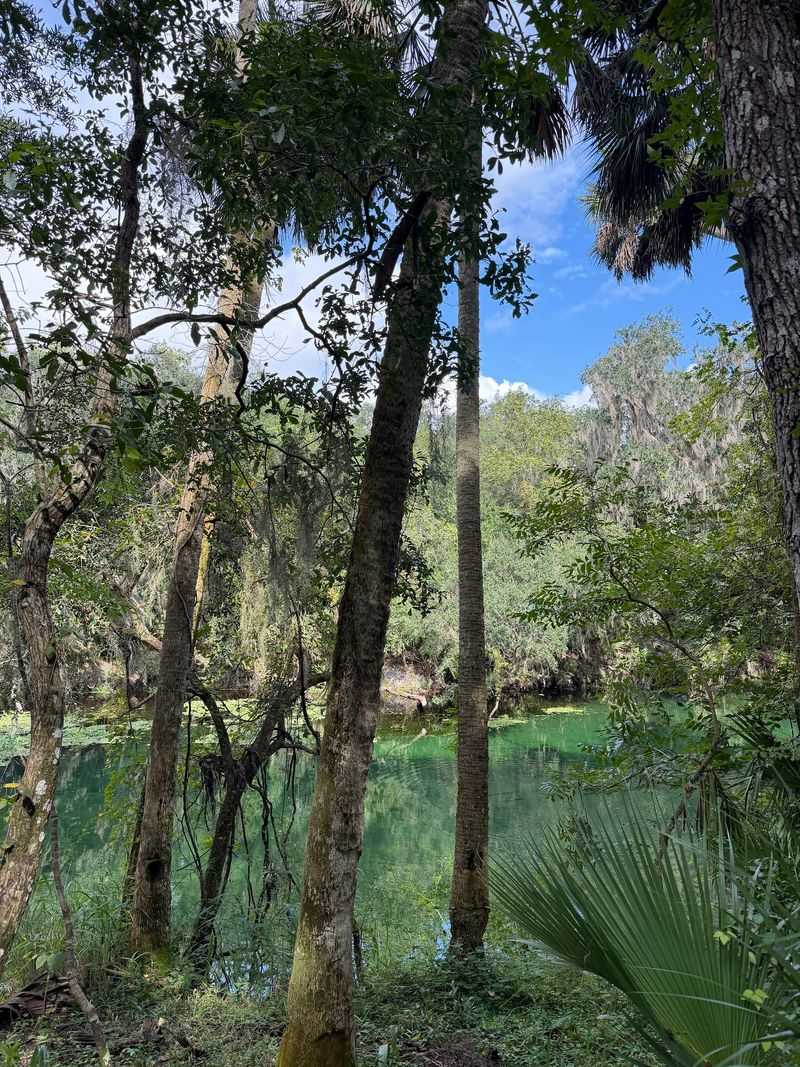
Why drive home when the manatees are right next door? Blue Spring State Park offers six cabins and 51 campsites for overnight stays.
Each cabin has two bedrooms, a stocked kitchen, a furnished living area, and a full bathroom. They sleep up to six guests.
Screened porches come with rocking chairs, which sounds like the perfect spot for morning cereal.
Outside, you’ll find picnic tables, fire pits, and grills. Bring marshmallows and you’re basically set.
The campsites handle both tents and RVs up to 35 feet long. Every site includes water, electric hookups, a picnic table, and a grill.
Pets are welcome too, so your dog can join the fun.
Showers, restrooms, and a dump station serve the campground. It’s simple, comfortable camping without too much fuss.
Here’s the catch. Cabins often book months ahead, especially during manatee season.
Campsite reservations are recommended too.
If you want to wake up near the spring on a frosty January morning, plan early. Staying overnight also means you’re already inside when the gates open.
That’s a big win on busy winter weekends.
Snacks, Souvenirs, And One Big Rule Before You Drive Over
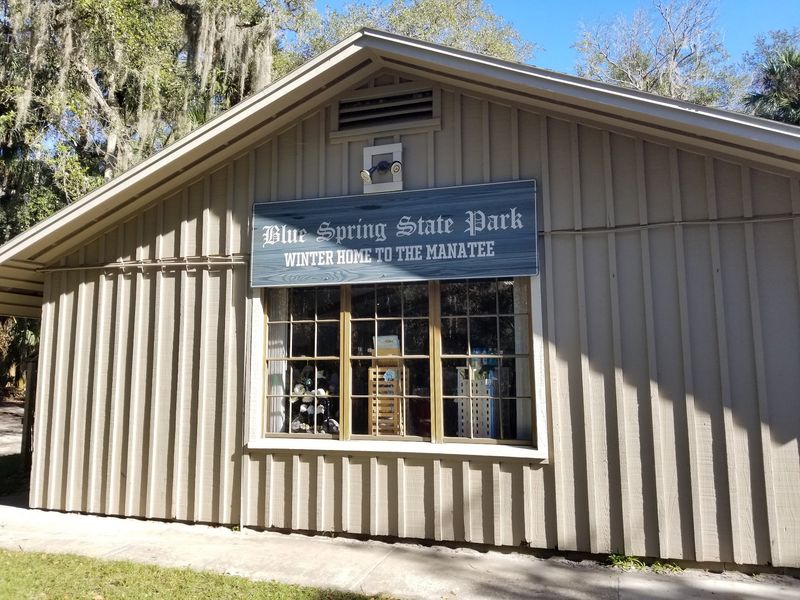
Manatee watching works up an appetite. Luckily, the Blue Spring Canteen sits near the boardwalk and is open daily from 9 a.m. to 4 p.m.
The menu keeps things easy. You’ll find sandwiches, burgers, pulled pork, hot dogs, mac and cheese, nachos, and soft pretzels.
Ice cream, snacks, and drinks round it out.
Prefer to pack your own lunch? Pavilions and picnic tables are spread across the park.
There’s also a playground and volleyball courts for anyone with extra energy.
Next to the concession building, a gift locker sells goodies for manatee fans. It’s hard to leave without something gray and cuddly.
Now for the big rule. Starting July 15, 2026, every day-use visitor needs an advance online reservation.
That includes annual passholders, walkers, and cyclists.
You can book up to 60 days ahead. The park opens at 8 a.m. every day of the year and closes at sundown.
Reserve early for cold winter weekends, since that’s when the manatees and the people both show up in force.
Plan Around Festivals, Fireflies, And Fun Nearby Stops
Some calendars deserve a manatee sticker. The Orange City Blue Springs Manatee Festival happens every year at the end of January, right when the herd is at its biggest.
Spring brings a totally different glow. Firefly season runs in March and April, with special after-hours viewing events.
Tiny blinking lights in the woods feel a little magical.
Runners can circle November 15, 2026. That’s the 23rd Annual Save the Manatee 5K.
Junior Ranger programs keep younger visitors busy and learning too.
You’ll find the park at 2100 W French Avenue, Orange City, FL 32763. That central Florida spot makes it easy to build a full weekend.
DeLand and Sanford offer arts, food, and shopping. The Museum of Florida Art in DeLand features work by Florida artists.
The Central Florida Zoo and Botanical Garden is close by, and Family Fun Town has go-karts and mini-golf.
Curious types can tour the Cassadaga Spiritualist Camp, founded in 1894. Daytona Beach sits about 40 minutes away.
Manatees in the morning and ocean waves by afternoon? That’s a pretty great Florida day.