
This Historic Mississippi Water Mill Has Been Grinding Corn Since 1790 Without Missing Its Heritage
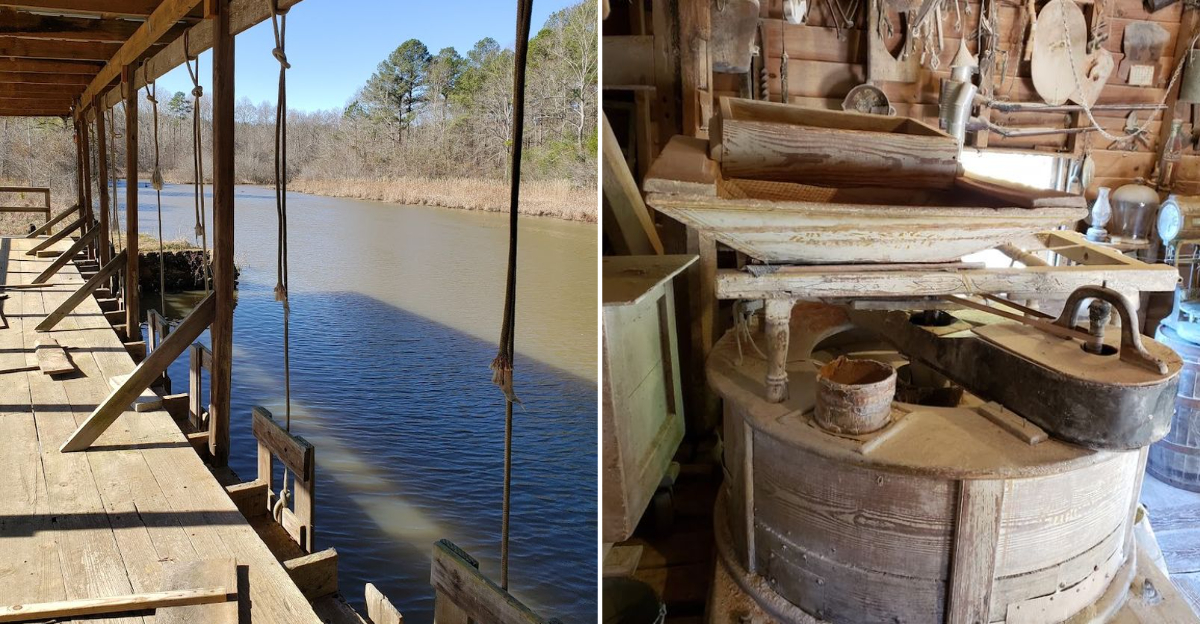
Modern automated mills process grain instantly but strip away all the actual flavor and texture. Corporate factories prioritize speed over quality, but this ancient stone setup values patience.
Mississippi holds a living relic where water power still dictates the daily production pace. The massive white oak wheel turns with a heavy, groaning rhythm that shakes the wooden floorboards.
Two massive flint stones crush the kernels into a fragrant, warm meal instead of slicing them with metal blades. The miller adjusts the flow by listening to the changing pitch of the friction.
Dustings of golden flour coat every rough-hewn beam in the building. You can smell the rich, earthy scent of real corn before you even cross the threshold.
This cornmeal creates a dense cornbread that modern grocery stores simply cannot replicate.
History Of Powered Milling Techniques
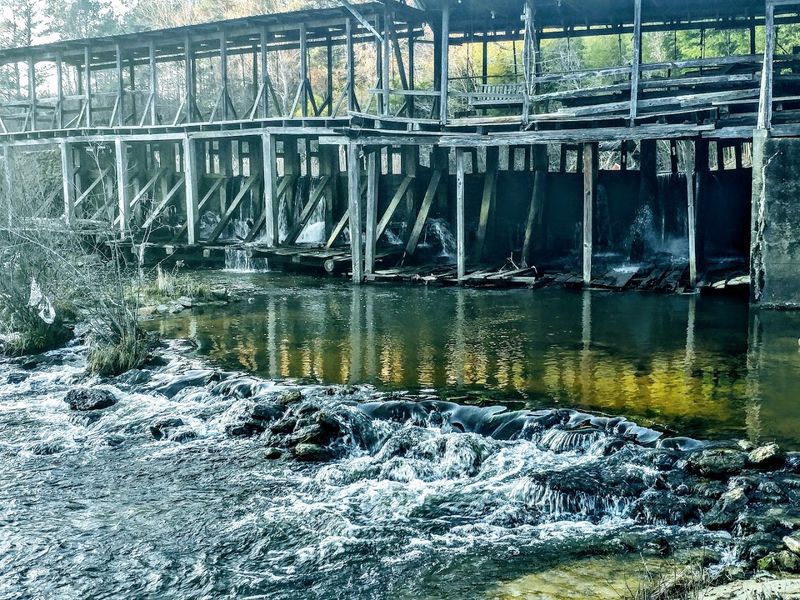
Water mills are older than most people realize. Long before electricity, moving water was the engine that ran entire communities.
Sciple’s Mill is a living example of that era.
The mill uses a Leffel Water Turbine Wheel, installed in 1880. It replaced an earlier wooden wheel that had served the same purpose for decades.
That turbine generates around 50 horsepower, which is impressive for a machine that runs on creek water.
Before the 1950s, the same turbine powered a cotton gin and sawmill. That means one water source was doing the heavy lifting for multiple industries.
It is wild to think about how efficient that setup actually was.
Water mills harness kinetic energy from moving water and convert it into mechanical power. No fuel, no emissions, just physics doing its job.
The technology was simple but incredibly effective for its time.
Sciple’s Mill sits at 525 Sciples Mill Rd, De Kalb, MS 39328. It has operated on the same site through wars, storms, and changing times.
That kind of staying power says everything about the people who kept it running.
Visiting this mill feels like flipping through a history textbook, except the machines are real and still moving. It is a rare chance to see 18th-century energy technology still doing exactly what it was built to do.
Corn Grinding Process And Traditional Methods
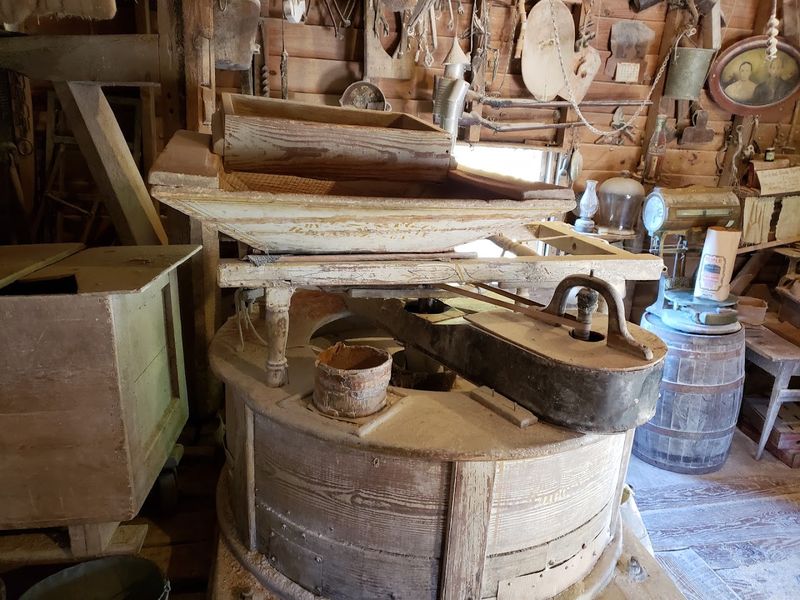
Grinding corn the old way is not complicated, but it is fascinating to watch. Grain drops from a hopper at the top and falls between two massive stones.
Those stones do all the work from there.
At Sciple’s Mill, the millstones are 42 inches in diameter. The bottom stone stays completely still while the top stone rotates above it.
Together they weigh over 3,700 pounds combined.
The bottom stone alone weighs 2,100 pounds. The top stone comes in at 1,600 pounds.
You would not want either of those rolling toward you on a hill.
Slow grinding is actually the secret to great cornmeal. The stones move at a pace that prevents heat buildup.
That low heat preserves the natural nutrients and flavor of the grain.
Modern high-speed steel mills generate heat that strips out a lot of the good stuff. Stone-ground meal keeps the germ and oils intact.
That is why the cornmeal from Sciple’s tastes noticeably different from store brands.
Watching the process in person is something else entirely. The rumble of the stones, the dust in the air, the smell of fresh-ground corn.
It hits differently than reading about it in a book.
Sciple’s Mill runs on Saturday mornings, so that is your best shot at seeing the whole operation in action. Plan and show up early.
Preservation Efforts For Heritage Mills
Keeping an old mill alive is not easy work. Nature does not care about history, and Sciple’s Mill learned that the hard way in 1973.
A tornado came through and caused serious damage to the structure.
What happened next says a lot about the community around it. Friends and neighbors showed up and helped rebuild the mill on its original foundation.
No corporate grant, no government program. Just people who cared.
Around 1970, the mill also dealt with a broken millstone. Replacing one of those is not like ordering a part online.
A replacement was eventually sourced all the way from South Carolina.
Water level monitoring is another ongoing challenge. The dam that feeds the mill requires constant attention.
If the water level drops too low, the turbine cannot generate enough power to run the stones.
Preservation is an active job, not a one-time fix. Every season brings new maintenance needs and potential problems.
The people behind Sciple’s Mill have committed to that work for generations.
Five generations of the same family have kept this mill running since 1790. That is not an accident.
It takes deliberate effort, real investment, and genuine pride in what the mill represents.
Heritage mills like this one are disappearing across the country. Sciple’s survival is a reminder that preservation takes a whole community, not just one dedicated family.
Architectural Features Of Historic Mills
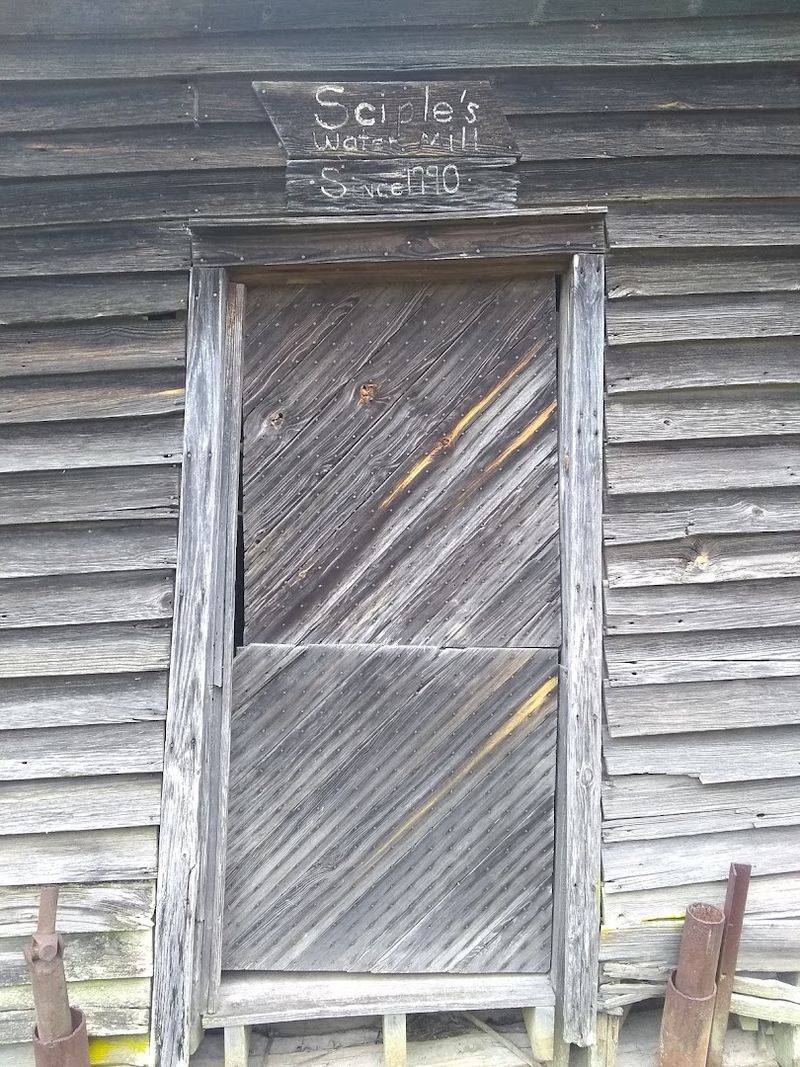
Sciple’s Mill does not look like it was built to impress anyone. The exterior is weathered clapboard with a rusted metal roof.
It looks exactly like what it is: a working building that has been working for a very long time.
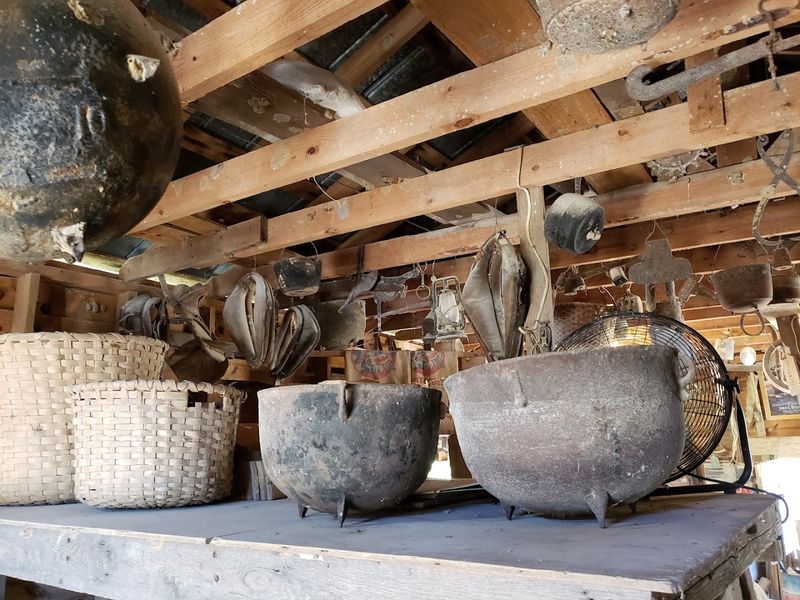
Inside, old farm implements and tools hang from walls and sit on shelves. Everything is covered in a fine layer of grain dust.
It smells like history and cornmeal, which is honestly a great combination.
The building was originally two stories tall. The ground floor housed the grain mill operations.
The upper floor held a cotton mill that processed fiber alongside the grain below.
The sawmill portion of the operation was located under a shed directly over Running Tiger Creek. Water flowed beneath it and powered the whole system.
That layout was clever engineering for its era.
Massive internal shafts and wooden cogs connect the water turbine to the grinding stones above. Watching those gears move is like seeing the inside of a giant clock.
Everything turns together in one coordinated rhythm.
The millstones themselves are encased in wood, which helps control the grinding process and contains the meal. It is a simple design that has not needed much improvement in centuries.
Every beam, board, and bolt in that building tells part of the story. You do not need a tour guide to feel the age of the place.
Impact Of Mills On Local Agriculture
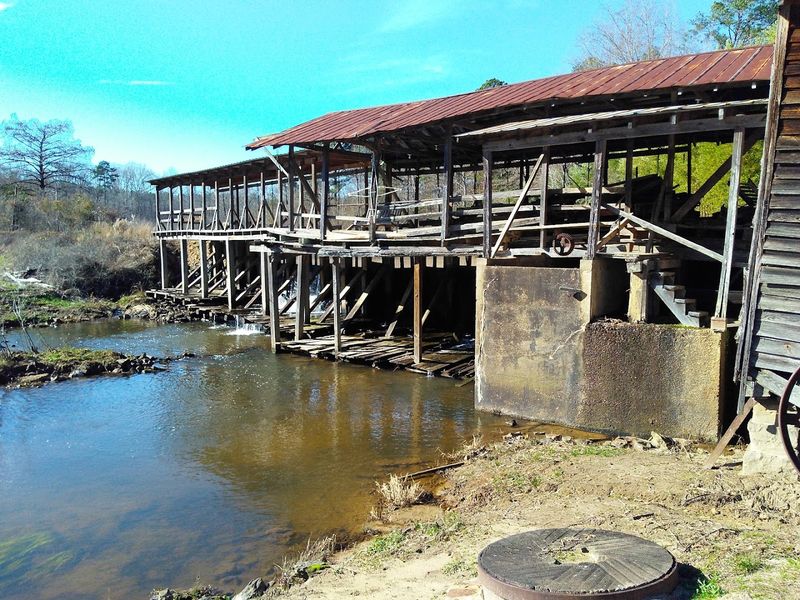
Before grocery stores existed, mills were survival infrastructure. Farmers grew corn and wheat, but they needed a mill to make that grain into food.
Without a mill nearby, communities struggled to feed themselves consistently.
In the 18th century, farmers needed a mill within a day’s wagon travel. That requirement shaped where communities formed and how they grew.
Mills were not just buildings. They were anchors for entire regions.
Water-powered grinding saved enormous amounts of farm labor. Hand-grinding grain was exhausting and time-consuming.
A water mill could process in hours what took days by hand.
Sciple’s Mill still uses an old-school payment model. Instead of charging cash, the mill takes an eighth of whatever grain a customer brings in.
That practice is called a “toll” system and dates back centuries.
The mill then sells its collected portion as cornmeal, grits, and flour. It is a circular economy that has worked for generations.
Farmers get their meal, the mill keeps its cut, everyone benefits.
Local agriculture in Kemper County relied on mills like this one for basic food production. Without that infrastructure, small farms could not have sustained the communities around them.
The mill was as important as the plow.
Today, Sciple’s Mill continues to serve local customers who bring in their own grain. That direct connection between farmer and mill is rare.
Most people have never experienced it firsthand.
Role Of Mills In Community Development
A mill was never just a place to grind grain. It was where people caught up with neighbors, shared news, and built relationships.
The weekly trip to the mill was a social event as much as a chore.
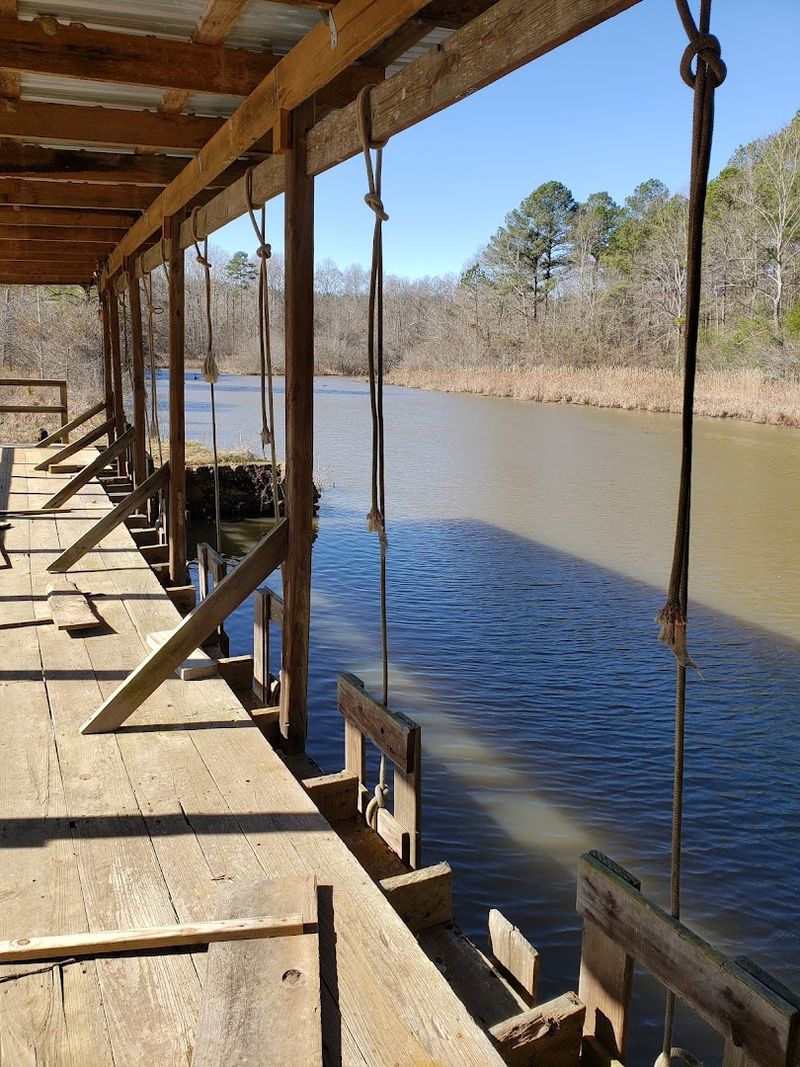
Kids used to swim and fish in the mill pond while adults waited for their grain to be processed. Those afternoons at the mill were a regular part of childhood for generations of rural families.
It was the original community hangout.
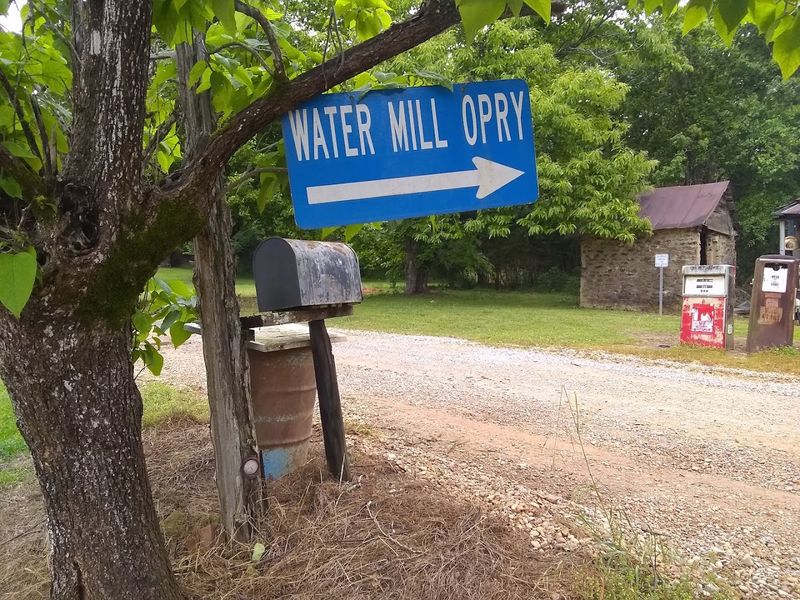
Sciple’s Mill carries that tradition forward with the Corn Mill Opry, held across the street. The event brings people together for gospel music, potluck dinners, and square dancing.
All ages are welcome, and the atmosphere is genuinely warm.
Gospel music and square dancing at a corn mill might sound like a joke, but it is completely real. The Opry keeps the social side of mill culture alive in a way that no museum exhibit could.
You have to be there to get it.
Historically, mills helped establish the social fabric of rural communities. People planned their weeks around mill days.
That rhythm created a shared calendar that kept neighbors connected through all seasons.
Sciple’s Mill still functions as a gathering point for its region. It is not just a tourist stop.
It is an active part of community life in De Kalb, Mississippi, just as it has been for over two centuries.
Environmental Benefits Of Powered Technology
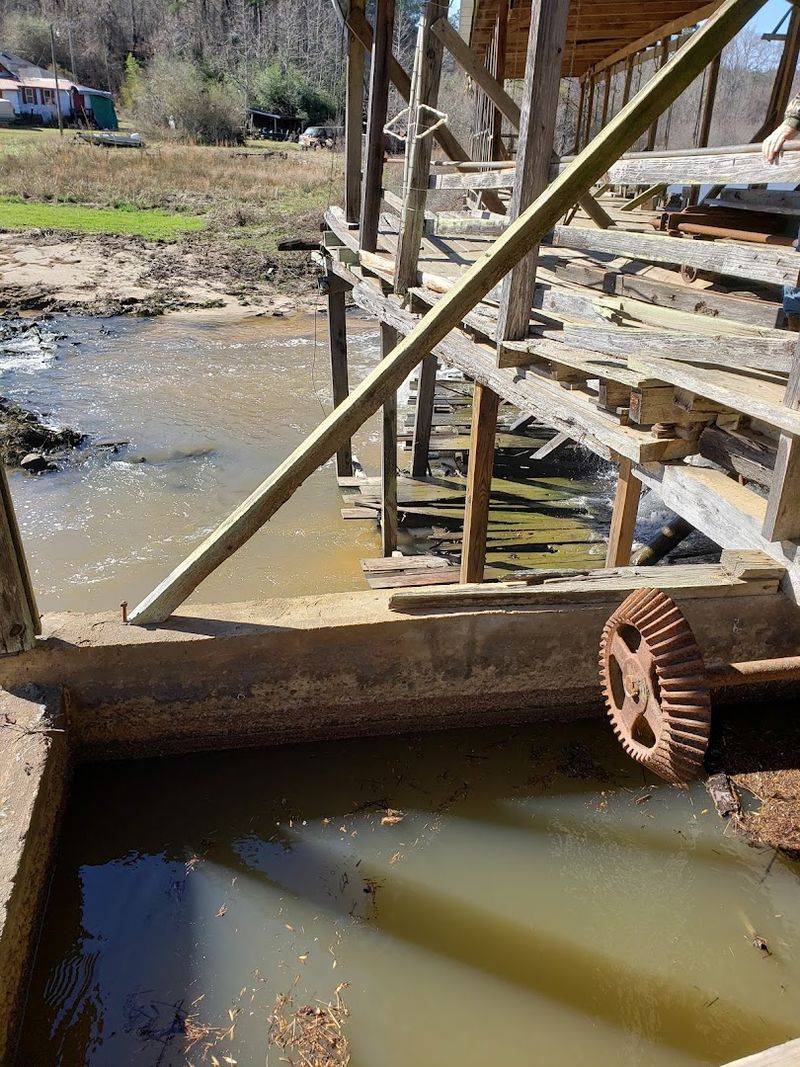
Water mills run on one of the cleanest energy sources available: moving water. No combustion, no exhaust, no fuel cost.
The creek does the work and asks for nothing in return.
Sciple’s Mill sits on Running Tiger Creek, which has been powering the operation since 1790. That is over 230 years of energy production without a single gallon of fossil fuel.
Not bad for a wooden building in rural Mississippi.
Converting water flow into mechanical energy produces zero greenhouse gas emissions. The turbine spins, the stones grind, and the only byproduct is fresh cornmeal.
That is about as clean as manufacturing gets.
Water mills also play a role in local water management. The impoundment system created by the dam helps regulate water flow in the surrounding area.
That can reduce erosion and support local wildlife habitats.
Modern engineers are actually revisiting water mill technology for small-scale electricity generation. The basic principles are the same as what Sciple’s uses.
Newer designs just squeeze more efficiency out of the same water flow.
Renewable energy conversations often focus on solar and wind. Water power deserves more credit in that discussion.
It is consistent, reliable, and does not depend on weather conditions the way other renewables do.
Sciple’s Mill is a working demonstration of sustainable energy that predates the entire concept of sustainability. It was green before green was a thing anyone talked about.
Tourist Attractions At Heritage Milling Sites
Sciple’s Mill is open on Saturday mornings from 8 a.m. to 12 p.m. That four-hour window is your best shot at seeing the turbine running and the stones grinding.
Arriving early means you get the full experience before the crowd thins out.
Visitors can tour the mill and watch the grinding process up close. The staff is knowledgeable and happy to explain how everything works.
You will leave knowing more about water turbines than you ever expected to.
Fresh stone-ground cornmeal, grits, and flour are available for purchase. The mill even operates on an honor system when no one is staffing the counter.
Bring cash and be honest. Rural Mississippi trusts you.
The mill appeared on the television show Dirty Jobs, which put it on the radar for a wider audience. That kind of recognition brought in visitors from well beyond Mississippi.
People drove hours just to see it in person.
The Corn Mill Opry across the street adds another layer to the visit. Gospel music and potluck food make it a full afternoon rather than a quick stop.
It transforms a mill tour into a genuine cultural experience.
There is a short trail behind the mill that winds through a bamboo grove. It is a quiet, unexpected bonus that most visitors do not know about.
The old one-lane bridge over the creek is part of the charm too.