
This Massachusetts Village Has Historic Workshops, Farm Animals, And A Famous Round Barn
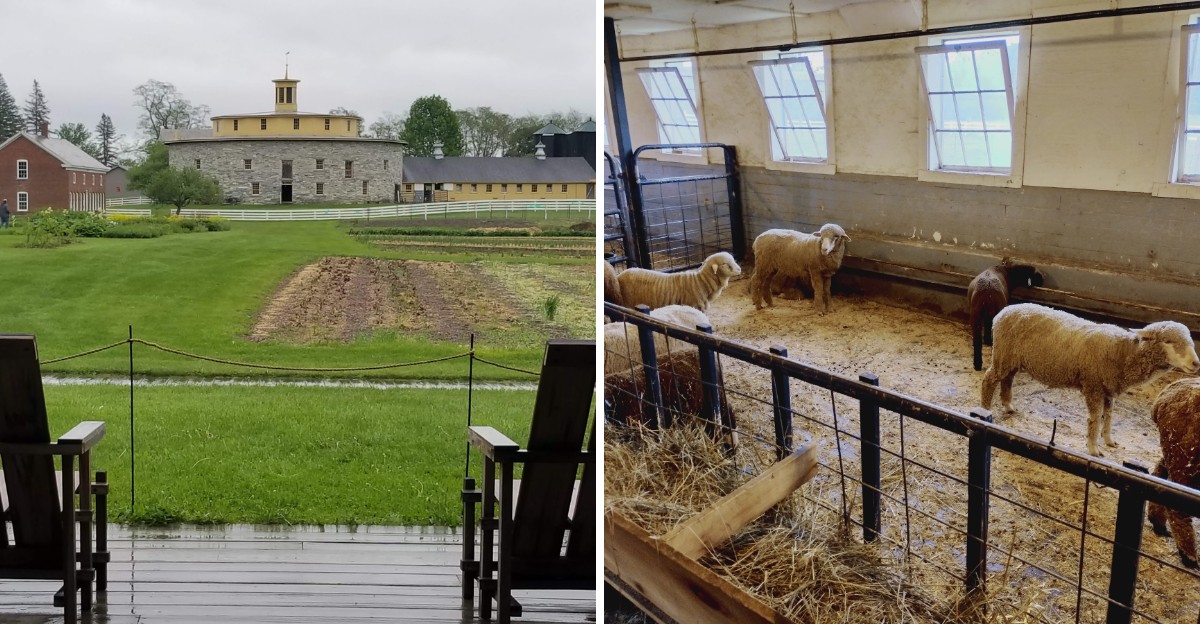
What if a day trip could feel like opening the door to another century? This Massachusetts village comes surprisingly close, with old workshops, farm animals, historic homes, and a round stone barn that immediately steals the show.
The grounds give you plenty to look at without feeling like a museum where everything stays behind glass. You can see traditional tools, learn how people worked the land, and get a better sense of how daily life once looked in this part of New England.
The animals add a lively touch, especially for families, while the historic buildings make it easy to slow down and take in the details. Then there is the barn.
Its circular shape makes it one of the most memorable structures on the property.
If you like places that mix history with something you can actually see and experience, this Massachusetts stop has a lot to keep you curious.
The Round Stone Barn That Started All The Talk
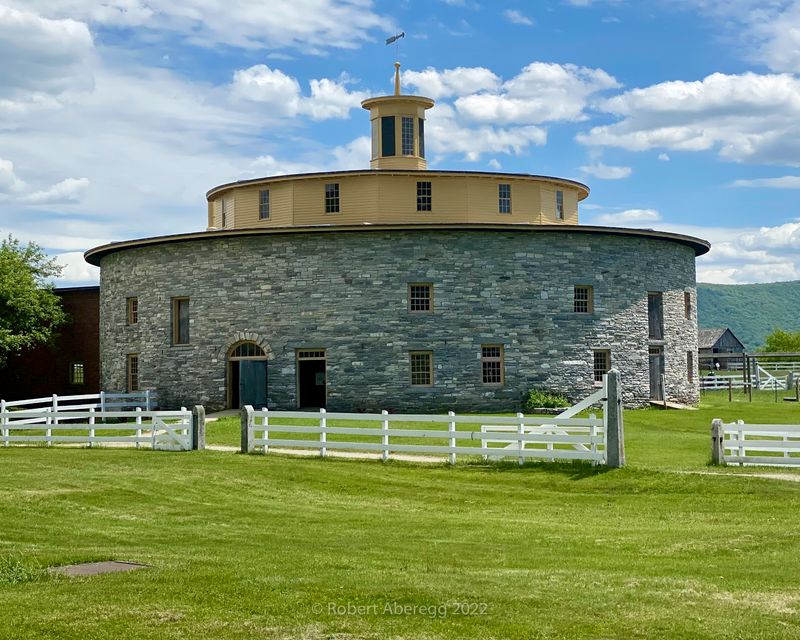
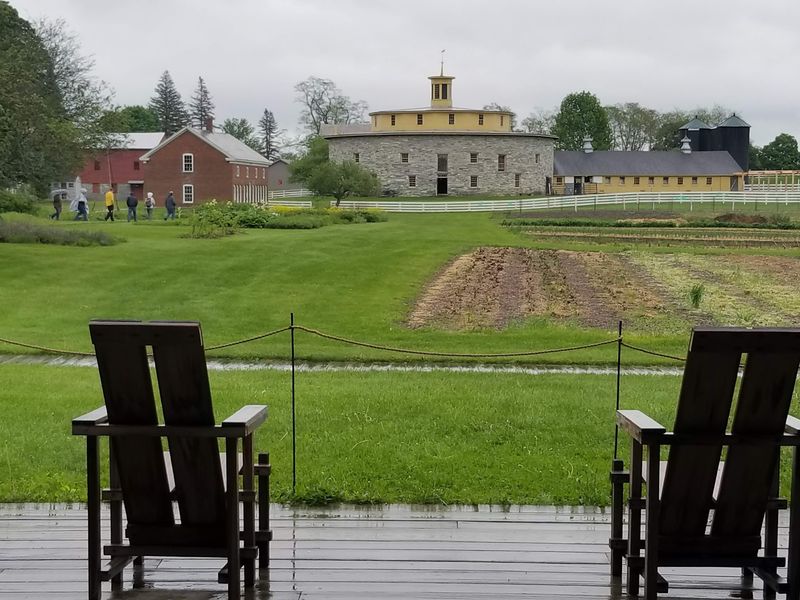
Picture a barn with no corners, no dead ends, and no frustrated farmer backing up a wagon. That is the Round Stone Barn, raised in 1826 and still the only circular barn the Shakers ever built.
The design solved a real problem. Hay wagons entered the upper level, unloaded into the central haymow, circled the barn, and exited through the same doorway without needing to back up.
Several wagons could unload at once.
Downstairs, the main floor stabled 50 or more dairy cattle in a ring of stalls, all facing inward. Feeding became one simple walk around the middle instead of a long trudge down a row.
Trap doors in the floor let workers push manure into a pit below. The manure was stored in the lower-level pit until workers needed it as fertilizer for the gardens.
Not everyone loved the idea at first. The circular shape sparked genuine debate within the community before the results won people over.
Fire destroyed the original structure in 1864, and it was rebuilt quickly. A full restoration followed in 1968, and the barn turns 200 years old in 2026.
Here is a fun bit of trivia. Writers Nathaniel Hawthorne and Herman Melville both took an interest in the building, and the two reportedly staged a footrace inside it.
Blacksmithing Demonstrations With Real Sparks
Orange metal, a heavy hammer, and a shower of sparks. The forge draws a crowd faster than anything else on the grounds, and for good reason.
Shaker craftsmen worked metal as skillfully as they worked wood. They forged nails, hinges, tools, and hardware for their own buildings, because buying what you could make yourself made little sense to them.
Today a smith works the fire in front of you, explaining each step while shaping iron into something practical. Watching a flat bar become a blade or a hook in real time is oddly hypnotic.
The heat of the coals surprises people standing several feet back. Children usually go quiet the moment the hammer strikes.
Hancock Shaker Village also offers hands-on blacksmithing classes for those who want to hold the tongs themselves. One-on-one sessions are available, which means genuine instruction rather than a quick photo op.
A practical tip: demonstration times change through the season, so check the daily schedule when you arrive. Crafts run on a rotating calendar and you do not want to miss the forge because you wandered off to the gardens.
What makes the experience stick is the connection to the buildings around you. Much of the hardware you see on the doors began exactly this way.
Twenty Historic Buildings On A 750-Acre Property
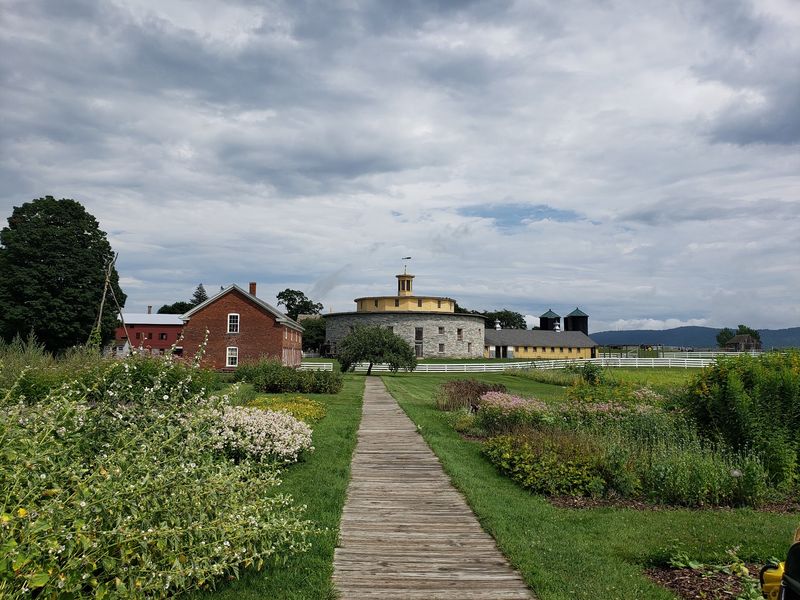
Twenty authentic buildings stand here, and each one tells a different part of the story. Some date to the 1790s, which means the floorboards have been underfoot for well over two centuries.
The community was founded in 1790 and stayed active until 1960. Members called their settlement The City of Peace, a name that fits the quiet you find walking the paths today.
You will find the address at 1843 W Housatonic St in Pittsfield, and the buildings sit on both sides of Route 20. Comfortable shoes matter, because covering the grounds involves real walking and plenty of steps.
Clear signs explain what happened inside each structure, so you can explore at your own pace without joining a group. Guides are stationed around the property if you prefer a deeper explanation.
The whole site is a National Historic Landmark, and the collection holds more than 22,000 artifacts. Furniture, tools, textiles, and household objects fill room after room.
Budget three to four hours for a proper look. Two hours covers the highlights, but you will leave wishing you had more time.
Season matters too. The property welcomes people from April through December, and autumn brings changing leaves against the mountain backdrop.
Heritage Farm Animals You Can Actually Meet
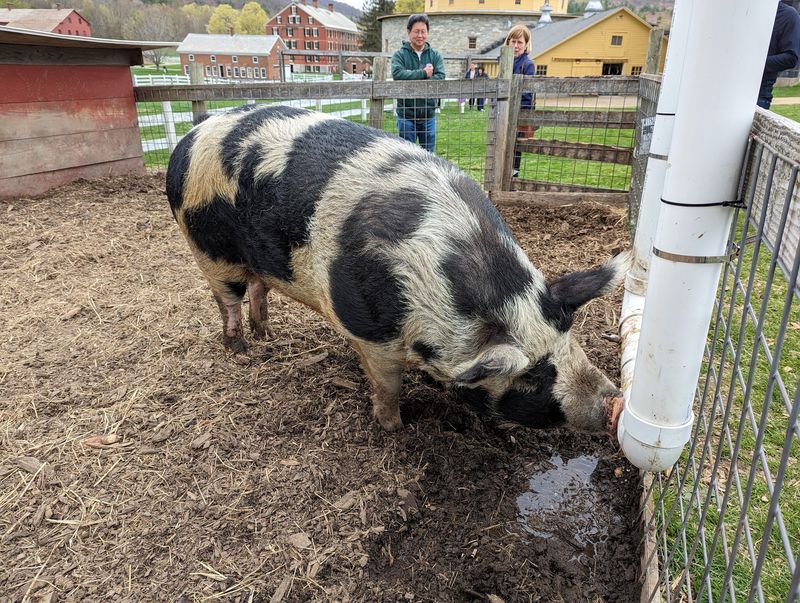
Cows, sheep, pigs, goats, and chickens call this place home, and they are not decorations. The farm here ranks among the oldest working farms in the Berkshires.
Heritage breeds of beef cattle, sheep, and pigs reflect the kinds of animals raised in the 1700s and 1800s. Seeing them grazing near stone walls gives you a sense of how the land actually functioned.
The Shakers favored what they called triple-purpose cattle. Those animals provided milk, meat, and labor, which suited a community that hated waste of any kind.
The farm has exhibited a mix of modern and heritage pig breeds, including Hampshires, Yorkshires, Landrace, Durocs, and Berkshires. Each has its own build, coloring, and temperament.
Trails run along the pastures, so you can watch the herds from a comfortable distance or step closer where allowed. The sounds carry across the fields, and the chatter between animals is genuinely entertaining.
A gentle warning from experienced families: give the roosters some space. They have opinions.
Animal care remains central to how the farm operates, tying directly to the Shaker commitment to sustainable, careful land use. Watching that philosophy in action beats reading about it on a plaque every time.
Spring Brings The Baby Animals Festival
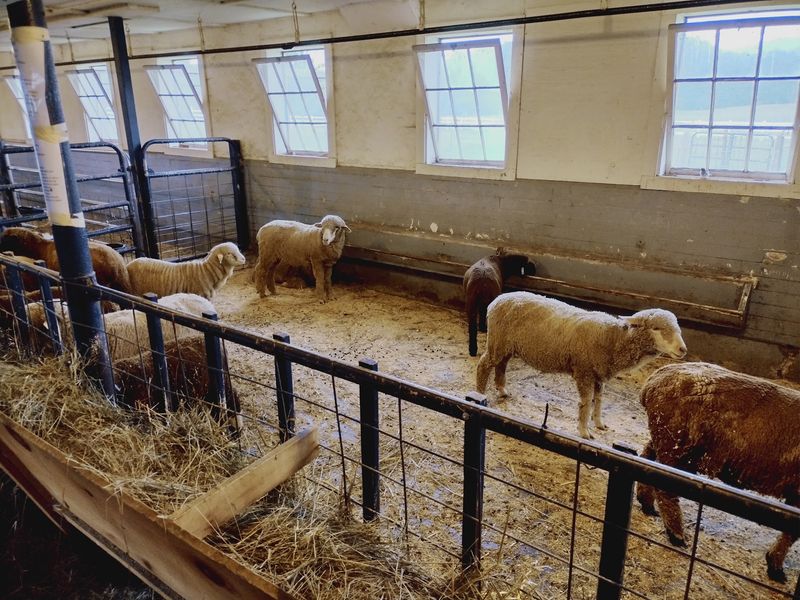
Every spring the barns fill with squeaks, bleats, and tiny hooves. The Baby Animals Festival is the busiest stretch of the year, and nobody is surprised by that.
Lambs wobble on new legs. Piglets pile together for naps.
Calves, chicks, and kid goats round out the lineup.
Families return year after year for this event, often making it an annual tradition. Grandparents and toddlers tend to react the same way, which is half the fun.
Arriving early pays off. Mornings on festival weekends are calmer, and you can take your time in the barns instead of shuffling through.
Beyond the animals themselves, the festival includes crafts, hands-on activities, and the regular demonstrations happening across the grounds. Face painting often appears on the schedule for younger guests.
The Discovery Barn gives children a space to play and learn what daily life looked like for Shaker kids. There is even a life-size replica cow that lets little ones practice milking.
Timing shifts slightly from year to year depending on when the animals arrive, so checking ahead is wise. Spring in western Massachusetts can swing from chilly to warm in a single afternoon, and layers make the day far more comfortable.
Bring a camera. You will use it constantly.
Weaving, Spinning, And The Sisters’ Dairy
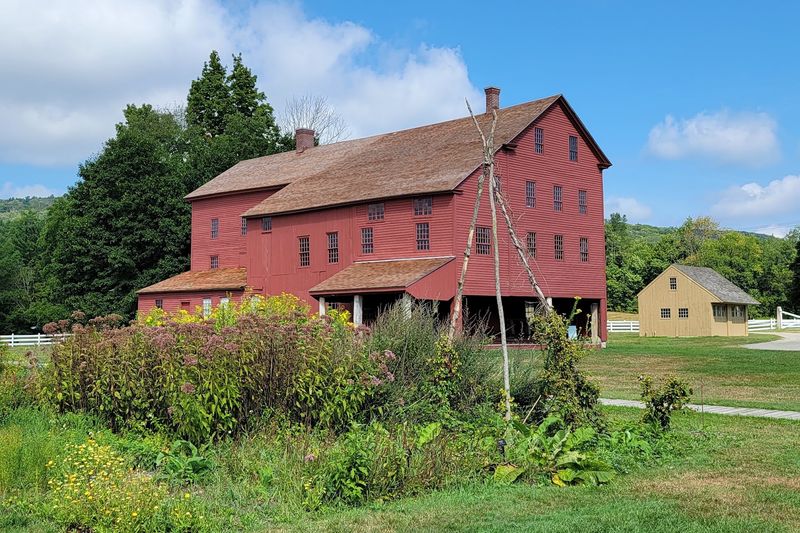
Long before factories, cloth came from patient hands and a steady rhythm at the loom. The Sisters’ Dairy and Weave Loft, a building from the 1790s, is where that work happened.
Shaker Sisters processed milk and churned butter on one level. Upstairs, looms and spinning wheels turned fiber into cloth for clothing, rugs, and bonnets.
Standing beside a working loom, you hear the clack of the beater and see the pattern grow row by row. It is slow work, and that is precisely the point.
Weaving and basketry classes are offered for anyone who wants to try, and one-on-one weaving sessions are available. Even a short attempt gives you real respect for the craft.
The Shakers were also skilled at basketry and broom making, and both crafts appear in the programs here. Brooms in particular have a surprising connection to Shaker innovation and trade.
Textiles reveal something about the community’s values. Every piece had a job, and decoration for its own sake was set aside.
Men and women shared equal standing in this community, an idea that was unusual for the time. The Sisters ran their own operations, kept their own records, and produced goods the whole settlement depended on.
Woodworking And The Famous Shaker Furniture
Clean lines. No carving.
No fuss. Shaker furniture became world famous for exactly what it left out.
Craftspeople here built chairs, tables, cupboards, and oval boxes designed to do their jobs beautifully and nothing more. The result somehow feels modern nearly two centuries later.
Look closely at the drawers in the collection. Tapered drawer sides are a signature detail found in pieces from the Hancock, Tyringham, and Enfield communities, a small fingerprint left by local craftsmen.
Woodworking demonstrations run during the day, and watching a cabinetmaker fit a joint by hand is quietly satisfying. Classes in oval box making and timberframing are offered, along with private woodworking sessions.
The community also built water-powered mills for grinding grain, cutting wood, and producing textiles. Efficiency was a form of devotion to them, not just a business strategy.
Built-in cupboards and rows of wall pegs appear throughout the buildings. Chairs could be hung up so floors were easy to sweep, a solution that still makes practical sense.
One memorable line heard among the exhibits here captures the irony of it all: a wish not to be remembered as a piece of furniture. The people mattered more than the objects, though the objects have certainly outlasted them.
Gardens, Trails, And The Berkshire Views
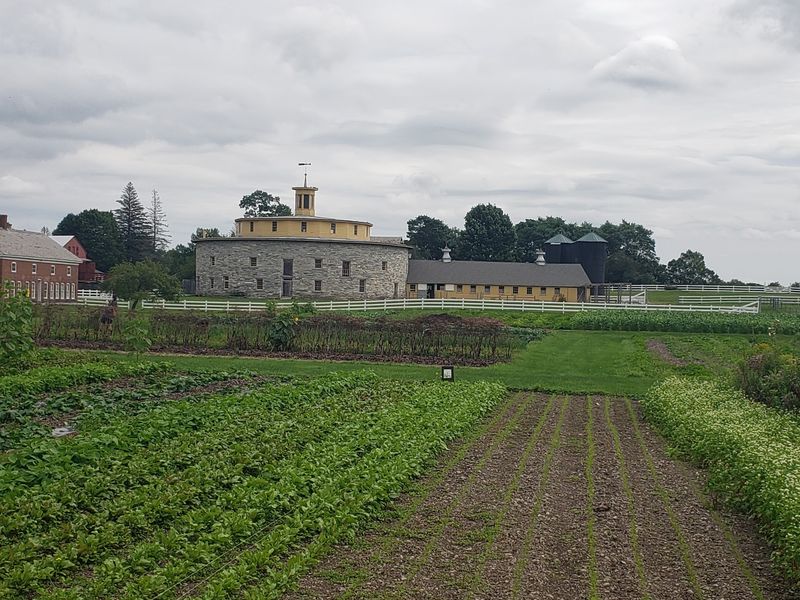
Rows of herbs, vegetables, and flowers stretch across the grounds, planted much the way they were generations ago. The Shakers built a reputation as serious seed and herb growers, and the gardens honor that history.
Heirloom varieties fill the beds, tended carefully through the growing season. Walking the rows on a warm afternoon, you catch the smell of mint and other herbs before you see them.
Trails wind through woods and along pastures, offering easy strolls rather than demanding hikes. The hills of western Massachusetts frame nearly every view.
Autumn deserves a special mention. Changing leaves against the mountains turn the property into something worth the drive on their own.
Inside the buildings, rotating exhibits add another layer. The former hen house now serves as a small gallery, and contemporary art installations sometimes appear alongside historic rooms.