
This Michigan Forest Ranks Among The Best Places To Spot Wild Black Bears This Fall
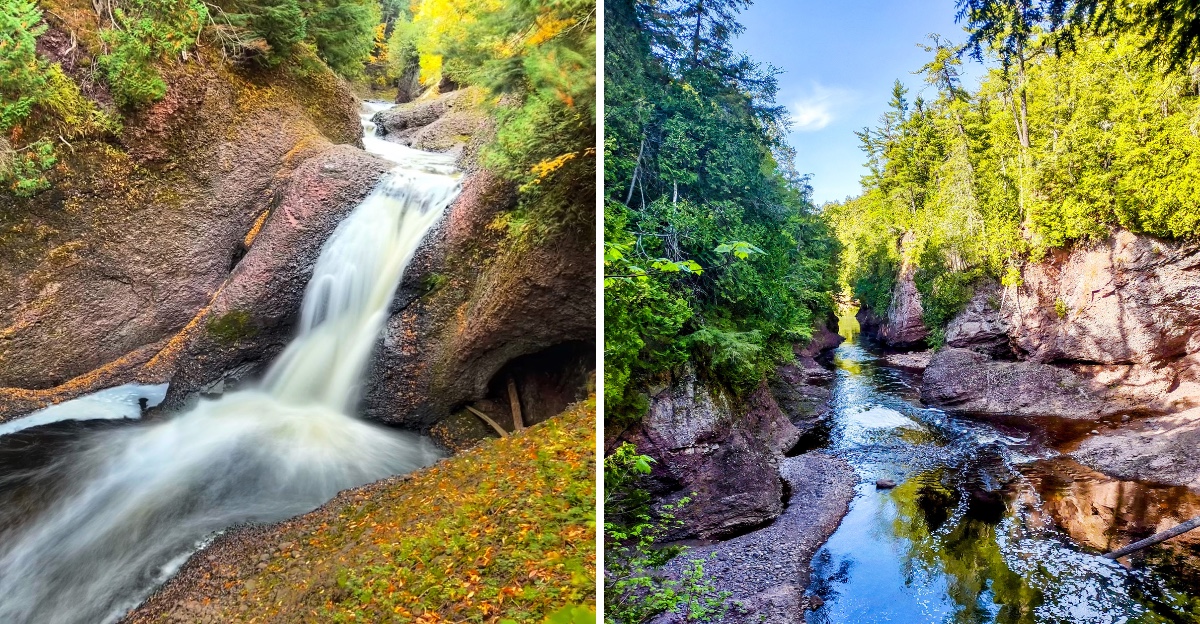
Autumn flips a switch across this Michigan forest, and black bears come out to feed before winter.
Berries and old logging roads pull them into open ground where quiet hikers might catch a glimpse.
Waterfalls roar nearby, and color stacks itself in reds, golds, and deep orange overhead.
A scenic byway threads through thick hardwoods toward a rugged Lake Superior harbor.
Trails wind past eighteen named waterfalls, wide lakes, and rivers built for quiet paddling.
Three wilderness areas guard the deepest corners, where eagles and loons outnumber people.
Would you recognize a black bear crossing a two track at dawn?
Michigan keeps this kind of wild close at hand, and few forests pack in so much. A weekend built around leaf peeping and bear watching might be worth planning.
A Million Acres Of Upper Peninsula Wild
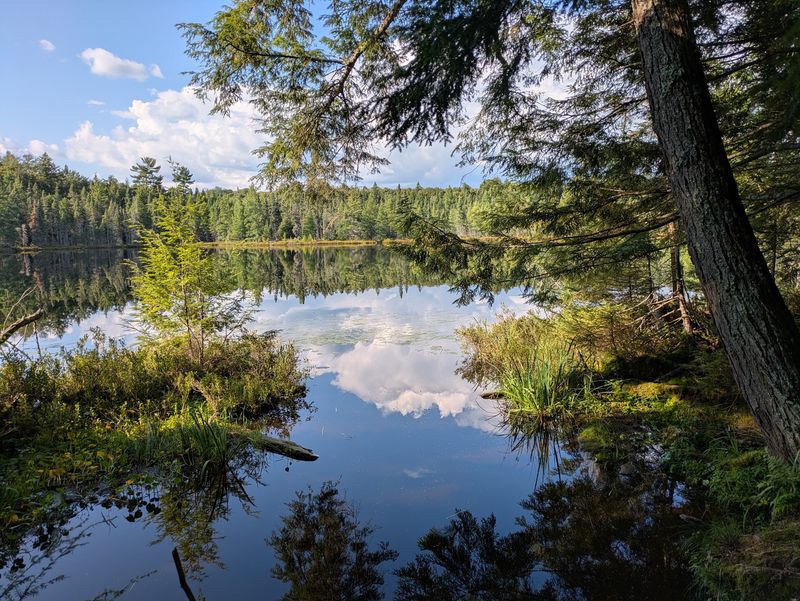
Big does not quite cover it. The Ottawa National Forest spreads across roughly one million acres of Michigan’s western Upper Peninsula.
It runs from the south shore of Lake Superior all the way down to the Wisconsin border. Ancient glaciers carved the ground, leaving kettle lakes, conifer swamps and rivers full of stone.
Elevations climb from about 600 feet along the Lake Superior shoreline to more than 1,800 feet inside the Sylvania Wilderness. That range creates wildly different habitats within a short drive.
Bears thrive in exactly this kind of patchwork. Berry thickets, mature hardwoods and quiet wetlands all sit close together.
Solitude comes standard. Many roads here pass more trees than mailboxes, and cell signal fades fast.
The forest headquarters sits in Ironwood, with a main visitor center in Watersmeet. A general mailing point for the Ottawa National Forest is Bruce Crossing, MI 49912, United States.
Stop at a visitor desk before heading deep. Rangers share current road conditions and recent wildlife sightings.
Scale like this rewards travelers who slow down and let the woods do the talking.
Why Black Bears Rule These Woods
Bears own the headlines here, and the numbers back it up. Michigan’s Upper Peninsula holds well over 80 percent of the state’s black bear population.
Inside the Ottawa National Forest, bears are described as common, and their numbers have been trending upward. That combination makes autumn sightings a real possibility rather than a fantasy.
Fall is their busiest stretch. Bears feed hard on berries, acorns and other calorie-heavy foods before settling in for winter.
All that foraging pulls them into openings, old logging roads and berry patches. Quiet observers occasionally catch a black shape crossing a two-track at dawn.
Nothing is guaranteed, of course. Wildlife keeps its own schedule, and many visitors leave with tracks and scat as their only proof.
Even so, the possibility changes how the forest feels. Every snapped twig gets your attention.
Binoculars help far more than a zoom lens and wishful thinking. Scan edges where meadow meets timber.
Keep distance generous and reactions calm. Watching a bear mind its own business in the Ottawa National Forest beats any souvenir shop.
Autumn Turns The Canopy Loud
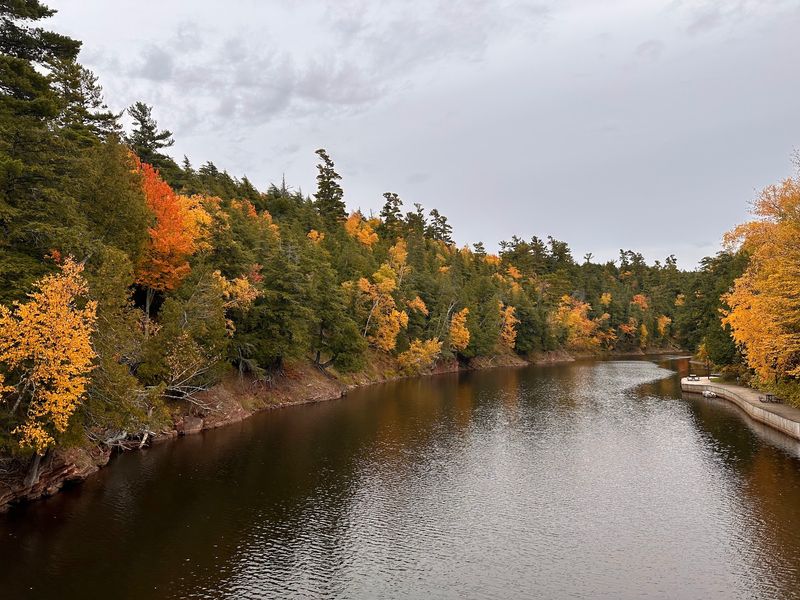
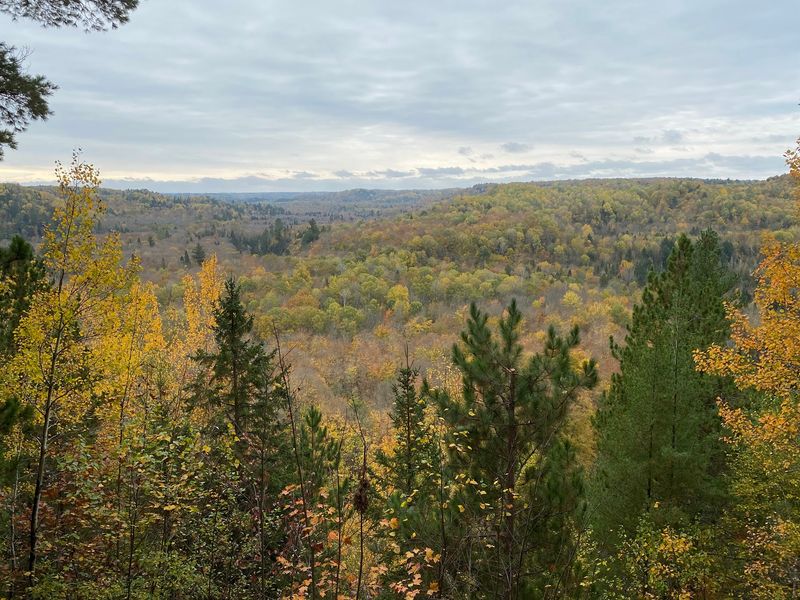
Color arrives like someone flipped a switch. Shorter days and cool nights push the maples and cherry trees into red, orange and gold.
Across the Ottawa National Forest, hillsides stack those shades layer on layer. Birch trunks add bright white lines between the warm tones.
Timing shifts each year with weather, so peak color can arrive earlier or later than expected. Late September into early October is often a safe window in this part of Michigan.
Bears happen to be most active during the same stretch. Leaf peeping and wildlife watching share the calendar nicely.
Gravel forest roads make excellent slow drives. Pull off safely, step out, and listen to leaves drop.
Morning light works best for photos, especially near water. Fog on a small lake with a red ridge behind it needs no filter.
Dress for swings in temperature. Frosty mornings can turn into mild afternoons by lunch.
Autumn here does not whisper. It puts on a full performance and charges nothing at the door.
The Black River Byway Delivers Twice
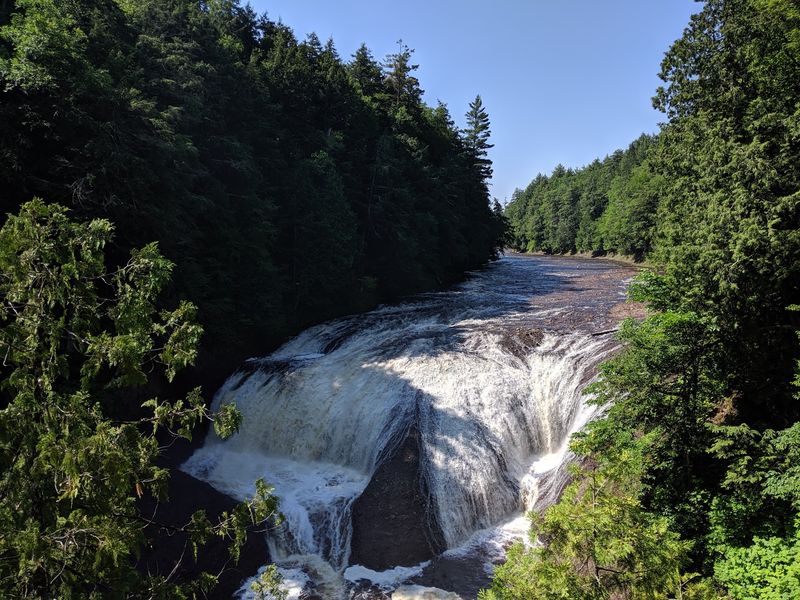
One road, two rewards. The Black River National Scenic Byway winds nearly 15 miles to the Black River Harbor Recreation Area on Lake Superior.
Along the way, the route threads through thick hardwoods that blaze in autumn. Short spur trails drop toward roaring water.
Visitors often rank this drive as the signature experience in the Ottawa National Forest. Waterfalls and foliage in a single afternoon explain the popularity.
Bear habitat borders the whole corridor. Slow speeds help, both for safety and for spotting movement in the brush.
The harbor at the end opens onto the big lake. Wind, waves and a long footbridge make a fine turnaround point.
Parking areas fill on bright weekends, so early arrivals get the calmer version. Weekday mornings feel almost private.
Restrooms and picnic spots exist near the harbor, but services thin out quickly inland. Pack snacks and water.
Drive it once for the leaves, then again for the falls. The byway holds up to repeat visits without complaint.
Trails That Go Somewhere Worth Going
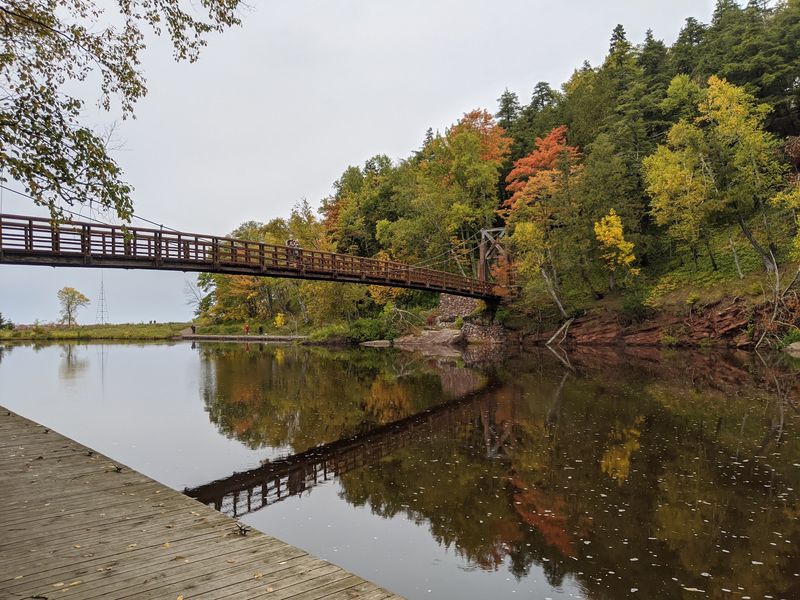
Over 200 miles of trails cut through this forest. Hikers, mountain bikers and horseback riders all find room to spread out.
The North Country National Scenic Trail passes straight through the Ottawa National Forest. That epic path allows quick strolls or multi-day pushes, depending on ambition.
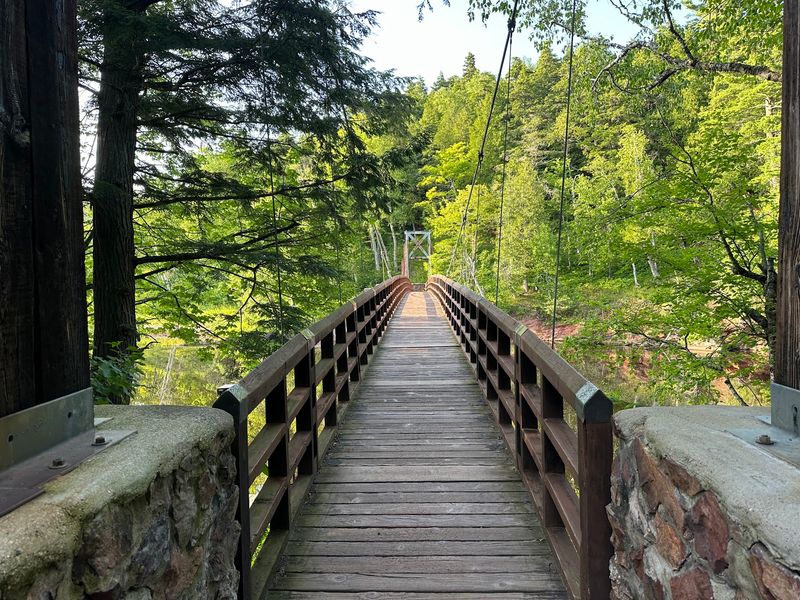
Shorter routes pay off too. The O Kun de Kun Falls trail follows the Baltimore River, crossing bridges before reaching a wide curtain of water.
Fall footing can get slick under wet leaves. Boots with real tread beat sneakers every time.
Staying on established paths matters most in late summer and autumn. It protects fragile ground and reduces surprise meetings with feeding bears.
Trail junctions are sometimes lightly marked. A paper map or downloaded offline map saves guesswork where signal disappears.
Noise works in your favor. Casual conversation warns wildlife long before you arrive.
Daylight shrinks fast in October, so start early and carry a headlamp anyway. Turning back before dusk is the smarter kind of brave.
Every trail here seems to end at water, rock or a view worth the mud.
Eighteen Waterfalls And Counting
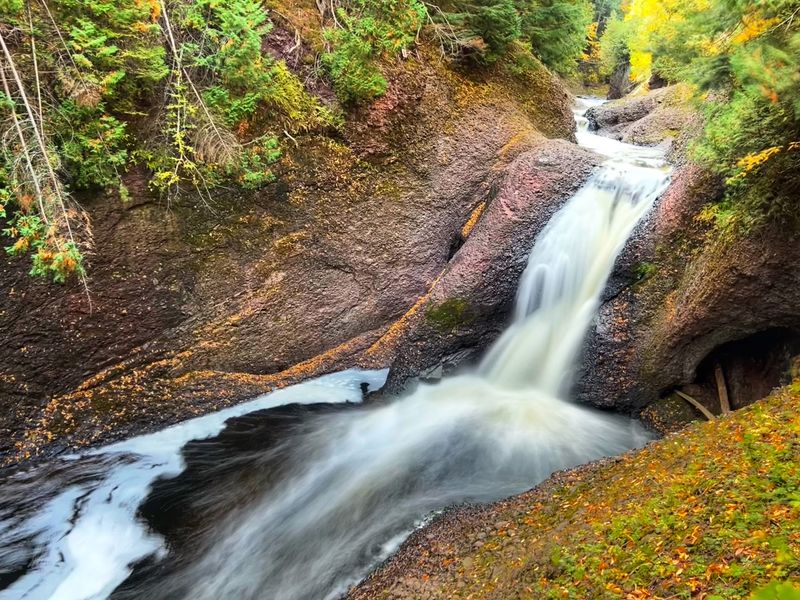
Count them: 18 named waterfalls sit within this forest. Few places in Michigan pack that many into one wilderness.
The Black River corridor strings several together in quick succession. Great Conglomerate Falls, Potawatomi Falls and Gorge Falls all sit within reach of short hikes.
Each drop behaves differently. Some spread wide over dark conglomerate rock, while others squeeze into narrow chutes and thunder.
Autumn rain can boost the flow noticeably. Higher water makes for louder, mistier viewing.
Wooden stairways and platforms serve the busier falls. Boardwalks help, though steps can be steep and wet.
Rocks near the lip stay slippery even on dry days. Overlooks exist for a reason, so use them.
Sound alone earns the trip. Rushing water fills the forest long before the falls appear through the trees.
Photographers like overcast mornings, when soft light keeps the water from blowing out. Reds and golds above the spray do the rest.
Chase two or three in a day, then pick a favorite. Most visitors cannot.
Sharing Space With Bears The Right Way
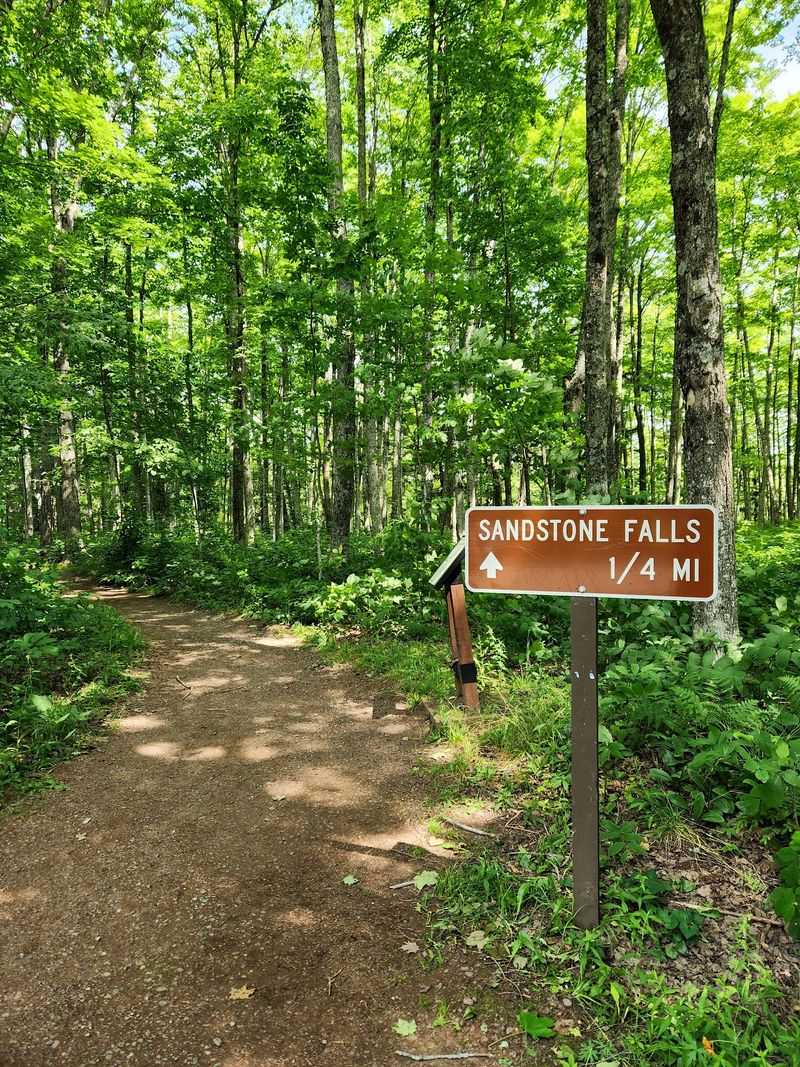
Respect beats bravado in bear country. Black bears are naturally wary of people and generally pose little threat when given space.
Surprises cause most trouble. Making noise while hiking through the Ottawa National Forest lets a bear move off long before you arrive.
Spotting one calls for calm. Groups should gather together rather than scatter.
Running is a bad idea. Back away slowly while speaking in a firm, steady voice.
Food security matters at camp. Store snacks, cookware and scented items like toothpaste well away from tents.
Never leave scraps behind. A bear that learns to associate humans with easy calories loses its natural caution.
Keep dogs leashed and under control. An excited pet can turn a quiet sighting into a tense standoff.
Photograph from a distance with zoom, not with footsteps. No picture is worth crowding a wild animal.
Guidance can change, so check current advice at a visitor center before heading out. Rangers know the season’s patterns.
Good habits keep bears wild and visitors welcome. That is the whole deal in Michigan’s north woods.
Lakes, Rivers And Paddles In Hand
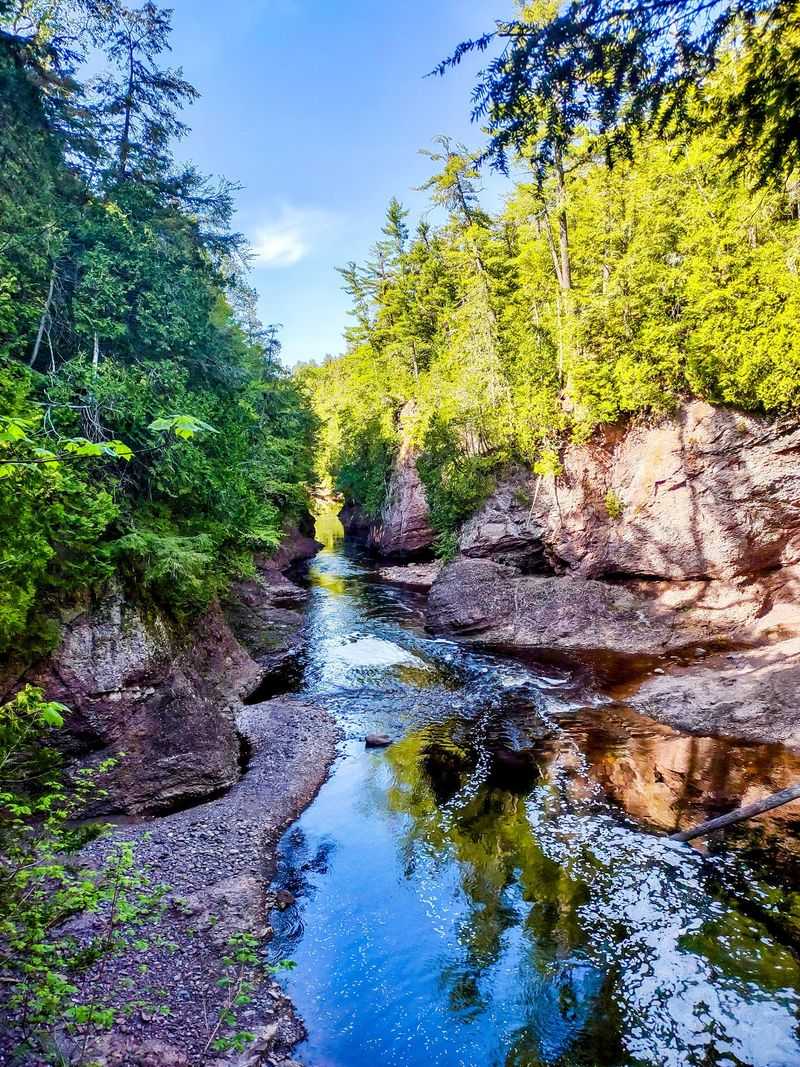
Water is everywhere. Hundreds of lakes and close to 2,000 miles of streams crisscross the Ottawa National Forest.
That abundance turns the place into a paddler’s playground. Canoes and kayaks glide across glassy lakes ringed by color.
Lake Gogebic, the Upper Peninsula’s largest inland lake, draws plenty of attention. Anglers pursue walleye, smallmouth bass and perch there.
The Wild and Scenic Sturgeon River offers a different mood entirely. Current, rock and forest walls keep paddlers alert.
Clark Lake and Crooked Lake inside Sylvania earn praise for clarity. Visitors describe water dark blue and startlingly clean.
Autumn paddling means cold water, so life jackets stop being optional. Layers that dry quickly help too.
Bears sometimes travel shorelines at dawn and dusk. Drifting quietly gives a rare vantage point.
Outfitters operate near some lakes for rentals, though availability shifts with the season. Calling ahead avoids disappointment.
Fishing rules vary by water, so check regulations first. A quiet morning afloat here rewires your definition of peaceful.
Three Wilderness Areas Worth The Effort
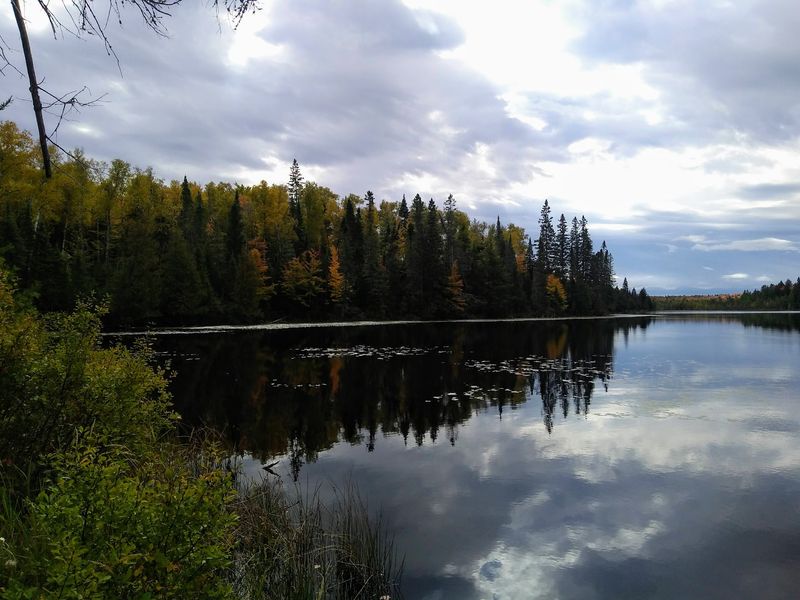
Deeper still lies real wilderness. Three federally designated wilderness areas sit within the Ottawa National Forest.
McCormick Wilderness, Sturgeon River Gorge Wilderness and Sylvania Wilderness each guard a different kind of quiet. Motors and modern conveniences stay behind.
Sylvania covers 18,327 acres and gets the most attention. Old-growth timber and clear lakes explain why.
Bald eagles, loons and osprey patrol the shorelines. Bears and other mammals use the interior with little interruption.
Camping in Sylvania requires a permit, a rule that keeps the area primitive rather than crowded. Reservations and limits help spread out use.
Sturgeon River Gorge rewards those who enjoy steep, rugged ground. The gorge cuts deep, and trails demand honest effort.
McCormick feels remote and lightly traveled. Navigation skills matter more than mileage here.
Regulations differ between the three, so confirm details before packing. Rules protect what makes these places special.
Wilderness travel asks more and gives more. Autumn silence in these corners of Michigan sticks with people for years.
Layers Of History Under The Trees
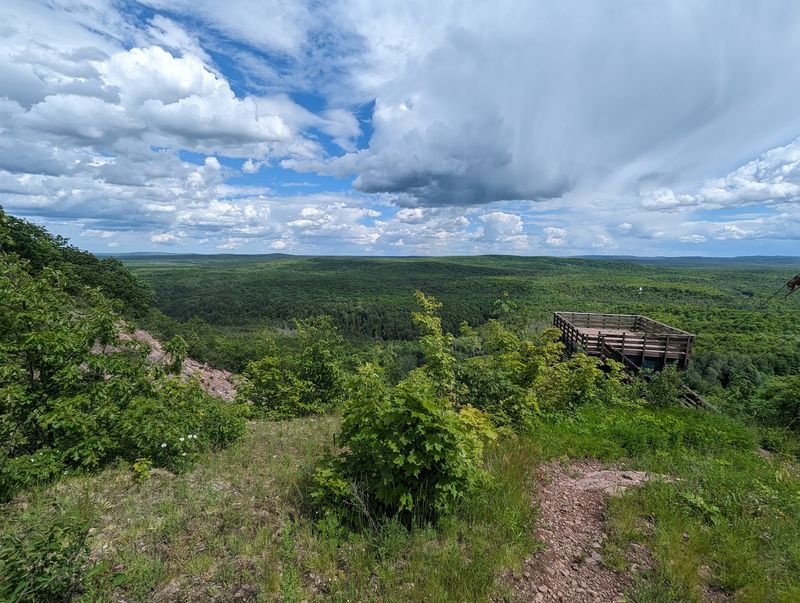
These woods carry more than timber. Officially established in 1931, the forest grew through Great Depression era reforestation work.
Crews replanted land stripped by earlier logging. Today’s canopy owes plenty to that labor.
Older history runs deeper. The land was ceded by the Ojibwe people through the 1842 Treaty, with rights retained to hunt, fish and gather.
Those rights remain meaningful. Members of federally recognized tribes may use Ottawa National Forest campgrounds without charge.
Administrative roots sit in two small towns. Headquarters operate from Ironwood, while a principal visitor center serves travelers in Watersmeet.
Copper Peak, near the Black River area, adds another chapter tied to ski flying history. Its silhouette surprises first-time visitors.
Interpretive displays at visitor centers fill in gaps. Staff often share stories that maps cannot.
Knowing the backstory changes how the forest reads. Second-growth hardwoods become evidence of recovery rather than scenery alone.
History and habitat overlap here in Michigan. Bears wander ground that people have used, shaped and protected for generations.
Bears Get Company In These Woods
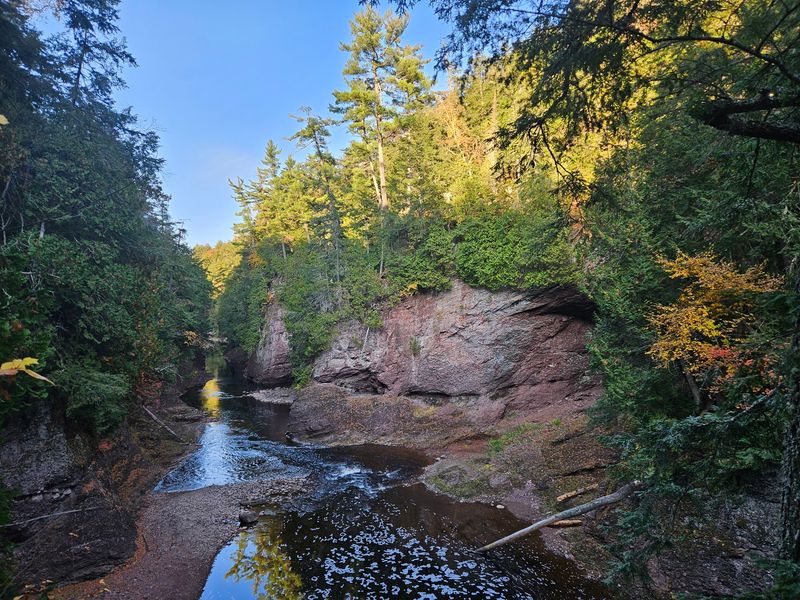
Bears headline, but the supporting cast is strong. White-tailed deer show up almost everywhere in this forest.
Moose, gray wolves and river otters also roam the Ottawa National Forest, though sightings take real luck. Wolves in particular stay far from people.
Birders do well here. Bald eagles, osprey, loons and a long list of songbirds use the varied habitats.
Conifer swamps, rocky bluffs and lake edges each host different species. Moving between them boosts your species count quickly.
Early mornings deliver the best odds. Animals move while the forest is still cool and quiet.
Sitting still beats walking fast. Pick a spot near water and wait twenty minutes.
Grouse explode from roadside brush and startle everyone involved. Turkeys strut through clearings without apology.
Bring bug protection in warmer stretches, since mosquitoes here have a reputation. Autumn frost thankfully thins the crowd.
Tracks in mud tell stories even on slow days. Reading them turns an ordinary walk into detective work worth repeating.
Planning A Smooth Fall Visit
Preparation makes this trip shine. Services stretch thin across the forest, so fuel and groceries deserve attention before heading in.
Campgrounds and dispersed sites both exist, with availability changing by season. Some facilities scale back once cold weather settles in.
Cell coverage is unreliable across much of the Ottawa National Forest. Download maps in advance and tell someone your route.
Hunting seasons overlap with autumn recreation in Michigan. Wearing bright orange on trails is a simple, smart move.
Weather flips fast near Lake Superior. Rain shells, hats and gloves belong in the daypack even on sunny mornings.
Roads range from smooth pavement to rough gravel. Checking conditions at a visitor center prevents unwanted adventures.
Fees, permits and rules vary by area, so confirm current requirements rather than assuming. Details shift year to year.
Pack out everything, including food scraps that attract bears. Clean campsites protect the next visitor too.
Give yourself extra days if possible. This corner of the Upper Peninsula has a habit of making people cancel their plans to leave.