
This Minnesota Town Boasts A Healthcare System Ranked Among The Best In The Country
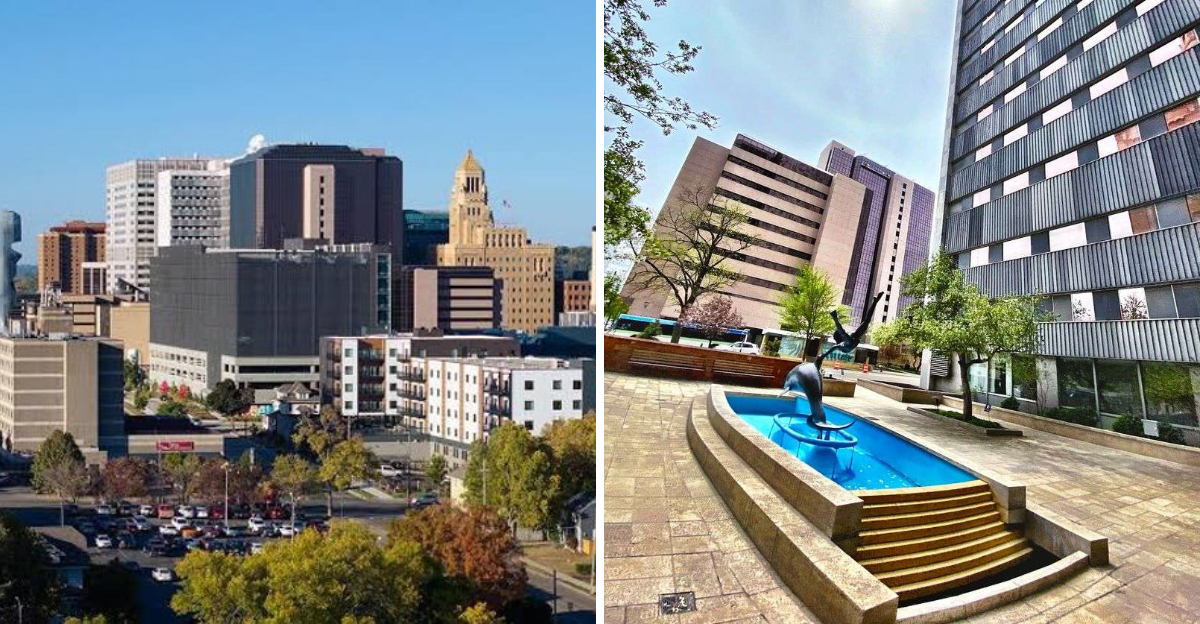
Get ready, because Minnesota is quietly running one of the most talked-about healthcare stories in the whole country.
Picture a place where the waiting rooms hum with dozens of languages and the sidewalks stay busy well past sunset.
This isn’t just a hospital town. It’s a full-blown medical universe hiding inside a mid-sized Minnesota city, and it grew out of the wreckage of a single storm over a century ago.
Doctors, nuns, and sheer stubborn hope built something that now pulls patients from nearly every corner of the globe.
Underground tunnels, glowing towers, and a bell-filled skyline hint at just how deep this story runs. There’s a riverside art scene too, tucked right alongside the medicine, plus parks and trails that feel worlds away from any clinic.
Curious how one Minnesota address became this powerful? There’s plenty more waiting once you start digging into it.
The Hospital That Keeps Winning The Country’s Top Spot
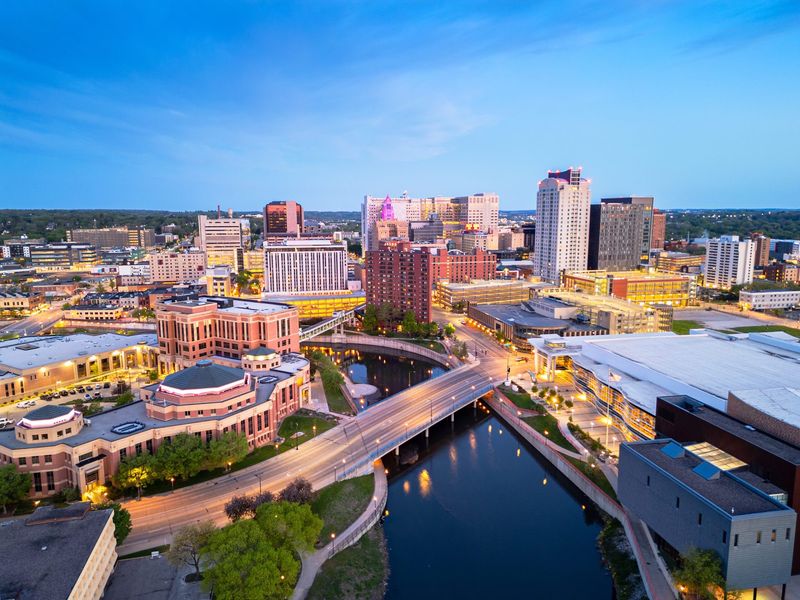
Newsweek has named Mayo Clinic the number one hospital in the world for eight consecutive years, and U.S. News & World Report has again placed it atop its Best Hospitals Honor Roll, a distinction it has now earned 37 times since the rankings began.
The streak stretches further back than that. For more than 35 years, the institution has sat at or very near the summit of national rankings.
Newsweek adds its own praise, naming it the world’s best hospital for seven straight years through its 2025 list. Few medical centers anywhere collect that kind of repeat recognition.
What drives the scores is specialty depth. Mayo Clinic ranks highly across a long list of medical specialties, often leading more categories than any other hospital in the country.
Children get the same attention. Mayo Clinic Children’s earned placement in all 11 pediatric specialties in the 2025 to 2026 Best Children’s Hospitals rankings, and it ranked first in Minnesota for the fifth year running.
The main campuses, including Saint Marys and Methodist, sit right in downtown Rochester. Patients walk from hotels to appointments without ever hailing a cab.
Numbers like these turn a modest prairie city into a global medical address.
How A Tornado In 1883 Rewrote Medical History
A storm started everything. In 1883, a devastating tornado tore through the young city and overwhelmed every available caregiver.
Doctor William Worrall Mayo had already put down roots here, settling his family in town and opening a practice back in 1864. The disaster pushed him into emergency service alongside local nuns.
Afterward, Mother Alfred Moes, founder of the Sisters of Saint Francis of Rochester, Minnesota, made a bold offer. The sisters would fund and build a permanent hospital if the Mayo physicians would provide the medical care.
Saint Marys Hospital opened its doors on September 30, 1889. That handshake between a religious order and a frontier family became the foundation of a worldwide institution.
The story continues at 200 First Street SW in Rochester, Minnesota, where the clinic’s downtown campus still anchors the city.
Two sons joined the practice later, and together the family shaped a team-based model of care. A purpose-built clinic building for multispecialty group practice opened in 1914.
Curious visitors can trace that timeline through downtown buildings and historical displays. History rarely sits this close to the sidewalk.
The 1928 Plummer Building And Its Carillon
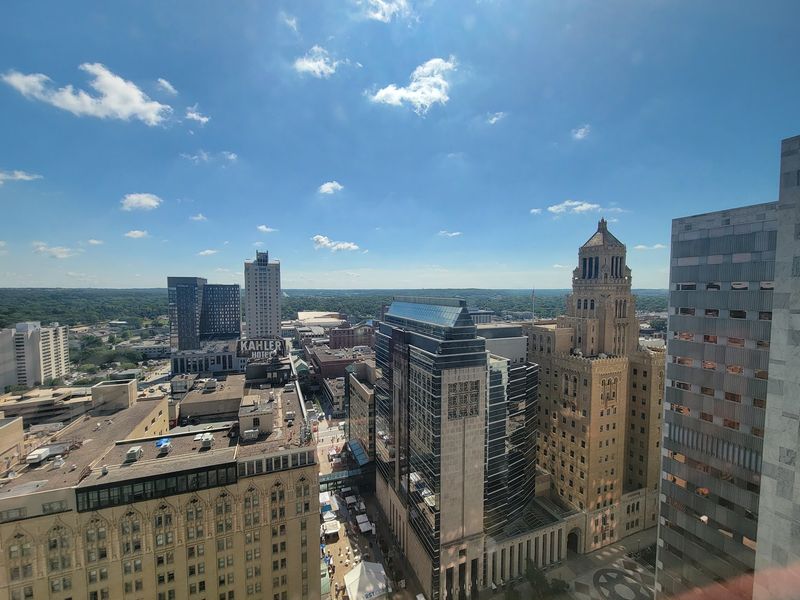
Look up downtown and one tower steals the view. The Plummer Building, completed in 1928, remains the most recognizable landmark on the Rochester skyline.
Its detailed stonework and ornate bronze doors belong to an era when hospitals aimed for grandeur. The building housed clinic offices and a library, and it still functions as part of the campus.
High in the tower sits a carillon. Bells ring out over the streets, giving the medical district a soundtrack that surprises first-time visitors.
Architecture fans notice the Romanesque influences and the careful craftsmanship on the lower levels. Photographers usually aim for the tower at golden hour, when the stone warms up beautifully.
The structure also marks a turning point. By the late 1920s, the practice had grown large enough to need serious space, and the tower announced that ambition to the region.
Nearby buildings from later decades create a layered downtown, mixing 1920s detail with modern glass.
Free public art displays and historical exhibits sit within walking distance. Even a short stroll here doubles as an architecture lesson.
Skyways And Subways That Beat Winter
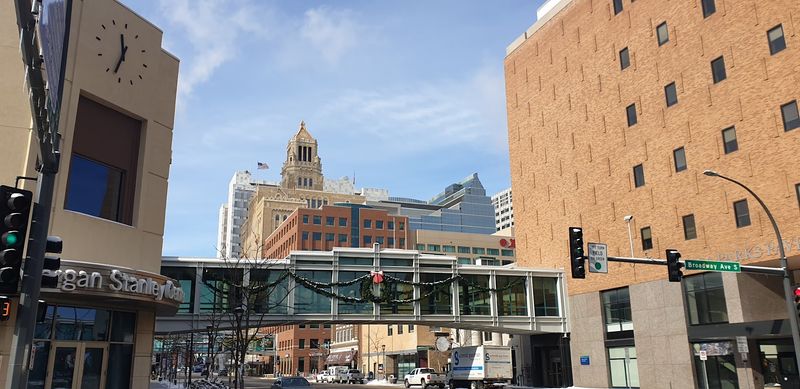
Minnesota winters have a reputation. Downtown here answers with a climate-controlled network of skyways and underground walkways.
The system links hotels, clinic buildings, parking ramps, shops, and restaurants. Visitors can cover a large chunk of downtown without stepping outside once.
For patients and families, that convenience matters enormously. Someone recovering from a procedure does not want to face icy sidewalks or a January wind.
The subway level runs beneath the streets, while glass-walled skyways cross above traffic. Signage helps, though newcomers still take a wrong turn or two.
Shopping happens along the route as well. The Galleria at University Square and the Grand Shops of Kahler & Marriott connect directly into the walkways.
Coffee shops and casual eateries line the corridors, making it easy to grab a bite between appointments.
Summer visitors appreciate the same system in reverse, ducking inside during humid afternoons.
Practical tip worth remembering: grab a downtown map early, because the network is larger than it first appears. Few American cities of this size offer anything comparable.
Patients Arrive Here From 137 Countries
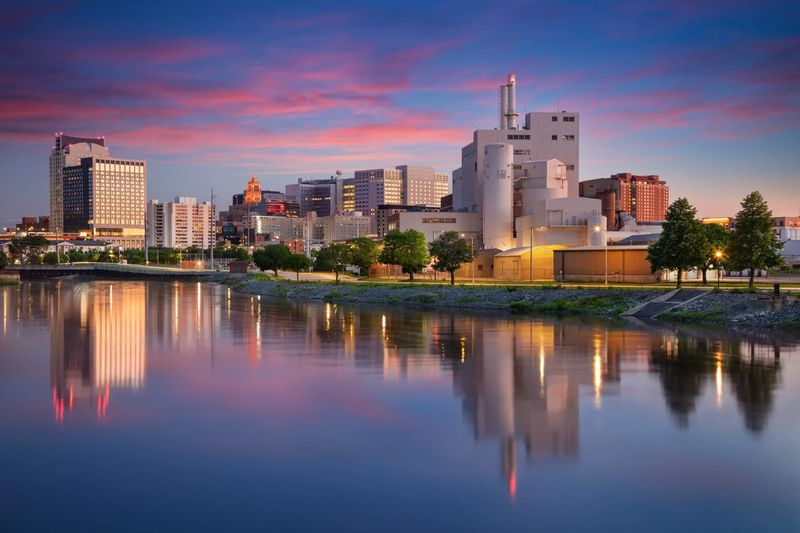
More than 1.3 million patients travel here annually. They come from all 50 states and around 137 countries, which gives a mid-sized Minnesota city an unmistakably international feel.
Listen in a downtown coffee shop and multiple languages float past. Interpreters, international patient services, and multilingual signage all reflect that reality.
Hotels build their business around medical visitors, often offering shuttle service and extended-stay options. Restaurants adjust menus to suit a wide range of dietary needs and cultural preferences.
Families frequently stay for weeks. That creates a rhythm unlike typical tourism, with visitors settling into routines rather than racing between attractions.
Support networks fill the gaps. Volunteer groups, hospitality houses, and community organizations help newcomers find their footing.
The effect spills into local culture. Grocery stores stock international ingredients, and small businesses cater to a global clientele.
Anyone planning a trip should book lodging early, since demand can vary sharply by season and appointment schedules.
A city this welcoming to strangers develops a certain patience. Locals give directions without being asked twice.
An Economy Built Around Care
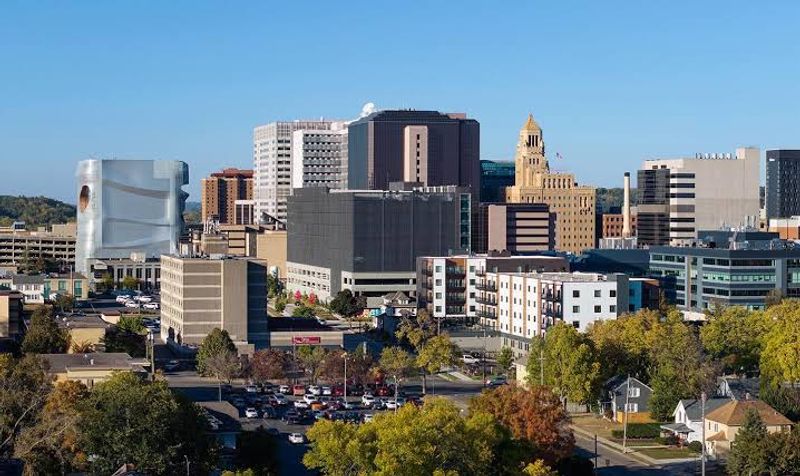
One employer dominates the local job market. Mayo Clinic employs more than 35,000 people in Rochester alone, making it by far the city’s largest workforce.
Ripple effects reach across the state. Estimates credit the institution with supporting over 92,000 jobs in Minnesota and contributing billions to the national economy.
Housing, restaurants, transportation, and retail all orbit that engine. Hotel occupancy tracks patient volume more than tourist seasons.
Young professionals move here for research and clinical positions. Nurses, technicians, scientists, and administrators fill neighborhoods that keep expanding outward.
Education follows the same pull. Medical training programs and research fellowships bring students from around the world.
For visitors, the practical result is a downtown that feels busier than the population suggests. Sidewalks stay active on weekday mornings.
Small businesses have learned to serve long-stay guests, offering laundry service, grocery delivery, and flexible hours.
The city has grown without losing its walkable core, which remains one of its quieter strengths. An economy centered on healing shapes daily life in ways both obvious and subtle.
Destination Medical Center And The Discovery Square Corridor
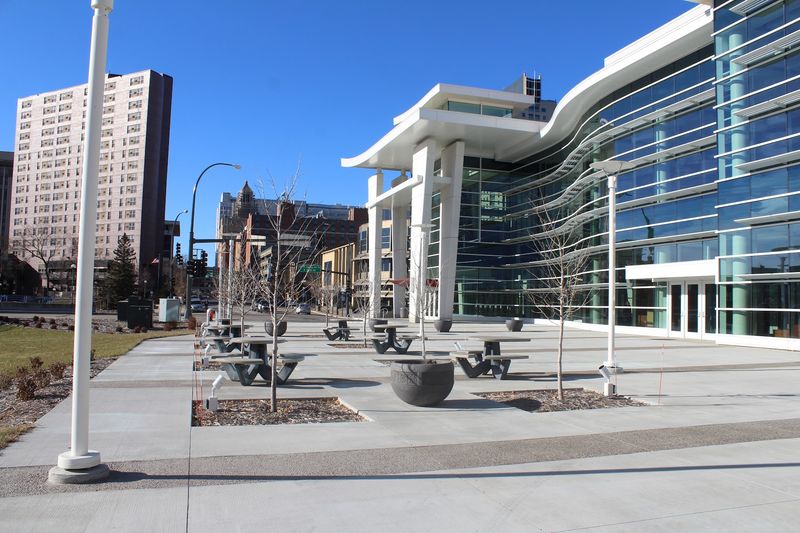
A 20-year plan is reshaping these streets. The Destination Medical Center initiative runs from 2015 to 2035 and represents roughly 5.6 billion dollars in public-private economic development.
Its goal reaches beyond hospital beds. Planners want Rochester recognized globally for health, wellness, and innovation, with Minnesota positioned as a center for high-quality medical care.
Public money funds infrastructure while private investment follows. Mayo Clinic has committed a substantial share of the total.
Discovery Square anchors the effort. Designed as an innovation corridor, it brings researchers, entrepreneurs, and companies into shared space near the clinical campus.
Construction is visible for anyone walking downtown. New buildings, improved transit, and upgraded public spaces keep appearing.
Visitors notice wider sidewalks, fresh landscaping, and more places to sit outdoors. The changes make appointment-heavy weeks a little more pleasant.
Details continue to evolve, so specifics can shift year to year as projects move through planning.
What stays constant is the ambition behind it. Watching a city redesign itself around medicine makes for unexpectedly interesting sightseeing.
Firsts That Changed How Medicine Works

Team-based care did not exist by accident. The integrated, multi-specialty group practice model developed here spread across the medical world.
Integrated medical records came from the same thinking. Instead of scattered notes, one shared file followed the patient through every department.
Surgical history was made too. The institution performed the first series of open-heart surgeries, a breakthrough that reshaped cardiac treatment.
Imaging arrived early as well. North America’s first CT scanner was introduced here, changing how doctors see inside the human body.
The philosophy behind these firsts stays simple. Specialists collaborate, records travel with the patient, and decisions get made as a group.
Visitors can explore parts of this legacy through campus exhibits and historical displays scattered around downtown buildings.
Research continues at scale, feeding new treatments into practice. Laboratories and clinical trials operate alongside everyday patient appointments.
For anyone interested in how modern hospitals came to look the way they do, the trail leads back to this southeastern Minnesota city. Innovation here rarely announces itself loudly, but it travels far.
Riverside Art And A Downtown Full Of Sculpture
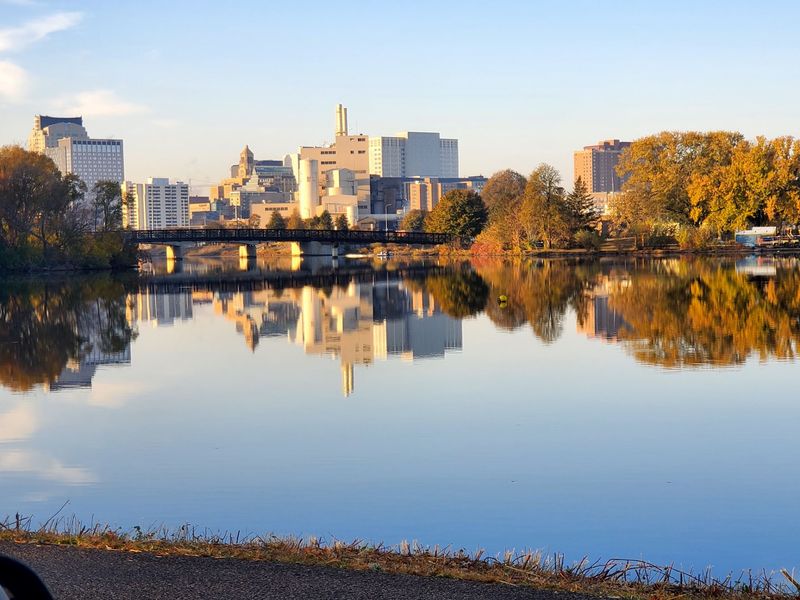
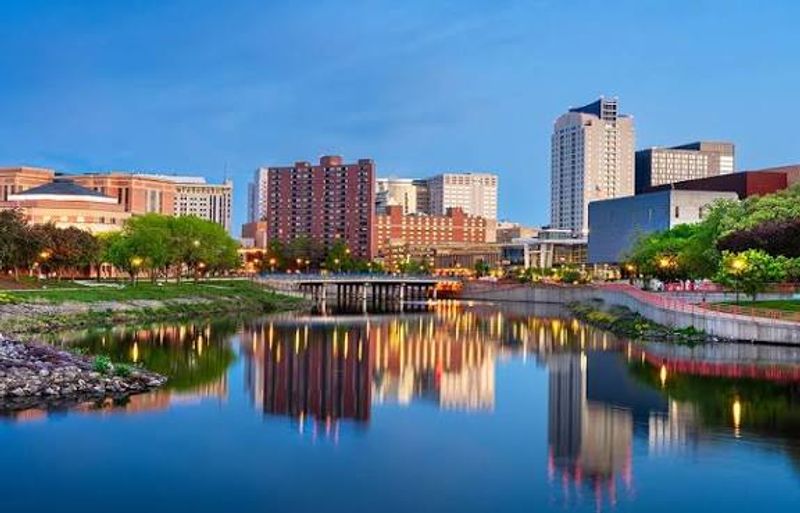
Contemporary art overlooks a river here. The Rochester Art Center sits beside the Zumbro River and hosts rotating contemporary exhibits.
Views from inside come free with the visit. Big windows frame the water and the downtown skyline beyond it.
Outside, the ARTWalk turns sidewalks into a gallery. Sculptures and murals appear along downtown blocks, rewarding anyone who wanders without a plan.
The clinic campus joins in as well. Self-guided art tours lead visitors past paintings, sculptures, and architectural details inside the medical buildings.
Art placed in waiting areas serves a purpose beyond decoration. Familiar landscapes and calming pieces help ease the nerves of patients and families.
Local galleries and studios add smaller venues to explore between larger stops.
Summer brings outdoor events and performances to downtown plazas, though schedules vary from year to year.
Camera-friendly corners are everywhere, especially near the riverfront walkways at sunset.
Mixing hospital corridors with contemporary canvases sounds odd on paper. In practice, it gives this Minnesota city a creative pulse most medical hubs never bother developing.
Sandstone Caves, Silver Lake, And 85 Miles Of Trails
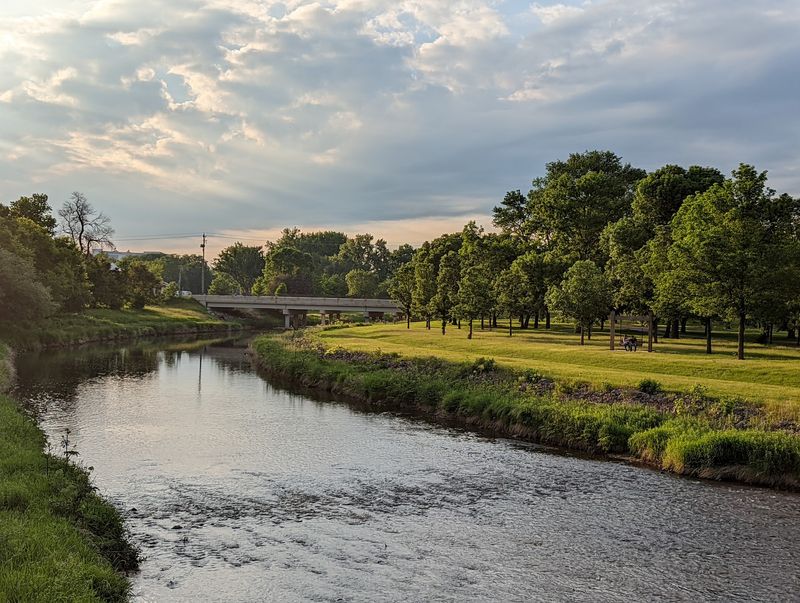
Fresh air is part of the treatment plan. The city maintains more than 100 parks and roughly 85 miles of bike trails.
Silver Lake Park draws walkers, cyclists, and wildlife watchers throughout the year. Geese are practically permanent residents there.
Quarry Hill Nature Center covers over 300 acres on the eastern side of town. Hiking trails wind past a pond and up through wooded slopes.
The real curiosity sits underground. A historical man-made sandstone cave gives the park an unusual attraction that kids talk about for weeks.
Inside the nature center, native animals are on display along with hands-on exhibits. Rainy afternoons find a purpose here.
Trail connections make it possible to reach green space directly from downtown by bike. Rental options exist, though availability changes seasonally.
Autumn colors along the Zumbro River corridor are worth timing a trip around.
Winter shifts the mood toward snowshoes and quiet paths.
For families spending long stretches in town, these parks provide relief that no waiting room can match. Nature and medicine share this city comfortably.