
This New York Apple Orchard Was Just Voted The Best In America
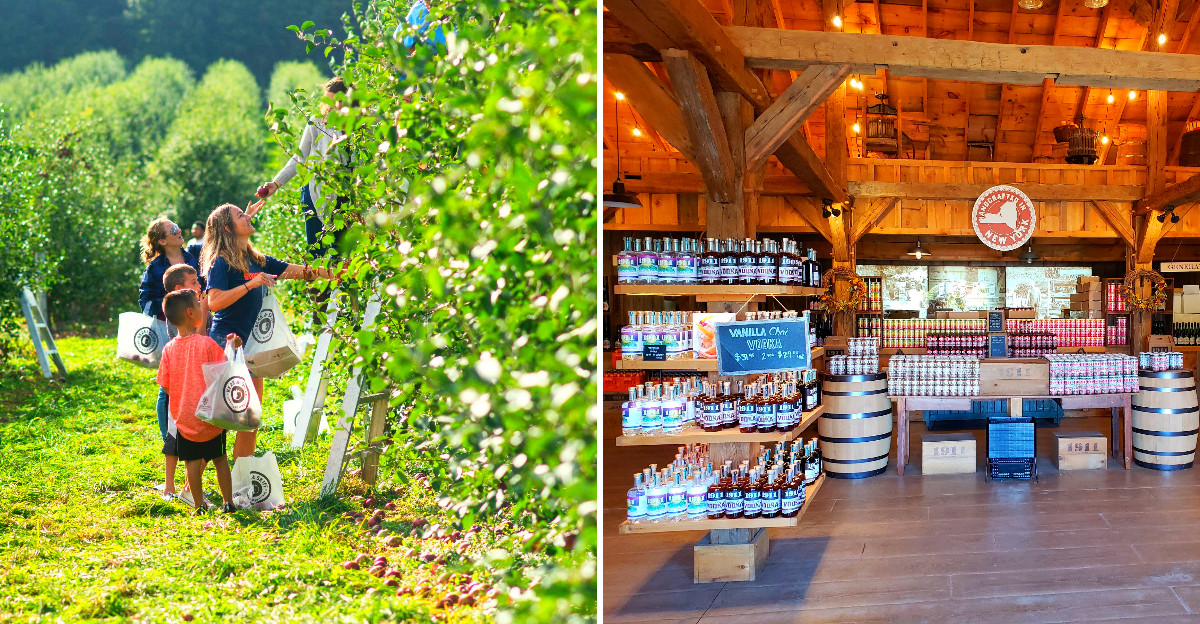
I get suspicious when any orchard is called the best in America. Apple season inspires strong opinions, and New York has enough great farms to make that title a serious claim.
Yet one hillside orchard keeps landing at the top of the conversation, with USA Today 10Best readers naming it the country’s best more than once. That kind of repeat praise gets hard to ignore.
The appeal goes far beyond picking a bag of apples. Fruit has been growing here since 1911, and the farm has grown into the sort of place that can swallow most of an afternoon.
Families come for the harvest, then stay for everything built around it. By the time you leave, the orchard feels less like a quick fall stop and more like a seasonal tradition people plan around.
The Hilltop Farm That Keeps Winning National Titles
Certain places earn their reputation slowly, one season at a time. A sprawling orchard in central New York has done exactly that, collecting the title of best apple orchard in America from USA Today 10Best readers in 2015, 2017, 2020, and 2021.
In 2025 it landed fifth nationally, which still puts it in rare company.
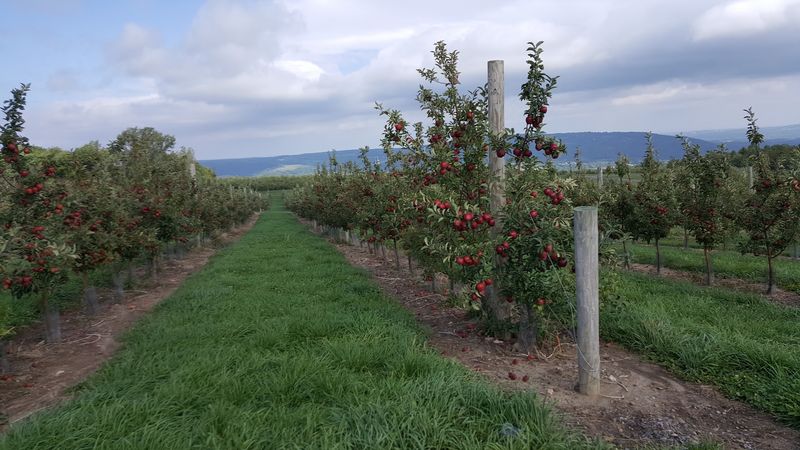
What makes the win believable is the scale. More than 300,000 apple trees cover the property, spreading across a hillside that gives visitors a view stretching for miles.
On clear fall days the valleys below turn amber and rust, and the air carries that sweet, slightly tart smell of ripe fruit.
Families come for picking. Music fans come for concerts.
Others come simply to eat a warm donut and stare at the horizon.
The mix works because nothing feels forced. A working farm sits at the center, and everything else grew around it over decades.
Few agritourism spots in the state manage that balance so gracefully, and fewer still keep people coming back through every month of the year, not only October.
Meet Beak & Skiff Apple Hill Campus In Lafayette
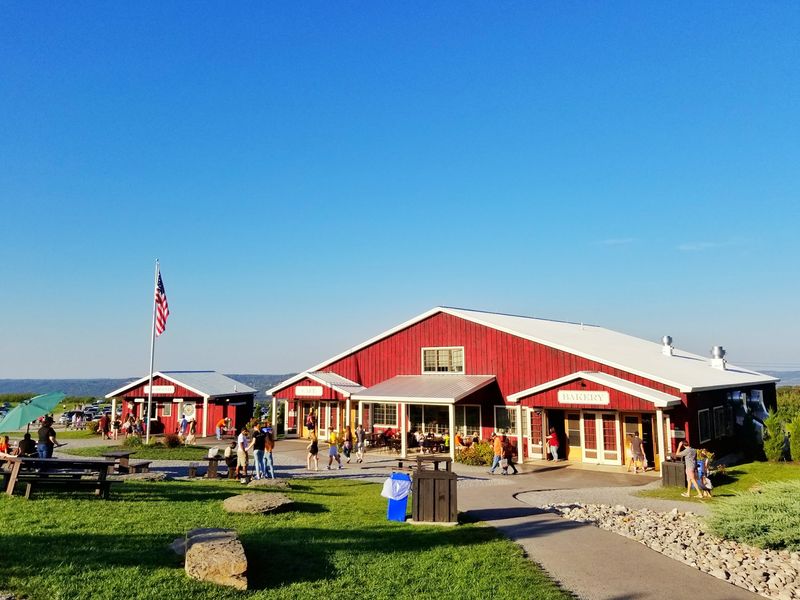
The name behind all this praise is Beak & Skiff Apple Hill Campus, home of the 1911 Tasting Room. You will find it at 2708 Lords Hill Rd in Lafayette, NY 13084, set among the rolling hills and valleys near Route 20, roughly twenty five minutes outside Syracuse.
The drive alone earns points. Country roads wind past farmland and open fields, and the final climb rewards you with one of the highest vantage points in Onondaga County.
Once you park, the layout makes sense quickly. A central plaza anchors the campus, with shops and buildings arranged around it and paved pathways linking everything together.
ADA compliant restrooms are available, which matters when you are traveling with grandparents or strollers.
Two farming families started the operation back in 1911, one raising onions and the other running dairy. Their partnership turned into an apple business that is still family owned, now in its fifth generation.
That continuity shows. The campus has grown enormously, yet the original purpose, growing good apples on good land, never got shoved aside.
A Century Of Apples, Told In Chapters
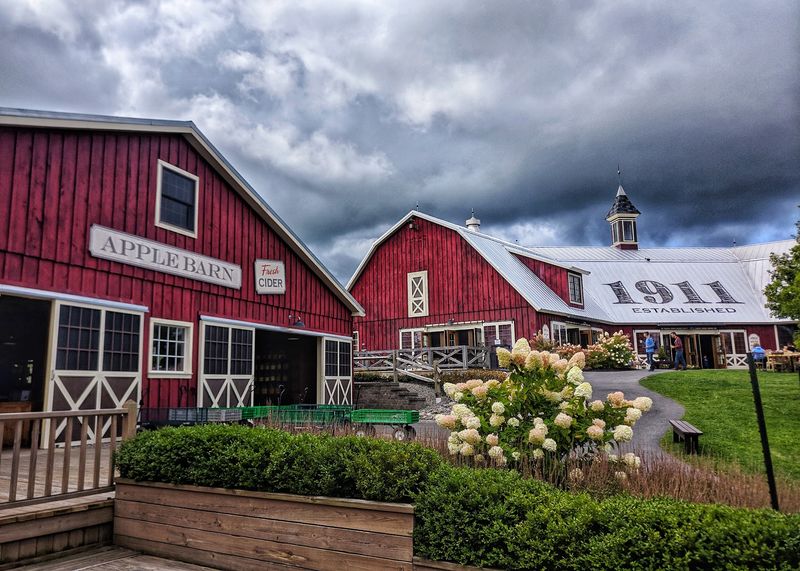
History here reads like a family scrapbook with very good chapters. The farm began in 1911 as a wholesale apple producer, sending fruit out to markets rather than welcoming visitors in.
Then came 1975, when the pick your own orchard opened and the public finally got to wander the rows. Cider production followed in 1979, adding another reason to stop by.
The 2000s and 2010s brought more change, with hard ciders and craft spirits joining the lineup. A major renovation in 2013 reshaped the Apple Hill Campus into the agritourism destination people know today.
Apples have been grown continuously on this land for well over a century, which is genuinely uncommon in American farming. Plenty of orchards from that era faded away or sold off their acreage.
Instead of standing still, each generation added something new without erasing what came before. The result feels layered rather than patched together.
Fun detail worth knowing: the 1911 brand name is a direct nod to that founding year, so every label doubles as a small history lesson.
Picking Your Own Among 300,000 Trees
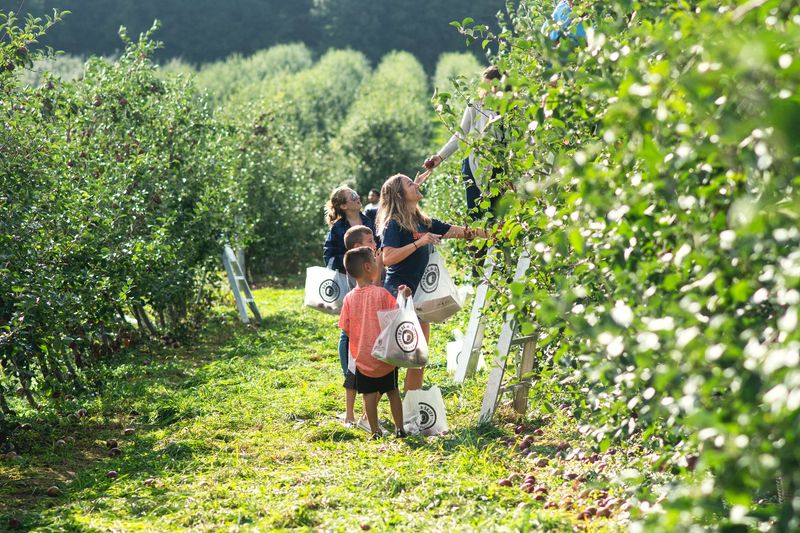
Nothing quite matches the snap of an apple pulled straight off the branch. Picking season generally runs from late August through late October, with the pick your own area open daily during that stretch from 10 am to 5 pm.
Wagon rides carry guests out to the rows, which saves a long walk and doubles as part of the fun. Kids tend to treat the ride as the main event.
Variety is the real draw. With over 300,000 trees on the property, the selection shifts through the season, so an early September visit yields different fruit than a late October one.
A few practical tips help. Wear shoes you do not mind getting muddy, bring a reusable bag for the walk back, and check what varieties are ripe before you go.
Weekends fill up fast, especially once foliage peaks across New York. Arriving close to opening usually means shorter lines and calmer orchard rows.
Pick low, pick high, and taste one before you commit to a full bushel.
Donuts, Fritters, And Bakery Perfume
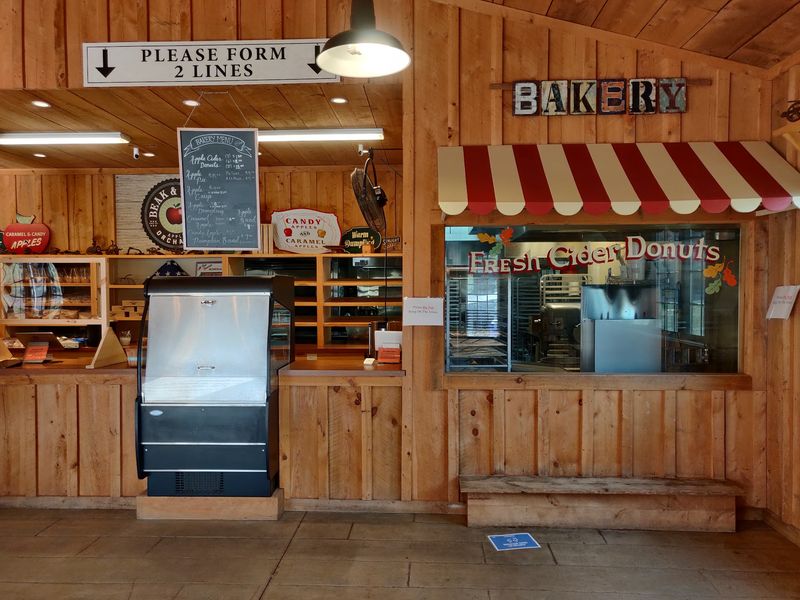
Ask anyone what they remember most and the answer usually involves sugar. The bakery turns out apple cider donuts that arrive warm, dusted in cinnamon sugar, and gone within about ninety seconds of purchase.
Apple fritters deserve equal billing. Craggy on the outside, soft and fruit studded inside, they are the kind of thing you buy one of and immediately regret not buying three.
The smell alone does half the marketing. Fried dough and cinnamon drift across the plaza, and resistance is mostly theoretical.
Beyond the fried goods, the bakery stocks pies, pastries, and seasonal treats that travel well if you can keep your hands off them during the drive home. Buying an extra box is simply good planning.
Pair a donut with fresh sweet cider for the full effect. The combination is a central New York autumn tradition that needs no updating.
Timing tip: mornings usually mean the freshest batches and the shortest wait. By mid afternoon on a fall Saturday, that line stretches considerably longer.
Inside The 1911 Tasting Room
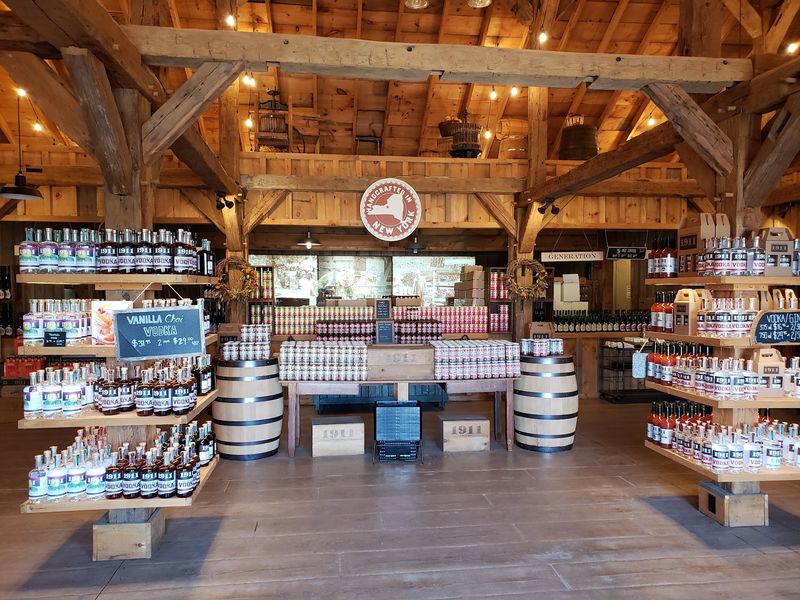
Cider gets serious attention on this hill. The 1911 Tasting Room pours a rotating lineup of ciders on tap, with plenty of additional flavors available in cans to take home.
Flights make sampling easy, letting you compare a crisp, dry pour against something rounder and sweeter without committing to a full glass. Staff are happy to explain what sets each one apart.
The room itself is bright and welcoming, with big windows framing the orchard views that make this campus famous. Seating is roomy rather than cramped.
A nice touch: guests can bring food over from the tavern and enjoy it in the tasting room, so nobody has to choose between a snack and a seat. Families are welcome, and kids are part of the crowd.
Bottles and cans line the shelves for anyone wanting to carry the flavors home. Gift boxes work well for holidays.
Visit on a weekday afternoon if you prefer elbow room. Weekends bring a livelier buzz and a fuller house.
Apple Grove Adventure Park Turns Kids Loose
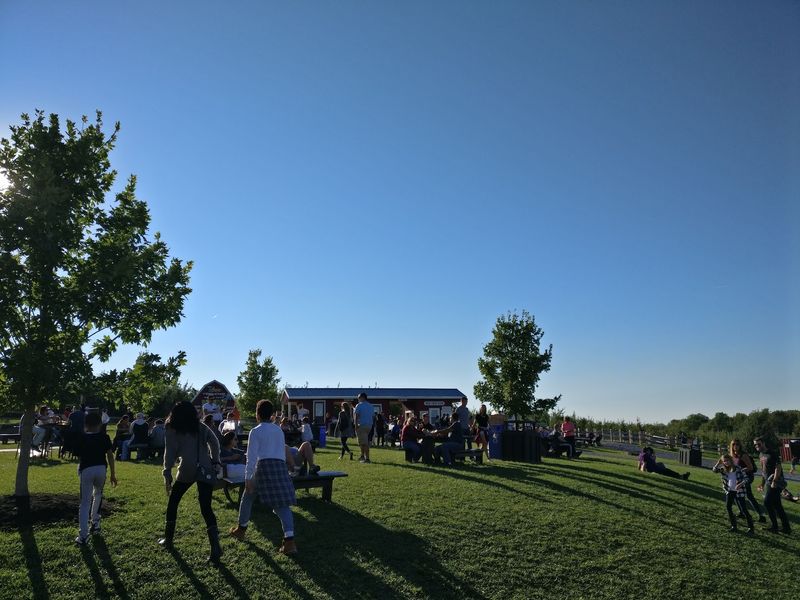
Parents, take note. The Apple Grove Adventure Park covers six acres and exists mainly so children can burn off every last bit of energy before the ride home.
Highlights include a mountain slide, a zip line, and jump pillows that bounce with impressive enthusiasm. Inflatable pads and several playgrounds fill out the space.
There is also an animal petting zoo, which tends to be the favorite for younger visitors who prefer goats to gravity. Expect plenty of photo opportunities.
The area is newer than much of the campus, part of ongoing expansion that has widened what a visit can include. It works especially well for families with kids of mixed ages, since the attractions span different comfort levels.
Paved pathways connect the park to the rest of the campus, making the walk manageable with strollers or wagons.
Plan for at least an hour here, and bring water. Adults get a bench, a view, and a moment to breathe while the kids handle the sprinting.
Live Music Under Open Sky
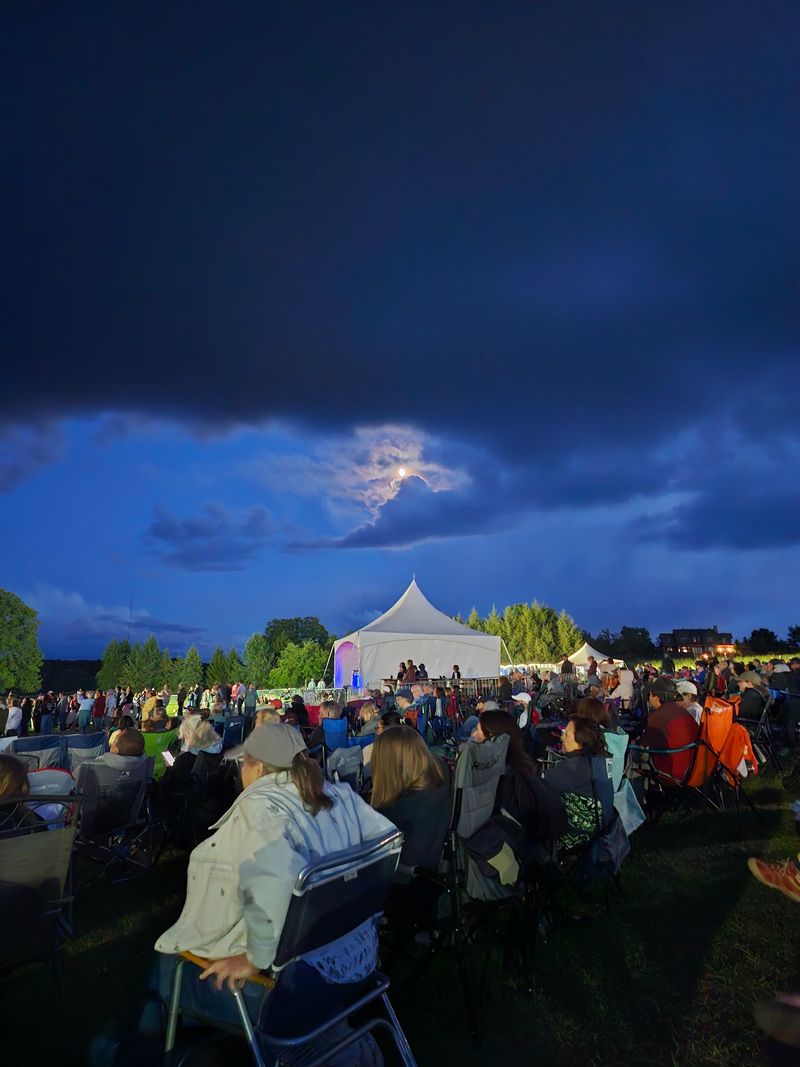
Summer changes the mood entirely. A concert venue adjacent to the campus holds up to 4,000 people, and the lawn fills with blankets, folding chairs, and music fans from across the region.
The setting does a lot of heavy lifting. Rolling orchard hills serve as the backdrop, and sunsets over the valley have a way of making even a familiar song land differently.
Layout is thoughtful. General admission still puts you reasonably close to the stage, and food options, merch tents, and restrooms are spread out enough to keep lines moving.
Guests may bring their own lawn chairs, which is a small courtesy that makes a long evening far more comfortable. Arrive early to claim a good patch of grass.
Beyond ticketed shows, the grounds have hosted larger community gatherings and festivals, drawing crowds who might never have visited during picking season.
Bring a light jacket. Hilltops in New York cool off quickly once the sun drops behind the ridgeline.
Planning A Visit That Actually Works
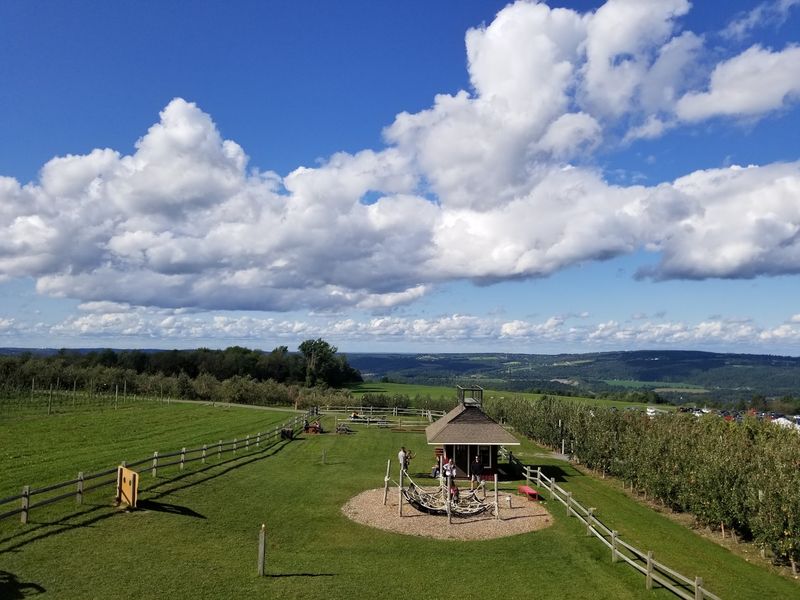
Good news for anyone who missed apple season: the campus operates year round, not only in autumn. Buildings and attractions shift with the calendar, so the experience in February looks different from the one in September.
The Cafe runs Monday through Wednesday from 10 am to 6 pm, then Thursday through Sunday from 10 am to 8 pm. Extended hours generally land Thursday through Sunday across the campus.
A general store, bakery, cafe, and tavern give visitors plenty to browse and taste, even when the trees are bare. Offseason visits tend to be calmer and easier to navigate.
Check the schedule before driving out, since seasonal attractions open and close at different points in the year. A quick look saves disappointment.
Comfortable shoes help, and so does allowing more time than you think you need. Most people arrive planning an hour and stay for three.
Views from this hilltop reward slow wandering. Grab something warm, find a spot facing the valley, and let central New York show off for a while.