
This New York Nature Park Has The Largest Marble Cave Entrance In The Eastern United States
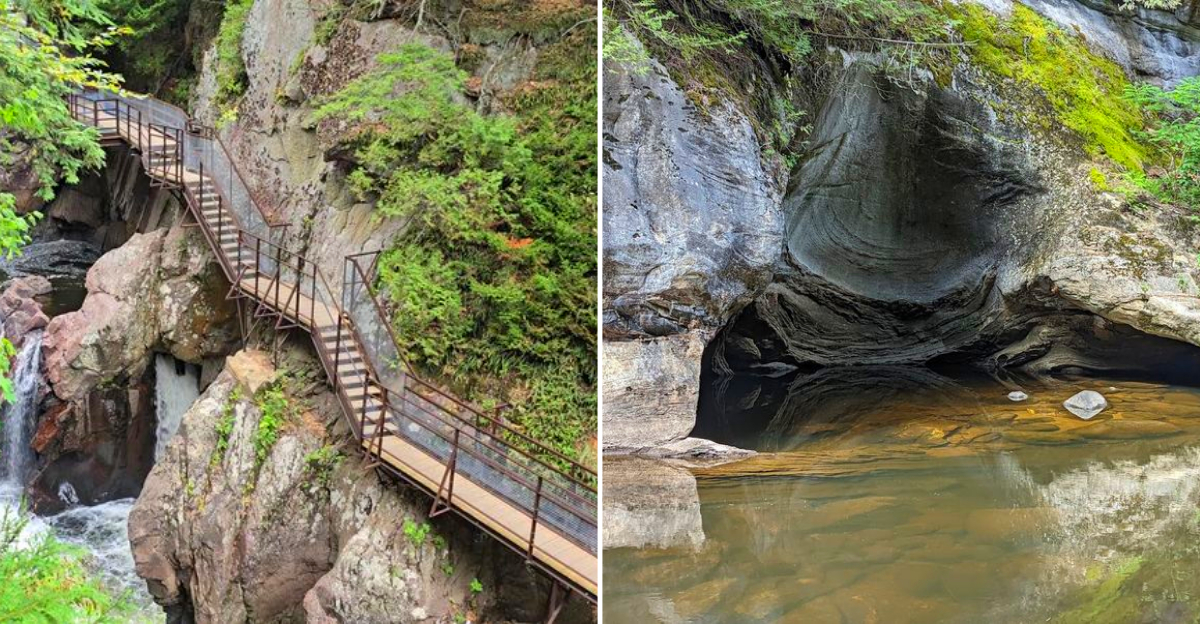
Unbelievable. 1.2 billion years old crystalline marble. The largest cave entrance of its kind on the entire eastern seaboard. New York has been sitting on that geological résumé in the Adirondack foothills without making nearly enough noise about it.
The scale is what gets people first. Mid-step, before anyone has consulted a single informational placard, the entrance does something to a person’s sense of proportion that no photograph has ever fully prepared them for.
Then they notice the underground river carving through the rock below, and the proportion problem gets considerably worse in the best possible way. Feeling genuinely small is an underrated experience in a world that rarely offers it honestly.
This park delivers it without effort, the way anything 1.2 billion years old tends to deliver perspective, quietly and completely and all at once. The Adirondack foothills have been keeping this one close for a very long time. It was always going to be worth the trip.
A Geological Wonder That Rewrites Your Sense Of Time
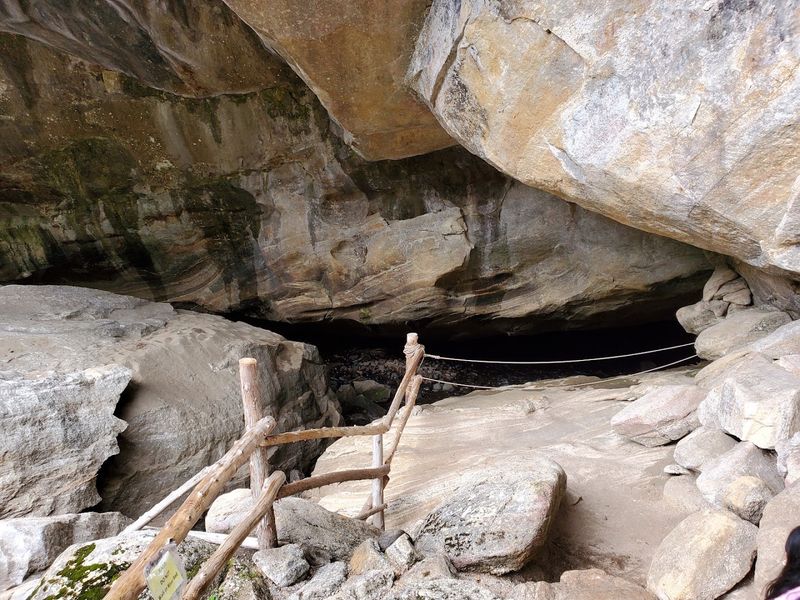
Few places on Earth can make you feel the full weight of deep time the way a billion-year-old rock wall can. The bedrock at this park is composed of crystalline marble that formed roughly 1.2 billion years ago under extraordinary heat and pressure far beneath the Earth’s surface.
That is older than most life forms we know of today.
What makes it even more fascinating is the contrast in ages. The cave system carved into that ancient marble is comparatively young, having formed between 10,000 and 14,000 years ago during the last ice age.
Acidic floodwaters from melting glaciers dissolved passages through the marble at a remarkable pace. That process differs significantly from how most limestone caves form, which tend to develop over millions of years.
The result is a dramatic marble gorge full of potholes, grottos, underground waterfalls, and whirlpools. An underground river called Trout Brook is responsible for much of that sculpting.
Standing at the edge of the gorge and watching the water move through stone shaped by glacial floods is genuinely breathtaking. New York has no shortage of natural beauty, but this particular corner of the Adirondacks plays by its own geological rules.
Natural Stone Bridge And Caves: The Park That Has It All
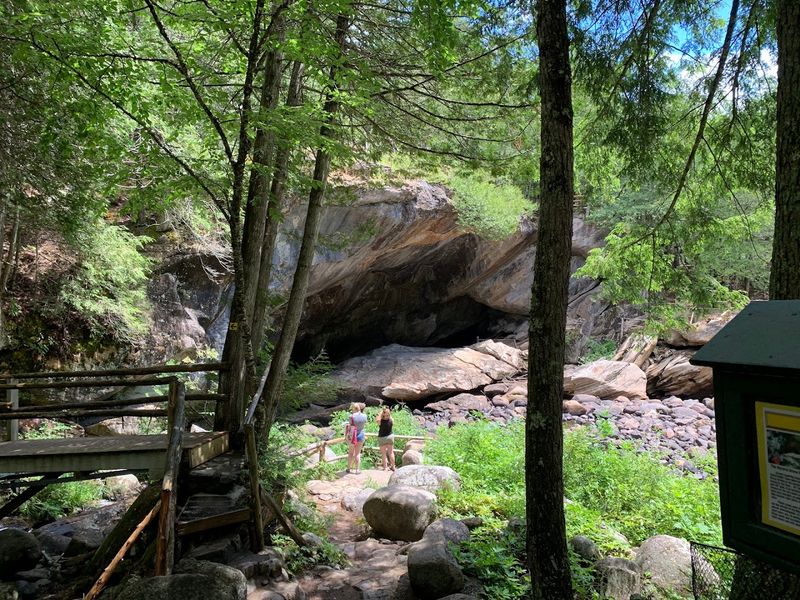
Natural Stone Bridge and Caves sits at 535 Stone Bridge Rd, Pottersville, NY 12860, and it has been drawing curious visitors for well over two centuries. The park is open daily from 9 AM to 5 PM, making it an easy day trip from Lake George or the surrounding Adirondack region.
The moment you arrive, the rock shop greets you with geodes, crystals, fossils, and more.
The property has a remarkable backstory. It has been owned continuously by the same family for more than 200 years.
Descendants of Jacob Van Benthuysen, who received the land as recognition for his Revolutionary War service in the 1700s, still manage the park today.
Early explorers called it Ponte de Dios, which translates to Bridge of God, and the site was documented in Morse’s Geography as far back as 1790.
The park is also an official Path Through History Site in New York, recognizing its cultural and geological significance. A 4.6-star rating speaks to how consistently the experience delivers.
Families, solo hikers, geology enthusiasts, and adventure seekers all find something here that speaks directly to them. The park’s phone number is (518) 494-2283 for those who want to plan ahead.
The Stone Bridge: Eastern America’s Crown Jewel Of Marble
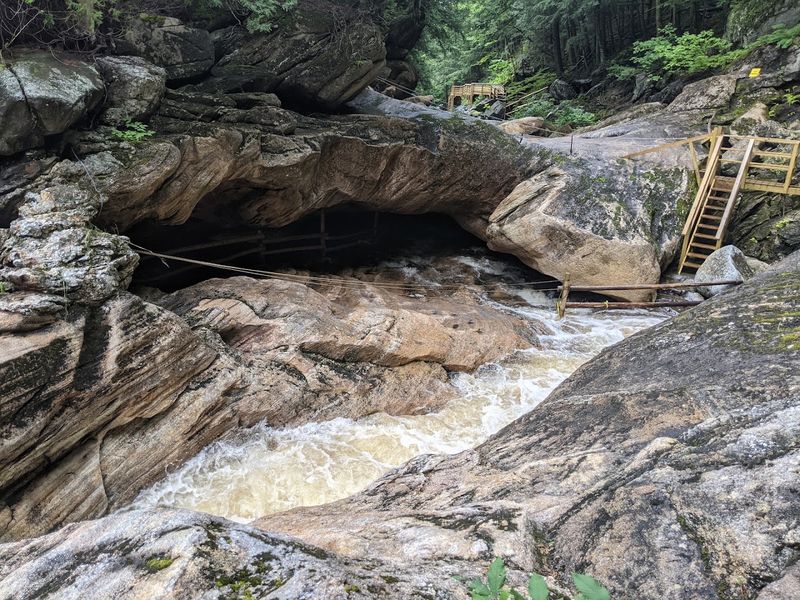
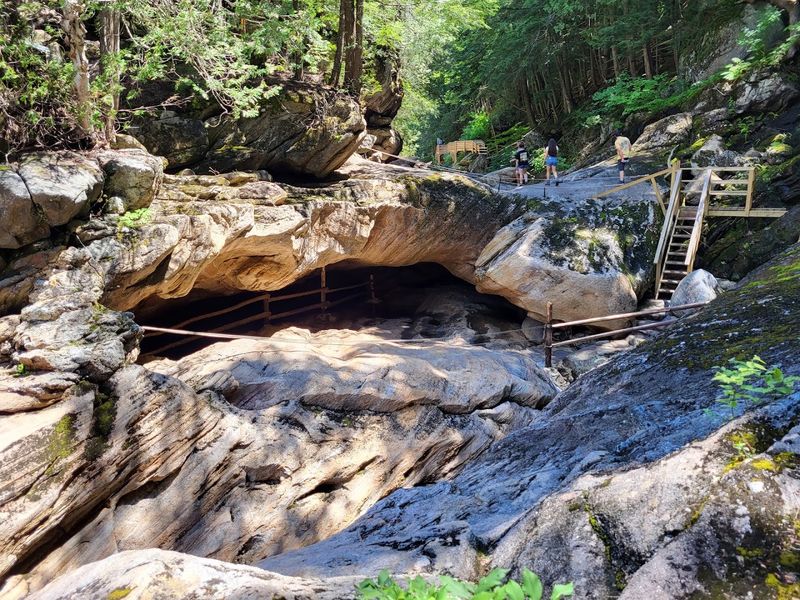
The centerpiece of the entire park is the Stone Bridge itself, and it earns every bit of the attention it receives. Measuring approximately 51 by 10 meters, it holds the title of the largest marble cave entrance in the eastern United States.
That is not a minor distinction. Nothing else east of the Mississippi comes close to matching that scale in marble.
Standing at the entrance and looking through is a genuinely jaw-dropping moment. The arch of ancient rock frames a view of rushing water and carved stone that feels almost theatrical, except it is entirely real and entirely natural.
Trout Brook flows through the base of the formation, adding sound and movement to an already striking scene.
Early explorers were clearly moved by the sight too, which is why they named it Ponte de Dios or Bridge of God. That name carries weight when you are standing in front of it.
The marble walls show layers of geological history that no museum exhibit could replicate. Visiting the Stone Bridge is one of those rare travel experiences where a photograph simply cannot do the subject justice.
You have to stand there and let the scale settle over you before it truly registers.
The Self-Guided Trail That Surprises Around Every Bend
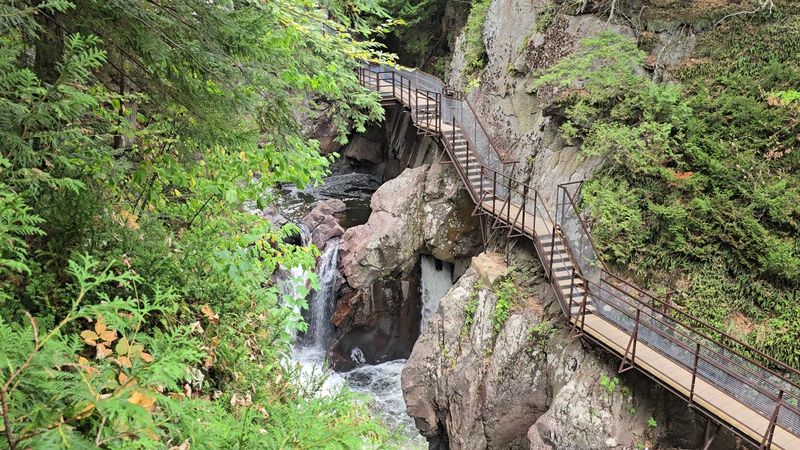
The self-guided nature trail at Natural Stone Bridge and Caves spans approximately 0.75 miles and moves through one of the most geologically rich landscapes in New York.
Rustic stone steps and gravel paths guide you along the marble gorge, past potholes, grottos, and waterfalls that appear almost without warning. Every turn brings something new into view.
Borrowing a walking stick from the trailhead is a smart move, especially if the ground is wet. The trail has some steep sections and uneven terrain, so solid footwear is a genuine necessity rather than a casual suggestion.
Informational signs posted along the route explain the geology and history of each formation, turning the hike into a moving classroom of sorts.
The trail typically takes between one and two hours depending on how much time you spend at each stop. Families with young children and older visitors with some mobility confidence have all completed it successfully.
The wooden boardwalk sections and well-maintained pathways make the experience accessible to a wide range of hikers. Photo opportunities appear constantly, from dramatic cave openings to peaceful riverside views.
Free walking sticks are available at the trailhead, which is a small but genuinely appreciated touch that sets the tone for the whole visit.
Named Caves Worth Knowing Before You Visit
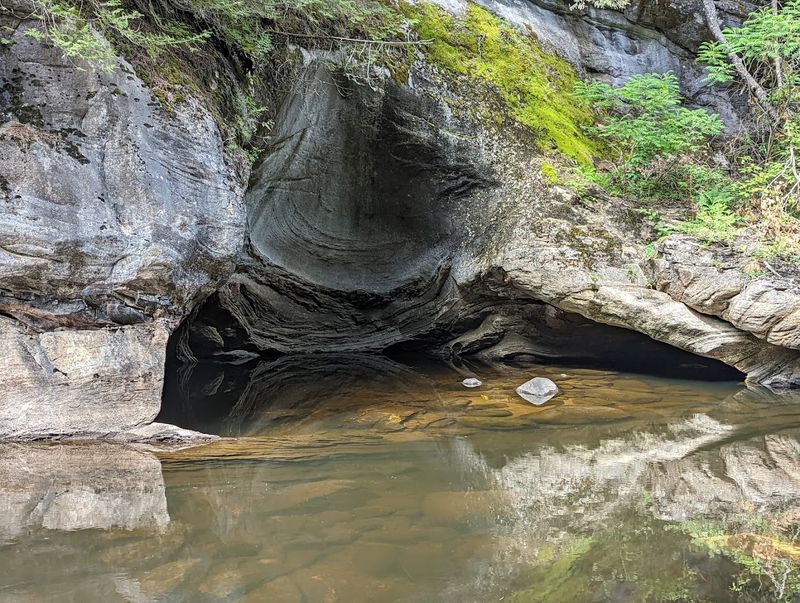
The cave system here is not just one big opening. Several distinct caves are accessible along the trail, each with its own personality and geological character.
Noisy Cave earns its name immediately with the roar of an underground waterfall that echoes through the marble walls. The sound alone makes it one of the most memorable stops on the trail.
Lost Pool Cave, Kelly’s Slide Cave, Echo Cave, and Peter Pan’s Peephole round out the accessible formations. Each one offers a slightly different experience in terms of scale, sound, and light.
Echo Cave plays with sound in ways that genuinely surprise first-time visitors, while Kelly’s Slide Cave has a more intimate feel compared to the grand openings elsewhere on the trail.
The lighted sections inside certain caves allow for close-up views of the marble walls and carved formations without requiring any special equipment. Guided Adventure Tours go deeper into the system, including a passage through Garnet Cave that involves crawling and a cave float.
Those tours last three to four hours and are ideal for visitors who want a more immersive experience beyond the standard trail. Booking in advance is recommended for the spelunking options, as group sizes are limited by the cave passages themselves.
Winter At The Park Is A Whole Different World
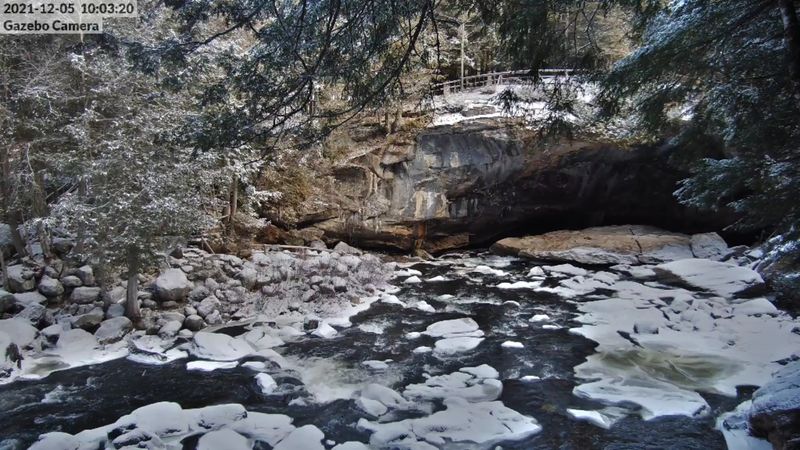
Most people think of caves and hiking trails as warm-weather pursuits, but Natural Stone Bridge and Caves transforms into something genuinely magical when the temperature drops.
Over 14 miles of snowshoeing trails open up across the property, offering a completely different perspective on the landscape that most summer visitors never get to experience.
The frozen waterfall formations beneath the Stone Bridge are a particular draw during the colder months. Ice builds up in elaborate patterns along the marble walls and cave openings, creating formations that look almost architectural.
The underground river keeps moving beneath the ice, adding a layer of sound and motion to an otherwise still winter scene.
A fire pit area on the property gives cold visitors a warm place to gather after hitting the trails, which is a practical and genuinely welcome amenity in the Adirondack winter.
The snowshoeing trails are well-mapped and clearly marked, so even first-timers can navigate them with confidence.
Prices remain reasonable through the winter season, making it an accessible cold-weather outing for families and couples alike.
The park operates year-round, and the winter version of the experience has its own loyal following among visitors who return specifically for the ice formations and the quiet that comes with an off-season visit.
Family Activities That Go Beyond The Trail
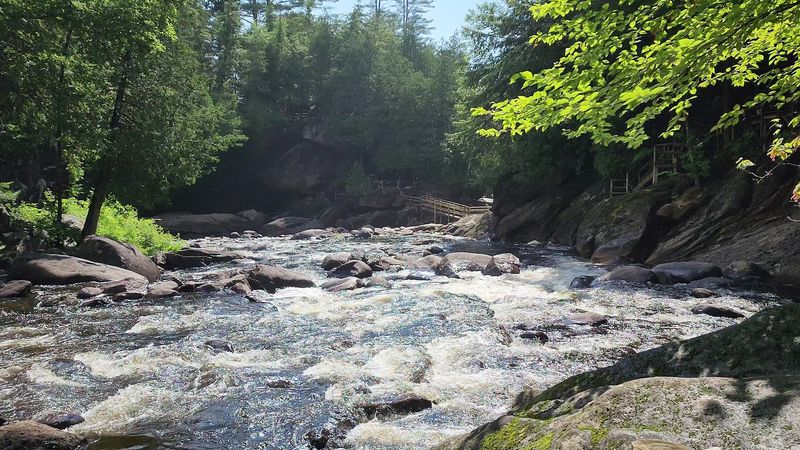
The trail and caves are the main draw, but the park has layered in a surprising number of additional activities that extend a visit well beyond two hours.
An 18-hole disc golf course winds through the property, offering a fun and low-key option for visitors who want to mix sport with scenery.
Bouldering walls provide a physical challenge for those who prefer climbing to walking.
A DinoDig activity gives younger visitors a chance to excavate replica fossils from a sand pit, which pairs perfectly with the geological storytelling happening throughout the rest of the park.
Fish feeding is another simple but genuinely enjoyable activity that tends to captivate children of all ages.
The combination of active and educational offerings means the park functions as a full-day destination rather than a quick stop.
Parking is plentiful and clean restrooms are available on site, which matters more than people admit when planning a full-day family outing. A small snack shack covers basic refreshments, so packing your own food is a good idea if you plan to stay for several hours.
The overall layout of the park is thoughtful, with activities spread across the property in a way that encourages exploration rather than crowding everyone into one spot at the same time.
Planning Your Visit To Get The Most Out Of It
Getting the most out of Natural Stone Bridge and Caves comes down to a few practical decisions made before you leave home.
The park opens daily at 9 AM and closes at 5 PM, so arriving early gives you the best chance of a relaxed experience before the trails get busy on peak weekend days.
Weekday visits in September have a notably peaceful quality compared to summer Saturdays.
Tickets can be booked in advance online with a time slot reserved 24 hours ahead, or you can walk in and purchase at the gift shop. Adult tickets run around $20 and children up to age 12 are approximately $10.
The guided Adventure Tours require separate booking and should be arranged in advance given the limited group sizes involved.
Solid footwear with good grip is non-negotiable. The caves are consistently humid and the stone steps can be slippery after rain.
Free walking sticks at the trailhead are available and genuinely useful on the steeper sections. The park sits near Lake George in New York’s Adirondack region, making it a natural addition to any broader trip through the area.
Allow two to five hours depending on how many activities you plan to take on. The park rewards those who slow down and actually read the interpretive signs along the route.