
This North Carolina Lake Covers Lost Towns Where Ghostly Streets Still Reappear Today
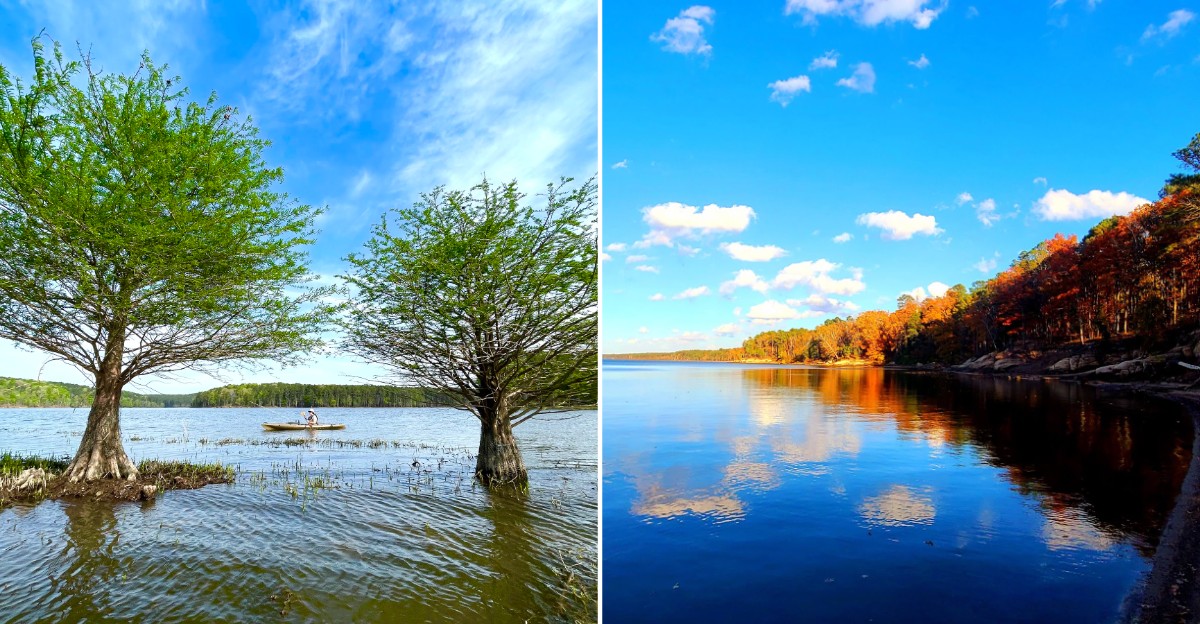
Every lake has a surface story, but this one has a second story waiting underneath. North Carolina has a lake built over towns that people left behind when the water rose.
In dry seasons, the shoreline pulls back, and old foundations push up through the mud. Faint outlines of streets appear where cars once passed.
Stone steps lead down to nothing. Locals tell stories about church bells and front porches that now sit beneath the boats.
Anglers drift above rooftops they will never see. Photographers wait for the low-water months, hoping to catch a road emerging from the shallows.
Some details of the old towns shift depending on who is telling the tale. This lake proved that a place can disappear under the water and still refuse to be forgotten.
A Valley That Lived Long Before The Water
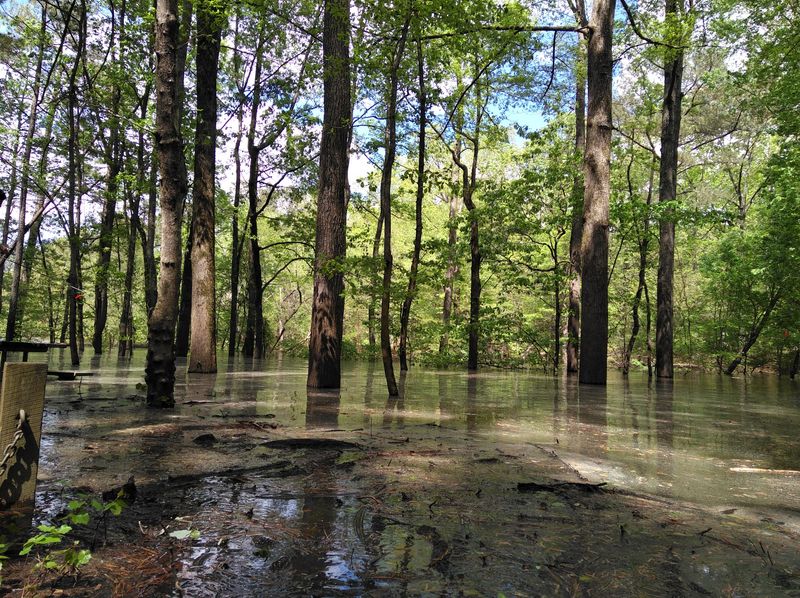
Ten thousand years is a long time to call a place home. Native peoples lived in the New Hope Valley for about that long, hunting, fishing, and farming along the creeks.
Archaeologists later found tools and artifacts here that go back to those earliest days. That means the ground under Jordan Lake holds one of the oldest stories in North Carolina.
Fast forward to the 1740s, and Scottish Highlanders started showing up. They cleared fields, built homes, and raised families in the rich valley soil.
Over time, churches and general stores popped up, and small communities took shape.
The valley even had ties to the Revolutionary War and the Civil War. Soldiers, farmers, and travelers all passed through these hills.
It was a busy, living place, not some empty patch of land waiting for a lake.
So how did all of that end up underwater? Blame it on a storm.
In 1945, a powerful hurricane caused major flooding downstream in the Cape Fear River Basin. Leaders decided the area needed a dam to control future floods and store drinking water.
Years of planning followed, and the B. Everett Jordan Dam was built.
The lake slowly filled between 1981 and 1983, covering the old valley for good. Today, the main entrance to Jordan Lake State Recreation Area sits at 280 State Park Road, Apex, NC 27523.
The Lost Towns Beneath The Surface
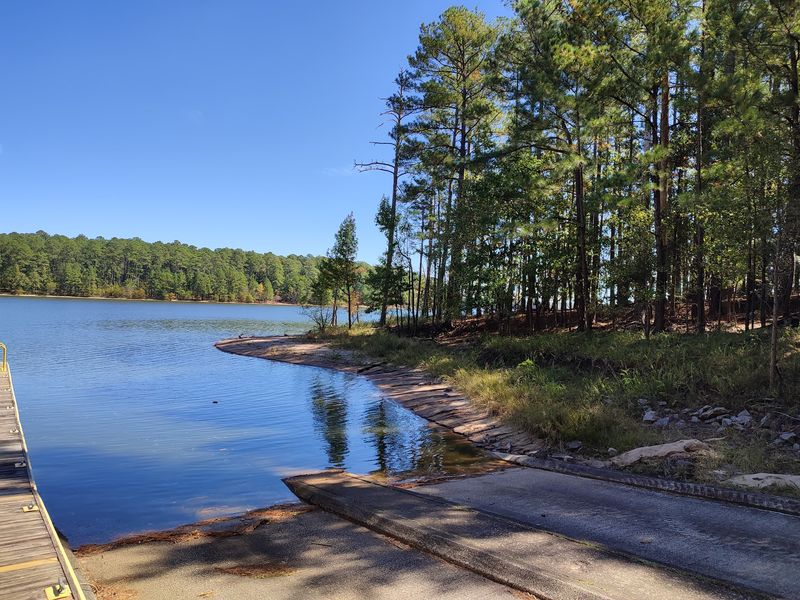
Seaforth, Farrington, Pea Ridge, and Friendship sound like names from a storybook. They were real places, though, with real neighbors, kitchens, and Sunday dinners.
When the government bought land for the lake, families had to pack up and leave. Some had farmed the same fields for generations.
Imagine telling your great grandpa his favorite fishing hole is about to become the deep end.
Friendship stands out from the bunch. After the Civil War, Black and white families lived side by side there.
That made it one of the first integrated communities in the region, which was rare for the time.
Losing a place like that hurts especially. It was more than houses.
It was proof that people could build something together during a hard chapter in history.
Seaforth did not vanish completely from memory, either. Its name lives on in the Seaforth access area, where people now swim and launch boats.
It is a little strange to splash around a beach named after a town sitting somewhere nearby under the water.
Here is a helpful tip for history fans. Before visiting, look up old maps of the New Hope Valley online.
Comparing them with the modern shoreline turns a regular lake day into a treasure hunt, minus the shovel and the pirate hat.
Ghostly Streets That Rise In A Drought
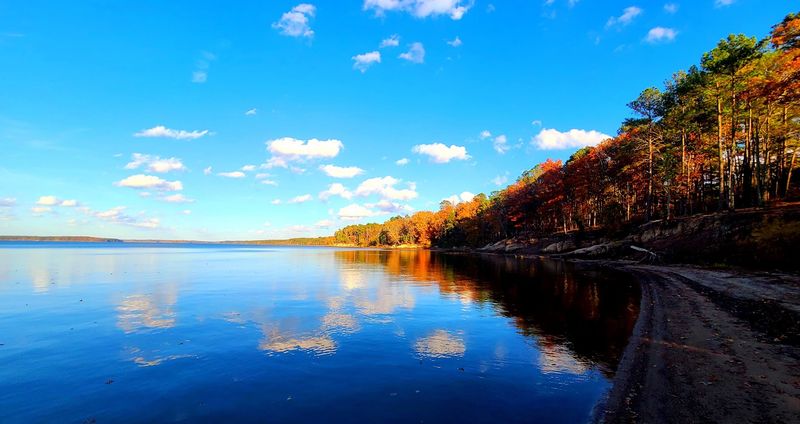
Mother Nature has a funny way of spilling secrets. When rain stays away for a long stretch, Jordan Lake shrinks, and the old valley floor starts showing up.
This happened in 2018, and again in a much bigger way in 2023. Suddenly, the lakebed looked less like a lake and more like a map of the past.
Pieces of the original Highway 64 appeared, cracked and muddy but still clearly a road. Imagine strolling down a highway that has been underwater for forty years.
Cars used to zoom along there, and now fish do.
Foundations of farmhouses and general stores also popped up. People spotted railroad remnants and stone pathways too.
Scattered bits of pottery, glass, and metal lay around like crumbs from someone else’s life.
Some explorers even found large stone slabs. A few folks believe they might be remains of old cemeteries, which adds a chill to the whole scene.
Before anyone gets too excited, a quick word of advice. Exposed lakebeds can be slippery, soft, and surprisingly sticky.
Wear sturdy boots, watch your step, and never take artifacts home. Those pieces belong to the history of the valley, and leaving them in place lets the next curious visitor see them too.
Also, check lake level reports before heading out. A dry summer might bring the past back into view.
Echoes From Families Who Remember
Some history lives in books. Other history lives in grandparents who still remember the smell of their family’s barn.
When the water dropped and old foundations appeared, descendants of valley families came to look. For some, it was the first time seeing where their relatives once lived.
Standing on that ground must feel like opening an old photo album you never knew existed.
The lake did important work, no question. It helps control floods and supplies drinking water to lots of people in the area.
Still, that progress came with a cost for the families who gave up their land.
Both truths can sit side by side. A place can be useful and a little bit sad at the same time.
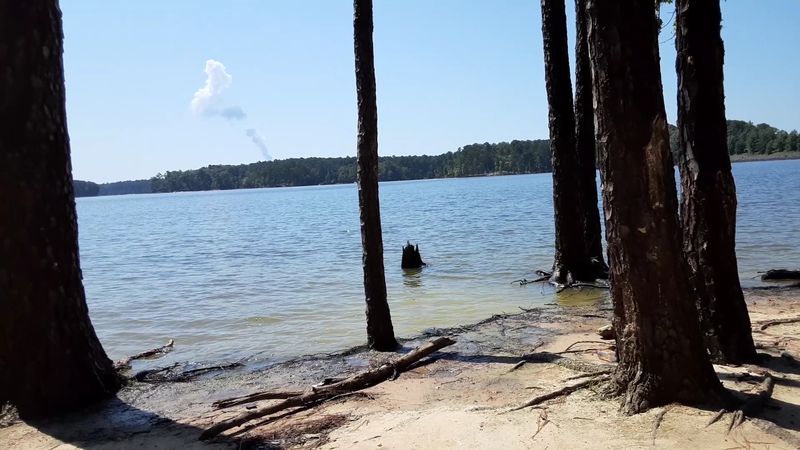
The quiet mood around the receding shoreline matches that feeling. Bare tree stumps, empty roadbeds, and the soft sound of water create a calm, thoughtful space.
It is less a haunted house and more a gentle reminder.
If you visit when history is showing, slow down. Read up on the old communities first, and treat the area with respect.
Think of it like visiting someone’s old neighborhood, because that is exactly what it is.
Bringing kids along? Turn it into a conversation about change, home, and how towns grow and disappear.
They might ask better questions than the grown-ups.
Bald Eagles Rule The Summer Skies
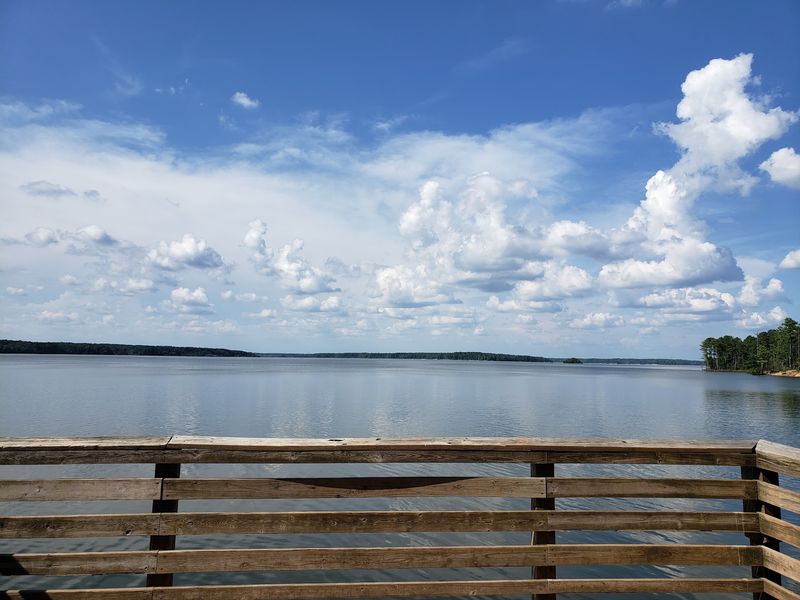
Forget ghosts for a minute, because the real celebrities here have feathers. Jordan Lake hosts one of the largest summer bald eagle populations in the eastern United States.
That is a big deal. Not long ago, bald eagles were in serious trouble across the country.
Seeing so many hanging out in one place feels like a comeback story with wings.
The best way to spot them is from an observation platform. Martha’s Chapel Wildlife Observation Platform is a favorite choice for eagle watchers.
Bring binoculars, a little patience, and maybe a snack to keep yourself from getting cranky.
Eagles are not the only flyers worth looking for. Ospreys dive for fish, and hawks circle high above the trees.
Great blue herons stand in the shallows like statues who forgot how to move.
Here is a fun fact to share with friends. Ospreys can dive feet first into water to snag fish, then shake off like wet dogs midair.
Bald eagles sometimes steal those fish right out of their talons, which is pretty rude for a national symbol.
Early mornings and evenings tend to be the most active times for birds. Dress in muted colors, keep your voice low, and stay a respectful distance from nests.
The birds were here first, after all, and they deserve their privacy.
Woods And Wetlands Full Of Surprises
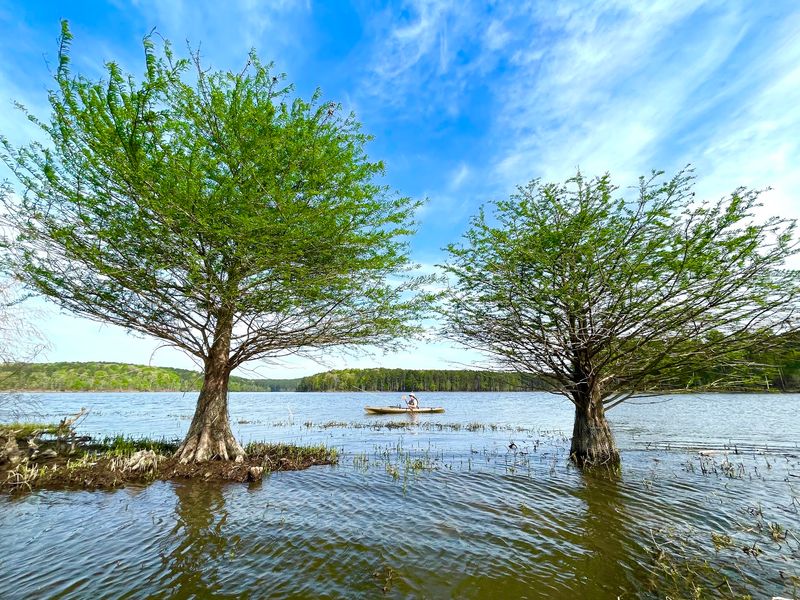
Picture a forest that throws a nonstop wildlife party. The land around Jordan Lake is a mix of Piedmont forest and wetlands, and lots of creatures RSVP yes.
Deer wander along the edges of the woods, especially near dawn. Songbirds chatter in the branches like they are gossiping about hikers.
At night, flying squirrels glide between trees, which is basically nature’s version of a zip line.
Beavers live here too, and they are busy little engineers. Look for chewed stumps with pointy tops near the water.
That is a sure sign a beaver has been working an overtime shift.
The whole area is part of the Cape Fear River basin. Water from these woods and creeks drains into the lake, then flows on toward the coast.
Healthy wetlands help filter that water and give animals safe places to live.
For hikers, the New Hope Trail is a solid pick. Combining sections makes a loop of a little over five miles.
Much of it hugs the shoreline, though trees often block the lake view, so think of it as a peaceful forest walk.
Pack bug spray in warmer months, and bring plenty of water. Wear shoes that can handle a bit of mud.
And if you see a snake, give it space and let it go about its day.
Fishing Spots Worth Bragging About
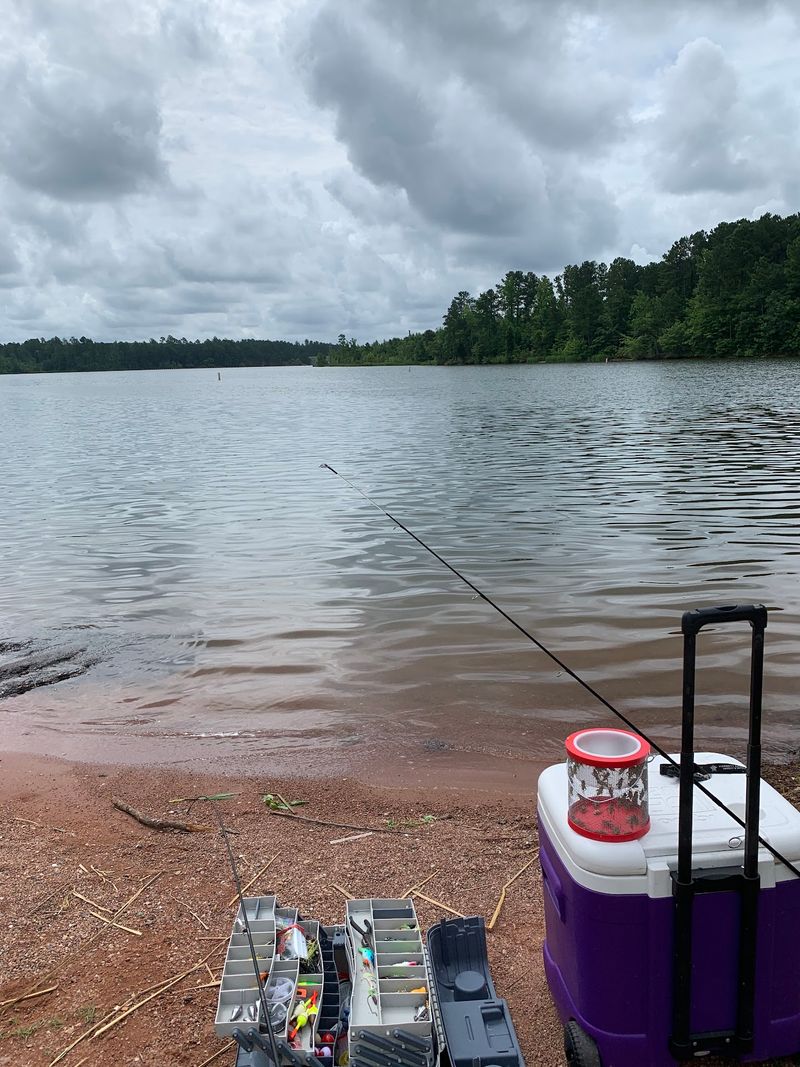
Every angler has a fish story, and Jordan Lake gives people plenty of material. The water holds largemouth bass, crappie, catfish, and white perch.
Largemouth bass are the showoffs of the lake. They fight hard, jump high, and make for great photos.
Crappie are a favorite too, especially for anyone who loves a steady bite.
Catfish tend to hang out near the bottom. They do not care about looking fancy.
They just want a good meal, which honestly makes them very relatable.
Here is a cool thought. Some of those fish may be swimming past old roads and foundations from the lost towns.
Your bass could literally be hiding behind a piece of history.
With about 13,940 acres of water and 180 miles of shoreline, there is room to spread out. Boat ramps make it easy to launch, while bank fishing works well for folks without a boat.
A few smart tips can help. Make sure you have a valid North Carolina fishing license before casting a line.
Try early mornings or late evenings, when fish are often more active. Check local rules on size and catch limits, too.
And remember the golden rule of fishing stories. The fish always gets a little bigger every time you tell it.
That is just tradition.
Beaches Campsites And Sunset Views
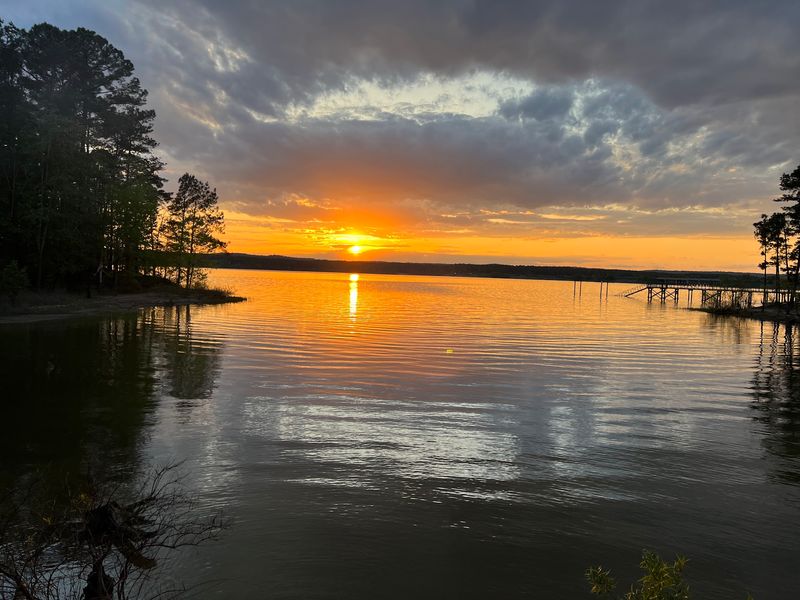
Who needs the ocean when a lake comes with sand? Jordan Lake has several swimming beaches, and on summer days they fill up with families, coolers, and beach umbrellas.
The Jordan Lake State Recreation Area includes nine access areas. Names like Crosswinds, Ebenezer Church, New Hope Overlook, Parker’s Creek, Seaforth, Vista Point, Robeson Creek, Poplar Point, and White Oak each offer something a bit different.
Many spots have picnic tables, grills, playgrounds, and volleyball areas. Kayaking, paddle boarding, and water skiing are all popular out on the water.
Basically, boredom does not stand a chance.
Camping is a huge draw, with over 1,000 campsites around the lake. Crosswinds Campground is well known for roomy sites separated by trees.
That means less staring into your neighbor’s tent.
Vista Point on the western shore is perfect for a quieter day. It has secluded coves and twisty exposed tree roots that photographers love.
Then there are the sunsets. The sky turns orange and pink over the water, and the whole lake seems to slow down.
Some folks even pick this moment for marriage proposals. A quick tip to finish. Weekends get busy, so weekdays offer more space and calm. Arrive early, pack sunscreen, and save some energy for that sunset finale.