
This Rhode Island Building Is Too Historic To Tear Down And Too Expensive To Fix
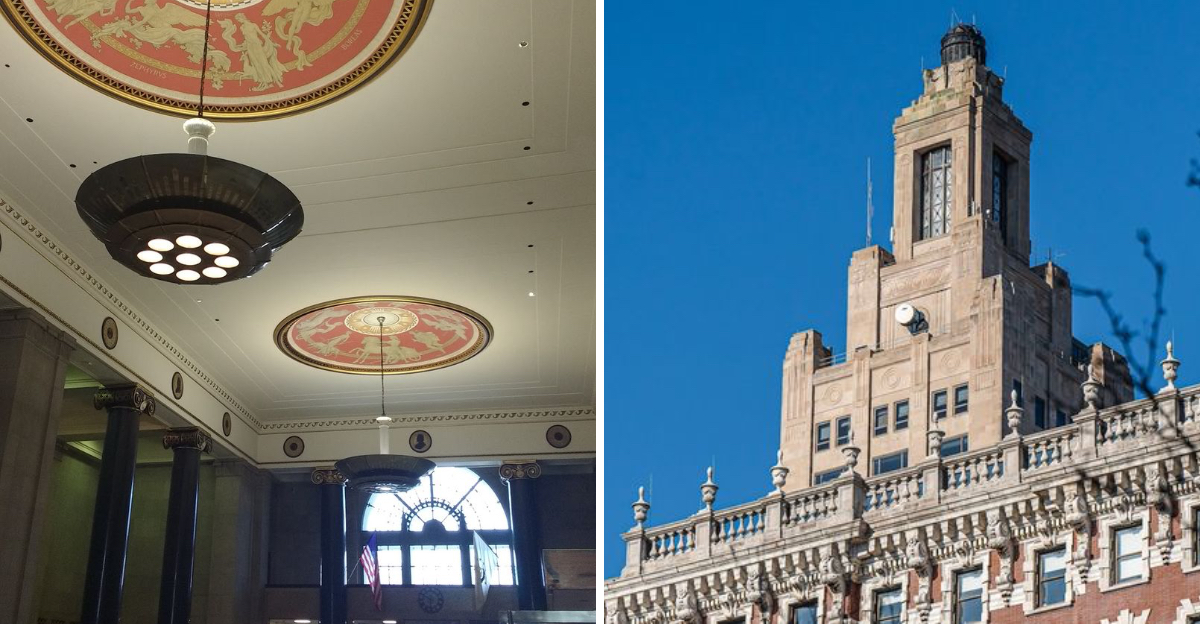
Too historic to tear down and too expensive to fix, one building has frozen a skyline in place. Rhode Island has watched this stalemate for over a decade, and nobody looks away.
Inside sits a banking hall built to dazzle, with a vault door heavy enough to anchor a ship. Falcons now nest near the top, undisturbed by the emptiness spreading through the floors below.
The repair bill has climbed past hundreds of millions, yet nobody has agreed to tear it down. Every plan gets floated, funded, and then quietly stalled again before anyone breaks ground.
Rhode Island keeps arguing about the tower’s future while it just keeps watching over downtown. Next time you’re nearby, look up before you decide what you think.
The Tower That Owns The Providence Skyline
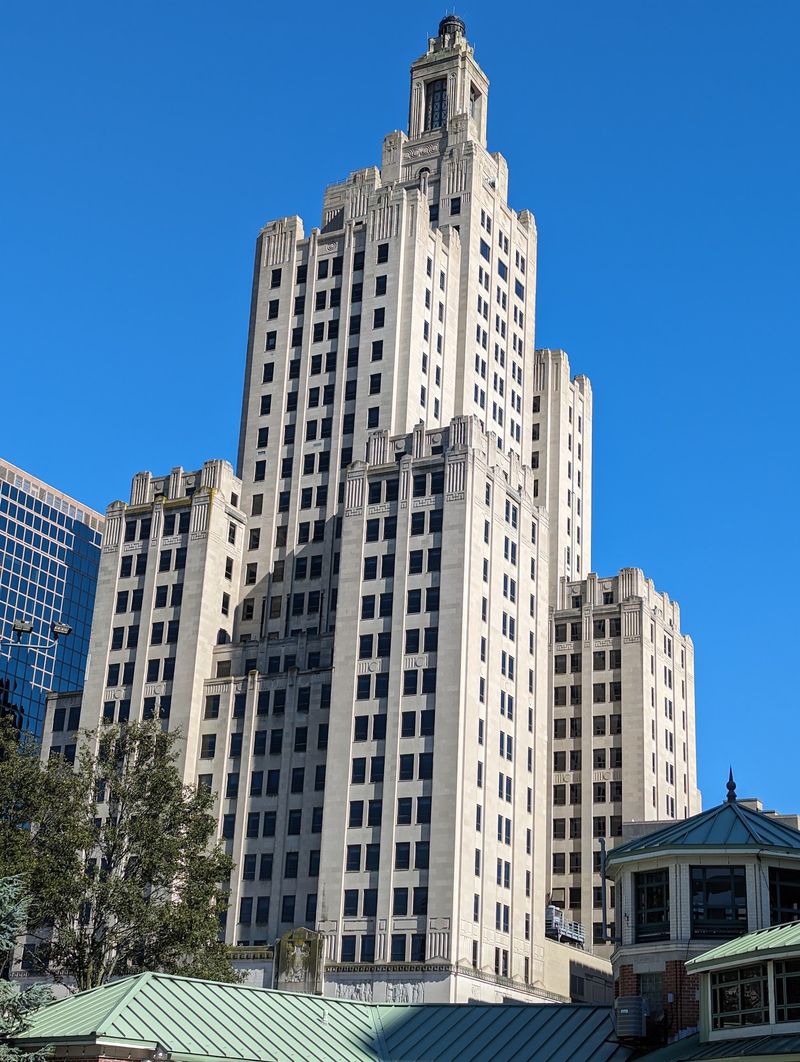
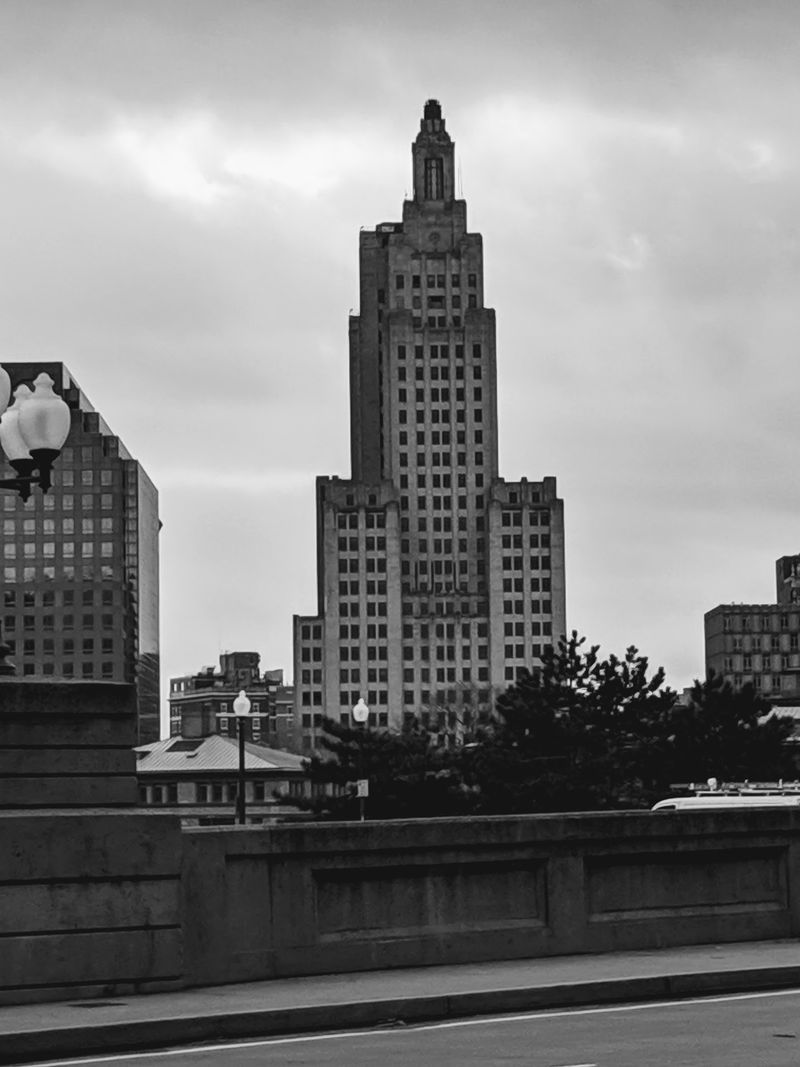
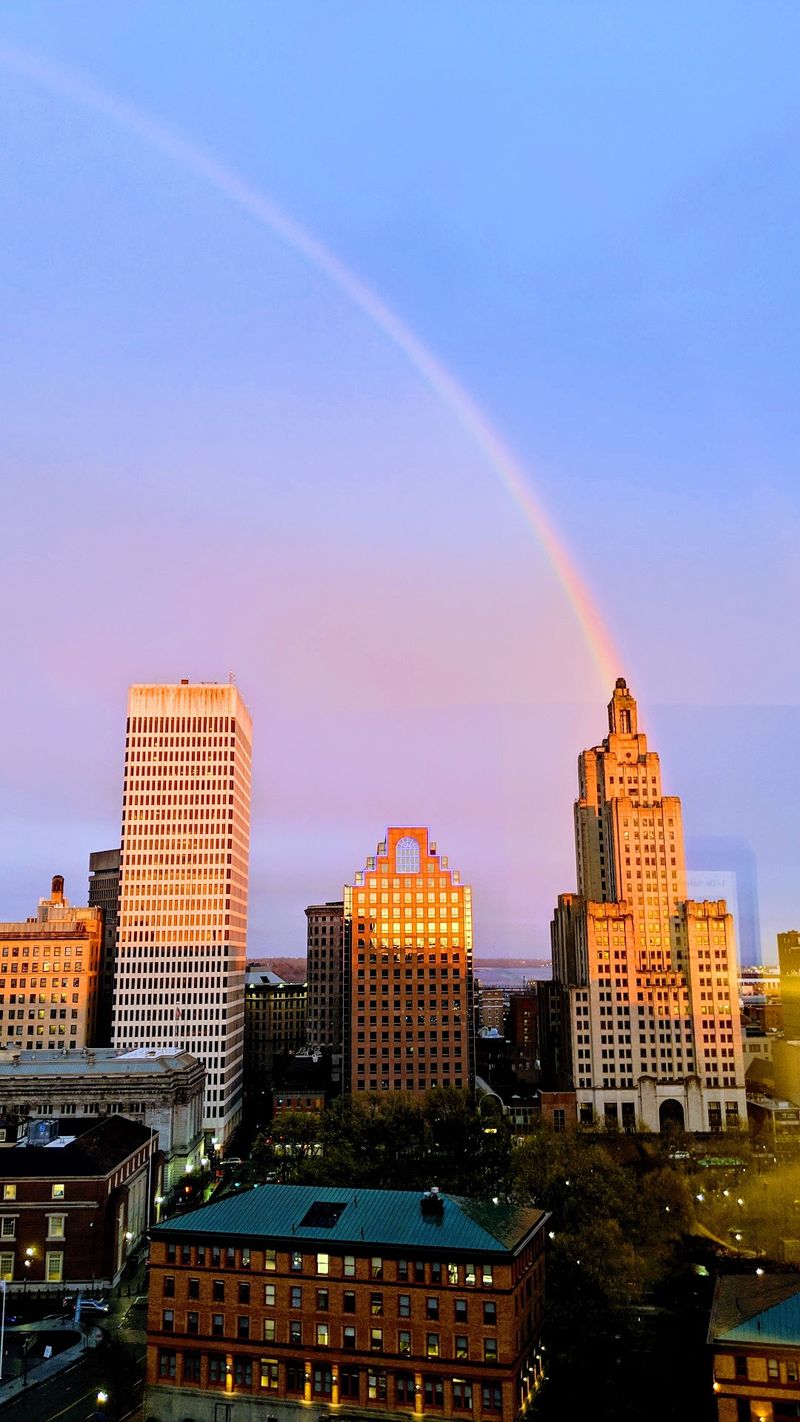
Look up anywhere downtown and it finds you first. The Industrial Trust Building rises above every rooftop in Providence, Rhode Island, and it has done so since the late 1920s.
Construction wrapped between 1927 and 1928, during a stretch of serious civic ambition. The New York firm of Walker & Gillette handled the design, with local architect George Frederick Hall contributing to the plan.
Visitors can find it at 111 Westminster Street, Providence, RI 02903, right at the edge of Kennedy Plaza.
Its stepped profile makes it instantly readable from the highway. Drivers heading north on I-95 often spot it before any other landmark.
At 428 feet, the tower still ranks as the tallest in the state. No newer building has passed it in nearly a century.
Photographers love the way afternoon light slides across the limestone. The shadows sharpen every setback and ledge.
Few American cities let one older structure hold the crown this long. Providence never gave the title away.
How A Bank Tower Earned A Superhero Nickname
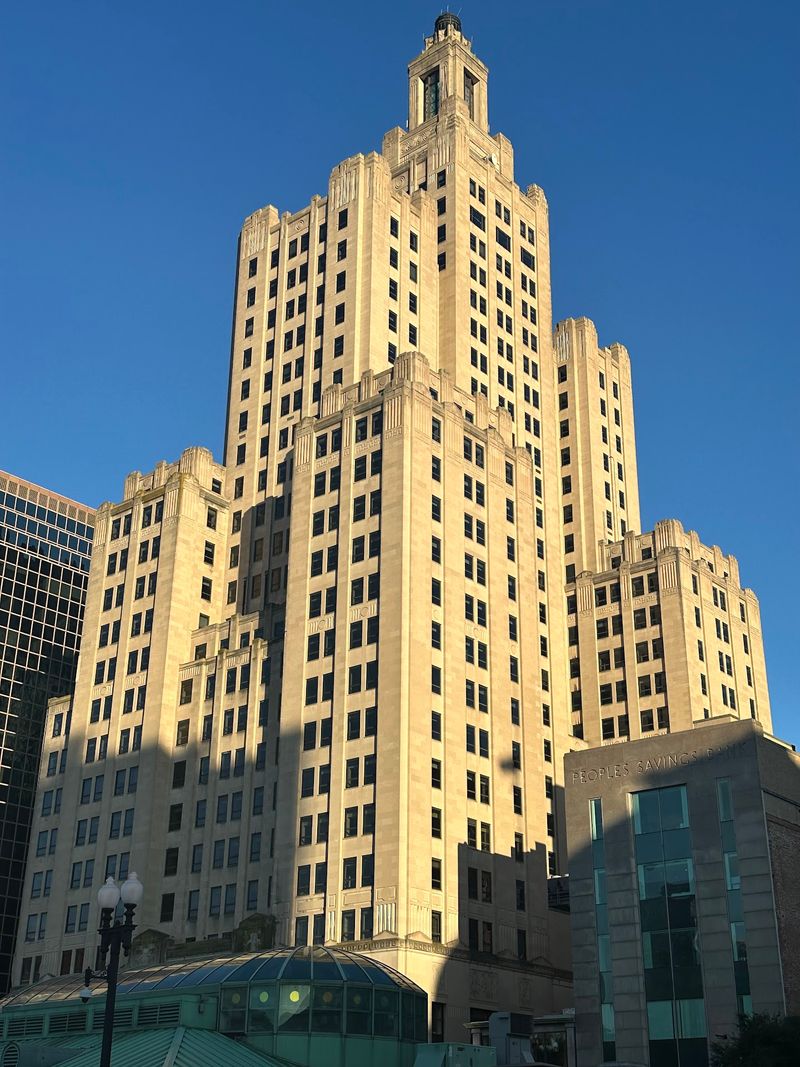
Comic book fans figured this one out fast. The tower’s stepped crown and strong vertical lines resemble the Daily Planet headquarters shown in the 1950s Adventures of Superman television series.
No official link ties the building to the show. Still, the nickname stuck and never let go.
Ask anyone in Providence for directions to the Superman Building and they will point without hesitation. The formal name gets used mostly in newspapers and preservation reports.
Not everyone loves the nickname. Purists insist on Industrial Trust Building, and they have history on their side.
The playful title does one useful thing, though. It keeps a 1920s bank tower in conversations that would otherwise skip architecture entirely.
Tourists show up just to photograph it because of that connection. Some arrive expecting a movie set and leave impressed by real Art Deco stonework.
A nickname born from a black-and-white TV show still pulls visitors downtown decades later.
Limestone, Granite, And Serious 1920s Craftsmanship
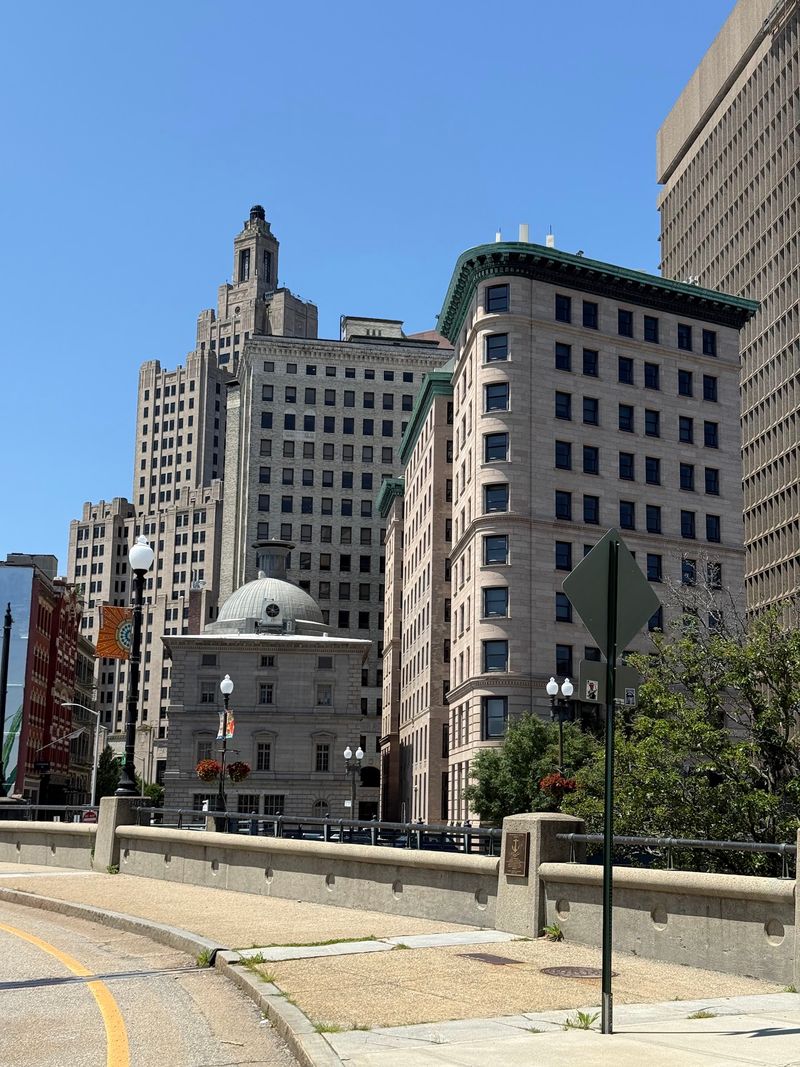
Money once bought details like these. A steel frame carries the tower, wrapped in Indiana limestone with a base of Deer Isle granite.
Carved frieze work runs across sections of the exterior. The panels depict scenes tied to labor and culture, themes that suited a bank funded by industry.
Gorham bronze doors mark entrances on both the Kennedy Plaza and Westminster Street sides. The metalwork rewards a slow walk past.
Stepped massing shapes the whole silhouette. That approach followed New York City zoning ideas meant to let daylight reach the sidewalks.
The result gives Providence a tiered tower rather than a flat slab. Each setback creates its own ledge and shadow line.
Materials like these are rarely used at this scale today. Cost and labor make the math difficult.
Anyone interested in Art Deco should study the base first. Ground level holds the finest carving, and it costs nothing to admire.
The Blue Glow That Marks Nightfall
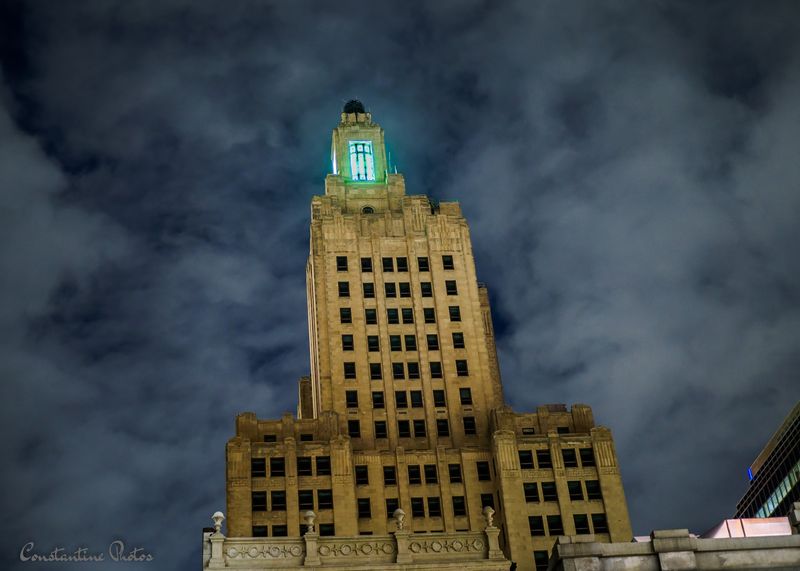
Night changes the mood completely. When it’s lit, blue light has been known to wash the upper floors until midnight, though the display has come and gone during the building’s long vacancy, so it’s worth checking current conditions before planning an evening visit.
A green beacon and a decorative globe once topped the structure.
Stone eagles once circled that high point too. One fell to the street in 1930, and the whole group came down for good two decades later, leaving the crown looking different ever since.
The current lighting keeps the building visible even while the offices sit empty. It reads almost like a signal that someone still cares.
Kennedy Plaza offers a reliable spot for evening photos. A tripod helps, since the glow is soft rather than harsh.
Winter nights work best. Bare trees clear the sightlines and the air often stays crisp.
Locals treat the lit crown as a small comfort. A dark tower would feel far lonelier over downtown.
One switch keeps a vacant giant looking alive.
From Busy Bank Headquarters To Empty Floors
Ninety years of banking happened inside these walls. The Industrial Trust Company, founded in 1886, built the tower as its headquarters.
Ownership changed with the industry. The building became the Fleet Bank Tower in 1982, then later carried the Bank of America name.
Stories describe a lobby stocked with fresh flower arrangements every day. Small touches like that signaled real prosperity.
April 2013 ended the run. Bank of America moved its operations out and the tower went completely vacant.
Empty office floors in a landmark this size create an unusual problem. Heating, security, and basic upkeep continue regardless of tenants.
The vacancy has now stretched more than a decade. Few American skyscrapers have sat idle this long in a downtown core.
Passersby still peer through the ground-floor glass. The quiet inside feels strange for a building designed around constant foot traffic.
A place built for crowds now waits for its next opening day.
A Banking Hall Built To Impress
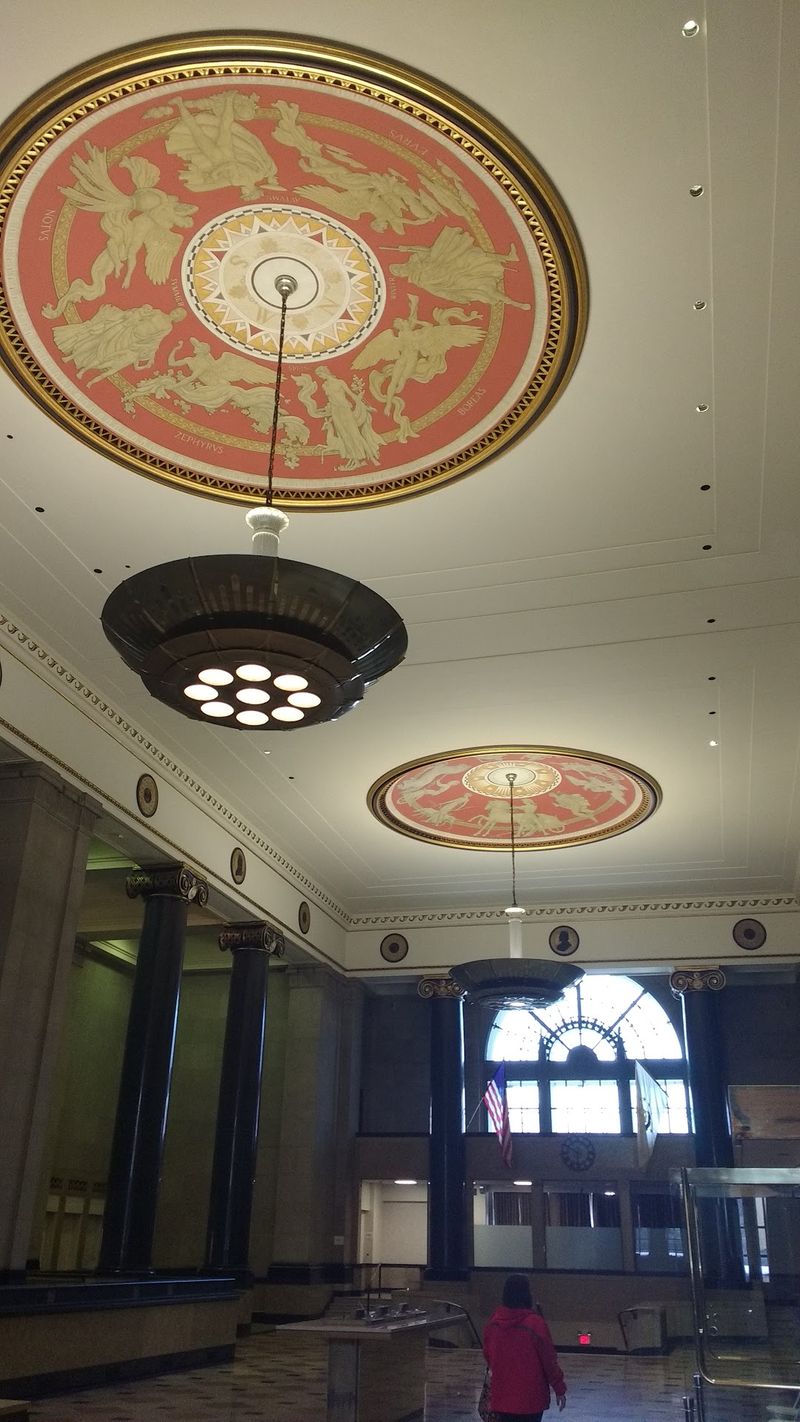
The showpiece was never the exterior. Inside, the main banking hall carried enormous ceilings and finishes meant to project confidence.
Wealth from decades of Rhode Island manufacturing paid for that room. The scale reflected exactly how much money passed through.
One detail still stops people cold. The vault door weighs roughly 17 tons.
Pyramidal setbacks shape the upper floors into unusual layouts. Those levels also deliver wide views across the city and toward the bay.
Public access is not available today. The interior stays closed while ownership and financing questions remain unsettled.
Photos released during redevelopment discussions show original woodwork and stone in surprisingly solid condition. Age has been kinder here than expected.
Many reviewers wish for an observation deck at the top. It remains a popular idea rather than a plan.
Until doors open again, the grandest room downtown stays a rumor with excellent documentation.
Endangered Status And National Attention
National groups noticed the silence. In 2019, the National Trust for Historic Preservation added the building to its list of America’s 11 Most Endangered Historic Places.
That listing carries no legal protection. It works instead as a spotlight, pushing a local problem onto a national stage.
The Providence Preservation Society has repeatedly named the tower among its most endangered properties. Local advocates have kept the pressure steady for years.
Both designations point at the same tension. Everyone agrees the structure matters, and almost no one agrees on how to pay for it.
Demolition rarely gets serious traction. Removing a landmark of this stature in Rhode Island would spark immediate opposition.
Preservationists argue the tower anchors downtown identity. Losing it would leave a hole no new construction could fill.
Recognition alone will not fix a roof or replace windows. Still, attention keeps the conversation from fading out entirely.
Why The Repair Bill Keeps Climbing
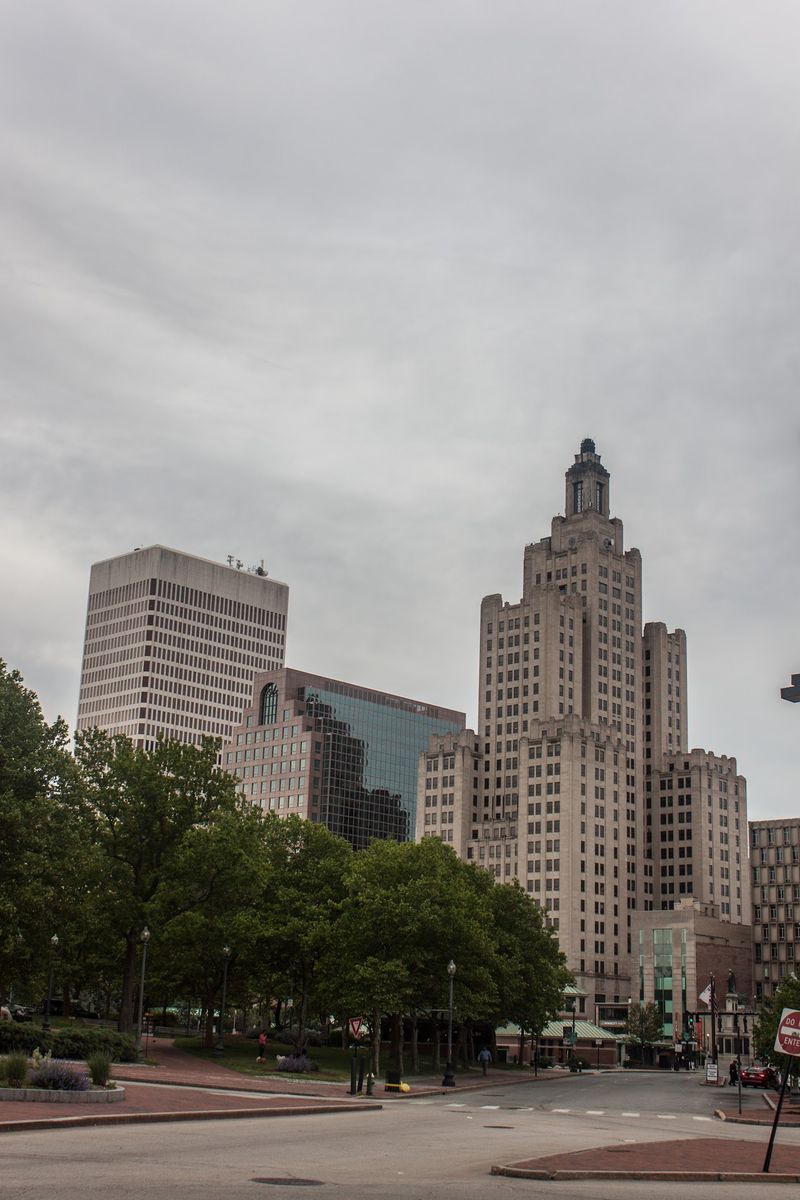
Numbers explain the standstill better than anything else. Early estimates in 2016 placed rehabilitation costs near $115 million.
Plans announced in 2022 aimed to create 285 apartments. That version carried a projected price around $220 million.
The figure later climbed past $270 million. Rising material and labor costs pushed the math further out of reach.
Older towers bring hidden expenses. Systems from the 1920s need full replacement, and historic materials require specialized work.
Residential conversion adds its own puzzles. Plumbing, elevators, and light access all need rethinking for apartments.
Public money entered the picture too. The 2022 effort secured about $41 million in combined state and municipal funding.
Even that support left gaps. A construction materials sales tax savings of roughly $4.6 million became a sticking point.
Big buildings rarely fail for lack of interest. They stall when the spreadsheet refuses to cooperate.
Stalled Plans And Waiting Cranes
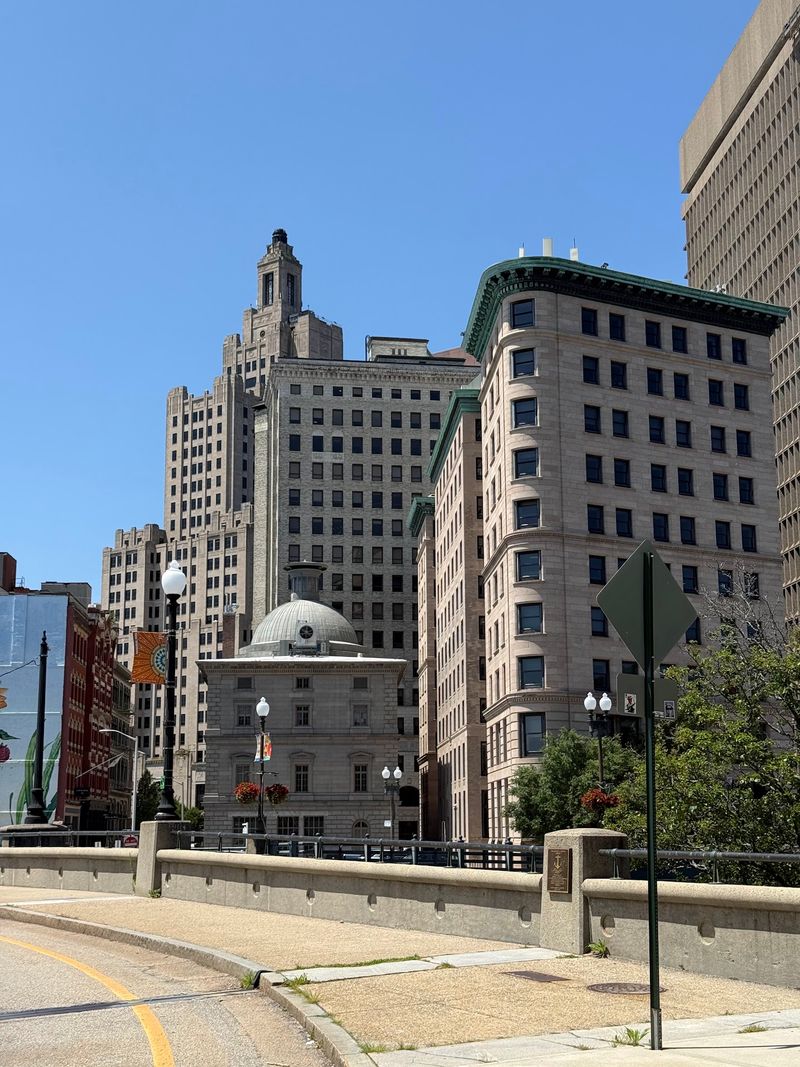
Hope arrived, then paused. The apartment conversion announced in 2022 looked like the strongest rescue attempt yet.
Momentum slowed anyway. By early 2025, redevelopment efforts had stalled and the site remained largely untouched.
Financing gaps caused most of the delay. Large historic projects depend on layered funding, and one missing piece can freeze everything.
Proposals over the years have imagined offices, hotels, and mixed uses. Residential conversion has drawn the most serious backing.
Nothing about the outcome is guaranteed. Timelines have shifted repeatedly and details may change again.
Curious visitors should manage expectations. Interior tours are not offered, and construction activity comes and goes.
What stays constant is the exterior. Anyone can study it from the sidewalk without permission or tickets.
Patience has become part of this building’s story, whether locals like it or not.
Kennedy Plaza And The Ripple Effect Downtown
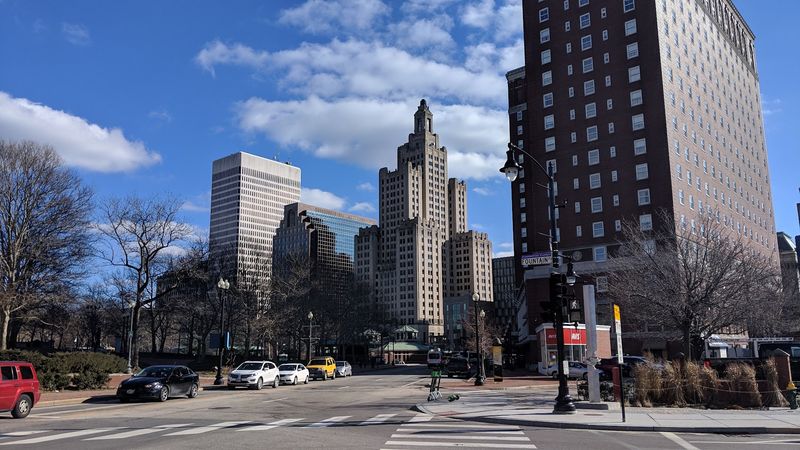
A vacant giant changes a neighborhood. The tower sits right at Kennedy Plaza, one of the busiest transit and gathering points in Providence.
Thousands of office workers once poured out of those doors daily. Nearby lunch counters and shops depended on that rhythm.
Business owners have long pointed to the missing foot traffic. Losing an anchor tenant this large leaves a measurable dent.
The plaza itself stays active with buses and events. The contrast between motion outside and stillness inside feels sharp.
City leaders often describe reoccupying the tower as key to downtown energy. Hundreds of residents living there would reshape evening activity.
Surrounding streets have seen new restaurants and housing anyway. Downtown has not waited around.
Filling the tallest building in Rhode Island would still change the whole equation.
One address holds unusual power over an entire district’s pulse.
Falcons, Photographers, And Everyday Admirers
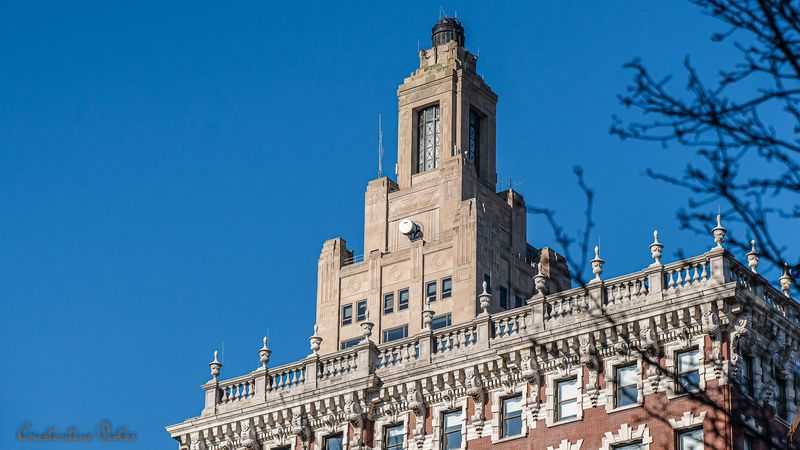
Wildlife found a use for it. Peregrine falcons have nested on the tower’s high ledges, and online nest cameras have drawn steady followings.
Height and stone ledges suit these birds well. A quiet building suits them even better.
Photographers treat the tower as a favorite subject. Its setbacks catch light differently through every season.
Returning residents often mention the same feeling. Spotting the crown from the highway tells them they are home.
Instagram fills with the same silhouette shot from a dozen angles. Nobody seems tired of it.
Street level offers the easiest views. Westminster Street and the plaza both work well without any special equipment.
Early morning brings soft light and thin crowds. Golden hour warms the limestone into something close to honey.
Empty offices have not stopped this landmark from earning attention every single day.
Planning A Visit To The State’s Tallest Landmark
Come for the outside and plan accordingly. Interior access is not available, so the experience happens entirely at street level.
Parking garages sit within a short walk of the plaza. Public buses stop nearby, which spares the parking hunt.
Pair the stop with other downtown sights. WaterFire events, the riverwalk, and Westminster Street shops all sit close by.
Allow twenty minutes for a proper look. Circling the base reveals carving details most people miss from a car.
Evening visits reward patience. Tall buildings on narrow streets challenge phone cameras.
Check local news before traveling for construction updates. Plans around this Rhode Island landmark shift often.
Free, quick, and memorable, a stop here fits into almost any Providence itinerary. The tallest tower in the state still delivers without charging admission.
Its next chapter remains unwritten, and that uncertainty is part of the draw.