
This Southeast Tennessee Historic Park Has Streams And Wooded Trails That Feel Like A Secret Only Locals Know
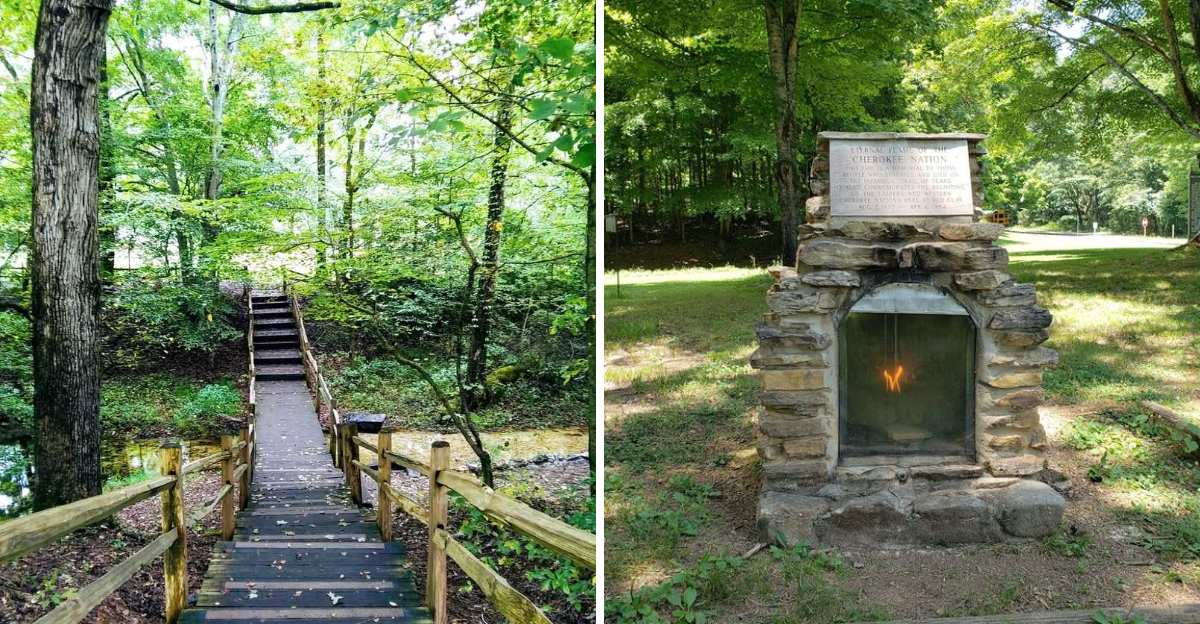
A quiet trail feels different when running water follows beside it and the woods seem to muffle everything else. Southeast Tennessee has a historic park where that peaceful mood settles in almost immediately.
Wooded paths cross a landscape shaped by nature and an important past. Streams move through the forest, shaded stretches invite an easy pace, and open areas break up the trees with room to breathe.
The scenery stays calm, but the history adds another layer to every walk. Markers and preserved sites explain what happened on this ground, giving the surroundings more meaning as you move through them.
The mix of creeks, forest, and history makes this Tennessee park feel far removed from busier attractions nearby. It is quiet, thoughtful, and easy to spend more time in than you planned.
Blue Hole Spring, The Sapphire Heart Of The Valley
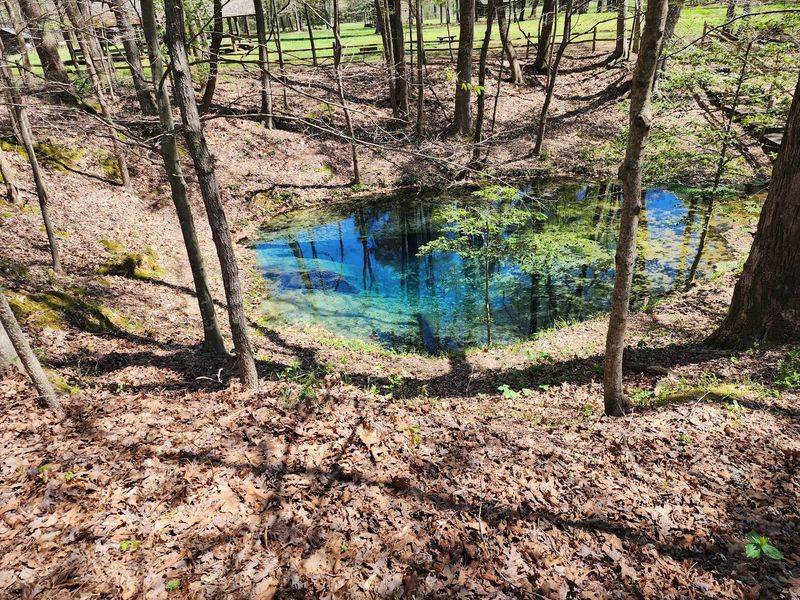
Water this blue usually shows up on postcards from tropical islands, not in southeast Tennessee. Blue Hole Spring holds deep, clear, sapphire colored water that rises straight out of the ground. It looks almost artificial until you stand beside it.
Centuries ago, this spring supplied water for Cherokee delegates who gathered here for council meetings. That history makes the site sacred, and the spring itself remains protected.
Park staff keep the water off limits for swimming or wading, and the reasons are explained clearly on site.
From the spring, the water flows into Mill Creek. That creek eventually feeds the Conasauga and Coosa River system, which stretches far south of the state line.
A small spring with a very long reach.
The short walk to reach it is flat and simple. Interpretive signs along the way explain what you are seeing, so nobody needs a guidebook.
Kids tend to lean over the railing and stare, which is exactly the right response.
Morning light works best for photographs, since the surrounding trees cast fewer harsh shadows. Bring a camera with a lens hood if you have one.
Reflections off the surface can trick a phone camera into washing out that remarkable color, so try shooting from a slight angle instead.
Council Of Trees Trail And Its Ridge Top Reward
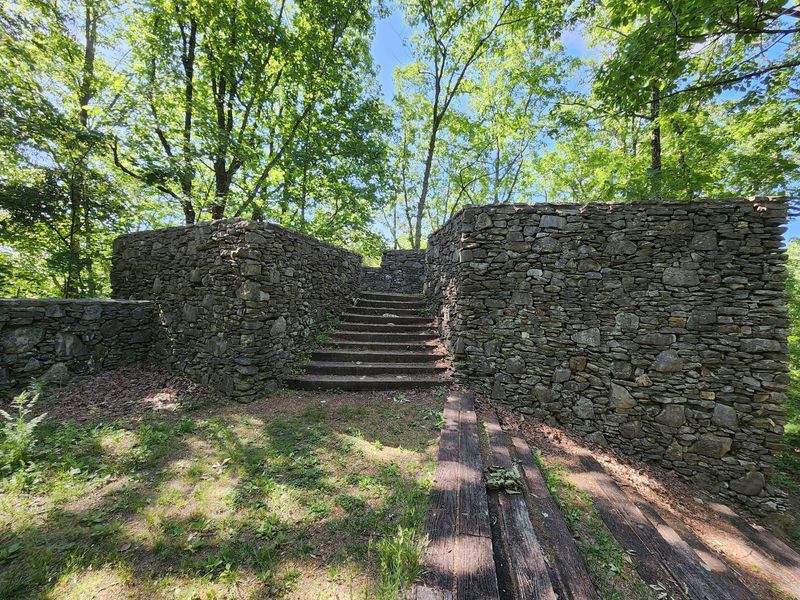
Not every scenic overlook demands sweat and switchbacks. The Council of Trees Trail runs about 1.7 miles through the wooded ground surrounding the historic area.
Elevation changes stay light, which makes it friendly for families and casual hikers.
The path climbs a ridge and reaches a stone overlook tower. From up there, the surrounding treetops spread out in every direction, and the valley below looks calm and green.
Autumn turns the whole view into a patchwork of gold and rust.
Footing varies as you go. Some sections are hardpacked earth, others feel like classic forest floor with roots and loose stones. Sneakers work fine, though trail shoes give better grip after rain.
Because the loop stays under a canopy for much of its length, summer heat feels less punishing here than on open ground. Still, carry water. There are no fountains along the wooded portions.
Runners occasionally use this route for training, and it handles foot traffic well without turning into a mud pit. Take it slow anyway, since watching your step matters more than logging a fast time.
Benches appear at useful intervals throughout the park, so resting is never a problem. Plan roughly forty five minutes to an hour at an unhurried pace.
Replica Cherokee Buildings That Bring 1830s Life Into Focus
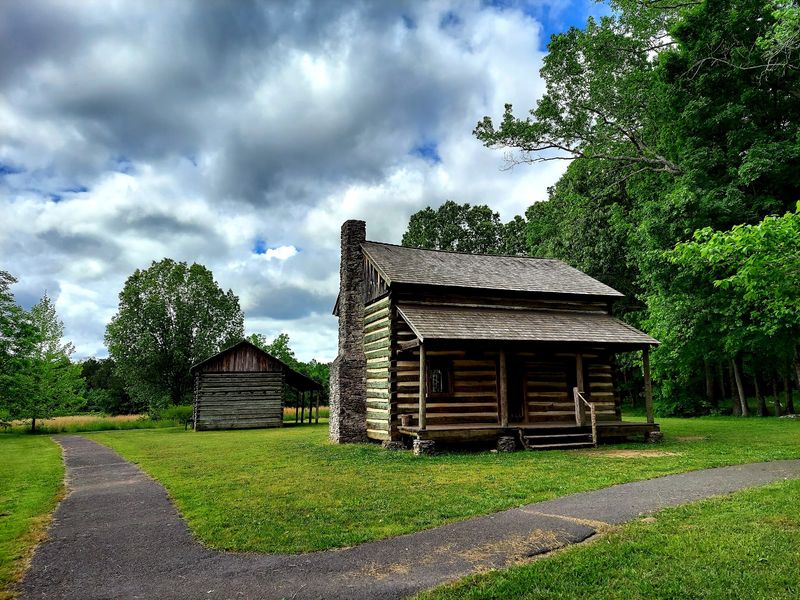
Log walls, split rails, and hand notched corners do more teaching than any textbook page. Standing within the park are replicas of 19th century Cherokee structures, carefully reconstructed to reflect the era.
The collection includes a council house, a farmhouse, a barn, a corn crib, and three sleeping huts.
The council house holds the most weight. Between 1832 and 1838, Cherokee leaders held official council meetings on these grounds, making Red Clay State Historic Park the last eastern capital of the Cherokee Nation.
The farmstead buildings show something different: daily life. Storage, sleeping, cooking, and farming all took place in structures like these.
Children usually gravitate toward the sleeping huts, which sit low and cozy against the ground.
Walking among them takes only a few minutes, but slowing down pays off. Plaques set along the paths explain each building’s purpose in plain language.
Photographers should note how the buildings sit in open grass with forest behind them. Late afternoon light rakes across the log walls beautifully.
The replicas sit close to the Blue Hole Trail, so you can see both in one short outing. Combining the two makes for a rewarding half hour, even if your schedule is tight that day.
The Eternal Flame And A Story Of Reunion
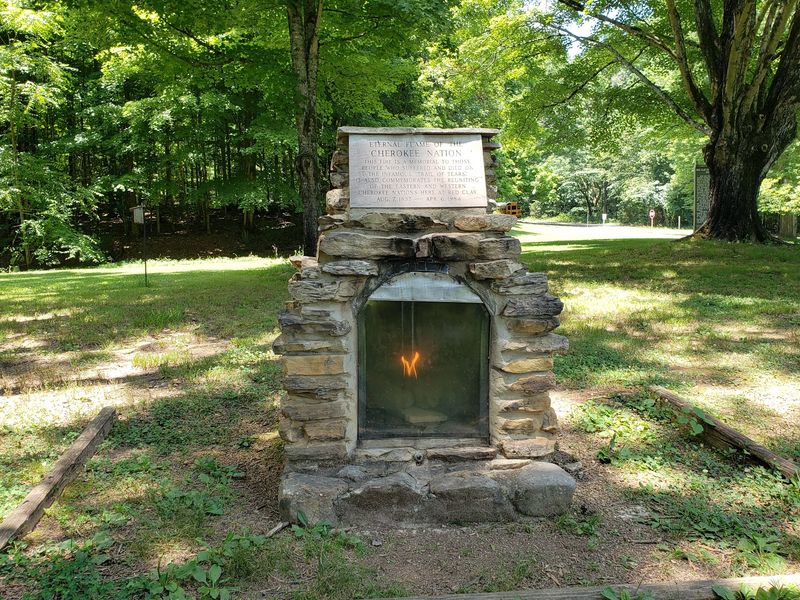
A flame burning in the open air tends to stop conversation. The Eternal Flame memorial at Red Clay honors the Cherokee people who suffered during the forced removal known as the Trail of Tears.
It stands quietly on the park grounds, easy to reach on foot.
There is a second layer to its meaning. In 1984, the Eastern and Western Cherokee nations held a reunification council here, the first joint gathering in generations.
The flame commemorates that reunion as well as the hardship that came before.
Standing beside it feels different from reading about the era. The monument grounds are open and uncluttered, which gives the site room to breathe. Many people pause here longer than they planned.
Signage nearby fills in the historical context without overwhelming younger readers. Sixth graders can follow it comfortably.
If you are traveling with a group, this makes a natural meeting point before or after a hike. It sits within easy walking distance of the main parking area.
Photographs are permitted, though a moment of quiet observation serves the place better. Come early in the day if you prefer fewer people around, since mornings on the grounds are usually still and calm.
Creekside Paths Where Water Runs Beside Your Boots
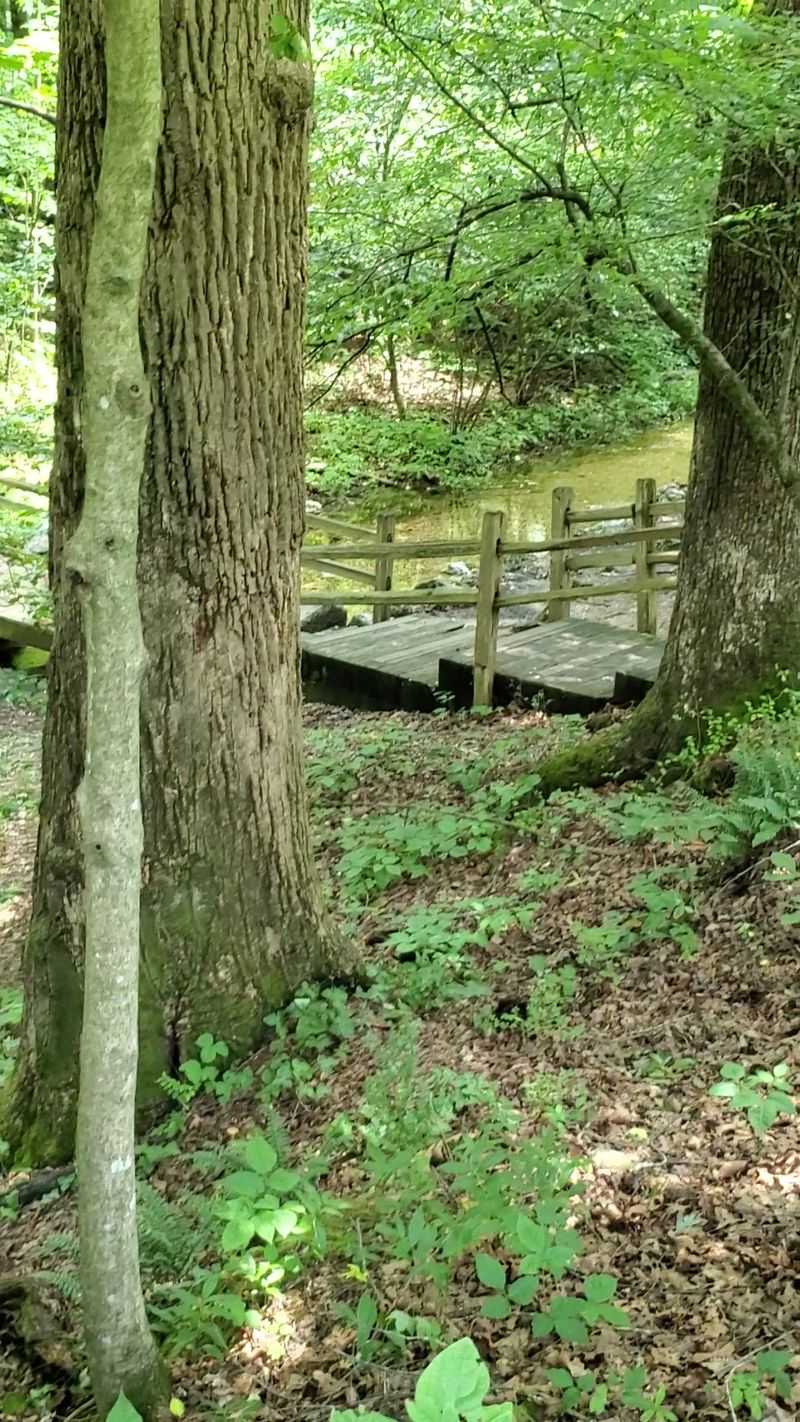
Few sounds beat moving water when you are walking. Clear creek water runs alongside stretches of trail here, threading through thick green forest and narrow valleys.
In places the creek turns shallow enough to see every pebble on the bottom.
Mill Creek carries the flow from Blue Hole Spring downstream. Along the way it passes beneath tree cover that keeps the water cool and the air noticeably fresher than in the open fields.
The creekside sections stay mostly level, which makes them ideal for anyone who wants scenery without a workout. Strollers manage the paved portions well, though the natural paths get bumpier.
Wildlife shows up often. Birds work the branches overhead, and deer sometimes appear near the park edges.
Keep voices low and your odds improve.
Photographers should bring a polarizing filter if they own one. It cuts glare on the water surface and deepens the greens in the surrounding leaves.
After heavy rain, expect a few muddy spots along the natural trail sections. Waterproof shoes solve the problem entirely.
Benches and picnic tables sit scattered near the water in several spots. Packing a sandwich turns a short walk into a genuinely relaxing morning outdoors.
Short Trails That Suit Every Pair Of Legs
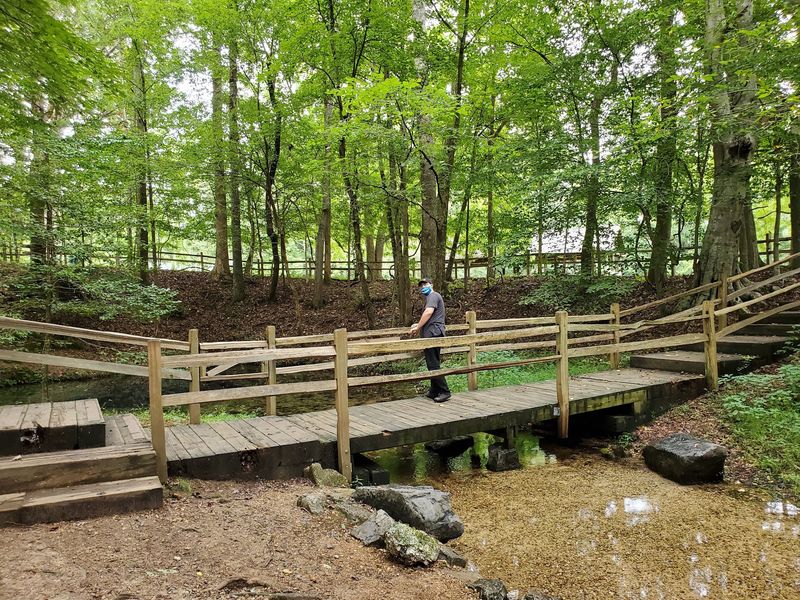
Three named trails cover this park, and none of them require serious planning. The Blue Hole Trail measures roughly 0.2 miles and leads directly to the spring and the farmstead replicas. Short, sweet, and packed with things to see.
The Connector Trail runs less than a mile. Its job is simple: link the paved areas to the wooded routes so you can build your own loop.
Then comes the 1.7 mile main loop, which climbs the ridge to the stone overlook tower. That combination lets you choose between a ten minute stroll and a solid hour on foot.
Surfaces differ across the network. Paved sections handle wheels and strollers, while hardpacked and natural paths deliver a more traditional forest feel.
Signage throughout the park is clear and well placed, so getting turned around is unlikely. Trail junctions are marked plainly.
Many people combine the loops and finish the whole system inside an hour. Others stretch it out with picnic stops and lingering.
Address for your navigation app: 1140 Red Clay Park Road SW, Cleveland, TN 37311. Gates open at 8 AM and close at 5 PM daily, so plan your walking time accordingly before arriving.
Visitor Center Exhibits Worth Arriving For
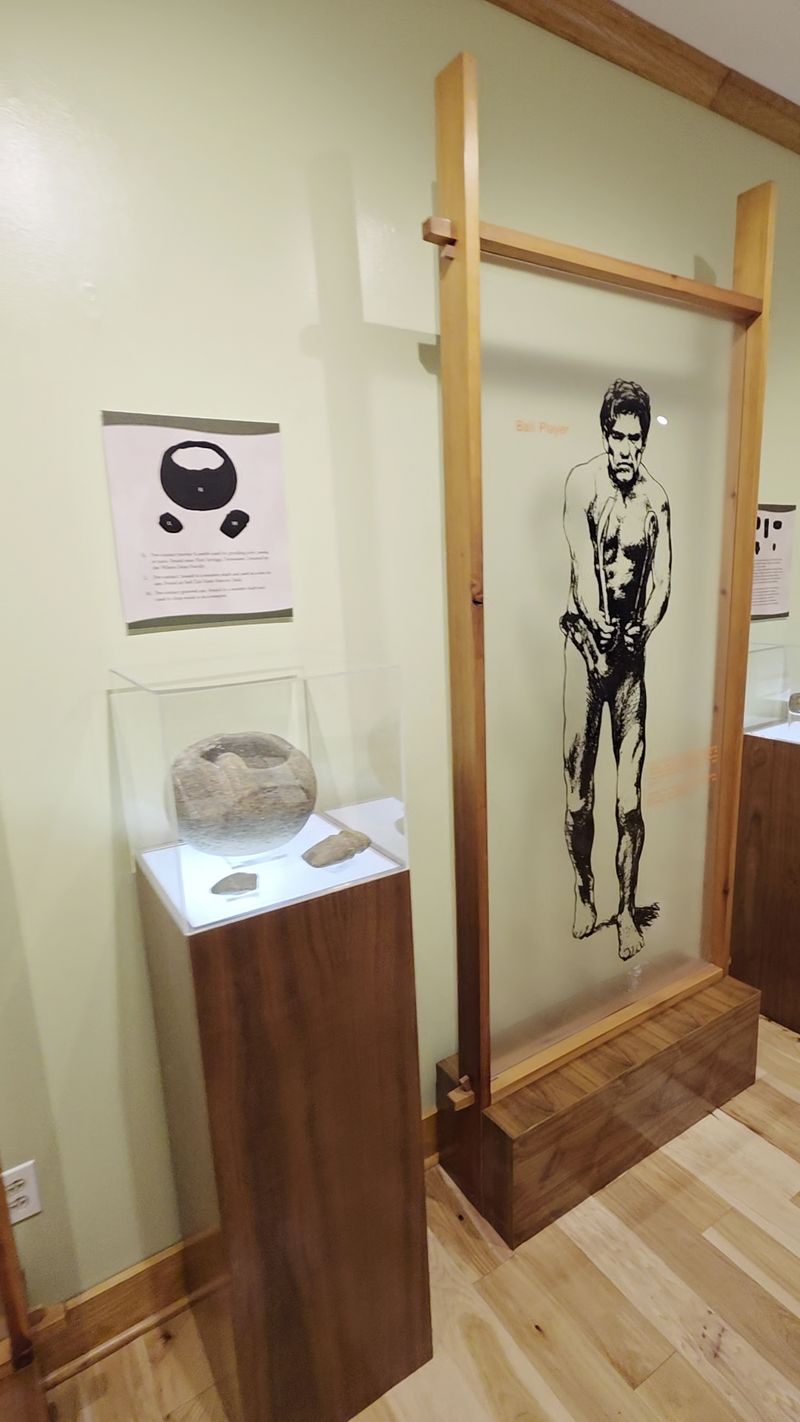
Start indoors and the rest of the park makes far more sense. The visitor center at Red Clay State Historic Park houses a museum covering Cherokee history and the events that unfolded on these grounds between 1832 and 1838.
Exhibits explain the council meetings, the removal, and the culture of the Cherokee Nation. Artifacts and interpretive panels fill the space, and rangers on duty answer questions willingly.
An auditorium screens a documentary titled We Are Still Here, running about twenty minutes. It is a strong companion to the outdoor sites.
There is also a gift shop stocked with regionally inspired items and educational materials. Books here tend to be well chosen rather than generic souvenirs.
One practical note: the visitor center and museum do not necessarily open the moment the park gates do.
Ranger led programs and classes run periodically. They add context that self guided reading simply cannot match.
Restrooms here are reliably clean, which matters more than people admit when traveling with kids. Take thirty minutes inside before heading out to the trails, and the whole property reads differently on the walk.
Picnics, Pavilions, And The Art Of Staying Longer
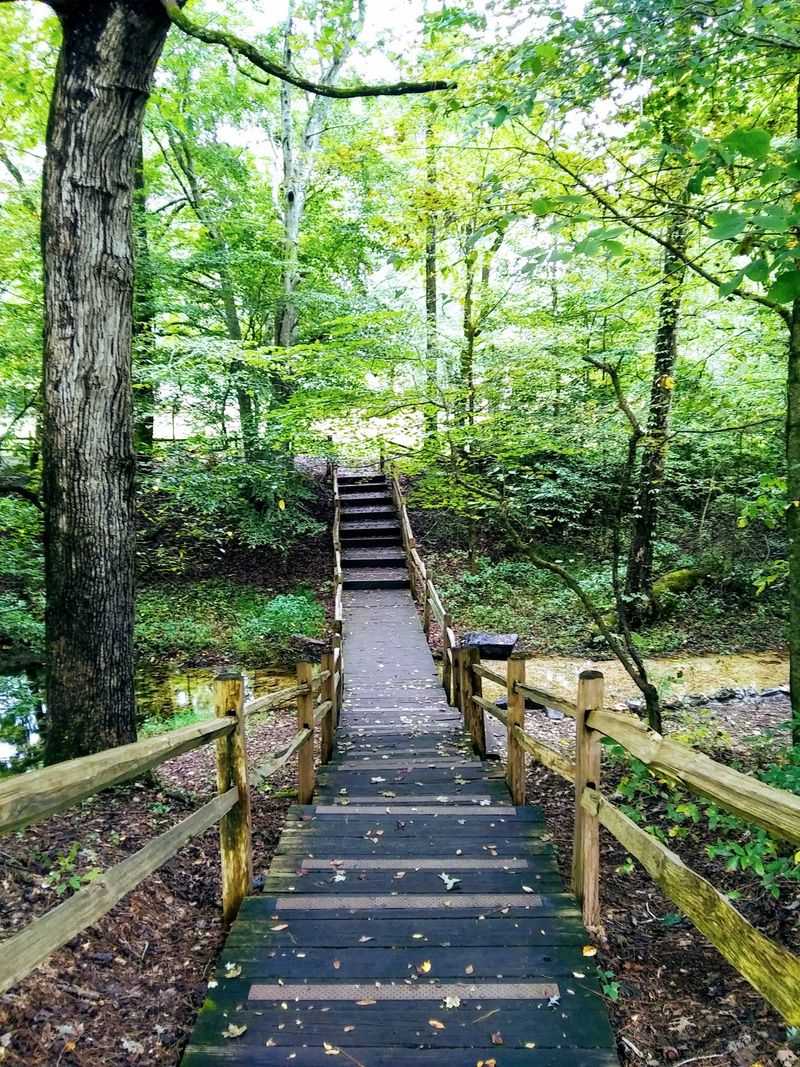
Wide grassy lawns, shade trees, and labeled picnic areas practically ask you to unpack lunch. Tennessee delivers plenty of pretty parks, but few pair a peaceful field with this much history at your back.
Picnic tables sit throughout the grounds, and a covered pavilion offers shelter when the sun climbs or a shower rolls through. Groups sometimes book the shelter for gatherings and events.
An amphitheater on site hosts programs and cultural activities during the year. Checking the park calendar before driving out is worth the two minutes.
Leashed dogs are welcome on the walking paths, which makes this a favorite stop for anyone traveling with a four legged companion. Shade trees give them a break on warm afternoons.
Rocking chairs near the buildings invite a pause, and plenty of people use them exactly as intended. Sitting still counts as an activity here.
Entry to Red Clay State Historic Park costs nothing, a rare bargain for a site of this significance. Bring a cooler, a blanket, and a bird guide if you have one.
Southeast Tennessee has plenty of noisy attractions. This valley, roughly 17 miles from Chattanooga, offers the opposite, and that is exactly its charm.