
This Tennessee Lake Shore Has More Snakes Than Most Visitors Expect
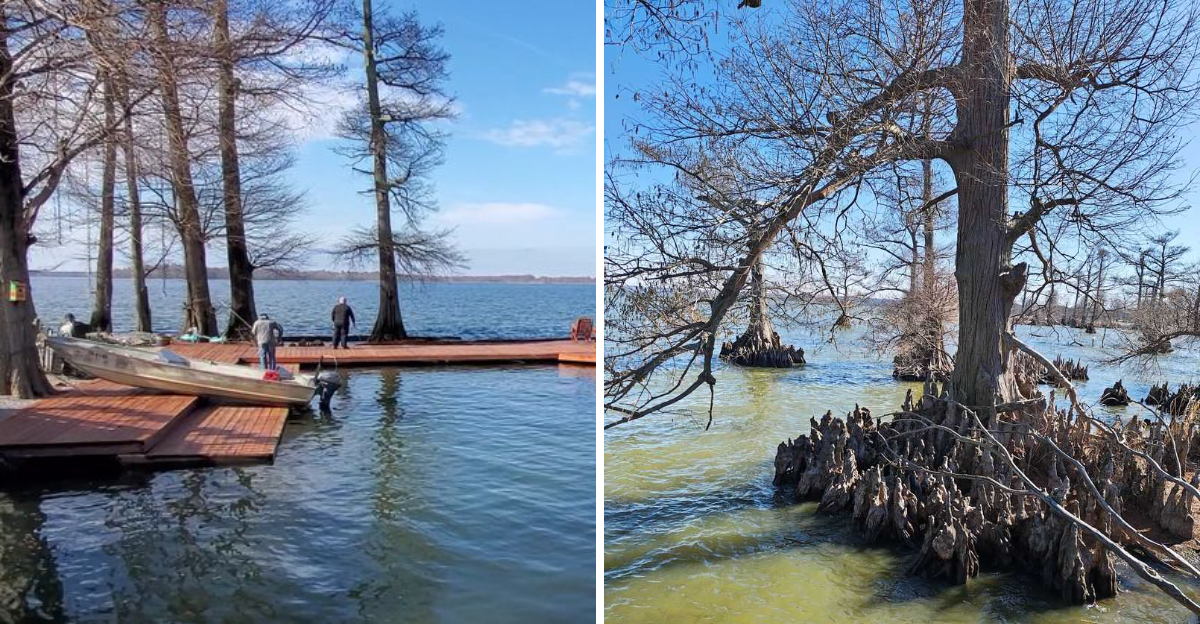
Tennessee has a lake that keeps its reptile population very much a secret from first time visitors. Cottonmouths move through these shallow waters more often than most people expect, especially around the cypress trees lining the shore.
Water snakes show up too, plenty of them, sliding along banks and basking on logs without much concern for onlookers. None of this makes the lake dangerous exactly, but it does make it interesting.
Locals know where to look and where to step carefully. Bald eagles circle overhead, adding a strange contrast to what’s happening below the surface.
This lake formed after a series of earthquakes centuries ago, and something about that violent history still lingers in how wild the place feels. Visitors come for the birds, the fishing, and the scenery, but leave talking about the snakes just as much.
A Lake Shaken Into Existence By Earthquakes
Most lakes are carved by glaciers or built behind concrete. Reelfoot Lake did neither. It arrived when the New Madrid fault zone convulsed during the winter of 1811 and 1812.
The ground sank, the Mississippi River briefly ran backward, and water poured into the new low spot. What formed became the only large natural lake in Tennessee, a fact that still surprises people who assume every big lake needs a dam.
That violent birth left behind a shape unlike anything else nearby. Instead of a deep bowl, the lake spreads wide and stays shallow, averaging around 5.5 feet deep.
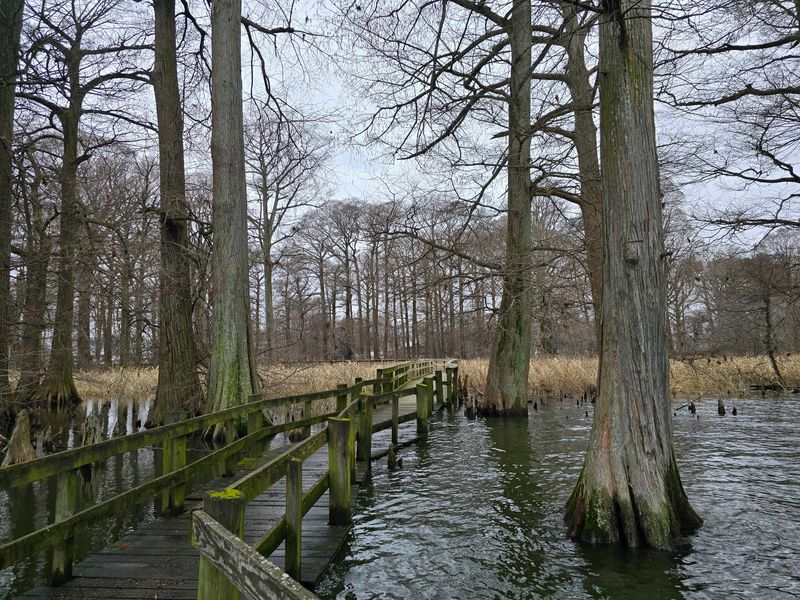
Drowned forest still stands inside it, with stumps and roots forming an underwater maze. All of that matters for the snakes. Shallow, warm, plant-filled water with endless hiding spots is close to reptile paradise.
Add sunny logs for basking and small fish for meals, and you get a shoreline that stays busy.
The story is told well inside the park museum, where displays explain the quakes and the land that dropped. Reading it first makes the walk outside feel different. Every crooked tree suddenly looks like evidence of a very bad week in 1811.
Cypress Knees, Stumps, And The Perfect Snake Apartment Complex
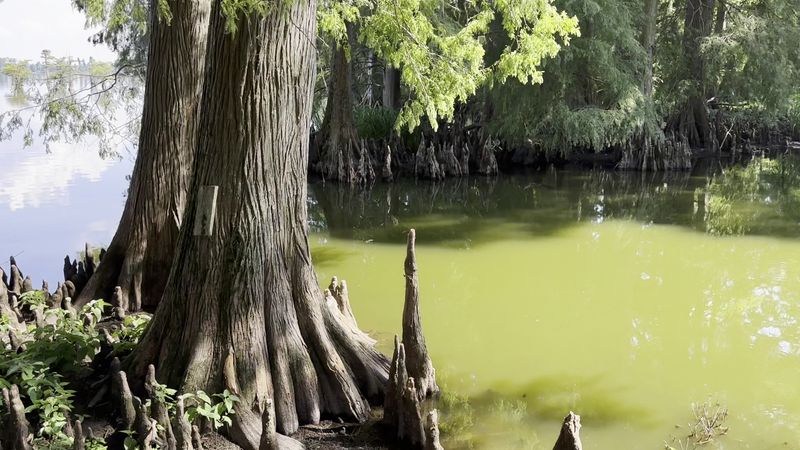
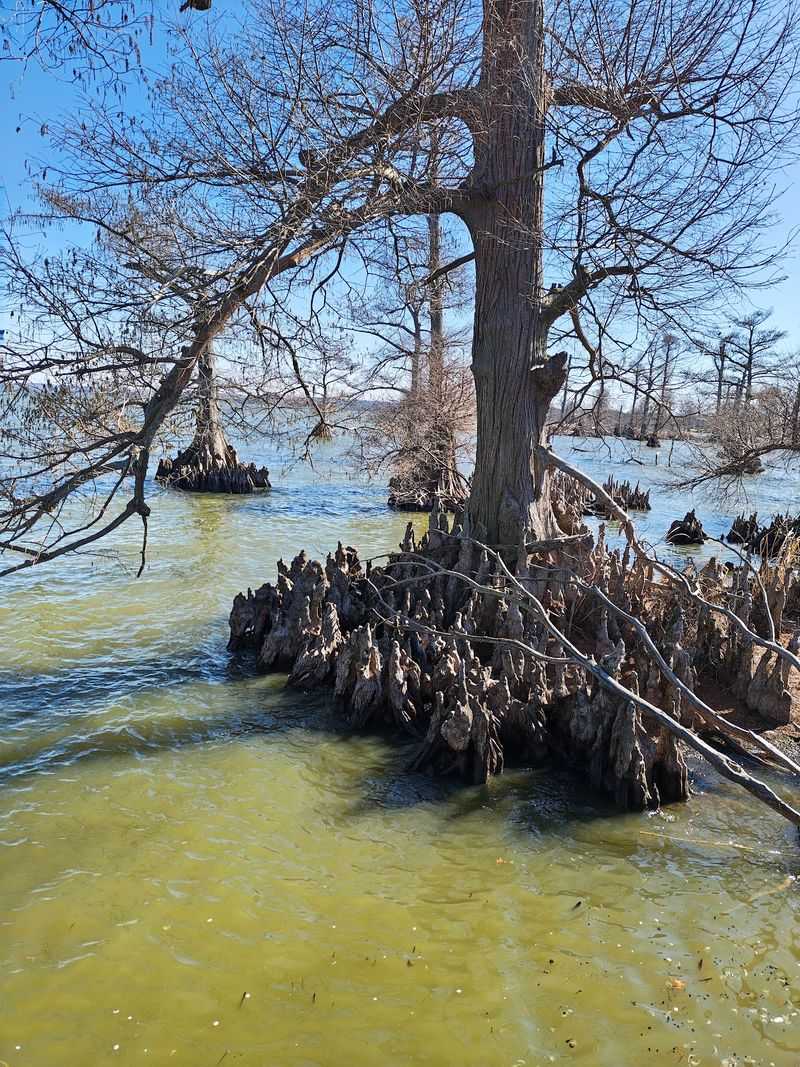
Bald cypress trees here do something odd. They send up woody bumps called knees, which poke above the waterline in clusters. Walk the shoreline and you will see hundreds of them.
Those knees, plus submerged stumps and thick mats of aquatic plants, create shelter at every level. Small fish hide there. Frogs hide there. And the animals that eat small fish and frogs move in right behind them.
Snakes love structure. A stump gives shade, a knee gives a sunning perch, and floating vegetation gives cover from hawks overhead. Reelfoot Lake supplies all three within arm’s reach of the bank.
The plant life is genuinely rich, with flowering species scattered across the shallows through the warm months. That diversity is one reason the lake carries National Natural Landmark status.
For anyone with a camera, the knees are a gift. Early light rakes across them and throws long shadows on glassy water. Just watch where you set your tripod feet.
The lesson is simple. When habitat is this layered and this wet, reptile numbers climb. Understanding the scenery explains the wildlife, and the scenery here is unlike anywhere else in Tennessee.
Around Thirty Species Share This Shoreline
Here is the number that raises eyebrows: roughly 30 snake species live in this ecosystem. That is a remarkable count for one lake basin.
Marshy wetlands stretch for miles around the water, and marsh is prime real estate for reptiles. Wet ground, dense cover, and steady food keep populations healthy year after year.
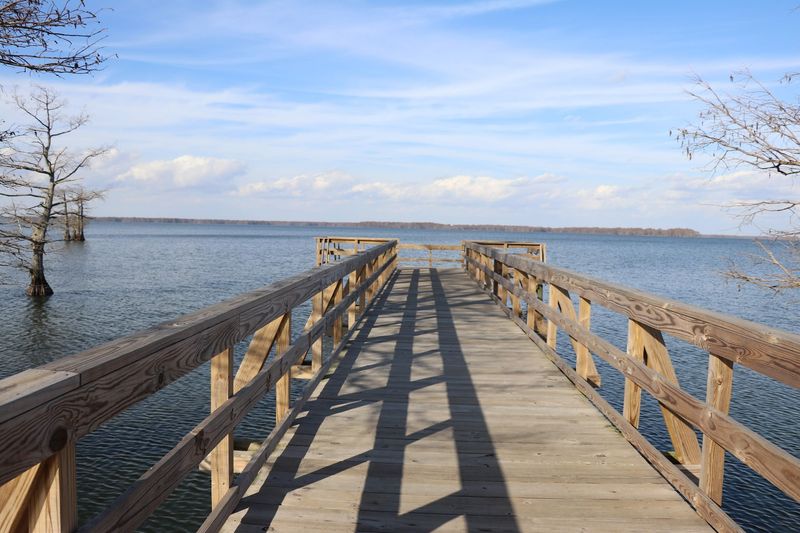
Sightings are not rare either. Along the park boardwalks, snakes turn up draped in plants, resting near pilings, and occasionally stretched along a handrail like they paid for the seat.
Most encounters are brief and calm. The animal notices footsteps long before people notice it, and it usually slides away without drama.
Keeping a few steps back solves nearly every awkward moment.
Warm afternoons in late spring bring the most activity, since reptiles need outside heat to get moving. Cool mornings tend to be quiet, which is why some people walk the same path twice and see nothing, then see three.
Reelfoot Lake earns its reputation as one of the top snake-watching spots in the state. For naturalists, that is a headline. For everyone else, it is a good reason to look before grabbing a railing.
Meet The Harmless Water Snakes You Will Actually See
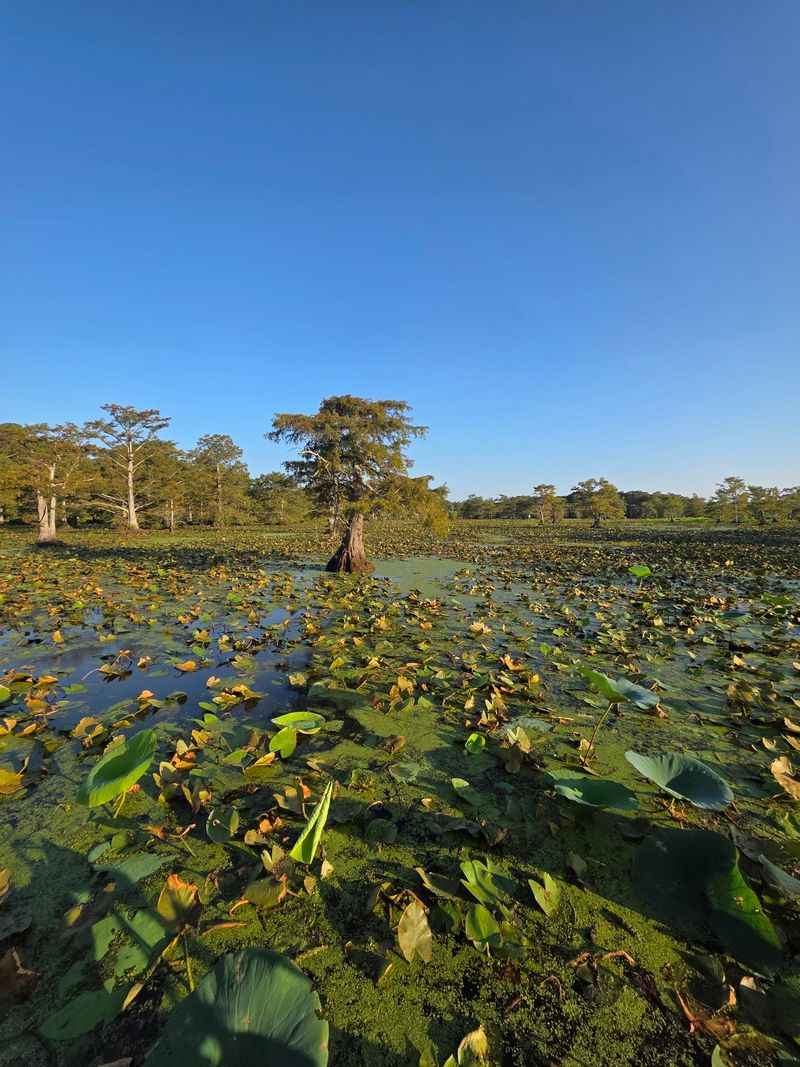
The overwhelming majority of snakes along this shore are harmless water snakes going about their business. They swim with heads up, hunt fish in the shallows, and flatten themselves on warm branches.
Diamondback watersnakes are common, recognizable by the chain-like pattern running down the back. Plain-bellied watersnakes show up too, often looking uniformly dark from a distance.
Northern watersnakes cause the most confusion. They get mistaken for something dangerous because of their thick bodies and banded look, though they are nonvenomous.
Southern watersnakes are also plentiful in these wetlands.
Then there are the shy characters. The eastern hognose snake puts on a theatrical show when startled, hissing, puffing up, and eventually rolling over to play dead.
It is pure bluff and honestly a little charming.
Mudsnakes live here as well, though they stay buried in muck and rarely make an appearance. Spotting one is a genuine stroke of luck.
A cheap pair of binoculars turns this into a fun game. You can identify patterns from twenty feet away and leave the animal completely undisturbed, which is exactly how good wildlife watching should work.
Knowing The Venomous Neighbors And Where They Stay
Yes, there is a venomous resident. The northern cottonmouth, often called a water moccasin, lives around this lake system.
Reports indicate they favor the lake’s islands rather than the busy park grounds and campgrounds. That distribution is good news for families walking the boardwalk on a Saturday morning.
Out in the hills east of the water, copperheads and rattlesnakes exist, though sightings right at the shoreline are uncommon. Anyone bushwhacking off-trail should wear boots and long pants as basic sense.
Identification tips help, but distance helps more. Give any snake a wide berth, never reach into brush blindly, and step over logs rather than beside them.
Nothing here wants trouble. Snakes react defensively only when cornered or handled, so simply not doing those two things removes almost all risk.
The park’s nature center displays live specimens behind glass, which is the smartest way to study markings up close. Learning the difference indoors makes outdoor moments feel calm instead of startling.
Respect turns a jumpy walk into a fascinating one. Reelfoot Lake rewards people who watch carefully and keep their hands to themselves.
Eagles, Pelicans, And More Than 270 Bird Species
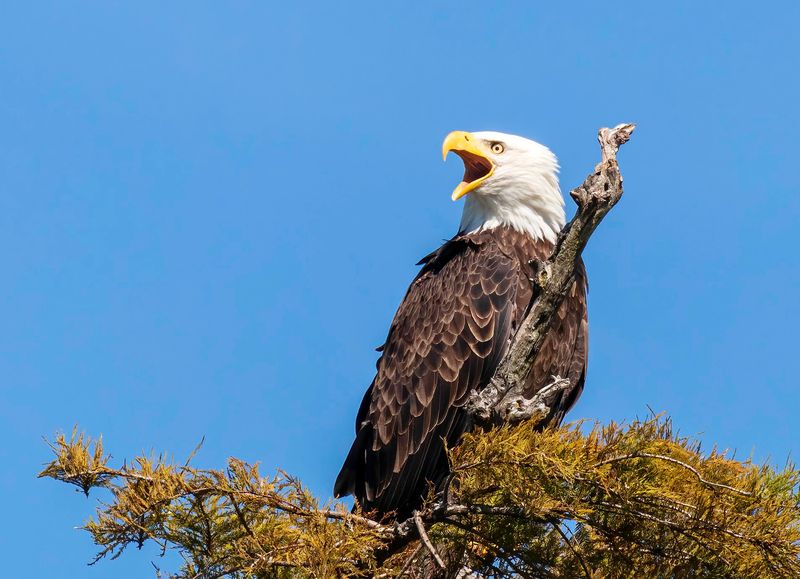
Snakes get the surprise factor, but birds built this lake’s fame. More than 270 species have been documented across the area.
Winter is the headliner season. Bald eagles gather here in impressive numbers, with many nests occupied during breeding season, and January and February are prime for spotting them.
Snow geese arrive by the thousands in the cold months, filling nearby fields with noise and motion. The sound carries a long way across flat water.
Fall brings American white pelicans through on migration, and their slow circling flight over the cypress looks almost prehistoric. Ospreys and herons take over in the warm season.
Guided eagle tours run during the cooler stretch, and the auto routes on well-kept gravel roads let people watch comfortably from a vehicle. Binoculars beat a long lens for beginners.
Turtles deserve their own mention. So many bask on logs and banks that the lake picked up the nickname turtle capital of the world.
Between reptiles, raptors, and waterfowl, this Tennessee shoreline delivers layered wildlife watching that changes completely from month to month. Go twice and you will see two different places.
Boardwalks, Paddles, And Pontoon Tours Worth Your Morning
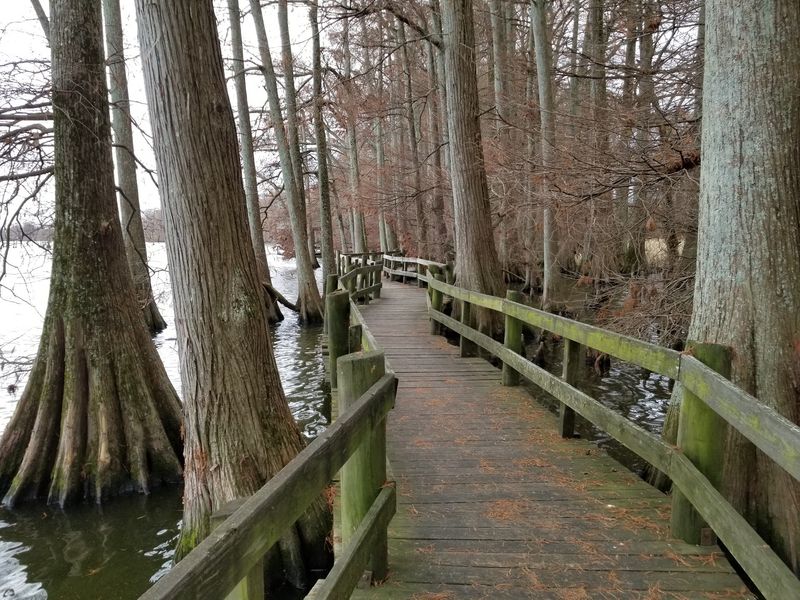
The boardwalk near the visitor center is the easiest win of the whole trip. It carries you out over the water and above the cypress knees, with gazebos for pausing.
Kayaks and canoes open up quieter corners, gliding between trunks where motors cannot follow. The shallow depth means paddling is the honest way to explore the flooded forest.
Guided pontoon tours run in season and come with a ranger’s running commentary on the lake’s plants, birds, and geology. Learning the backstory while floating through it beats any brochure.
Anglers come for crappie and bass, and fishing has been a tradition here for generations. Boat choice matters, since submerged stumps sit everywhere in the shallows.
Hiking trails are rated easy, though conditions vary after storms and high water. Sturdy shoes and long pants make sense on anything beyond the boardwalk.
The visitor center sits on TN Highway 21 along the southwestern shoreline, an ideal first stop for maps and current trail conditions. Rangers there know what wildlife is showing up that week.
Plan a full morning. Reelfoot Lake is not a quick pull-off, and rushing it wastes the best light.
What To Know Before Visiting Reelfoot Lake State Park
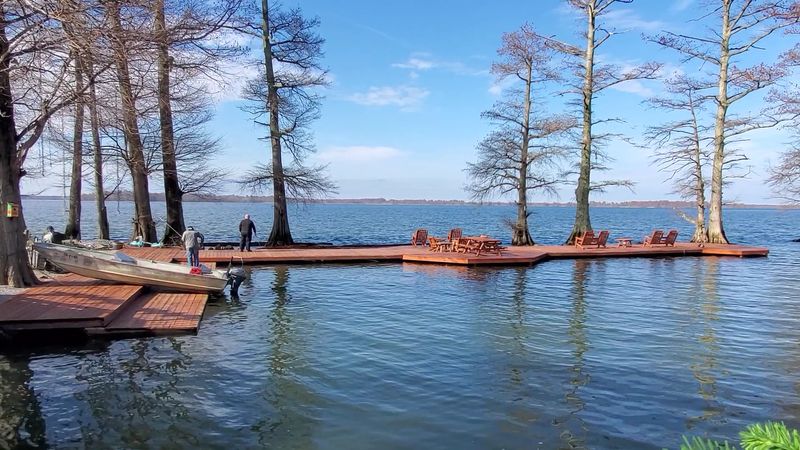
Getting the practical details right makes the difference between a pleasant outing and a scramble. The main park office sits at 2595 TN-21, Tiptonville, TN 38079.
Standard hours run 8 AM to 4:30 PM daily, so plan the museum and nature center inside that window. The boardwalk and roads offer plenty before and after.
Lodging options include lakeside cabins, campgrounds with hookups, and a range of nearby inns and resorts. The south campground has been a family favorite for decades.
Cooler months bring eagles and fewer insects. Late spring and summer bring lush plant growth, active reptiles, ospreys, and warm evenings on the water.
Pack insect repellent, water, closed shoes, and a hat. Skip the flip-flops if you intend to leave the pavement.
Interpretive programs, an aviary with birds of prey, and reptile displays all cluster near the office, making it a strong stop for curious kids.
Northwest Tennessee is not on the way to much, which is exactly why this place stays peaceful. Reelfoot Lake pays back the drive with scenery, wildlife, and a geology story you will retell later.