
This Tennessee Museum Is Filled With Rare Bibles Dating Back Centuries
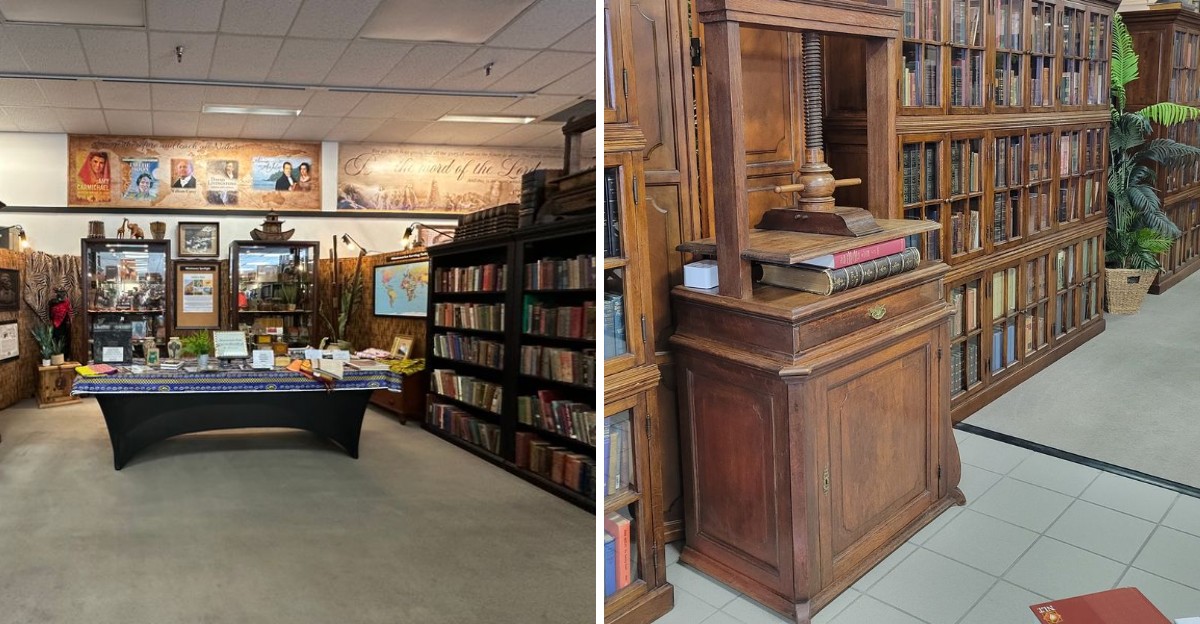
A Bible printed in 1480 sits inside a small Tennessee museum, and that’s only the beginning of what makes this collection so unusual. That book was already around before Columbus made his famous voyage across the Atlantic.
But the surprises get even bigger. Literally.
One Bible weighs roughly 120 pounds, while another is so tiny its writing needs powerful magnification. There’s even a book said to have stopped a bullet during the Civil War.
I have to admit, I wouldn’t expect to find treasures like these near the busy tourist attractions of the Smoky Mountains.
What makes this place especially interesting is that visitors don’t just stare at old books behind glass. Guided tours explain the stories behind them, and some historic items can even be touched.
A working replica of Gutenberg’s printing press adds another fascinating piece of history.
These rare books have survived centuries of change, and the stories behind them are just as remarkable as the pages themselves.
A 1480 Latin Bible That Predates Columbus
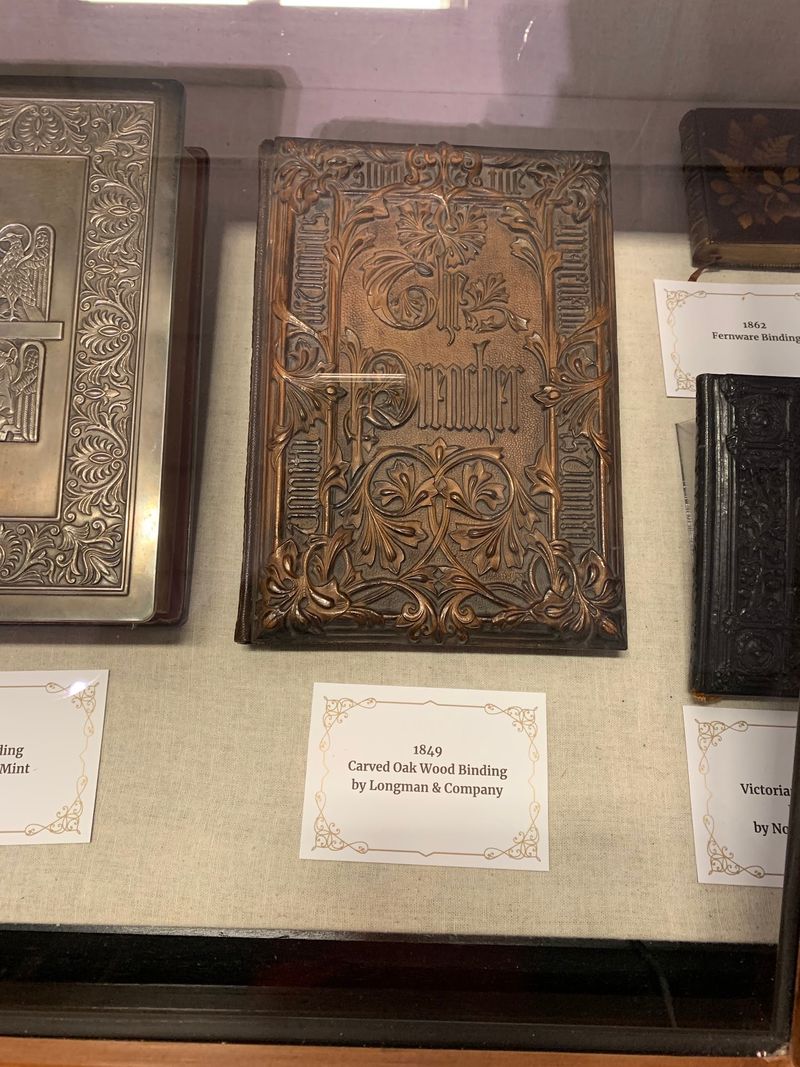
Older than the voyage of Columbus. That single fact tends to stop people mid-sentence when they meet the 1480 Latin Bible on display here.
Printing was barely a few decades old when this volume was made. Gutenberg’s press had only recently changed the world, and this book came off that early wave of technology.
The pages feel thicker than modern paper because they were built to last. Rag paper and careful binding are the reasons a book from the 1400s can still be studied today.
Latin was the language of the church across much of Europe back then. Most people could not read it, which is part of why later translations mattered so much to ordinary families.
Look closely at the letterforms and you will notice how much they imitate handwriting. Early printers wanted their books to resemble the manuscripts scribes had produced for generations.
The Tennessee Bible Museum keeps items like this in curtained display areas along the perimeter of the building. Guides explain the details rather than leaving you to squint at a wall of text.
Age alone is impressive, but the context is what sticks with you. A single book connects the reader to a printing shop that operated more than 540 years ago.
The 120-Pound Giant You Are Allowed To Touch
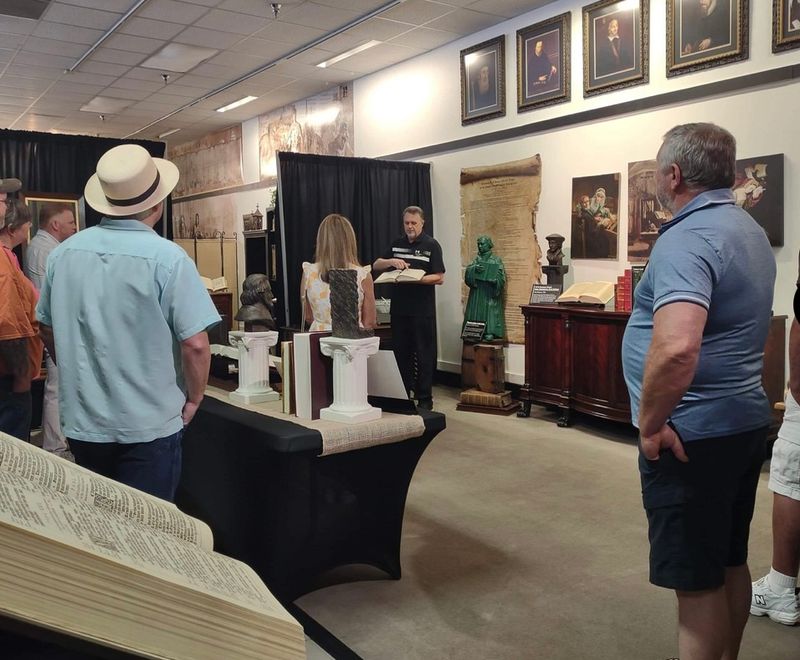
Most museums shout do not touch. Here, guests are invited to put their hands on a Bible that weighs roughly 120 pounds.
It is a copy of the largest Bible ever printed, produced in London. Turning a page takes real effort, and lifting the whole thing takes more than one determined person.
Books this size were never meant for a nightstand. They were showpieces, printed to display craftsmanship and to be read aloud from a lectern.
The paper alone accounts for much of the weight. Add heavy boards, leather, and metal fittings, and the total climbs fast.
Children usually react first, since the scale reads almost like a prop from a movie. Adults follow a moment later, testing the edge of a page just to confirm it is real.
Being allowed to touch changes the experience completely. History stops being a thing behind glass and becomes something with texture and weight.
Photographs never quite capture it either. You need a person standing beside the book for your brain to accept the proportions.
Ask about the printing process while you are there. The explanation of how such a volume was assembled by hand is worth the stop on its own.
The Nano Bible Smaller Than A Grain Of Rice
Now flip the scale completely upside down. The same collection holds an incredibly tiny Hebrew Bible engraved onto a microchip.
Often called the Nano Bible, it needs magnification to be seen at all. The entire text sits on a surface you could lose in a pocket seam.
Modern engraving technology made it possible, using techniques borrowed from the semiconductor industry. Every word is there, just written at a scale the human eye cannot process.
Placing it near the 120-pound giant is a clever bit of curation. Two extremes of the same text, separated by centuries of invention.
Miniature books have a long history of their own. Craftspeople have been shrinking scripture for generations, sometimes into volumes the size of a postage stamp.
Guests have also mentioned seeing a micro book containing a well-known prayer in seven languages. Small things gather big crowds in this room.
It raises a fair question about what a book actually is. If the words survive, does the size matter at all?
The contrast makes the whole collection more memorable. You leave thinking about scale, technology, and how stubbornly people keep finding new ways to preserve old words.
Working Replica Of The Gutenberg Press
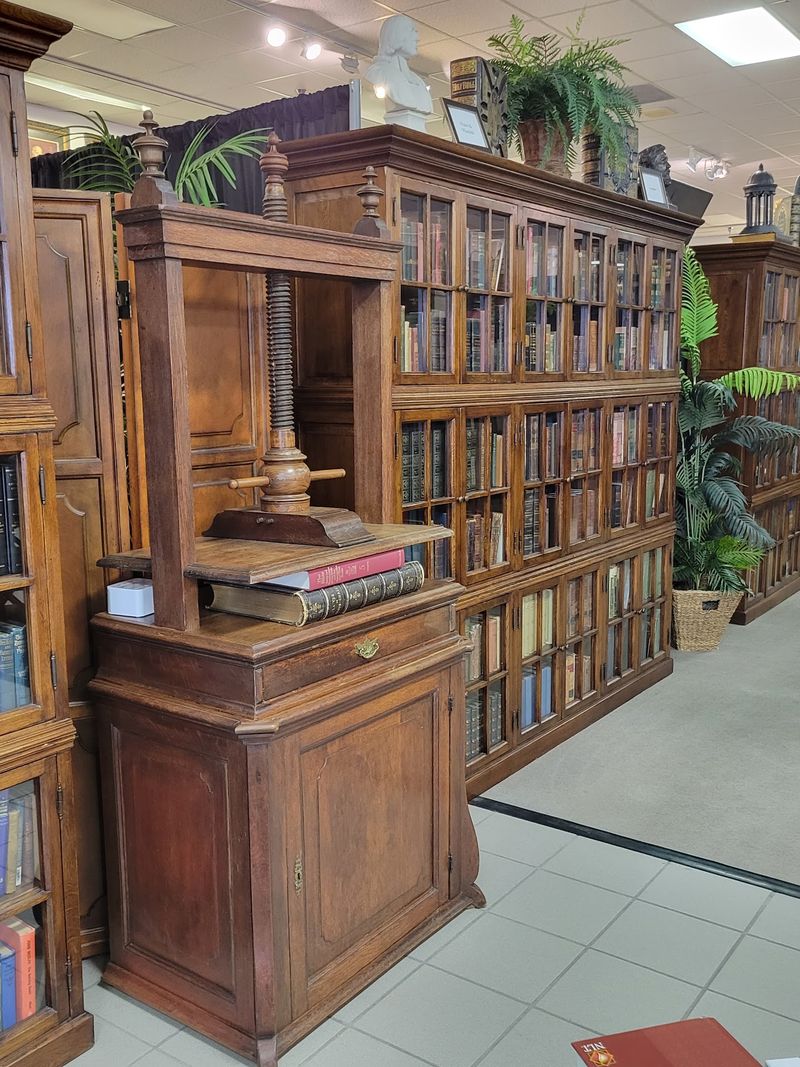
Wood, iron, and a giant screw. That is essentially the machine that reshaped how information traveled across Europe.
A full-scale replica of the Gutenberg printing press stands inside the museum at 135 E Wears Valley Rd #1 in Pigeon Forge. It is not a scale model behind rope, but a proper working reproduction.
The working replica produces reproductions of Gutenberg Bible pages, which visitors can purchase as souvenirs. Few souvenirs beat a page pressed in front of you on a press design from the 1400s.
Before the press, a single Bible could take a scribe more than a year to copy. Afterward, hundreds of copies became possible in the same span of time.
Watching the lever come down explains more than any diagram could. You feel the pressure required to transfer ink to damp paper.
Ink was another challenge entirely, since water-based inks slid off metal type. Printers developed oil-based formulas to make the letters stick.
Demonstrations like this turn abstract history into something mechanical and clear. Kids especially seem to leave with the concept locked in.
Bibles That Came Home From The Revolutionary War
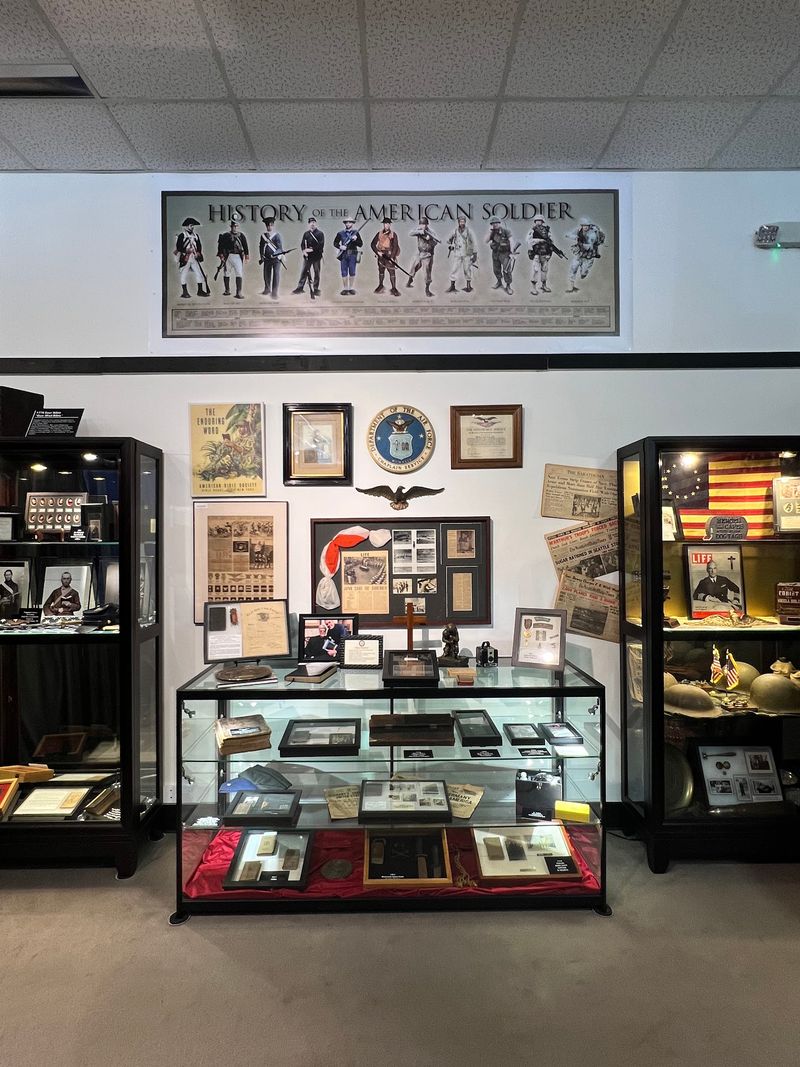
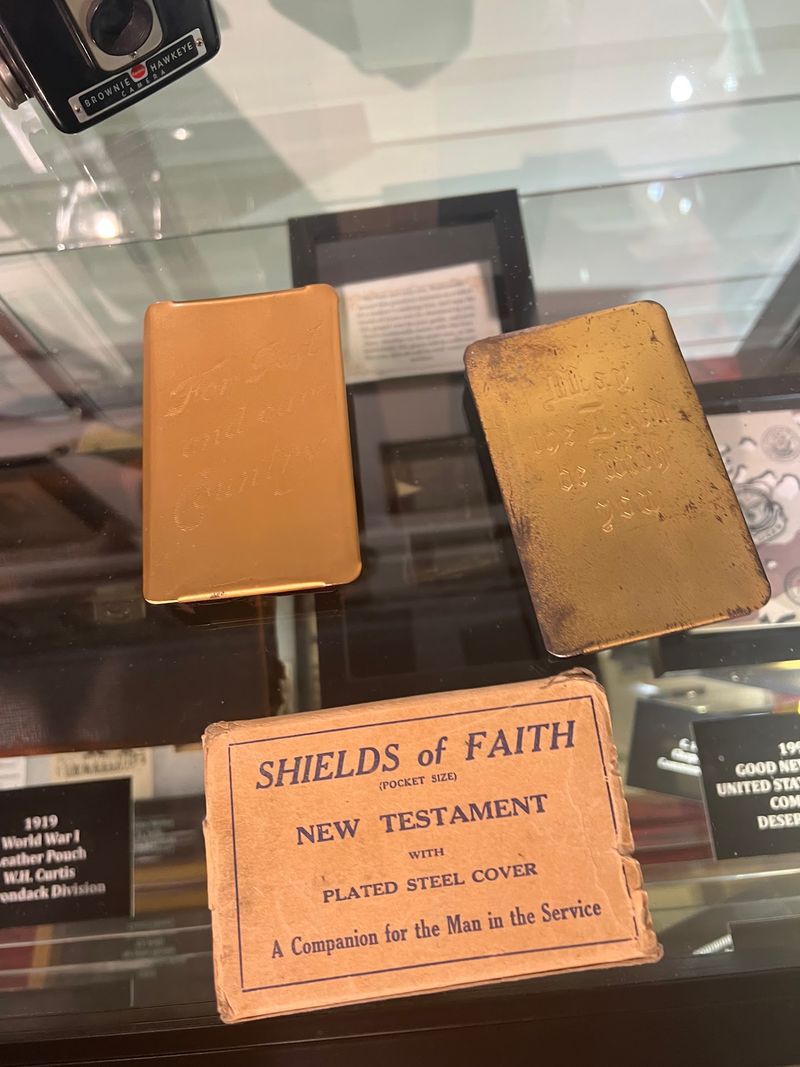
Some books carry scars. Among the holdings are Bibles dating to the Revolutionary War, along with a separate Civil War-era Bible said to have stopped a bullet and saved a soldier’s life.
Pocket-sized scripture was common for soldiers of that era. Men carried small volumes in coat pockets, often over the chest.
Whether by chance or design, that placement occasionally mattered. The story attached to this particular book is one guides share during the tour.
Paper and leather stacked tightly can absorb surprising force. Dense material behaves differently than most people expect.
Beyond the dramatic detail, these books show what mattered to people far from home. A worn Bible was often the only personal item a soldier kept.
Margins sometimes hold names, dates, and short notes. Those markings turn an object into a record of a real household.
American printing history is tied up in this period too. Wartime shortages made imported books scarce, which pushed printers in the colonies to attempt their own editions.
Standing near an artifact from the 1770s does something that textbooks cannot. The distance between then and now shrinks considerably, and that shift is exactly what the collection is built to create.
An 1800s Torah Scroll With A Remarkable Journey
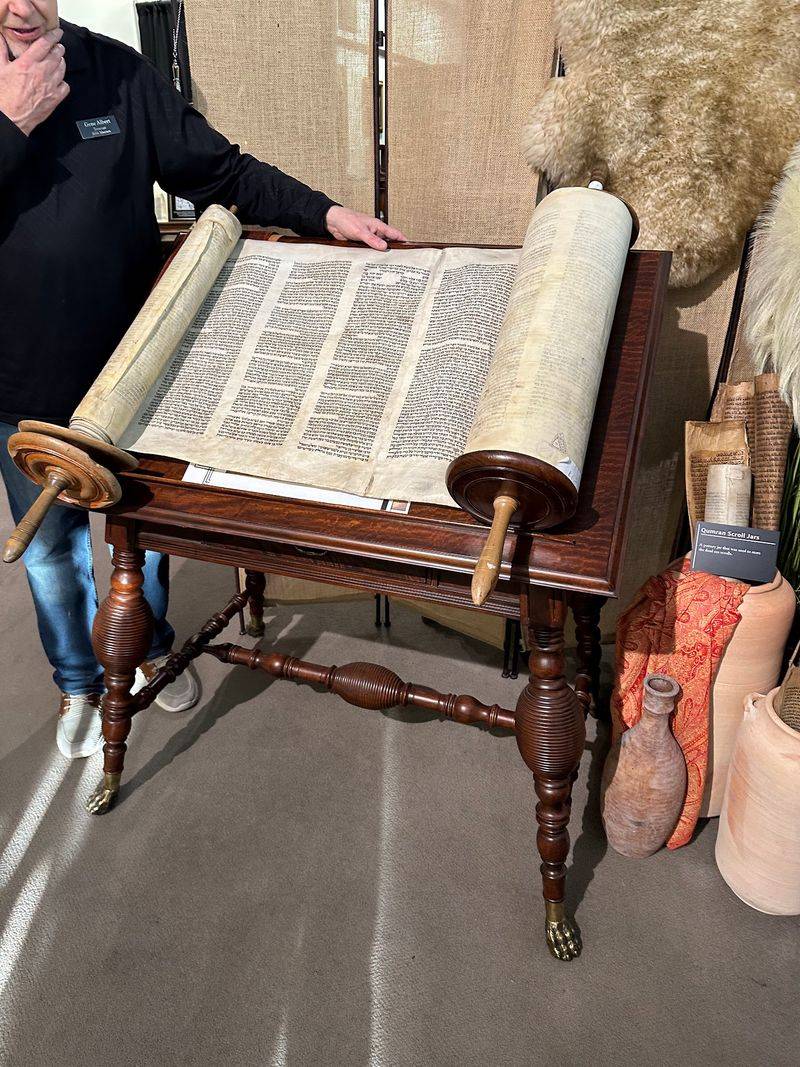
Handwritten, letter by letter, with rules that have not changed in centuries. The Torah scroll dating to the 1800s is among the most carefully made objects in the building.
Scribes who produce these scrolls follow exacting standards. A single error can require an entire section to be redone.
Parchment, quill, and specially prepared ink are still the traditional tools. Speed is never the goal, accuracy is.
What sets this scroll apart is where it has been. The museum displays a nineteenth-century Hebrew Torah scroll from Germany, offering visitors a look at the longstanding tradition of preserving scripture by hand.
Many scrolls from that era were lost or damaged permanently. Restoration efforts brought some of them back into use decades later.
Seeing Hebrew script written by hand also reframes how the text was preserved. Long before printing, this was the method that carried scripture forward.
Nearby, the museum displays replicas of parchment-making tools. The process involved treating animal skins through several careful stages before a surface was ready to write on.
Jars similar to those that held the Dead Sea Scrolls appear in the same area. Together, the pieces sketch out how fragile writing survived for thousands of years.
Letters, Facsimiles, And Famous Bibles
Handwriting reveals personality in a way print never does. Original letters from preachers D.L. Moody and Charles Spurgeon sit among the displays, ink and all.
Alongside them are facsimiles of texts that shaped biblical scholarship. The Codex Sinaiticus, the Complutensian Polyglot, and the 1611 King James Bible all appear.
Facsimiles matter more than people assume. The originals live in guarded institutions, so faithful reproductions are how most of us ever study the pages.
The Complutensian Polyglot printed multiple languages in parallel columns. Typesetting that by hand was an enormous undertaking for its time.
First editions in French, German, Latin, Greek, and Hebrew round out the language collection. Each one represents a moment when scripture reached a new audience.
There are personal connections too. The collection includes Bibles associated with prominent religious and political figures, including copies signed by George W. Bush and Donald Trump.
A Bible used at Elvis Presley’s funeral also sits in the collection, which feels fitting given the Tennessee setting.
Owner and curator Gene Albert, known as The Bible Guy, assembled much of this over many years. The mix of scholarly and famous items keeps every kind of guest interested.
Guided Tours, The Bookstore, And Butterflies
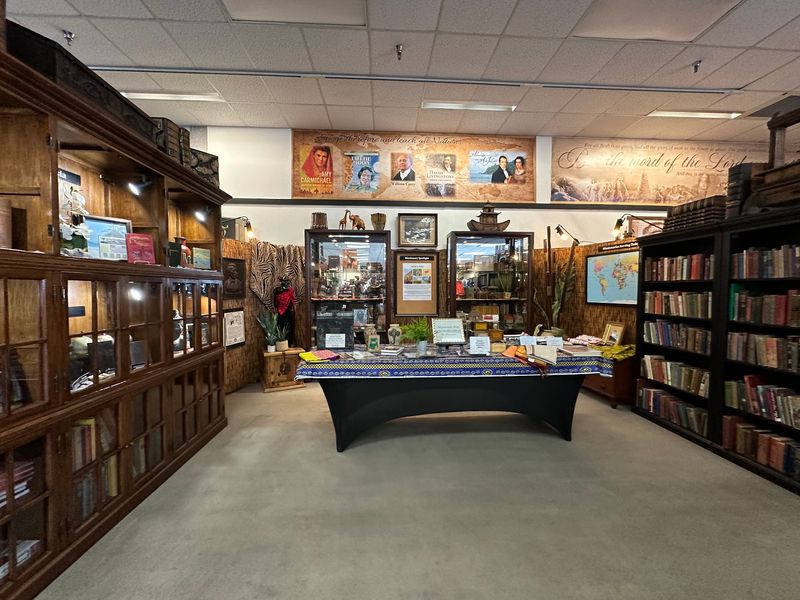
Plan on about an hour, and plan on listening. The guided tour is the heart of the experience, with the story delivered by a knowledgeable guide rather than posted signs.
That approach means questions get answered on the spot. It also means the pace adjusts to whoever is standing in the room.
The building covers roughly 8,000 square feet, and the gift shop and bookstore take up a generous share of it. Rare Bibles, new editions, antique Christian books, and replicas fill the shelves.
Book lovers often spend as long browsing as touring. Out-of-print theological titles turn up regularly.
Other rooms deserve attention as well. A missionary room holds a map with pins marking global reach, and a Pastor’s Corner offers commentaries and reference works.
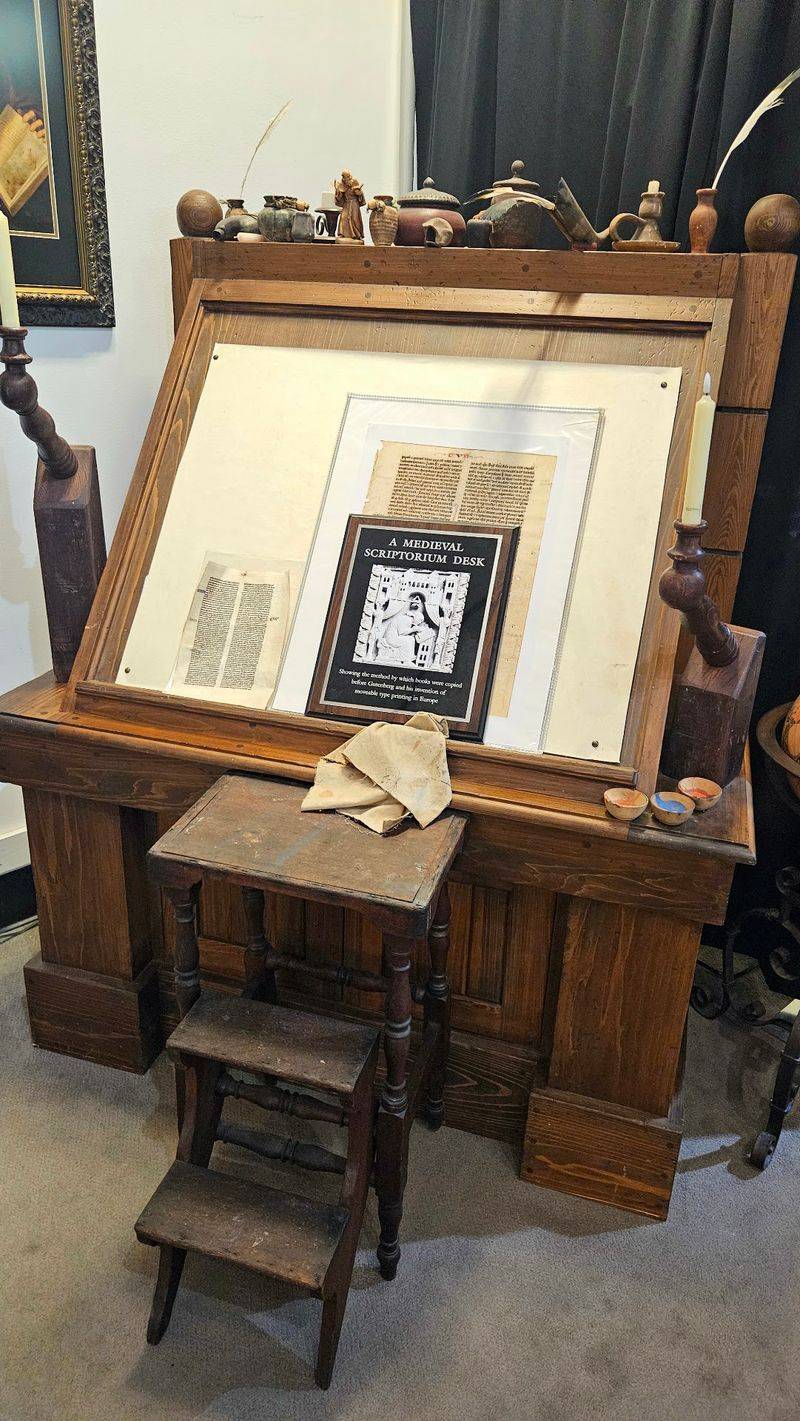
A medieval scribe’s workspace has been recreated in careful detail. It shows exactly how books were made before machines took over.
A Butterfly Encounter has been added to the offerings, giving the stop a lighter second act.
The museum’s bookstore and gift shop are open Monday through Saturday from 10 AM to 6 PM, with guided tours scheduled at 10:30 AM, 12:30 PM, 2 PM, and 4 PM.